
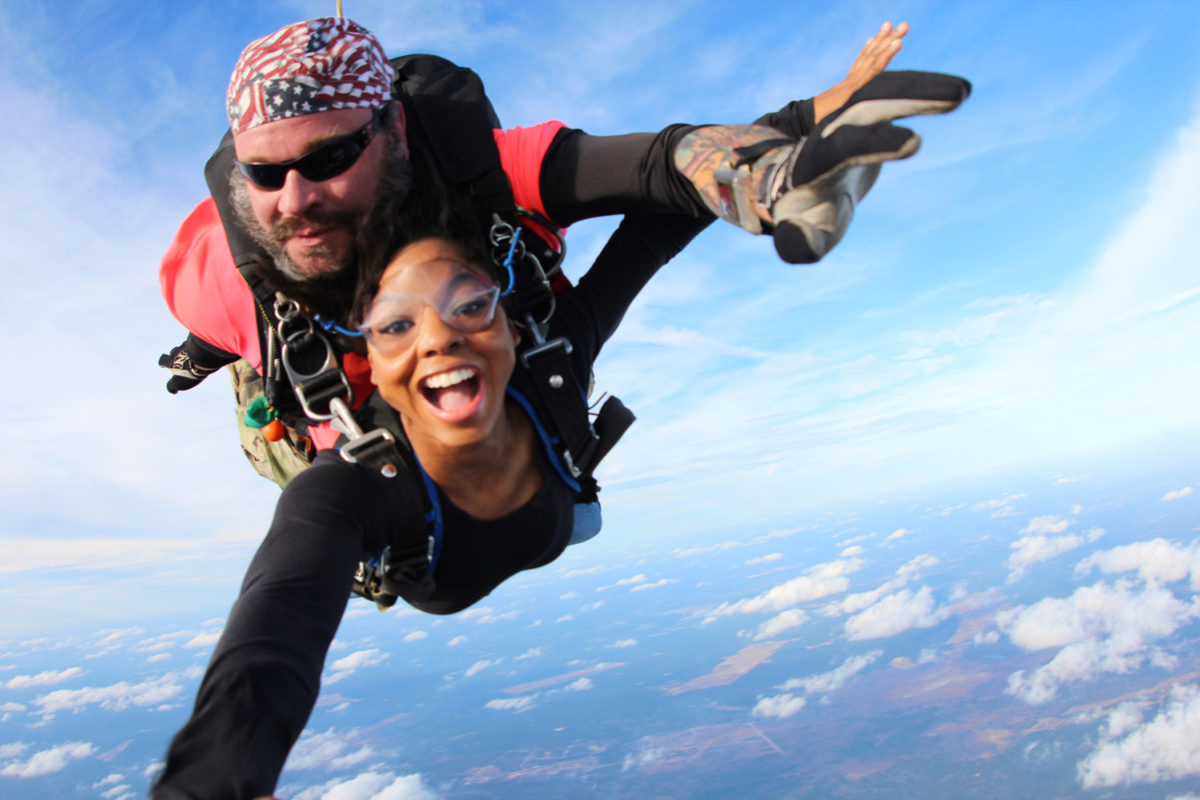
From gearing up to landing safely — here’s the real moment-by-moment experience of a first-time skydive.
🙋 Why I’m Sharing This
Before my first jump, I Googled everything —
“Is skydiving scary?”
“Does your stomach drop?”
“What if I panic?”
And most results were either super technical or just “you’ll love it!” with no real details.
So here’s a realistic, step-by-step breakdown of what actually happens during a first skydive in 2026 — from the second you arrive at the dropzone to the moment your feet touch the ground.
If you’ve never jumped before, this will answer 90% of your fears.
🏁 PART 1: Arrival & Check-In
What happens first:
You sign some paperwork, watch a brief safety video, and meet the staff.
This process is standard worldwide — every dropzone requires it.
You will:
✔ Fill out forms
✔ Show ID
✔ Get weighed (weight limits matter)
✔ Watch a briefing video
Pro-tip: Arrive early. Weather changes throughout the day, and mornings usually have the smoothest winds.
🎓 PART 2: Training & Safety Briefing
This is where anxiety drops for most beginners because you realize the gear and instructors are extremely prepared.
The instructor will show you:
✔ How the harness works
✔ How to arch your body in freefall
✔ How to lift your legs for landing
✔ What to expect when exiting the plane
They’ll also answer questions like:
- “Can I breathe up there?” Yes.
- “What if I forget to pull anything?” You won’t — they handle everything.
Important:
In a tandem skydive, your instructor:
✔ Controls the exit
✔ Deploys the parachute
✔ Flies the canopy
✔ Handles landing
You’re basically a passenger with a front-row seat to the sky.
🧥 PART 3: Gear Up (Suit + Harness + Goggles)
Once trained, you get geared up.
The equipment includes:
✔ Jumpsuit (optional at warm dropzones)
✔ Harness (tight but comfortable)
✔ Goggles (wind protection)
✔ Altimeter (sometimes)
✔ Helmet (optional for tandems)
What most beginners notice:
The harness feels snug but not painful — it needs to stay secure for freefall and canopy flight.
At this point, the excitement kicks in. Photos are usually taken now too.
✈️ PART 4: The Plane Ride Up (10–20 Minutes)
This is the moment people think will be the scariest…
But surprisingly, it’s calm and even beautiful.
You’ll notice:
✔ Everyone is smiling or laughing
✔ Instructors are relaxed (they’ve done this 1000+ times)
✔ The views get better as you climb
The plane slowly climbs to 10,000–15,000 feet depending on the dropzone.
My recommendation:
Look out the window — it makes the whole experience feel surreal, not scary.
🕳️ PART 5: The Door Opens — And Your Brain Goes Silent
When the aircraft door slides open, the noise gets loud and the cold air hits your face.
Here’s the weird part:
99% of people say the door moment isn’t terror — it’s pure adrenaline + curiosity.
Your instructor attaches to you firmly (4 connection points), does a final gear check, and moves toward the door with you.
🪂 PART 6: The Exit (The Moment Everyone Talks About)
This is the single most intense second of the entire experience.
Your instructor counts:
“Ready… Set… Go!”
And you’re suddenly outside the plane.
Does your stomach drop?
Almost never.
Unlike roller coasters, you’re moving forward with the plane — not falling off a ledge — so there’s no sudden drop sensation.
What it actually feels like:
✔ Loud air rush
✔ Instant speed
✔ Pure weightlessness
✔ Full sensory overload
After about 5–7 seconds, your brain catches up and everything slows down mentally.
🌬️ PART 7: Freefall (45–60 Seconds)
This is the part people imagine the most — and it’s different than you think.
Freefall feels like:
✔ Floating on air
✔ Flying horizontally
✔ Breathing normally
✔ Extreme freedom
✔ “I am actually in the sky right now”
It does not feel like falling — more like you’re resting on a cushion of wind.
In 2026, cameras have improved a lot — so if you buy photo/video packages, you’ll see:
✔ Slow-motion cinematics
✔ Hand signals
✔ Big smiles
✔ Stabilized footage
It’s worth it.
🪢 PART 8: Parachute Deployment (Quiet, Calm, Peaceful)
Around 5,000 feet, the instructor deploys the main canopy.
Freefall noise disappears instantly.
Post-deployment feels like:
✔ Floating
✔ Quiet
✔ Peaceful
✔ Breathtaking views
This is where first-timers say:
“I wish this lasted longer.”
The canopy ride lasts 4–6 minutes, depending on wind and altitude.
🌄 PART 9: The Canopy Ride (The Scenic Part)
With the parachute open, you can finally look around.
You’ll see:
✔ Coastlines or mountains
✔ Rivers or cities
✔ Boats or highways
✔ Clouds around you
Some instructors let you steer by pulling the toggles — optional, but really fun.
🛬 PART 10: Landing (Much Softer Than Most Expect)
As you approach the landing area, the instructor tells you:
“Legs up!”
That’s so they can slide you gently onto grass or turf.
Landing styles in 2026:
✔ Soft slide landing (most common)
✔ Stand-up landing (light-wind conditions)
Pain level: 0/10 for almost everyone.
😅 After Landing: The Adrenaline Afterglow
Once you stand up, your brain is like:
“Did I really just jump out of an airplane?”
Most first-timers:
✔ Hug their instructor
✔ High-five everyone
✔ Immediately check their video
✔ Want to go again
Skydiving gives one of the cleanest adrenaline highs you can get, and it lasts for hours.
🧠 Common First-Timer Fear Myths: Busted
❌ Fear #1: “I won’t be able to breathe”
You absolutely can. Freefall air pressure makes breathing natural.
❌ Fear #2: “My stomach will drop”
It rarely does — airplane exit isn’t a vertical roller coaster.
❌ Fear #3: “The parachute might not open”
Modern rigs have:
✔ Main canopy
✔ Reserve canopy
✔ AAD (Automatic Activation Device) that opens if needed
❌ Fear #4: “I might panic mid-air”
Most panic happens before, not during the jump. Once you exit, instincts take over.
🧍 Who Should Try Skydiving (In 2026)
Skydiving is suitable for:
✔ Students
✔ Couples
✔ Travelers
✔ Bucket-list adventure seekers
✔ Fear-facing personalities
✔ Photographers & content creators
Not typical for:
❌ Severe heart or medical conditions
❌ Extreme mobility limitations
❌ Certain medications (check with doctor)
🧳 What to Bring & Wear
Wear:
✔ Sneakers
✔ Active clothing
✔ Hair tied back
✔ Light jacket (if cold)
Avoid:
❌ Sandals
❌ Boots with hooks
❌ Jewelry
❌ Scarves
Bring:
✔ ID / Passport
✔ Sunglasses
✔ Water
✔ Phone battery
✔ Friends (for photos!)
🧠 How Long It Takes (Start to Finish)
Full experience time:
🕒 2–4 hours
Actual freefall time:
🕓 45–60 seconds
Canopy ride:
🕔 4–6 minutes
Worth every minute.
📞 If You’re Nervous… Here’s the Honest Truth
Skydiving is one of those rare experiences that feels terrifying before you do it — and life-changing after you land.
For many first-timers, it becomes a before/after moment in their life story.
🏁 Final Thoughts
If you’re reading this because you’re scared or curious — good. That means you care about the experience.
Just know:
✔ You are not alone
✔ It’s way safer than you imagine
✔ It feels nothing like you expect
✔ And it might become one of the happiest memories of your life
The only way to understand skydiving… is to actually do it.