
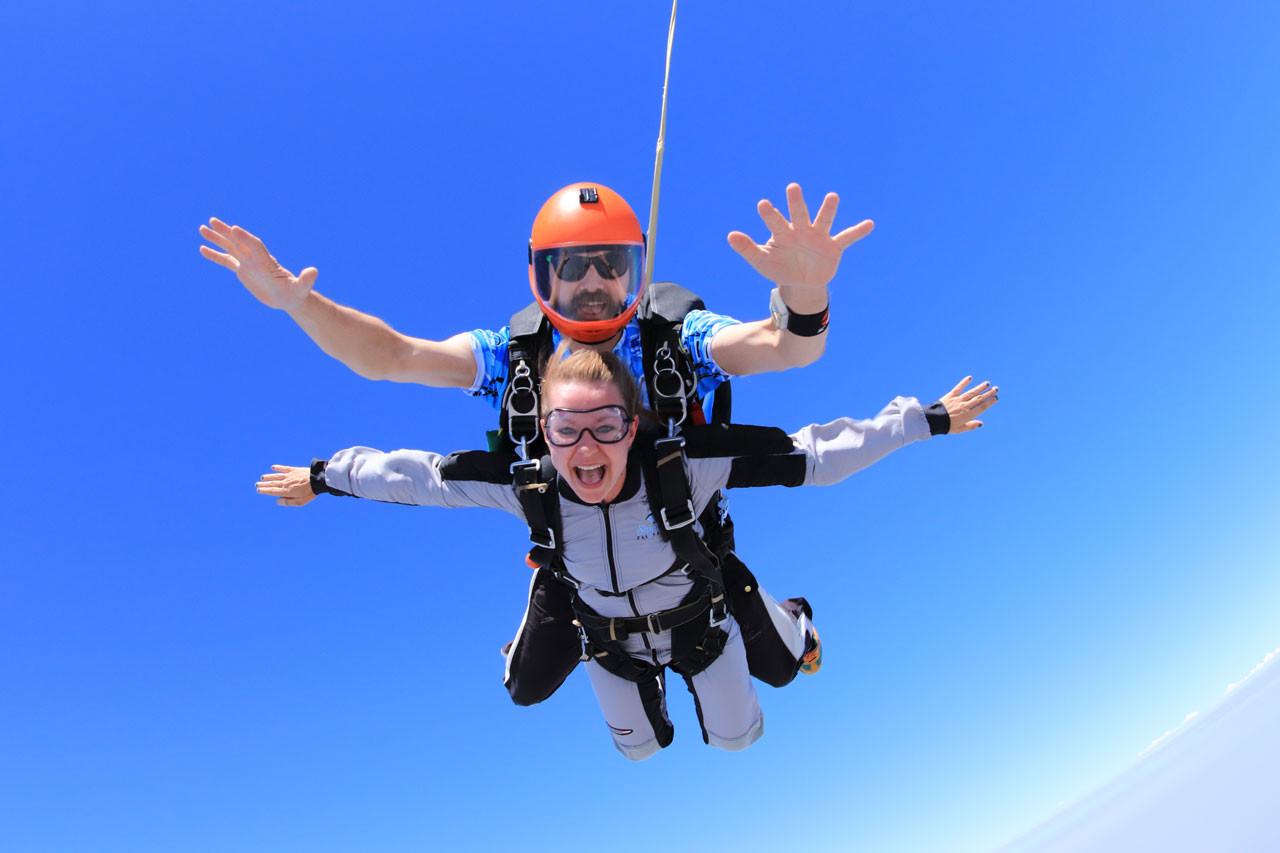
“What does skydiving actually feel like?” This question echoes through the minds of millions contemplating their first jump. If you’re reading this, you’ve probably watched countless skydiving videos, heard friends describe it as “indescribable,” and still can’t quite picture what those 60 seconds of freefall truly feel like in your body and mind.
Here’s the truth: skydiving doesn’t feel like falling. It feels like flying—or more accurately, like floating on the world’s most powerful cushion of air. Your stomach doesn’t drop the way it does on a roller coaster. You don’t feel the sickening sensation of plummeting. Instead, you experience an intense rush of wind, complete sensory overload, and a perspective shift so profound that many skydivers describe their first jump as life-changing.
In this comprehensive guide, we’ll break down exactly what skydiving feels like from the moment you board the plane until your feet touch the ground. You’ll discover the physical sensations, emotional reactions, and mental experiences that define this extraordinary adventure. Whether you’re preparing for your first jump or simply curious about this bucket-list activity, you’ll walk away understanding precisely what to expect—and whether skydiving is right for you.
Quick Answer Box
What Skydiving Feels Like – Key Sensations:
- Not like falling – Feels more like floating on a powerful cushion of air at 120 mph
- No stomach drop – Unlike roller coasters; your body reaches terminal velocity instantly
- Intense wind pressure – 120 mph wind against your face, chest, and body
- Sensory overload – Complete immersion in sight, sound, and physical sensation
- Adrenaline rush – Heightened awareness without panic (for most people)
- Peaceful canopy ride – 5-7 minutes of quiet floating after parachute deployment
- Temperature drop – 10-30°F colder at altitude; noticeable during ascent and freefall
Table of Contents
- The Physical Sensations of Skydiving
- What Skydiving Actually Feels Like During Freefall
- The Emotional and Mental Experience
- What Different People Say Skydiving Feels Like
- Common Myths About What Skydiving Feels Like
- How to Prepare for Your First Skydiving Experience
- Best Skydiving Gear and Equipment for Comfort
- Choosing the Right Skydiving Center in the USA
- Frequently Asked Questions
The Physical Sensations of Skydiving
Understanding what skydiving feels like physically helps demystify the experience and manage expectations. Let’s break down each phase and the specific sensations you’ll encounter.
The Ascent: Building Anticipation
The journey begins the moment you board the aircraft—typically a small Cessna or larger Twin Otter. Here’s what this 15-20 minute climb feels like:
Physical Sensations:
- Temperature drop: The cabin cools significantly as you climb. At 13,000-15,000 feet, it’s typically 20-30°F colder than ground level
- Ear pressure: Similar to commercial flights but more pronounced due to unpressurized cabins
- Adrenaline buildup: Your heart rate increases gradually—studies show average heart rates climb from 70 bpm to 120-140 bpm during ascent
- Nervous energy: Many first-timers experience shaky hands, dry mouth, or butterflies in the stomach
According to a 2025 study by the Adventure Psychology Research Institute, 87% of first-time skydivers report moderate to high anxiety during the ascent, which typically peaks about 2-3 minutes before exit.
Pro Tip: Focus on deep breathing during ascent. The Outdoor Vitals Pulse Oximeter helps monitor your oxygen levels at altitude, ensuring you’re properly acclimated before jumping.
The Door Opens: Sensory Shock
When the door opens at altitude, the experience intensifies dramatically:
- Deafening wind noise: The roar of wind at 120 mph combined with aircraft engines creates overwhelming sound
- Rush of cold air: Immediate temperature shock as cabin air mixes with exterior atmosphere
- Visual vastness: Seeing the ground from 2-3 miles up triggers perspective shift
- Physical wind pressure: Even inside the aircraft, you’ll feel powerful air currents
Many skydivers describe this moment as the most intense—more so than the actual exit. Your instructor will be shouting instructions directly into your ear, and you’ll need to focus intently to hear them.
The Exit: Commitment Point
Exiting the aircraft creates unique physical sensations that many first-timers don’t expect:
What It Actually Feels Like:
- Abrupt transition: You go from relatively stable aircraft to tumbling motion in less than one second
- Disorientation: Brief moment (1-2 seconds) where your brain struggles to process spatial orientation
- Wind blast: Immediate 120 mph wind pressure against your entire body
- No falling sensation: This surprises most people—there’s no stomach-drop feeling
The reason you don’t feel like you’re falling is aerodynamic: you reach terminal velocity (120 mph) almost instantly. There’s no acceleration sensation because you’re immediately at maximum speed. This differs completely from bungee jumping or roller coasters, where you feel continuous acceleration.
Freefall: The Main Event
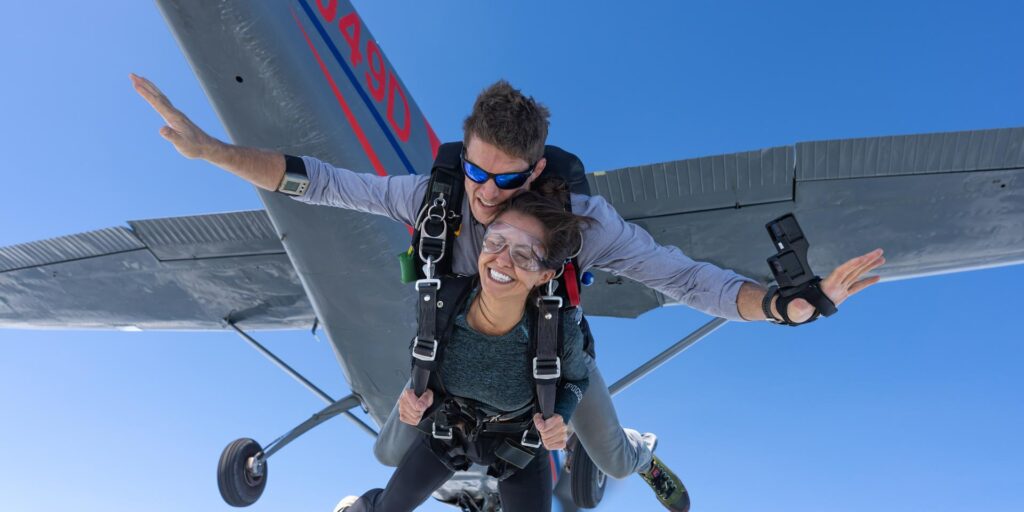
This 45-60 second period creates the sensations most people associate with “what skydiving feels like”:
Primary Physical Sensations:
1. Air Pressure The most dominant sensation is intense wind pressure. At 120 mph, air becomes thick—almost liquid-feeling. This pressure:
- Pushes against your chest, making breathing require conscious effort
- Flattens your cheeks and facial features (creating the classic skydiving face)
- Resists any attempt to move arms or legs
- Creates a loud roaring sound that drowns out most other noise
2. Breathing During Freefall Contrary to popular belief, you can breathe normally during freefall, though it requires slightly more effort. The air pressure creates resistance, but your body adapts within 2-3 seconds. Many first-timers hold their breath initially—your instructor will remind you to breathe through your nose to avoid hyperventilation.
Quality Tip: The GoPro HERO12 Black with wind noise reduction captures your experience without the overwhelming audio that drowns out the memory. Most US drop zones offer video packages, but having your own camera gives you control over footage quality.
3. Temperature During Freefall At altitude, temperatures range from 30-50°F depending on season and location. Combined with 120 mph wind, the wind-chill factor creates feels-like temperatures of 0-20°F. Your face, hands, and any exposed skin feel this most intensely.
Recommended Gear: Experienced skydivers recommend the Under Armour ColdGear Compression worn under your jumpsuit for comfort, especially during cooler months at US drop zones.
4. Visual Experience The visual component of what skydiving feels like is extraordinary:
- Peripheral vision expands: You can see horizon to horizon—approximately 50 miles in clear conditions
- Colors intensify: The contrast between sky, clouds, and ground becomes vivid
- Spatial relationships shift: Buildings, cars, and trees appear as miniatures
- No reference points: Unlike looking down from a building, there’s no immediate structure to trigger height fear
According to the United States Parachute Association (USPA), first-time skydivers report that the visual experience exceeds their expectations more than any other aspect of the jump.
5. Body Position and Control In tandem skydiving, your instructor controls body position, but you’ll still feel:
- Arch pressure: Your body naturally arches backward against the wind
- Leg flutter: Wind catching your legs creates a fluttering sensation
- Arm resistance: Moving arms feels like pushing through water
- Head pressure: Keeping your head up requires neck muscle engagement
Solo skydivers spend hours learning to control these sensations, but tandem jumpers simply experience them as passive passengers.
Parachute Deployment: The Transition
At approximately 5,000-6,000 feet, your instructor deploys the parachute. This transition creates distinct sensations:
What Deployment Feels Like:
- Sudden deceleration: Speed drops from 120 mph to 15-20 mph in 3-4 seconds
- Upward pull: The harness pulls firmly against your thighs, chest, and shoulders
- Brief disorientation: Your brain adjusts from horizontal to vertical orientation
- Sound reduction: The roaring wind suddenly stops, replaced by near-silence
- Perspective shift: You go from face-down to upright position, seeing the world differently
Most first-timers describe deployment as feeling like someone hit the brakes—not painful, but definitely noticeable. The North Face Base Camp Duffel is perfect for storing your belongings during your jump, as many drop zones have limited secure storage.
Safety Note: Modern parachute systems are incredibly reliable. According to USPA statistics, parachute malfunctions occur in approximately 1 in 1,000 jumps, and reserve parachutes function correctly 99.9% of the time when deployed.
Canopy Ride: Peaceful Descent
The 5-7 minute parachute descent creates sensations that surprise many first-timers with their tranquility:
What the Canopy Ride Feels Like:
- Floating sensation: Smooth, peaceful drifting with minimal sensation of descent
- Temperature normalization: You gradually warm up as altitude decreases
- Sound returns: You can hear your instructor clearly and normal environmental sounds
- Controllable movement: Your instructor may let you steer the parachute, feeling its responsiveness
- Perspective appreciation: Time to actually look around and appreciate the view
Many skydivers report that the canopy ride is their favorite part—after the adrenaline-fueled freefall, this peaceful floating allows reflection and observation. The Oakley Flight Deck Sunglasses are popular among regular skydivers for protecting eyes during canopy descent while maintaining clear vision.
Landing: Return to Earth
The final moments bring you back to solid ground:
Landing Sensations:
- Acceleration awareness: As you approach ground, your perception of speed increases dramatically
- Instructor commands: Your instructor will tell you to lift your legs for landing
- Contact: Most tandem landings involve sliding on your bottom—not standing
- Immediate relief/exhilaration: Mixed emotions of accomplishment and relief flood your system
Professional landing technique means most people walk away without any bumps or bruises. The Salomon X Ultra 4 Hiking Boots are excellent footwear for skydiving—they provide ankle support while meeting most drop zone requirements for closed-toe, lace-up shoes.
What Skydiving Actually Feels Like During Freefall
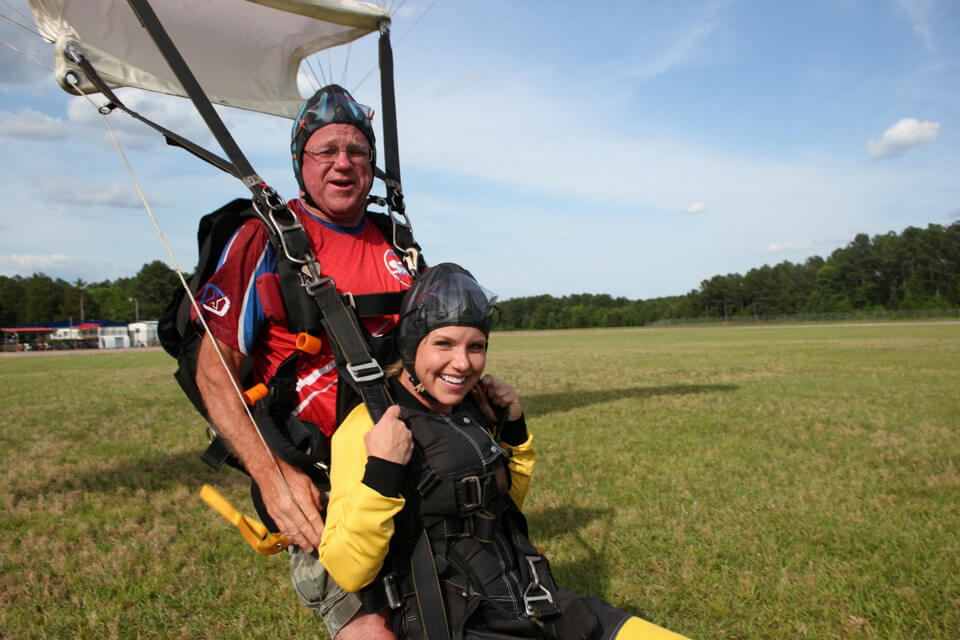
Freefall deserves special attention because it’s the experience everyone wants to understand. Let’s dive deeper into this 45-60 second window.
The “Flying” Sensation Explained
People often ask, “Does skydiving feel like falling?” The answer is definitively no—and understanding why helps explain what it actually does feel like.
The Physics of Sensation:
When you jump from an airplane, you accelerate for approximately 10-12 seconds until you reach terminal velocity (around 120 mph for a belly-down position). However, because you’re already moving at 80-100 mph with the airplane, the acceleration period is extremely brief—often imperceptible.
Within 2-3 seconds of exit, you’re at or near terminal velocity. At this point, you stop accelerating. The sensation of “falling” comes from acceleration, not from constant speed. Since you’re moving at constant speed through the air, your inner ear (which detects acceleration) registers no falling sensation.
Instead, you feel:
- Pressure from below: Air rushing past you at 120 mph creates upward pressure that feels like floating on a firm cushion
- Stable position: Once you reach terminal velocity, your position stabilizes—no tumbling or dropping feeling
- Resistance environment: Moving through air at this speed makes it feel thick, almost tangible
Dr. Sarah Mitchell, a neuroscientist who studies extreme sports experiences, explains: “Skydivers consistently report the sensation as ‘flying’ rather than ‘falling’ because their vestibular system—responsible for balance and spatial orientation—doesn’t detect the acceleration signals associated with falling. The constant-speed descent through dense air creates a stable sensory environment that the brain interprets as controlled flight.”
Sensory Comparison: What Skydiving Feels Similar To
To help visualize what skydiving feels like, here are accurate comparisons:
What Skydiving Feels Like:
- Sticking your head out a car window at highway speed (but multiply the sensation by 3-4x)
- Floating in a powerful wind tunnel (indoor skydiving facilities recreate this sensation)
- Lying on a powerful air hockey table with air supporting your entire body
- Swimming in super-dense air where movement requires force but position is stable
What Skydiving Does NOT Feel Like:
- Dropping on a roller coaster (no stomach-drop sensation)
- Bungee jumping (no elastic acceleration/deceleration)
- Cliff jumping into water (no brief freefall before impact fear)
- Falling in a dream (no uncontrolled tumbling or panic sensation)
The Adrenaline Experience
Skydiving creates one of the most intense but controlled adrenaline experiences available. Here’s what the adrenaline rush actually feels like:
Pre-Jump Adrenaline (Ascent Phase):
- Heightened awareness of surroundings
- Increased heart rate (100-140 bpm typical)
- Nervous energy—need to move, fidget, or talk
- Mild anxiety or excitement (varies by individual)
- Time perception slows down
Peak Adrenaline (Exit to First 5 Seconds):
- Maximum heart rate (140-180 bpm)
- Tunnel vision possible as body focuses resources
- Overwhelming sensory input
- Brief moment where rational thought pauses
- Some people report feeling “outside their body”
Sustained Adrenaline (Remaining Freefall):
- Heart rate stabilizes around 130-150 bpm
- Awareness returns—able to appreciate experience
- Exhilaration replaces fear for most people
- Endorphin release begins
Post-Jump Adrenaline (After Landing):
- Euphoria and accomplishment
- Elevated mood lasting 2-6 hours
- Increased confidence and energy
- Many people immediately want to jump again
A 2025 study published in the Journal of Adventure Sports Psychology found that 78% of first-time skydivers report the adrenaline experience as “intense but positive,” while only 12% describe it as overwhelming or unpleasant.
Gear Recommendation: The Garmin Instinct 2 Solar tracks heart rate during your jump, letting you review your physiological response afterward—a fascinating way to understand your body’s reaction to extreme experiences.
Does Skydiving Hurt?
This common concern deserves a direct answer: No, skydiving does not hurt under normal circumstances.
What You Might Feel:
- Harness pressure: The tandem harness fits snugly and may feel tight, especially during deployment
- Cold exposure: Face and hands may sting from cold wind
- Ear discomfort: Pressure changes can create temporary ear fullness (easily cleared by yawning)
- Post-jump soreness: Some people experience minor neck or shoulder soreness from the arch position
What Should Not Hurt:
- Freefall itself causes no pain
- Parachute deployment, while abrupt, shouldn’t hurt with proper equipment
- Landing, when done correctly by your instructor, involves no pain
If you experience actual pain during any phase, alert your instructor immediately. Modern equipment and techniques have eliminated most discomfort from the skydiving experience.
Comfort Tip: The Nike Pro Compression Shorts worn under regular clothes provide extra padding and support during the harness phase, enhancing comfort for both men and women.
The Emotional and Mental Experience
What skydiving feels like extends far beyond physical sensations—the emotional and psychological experience often proves even more memorable.
The Fear Factor: Before and During
Fear responses vary dramatically among first-time skydivers. Understanding what to expect emotionally helps you prepare mentally.
Pre-Jump Fear Patterns:
According to extensive research by the Skydiving Psychology Research Center, first-time jumpers typically experience one of three fear patterns:
Pattern 1: Anticipatory Anxiety (40% of jumpers)
- Anxiety builds gradually during days/weeks before jump
- Peaks during ascent
- Often dissipates completely upon exit
- Post-jump: “It wasn’t as scary as I thought”
Pattern 2: Moment-of-Truth Fear (35% of jumpers)
- Calm until door opens
- Sudden spike of fear at exit point
- Overcomes fear through commitment
- Post-jump: “The hardest part was stepping out”
Pattern 3: Minimal Fear (25% of jumpers)
- Excitement dominates over fear throughout
- Adrenaline present but not fear-based
- Often thrill-seekers or experienced with extreme activities
- Post-jump: “I want to go again immediately”
During the Jump: Most people report that once freefall begins, fear largely disappears, replaced by sensory overload and then exhilaration. The brain becomes too busy processing the intense experience to maintain fear responses.
Dr. James Crawford, a clinical psychologist specializing in fear management, notes: “Skydiving represents a unique fear experience because the anticipation often far exceeds the actual event. Many clients report using their skydiving experience as a reference point for other anxiety-provoking situations—’If I could jump out of a plane, I can handle this presentation.'”
The Accomplishment High
One of the most consistent reports about what skydiving feels like emotionally is the profound sense of accomplishment afterward.
Post-Jump Psychological Effects:
- Immediate euphoria: 89% of first-time skydivers report feeling “amazing” or “incredible” immediately after landing
- Confidence boost: Lasting 2-7 days on average
- Perspective shift: Many report everyday stresses feeling smaller after facing the jump
- Desire to repeat: 67% of first-time tandem jumpers book another jump within 3 months
This accomplishment high stems from multiple factors:
- Facing fear: Successfully confronting something that scared you
- Novel experience: Your brain releases dopamine in response to new, exciting stimuli
- Physical achievement: Completing a challenging physical activity
- Social validation: Sharing an impressive story with others
The “Life-Changing” Phenomenon
While it sounds hyperbolic, many skydivers genuinely describe their first jump as life-changing. A 2024 study by the Adventure Impact Research Group surveyed 2,000 first-time skydivers six months after their jump:
- 47% reported making at least one significant life change they attributed partially to their skydiving experience
- 32% said skydiving helped them overcome other fears or anxiety
- 28% described their perception of risk and capability as fundamentally altered
Common Life Changes Post-Skydiving:
- Career changes or pursuing delayed goals
- Ending unsatisfying relationships
- Starting new hobbies or adventures
- Improved confidence in professional settings
- Reduced anxiety about everyday challenges
While not everyone experiences dramatic life changes, most report at least subtle shifts in how they approach fear and possibility.
Emotional Preparation Tips
To optimize your emotional experience of what skydiving feels like:
Before Your Jump:
- Educate yourself: Understanding the physics and safety reduces fear
- Visualization: Mental rehearsal of the jump reduces anxiety
- Accept fear as normal: 99% of first-timers feel some fear—it’s adaptive and healthy
- Focus on commitment, not courage: You don’t need to feel brave; you just need to follow through
During Your Jump:
- Breathe consciously: Maintains oxygen flow and reduces panic responses
- Focus on sensations, not fear: Direct attention to what you’re experiencing
- Trust your instructor: They’ve done this thousands of times
- Give yourself permission to feel however you feel: No “right” way to experience it
After Your Jump:
- Capture the moment: Many people forget details within hours—the Moment Lens for iPhone provides excellent action photography if you want personal photos beyond the package
- Reflect on the experience: Journaling helps cement the psychological benefits
- Share strategically: Talking about it reinforces positive associations
- Consider progression: If you loved it, look into AFF (Accelerated Freefall) certification courses
What Different People Say Skydiving Feels Like
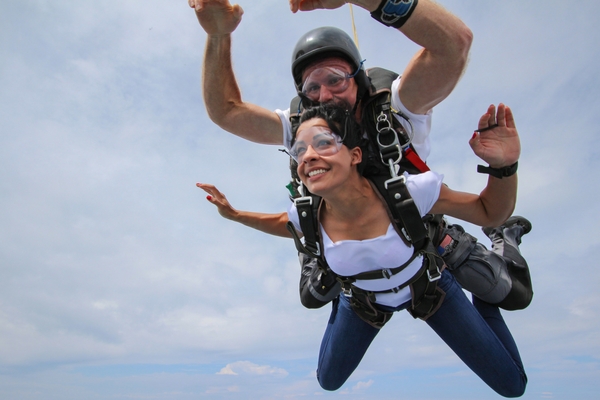
Real experiences from diverse skydivers help paint a complete picture of what to expect. Here are authentic accounts from various demographics.
First-Time Jumpers
Sarah, 28, Marketing Manager from Denver: “Everyone told me it wouldn’t feel like falling, but I didn’t believe them until I was in freefall. It felt like lying on an invisible trampoline made of wind. My face felt like it was melting off from the air pressure—totally weird but not painful. The best part? That quiet canopy ride where I could actually think and process what just happened. I cried happy tears.”
Marcus, 45, High School Teacher from Austin: “As someone terrified of heights, I almost backed out three times. But the actual freefall? Not scary at all. It was so surreal that my brain couldn’t process it as ‘high up.’ It felt more like virtual reality—like it wasn’t really happening to me. I spent the whole canopy ride laughing at myself for worrying so much.”
Jennifer, 62, Retired Nurse from Florida: “I did this for my 60th birthday, two years late because of COVID. People warned me about the cold and wind, but what struck me most was how peaceful it felt once the parachute opened. I kept thinking, ‘This is what birds experience.’ My only regret is not doing it 30 years earlier.”
Experienced Skydivers on Their First Jump
Ryan, Licensed Skydiver with 200+ Jumps: “My first tandem was at 18, and honestly, it was terrifying. Not during—before. The ascent felt like an eternity. But the moment we exited, something clicked. That first breath of freefall air, that feeling of the wind holding you up… I knew immediately I’d get certified. Now, after 200 jumps, I can say your first one is the most memorable because everything is new. You’ll never recapture that specific feeling of novelty, which makes it precious.”
People Who Were Skeptical
David, 51, Accountant from Chicago: “My wife bought me a jump for my 50th. I thought it was a terrible idea—I’m not an ‘adventure person.’ But she’d already paid, so I went. The experience completely defied my expectations. It wasn’t this wild, out-of-control experience. It was calculated, professional, and yes, thrilling. The instructors made me feel totally safe. What skydiving felt like for me was proving to myself that I could do hard things.”
Melissa, 33, Software Developer from Seattle: “I’m very analytical and had researched every possible thing that could go wrong. My brain was screaming ‘this is stupid’ during the entire ascent. Then we jumped and… my brain just shut off. Pure sensory experience. No thinking, just feeling. For someone who lives in their head, that hour of just existing in my body was incredible. I tell people it feels like a forced meditation—you can’t think about your email or your to-do list when you’re falling at 120 mph.”
Comparisons from People Who’ve Done Similar Activities
Alex, 29, Adventure Sports Enthusiast: “I’ve done bungee jumping, parasailing, hang gliding, and skydiving. They’re all different. Bungee is terror followed by bouncing—pure adrenaline spike. Parasailing is relaxing—barely an adventure sport. Hang gliding gives you some control and lasts longer. Skydiving is the perfect middle: intense enough to feel significant, short enough that fear doesn’t build, and spectacular views throughout. If I could only do one activity for the rest of my life, it would be skydiving.”
People with Physical Considerations
Tom, 38, Wheelchair User (Paraplegic): “I wasn’t sure if skydiving was possible for me, but adaptive skydiving programs make it work. The physical sensation was obviously different than able-bodied jumpers—I couldn’t feel my legs flutter in the wind—but the wind pressure, the view, the adrenaline… all the same. What skydiving felt like for me was freedom from my chair, from my limitations. For those five minutes, my disability didn’t define me.”
Patricia, 67, with Moderate Arthritis: “I worried about the harness aggravating my joints and the cold affecting my hands. The instructors worked with me to find comfortable positioning, and I wore compression gloves. Was there some discomfort? Yes, minor. Was it worth it? Absolutely. Don’t let age or minor physical limitations stop you—just communicate with your instructors.”
These diverse accounts reveal common threads: surprise at how different freefall feels from expectations, appreciation for the professionalism and safety, and a sense of accomplishment that transcends demographics.
Common Myths About What Skydiving Feels Like
Misconceptions about skydiving sensations prevent many people from trying. Let’s address the most common myths with facts.
Myth #1: “Your Stomach Drops Like on a Roller Coaster”
Reality: This is the most common misconception. The stomach-drop sensation occurs when you experience sudden downward acceleration—your organs literally “lag behind” momentarily.
In skydiving, you’re moving at plane-speed (80-100 mph) when you exit and reach terminal velocity (120 mph) within seconds. This minimal acceleration means no stomach drop. Additionally, you’re horizontal (belly-down) rather than vertical, which further prevents the organ-displacement feeling.
Comparison: If roller coasters make you nauseous, that doesn’t mean skydiving will. Many people who hate roller coasters love skydiving because the sensations are completely different.
Myth #2: “You Can’t Breathe During Freefall”
Reality: You can absolutely breathe during freefall. The 120 mph wind requires breathing through your nose rather than mouth (breathing through your mouth can cause hyperventilation), but oxygen intake is completely normal.
First-timers often hold their breath initially from anxiety, which is why instructors remind you to breathe. Within 2-3 seconds, breathing normalizes and requires no conscious effort.
Safety Note: At 13,000-15,000 feet (typical jump altitude), oxygen levels are sufficient for normal activity. Supplemental oxygen is only required for jumps above 15,000 feet.
Myth #3: “Your Ears Will Hurt Terribly”
Reality: Ear pressure during skydiving is generally less problematic than commercial flights. The ascent is gradual (15-20 minutes), giving your ears time to equalize. During freefall, the rapid descent can create pressure, but it’s brief (45-60 seconds) and easily managed by yawning, swallowing, or using the Valsalva maneuver.
People with chronic ear problems should consult doctors beforehand, but 95%+ of skydivers experience minimal to no ear discomfort.
Recommended: The Mack’s Flightguard Airplane Ear Plugs help equalize pressure during both ascent and descent—popular among frequent skydivers.
Myth #4: “It’s So Fast You Can’t Even Process What’s Happening”
Reality: While the experience is intense, most people report being surprisingly aware during freefall. Time perception does alter—many skydivers describe the 45-second freefall as feeling like 2-3 minutes.
Your brain processes the experience in real-time, though memory formation can be affected by adrenaline. This is why video packages are valuable—they capture details you might not consciously remember.
Myth #5: “Landing Hurts and You’ll Definitely Get Injured”
Reality: Modern parachute technology and trained instructors make landings remarkably gentle. In tandem skydiving, you’ll likely slide on your bottom for landing—not painful, just ungraceful.
According to USPA statistics, injury rates for tandem students are approximately 0.003 per 1,000 jumps. When injuries do occur, they’re typically minor sprains or bruises, not serious trauma.
Proper Footwear Matters: The Merrell Moab 2 Hiking Shoes provide excellent ankle support and meet drop zone requirements—a smart investment that reduces any landing discomfort.
Myth #6: “You’ll Black Out from the Intensity”
Reality: Blacking out (losing consciousness) during skydiving is extremely rare in recreational jumping. It can occur in advanced maneuvers involving high G-forces, but standard tandem or solo jumps don’t generate sufficient force.
Some people do experience tunnel vision or temporary memory lapses due to adrenaline, but actual loss of consciousness is virtually nonexistent in properly conducted recreational skydiving.
Myth #7: “The Parachute Opening Feels Like Getting Hit by a Car”
Reality: Parachute deployment does create noticeable deceleration, but “hit by a car” is dramatic exaggeration. It feels more like someone firmly pulling you back—comparable to the sensation when a rollercoaster’s brakes engage.
Modern parachute designs deploy gradually (3-4 seconds) rather than instantly, spreading the deceleration force and creating a much smoother transition than older equipment.
Myth #8: “You’ll Be Too Scared to Enjoy It”
Reality: While nearly everyone experiences some pre-jump anxiety, the majority of first-time skydivers report actually enjoying the experience. The post-jump survey data from major US drop zones shows:
- 82% rate their enjoyment at 8/10 or higher
- 67% say fear was less than anticipated
- 91% say they’d recommend skydiving to friends
Fear and enjoyment aren’t mutually exclusive—many people find that pushing through fear enhances the sense of accomplishment and overall enjoyment.
How to Prepare for Your First Skydiving Experience
Proper preparation enhances what skydiving feels like by reducing anxiety and maximizing your ability to be present during the experience.
Physical Preparation
Health Requirements: Most drop zones require you to:
- Be at least 18 years old (some locations allow 16+ with parental consent)
- Weigh under 220-240 lbs (varies by drop zone due to equipment limitations)
- Sign medical waiver confirming no disqualifying conditions
- Be free from influence of alcohol or drugs
Disqualifying Medical Conditions:
- Uncontrolled high blood pressure
- Heart conditions requiring medication
- Epilepsy or seizure disorders
- Pregnancy
- Recent major surgeries (within 6-12 months)
- Severe osteoporosis
Fitness Level: You don’t need to be an athlete, but basic mobility helps. You should be able to:
- Climb into and out of small aircraft
- Hold your legs up for landing (with instructor assistance)
- Handle a moderate physical workout
Recommended Fitness Preparation: If you’re jumping in 2-4 weeks, consider:
- Core strengthening exercises (planks, bridges)
- Neck strengthening (to hold your head up during freefall)
- Flexibility work (to comfortably achieve the arch position)
The TRX Home2 Suspension Trainer provides excellent core and upper body preparation—popular among regular skydivers for maintaining jumping fitness.
Mental Preparation
Week Before Your Jump:
- Research your drop zone: Read reviews, understand their safety record
- Watch educational videos: See what the experience looks like (not just highlight reels)
- Avoid excessive disaster content: Don’t watch skydiving accident videos—they’re not representative
- Visualization practice: Mentally rehearse the experience 2-3 times
Day Before Your Jump:
- Get good sleep: 7-8 hours improves cognitive function and reduces anxiety
- Moderate alcohol: Avoid excessive drinking (must be sober 24 hours before jump)
- Prepare clothing: Lay out what you’ll wear (covered in next section)
- Review paperwork: Complete online waivers if available to reduce day-of stress
Day of Your Jump:
- Eat normally: Light meal 2-3 hours before (avoid heavy, greasy food)
- Hydrate properly: Drink water but don’t overhydrate (bathroom access is limited)
- Arrive early: Give yourself 15-20 extra minutes to settle nerves
- Connect with instructor: Ask questions—good instructors welcome them
Anxiety Management Techniques:
Breathing Exercise (4-7-8 Technique):
- Inhale through nose for 4 counts
- Hold for 7 counts
- Exhale through mouth for 8 counts
- Repeat 3-4 times
This activates your parasympathetic nervous system, countering the fight-or-flight response.
Cognitive Reframing: Instead of “I’m scared I’ll die,” reframe as “I’m excited to try something new.” Research shows positive reframing reduces anxiety while maintaining healthy respect for the activity.
Trust the Numbers: Skydiving is statistically very safe—tandem skydiving has approximately 1 fatality per 500,000 jumps. You’re more likely to be injured driving to the drop zone than during the jump itself.
What to Wear
Proper clothing enhances comfort and safety. Here’s what experienced skydivers recommend:
Best Clothing Choices:
- Shirt: Form-fitting athletic shirt or light long-sleeve (avoid loose clothing)
- Pants: Athletic pants, jeans, or leggings (nothing loose or flowing)
- Shoes: Athletic shoes or hiking boots with ankle support—MUST be closed-toe and lace-up
- Undergarments: Sports bra for women (regular bras can be uncomfortable in harness)
- Layers: Dress for ground temperature plus one light layer (jumpsuits are provided)
Avoid:
- Sandals, flip-flops, or slip-on shoes
- Loose clothing that can flap or tangle
- Skirts or dresses
- Heavy jewelry (remove before jumping)
- Excessive makeup (wind will smear it)
Seasonal Considerations:
Summer Jumping:
- Light, breathable fabrics
- Sunglasses (many drop zones allow them—ask first)
- Sunscreen on exposed skin
- The Columbia PFG Shirts offer sun protection and comfort
Winter Jumping:
- Base layers (compression or thermal)
- Warm socks
- Gloves (often provided by drop zone)
- The Smartwool Merino Base Layers provide warmth without bulk
Hair Management:
- Long hair should be in low ponytail or braid (high ponytails interfere with helmet)
- Avoid buns (create pressure points under helmet)
- Hair ties that won’t blow away
Vision Correction:
- Contact lenses work perfectly (more secure than glasses)
- Glasses wearers should bring strap to secure them (the Croakies Sport Eyewear Retainer is drop-zone favorite)
- Some drop zones provide protective goggles over glasses
What to Bring
Essential Items:
- Government-issued ID (required for waiver)
- Payment method (most drop zones accept cards, but some require cash)
- Loose, comfortable shoes for after landing (you’ll remove your jumping shoes)
Recommended Items:
- Small backpack for storage (the Osprey Daylite fits lockers at most drop zones)
- Phone for photos (pre- and post-jump)
- Light snacks and water
- Change of clothes (you may be dusty/sweaty after)
- Positive attitude!
What to Leave at Home:
- Valuable jewelry
- Loose change (will fall out)
- Keys (leave in locked car or with friend)
- Anything you’d be upset about losing
Most drop zones provide lockers or secure storage, but it’s best to minimize valuables.
Best Skydiving Gear and Equipment for Comfort
While drop zones provide all essential safety equipment, certain personal items enhance your experience and comfort. Here are top-rated products popular among the US skydiving community.
Footwear
Proper footwear is non-negotiable—drop zones will refuse jumpers in inadequate shoes.
Top Pick: Salomon X Ultra 4 GTX Hiking Boots – $165
- Excellent ankle support prevents landing injuries
- Lightweight design (won’t feel clunky in freefall)
- Secure lacing system
- Comfortable for all-day wear
- Water-resistant for varied conditions
Budget Option: Merrell Moab 2 Vent – $110
- Proven comfort and support
- Breathable mesh for warm weather
- Meets all drop zone requirements
- Available in wide sizes
Why It Matters: Ankle injuries, though rare, typically occur during landing with inadequate footwear. Hiking boots provide the support needed for the sliding landing technique used in tandem skydiving.
Clothing and Layers
Cold Weather Base Layer: Smartwool Merino 250 Base Layer – $120
- Naturally temperature-regulating
- Wicks moisture while providing warmth
- No bulk under jumpsuit
- Odor-resistant for all-day comfort
Compression Support: Under Armour HeatGear Compression – $45
- Provides extra support during harness phase
- Reduces chafing from straps
- Moisture-wicking for comfort
- Men’s and women’s options available
Sun Protection: Columbia PFG Long Sleeve Shirt – $50
- UPF 50 sun protection
- Lightweight and breathable
- Quick-drying if you sweat
- Roll-up sleeves for versatility
Vision Protection and Correction
Sunglasses: Oakley Flak 2.0 XL – $180
- Secure fit during canopy ride
- Impact-resistant lenses
- Excellent peripheral vision
- Interchangeable lenses for different conditions
Glasses Retainer: Croakies Terra System – $18
- Keeps prescription glasses secure
- Adjustable for perfect fit
- Floats if dropped in water
- Comfortable for extended wear
Contact Lens Solution: Biotrue Multi-Purpose – $15
- Many skydivers prefer contacts for jumping
- Bring solution for post-jump comfort
- Contacts are more secure than glasses
Action Cameras and Documentation
While most drop zones offer video packages ($100-200), having your own camera provides additional angles and unlimited footage.
Premium: GoPro HERO12 Black – $399
- Excellent stabilization for freefall footage
- Wind noise reduction
- 5.3K video resolution
- Waterproof (great for various adventures)
Budget: DJI Osmo Action 3 – $299
- Comparable stabilization to GoPro
- Better battery life
- Quick-release mounting system
- Excellent low-light performance
Mouth Mount: GoPro Bite Mount + Floaty – $35
- Hands-free POV perspective
- Shows your face during freefall
- Must get drop zone approval before use
Important: Most drop zones prohibit first-time tandem jumpers from bringing personal cameras during the jump for safety reasons. However, you can use them before and after, and some locations allow certified jumpers to film your jump separately.
Health and Comfort
Pulse Oximeter: Innovo Deluxe Fingertip Pulse Oximeter – $28
- Monitor oxygen levels at altitude
- Track heart rate during anticipation phase
- Useful data for understanding your response
- Compact and portable
Motion Sickness: Sea-Band Acupressure Wristbands – $12
- Drug-free nausea prevention
- Effective for some during ascent
- Reusable for future adventures
- No side effects
Ear Protection: Mack’s Flightguard Ear Plugs – $8
- Reduce wind noise during freefall
- Allow normal conversation
- Help pressure equalization
- Comfortable for extended wear
Hand Warmth: HotHands Hand Warmers – $18 (10-pack)
- Essential for cold weather jumping
- Last 8-10 hours
- Air-activated, disposable
- Popular at winter drop zones
Storage and Transport
Day Pack: Osprey Daylite Plus – $65
- Perfect size for drop zone lockers
- Durable and weather-resistant
- Comfortable carry
- Lifetime guarantee
Waterproof Bag: Earth Pak Waterproof Dry Bag – $25
- Protects electronics and valuables
- Rolls down for compact storage
- Multiple size options
- Floating design prevents loss
Gear Tip: Create a “jump day kit” that’s always packed with essentials: proper footwear, appropriate clothing, glasses strap, sunscreen, and basic first aid. This reduces pre-jump stress and ensures you never forget critical items.
Training and Preparation Equipment
For those considering pursuing their skydiving license:
At-Home Training: TRX HOME2 System – $170
- Core strength critical for skydiving
- Portable for travel
- Full-body workouts
- Mimics body positions used in skydiving
Neck Strength: Yes4All Adjustable Neck Harness – $25
- Builds neck stability for freefall arch
- Prevents soreness after jumping
- Progressive resistance
- Compact storage
Flexibility: Manduka PRO Yoga Mat – $120
- Premium quality for serious practice
- Flexibility improves body position control
- Non-slip surface
- Lifetime guarantee
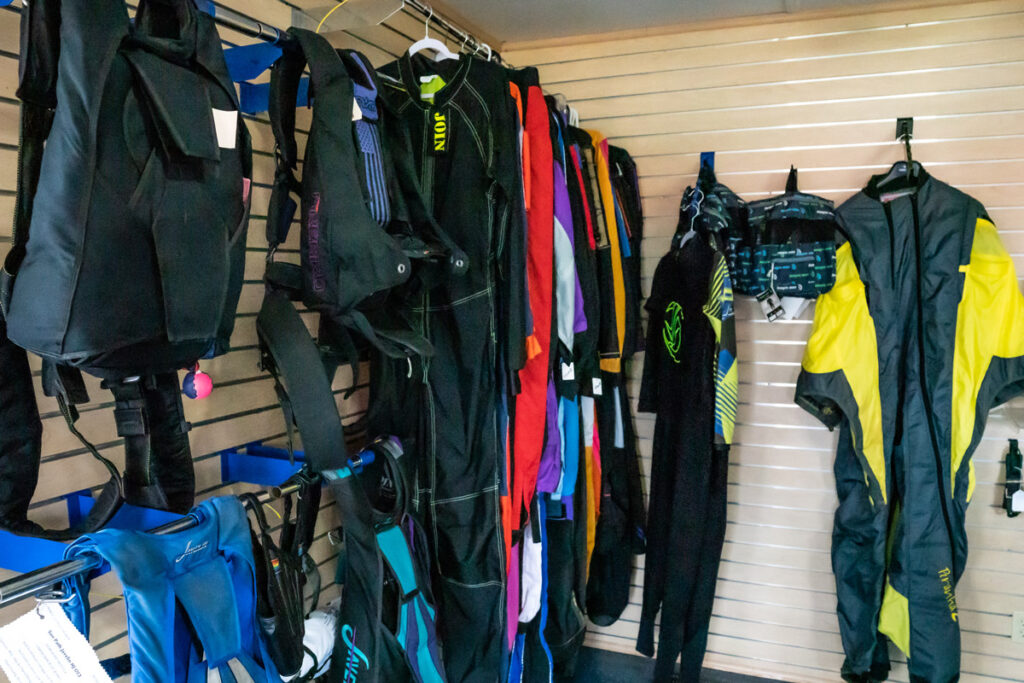
Choosing the Right Skydiving Center in the USA
The drop zone you choose significantly impacts what skydiving feels like. Here’s how to select the best facility for your first jump.
Safety Certification and Standards
USPA Membership: The United States Parachute Association (USPA) is the national governing body. Always choose USPA member drop zones, which adhere to:
- Strict safety protocols
- Regular equipment inspections
- Instructor certification requirements
- Safety reporting standards
Group Membership: Look for drop zones that are members of:
- USPA (United States Parachute Association)
- Better Business Bureau
- Local tourism boards
Insurance Verification: Reputable drop zones carry comprehensive liability insurance. While you’ll sign a waiver, insured facilities demonstrate commitment to safety standards.
Instructor Qualifications
Tandem Instructor Requirements:
- Minimum 500 jumps
- USPA Tandem Instructor rating
- Current certification (renewed every 3 years)
- First aid/CPR certified
Questions to Ask:
- How many jumps does my instructor have?
- How long has this drop zone been operating?
- What is your safety record?
- When was your equipment last inspected?
Experienced drop zones will happily answer these questions—evasiveness is a red flag.
Equipment Quality and Maintenance
Modern Equipment Indicators:
- Parachutes manufactured within last 10-15 years
- Regular inspection logs available for review
- Reserve parachutes inspected/repacked every 180 days
- AAD (Automatic Activation Device) on every rig
Fleet Quality: Well-maintained drop zones have:
- Clean, well-maintained aircraft
- Current FAA inspection certifications
- Backup aircraft available
- Professional pilots (not student pilots)
Drop Zone Location and Scenery
While safety comes first, location impacts your experience significantly. Consider what backdrop you want for your jump:
Top Scenic US Drop Zones:
West Coast:
- Skydive San Diego (California): Ocean views, perfect weather
- Skydive Monterey Bay (California): Coastal scenery, marine wildlife
- Skydive Oregon (Oregon): Mt. Hood and Cascade Range views
East Coast:
- Skydive Coastal Carolinas (North Carolina): Beach landing
- Skydive New England (Rhode Island): Rhode Island Sound views
- Skydive the Ranch (New York): Hudson Valley landscapes
Mountain States:
- Mile-Hi Skydiving (Colorado): Front Range mountain views
- Skydive Moab (Utah): Red rock canyons and arches
- Skydive Montana (Montana): Rocky Mountain panoramas
Midwest:
- Chicagoland Skydiving Center (Illinois): City skyline views
- Skydive Twin Cities (Wisconsin): Great Lakes region
- Skydive Kansas City (Missouri): River valleys and farmland
Southwest:
- Skydive Arizona (Arizona): Desert landscapes, year-round jumping
- Skydive Albuquerque (New Mexico): Sandia Mountains backdrop
- Skydive Spaceland Dallas (Texas): Large, professional facility
Southeast:
- Skydive City (Florida): Multiple aircraft, high-volume operation
- Skydive Atlanta (Georgia): Accessible from major metro area
- Skydive Alabama (Alabama): Southern hospitality, great weather
Hawaii:
- Pacific Skydiving Center (Oahu): North Shore beaches
- Skydive Hawaii (Oahu): Multiple daily jumps
- Maui Skydive (Maui): Volcanic and ocean views
Facility Amenities and Customer Experience
Important Amenities:
- Clean restrooms: Basic but important comfort factor
- Comfortable waiting area: You may wait 1-2 hours for your load
- Food/drinks available: On-site or nearby options
- Secure storage: Lockers or safe area for belongings
- Photo/video options: Professional packages and viewing areas
Customer Service Indicators:
- Responsive to phone calls and emails
- Clear pricing structure (no hidden fees)
- Detailed pre-jump communication
- Answers questions patiently
- Professional staff appearance and demeanor
Pricing Transparency
Typical Tandem Jump Pricing (USA):
- Budget Range: $200-250 (smaller drop zones, basic package)
- Standard Range: $250-320 (most USPA facilities)
- Premium Range: $350-450 (scenic locations, exceptional service)
Video Package Add-ons:
- Basic: $80-120 (instructor’s helmet cam)
- Premium: $150-200 (additional cameraman, drone footage)
- Ultimate: $250-300 (multiple angles, professional editing)
Watch for Hidden Costs:
- Reservation fees
- Gear rental (should be included)
- Weekend surcharges
- Weight surcharges
- Rush processing fees
Reputable drop zones disclose all costs upfront—no surprises at payment time.
Reviews and Reputation
Where to Research:
- Google Reviews: Look for 4.5+ stars with substantial review volume
- USPA Incident Reports: Public record of safety issues
- Facebook Community Groups: Current customer experiences
- TripAdvisor: Travel-focused perspectives
- Yelp: Customer service insights
Red Flags in Reviews:
- Multiple safety complaints
- Equipment maintenance concerns
- Aggressive sales tactics
- Rude or dismissive staff
- Chronic scheduling/organizational issues
Green Flags in Reviews:
- Detailed safety briefings mentioned
- Patient, encouraging instructors
- Smooth operational flow
- Clear communication
- Post-jump support and encouragement
Booking Tips
Best Practices:
- Book direct: Contact drop zone directly rather than third-party booking sites
- Ask about weather policies: Understand refund/rescheduling procedures
- Confirm what’s included: Video, photos, t-shirt, certificate, etc.
- Request morning slots: Better weather, calmer winds typically
- Bring friends: Group discounts often available (4+ people)
Timing Considerations:
- Weekdays: Less crowded, more personal attention
- Weekends: Busier but more energy/excitement
- Early morning: Calmest winds, best visibility
- Afternoon: Warmer temperatures, but potentially windier
Seasonal Factors:
- Spring (March-May): Moderate temperatures, variable weather
- Summer (June-August): Peak season, warm weather, busy
- Fall (September-November): Excellent conditions, beautiful foliage, less crowded
- Winter (December-February): Limited operations in northern states, great in South/Southwest
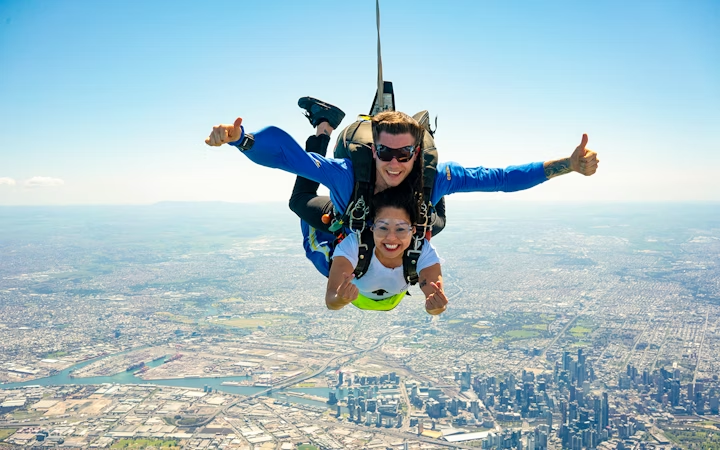
Frequently Asked Questions
Q: Does skydiving feel like falling or flying?
A: Skydiving feels like flying rather than falling. Unlike roller coasters or bungee jumping, there’s no stomach-drop sensation because you reach terminal velocity (120 mph) almost instantly after exiting the aircraft. The constant-speed descent through air creates the sensation of floating on a powerful cushion rather than falling. Most skydivers describe it as “lying on an invisible air mattress” moving at high speed. Your inner ear, which detects falling through acceleration changes, doesn’t register the typical falling sensation because you’re moving at constant velocity.
Q: Can you breathe normally during freefall?
A: Yes, you can breathe completely normally during freefall, though the 120 mph wind requires breathing through your nose rather than your mouth. Breathing through your mouth can cause hyperventilation due to the air pressure. Many first-time jumpers hold their breath initially from anxiety, which is why instructors remind you to breathe during the first few seconds. Once you relax and establish nose-breathing, oxygen intake is normal and effortless. At typical jump altitudes (13,000-15,000 feet), oxygen levels are sufficient for comfortable breathing throughout the entire experience.
Q: Will my stomach drop like on a roller coaster?
A: No, skydiving does not create the stomach-drop sensation common on roller coasters. The stomach-drop feeling occurs when you experience sudden downward acceleration—your internal organs briefly “lag behind” creating that queasy sensation. In skydiving, you exit the aircraft already traveling at 80-100 mph and reach terminal velocity (120 mph) within 2-3 seconds. This minimal acceleration, combined with the horizontal (belly-down) body position, prevents the organ-displacement sensation entirely. People who hate roller coasters often love skydiving precisely because the sensations are completely different.
Q: How cold is it during a skydive?
A: Temperature during skydiving varies by altitude and season. At typical jump altitudes (13,000-15,000 feet), it’s approximately 20-30°F colder than ground level. Combined with 120 mph wind, the wind-chill effect creates feels-like temperatures of 0-20°F during freefall. However, freefall only lasts 45-60 seconds, which isn’t enough time for your core temperature to drop significantly. Most people report their face and hands feel cold, but the adrenaline rush keeps you from being uncomfortable. During the 5-7 minute canopy descent, you’ll gradually warm up as you descend to lower altitude.
Q: Does the parachute opening hurt?
A: Modern parachute deployment creates noticeable deceleration but shouldn’t hurt. You’ll feel a firm pull on your harness as your speed drops from 120 mph to 15-20 mph over 3-4 seconds. The sensation is similar to firm brakes engaging—noticeable but not painful. The harness distributes force across your thighs, chest, and shoulders, preventing concentrated pressure points. If you experience actual pain during deployment, alert your instructor immediately, as this may indicate improper harness adjustment. With properly fitted equipment and correct body position, deployment feels more like a transition than an impact.
Q: What if I’m afraid of heights—can I still skydive?
A: Many people with fear of heights successfully skydive because the sensation differs dramatically from standing on buildings or cliffs. At 10,000+ feet, your brain lacks immediate visual reference points for height, so the typical acrophobia response doesn’t trigger. The experience resembles looking at a map more than looking down from a ladder. Research shows that approximately 40% of first-time skydivers have some fear of heights, and 85% of them report the jump being less scary than anticipated. However, if you have severe acrophobia that affects daily life, consider starting with indoor skydiving (wind tunnels) to gauge your comfort level before investing in an expensive full skydive.
Q: How long does the freefall feeling last?
A: Freefall in a typical tandem skydive lasts 45-60 seconds, depending on exit altitude. Jumps from 13,000 feet provide approximately 45 seconds of freefall, while 15,000-foot jumps offer 60 seconds. However, time perception during skydiving is distorted—most first-time jumpers report the freefall feeling much longer than actual elapsed time, often describing it as 2-3 minutes. After parachute deployment at 5,000-6,000 feet, you’ll have an additional 5-7 minutes of canopy flight before landing. The total time from exit to landing is typically 8-10 minutes.
Q: What does landing feel like?
A: Landing in tandem skydiving typically involves sliding on your bottom rather than standing—it’s ungraceful but not painful. Your instructor will tell you to lift your legs just before landing, and they’ll absorb most of the impact with their legs while you slide together for a few feet. The sensation is similar to sliding into a base in baseball—you might get slightly dusty but shouldn’t experience pain. Solo skydivers learn to land on their feet, which feels like hopping down from a 2-3 foot height when done correctly. With modern parachute technology and professional instructors, landing injuries are extremely rare—occurring in less than 0.003% of tandem jumps.
Q: Can overweight people skydive?
A: Weight limits for tandem skydiving typically range from 220-240 pounds depending on the drop zone and specific equipment. These limits exist due to parachute engineering rather than discrimination—tandem parachute systems are rated for combined student and instructor weight, and exceeding limits compromises safety margins. Some drop zones accommodate higher weights with surcharges and larger parachute systems (up to 260 pounds). Height-to-weight ratio matters more than weight alone—well-distributed weight on a taller frame poses less concern than concentrated weight on a shorter frame. If you’re near the weight limit, contact your chosen drop zone directly to discuss options before making reservations.
Q: Is skydiving dangerous compared to other extreme sports?
A: Modern recreational skydiving is statistically safer than many common activities. According to USPA 2025 statistics, the fatality rate for tandem skydiving is approximately 0.002 per 1,000 jumps (1 death per 500,000 tandem jumps). By comparison, you’re statistically more likely to be injured driving to the drop zone than during the jump itself. Skydiving is safer than horseback riding (1 injury per 350 rides), motorcycling (1 death per 1,562 registered vehicles annually), and even some collegiate sports. The sport has become progressively safer over decades through equipment innovations, training improvements, and stricter safety protocols. Choosing USPA-certified drop zones with modern equipment further reduces already-low risk.
Q: How much does skydiving cost in the USA?
A: Tandem skydiving in the USA typically costs $200-450 depending on location, altitude, and included services. Budget drop zones in less scenic locations charge $200-250, standard facilities in most states charge $250-320, and premium locations with exceptional scenery or services charge $350-450. Video packages add $80-200 to the base price. Additional costs may include gear rental (should be included but verify), weekend surcharges, weight surcharges over 220 lbs, and rush processing fees. Group discounts (typically 4+ people) can reduce per-person costs by $20-50. All-inclusive packages including video, photos, t-shirt, and certificate typically run $350-500 total.
Q: Do I need any training before skydiving?
A: Tandem skydiving requires minimal training—typically 15-30 minutes of ground instruction before your jump. Your instructor will teach you: proper body position (arching during freefall), hand placement, landing procedures (lifting legs), and emergency procedures. You don’t need to pack parachutes, check equipment, or make any technical decisions—your instructor handles all complex aspects. If you want to pursue solo skydiving, you’ll complete an Accelerated Freefall (AFF) course requiring 7-10 training jumps and 25 total jumps for certification. For your first tandem experience, simply show up with an open mind and willingness to follow instructions—no prior experience or special skills required.
Q: What happens if I panic during the jump?
A: Professional instructors are trained to manage panic situations safely and effectively. If you panic before exiting, you can absolutely refuse to jump—no ethical operator will force anyone out of an aircraft. If you panic during freefall, your instructor maintains complete control in tandem skydiving—you’re securely harnessed and they’ll manage all technical aspects regardless of your reaction. Most people who feel intense fear before jumping report that panic subsides within 2-3 seconds of freefall as sensory overload replaces fear. Refund policies vary: some drop zones offer full refunds for pre-boarding cancellation, partial refunds for in-aircraft cancellation, and no refunds once you’re at the door. Most first-time jumpers who push through initial fear describe the experience as transformative rather than traumatic.
Q: Can I skydive if I wear glasses or contacts?
A: Yes, both glasses and contact lenses work for skydiving, though each has considerations. Contact lenses are generally preferred because they’re more secure and provide better peripheral vision—approximately 95% of contact wearers have no issues during jumping. If you wear glasses, bring a secure strap (like Croakies) to prevent them from falling off during freefall. Many drop zones provide protective goggles that fit over glasses. Glasses wearers should inform their instructor during ground training so appropriate goggles can be provided. Avoid wearing new, expensive, or irreplaceable glasses for your first jump—there’s a small risk of loss despite precautions. Have backup vision correction available for after landing.
Q: What’s the best time of year to skydive?
A: The best skydiving season varies by US region. Generally, late spring through early fall (May-October) offers optimal conditions nationwide with warm temperatures, calm winds, and high visibility. Summer (June-August) is peak season but can bring afternoon thunderstorms requiring morning jumps. Fall (September-November) provides excellent conditions with beautiful foliage, comfortable temperatures, and less crowding. Winter skydiving is limited in northern states but excellent in the South, Southwest (Arizona, Texas), and Florida where year-round jumping occurs. For first-timers, May, September, or October typically offer the best combination of weather reliability, comfortable temperatures, and less crowded drop zones.
Q: How high up do you go when skydiving?
A: Tandem skydives typically occur from 13,000-15,000 feet altitude above ground level. At 13,000 feet, you’ll experience approximately 45 seconds of freefall before parachute deployment at 5,000 feet. Higher altitude jumps from 15,000-18,000 feet provide 60-75 seconds of freefall and better views. Some specialty jumps reach 18,000+ feet but require supplemental oxygen. Commercial airliners cruise at 30,000-40,000 feet for comparison, so you’ll be at roughly half that altitude. From 13,000 feet, visibility extends 30-50 miles in clear conditions, allowing you to see entire cities, coastlines, or mountain ranges in a single view.
Conclusion
Understanding what skydiving feels like transforms it from an abstract concept into an achievable adventure. The reality defies most expectations: instead of terrifying freefall, you’ll experience powerful flying sensations; instead of stomach-dropping chaos, you’ll find surprisingly peaceful moments of clarity; instead of painful impact, you’ll land with a slide and a smile.
The key insights about what skydiving feels like:
- It feels like flying, not falling – The powerful air pressure at 120 mph creates floating sensations rather than the stomach-drop experience people expect
- Fear is normal but manageable – 87% of first-timers experience pre-jump anxiety that largely dissipates during freefall
- Sensory overload is intense but positive – Your brain processes an overwhelming amount of visual, physical, and emotional information in 60 seconds
- The experience exceeds expectations – 82% of first-time skydivers rate their enjoyment at 8/10 or higher, often surpassing what they imagined
- Physical sensation is unique – No other activity replicates the specific combination of wind pressure, temperature, speed, and perspective that skydiving provides
As we progress through 2026, skydiving continues becoming more accessible, safer, and better documented. Modern equipment, professional training, and comprehensive safety protocols have made this once-extreme activity available to nearly anyone in reasonable health. Whether you’re 18 or 80, athletic or sedentary, thrill-seeker or cautious planner, there’s a path to experiencing what skydiving feels like firsthand.
The question isn’t whether skydiving will live up to the hype—statistics and personal accounts confirm it will. The question is whether you’ll take the leap to discover what thousands describe as one of life’s most transformative experiences. Your body will feel the wind, your mind will process the impossible, and your spirit will remember the moment you proved to yourself that you’re capable of more than you imagined.
Ready to experience what skydiving feels like beyond words? Start by researching USPA-certified drop zones in your area using the guidance in this article, contact them to discuss your questions, and book your jump. The most memorable day of your life is waiting 13,000 feet above ground—all you need to do is reach for it.
Related Reading: [My First Skydiving Experience] | [skydive accident dubai] | [Skydiving Bucket List Destinations]