
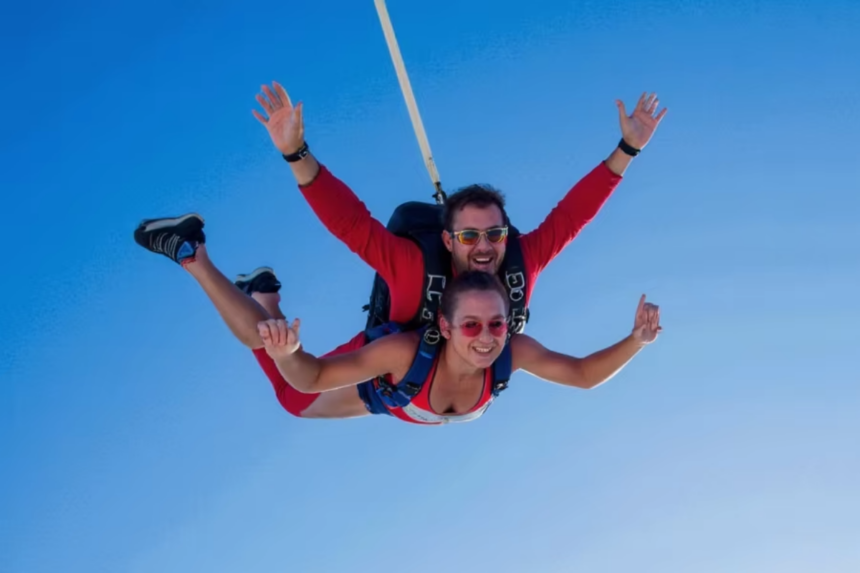
My hands were shaking uncontrollably. Not from the cold morning air, but from pure, unfiltered fear. I was about to jump out of a perfectly good airplane at 13,000 feet, and the only thing running through my mind was a question that had kept me awake for three nights straight: how many skydiving deaths per year actually happen?
- Why Everyone Gets Skydiving Death Statistics Wrong
- The Secret About First-Time Jumpers That Changes Everything
- What Nobody Tells You About Who Actually Gets Hurt
- The Technology Revolution That Made Modern Skydiving Incredibly Safe
- The Real Numbers That Should Actually Concern You
- What Actually Causes the Accidents That Do Happen
- How the Professionals Keep You Safe Without You Even Knowing
- The Training That Happens Before You Ever Leave the Ground
- The Equipment That Stands Between You and Danger
- What the First 60 Seconds of Freefall Actually Feel Like
- The Five Minutes Under Canopy That Nobody Talks About
- The Questions You’re Afraid to Ask But Really Need Answered
- How to Choose a Dropzone That Won’t Cut Corners
- The Life-Changing Impact of That First Jump
- Frequently Asked Questions
- How many people die from skydiving each year?
- Is your first skydive the most dangerous?
- What are the odds of dying skydiving tandem?
- Has anyone survived a skydiving accident without a parachute?
- What is the most common cause of skydiving deaths?
- Can you breathe while skydiving?
- Do parachutes ever not open?
- How safe is skydiving compared to driving?
- At what age can you no longer skydive?
- What should I know before my first skydive?
- Your Journey Starts with a Decision
That was five years ago. Today, I’m writing this article after completing over 200 jumps, and I wish someone had told me then what I’m about to tell you now. The truth about skydiving deaths isn’t what you think. In fact, the statistics might shock you more than the jump itself.
Let me take you on a journey through the real numbers, the hidden truths, and the surprising facts that nobody talks about when they discuss skydiving safety. What you’re about to read might completely change your perspective on one of the most misunderstood adventure sports in the world.
Why Everyone Gets Skydiving Death Statistics Wrong
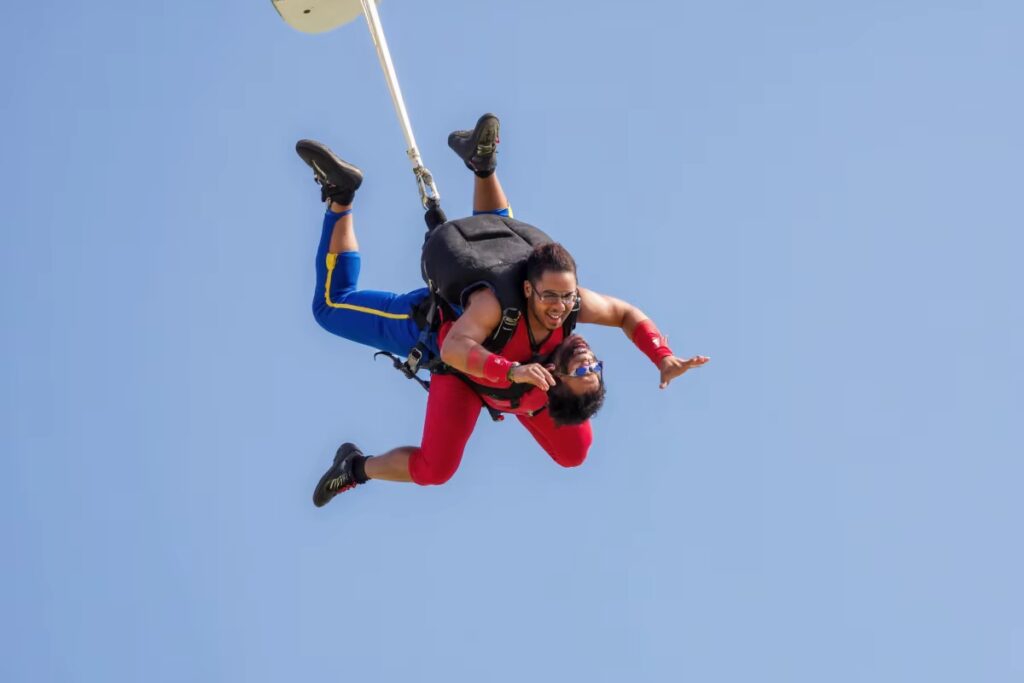
Here’s something that drives me absolutely crazy. Almost everyone I meet has completely wrong ideas about how dangerous skydiving actually is. They’ve watched too many movies, heard too many exaggerated stories, or let their imagination run wild with worst-case scenarios.
The reality is far different from what people imagine. According to the United States Parachute Association, which meticulously tracks every single jump made at member dropzones across America, we’re looking at roughly 3.5 to 4 million skydives performed every year in the United States alone. Out of these millions of jumps, the number of fatal accidents typically ranges between 10 and 21 annually.
Stop for a second and think about those numbers. We’re talking about millions of jumps. Millions of people successfully floating back down to Earth with huge smiles on their faces. And only a handful of tragic accidents among all those experiences.
When you calculate the actual fatality rate, you get approximately 0.39 deaths per 100,000 jumps. Let me put that in perspective for you. That means if you attended a sold-out football stadium with 100,000 people, and each person represented one skydive, statistically less than one person in that entire stadium would experience a fatal accident.
Your chances of completing a skydive safely are 99.9996 percent. Think about that number for a moment. That’s not just good odds. That’s extraordinarily high safety for any activity that gets your adrenaline pumping.
But here’s where it gets even more interesting, and this is the part that most articles about skydiving deaths completely miss. Those statistics include all types of skydiving. They count experienced solo jumpers doing crazy advanced maneuvers. They count professional skydivers pushing the absolute limits of the sport. They count everything.
The Secret About First-Time Jumpers That Changes Everything
When I finally worked up the courage to book my first jump, I spent hours researching statistics. I read accident reports until my eyes hurt. I watched every safety video I could find. And then I discovered something that completely changed my perspective.
Tandem skydiving, which is what first-timers do, has an even better safety record than the overall statistics. We’re talking about approximately one fatality per 500,000 tandem jumps. Let that sink in. Five hundred thousand jumps for every single fatal accident involving a tandem student.
Do you know what those odds mean in practical terms? You’re literally more likely to be struck by lightning. You’re more likely to be seriously injured slipping in your bathtub. You’re significantly more likely to have a fatal car accident on your way to the dropzone than you are to have a fatal skydiving accident during your tandem jump.
I remember the moment this really clicked for me. I was sitting in the training room, and my instructor told me something I’ll never forget. He said, “You know what the most dangerous part of your skydiving experience is? The drive here on the highway.”
He wasn’t joking. According to national safety statistics compiled by the National Safety Council, motor vehicle accidents claim over 40,000 lives every single year in the United States. That’s more than 100 people dying in car crashes every single day. Compare that to the handful of skydiving fatalities per year, and suddenly the perspective shifts dramatically.
The car vs skydiving death statistics risk comparison reveals something most people never realize. The everyday activity we don’t think twice about is statistically far more dangerous than the extreme sport that terrifies us.
What Nobody Tells You About Who Actually Gets Hurt
This next part is going to surprise you, and it’s the key to understanding skydiving safety. When I started digging into the actual accident reports, I discovered something that completely contradicted everything I expected.
The people dying in skydiving accidents aren’t beginners. They’re not first-time jumpers who don’t know what they’re doing. They’re experienced skydivers. We’re talking about people with hundreds, sometimes thousands of jumps under their belt.
I met a guy named Jake at my dropzone who had over 2,000 jumps. He told me something brutally honest. He said the danger doesn’t come from not knowing what you’re doing. The danger comes from getting so comfortable that you start pushing boundaries, attempting advanced maneuvers, and taking calculated risks that occasionally don’t work out.
When safety investigators analyze skydiving fatalities, clear patterns emerge in the data. Many accidents involve experienced jumpers performing something called swooping, which means executing high-speed landing approaches. Others involve wingsuit flying, canopy formations, or other advanced techniques that require split-second timing and expert-level judgment.
These aren’t people making mistakes because they lack knowledge. These are skilled athletes pushing the limits of human flight, similar to professional motorsports drivers or extreme mountain climbers. They understand the risks they’re taking, and they’ve made informed decisions to pursue the cutting edge of the sport.
For someone making a simple tandem jump with a certified instructor, none of these risk factors apply. You won’t be swooping. You won’t be flying a wingsuit. You won’t be attempting any advanced maneuvers whatsoever. You’ll be doing exactly what millions of other first-time jumpers have done safely before you.
Think of it this way. Professional motorcycle racers occasionally crash at 200 miles per hour on the track. But that doesn’t mean your Sunday afternoon motorcycle ride on regular roads at normal speeds carries the same risk. The activity might look similar from the outside, but the actual risk profile is completely different.
The Technology Revolution That Made Modern Skydiving Incredibly Safe
Let me tell you about the moment I truly understood how safe modern skydiving has become. I was talking with a veteran skydiver who made his first jump back in the 1980s. He pulled out an old photo of himself with equipment that looked like something from a museum.
He explained that the gear he jumped with decades ago bears almost no resemblance to what we use today. The advances in technology have been so dramatic that modern skydiving is essentially a different sport in terms of safety.
The most important innovation is something called an Automatic Activation Device. This little electronic marvel sits inside your parachute system and constantly monitors your altitude and descent rate. It’s measuring your position hundreds of times every second, watching and waiting.
If something goes terribly wrong, if you become unconscious, if you experience a medical emergency, if you somehow lose awareness during freefall, this device will save your life. At a preset altitude, if it detects you’re still falling fast, it automatically fires your reserve parachute. No human intervention needed. No decision required. It just works.
I asked my instructor how often these devices actually fire. He told me they’ve saved countless lives over the decades they’ve been in use. They’re the backup to the backup, the last line of defense that ensures a parachute will open even in the worst-case scenario.
But the technology goes way beyond just automatic activation devices. Modern parachutes themselves are engineering marvels. They’re designed to open reliably in almost any condition. They’re built from materials that are incredibly strong yet lightweight. They have features that help prevent common problems like line twists.
The main parachutes used for tandem jumping are specifically designed to carry two people comfortably while remaining easy to control. They have excellent glide characteristics, meaning they can travel significant horizontal distances. This gives instructors plenty of options for choosing the safest landing area.
GPS technology has transformed how dropzones make decisions about when it’s safe to jump. Instructors can check real-time wind speeds at different altitudes. They can monitor approaching weather systems. They can track conditions throughout the day and make informed decisions based on actual data rather than guesswork.
Weather monitoring systems alert dropzones to dangerous conditions like thunderstorms, high winds, or low cloud cover. Professional operations use this technology to ensure they only conduct jumps when conditions are ideal. If Mother Nature isn’t cooperating, they simply don’t jump, no matter how many disappointed customers they might have.
Training methods have evolved dramatically too. High-quality cameras allow instructors to review every student’s performance. Computer simulations let people practice emergency procedures in a completely safe environment. The quality of instruction has improved exponentially as teaching methods have been refined over decades.
The Real Numbers That Should Actually Concern You
I’m going to share something with you that completely changed how I think about risk in my everyday life. After I made my first skydive and got hooked on the sport, I started looking at statistics for all kinds of activities. What I discovered was genuinely eye-opening.
According to data compiled from national safety organizations, you face greater statistical risk during routine daily activities than you do during a tandem skydive. Let me give you some specific examples that put this in perspective.
The lifetime odds of dying in a motor vehicle accident are one in 107. For drowning, they’re one in 1,043. For a bicycle accident, they’re one in 4,047. For choking on food, they’re one in 2,696. Compare all of these to the one in 500,000 odds for a single tandem skydive.
You’re more likely to die from falling down stairs in your own home than you are during a tandem skydive. You’re more likely to be fatally injured while playing recreational sports. You’re more likely to have a fatal accident while hiking or camping.
The skydiving deaths per year worldwide statistics reveal something profound about human psychology and risk perception. We’re terrible at accurately assessing danger. We fear unfamiliar activities while ignoring much larger risks we encounter daily.
I remember having this conversation with my grandmother after my first jump. She was terrified when I told her I was going skydiving, but she never worried about me driving on the highway. When I showed her the actual statistics, she sat in stunned silence for a solid minute before saying, “That can’t be right. That just can’t be right.”
But it is right. The numbers don’t lie. Your daily commute poses significantly more statistical risk than a tandem skydive. Your weekend bicycle ride carries higher odds of serious injury. Even your shower, where thousands of people slip and fall every year, statistically presents more danger.
This doesn’t mean these activities are terribly dangerous or that you should stop doing them. It simply illustrates that we’ve normalized certain risks while being disproportionately afraid of others. The unfamiliarity of jumping from an airplane makes it feel more dangerous than it actually is.
What Actually Causes the Accidents That Do Happen
I think it’s important to be honest and transparent about what actually causes skydiving accidents when they do occur. Understanding the real risks helps explain why proper procedures are so effective at preventing tragedies, and why following your instructor’s guidance is so important.
Poor decision-making is the leading factor in most skydiving accidents. This usually involves experienced jumpers choosing to jump in questionable weather conditions, attempting maneuvers beyond their skill level, or ignoring established safety procedures. The key point here is that these are decisions made by independent jumpers operating on their own, not students following instructor guidance.
I witnessed this firsthand at my home dropzone. An experienced jumper wanted to do one more load even though winds were picking up beyond recommended limits. The manifest refused to put him on the plane. He was frustrated and argued for ten minutes, but the dropzone held firm. That’s the kind of conservative decision-making that prevents accidents.
Canopy collisions represent another category of accidents. These happen when skydivers come too close together under their open parachutes, usually during landing approaches. Dropzones teach clear traffic patterns and separation requirements to prevent this. Again, this primarily affects solo jumpers navigating independently, not tandem pairs where the instructor controls everything.
Low turns during landing cause some accidents among experienced jumpers. This involves making aggressive turns close to the ground to achieve high-speed landings, a technique called swooping. It’s an advanced skill that carries risk even for experts who have done it thousands of times. Tandem instructors never swoop. They execute conservative landing patterns designed purely for safety.
Equipment malfunctions are actually quite rare in modern skydiving. When equipment issues do occur, the multiple backup systems usually prevent serious injury. You’d need several simultaneous failures for equipment problems to cause a fatality, and modern reliability standards have made this scenario extremely unlikely.
Medical emergencies can happen during any physical activity, and skydiving is no exception. This is why dropzones screen participants for health conditions that might increase risk. They require medical waivers, maintain age restrictions, and ask detailed questions about your health history.
The investigation process following any accident is thorough and transparent. The United States Parachute Association investigates every single fatality, publishes detailed reports, and shares findings throughout the entire skydiving community. This commitment to learning from every incident has driven continuous safety improvements across the sport.
How the Professionals Keep You Safe Without You Even Knowing
I’ll never forget my first meeting with my tandem instructor. His name was Mike, and he had over 5,000 jumps. When I asked him how he keeps students safe, he smiled and said, “You’d be amazed how much work goes into making this look easy.”
He was right. The level of preparation and expertise that goes into every tandem jump is staggering. Most students never see the hours of training, the equipment checks, the weather monitoring, and the constant vigilance that happens behind the scenes.
Becoming a tandem instructor isn’t something that happens quickly. The path requires years of dedication and extensive training. First, aspiring instructors must earn their basic skydiving license, which requires at least 25 jumps and passing both written and practical tests. Then they need to accumulate hundreds of additional jumps to build experience and develop judgment.
After meeting basic requirements, candidates enter a specific tandem instructor certification course. This intensive training covers equipment systems in exhaustive detail, emergency procedures for every conceivable scenario, teaching techniques for working with nervous students, and practical skills that take years to master.
Candidates must demonstrate proficiency in both normal operations and emergency scenarios before earning their rating. They’re tested on equipment malfunctions, student panic situations, weather decision-making, and dozens of other scenarios. The pass rate isn’t 100 percent. Not everyone who tries becomes a tandem instructor.
The certification doesn’t end when you earn your rating. Instructors must maintain currency by completing a certain number of jumps within specific time periods. They participate in ongoing training and safety seminars. They stay current with the latest equipment and procedures. The requirements ensure that instructors stay sharp and up-to-date.
Mike explained to me that every single jump begins with a detailed equipment check. He goes through a memorized checklist, examining every buckle, every connection point, every piece of gear. He checks the main parachute packing job. He verifies the reserve parachute inspection date. He tests the automatic activation device.
Then he checks everything again. And sometimes, he checks a third time. This redundancy isn’t paranoia. It’s professionalism. It’s the habit of excellence that comes from taking responsibility for another person’s life.
Before we boarded the plane, Mike studied the weather conditions. He checked wind speeds at altitude. He looked at cloud formations. He talked to other instructors who had jumped recently about what conditions were like up there. Only after he was satisfied that everything was perfect did we proceed.
During the flight to altitude, Mike kept talking to me, keeping me calm, explaining what was happening. But he was also constantly monitoring. Watching other jumpers. Checking the aircraft. Preparing for the exit. His mind was working on multiple levels simultaneously.
The moment we jumped, every movement Mike made was deliberate and calculated. The way he positioned our bodies for stability. The way he tracked across the sky. The way he deployed the parachute at exactly the right altitude. Nothing was random. Everything was the result of thousands of hours of practice and experience.
The Training That Happens Before You Ever Leave the Ground
When I showed up for my first jump, I expected to just sign a waiver and get on the plane. Instead, I spent 30 minutes in a training session that covered everything I needed to know. Looking back, that training was one of the most important parts of the entire experience.
Your training briefing typically lasts between 15 and 30 minutes, depending on the dropzone and how many questions you ask. Your instructor will explain exactly what’s going to happen from the moment you gear up until the moment you land.
The most important part of the training covers body position during freefall. Your instructor will show you the arch position, where you bend your body backward with your hips pushed forward, arms back, and legs bent. This position creates stability in freefall and allows your instructor to control your descent.
They’ll have you practice this position on the ground until it feels natural. You’ll lie on a table or padded bench, arching your back and holding the position. Your instructor will physically adjust your arms and legs until the position is perfect. They want muscle memory to kick in when you exit the plane.
You’ll learn what to do during parachute deployment. Your instructor will explain that you’ll feel a tap on your shoulder as a signal. You’ll need to grab your harness straps and maintain your arch position. The deployment itself will create a gentle tug as the parachute opens and catches air.
Landing procedures are another critical component of your training. Your instructor will teach you the position for touchdown. Typically, you’ll lift your legs up so your instructor can land first, absorbing the impact with their feet. Some dropzones teach tandem students to land on their feet alongside the instructor. Either way, you’ll practice the position multiple times.
Emergency procedures are covered, though your instructor handles all emergency decisions. You’ll learn that if something unexpected happens, the most important thing you can do is stay calm and follow your instructor’s directions. They’re trained for every scenario and will tell you exactly what to do.
The training also covers communication during freefall. Because of wind noise, verbal communication is impossible during freefall. Your instructor will use taps and hand signals to communicate. You’ll learn what these signals mean so you can respond appropriately.
Finally, you’ll watch a safety video that covers the basics and shows you what a successful jump looks like. Many dropzones also show footage of what different emergency scenarios look like and how instructors handle them. This helps demystify the experience and shows you that problems are manageable.
I remember thinking the training seemed almost too simple. How could 30 minutes of instruction prepare me for something as intense as jumping from an airplane? But my instructor explained that tandem skydiving is designed to be simple for the student. All the complexity is handled by the professional strapped to your back.
The Equipment That Stands Between You and Danger
After my training, the next step was getting fitted with my harness. This was the moment when everything started feeling very real. My instructor brought out what looked like a complicated system of straps and buckles, and proceeded to explain how it all worked.
The tandem harness is specifically engineered for two-person jumps. It’s designed to distribute weight evenly between the student and instructor while maintaining a secure connection. The harness fits over your shoulders, around your legs, and across your chest, creating multiple connection points.
Modern tandem harnesses are incredibly comfortable despite how intimidating they look. The leg straps are padded. The shoulder straps distribute pressure across your upper body. The chest strap keeps everything secure without restricting your breathing. When properly fitted, the harness feels snug but not uncomfortable.
The connection between your harness and your instructor’s rig involves multiple attachment points with redundant safety features. There’s not just one connection, there are four separate attachment points. Each one is independently capable of holding the full weight of both people. This redundancy means that multiple failures would need to occur simultaneously for the connection to fail.
My instructor checked every buckle, every strap, every connection point. He pulled on each attachment to verify it was secure. Then he had another instructor come over and double-check his work. This buddy-check system is standard procedure at professional dropzones, providing an additional layer of safety verification.
The parachute system itself is a marvel of engineering. Every tandem rig has two completely separate parachute systems: a main parachute and a reserve parachute. The main parachute is packed by the instructor or another certified packer. The reserve parachute is packed by a certified parachute rigger and must be inspected and repacked at regular intervals mandated by federal regulation.
The main parachute for tandem jumping is larger than what solo jumpers use because it needs to support the weight of two people. These canopies are specifically designed to open reliably and fly predictably. They have excellent performance characteristics that make them easy to control and land safely.
The reserve parachute serves as a complete backup system. It’s packed according to strict procedures and inspected regularly. It has its own deployment handle that the instructor can pull if needed. More importantly, it’s connected to an automatic activation device that will deploy it automatically if necessary.
That automatic activation device I mentioned earlier is a small electronic unit inside the parachute system. It constantly measures altitude and descent rate using a combination of pressure sensors and computer algorithms. These devices are incredibly reliable and have saved countless lives over the years they’ve been in use.
The device is set to activate at a specific altitude, typically around 750 to 1,000 feet. If you’re still in freefall at that altitude, meaning no parachute has deployed yet, the device automatically fires a small explosive charge that pulls the reserve parachute out. The entire process takes less than a second from activation to full parachute deployment.
Mike showed me his automatic activation device and explained how it’s serviced regularly by certified technicians. The device has a battery that’s replaced on a strict schedule. It undergoes electronic testing to ensure all systems are functioning correctly. It’s treated with the same care and attention as any other critical safety equipment.
What the First 60 Seconds of Freefall Actually Feel Like
The plane ride to altitude felt like it took forever and no time at all simultaneously. I watched the ground get smaller and smaller below us. The altimeter on the wall clicked upward. 5,000 feet. 8,000 feet. 10,000 feet. Finally, 13,000 feet.
My instructor hooked our harnesses together, creating the secure connection that would keep us together throughout the jump. He checked every attachment point one more time. He prepared the equipment for deployment. He looked me in the eye and asked if I was ready.
I wasn’t ready. I would never be ready. But I nodded anyway.
We shuffled toward the open door of the aircraft. The wind was loud. The ground looked impossibly far away. Every instinct in my body was screaming at me to stay in the perfectly good airplane. And then we jumped.
Here’s what nobody tells you about freefall. It doesn’t feel like falling. I expected that stomach-dropping sensation you get on a roller coaster, but it never came. Instead, it felt like floating on an incredibly powerful cushion of air. The wind was rushing past at 120 miles per hour, but I felt stable and secure.
The first few seconds are disorienting as you transition from the aircraft to freefall. Your brain is processing so much information that everything seems to happen in slow motion. The roar of the wind. The incredible view spreading out below you. The feeling of the air supporting your body weight.
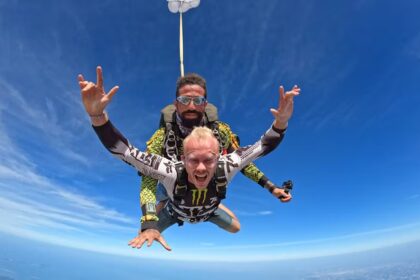
Mike tapped my shoulder, reminding me to maintain the arch position. I pushed my hips forward, pulled my arms back, and felt my body stabilize. We were flying. That’s the only word that captures what it felt like. We were flying through the air like birds.
The 60 seconds of freefall felt like both an eternity and an instant. Time seemed to behave differently up there. I could see the patchwork of fields below. I could see the horizon stretching out in every direction. I could feel the wind on my face and the absolute freedom of flight.
Around 5,000 feet, Mike deployed the main parachute. There was a gentle tug as the parachute left the container, then a moment of anticipation as it inflated, and finally a smooth deceleration as the canopy caught air and slowed our descent.
Suddenly everything changed. The roaring wind disappeared. The world became quiet and peaceful. We were floating gently under a fully inflated parachute, descending slowly toward the ground far below.
The Five Minutes Under Canopy That Nobody Talks About
Everyone focuses on the freefall when they talk about skydiving, but honestly, the time under the open parachute was my favorite part of the entire experience. This is the part that gets overlooked in most descriptions, and it’s absolutely magical.
After the parachute deployed and everything stabilized, Mike loosened my harness straps slightly, giving me more freedom to move and look around. The view from under a parachute at 5,000 feet is unlike anything else. You’re not falling fast. You’re not rushing. You’re just floating.
Mike let me try steering the parachute. He explained how pulling the right toggle makes you turn right, and pulling the left toggle makes you turn left. He let me make some gentle turns, feeling how the parachute responded to the inputs. It was surprisingly easy to control.
We made big spiraling turns in the sky, enjoying the view and the peaceful descent. Mike pointed out landmarks on the ground. He showed me where we were heading for landing. He explained how the wind would affect our approach.
This is when the adrenaline starts to fade and you can actually process what just happened. You jumped out of an airplane. You fell through the sky at 120 miles per hour. And now you’re floating gently back to Earth with an incredible bird’s eye view of the world.
The landing approach happened so smoothly I almost didn’t realize we were doing it. Mike started making deliberate turns, lining us up with the landing area. He talked me through what was going to happen next. He told me when to lift my legs.
The actual landing was gentler than I expected. Mike flared the parachute at the last second, slowing our descent to almost nothing. We touched down softly, and I walked away without even stumbling. It felt anticlimactic after all the buildup and worry.
As soon as my feet touched the ground, this enormous wave of emotion hit me. Relief. Exhilaration. Disbelief. Pride. I had actually done it. I had jumped out of an airplane and lived to tell the tale. More than that, I had loved every second of it.
The Questions You’re Afraid to Ask But Really Need Answered
After my jump, I spent weeks talking to other skydivers and asking all the questions I was too embarrassed to ask before my first jump. Here are the honest answers to the questions everyone wonders about but rarely asks out loud.
What happens if I panic during the exit? Your instructor is trained to handle panicking students. If you freeze at the door, they’ll either talk you through it or make the decision to exit anyway. Once you’re in freefall, panic typically disappears because there’s nothing you can do except enjoy the ride. Your instructor controls everything.
Can I throw up during the jump? It’s extremely rare because you’re not experiencing the stomach-dropping sensation that causes motion sickness. The freefall doesn’t feel like falling. If you do feel nauseous, it’s usually during the plane ride to altitude, not during the actual jump.
What if I can’t breathe during freefall? You can breathe normally during freefall. The air is moving past you quickly, which can make breathing feel different at first, but you’re not in a vacuum. Take deliberate breaths through your nose and you’ll be fine.
What happens if my instructor becomes incapacitated? This is why the automatic activation device exists. If something happened to your instructor and no parachute deployed, the device would automatically deploy the reserve parachute at a safe altitude. You would land under a fully inflated parachute even if your instructor was completely unconscious.
How much does it hurt when the parachute opens? It doesn’t hurt at all if the parachute is packed correctly. You’ll feel a firm but gentle tug as the parachute inflates and slows your descent. It’s not painful, it’s just a clear sensation of deceleration.
What if I’m too scared to jump when the moment comes? Every first-time jumper is scared. That’s completely normal and expected. Your instructor will talk you through it. Many instructors won’t ask if you’re ready because if they did, everyone would say no. They’ll count to three and then you jump. The decision is made before you get to the door.
Can I really enjoy it if I’m terrified? Absolutely. Fear and enjoyment aren’t mutually exclusive. Most people are terrified during the exit and first few seconds of freefall. Then the fear transforms into exhilaration. By the time you land, you’re already planning your next jump.
How to Choose a Dropzone That Won’t Cut Corners
After I caught the skydiving bug, I started visiting different dropzones and talking to people throughout the industry. I learned that not all dropzones are created equal. Here’s what you should look for when choosing where to make your first jump.
Start by verifying that the dropzone is a member of the United States Parachute Association. USPA membership isn’t legally required, but it’s a strong indicator that the dropzone follows industry best practices and maintains professional standards. Most reputable operations proudly display their USPA membership.
Check online reviews carefully, but read them with a critical eye. Focus on comments about safety procedures, equipment condition, and instructor professionalism. Red flags include reviews mentioning rushed training, equipment that looked worn or damaged, or instructors who seemed careless or overconfident.
Call the dropzone and ask questions about their safety record. Professional operations will be transparent about their statistics and happy to discuss their procedures. Ask about the average experience level of their tandem instructors. Ask how they handle weather decisions. Ask about their equipment maintenance schedules.
When you arrive at the dropzone, pay attention to the overall atmosphere. Does everything look organized and professional? Is the equipment clean and well-maintained? Are the aircraft in good condition? Does the staff seem safety-conscious or are they casual about procedures?
Watch how they handle weather decisions. Quality dropzones will ground operations if conditions aren’t ideal, even if it means disappointing customers. They should never pressure anyone to jump if they’re uncomfortable. The best dropzones prioritize safety over revenue.
Talk to other customers who are there for their jumps. Ask about their experience with the training. Ask if they feel safe and well-informed. Most people are happy to share their impressions and will give you honest feedback about their experience.
Look for dropzones that invest in their staff and equipment. Newer parachutes, well-maintained aircraft, and ongoing instructor training all indicate a commitment to safety. These things cost money, and dropzones that prioritize them are putting safety first.
Trust your gut instinct. If something feels off, if you get a bad vibe, if the staff seems unprofessional, it’s okay to walk away and find a different dropzone. Your safety is too important to ignore red flags just because you’ve already driven there.
The Life-Changing Impact of That First Jump
Five years after my first jump, I can honestly say it changed my life in ways I never expected. The impact went far beyond just having an exciting story to tell at parties. It fundamentally shifted how I think about fear, risk, and what I’m capable of achieving.
The confidence boost from overcoming such a primal fear is hard to describe. For weeks after my first jump, I felt like I could tackle anything. If I could jump out of an airplane, what else was I limiting myself from doing out of irrational fear?
I started saying yes to opportunities I would have previously declined. I applied for a job promotion I thought was beyond my reach. I traveled to countries I had been too nervous to visit. I had conversations I had been too scared to initiate. The skydive became a reference point: if I could do that, I could do this.
The skydiving community itself became an unexpected bonus. I met people from all walks of life who shared this incredible passion. Lawyers, teachers, mechanics, retirees, college students, everyone brought together by the love of flight. Some of my closest friendships today started at the dropzone.
Learning to skydive taught me about calculated risk versus unnecessary fear. I became better at assessing actual danger versus perceived danger in all areas of my life. I stopped avoiding things simply because they seemed scary and started evaluating whether they were actually dangerous.
The sport gave me a profound appreciation for the present moment. When you’re in freefall, you can’t think about work stress, relationship problems, or future worries. You’re completely absorbed in the immediate experience. That forced mindfulness carried over into other areas of my life.
I also gained tremendous respect for expertise and professionalism. Watching experienced instructors work, seeing their dedication to safety, observing how they handle responsibility for other people’s lives, it showed me what true professionalism looks like. That lesson applies far beyond skydiving.
The photos and videos from my jumps aren’t just cool pictures. They’re reminders of courage, of overcoming fear, of pushing past self-imposed limitations. On days when I’m feeling uncertain or scared about something new, I look at those photos and remember what I’m capable of.
Perhaps most importantly, skydiving taught me that the scariest moment is often right before you act. The anticipation is worse than the reality. Once you commit and take action, things usually aren’t as terrifying as you imagined. That lesson applies to so many aspects of life.
Frequently Asked Questions
How many people die from skydiving each year?
In the United States, there are typically between 10 and 21 skydiving fatalities per year out of approximately 3.5 to 4 million jumps. This works out to a fatality rate of about 0.39 per 100,000 jumps, making skydiving much safer than most people realize.
Is your first skydive the most dangerous?
No, your first tandem skydive is actually one of the safest jumps you’ll ever make. Tandem jumping has a fatality rate of approximately one per 500,000 jumps. The vast majority of accidents involve experienced solo jumpers attempting advanced maneuvers, not first-time tandem students.
What are the odds of dying skydiving tandem?
The odds of a fatal accident during a tandem skydive are approximately one in 500,000. To put this in perspective, you’re more likely to be killed in a car accident, bicycle accident, or even from choking on food than you are during a tandem skydive with a certified instructor.
Has anyone survived a skydiving accident without a parachute?
There have been extremely rare cases of people surviving falls from aircraft without functioning parachutes, but these cases involve extraordinary circumstances and luck. Modern equipment redundancy, including reserve parachutes and automatic activation devices, makes parachute failure scenarios extremely unlikely.
What is the most common cause of skydiving deaths?
Human error is the leading cause, particularly among experienced jumpers making high-risk decisions. This includes factors like poor judgment about weather, attempting maneuvers beyond skill level, or errors during landing approaches. Equipment malfunction is actually quite rare in modern skydiving.
Can you breathe while skydiving?
Yes, you can breathe normally during freefall. While the air is rushing past at high speed, you’re not in a vacuum. Many first-time jumpers worry about this, but breathing is never actually a problem. Just breathe through your nose and you’ll be completely fine.
Do parachutes ever not open?
Modern parachutes are extremely reliable, and malfunctions are rare. Even if the main parachute malfunctions, every rig includes a reserve parachute and an automatic activation device. The scenario where both systems fail is extraordinarily uncommon.
How safe is skydiving compared to driving?
Statistically, skydiving is safer than many people realize. A single tandem skydive has approximately one in 500,000 odds of being fatal. Compare this to the one in 107 lifetime odds of dying in a motor vehicle accident. Your drive to the dropzone is statistically more dangerous than the jump itself.
At what age can you no longer skydive?
Most dropzones don’t have an upper age limit, though they may require medical clearance for older participants. People in their 70s, 80s, and even 90s have successfully completed tandem skydives. The minimum age is typically 18 years old in the United States.
What should I know before my first skydive?
Arrive well-rested and properly hydrated. Avoid alcohol the night before. Wear comfortable clothes and athletic shoes. Listen carefully during training. Trust your instructor. Remember that fear is normal and expected. Most importantly, try to enjoy the incredible experience you’re about to have.
Your Journey Starts with a Decision
Everything I’ve shared with you comes from real experience, real research, and real conversations with people throughout the skydiving community. The statistics are clear. The safety record speaks for itself. Modern tandem skydiving is remarkably safe when conducted by certified professionals using proper equipment.
But ultimately, the decision is yours. No amount of statistics will completely eliminate the fear, and that’s okay. Fear is a natural response to doing something outside your normal experience. The question isn’t whether you’re afraid, it’s whether you’re willing to move forward despite the fear.
Thousands of people make their first tandem jump every single day at dropzones around the world. The vast majority walk away with huge smiles, incredible memories, and a profound sense of accomplishment. Many come back for more. Some, like me, catch the bug and make it a regular part of their lives.
If you’re ready to take the next step, visit Skydive Guides where you’ll find comprehensive information about every aspect of skydiving. We provide detailed guides on choosing dropzones, what to expect during your first jump, safety information, gear recommendations, and everything else you need to know.
Don’t let fear based on misconceptions rob you of an incredible experience. The numbers show that tandem skydiving is one of the safest ways to get an extreme adrenaline rush. Your careful research and smart choices can make it even safer.
The view from 13,000 feet is waiting. The rush of freefall is waiting. The sense of accomplishment and the incredible story you’ll tell for years is waiting. All that stands between you and that experience is the willingness to take the leap.
I’ll see you in the sky.