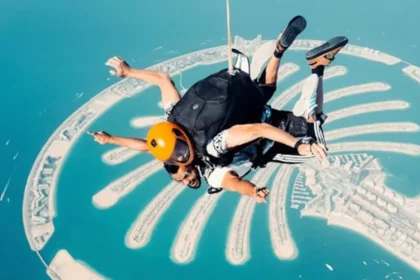

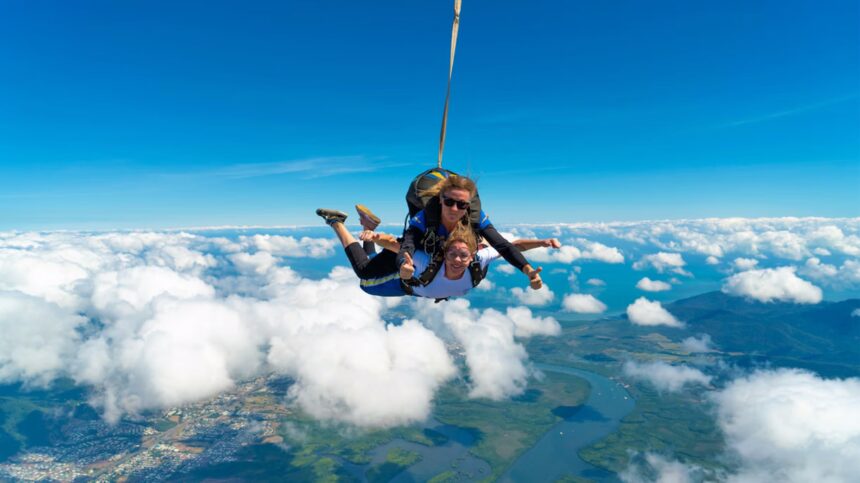
you’re standing at 13,000 feet above Southern California, the Pacific Ocean stretching endlessly to your left, the sprawling city of Los Angeles laid out like a map beneath you, and the San Gabriel Mountains rising majestically in the distance. Your heart is pounding, adrenaline is coursing through your veins, and you’re about to experience something that will change how you see the world forever. This is skydiving in LA California, and it’s calling your name.
- Why Los Angeles is One of the World’s Best Skydiving Destinations
- The Top Dropzones Near Los Angeles
- Understanding the Complete Tandem Skydiving Experience
- The Real Truth About Skydiving Safety
- Best Times to Experience Skydiving Near Los Angeles
- What You’ll Invest for This Experience
- Preparing Yourself for Jump Day Success
- Understanding the Los Angeles Skydiving Community
- Frequently Asked Questions About Skydiving Near Los Angeles
- Taking the Leap: Your Next Steps
Every year, thousands of people make the decision to take that leap, literally. Some are locals who’ve driven past dropzones for years, always wondering what it would be like. Others are visitors who want to add something extraordinary to their California vacation. But they all have one thing in common: they’re about to discover that skydiving near Los Angeles offers an experience that combines natural beauty, perfect weather, and world-class facilities in a way that few other places on Earth can match.
Whether you’ve been dreaming about this moment for years or the idea just popped into your head yesterday, you’re in the right place. Let me walk you through everything you need to know about skydiving in the Los Angeles area, from choosing the perfect dropzone to understanding what those first seconds of freefall actually feel like.
Why Los Angeles is One of the World’s Best Skydiving Destinations
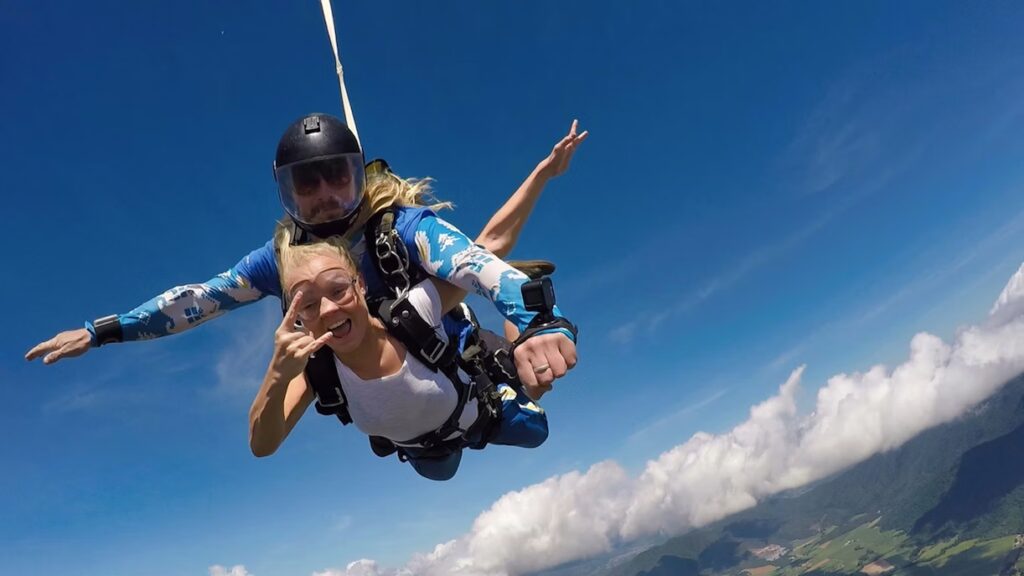
When people think about the perfect place to jump out of an airplane, Southern California consistently ranks at the top of the list. There are solid reasons why skydiving in LA California has become such a bucket-list experience for people from around the globe.
The weather in Southern California is practically legendary, and for skydivers, it’s nothing short of perfect. While jumpers in other parts of the country deal with seasonal closures, frequent weather delays, and unpredictable conditions, the LA area enjoys clear skies and jumpable weather nearly year-round. The sun shines consistently, cloud cover is minimal most days, and temperatures remain comfortable even at altitude. This means when you book your jump, you can plan with confidence knowing that weather cancellations are far less common than in most other regions.
The views during your descent are absolutely spectacular. From your vantage point at jump altitude, you’ll see a landscape that showcases everything that makes California special. The Pacific Ocean extends to the western horizon, its surface sparkling in the sunlight. The coastline curves gracefully from Malibu down through Santa Monica and beyond. Inland, you’ll spot the distinctive skyline of downtown Los Angeles, the sprawling urban landscape, and the mountains that ring the basin. On exceptionally clear days, jumpers report seeing all the way to Catalina Island and across to Orange County.
The temperature factor shouldn’t be underestimated either. At 13,000 feet, the air is noticeably cooler than at ground level, but in Southern California, it remains comfortable compared to many other jumping locations. You won’t need heavy layers of clothing or bulky gear that restricts your movement. This makes the entire experience more enjoyable from start to finish.
Southern California also boasts some of the most experienced skydiving professionals in the world. Many instructors working at LA area dropzones have logged thousands of jumps over decades of involvement in the sport. They’ve seen every type of weather pattern, trained countless students, and developed an intuitive understanding of the local conditions. When you jump with these professionals, you’re benefiting from a depth of experience that’s hard to find elsewhere.
The Top Dropzones Near Los Angeles
When you start researching skydiving in LA California, you’ll discover that while you can’t jump directly from downtown Los Angeles due to airspace restrictions and urban density, several world-class dropzones operate within reasonable driving distance of the city. Each facility has its own character and advantages, so understanding your options helps you choose the best fit for your adventure.
Perris Valley Skydiving stands as one of the largest and most renowned dropzones not just in California but in the entire United States. Located roughly 90 minutes east of Los Angeles in Riverside County, this facility has earned an international reputation for excellence. Skydivers from around the world travel to Perris Valley to train, compete, and pursue their passion for the sport. The facility operates multiple aircraft, including larger planes that can accommodate groups, making it ideal if you want to share the experience with friends or family members. The staff includes some of the most experienced instructors in the sport, many with certifications in multiple disciplines. First-time jumpers receive thorough training and attentive care throughout the entire process.
The advantage of choosing a larger facility like Perris Valley is the frequency of jump operations. With multiple loads going up throughout the day, you’ll likely experience less waiting time between arriving and actually jumping. The facility also offers extensive amenities including gear shops, packing areas for experienced jumpers, and comfortable spectator areas for friends and family who come to watch.
Lake Elsinore represents another excellent option for skydiving near Los Angeles. This dropzone offers stunning views of the surrounding Ortega Mountains and Lake Elsinore itself. The facility caters to both first-time tandem jumpers and experienced skydivers working on advanced skills. Many people appreciate the slightly more intimate atmosphere compared to some larger operations. The staff knows regular jumpers by name, and there’s a strong sense of community that makes first-timers feel welcome and comfortable.
The Lake Elsinore dropzone has a reputation for maintaining high safety standards while creating a fun and supportive environment for learning. If you’re someone who prefers a facility where you can build relationships with staff and feel like part of a community rather than just another customer, this location might be perfect for you.
While technically outside the immediate LA area, Skydive San Diego deserves mention because many Los Angeles residents make the two-hour drive south for the opportunity to jump with ocean views. If you’re willing to extend your travel time, the coastal scenery during your descent is absolutely breathtaking. The combination of Pacific Ocean, beaches, and Southern California landscape creates a visual experience that’s hard to match anywhere else.
When choosing your dropzone for skydiving in LA California, consider what matters most to you. Do you want the most frequent jump times and largest facility? Or would you prefer a more personal atmosphere where staff can give you more individual attention? Both approaches offer excellent experiences, they just cater to different preferences.
Understanding the Complete Tandem Skydiving Experience
If you’ve never been skydiving before, understanding the step-by-step process can help calm your nerves and ensure you get the most out of this incredible adventure. The tandem skydiving experience follows a well-established sequence that’s been refined over decades to maximize both safety and enjoyment.
Your journey begins when you arrive at the dropzone, usually about an hour before your scheduled jump time. This buffer allows for paperwork, training, and preparation without feeling rushed. At check-in, you’ll complete the required waiver forms. Every dropzone in the United States requires these waivers, which acknowledge that you understand the inherent risks involved in the activity. You’ll also need to provide valid photo identification and confirm that you meet the age and weight requirements.
Most dropzones require jumpers to be at least 18 years old with no exceptions. Weight limits typically range from 220 to 240 pounds depending on the specific facility and equipment being used. These limits exist for legitimate safety reasons related to equipment specifications and the physics of tandem jumping. If you’re close to the weight limit, call ahead to discuss your specific situation with the dropzone staff.
After completing paperwork, you’ll receive your safety briefing and training session. This crucial part of the process typically lasts 20 to 30 minutes. Your tandem instructor will explain how the equipment works, demonstrate the proper body position for both freefall and landing, and go over the hand signals they’ll use to communicate with you during the jump. Pay close attention during this training even if you’re nervous. Understanding what to expect and what to do will make the actual jump much more enjoyable.
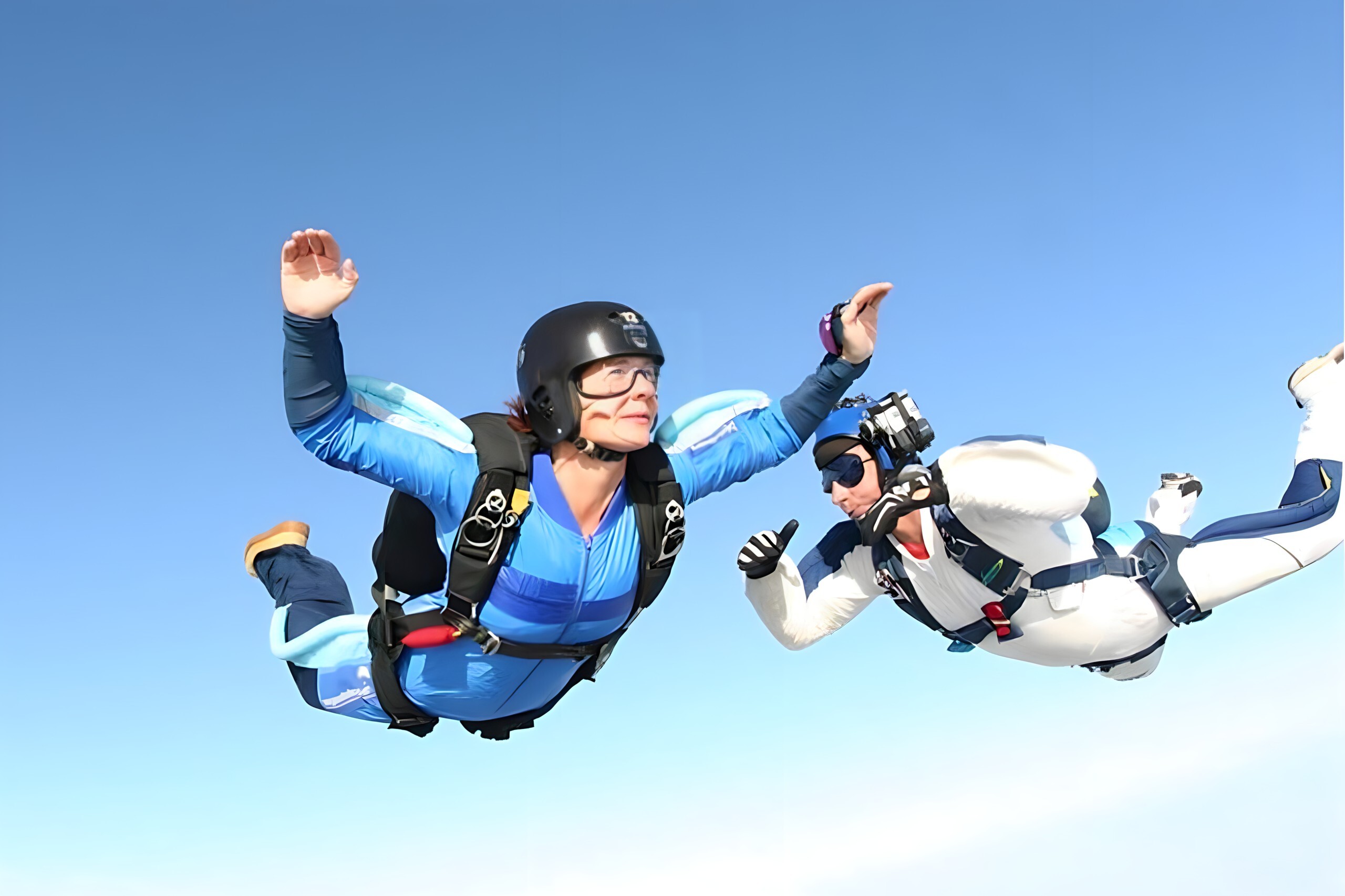
The training covers several key points. You’ll learn how to arch your body during freefall, with your hips pushed forward and your head back. This position is crucial for stability during freefall. You’ll also learn the proper position for landing, where you’ll lift your legs up so your instructor’s feet touch the ground first. These aren’t complicated moves, but doing them correctly makes a significant difference in the quality of your experience.
Next comes the gear-up process. For tandem skydiving, you’ll wear a harness that attaches you securely to your instructor’s harness. The actual parachute system is worn by your instructor and includes both a main parachute and a reserve parachute, plus an automatic activation device that serves as a final backup safety system. You might also wear goggles to protect your eyes during freefall, and depending on conditions, you might put on a jumpsuit over your regular clothes.
Then comes the airplane ride to altitude. You’ll board the aircraft along with your instructor, possibly other tandem pairs, and potentially some experienced solo jumpers. The ride up takes approximately 15 to 20 minutes depending on the aircraft and your exit altitude. This is a great time to enjoy the changing perspective as the ground falls away beneath you. Many first-time jumpers say this is when the reality of what they’re about to do really sets in. Your instructor will stay close, continuing to check equipment and offering reassurance.
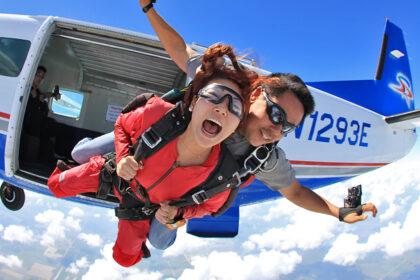
As the aircraft approaches jump altitude, the energy level inside increases. The door opens, and if there are experienced jumpers aboard, they typically exit first. Then it’s your turn. Your instructor will position you at the door, and you’ll feel the rush of wind and the overwhelming sense of space opening up below you. On your instructor’s count, you’ll launch into the sky together.
The sensation of freefall is unlike anything else you’ll ever experience. You’re falling at approximately 120 miles per hour, but it doesn’t feel like falling in the traditional sense. There’s no stomach-dropping sensation like you might experience on a roller coaster. Instead, it feels more like you’re floating on a cushion of rushing air. The wind is intense, the visual perspective is surreal, and time seems to stretch out even though the freefall portion typically lasts only 45 to 60 seconds.
At around 5,000 feet, your instructor will deploy the parachute. You’ll feel the deployment as the parachute opens and catches air, but modern parachute designs make this transition smooth and comfortable rather than jarring. Once the canopy is fully inflated, everything changes. The rushing wind stops, and suddenly you’re gliding peacefully through the air. This portion of the jump typically lasts five to seven minutes and gives you time to catch your breath, take in the views, and actually process what just happened.
Many skydivers say the canopy ride is their favorite part of the entire experience. The quiet serenity after the intensity of freefall creates a powerful contrast. Your instructor might perform some gentle turns to show you different perspectives of the landscape. You can have a conversation now, pointing out landmarks and sharing your reactions. This is when the experience shifts from pure adrenaline to a profound appreciation of the beauty spread out below you.
As you approach the landing area, your instructor will set up the final approach. They’ll provide instructions about lifting your legs for landing. With proper technique, the landing is surprisingly gentle, often no harder than jumping down from a low step. You’ll slide to a stop on the grass, and just like that, you’ve completed your first skydive. The feeling of accomplishment is immediate and powerful.
The Real Truth About Skydiving Safety
Before you commit to skydiving in LA California, you naturally want to understand the safety considerations. Let’s have an honest conversation about risk, safety systems, and what the actual statistics tell us about tandem skydiving.
The skydiving industry takes safety extraordinarily seriously. Over the decades, the sport has developed multiple layers of protection that work together to keep jumpers safe. These systems have been refined through extensive research, accident analysis, and continuous improvement. The result is a sport that’s far safer today than it was even 10 or 20 years ago.
Modern parachute systems include numerous safety features. Every tandem rig has two complete parachute systems: a main parachute and a reserve parachute. These are independent systems, either one of which is sufficient to land safely. The reserve parachute is packed by a certified FAA parachute rigger and must be inspected and repacked every 180 days even if it’s never deployed. This ensures the reserve is always in perfect condition and ready to use if needed.
Beyond the dual parachute system, every tandem rig includes an automatic activation device. This is a small computer that continuously monitors your altitude and descent rate hundreds of times per second. If you’re still in freefall at a dangerously low altitude, this device will automatically fire the reserve parachute without any action required from the jumper or instructor. This backup system has saved countless lives and provides protection even in worst-case scenarios where an instructor might become unconscious or incapacitated.
The training and certification requirements for tandem instructors are rigorous. Before someone can take students on tandem jumps, they must first earn their basic skydiving license, which requires a minimum of 25 jumps plus passing written and practical examinations. After that, they need to accumulate at least 500 additional jumps and three years in the sport before they can even begin tandem-specific training. The tandem instructor course itself involves additional ground school, practice jumps, and evaluation jumps. The entire process typically takes several years and ensures that only highly skilled and experienced skydivers work with first-time jumpers.
When we look at the actual safety statistics, the numbers are reassuring. According to data tracking skydiving deaths per year worldwide, tandem skydiving has an excellent safety record. The fatality rate for tandem students specifically is approximately one in 500,000 jumps. To put that in perspective, you have better odds in a tandem skydive than you do of being struck by lightning in your lifetime.
The car vs skydiving death statistics risk comparison reveals something that surprises most people: your drive to the dropzone presents statistically more risk than the jump itself. Motor vehicle accidents claim over 40,000 lives annually in the United States, while skydiving fatalities number in the teens or low twenties most years across millions of jumps.
This doesn’t mean skydiving is without risk. No adventure sport is completely risk-free. But when you jump with a certified instructor at a reputable dropzone using modern equipment and following established procedures, the activity is remarkably safe. The key is choosing a dropzone that maintains high standards, follows USPA guidelines, and employs well-trained instructors.
Equipment maintenance plays a crucial role in safety. Parachutes are inspected after every use by qualified personnel. Any parachute showing signs of wear or damage is immediately removed from service. Dropzones maintain detailed logs of equipment history, inspection dates, and any maintenance performed. This level of attention to gear ensures that mechanical failures are extremely rare.
Weather monitoring and decision-making represent another critical safety factor. Reputable dropzones won’t operate in conditions that present elevated risks. If winds are too strong, if there’s rain or lightning in the area, or if cloud cover prevents clear visibility, jumps will be delayed or cancelled. While this might be frustrating if you’ve driven a long way for your jump, it demonstrates a commitment to safety that should make you feel more confident about the operation.
Best Times to Experience Skydiving Near Los Angeles
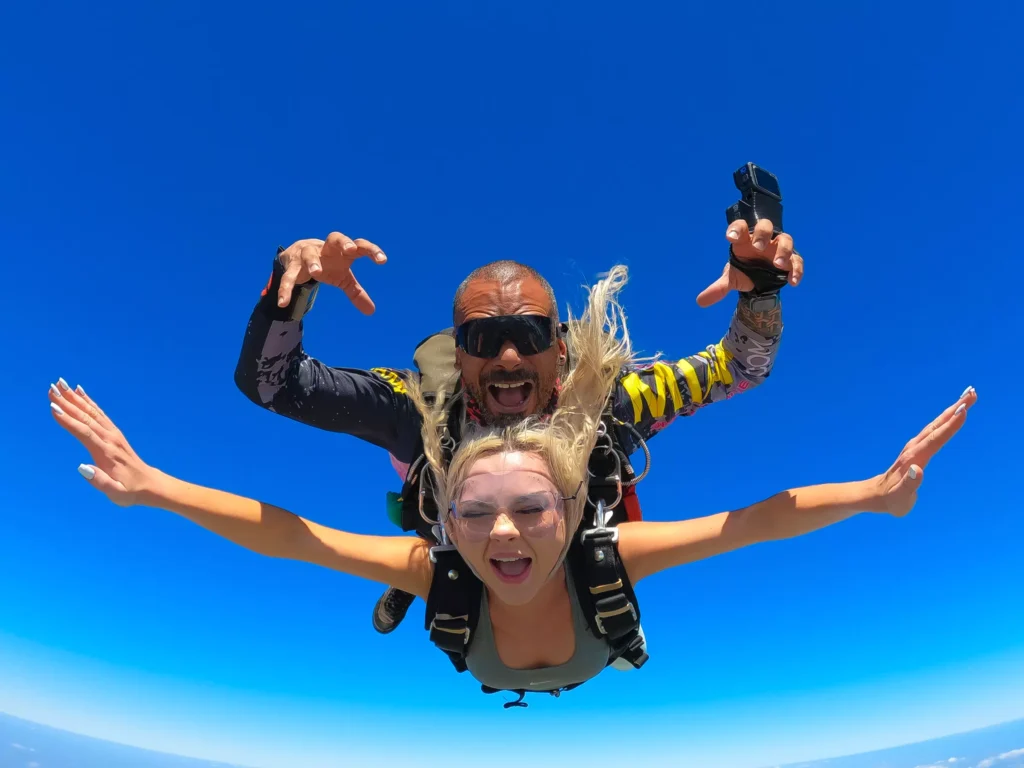
One of the beauties of skydiving in LA California is the flexibility it offers throughout the year. Unlike many regions where skydiving is purely a summer activity, Southern California’s climate allows for jumping in every season. However, different times of year do offer distinct advantages worth considering.
Spring months from March through May provide some of the most ideal conditions for skydiving in the LA area. The weather during this period is typically clear and mild, with comfortable temperatures both on the ground and at altitude. Spring also tends to have less atmospheric haze than summer, which translates to better visibility during your jump. If your primary goal is to see the maximum distance and enjoy crystal-clear views of the coastline, mountains, and urban landscape, spring is hard to beat.
The moderate temperatures in spring also make the entire experience more comfortable. You won’t be too hot while waiting your turn in the gear, and you won’t be too cold at jump altitude. This Goldilocks combination of conditions makes spring a favorite season for many skydivers.
Summer brings the busiest season for dropzones near Los Angeles, and there are good reasons for this popularity. The long days mean facilities can operate from early morning until evening, giving you maximum flexibility in scheduling your jump. The warm weather is perfect for this type of outdoor adventure. School vacations bring families and young adults looking for memorable experiences. The energy and excitement at the dropzone during summer can be infectious.
However, summer does come with a trade-off. The heat can create atmospheric haze, particularly in the afternoons. This doesn’t make jumping unsafe, but it can reduce visibility compared to cooler months. Many experienced jumpers prefer to schedule morning jumps during summer to take advantage of clearer air before the heat of the day sets in. The cooler morning temperatures also make the wait time before your jump more comfortable.
Fall offers what many consider the sweet spot for skydiving in Southern California. From September through November, the air becomes crisper and clearer as summer heat dissipates. Visibility often rivals or exceeds spring conditions. Temperatures remain comfortable for jumping. The crowds thin out slightly compared to summer, which can mean a more relaxed experience at the dropzone with potentially shorter wait times between arrival and jumping.
The lighting during fall can be particularly beautiful for photos and videos. The angle of the sun creates dramatic shadows and golden tones across the landscape that make for stunning visual records of your jump. If you’re purchasing a video package, fall jumping can yield especially cinematic results.
Even winter remains viable for skydiving near Los Angeles, which sets this region apart from much of the country. While you might encounter more variable weather patterns and the occasional wind delay, the clear winter days offer some of the most spectacular visibility of the entire year. On a perfect winter day, you can see for more than a hundred miles in every direction from jump altitude. The air has a clarity that’s simply not possible during warmer months.
Winter jumping does require slightly warmer clothing since temperatures at altitude will be cooler. However, even in winter, the conditions remain far more comfortable than you’d find in northern states. You won’t need the heavy layers required for winter jumping in other regions.
The time of day also influences your skydiving experience. Morning jumps typically offer the best weather conditions regardless of season. Winds are usually calmer before midday, and air tends to be clearer before heat creates afternoon haze. Many professional skydivers prefer to complete their jumps before noon for these reasons. If you have flexibility in scheduling, consider booking an early morning slot.
However, late afternoon and evening jumps have their own appeal. The lighting becomes more dramatic as the sun gets lower in the sky. If you’re jumping during summer when days are long, an evening jump can feel magical as the landscape glows with golden hour light. Some people also find that they’re less nervous later in the day after they’ve had time to mentally prepare.
What You’ll Invest for This Experience
Understanding the costs associated with skydiving in LA California helps you budget appropriately and make informed decisions about packages and extras that might enhance your experience. While tandem skydiving isn’t inexpensive, most people feel the investment is well worth it for the memories and sense of accomplishment it provides.
The base cost for a tandem skydive near Los Angeles typically ranges from $200 to $350 depending on several factors. The specific dropzone you choose, the exit altitude for your jump, and the day of the week can all influence pricing. Weekday jumps sometimes cost slightly less than weekend jumps at some facilities. Higher altitude jumps cost more because they provide longer freefall time.
Most first-time jumpers opt for exits between 10,000 and 13,000 feet. A jump from 10,000 feet might cost around $200 to $250, while a jump from 13,000 feet typically costs $250 to $350. The difference in price might seem significant, but it translates to precious additional seconds of freefall. Most experienced jumpers and instructors recommend paying extra for the higher altitude if your budget allows. Those extra seconds of freefall time make a substantial difference in the overall experience.
Video and photo packages represent an additional cost but one that most jumpers don’t regret. These packages typically range from $100 to $200 depending on what’s included. Some packages feature a camera mounted on your instructor’s wrist capturing your reactions throughout the jump. Other packages include a dedicated videographer who jumps alongside you specifically to film your entire experience from a third-person perspective. The most comprehensive packages include both perspectives plus edited videos and numerous still photos.
While spending an extra $100 or $200 on video might feel like a lot when added to the base jump price, consider that you’re creating a record of one of the most significant experiences of your life. The expressions on your face during freefall, the beauty of the landscape from altitude, and the sheer joy of the moment are all captured forever. Most people who skip the video package end up wishing they had purchased it.
Group discounts are often available if you’re jumping with friends or family. Many dropzones offer reduced rates for groups of four or more people booking together. This not only saves money but also enhances the experience since you can share the adventure with people you care about. Celebrating together after you’ve all completed your jumps creates bonds and memories that last a lifetime.
Some dropzones offer special package deals during slower seasons or on certain weekdays. It’s worth checking the websites of different facilities or calling them directly to ask about current promotions. You might find opportunities to save money without compromising the quality of your experience.
When you consider the total investment, remember what you’re paying for. The price includes use of sophisticated safety equipment that costs thousands of dollars. You’re paying for the expertise of a highly trained instructor who has invested years developing their skills. The cost covers aircraft operation, fuel, insurance, facility maintenance, and all the overhead required to operate a safe dropzone. When viewed this way, the price represents fair value for what you receive.
Compare the cost of skydiving to other forms of entertainment or adventure experiences. A few hours at a theme park with admission, parking, and food can easily cost $100 or more per person. A concert or sporting event with decent seats often exceeds $200 per ticket. Skydiving provides an experience that’s arguably more memorable and impactful than most alternatives at a comparable or even lower price point.
Many people save up specifically for their first skydive, treating it as an investment in themselves and their personal growth. When you complete this challenge, you’re not just buying an adrenaline rush. You’re proving to yourself that you can face significant fears and come out stronger on the other side. That kind of personal development has value that extends far beyond the monetary cost.
Preparing Yourself for Jump Day Success
Once you’ve booked your skydiving adventure in LA California, taking time to prepare properly will help ensure you get the maximum enjoyment from the experience. Good preparation addresses both practical considerations and mental preparation.
Start with clothing choices. Wear comfortable, athletic-style clothing that allows you to move freely. Avoid anything too loose or baggy that might flap around during freefall. Jeans and a t-shirt work perfectly for most people. Athletic pants or leggings paired with a fitted top are also excellent choices. The key is comfort and freedom of movement without excess fabric.
Footwear matters more than you might think. You’ll need closed-toe shoes, with athletic shoes or sneakers being the ideal choice. Avoid boots, high-tops, or anything that restricts ankle movement. Your instructor needs to be able to see and control your body position during freefall and landing, and stiff footwear can interfere with this. Sandals, flip-flops, or any open-toed shoes are never acceptable for skydiving.
If you have long hair, bring something to tie it back securely. Your hair will whip around during freefall, and keeping it under control makes the experience more comfortable and looks better in photos and videos. Multiple hair ties are a good idea in case one breaks.
Remove all jewelry before your jump. Rings, necklaces, earrings, watches, and bracelets can get caught on equipment or become uncomfortable during the jump. Most dropzones have secure areas where you can leave valuables, but it’s even better to leave them at home or in your car.
Think carefully about what you eat before jumping. You want to have something in your stomach but avoid overeating. A light, normal meal two to three hours before your scheduled jump time is ideal. Contrary to popular belief, motion sickness is quite rare in skydiving because there’s no sense of falling to trigger nausea. However, jumping on a completely empty stomach isn’t comfortable either. A balanced approach works best.
Stay well hydrated before your jump, especially during warmer months. Dehydration can make you feel tired, dizzy, or less mentally sharp, none of which enhance the skydiving experience. Drink plenty of water in the hours before you arrive at the dropzone. However, use the restroom before gearing up since you won’t have another chance until after you land.
Get a good night’s sleep before jump day. Being well-rested helps you enjoy the experience more fully, retain the memories better, and follow instructions more effectively. Fatigue can also amplify nervousness, so giving yourself the advantage of being well-rested makes the entire day more positive.
Arrive at the dropzone early as requested, typically about an hour before your scheduled jump time. This buffer allows for paperwork, training, and preparation without feeling rushed. Hurrying through these important steps increases stress unnecessarily and can detract from your enjoyment.
Bring valid photo identification. Every dropzone requires ID to verify your identity and age. A driver’s license, passport, or state-issued ID card all work fine. Without proper identification, you won’t be allowed to jump regardless of whether you’ve already paid.
Consider inviting friends or family to watch even if they’re not jumping themselves. Most dropzones have spectator areas where people can watch landings and aircraft operations. Having a support crew on the ground adds another dimension to the experience. They can take photos and videos from the ground, be there to celebrate with you immediately after landing, and share in your excitement.
If you wear glasses, discuss this with your instructor during the safety briefing. Glasses typically need to be secured with a strap to prevent them from flying off during freefall. Most dropzones have straps available. Contact lenses are generally fine for skydiving and don’t require special accommodation.
Mental preparation is just as important as physical preparation. Acknowledge that feeling nervous is completely normal and even healthy. A little bit of fear means you’re taking the activity seriously and will pay attention to instructions. Try to reframe the nervousness as excitement. The physiological responses are very similar; it’s largely your interpretation that determines whether you experience the feelings as anxiety or anticipation.
Visualization can be a helpful preparation tool. Spend some time in the days before your jump visualizing the experience going smoothly. Imagine yourself following instructions calmly, enjoying the sensations of freefall, and landing safely with a huge smile on your face. This mental rehearsal can help reduce anxiety and prime your mind for a positive experience.
Remember that millions of people have done exactly what you’re about to do. The vast majority of them not only survived but had such a positive experience that they recommend it to others. You’re not doing anything unprecedented or unreasonably dangerous. You’re following in the footsteps of countless others who faced the same fears and came out the other side with incredible memories.
Understanding the Los Angeles Skydiving Community
When you show up for your skydive in LA California, you’re entering a community with its own culture, values, and traditions. Understanding a bit about this community can enhance your appreciation of the experience and help you feel more comfortable during your visit to the dropzone.
The Southern California skydiving scene attracts people from incredibly diverse backgrounds. You’ll meet individuals from every walk of life, every profession, and every socioeconomic level. Teachers, doctors, construction workers, tech professionals, artists, students, and retirees all share the same passion for flight. This diversity creates a uniquely democratic environment where the only thing that matters is your attitude and your respect for the sport.
Many skydivers are drawn to the activity not just for the adrenaline but for the mental state it creates. When you’re in freefall, it’s impossible to think about your work stress, relationship problems, or any other concerns. You’re completely present in the moment, totally focused on the immediate experience. This forced mindfulness is part of what makes skydiving addictive for some people. In our constantly connected world where attention is fragmented across multiple screens and concerns, the complete presence required by skydiving offers a rare opportunity to simply be.
The community takes safety extremely seriously, creating a culture where speaking up about potential hazards is not only accepted but expected. Experienced jumpers watch out for newcomers and aren’t afraid to offer guidance if they see something concerning. This accountability helps maintain the sport’s strong safety record. When you jump at a reputable dropzone, you’re surrounded by people who prioritize doing things the right way even when it might be faster or easier to cut corners.
Many dropzones host social events beyond just jumping. Barbecues, video viewing parties, and social gatherings create opportunities for people to connect outside the context of jumping. Even if you’re only planning to do one tandem jump, you might enjoy sticking around after your jump to chat with other jumpers and soak in the atmosphere. The stories you’ll hear can be fascinating and might even inspire you to return for another jump.
The skydiving community generally welcomes first-time jumpers with enthusiasm. Experienced skydivers remember their own first jumps and the mixture of terror and excitement they felt. Many will go out of their way to offer encouragement and share their own stories. Don’t be surprised if complete strangers congratulate you after your jump or ask how it went. This friendliness is part of the culture.
Frequently Asked Questions About Skydiving Near Los Angeles
How much does it cost to skydive in LA California?
A tandem skydive near Los Angeles typically costs between $200 and $350 for the basic jump, with higher altitude jumps on the upper end of that range. Video packages add another $100 to $200. Group discounts are often available for four or more people booking together. While the investment might seem significant, most people report that the experience is worth every penny.
What are the age and weight requirements?
You must be at least 18 years old to skydive in California with no exceptions. Weight limits vary by dropzone but typically range from 220 to 240 pounds. These limits exist for legitimate safety reasons related to equipment specifications. If you’re close to the limit, call the dropzone ahead of time to discuss your specific situation.
How long does the whole experience take?
Plan to spend about three to four hours at the dropzone from check-in to landing. This includes paperwork, safety training, getting geared up, waiting for your turn if other jumps are scheduled ahead of yours, the flight to altitude, the jump itself, and time afterward to celebrate and purchase your video if you opted for that package. The actual jump including freefall and parachute ride lasts about seven to ten minutes depending on your exit altitude.
What if the weather is bad?
Dropzones won’t operate in unsafe conditions including rain, high winds, or low cloud cover. If weather conditions aren’t suitable when you arrive, your jump will be delayed until conditions improve or rescheduled for another day. While this can be disappointing, it demonstrates the facility’s commitment to safety. Most dropzones will work with you to reschedule without additional fees if weather prevents your jump.
Can I bring my phone or camera during the jump?
First-time tandem jumpers are not allowed to bring personal cameras, phones, or other items during the jump. Loose items could become dangerous if they come free during freefall, and you need your hands free to maintain proper body position. This is why dropzones offer professional video packages. Trust the professionals to capture your experience safely and beautifully.
Is skydiving really safe?
Tandem skydiving has an excellent safety record with approximately one fatality per 500,000 tandem jumps. Modern equipment includes multiple redundant safety systems including reserve parachutes and automatic activation devices. Your instructor has completed extensive training and likely has hundreds or thousands of successful jumps. While no activity is completely without risk, tandem skydiving is remarkably safe when conducted by trained professionals using modern equipment at reputable facilities.
Will I feel sick or dizzy?
Most people don’t experience motion sickness during skydiving. Unlike a roller coaster or boat, there’s no sensation of falling that triggers nausea. You’re falling at a constant rate which creates a feeling of floating rather than dropping. Some people feel a rush of adrenaline that might cause butterflies in the stomach, but true motion sickness is rare. If you’re prone to motion sickness in other contexts, you’ll likely be fine skydiving.
What if I’m afraid of heights?
Many people who are terrified of heights find that skydiving doesn’t trigger the same fear response. At 13,000 feet, you’re so high that height doesn’t register in the same way it does on a ladder, tall building, or cliff edge. The altitude is so extreme that your brain processes it differently. Countless skydivers who are afraid of heights report that they felt more comfortable in the airplane at altitude than they do standing on a second-floor balcony.
Taking the Leap: Your Next Steps
If you’ve made it this far in the article, you’re clearly serious about experiencing skydiving in LA California. The combination of ideal weather, spectacular views, and world-class facilities makes Southern California one of the premier skydiving destinations anywhere in the world. Whether you’re a local resident or a visitor, this experience offers something that will stay with you long after the parachute is packed away.
The dropzones near Los Angeles are ready and waiting to help you achieve this incredible goal. The instructors have trained thousands of first-time jumpers and understand exactly how to make your experience both safe and unforgettable. They’ve seen every type of nervousness, answered every imaginable question, and helped countless people overcome their fears to accomplish something extraordinary.
Don’t let uncertainty or fear keep you from an experience you’ll remember for the rest of your life. Thousands of people just like you have stood where you’re standing right now, wondering if they should take the leap. Almost universally, those who went through with it say they wish they had done it sooner. The feeling of accomplishment, the rush of flying through the California sky, and the stunning beauty of Southern California from 13,000 feet are all waiting for you.
Start by researching the dropzones near Los Angeles. Read reviews, watch videos, look at photos, and get a sense of which facility feels right for you. Most dropzones have excellent websites with detailed information about their operations, safety records, and the experience they offer. Don’t hesitate to call with questions. The staff understands that booking your first jump is a big decision, and they’re happy to address your concerns.
Visit Skydive Guides for more comprehensive information about skydiving safety, statistics, and locations throughout California and beyond. Our detailed resources can help you understand more about this incredible sport and make informed decisions about your first jump.
When you’re ready, make that booking. Choose a date that gives you something to look forward to. Share your plans with friends and family. Start that mental preparation that will help you approach the experience with excitement rather than just anxiety. The sky above Los Angeles is calling, and an adventure unlike any other is waiting for you.
The moment you land safely after your first jump, adrenaline still coursing through your veins and a smile stretching across your face, you’ll understand why people become so passionate about this sport. You’ll have conquered a significant fear, experienced something most people only dream about, and proven to yourself that you’re capable of more than you might have thought possible.
So take that next step. Research your options, ask your questions, and when you feel ready, book your jump. The beautiful California sky, the experienced instructors, and the thrill of a lifetime are all waiting for you. Your adventure in skydiving in LA California is just one decision away.