
On October 14, 2012, the world held its collective breath as Austrian skydiver Felix Baumgartner stepped off a capsule at the edge of space, 128,100 feet above Earth. His record-breaking freefall captivated 8 million live viewers and cemented his place among the most famous skydivers in history. But Baumgartner’s achievement stands on the shoulders of countless pioneers who pushed boundaries, broke records, and transformed skydiving from a military necessity into an internationally recognized sport.
The history of skydiving is written by audacious individuals who refused to accept limitations. From the first successful parachute jump in 1797 to today’s wingsuit pilots defying physics, famous skydivers in history have continuously redefined what’s possible when humans leap from aircraft. These aren’t just adrenaline junkies—they’re athletes, innovators, stunt performers, and scientists who advanced parachute technology, established safety protocols, and inspired millions to experience the freedom of flight.
This comprehensive guide profiles 30 of the most influential skydivers who shaped the sport’s evolution over two centuries. You’ll discover military pioneers who proved parachutes could save lives, competition champions who elevated skydiving to an art form, record-breakers who pushed human limits, and modern influencers bringing the sport to new audiences. Whether you’re a skydiving enthusiast, history buff, or simply curious about these remarkable individuals, you’ll gain insight into the courage, innovation, and determination that define the world’s most famous skydivers.
Famous Skydivers in History
| Skydiver | Known For |
|---|---|
| Felix Baumgartner | Stratosphere jump |
| Luke Aikins | Jump without parachute |
| Jeb Corliss | Wingsuit flying |
Most Famous Skydivers in History
- Felix Baumgartner – Broke the sound barrier in freefall from 128,100 feet (2012)
- André-Jacques Garnerin – Completed the first successful parachute jump (1797)
- Joseph Kittinger – Held highest jump record for 52 years at 102,800 feet (1960)
- Cheryl Stearns – World record holder with 20,000+ jumps
- Patrick de Gayardon – Revolutionary wingsuit pioneer and BASE jumping legend
- Tiny Broadwick – First woman to parachute from an airplane (1913)
- Alan Eustace – Current altitude record holder at 135,890 feet (2014)
- Jay Stokes – Completed 640 jumps in 24 hours, world record holder
Table of Contents
- The Early Pioneers: Birth of Parachuting (1797-1940)
- Military Legends: Skydivers Who Shaped Warfare
- Record-Breaking Altitude Jumpers
- Competition Champions and Formation Masters
- Wingsuit and BASE Jumping Innovators
- Hollywood Stunt Performers and Aerial Artists
- Modern Influencers and Social Media Stars
- Women Who Broke Barriers in Skydiving
- Tragic Heroes: Skydivers Lost Too Soon
- Frequently Asked Questions
The Early Pioneers: Birth of Parachuting (1797-1940)
The story of famous skydivers in history begins not with airplanes but with hot air balloons and the audacious individuals who trusted primitive parachutes with their lives.
André-Jacques Garnerin (1769-1823): The First Successful Parachutist
French aeronaut André-Jacques Garnerin earned his place as history’s first famous skydiver on October 22, 1797, when he jumped from a hydrogen balloon at approximately 3,000 feet above Paris. His frameless parachute—a 23-foot diameter canvas canopy with a basket attached—descended successfully, though oscillations during descent left him severely airsick.
Historic Achievements:
- First documented successful parachute descent
- Conducted exhibitions across Europe, completing jumps in England in 1802
- His wife, Jeanne-Geneviève, became the first female parachutist in 1799
- Nephew Élisa Garnerin later set women’s altitude parachute records
Garnerin’s demonstrations proved that controlled descents from altitude were possible, laying groundwork for future aviation safety systems. Though he died in 1823 from injuries sustained in a balloon-related accident, his pioneering jumps established parachuting as both scientifically valid and publicly captivating.
Georgia “Tiny” Broadwick (1893-1978): Aviation’s Brave Heart
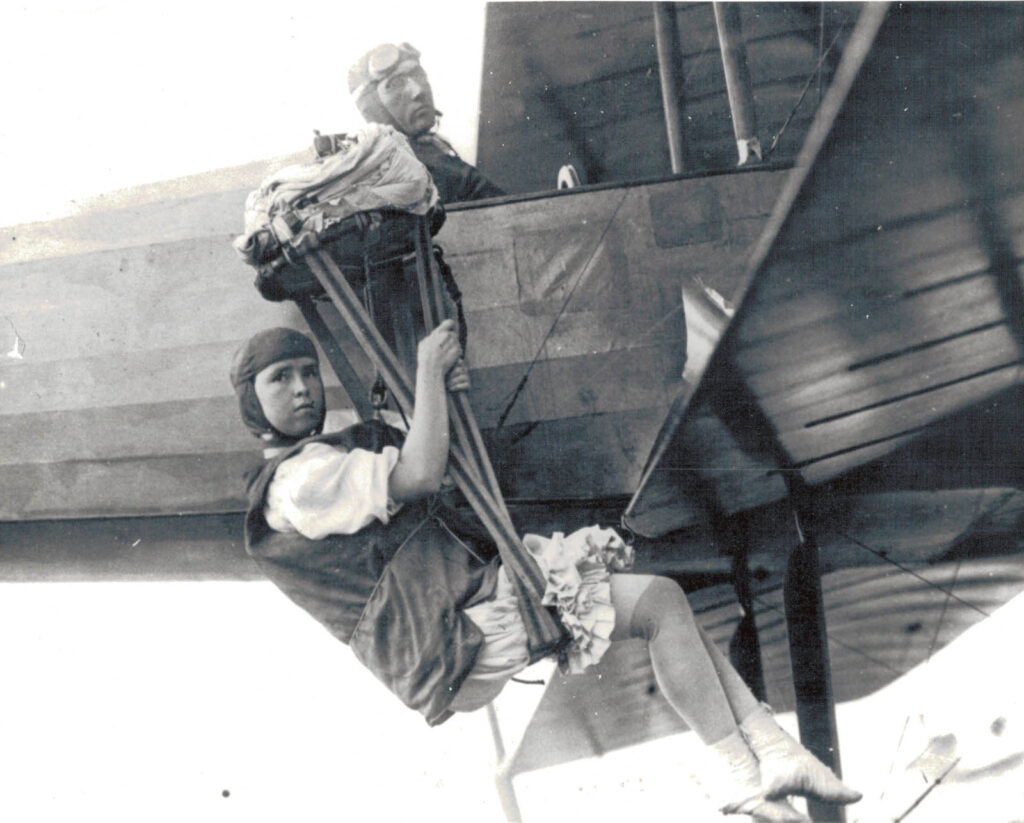
Georgia “Tiny” Broadwick stands as one of the most significant famous skydivers in history, particularly regarding women’s contributions to the sport. Born in North Carolina, the 4-foot-11-inch Broadwick made her first jump at age 15 in 1908 and went on to complete over 1,100 jumps during her career.
Pioneering Achievements:
- First woman to parachute from an airplane (1913)
- First person to demonstrate a freefall jump to the U.S. military (1914)
- Invented the ripcord-operated parachute after her static line became entangled
- Youngest person at the time to parachute from a balloon (age 15)
Broadwick’s 1914 demonstration to the U.S. Army at North Island, California, proved the military viability of parachutes for aviators. When her static line tangled in the aircraft’s tail assembly during one jump, she cut it away and pulled the parachute open manually—demonstrating the ripcord concept that became standard. Her contributions directly influenced World War I aviation safety protocols.
According to the Smithsonian National Air and Space Museum, Broadwick’s innovations saved countless aviator lives during both World Wars, making her one of the most impactful figures in aviation history despite receiving limited recognition during her lifetime.
Leslie Irvin (1895-1966): The Father of Modern Skydiving
Leslie Irvin’s contributions to parachuting technology make him essential to any discussion of famous skydivers in history. On April 28, 1919, Irvin made the first premeditated freefall jump using a manually-operated parachute at McCook Field in Ohio, establishing principles still used today.
Major Contributions:
- Developed the first modern parachute pack worn on the back
- Founded Irving Air Chute Company (note: company name misspelled, adding ‘g’)
- Parachutes designed by Irvin saved an estimated 100,000+ lives during WWII
- Established training programs for military paratroopers worldwide
Irvin’s business innovations proved equally important as his jumping achievements. His manufacturing company produced millions of parachutes for Allied forces during World War II. The British Caterpillar Club, founded in 1922 for those whose lives were saved by Irvin parachutes, had over 34,000 members by 1945.
Historical Impact: The phrase “hitting the silk” originated from Irvin’s silk parachutes, becoming standard aviation terminology that persists today.
Charles Broadwick (1856-1930): Exhibition Innovator
Charles Broadwick (Georgia “Tiny” Broadwick’s adoptive father and manager) deserves recognition among famous skydivers in history for popularizing parachute exhibitions and developing early safety equipment.
Key Achievements:
- Conducted over 600 parachute jumps from hot air balloons
- Developed improved parachute folding techniques
- Created the “coat pack” parachute design worn on the torso
- Trained and managed exhibition jumpers including Tiny Broadwick
Broadwick’s barnstorming shows across America in the early 1900s brought parachuting to public consciousness, transforming it from scientific curiosity to entertainment spectacle and ultimately recognized safety equipment.
Military Legends: Skydivers Who Shaped Warfare
Military operations transformed parachuting from exhibition curiosity to tactical necessity, creating legends whose courage under fire remains unmatched.
Captain Joseph W. Kittinger (1928-2022): Stratospheric Pioneer
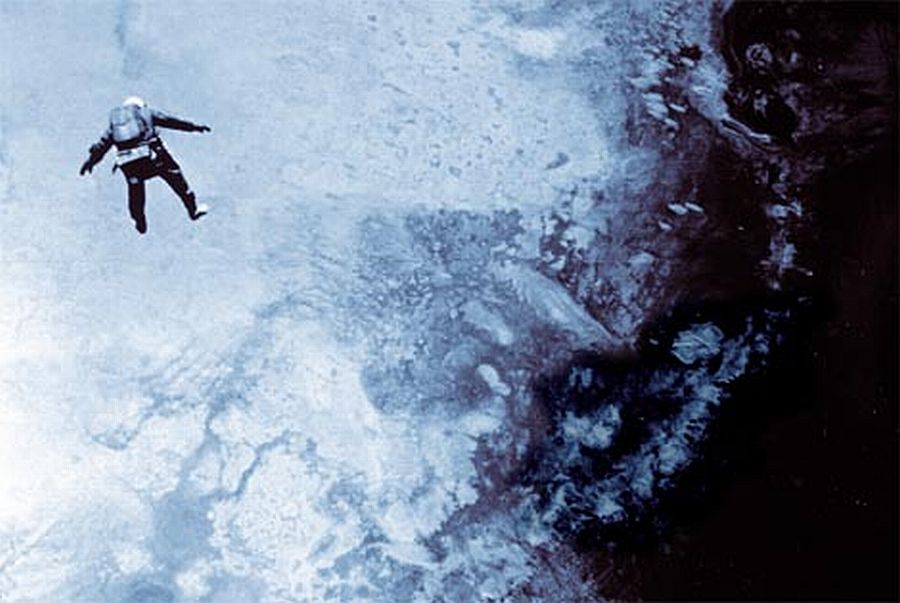
Captain Joseph Kittinger ranks among the most famous skydivers in history for achievements spanning military service, altitude records, and nearly six decades of contributions to aerospace research. His 1960 jump from 102,800 feet as part of Project Excelsior remained the highest parachute jump for 52 years.
Record-Breaking Achievements:
- Jumped from 102,800 feet on August 16, 1960
- Freefell for 4 minutes 36 seconds, reaching 614 mph
- Endured temperatures of -94°F at altitude
- Provided crucial data for space program development
Kittinger’s Project Excelsior jumps tested high-altitude bailout systems for military pilots and astronauts. His third and highest jump nearly killed him when a glove malfunctioned, causing his right hand to swell to twice normal size during ascent. Despite this, he completed the mission, providing NASA with invaluable data about human survivability at extreme altitudes.
Military Service: Beyond his record jumps, Kittinger flew 483 combat missions during the Vietnam War and spent 11 months as a prisoner of war after being shot down in 1972. He received numerous military decorations including the Distinguished Flying Cross with one Oak Leaf Cluster.
Kittinger later advised Felix Baumgartner during his 2012 record-breaking jump, serving as capcom (capsule communicator) and providing the calm, experienced guidance that helped Baumgartner succeed. Kittinger passed away in 2022 at age 94, leaving an extraordinary legacy in both military aviation and skydiving history.
Major General William C. Lee (1895-1948): Father of Airborne Forces
While not primarily known as a jumper himself, Major General William C. Lee’s creation of the U.S. Army’s airborne divisions made him instrumental to skydiving’s military evolution and earned him recognition among famous skydivers in history.
Historic Contributions:
- Established the first U.S. Airborne Test Platoon in 1940
- Developed airborne warfare tactics and training protocols
- Commanded the 101st Airborne Division’s formation
- Created systematic military parachute training programs
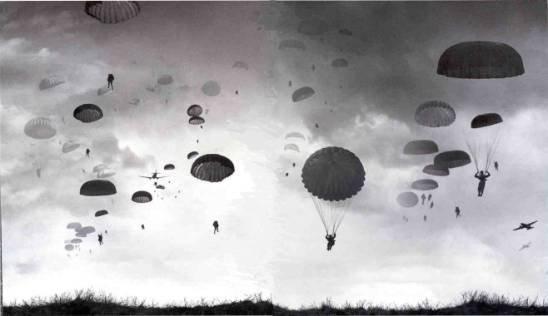
Lee’s vision transformed parachuting from individual acts of daring into coordinated military operations involving thousands of soldiers. The airborne divisions he created proved decisive in World War II operations including D-Day, where over 13,000 paratroopers dropped into Normandy.
James M. Gavin (1907-1990): Combat Jump Commander
Lieutenant General James M. Gavin earned legendary status among famous skydivers in history by leading paratrooper assaults during World War II and becoming the youngest major general in U.S. Army history at age 37.
Combat Achievements:
- Commanded the 82nd Airborne Division during four combat jumps
- Led paratroopers in Sicily, Italy, Normandy, and Operation Market Garden
- Personally conducted combat jumps despite his rank
- Completed over 100 training and combat jumps
Gavin’s leadership philosophy emphasized leading from the front. Unlike many senior commanders, he insisted on jumping with his troops during combat operations, earning their deep respect and establishing himself as the quintessential airborne commander.
Russian Airborne Forces: Soviet Pioneers
The Soviet Union’s airborne forces (VDV) produced numerous famous skydivers in history, though many remain lesser-known in Western accounts due to Cold War secrecy.
Notable Soviet Contributions:
- First large-scale military parachute demonstration (1930)
- Developed mass parachute assault tactics before Western nations
- Created BMD airborne combat vehicles that could be parachute-dropped
- Established elite airborne culture that persists in modern Russia
Soviet paratroopers conducted the world’s first operational combat jump during the 1929 Tadjik campaign, predating Western airborne operations by over a decade. By 1935, the USSR was conducting exercises involving 1,000+ paratroopers, demonstrating capabilities that shocked Western military observers.
Record-Breaking Altitude Jumpers
Altitude records capture public imagination like few other skydiving achievements, making these record-holders some of the most famous skydivers in history.
Felix Baumgartner (1969-Present): Stratos Space Jumper
Austrian daredevil Felix Baumgartner became one of the most famous skydivers in history on October 14, 2012, when his Red Bull Stratos jump shattered multiple records and captivated a global television audience.
Red Bull Stratos Achievements:
- Jumped from 128,100 feet (39,045 meters)
- First human to break the sound barrier in freefall (Mach 1.25, 843.6 mph)
- Freefell for 4 minutes 19 seconds
- Nearly 8 million people watched live on YouTube
Baumgartner’s jump required years of preparation, custom-designed pressure suits, and a helium balloon system capable of reaching stratospheric altitudes. The mission provided valuable data about high-altitude bailout survival and human physiological responses to supersonic speeds.
Beyond Stratos: Before his stratospheric fame, Baumgartner established himself as a BASE jumping pioneer, completing jumps from the Christ the Redeemer statue in Brazil, Taipei 101, and the Millau Viaduct in France. His combination of extreme sports credentials and scientific mission execution made him uniquely suited for the Stratos project.
According to Red Bull’s post-mission analysis, Baumgartner’s jump generated over 3 billion media impressions and contributed significant aerospace research data to NASA and other organizations studying high-altitude human survival.
Alan Eustace (1957-Present): The Quiet Record-Holder
Google executive Alan Eustace holds the current altitude skydiving record but remains less recognized than Baumgartner among famous skydivers in history due to his deliberately low-profile approach.
StratEx Record (October 24, 2014):
- Altitude: 135,890 feet (41,419 meters)
- Location: Roswell, New Mexico
- Freefall time: 4 minutes 27 seconds
- Peak speed: 822 mph (Mach 1.23)
Key Differences from Stratos:
- Self-funded project ($3 million+ personal investment)
- No corporate sponsorship or extensive media coverage
- Used balloon-attached suit system rather than capsule
- Focused on scientific data collection over publicity
Eustace’s jump provided important comparative data to the Stratos mission, validating some findings while providing new insights into stratospheric jumping. His approach demonstrated that private individuals could conduct meaningful aerospace research without massive corporate backing.
Scientific Contribution: The StratEx team developed a new pressure suit design that’s lighter and more mobile than previous versions, with potential applications for emergency aircraft egress systems and space tourism.
Nick Piantanida (1932-1966): The Tragic Strato-Jump Pioneer
Nick Piantanida deserves recognition among famous skydivers in history despite never completing his ultimate goal—breaking the altitude record and reaching space’s edge.
Strato-Jump Attempts:
- First attempt (1965): Reached 123,500 feet but suffered equipment malfunction
- Second attempt (1966): Aborted due to technical issues
- Third attempt (1966): Catastrophic pressure suit failure at 57,000 feet
Piantanida’s third attempt ended in tragedy when his helmet faceplate detached during ascent, causing rapid decompression. He fell into a coma and died four months later without regaining consciousness. His death at age 34 highlighted the extreme dangers of stratospheric jumping and led to improved safety protocols.
Legacy: Piantanida’s pioneering spirit and willingness to self-fund dangerous research inspired future altitude jumpers. Both Kittinger and Baumgartner acknowledged his contributions to advancing high-altitude jumping technology and safety systems.
Michel Fournier (1944-Present): The Persistent Frenchman
French skydiver Michel Fournier attempted numerous stratospheric jumps between 2002 and 2010, becoming known among famous skydivers in history more for determination than success.
Attempted Missions:
- Four separate attempts to jump from 130,000 feet
- Invested over €15 million ($20+ million USD) in the project
- All attempts failed due to balloon malfunctions or weather
Despite never completing his record attempt, Fournier’s decades-long pursuit kept stratospheric jumping in public consciousness and contributed to technological developments later utilized by successful missions. His story represents the persistence and financial sacrifice many skydivers endure in pursuit of records.
Competition Champions and Formation Masters
Competitive skydiving elevated the sport from thrill-seeking to athletic artistry, creating champions whose names define excellence in formation skydiving, accuracy landing, and canopy piloting.
Cheryl Stearns (1955-Present): The Most Prolific Skydiver in History
Cheryl Stearns stands among the most accomplished famous skydivers in history with records that may never be broken. As of 2026, she has completed over 21,000 jumps and holds more competitive skydiving records than any other person.
Record-Breaking Achievements:
- 21,000+ lifetime jumps (world record for women)
- 20 gold medals at World Parachuting Championships
- 5 gold medals at World Air Games
- Set women’s accuracy landing record: 50 consecutive dead centers
- First woman on the U.S. Army Golden Knights demonstration team
Military Career: Stearns served 29 years in the U.S. Army, retiring as a Sergeant Major. Beyond competitive achievements, she holds patents on parachute designs and served as the U.S. Parachute Association’s Director of Safety and Training.
According to USPA records, Stearns’ longevity and consistency in competition spanning four decades remains unmatched. She continues competing and coaching in her late 60s, inspiring new generations of skydivers.
United States Parachute Association (USPA). (2025). Historical Archive: Pioneering Skydivers and Record Holders.
Technical Innovation: Stearns developed training methodologies for accuracy landing that became standard instruction worldwide, directly improving competition results for countless skydivers.
Don Kellner (1918-1978): Artistic Aerial Photography Pioneer
Don Kellner revolutionized skydiving by introducing artistic aerial photography and formation innovations that made him one of the most influential famous skydivers in history.
Major Contributions:
- Pioneered freefall photography techniques in the 1960s
- Developed camera helmet mounts still used today
- Captured first high-quality images of formation skydiving
- Founded Para-Dyne (later Performance Designs) parachute company
Kellner’s photographs brought skydiving’s artistic elements to mainstream audiences, transforming public perception from dangerous daredevil activity to graceful aerial sport. His images appeared in Life magazine, National Geographic, and countless publications, inspiring thousands to try skydiving.
Ray Young (1944-2005): Accuracy Landing Legend
Ray Young dominated accuracy landing competitions during the 1970s and 1980s, establishing him among famous skydivers in history for pinpoint precision and competitive consistency.
Competition Record:
- 19 National Accuracy Landing Championships
- Multiple World Championship medals
- Set world record with 105 consecutive dead center landings
- Coached numerous world champion accuracy competitors
Accuracy landing requires skydivers to land on a 3-centimeter disc, with millimeters determining competition results. Young’s combination of natural talent, meticulous technique refinement, and psychological discipline made him nearly unbeatable during his prime years.
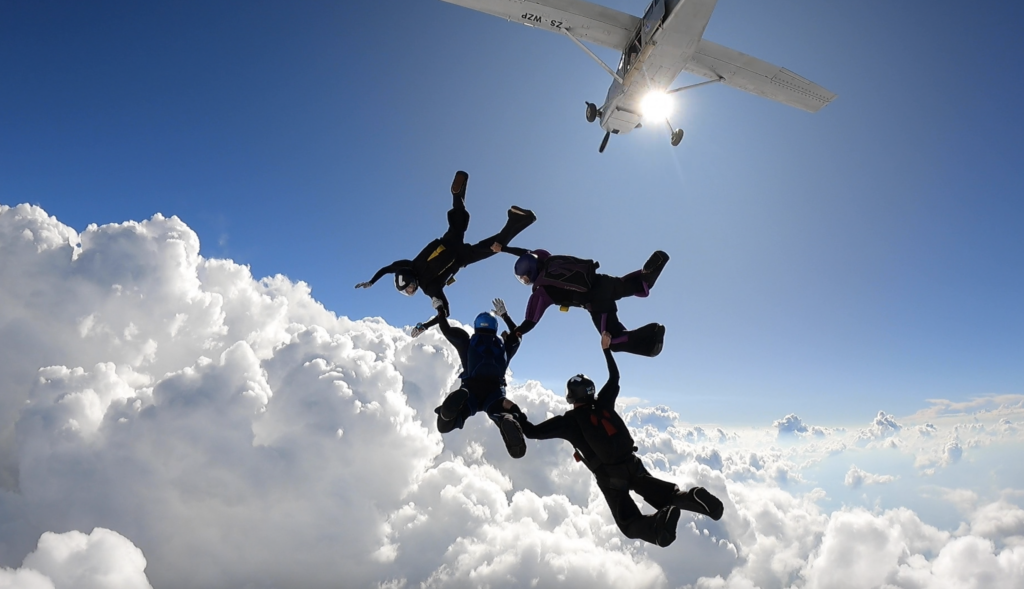
Arizona Airspeed: Formation Skydiving Dynasty
Arizona Airspeed, formed in 1993, became the most successful 4-way formation skydiving team in history, with members who rank among famous skydivers in history for their competitive dominance.
Team Achievements:
- 16 U.S. National Championships (as of 2025)
- 6 World Championship gold medals
- Revolutionized training methodologies for formation teams
- Set numerous formation skydiving records
Notable Team Members:
- Dan BC (Dan Brodsky-Chenfeld): Team captain and author
- Mark Kirkby: Legendary videographer and organizer
- Craig Girard: Multiple world champion across different formations
- Thomas Hughes: Technical innovator and competitor
Arizona Airspeed’s systematic training approach, video analysis techniques, and professional athlete mentality elevated formation skydiving from hobby to serious sport, influencing competitive skydivers worldwide.
Wingsuit and BASE Jumping Innovators
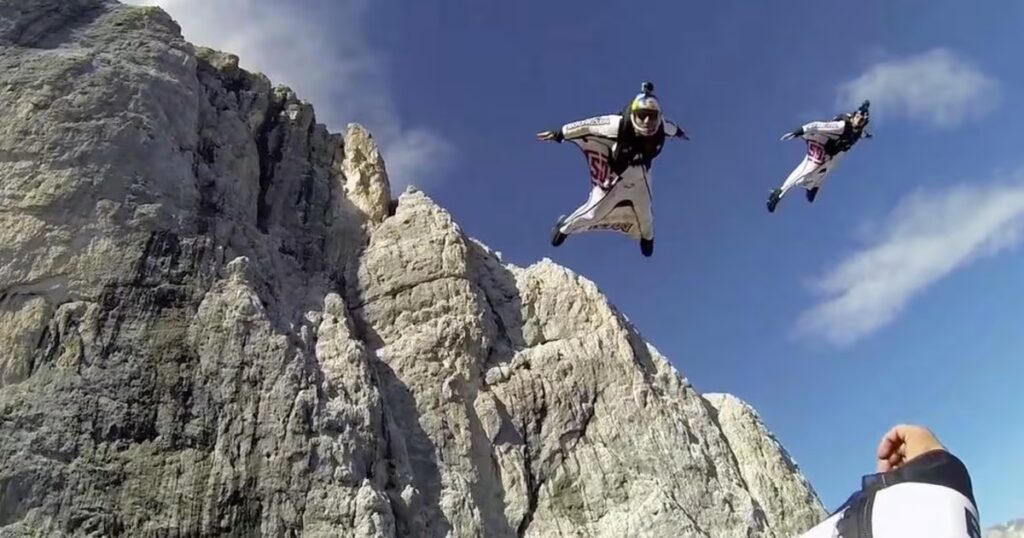
Wingsuit flying represents skydiving’s most dramatic recent evolution, with pioneers whose innovations and achievements make them instantly recognizable among famous skydivers in history.
Patrick de Gayardon (1960-1998): The Father of Modern Wingsuits
Patrick de Gayardon’s contributions to wingsuit development, BASE jumping, and skysurfing make him one of the most influential famous skydivers in history despite his tragic death at age 38.
Revolutionary Achievements:
- Developed first modern wingsuit with fabric between legs (1994)
- Pioneered skysurfing (skydiving with aerial board)
- Completed over 12,000 skydives and 1,000+ BASE jumps
- Created foundation for contemporary wingsuit design
De Gayardon’s wingsuit innovations increased horizontal travel from negligible distances to over 1 kilometer per jump, fundamentally changing what was possible in freefall. His designs inspired current manufacturers including Tony Suits and Phoenix Fly.
Tragic End: De Gayardon died in April 1998 during a routine skydive in Hawaii when his main parachute failed to deploy properly. His death shocked the skydiving community but his innovations continue influencing the sport nearly three decades later.
French president Jacques Chirac’s statement following de Gayardon’s death called him “a great champion who pushed back the limits of his discipline,” recognizing his impact extended beyond the skydiving community.
Jeb Corliss (1976-Present): BASE Jumping’s Public Face
Jeb Corliss became one of the most famous skydivers in history by combining extreme BASE jumping with media savvy, bringing wingsuit flying to mainstream audiences through documentaries and spectacular stunts.
Notable Achievements:
- Jumped from Eiffel Tower (arrested upon landing)
- BASE jumped into an active volcano (Villarrica, Chile)
- Flew through Tianmen Cave in China (2011)
- Featured in multiple documentaries including “Grinding the Crack”
- Survived catastrophic Table Mountain crash (2012)
Corliss’s Table Mountain accident—where he struck a rock outcropping at high speed, severely injuring both legs—became a turning point for BASE jumping safety discussions. His recovery and return to jumping demonstrated the determination characteristic of elite extreme athletes.
Media Impact: Corliss’s appearances in documentaries, television shows, and social media have introduced millions to wingsuit flying, significantly expanding the sport’s popularity and inspiring new participants.
Luigi Cani (1978-Present): Brazilian Wingsuit Ambassador
Luigi Cani ranks among famous skydivers in history for world-record wingsuit performances and bringing skydiving culture to South America through spectacular publicity stunts.
Record Achievements:
- Highest wingsuit exit: 37,265 feet (2012)
- Various long-distance wingsuit records
- Over 10,000 jumps completed
- Multiple TV show appearances and documentaries
Famous Stunts:
- Wingsuit flight through a waterfall in Brazil
- Jump from helicopter to land on moving speedboat
- Numerous cityscape proximity flights
Cani’s charismatic personality and media-friendly approach helped popularize skydiving throughout Brazil and Latin America, regions previously underrepresented in the sport’s global community.
Valery Rozov (1964-2017): Mountain Wingsuit Specialist
Russian BASE jumper Valery Rozov specialized in wingsuit jumps from extreme mountain locations, earning recognition among famous skydivers in history for altitude records and technical difficulty.
Mountain Achievements:
- Mount Everest North Face BASE jump from 23,687 feet (2013)
- Kilimanjaro wingsuit jump (2010)
- Numerous first descents from Himalayan peaks
- Over 10,000 parachute jumps and thousands of BASE jumps
Rozov died in April 2017 during a wingsuit jump from the Ama Dablam mountain in Nepal when he struck a cliff face. His death, like many wingsuit pioneers, underscored the extreme risks inherent in the discipline.
Legacy: Rozov’s systematic approach to mountain BASE jumping—including extensive reconnaissance, weather analysis, and safety protocols—established methodologies that improved survival rates for subsequent mountain proximity flights.
Hollywood Stunt Performers and Aerial Artists
Some famous skydivers in history gained recognition through entertainment rather than competition, bringing aerial artistry to movies, television, and live performances.
Carl Boenish (1941-1984): BASE Jumping Founder
Carl Boenish earned his place among famous skydivers in history by essentially creating BASE jumping as a recognized discipline and documenting early jumps through pioneering aerial cinematography.
Founding Achievements:
- Coined the term “BASE” jumping (Building, Antenna, Span, Earth)
- Completed first BASE jump from Troll Wall, Norway (1984)
- Developed early skydiving cinematography techniques
- Created documentary films that defined BASE jumping culture
BASE Number System: Boenish established the BASE number system, where jumpers receive sequential numbers upon completing jumps from all four categories. As of 2026, over 2,000 people have received BASE numbers, creating a community descended directly from Boenish’s vision.
Boenish died in July 1984 during his third Troll Wall jump when he struck the cliff face. His widow, Jean Boenish, continued his legacy through documentary work and became one of the first women to receive a BASE number.
Rick Sylvester (1942-Present): James Bond’s Ski-BASE Pioneer
Rick Sylvester became one of the most famous skydivers in history through a single iconic stunt: the ski-BASE jump opening the James Bond film “The Spy Who Loved Me” (1977).
Career Highlights:
- Iconic ski-BASE jump from Mount Asgard, Canada (3,300-foot cliff)
- First person to ski off El Capitan with BASE jump (1972)
- Numerous film and commercial stunt performances
- Pioneered combining skiing with BASE jumping
Sylvester’s Mount Asgard jump required three attempts over two weeks due to weather, ultimately creating one of cinema’s most memorable opening sequences. He reportedly earned $30,000 for the stunt—a massive sum in 1976 but modest considering the risk and resulting fame.
Academic Background: Uniquely among famous skydivers in history, Sylvester held a Ph.D. and taught filmmaking at University of California before dedicating himself to professional stunts.
Joe Jennings (1948-Present): Precision Aerial Coordinator
Joe Jennings built his reputation among famous skydivers in history through Hollywood stunt coordination, working on major productions requiring complex aerial sequences.
Film Career Highlights:
- Aerial coordinator for “Point Break” (1991)
- Coordinated skydiving sequences for “Cutaway” (2000)
- Worked on “Drop Zone” (1994) and numerous action films
- Over 8,000 jumps and decades of stunt coordination experience
Jennings’ technical expertise ensured realistic aerial sequences while maintaining actor and stunt performer safety. His work influenced how Hollywood portrays skydiving, improving accuracy compared to earlier films that relied heavily on unconvincing effects.
Mike Swanson (1950-2000): Skysurfing Pioneer
Mike Swanson helped develop skysurfing in the early 1990s, becoming recognized among famous skydivers in history for aerial board maneuvers that attracted MTV Sports coverage.
Skysurfing Contributions:
- Multiple X Games skysurfing medals
- Developed tricks and maneuvers still used by skydivers
- Brought skydiving to extreme sports television audiences
- Mentored next generation of aerial performance athletes
Swanson died in February 2000 in a skydiving accident, but his contributions to aerial performance and media representation of skydiving influenced thousands of jumpers who entered the sport through extreme sports culture.
Modern Influencers and Social Media Stars
The digital age created a new category of famous skydivers in history—those who built massive followings through Instagram, YouTube, and TikTok, bringing the sport to audiences far beyond traditional skydiving communities.
Roberta Mancino (1980-Present): Supermodel Skydiver
Italian model and skydiver Roberta Mancino uniquely combines fashion modeling with world-class skydiving achievements, making her one of the most recognizable famous skydivers in history to mainstream audiences.
Dual Career Achievements:
- Over 10,000 skydives completed
- Multiple world records in formation skydiving
- Appeared in Sports Illustrated, Vogue, and major fashion magazines
- Featured in Red Bull promotional content and documentaries
- Professional wingsuit pilot and BASE jumper
Unique Stunts:
- Wingsuit flight with a flock of eagles
- Underwater photography while freediving with sharks
- Skydiving in formal gowns for fashion photography
Mancino’s Instagram following exceeds 500,000 (as of 2026), introducing skydiving culture to fashion and lifestyle audiences typically disconnected from extreme sports. Her ability to perform at elite levels in both modeling and skydiving challenges stereotypes about both professions.
Travis Pastrana (1983-Present): Multisport Extreme Athlete
While better known for motocross and rally racing, Travis Pastrana’s skydiving exploits—particularly jumping without a parachute—earned him recognition among famous skydivers in history.
Skydiving Achievements:
- Completed first skydive into a body of water without parachute (2006)
- Jumped from 25,000 feet and caught by another skydiver mid-air
- Numerous BASE jumps and proximity flights
- Featured in Nitro Circus skydiving stunts
Pastrana’s 2006 stunt involved freefalling 13,500 feet before being caught by a skydiver with a parachute—a dangerous feat requiring precise timing and spatial awareness. The stunt aired on ESPN and introduced millions to advanced skydiving capabilities.
Media Empire: Pastrana’s Nitro Circus franchise brought extreme sports including skydiving to global audiences through live shows, television series, and films, significantly expanding the sport’s visibility.
Melissa Andrzejewski (1990-Present): Plus-Size Skydiving Advocate
Melissa Andrzejewski became one of the more recently recognized famous skydivers in history by challenging body image stereotypes in skydiving and building a substantial social media following around body-positive extreme sports participation.
Advocacy Achievements:
- Over 2,000 jumps completed
- Instagram following of 100,000+ focused on plus-size outdoor adventure
- Challenged drop zone weight restrictions through advocacy
- Mentored hundreds of first-time jumpers concerned about body size
Andrzejewski’s visibility helped numerous people who felt excluded from skydiving due to body size take their first jumps, expanding the sport’s demographic diversity. Her advocacy led some drop zones to reevaluate equipment and policies to accommodate broader weight ranges safely.
Norman Kent (1952-Present): Aerial Cinematographer Extraordinaire
Norman Kent’s spectacular freefall cinematography made him one of the most influential famous skydivers in history despite rarely appearing on-camera himself.
Cinematography Career:
- Filmed skydiving sequences for major motion pictures
- Created Red Bull promotional content
- Shot footage for countless documentaries
- Over 22,000 jumps with camera equipment
- Founded Air to Air Productions
Technical Innovation: Kent pioneered camera helmet designs, stability techniques for filming in freefall, and editing approaches that capture skydiving’s visual drama. His work appears in virtually every major skydiving documentary of the past three decades.
Kent’s footage introduced millions to skydiving’s beauty through compelling visual storytelling, arguably doing more to popularize the sport than any other single individual in recent decades.
Women Who Broke Barriers in Skydiving
Women faced significant barriers entering skydiving throughout history, making these pioneering female skydivers particularly significant among famous skydivers in history.
Dolly Shepherd (1886-1983): Edwardian Parachute Pioneer
British parachutist Dolly Shepherd performed balloon parachute jumps across England in the early 1900s, becoming one of the earliest famous skydivers in history despite receiving less recognition than male contemporaries.
Career Highlights:
- Completed over 200 parachute jumps between 1903-1912
- Survived multiple equipment failures
- Rescued another female parachutist during a jump when her parachute failed
- Lived to age 96, witnessing skydiving’s evolution from exhibition curiosity to established sport
Shepherd’s 1908 rescue of parachutist Louie May—catching her and sharing a single parachute after May’s failed to open—remains one of skydiving’s most heroic acts. Both women survived despite landing hard in trees.
Jackie Smith (1925-1987): Post-War Pioneer
Jackie Smith established herself among famous skydivers in history by becoming one of the first women to skydive recreationally in the United States after World War II, when the sport remained predominantly male.
Breaking Barriers:
- First licensed female skydiver in several U.S. states
- Competed in early national championships
- Mentored numerous women entering the sport
- Completed over 3,000 jumps during her career
Smith faced constant discrimination, including drop zones refusing to allow women to jump or requiring male “approval” for female participants. Her persistence helped establish women’s legitimate participation in recreational skydiving.
Debbie Williams (1959-Present): World Champion and Coach
Debbie Williams earned recognition among famous skydivers in history through competitive excellence and subsequent coaching that developed multiple world champions.
Competitive Achievements:
- Multiple U.S. National Championship medals
- World Championship competitions in accuracy landing and formation skydiving
- Over 12,000 jumps completed
- Founded women’s skydiving camps and training programs
Williams’ coaching focused specifically on helping women overcome physical and psychological barriers in skydiving competition, developing techniques that accounted for physiological differences while maximizing performance.
Pamela Bridgman (1968-2004): British Skydiving Pioneer
Pamela Bridgman became one of Britain’s most accomplished famous skydivers in history before her tragic death during a routine jump in 2004.
Record Achievements:
- Over 10,000 jumps completed
- British women’s accuracy landing champion multiple years
- International competition medals
- Dedicated instructor who trained hundreds of new skydivers
Bridgman’s death during a canopy collision highlighted ongoing safety challenges in busy skies, leading to improved air traffic protocols at many drop zones worldwide.
Tragic Heroes: Skydivers Lost Too Soon
Many famous skydivers in history died pursuing their passion, their losses reminding the community of the sport’s inherent dangers while their achievements inspire continued innovation.
Rob Harris (1962-1995): Competitive Formation Star
Rob Harris excelled in formation skydiving during the 1980s and early 1990s, establishing himself among famous skydivers in history before dying in a BASE jumping accident in 1995.
Achievements:
- Multiple national formation skydiving championships
- Member of legendary Golden Knights demonstration team
- Over 3,000 skydives and hundreds of BASE jumps
- Pioneered advanced formation techniques
Harris died during a BASE jump from the New River Gorge Bridge in West Virginia during Bridge Day—an annual event where BASE jumping is legal. His death, along with several others during that period, led to improved safety protocols for organized BASE jumping events.
Dwain Weston (1975-2003): Proximity Flying Pioneer
Australian skydiver Dwain Weston pushed wingsuit proximity flying boundaries, becoming recognized among famous skydivers in history for both his achievements and his cautionary death.
Career Highlights:
- World-record long-distance wingsuit flight (2002)
- Featured in documentaries and extreme sports media
- Pioneered close-proximity wingsuit techniques
- Over 1,500 skydives and numerous BASE jumps
Weston died in October 2003 attempting to fly under the Royal Gorge Bridge in Colorado during a stunt. He struck the bridge at high speed, dying instantly. His death sparked extensive debate about risk management in wingsuit flying and influenced safety culture in the BASE community.
Legacy Impact: Weston’s accident led to more conservative approach planning among professional wingsuit pilots and development of better risk assessment methodologies.
Russell Powell (1974-2012): British Skydiving Champion
Russell Powell established himself among British famous skydivers in history through competitive excellence before dying in a skydiving accident in Switzerland in 2012.
Achievements:
- British national champion in multiple disciplines
- Over 5,000 jumps completed
- Coached numerous competitors
- Advocate for skydiving safety improvements
Powell’s death during a routine formation jump resulted from a mid-air collision, highlighting that even experienced professionals face risks despite extensive training and precautions.
Frequently Asked Questions
Q: Who is considered the most famous skydiver in history?
A: Felix Baumgartner is arguably the most famous skydiver in history due to his 2012 Red Bull Stratos jump from 128,100 feet, which was watched live by 8 million viewers worldwide. His freefall breaking the sound barrier created unprecedented media coverage. However, Joseph Kittinger deserves equal recognition for his 1960 record that stood for 52 years and his subsequent 52-year career advancing aerospace safety. Among competitive skydivers, Cheryl Stearns holds the most records with over 21,000 jumps and 20 World Championship gold medals.
Q: Who was the first person to ever parachute jump?
A: André-Jacques Garnerin completed the first documented successful parachute jump on October 22, 1797, descending from approximately 3,000 feet above Paris in a hot air balloon. While some earlier parachute experiments occurred, Garnerin’s was the first well-documented, intentional jump using a purpose-built parachute that safely returned the jumper to earth. His frameless, 23-foot diameter canvas parachute attached to a basket, though primitive by modern standards, proved the fundamental concept of controlled parachute descent.
Q: What famous skydivers have died doing their sport?
A: Many legendary skydivers died pursuing their passion, including Patrick de Gayardon (1998, skydiving equipment malfunction), Dwain Weston (2003, wingsuit bridge strike), Valery Rozov (2017, mountain BASE jumping collision), Rob Harris (1995, BASE jumping accident), and Nick Piantanida (1966, pressure suit failure during stratospheric attempt). Carl Boenish, who founded BASE jumping, died in 1984 during a Troll Wall jump. These tragedies remind the community that despite technological advances and improved safety protocols, skydiving and BASE jumping remain inherently dangerous activities even for the most experienced professionals.
Q: Who holds the highest skydive record currently?
A: Alan Eustace holds the current highest skydive record, jumping from 135,890 feet (41,419 meters) on October 24, 2014, in Roswell, New Mexico. His StratEx jump exceeded Felix Baumgartner’s more famous 2012 record by nearly 8,000 feet. Eustace, a Google executive, self-funded the $3 million project and deliberately avoided the extensive media coverage that accompanied Baumgartner’s Red Bull-sponsored jump. Eustace used a balloon-attached suit system rather than a capsule, representing a different technical approach to stratospheric jumping.
Q: Are there any famous female skydivers?
A: Yes, numerous women rank among famous skydivers in history. Cheryl Stearns holds more competitive skydiving records than any person regardless of gender, with 21,000+ jumps and 20 World Championship gold medals. Tiny Broadwick (1893-1978) was the first woman to parachute from an airplane (1913) and invented the ripcord system. Roberta Mancino combines professional modeling with world-class skydiving and wingsuit flying, holding multiple world records. Dolly Shepherd performed over 200 exhibition jumps in Edwardian England (1903-1912). These women not only achieved personal excellence but also opened opportunities for subsequent generations.
Q: Who invented modern skydiving?
A: Leslie Irvin is considered the father of modern skydiving for making the first premeditated freefall jump using a manually-operated parachute on April 28, 1919. Irvin developed the first parachute pack worn on the back and founded the Irving Air Chute Company, which produced millions of parachutes saving countless lives during World War II. However, the sport evolved through contributions from many pioneers including Tiny Broadwick (ripcord concept), André-Jacques Garnerin (first successful jump), and military innovators who developed training protocols and equipment improvements throughout the 20th century.
Q: What military personnel are famous for skydiving?
A: Captain Joseph Kittinger ranks highest among military famous skydivers in history for his record stratospheric jumps (1960), 483 Vietnam combat missions, and decades of aerospace research. Major General William C. Lee founded U.S. Airborne forces. Lieutenant General James M. Gavin led combat parachute assaults during World War II despite his senior rank. Cheryl Stearns served 29 years in the U.S. Army, retiring as Sergeant Major while competing as a world champion. Soviet VDV airborne forces produced numerous legends, though many remain lesser-known in Western accounts due to Cold War secrecy.
Q: Who are the most famous BASE jumpers?
A: Carl Boenish founded BASE jumping and created the BASE numbering system before dying in 1984. Jeb Corliss became BASE jumping’s public face through spectacular stunts and documentaries, surviving a near-fatal Table Mountain crash in 2012. Patrick de Gayardon revolutionized wingsuit design before his 1998 death. Valery Rozov specialized in mountain BASE jumps from peaks including Mount Everest before dying in 2017. Dean Potter combined BASE jumping with highlining and free soloing before his 2015 death in Yosemite. These athletes pushed boundaries while accepting extraordinary risks, with several losing their lives pursuing their passion.
Q: How do skydivers become famous?
A: Famous skydivers in history achieved recognition through various paths: record-breaking achievements (Baumgartner, Kittinger, Eustace), competitive dominance (Cheryl Stearns, Ray Young), technological innovation (Patrick de Gayardon, Leslie Irvin), military service (Joseph Kittinger, James Gavin), media visibility (Roberta Mancino, Jeb Corliss), or Hollywood stunts (Rick Sylvester, Carl Boenish). Modern skydivers gain fame through social media platforms, building audiences through spectacular photography and video. However, true recognition within the skydiving community requires sustained excellence, innovation, or contributions that advance the sport beyond personal achievement.
Q: Who has completed the most skydives ever?
A: Cheryl Stearns holds the women’s record with over 21,000 documented jumps as of 2026 and continues jumping. For men, Don Kellner completed over 22,000 jumps before his death in 1978, while Jay Stokes (detailed below) completed extraordinary jump volume in compressed timeframes. However, precise records for lifetime total jumps become difficult to verify for skydivers active before electronic logging systems. Many professional skydivers including instructors, videographers, and demonstration team members complete 500-1,000+ jumps annually, accumulating 10,000-20,000+ lifetime jumps over multi-decade careers.
Q: What famous people have gone skydiving?
A: Numerous celebrities have skydived, though few became famous skydivers themselves. President George H.W. Bush jumped on his 75th, 80th, 85th, and 90th birthdays. Kate Winslet, Tom Cruise (who performs his own stunts), and Brad Pitt have made jumps. Travis Pastrana combines skydiving with motocross fame. Roberta Mancino uniquely achieved fame in both fashion modeling and skydiving. However, there’s an important distinction between celebrities who skydive occasionally and true famous skydivers in history who achieved recognition primarily through their contributions to the sport itself.
Q: Who broke the sound barrier in freefall?
A: Felix Baumgartner became the first human to break the sound barrier in freefall on October 14, 2012, during his Red Bull Stratos jump from 128,100 feet. He reached a maximum speed of 843.6 mph (Mach 1.25) during his 4-minute, 19-second freefall. Alan Eustace also exceeded the sound barrier during his 2014 record jump from 135,890 feet, reaching approximately 822 mph (Mach 1.23). Both jumps required specialized pressure suits, medical support, and extensive scientific research to ensure human survival at supersonic speeds in the near-vacuum of the stratosphere.
Q: Are there any famous skydiving accidents?
A: Several accidents involving famous skydivers in history profoundly impacted the sport. Nick Piantanida’s 1966 pressure suit failure during a stratospheric attempt led to his death after months in a coma, highlighting extreme altitude dangers. Patrick de Gayardon died in 1998 from equipment malfunction, shocking the community given his extensive experience. Dwain Weston’s 2003 death attempting to fly under the Royal Gorge Bridge sparked debates about acceptable risk in wingsuit flying. Dean Potter’s 2015 wingsuit accident in Yosemite led to renewed scrutiny of proximity flying. These tragedies led to improved safety protocols, equipment standards, and risk assessment methodologies.
Q: What records exist in skydiving?
A: Major skydiving records include highest jump (Alan Eustace, 135,890 feet), fastest freefall (Felix Baumgartner, 843.6 mph), most jumps in 24 hours (Jay Stokes, 640 jumps), largest formation (357 skydivers in Thailand, 2006), and longest wingsuit distance (multiple records in the 15+ kilometer range). Competitive records exist for accuracy landing (Cheryl Stearns: 50 consecutive dead centers), formation completion times, and canopy piloting speed. Record attempts continue advancing the sport’s boundaries, though many focus increasingly on safety and scientific contribution rather than pure spectacle.
Q: How has skydiving changed since the early pioneers?
A: Skydiving transformed dramatically from early pioneers’ round parachutes and minimal safety equipment to today’s high-performance ram-air canopies, automatic activation devices (AADs), GPS-enabled altimeters, and wind tunnels for skill development. Fatality rates decreased from approximately 1 per 1,000 jumps in the 1960s to less than 1 per 100,000 jumps today. Competition disciplines expanded from basic accuracy landing to formation skydiving, freeflying, canopy piloting, and wingsuit racing. Perhaps most significantly, skydiving accessibility improved dramatically—what once required military training or substantial wealth is now available to the general public through tandem jumping and systematic training programs.
Conclusion
The history of skydiving is written in courage, innovation, and sometimes tragedy. From André-Jacques Garnerin’s first leap from a balloon in 1797 to Felix Baumgartner’s stratospheric freefall in 2012, famous skydivers in history have consistently pushed boundaries and expanded human capabilities.
These legends fall into recognizable categories: pioneers who proved parachuting could save lives, military heroes who transformed jumping into tactical warfare, record-breakers who reached unprecedented altitudes, competitive champions who elevated skydiving to artistic sport, innovators who developed wingsuits and new disciplines,Death Rate in Skydiving , entertainers who brought the sport to mainstream audiences, and tragic heroes whose losses reminded the community of inherent risks while inspiring improved safety.
Key takeaways from famous skydivers in history:
- Innovation drives progress – From Leslie Irvin’s manually-operated parachute to Patrick de Gayardon’s wingsuit designs, technological advances consistently emerged from individual skydivers willing to experiment and take calculated risks
- Women consistently overcame barriers – Despite facing discrimination and limited opportunities, women like Tiny Broadwick, Dolly Shepherd, and Cheryl Stearns achieved excellence and opened doors for subsequent generations
- Military applications advanced civilian sport – Airborne forces’ equipment improvements, training methodologies, and safety protocols directly benefited recreational skydiving
- Media visibility matters – Modern famous skydivers like Roberta Mancino and Jeb Corliss introduced millions to the sport through social media and documentaries, dramatically expanding participation
- Risks remain despite advances – The deaths of experienced professionals including de Gayardon, Weston, and Rozov remind us that even with modern equipment and knowledge, skydiving retains inherent dangers requiring constant vigilance
As we progress through 2026, new skydivers continue writing their chapters in this ongoing story. Technological advances in wingsuits, canopy designs, and safety equipment promise new records and possibilities. However, the fundamental human impulse driving famous skydivers in history remains unchanged—the desire to experience unencumbered flight and push beyond previously accepted limitations.
Whether you’re inspired to make your first tandem jump or simply appreciate these remarkable individuals from a distance, the legacy of famous skydivers in history demonstrates what humans can achieve when passion, courage, and innovation combine. Their stories transcend sport, offering lessons about calculated risk-taking, persistence through failure, and the transformative power of pursuing dreams despite danger.
The next chapter of skydiving history is being written today by jumpers around the world—perhaps one of them will join this list of legends in future decades.