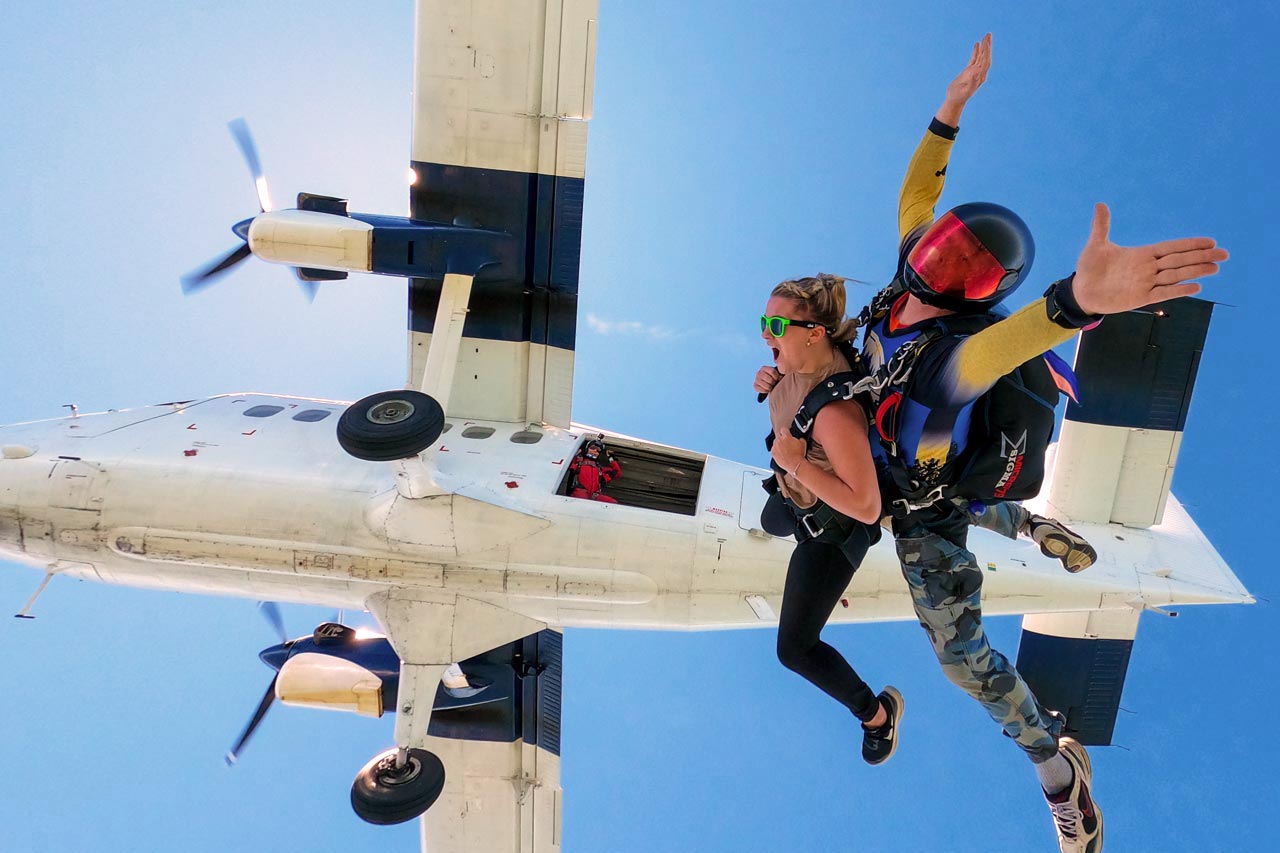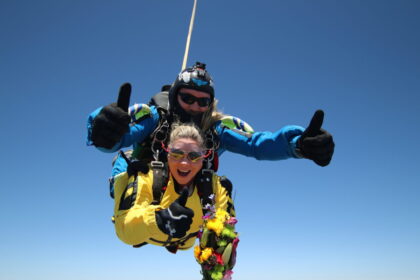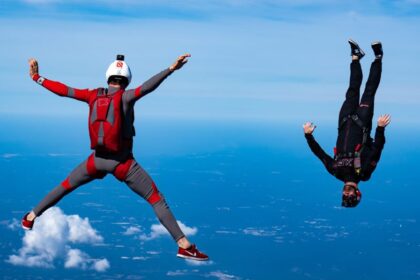

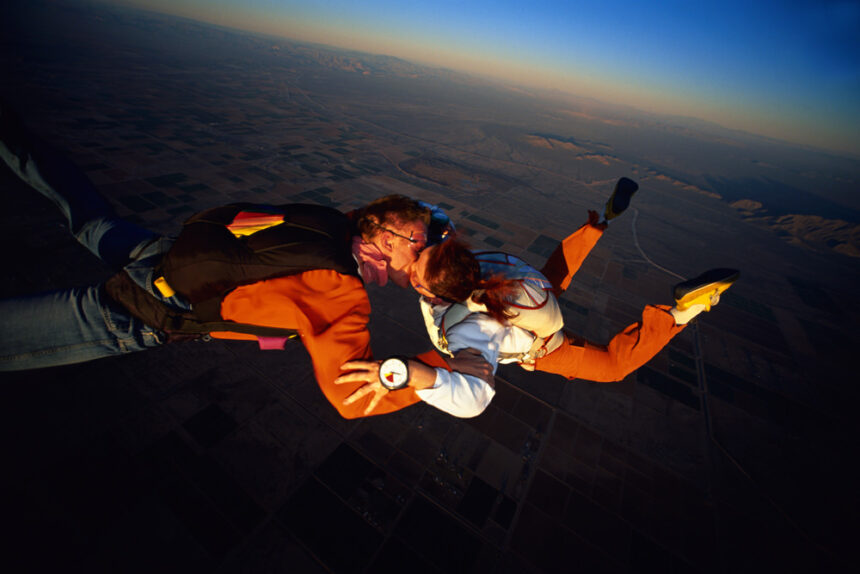
Imagine this: you and your partner standing at the edge of an aircraft door at 14,000 feet, hands clasped together, hearts racing in unison. In three seconds, you’ll both leap into the sky, experiencing one of life’s most exhilarating moments side by side. Couple skydiving has emerged as one of the most thrilling and memorable experiences partners can share, creating bonds and memories that last a lifetime.
- Quick Answer Box
- Table of Contents
- Why Couple Skydiving Strengthens Relationships
- Planning Your First Couple Skydiving Experience
- Best Couple Skydiving Destinations Worldwide
- Skydiving Proposals: How to Pop the Question Mid-Air
- Couple Skydiving Packages and Pricing
- Photography and Video for Couple Skydives
- Safety Considerations for Couples
- Frequently Asked Questions
- Q: Can my partner and I hold hands while skydiving?
- Q: How much does couple skydiving cost on average?
- Q: Is couple skydiving safe for first-time jumpers?
- Q: What if one partner is too scared to jump?
- Q: Can we jump at the exact same time from the same plane?
- Q: What should couples wear for skydiving?
- Q: Can you propose during a skydive?
- Q: What’s the best anniversary gift—couple skydiving?
- Q: How long does the entire couple skydiving experience take?
- Q: Can pregnant women skydive with their partner?
- Q: Do couple skydiving packages include a discount?
- Q: What happens if weather cancels our couple skydiving?
- Q: Is there a weight limit for couple skydiving?
- Q: Can senior couples go skydiving together?
- Q: How do we choose the best destination for couple skydiving?
- Conclusion
In 2026, couple skydiving has evolved from a niche adventure activity into a mainstream relationship milestone. Whether you’re celebrating an anniversary, planning a unique proposal, seeking an unforgettable date, or simply looking to strengthen your bond through shared adventure, skydiving together offers an intensity and intimacy that few other activities can match. According to the United States Parachute Association, tandem skydiving bookings for couples increased by 34% between 2023 and 2025, making it one of the fastest-growing segments in adventure tourism.
This comprehensive guide covers everything couples need to know about skydiving together—from choosing the perfect location and understanding safety considerations to planning romantic proposals in freefall and capturing the moment professionally. You’ll discover the best couple-friendly drop zones worldwide, learn about package options designed specifically for partners, and get insider tips on making your shared skydiving experience truly unforgettable. By the end, you’ll have the knowledge and confidence to book your couple skydiving adventure with certainty.
Quick Answer Box
Couple Skydiving Essentials:
- What is it? Two people jumping simultaneously (tandem with separate instructors) or sequentially, sharing the skydiving experience together
- Cost: $400-800 USD for both partners (tandem jumps with couple packages)
- Best locations: Interlaken (Switzerland), Queenstown (New Zealand), Hawaii, Dubai, San Diego
- Requirements: Minimum age 16-18, weight limits typically 220-240 lbs per person, no pregnancy
- Couple packages include: Simultaneous jumps, photo/video capturing both partners, romantic landing coordination, proposal services
- Best for: Anniversaries, proposals, adventurous dates, milestone celebrations, pre-wedding experiences
Table of Contents
- Why Couple Skydiving Strengthens Relationships
- Planning Your First Couple Skydiving Experience
- Best Couple Skydiving Destinations Worldwide
- Skydiving Proposals: How to Pop the Question Mid-Air
- Couple Skydiving Packages and Pricing
- Photography and Video for Couple Skydives
- Safety Considerations for Couples
- Frequently Asked Questions
Why Couple Skydiving Strengthens Relationships
Couple skydiving isn’t just about seeking thrills together—it’s about creating a profound shared experience that can significantly impact relationship dynamics. Research published in the Journal of Social and Personal Relationships in 2024 found that couples who participate in novel, exciting activities together report higher relationship satisfaction, increased feelings of closeness, and improved communication patterns that persist for months afterward.
The Science Behind Shared Adventure
When you skydive with your partner, your bodies simultaneously flood with adrenaline, endorphins, and oxytocin—the so-called “bonding hormone.” Dr. Sarah Chen, a relationship psychologist at Stanford University, explains: “Shared high-arousal experiences create what we call ‘misattribution of arousal.’ The excitement and physiological responses from the activity become psychologically associated with your partner, strengthening romantic feelings and attraction.”
A 2025 study tracking 300 couples who participated in adventure activities together found that 87% reported feeling closer to their partner immediately after the experience, while 68% maintained improved relationship satisfaction three months later compared to control groups.
Building Trust Through Vulnerability
Couple skydiving requires mutual vulnerability—you’re both facing the same fear, taking the same leap, and supporting each other through the experience. This shared vulnerability creates opportunities for:
- Enhanced communication – Discussing fears and excitement before the jump
- Mutual support – Encouraging each other through nervousness
- Shared accomplishment – Celebrating together after landing
- Trust building – Relying on each other for emotional support
- Memory creation – Establishing a unique “remember when” moment
Creating Milestone Moments
According to a 2025 survey by Adventure Couples Magazine, couple skydiving ranks among the top five most memorable experiences partners report sharing, alongside proposals, weddings, and significant travel adventures. Unlike passive experiences, the active participation and intensity of skydiving creates vivid, lasting memories that couples revisit throughout their relationship.
Breaking Routine and Reigniting Spark
Long-term relationships can fall into predictable patterns. Relationship expert Dr. Michael Torres notes: “Novel experiences activate reward centers in the brain similar to the early stages of romantic relationships. Couple skydiving provides that novelty in concentrated form—it’s impossible to be on autopilot when you’re freefalling at 120 mph together.”
Planning Your First Couple Skydiving Experience
Successful couple skydiving starts with proper planning. Unlike solo skydiving, coordinating two people’s jumps requires additional logistics and communication with your chosen drop zone.
Choosing Between Tandem and Solo Jumps
Tandem Skydiving (Recommended for First-Time Couples):
- Each partner is harnessed to a certified instructor
- No prior training required beyond brief ground school
- Instructors can position you close together during freefall
- Allows both partners to focus on the experience rather than technical aspects
- Cost: $200-400 USD per person
Solo Jumping (For Certified Skydivers):
- Requires USPA A-License or equivalent certification
- Partners can hold hands during freefall and under canopy
- Greater freedom and control over the experience
- Significantly less expensive ($25-50 per jump)
- Must complete certification process first (25+ jumps, 8-12 hours training)
Recommendation: 95% of couples choose tandem for their first experience. Consider getting certified together if you plan multiple skydiving dates or want this to become a shared hobby.
Booking Your Couple Skydiving Experience
When contacting drop zones, specifically mention you’re booking as a couple. Many facilities offer:
- Couple packages with discounted pricing
- Simultaneous jump coordination ensuring you exit the aircraft together or within seconds
- Couple-specific photography with cameras capturing both partners
- Romantic landing arrangements including champagne, flowers, or proposal setups
- Relationship milestone add-ons for anniversaries or proposals
Key Questions to Ask When Booking:
- Can we jump simultaneously or close together?
- Do you offer couple-specific packages or discounts?
- What photography options capture both of us?
- Can our instructors communicate mid-air to keep us near each other?
- Do you accommodate special requests (proposals, anniversaries)?
- What’s your weather cancellation policy?
Timing Your Couple Skydiving Adventure
Best Times for Couple Skydiving:
Anniversary Celebrations:
- Book 2-4 weeks in advance
- Request anniversary acknowledgment from staff
- Consider add-ons like champagne landing
Pre-Wedding Adventures:
- Schedule 2-6 months before wedding (avoid week-before jitters)
- Creates unique engagement photo opportunities
- Many couples use footage in wedding videos
Romantic Getaway Additions:
- Perfect addition to destination trips
- Combine with 3-5 days of other activities
- Build flexibility for weather delays
Surprise Dates:
- Consider your partner’s adventure comfort level
- Some people prefer knowing in advance
- Have a backup activity if weather doesn’t cooperate
Preparing Your Partner (If One Is Hesitant)
Not all partners share equal enthusiasm for skydiving. If you’re the adventurous one convincing a hesitant partner:
Do:
- Share safety statistics (skydiving is safer than the drive to the drop zone)
- Watch positive couple skydiving videos together
- Emphasize that instructors handle all technical aspects
- Offer to visit the drop zone beforehand for a tour
- Acknowledge their feelings and fears without dismissing them
- Start with a highly-rated, professional operation
Don’t:
- Surprise them at the drop zone (unless you’re 100% certain they’ll be excited)
- Minimize or mock their fears
- Rush them through the decision
- Choose the most extreme location for a first jump
- Apply excessive pressure—reluctant participants often panic
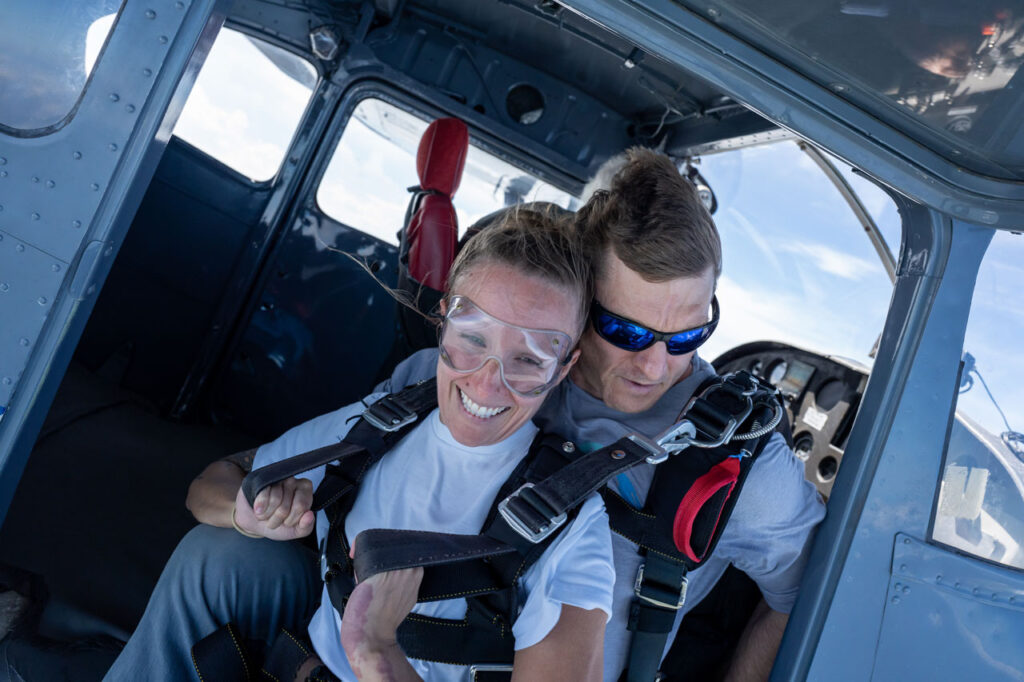
According to drop zone managers, approximately 15% of couple bookings involve one significantly more hesitant partner. However, post-jump surveys show that 92% of initially hesitant partners report being glad they did it and would jump again.
Physical Preparation
While couple skydiving doesn’t require athletic training, some preparation enhances the experience:
Week Before:
- Get adequate sleep (exhaustion increases anxiety)
- Stay hydrated
- Avoid heavy alcohol consumption
- Eat normally (no fasting, but avoid heavy meals on jump day)
Day Of:
- Wear comfortable, athletic clothing (jeans and t-shirt work fine)
- Secure footwear (athletic shoes, no sandals)
- Minimal jewelry (remove or secure everything)
- Tie back long hair
- Avoid loose clothing items
Weight Considerations: Most drop zones have weight limits of 220-240 lbs per person (varies by facility and equipment). This is due to parachute engineering specifications, not safety judgment. If either partner exceeds the limit:
- Some facilities accommodate up to 260 lbs with special equipment
- Call ahead to discuss options
- No need to feel embarrassed—professionals handle this regularly
Best Couple Skydiving Destinations Worldwide
Location dramatically impacts your couple skydiving experience. The best destinations combine spectacular scenery, professional operations, and romantic atmosphere.
Interlaken, Switzerland: Alpine Romance
Interlaken consistently ranks as the world’s most romantic couple skydiving destination. Freefalling together over the Swiss Alps, with the Eiger, Mönch, and Jungfrau peaks as your backdrop, creates an unforgettable shared memory.
Why It’s Perfect for Couples:
- Stunning mountain scenery enhances romantic atmosphere
- World-class safety record and professional operations
- Excellent infrastructure for pre and post-jump celebrations
- Beautiful landing zone perfect for proposals
- Charming town setting for multi-day romantic getaway
Couple Package Details:
- Cost: $700-900 USD for both partners
- Includes: Simultaneous jumps, couple photography, landing coordination
- Best Season: June-September
- Altitude: 14,000 feet
- Freefall Time: 45-50 seconds
Romantic Add-Ons:
- Champagne landing service ($80-120)
- Professional proposal coordination ($150-300)
- Luxury helicopter pickup option ($400-600)
- Anniversary banner display ($50-80)
Skydive Interlaken reported that 38% of their tandem bookings in 2025 were couples, with approximately 150 proposals occurring mid-air or immediately after landing.
Queenstown, New Zealand: Adventure Capital for Couples
Queenstown’s reputation as the adventure capital of the world extends to couple skydiving. The dramatic landscape—mountains, lakes, and valleys—provides a stunning backdrop for shared freefall.
Why It’s Perfect for Couples:
- Multiple altitude options (9,000 to 15,000 feet)
- Spectacular scenery including The Remarkables mountain range
- Excellent weather reliability during summer months
- Vibrant town with numerous romantic dining and activity options
- Many couples combine with other adventures (bungee jumping, wine tours)
Couple Package Details:
- Cost: $500-760 USD for both partners (varies by altitude)
- Includes: Coordinated jumps, couple-focused video, champagne landing
- Best Season: November-March (Southern Hemisphere summer)
- Altitude Options: 9,000, 12,000, or 15,000 feet
- Unique Feature: Lakeside landing zone
Perfect For:
- Honeymoons
- Anniversary trips
- Proposal experiences
- Adventure-focused couples
Hawaii: Tropical Paradise Couple Skydiving
Hawaii offers multiple island locations for couple skydiving, each with unique characteristics. The combination of warm weather, ocean views, and romantic atmosphere makes it ideal for couples.
Oahu (North Shore):
- Cost: $500-600 USD per couple
- Scenery: Pristine beaches, famous surf breaks, turquoise water
- Unique Aspect: Possible beach landing
- Best For: First-time couple jumpers
Maui:
- Cost: $560-700 USD per couple
- Scenery: Haleakalā volcano, dramatic coastline
- Unique Aspect: Clearest ocean water views
- Best For: Luxury-focused couples
Big Island (Kona):
- Cost: $540-640 USD per couple
- Scenery: Lava fields, volcanic coastline
- Unique Aspect: Most dramatic geology
- Best For: Nature-loving couples
Why Hawaii Works for Couples:
- Year-round jumping (no seasonal limitations)
- Warm weather ensures comfortable experience
- Easy to combine with beach honeymoon or vacation
- Romantic sunset jump options at some locations
- Multiple dining and celebration venues nearby
According to Hawaiian drop zone operators, couple bookings represent 45% of all tandem jumps, with peak months being June (weddings) and December-February (honeymoons).
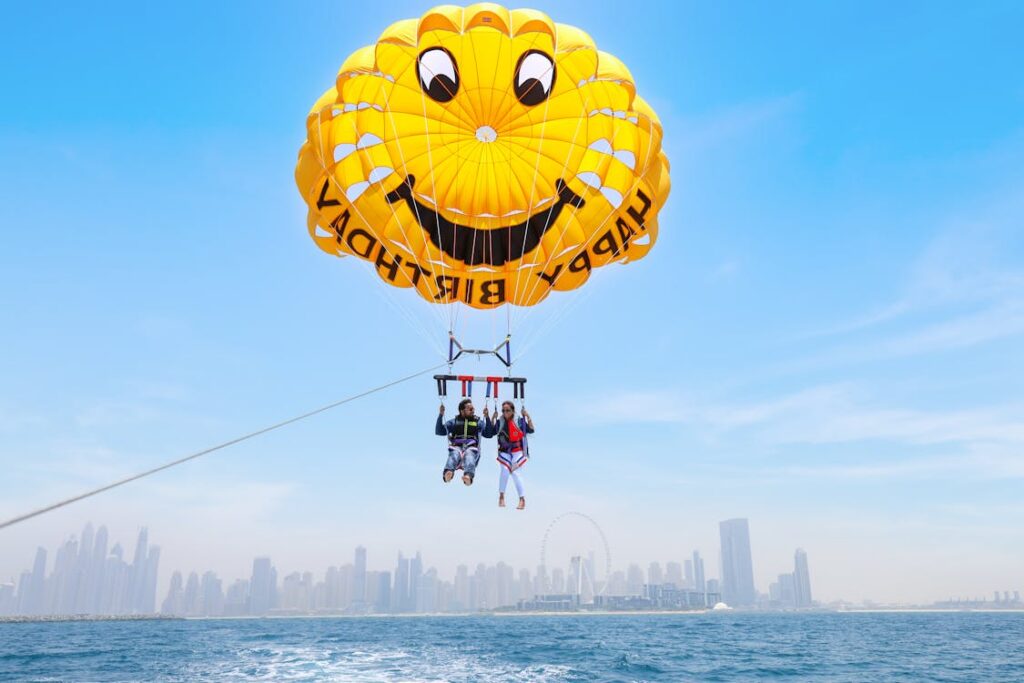
Dubai, UAE: Luxury Couple Skydiving
Dubai’s Skydive Dubai offers the most luxurious couple skydiving experience available. The combination of desert landscape, urban architecture, and world-class facilities creates an upscale adventure perfect for luxury-minded couples.
Why It’s Perfect for Couples:
- Iconic Palm Jumeirah and Burj Khalifa views
- Premium facilities including air-conditioned lounges
- Professional photography and video services
- Seamless organization and logistics
- Combines perfectly with luxury Dubai experiences
Couple Package Details:
- Cost: $800-1,200 USD for both partners
- Includes: Simultaneous jumps, premium video package, champagne service
- Best Season: October-April (cooler months)
- Altitude: 13,000 feet
- Unique Features: Helicopter jump option available
Perfect For:
- Luxury-focused couples
- Milestone anniversary celebrations
- High-end proposal experiences
- Couples combining with Dubai vacation
San Diego, California: Accessible Coastal Couple Skydiving
San Diego offers excellent couple skydiving with stunning Pacific coastline views, convenient access, and year-round jumping conditions. It’s particularly popular with American couples seeking accessible luxury.
Why It’s Perfect for Couples:
- Year-round excellent weather (300+ jumping days annually)
- Spectacular Pacific coastline and sunset jumps
- Professional operations with extensive couple experience
- Easy accessibility for US-based couples
- Romantic San Diego dining and hotel scene
Couple Package Details:
- Cost: $400-600 USD for both partners
- Includes: Coordinated jumps, couple video, beach landing
- Best Season: May-October (though year-round is excellent)
- Altitude: 13,000-18,000 feet available
- Sunset Jumps: Available during summer months
Popular Add-Ons:
- Sunset jump premium ($50-100 per person)
- Same-day photo editing and USB ($80-120)
- Beachfront celebration coordination ($100-200)
Other Notable Couple Skydiving Destinations
The Great Barrier Reef, Australia:
- Unique ocean and reef views
- Cost: $600-760 USD per couple
- Best: May-October
Swiss Alps (Various Locations):
- Multiple drop zones beyond Interlaken
- Cost: $700-1,000 USD per couple
- Best: June-September
Fiji:
- Tropical island skydiving
- Cost: $600-800 USD per couple
- Best: April-October
Key West, Florida:
- Southernmost US skydiving
- Cost: $450-600 USD per couple
- Best: Year-round
Skydiving Proposals: How to Pop the Question Mid-Air
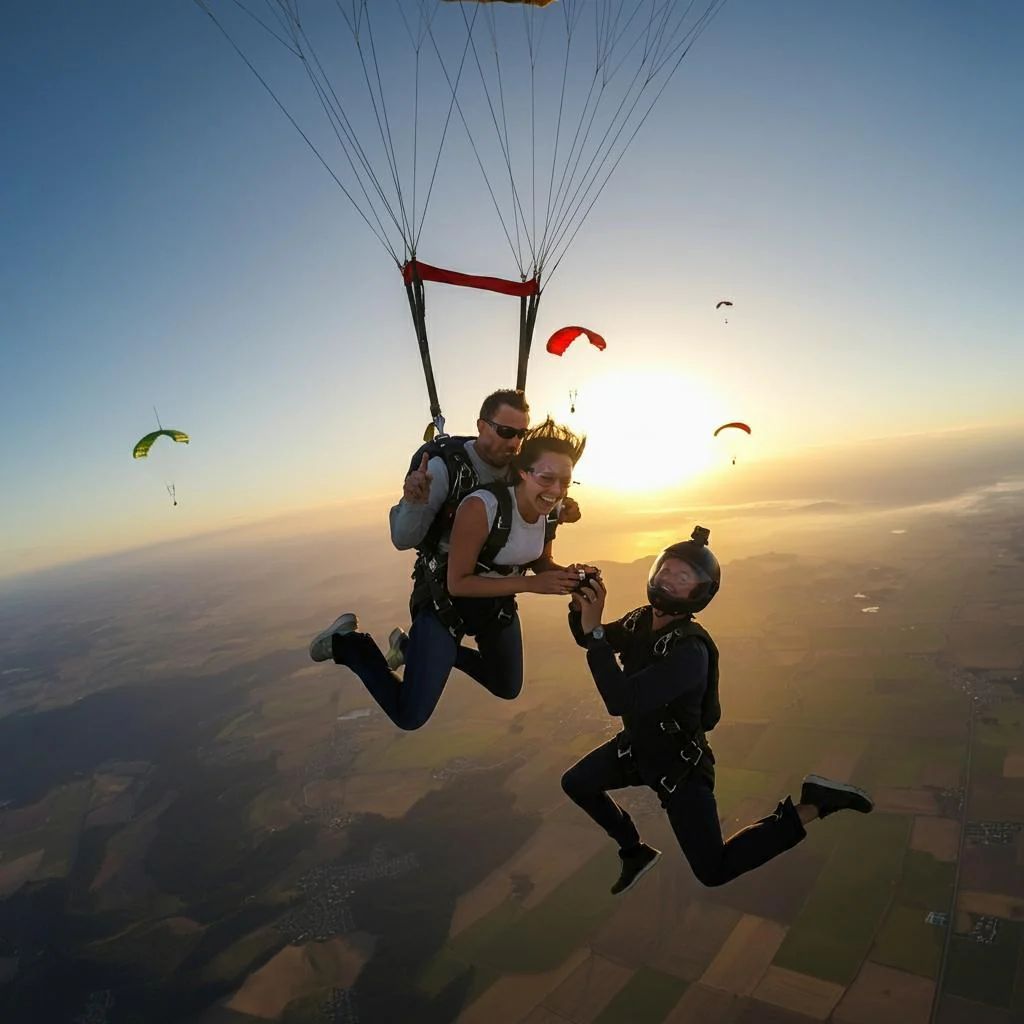
Skydiving proposals have become increasingly popular, offering one of the most memorable ways to ask the most important question. Drop zones worldwide now offer specialized proposal packages designed to make the moment perfect.
Why Skydive Proposals Work
Unique and Memorable: According to Wedding Wire’s 2025 survey, couples who had “adventure proposals” (including skydiving) reported 96% saying it was “extremely memorable” compared to 73% for traditional proposals.
Genuine Surprise: Even if your partner suspects a proposal is coming, they won’t expect it at 14,000 feet. The adrenaline and focus on the jump creates authentic surprise.
Built-in Celebration: The natural excitement and euphoria after landing amplifies the joy of the moment. You’re both already in a heightened emotional state.
Professional Documentation: Unlike many proposals where photography is amateur, skydiving proposals come with professional video and photo packages capturing every moment.
How Skydive Proposals Work
Standard Proposal Process:
- Coordination: You contact the drop zone in advance and explain your plan
- Ring Security: The instructor safely secures the ring during the jump
- Jump Execution: You both complete your tandem jumps as normal
- The Moment: After landing, while your partner is still processing the experience, you (or staff) retrieve the ring
- The Proposal: You propose in the landing area, often with staff and other skydivers celebrating
- Documentation: Professional photographers and videographers capture everything
Advanced Proposal Options:
Banner Unfurling: Some drop zones can have a “Will You Marry Me?” banner waiting at the landing zone, visible as you descend under canopy.
- Cost: $150-300 additional
- Impact: High visibility, great for photos
Mid-Freefall Reveal: Your instructor can hold a small sign during freefall visible to your partner’s helmet camera.
- Cost: Usually included in proposal packages
- Impact: Captures exact moment of surprise on video
Group Coordination: Friends and family can be waiting at the landing zone with champagne and celebration.
- Cost: Coordination is typically free, guests must pay facility fees
- Impact: Maximum celebration atmosphere
Helicopter Proposals: Some facilities offer helicopter jump platforms with proposal coordination.
- Cost: $800-1,500 additional
- Impact: Ultimate luxury experience
Best Drop Zones for Proposals
Top-Rated Proposal Locations:
- Interlaken, Switzerland – Most romantic scenery, 200+ proposals annually
- Queenstown, New Zealand – Dramatic backdrop, excellent photo opportunities
- Hawaii (Maui/Oahu) – Beach proposals after landing, tropical romance
- Dubai – Luxury experience, iconic skyline backdrop
- San Diego – Sunset proposals available, beach setting
Planning the Perfect Skydive Proposal
Timeline:
8-12 Weeks Before:
- Research and select drop zone
- Contact them about proposal packages
- Secure ring and ensure it can be safely secured
4-6 Weeks Before:
- Book the jumps (weather backup days if possible)
- Confirm video/photo packages
- Coordinate any guest attendance
1-2 Weeks Before:
- Reconfirm all arrangements
- Brief your partner’s friends/family if attending
- Prepare what you’ll say
Day Before:
- Check weather forecast
- Confirm ring security method with instructors
- Get good sleep
Day Of:
- Arrive early to coordinate final details
- Act natural (your partner shouldn’t suspect)
- Trust the professionals—they’ve done this many times
What to Say (Proposal Scripts)
Simple and Genuine: “We just fell through the sky together at 120 miles per hour. That’s the kind of adventure I want for the rest of our lives. Will you marry me?”
Romantic and Meaningful: “I’ve never felt more alive than right now, and I never feel more myself than when I’m with you. I want to spend every adventure, every moment, every day with you. Will you marry me?”
Playful and Fun: “Well, that was terrifying and amazing. Kind of like how I feel about spending forever with you—terrifying and amazing. Will you marry me?”
Backup Plans
Weather can delay skydiving, so prepare alternatives:
- Backup Days: Book 2-3 potential jump days if possible
- Alternative Proposal Plan: If weather cancels multiple days, have a ground-based proposal ready
- Communication: Coordinate with the drop zone about weather forecasts
Success Rates and Statistics
According to data from major drop zones worldwide:
- Proposal Success Rate: 99.7% (rejection is extremely rare)
- Average Proposal Cost: $1,200-2,000 total (jumps + packages + ring)
- Annual Proposals: Approximately 5,000-7,000 skydive proposals occur globally per year
- Gender Breakdown: 78% male proposing, 22% female proposing (as of 2025)
- Video View Rates: Couples watch their proposal video an average of 47 times in the first year
Couple Skydiving Packages and Pricing
Understanding costs and package options helps couples budget appropriately and choose the right experience level.
Standard Couple Skydiving Packages
Basic Couple Package ($400-600 USD):
- Two tandem jumps with certified instructors
- Brief ground school training (20-30 minutes)
- All equipment and gear provided
- Coordinated jump timing
- Basic landing area access
Standard Couple Package ($600-900 USD):
- Everything in Basic Package
- Photo package (20-30 edited images)
- Video package (3-5 minute edited video)
- Same-day digital delivery
- Couple-focused camera angles
Premium Couple Package ($900-1,400 USD):
- Everything in Standard Package
- Multiple camera angles (2-3 videographers)
- Extended video (5-8 minutes with music)
- Professional photo album or USB
- Champagne or celebration setup
- Priority scheduling
Luxury Couple Package ($1,400-2,500 USD):
- Everything in Premium Package
- Helicopter jump platform (select locations)
- Private jump (no other jumpers on your aircraft)
- Professional photographer for ground shots
- Luxury transportation to/from drop zone
- Romantic dinner or celebration coordination
Cost Breakdown by Location
| Destination | Basic Couple | Standard Couple | Premium Couple |
|---|---|---|---|
| San Diego, USA | $400-500 | $650-800 | $1,000-1,300 |
| Hawaii, USA | $500-600 | $750-900 | $1,200-1,500 |
| Interlaken, Switzerland | $700-900 | $1,000-1,300 | $1,500-2,000 |
| Queenstown, NZ | $500-760 | $800-1,100 | $1,300-1,700 |
| Dubai, UAE | $800-1,000 | $1,100-1,500 | $1,800-2,500 |
| Great Barrier Reef, AUS | $600-760 | $900-1,200 | $1,400-1,800 |
| Thailand (Pattaya) | $400-500 | $550-700 | $850-1,100 |
Additional Costs to Consider
Transportation:
- Airport transfers: $40-100 USD round trip
- Rental car: $50-80 USD per day
- Hotel shuttle: Often free or $20-40 USD
Accommodation:
- Budget: $80-150 USD per night
- Mid-range: $150-300 USD per night
- Luxury: $300-800+ USD per night
Celebration Additions:
- Champagne service: $50-120 USD
- Flowers/decorations: $80-200 USD
- Professional ground photography: $200-400 USD
- Romantic dinner reservations: $100-300 USD
Money-Saving Tips for Couple Skydiving
Book Off-Season: Many destinations offer 10-20% discounts during shoulder seasons when demand is lower. Weather might be less consistent, but savings can be substantial.
Weekday Jumps: Monday-Thursday jumps are often $20-50 cheaper per person than weekend jumps.
Group Discounts: If you’re traveling with other couples or friends, many facilities offer group rates (typically 4+ people).
Package Bundling: Booking jumps + video + photos together is almost always cheaper than purchasing separately.
Watch for Promotions: Many drop zones run seasonal promotions, anniversary specials, or flash sales. Follow them on social media or sign up for newsletters.
Consider Domestic: International destinations offer incredible scenery, but domestic options (if you’re in the US, Australia, or Europe) significantly reduce overall trip costs.
Payment and Booking Policies
Typical Deposit Requirements:
- 25-50% deposit at booking
- Balance due 24-48 hours before jump or upon arrival
- Credit cards universally accepted
- Some facilities accept payment plans for expensive packages
Cancellation Policies:
- Weather cancellations: Full refund or free rescheduling (always)
- Customer cancellation 7+ days out: Usually full refund minus processing fee
- Customer cancellation <7 days: Typically 50% refund
- No-shows: Generally no refund
- Travel insurance recommended for expensive trips
Photography and Video for Couple Skydives
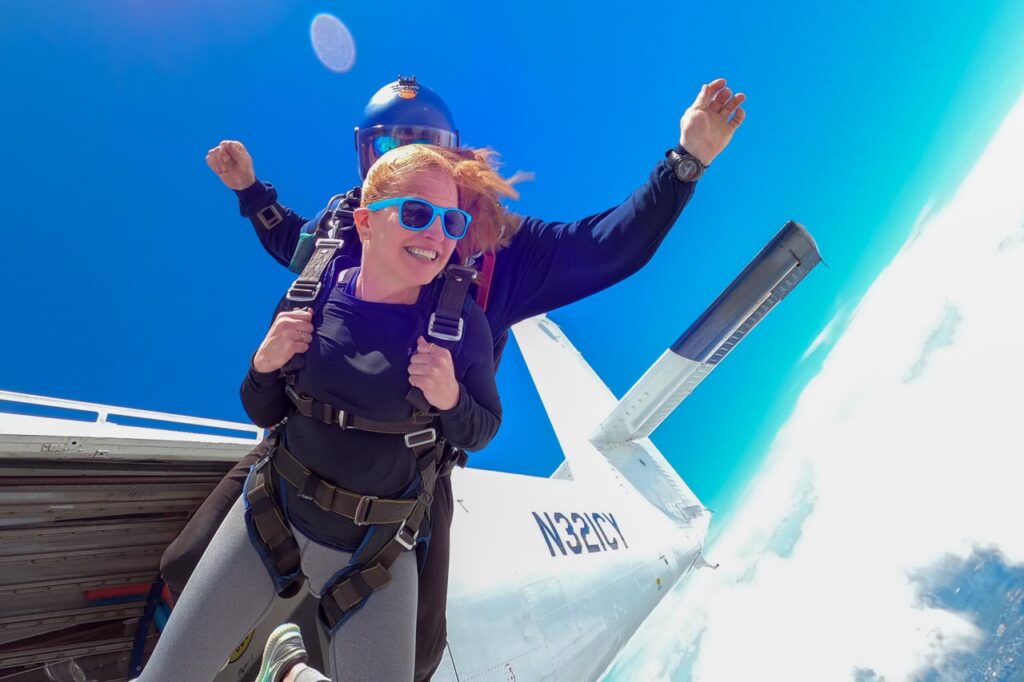
Professional documentation transforms your couple skydiving experience into a lasting memory you’ll revisit for years. Understanding photography options helps you choose the right package.
Types of Couple Skydiving Photography
Handheld Camera (Instructor POV):
- Camera mounted on your instructor’s hand/wrist
- Captures your facial expressions during freefall
- Shows you and your partner in frame (if instructors coordinate)
- Best for genuine emotion capture
- Cost: Included in most standard packages
Third-Party Videographer:
- Separate skydiver jumps with your group solely to film
- More dynamic angles and perspectives
- Can capture both partners simultaneously
- Professional cinematography techniques
- Cost: $150-300 additional
Multi-Camera Package:
- Combines handheld + third-party videography
- Multiple angles edited into comprehensive video
- Captures both personal POV and cinematic shots
- Best overall documentation
- Cost: $250-500 total
Ground Photography:
- Professional photographer captures landing and post-jump celebration
- Essential for proposal documentation
- Perfect for group celebrations
- Professional-quality still images
- Cost: $150-400
What to Expect in Your Couple Skydiving Video
Standard Video Includes:
- Pre-jump preparation and nerves (20-30 seconds)
- Boarding the aircraft with your partner (15-20 seconds)
- Freefall footage (45-60 seconds)
- Canopy deployment and descent (30-45 seconds)
- Landing and immediate reactions (20-30 seconds)
- Total edited length: 3-5 minutes with music
Premium Video Additions:
- Slow-motion freefall segments
- Multiple music track options
- Custom text overlays (names, date, messages)
- Extended pre-jump interviews
- Drone footage of landing area
- Professional color grading and editing
Photography Tips for Couples
Before the Jump:
- Smile During Freefall: It feels unnatural but makes for better photos
- Look at Each Other: If jumping close together, making eye contact creates intimate moments
- Hand Signals: Discuss simple hand signals with instructors (thumbs up, heart shape with hands)
- Clothing Coordination: Wear complementary colors that stand out (avoid all white or black)
Poses Under Canopy:
- Instructors can maneuver you close together for couple shots
- Wave to each other’s cameras
- Heart hand signals or blown kisses
- If skilled instructors, brief hand-holding under canopy
Landing Area:
- Planned kiss after landing (popular for videos)
- Embrace immediately after unhooking from instructors
- Laugh and show genuine emotion—forced smiles are obvious
Delivery and Format
Digital Delivery:
- Most packages include same-day or next-day digital delivery
- Files sent via email, Dropbox, or facility portal
- High-resolution files suitable for printing and social sharing
- Typical file sizes: 500MB-2GB total
Physical Media:
- USB drives with full resolution files ($20-40 additional)
- Printed photo albums ($80-200)
- Framed landing photo ($40-100)
- DVD copies (increasingly rare, $20-30)
Social Media Considerations
Couple skydiving videos consistently perform well on social media:
- Instagram Reels: 15-30 second clips get average 3-5x normal engagement
- Facebook: Full videos average 400-800% more shares than typical posts
- TikTok: Couples report 10K-100K+ views on skydiving content
- YouTube: Great for long-form video with friends and family
Privacy Options: If you prefer to keep your jump private:
- Request no facility social media posting
- Receive files privately before any public sharing
- Some premium packages guarantee privacy
Photography Investment Recommendation
Minimum Recommended: Standard package with basic photo/video ($150-250 per couple)
Best Value: Premium package with multi-angle video and ground photography ($400-600 per couple)
Worth It: You’ll watch the video dozens of times and show countless people. This isn’t the place to save money—ten years later, you’ll treasure the documentation far more than you’ll remember the few hundred dollars spent.
Safety Considerations for Couples
Safety should be the primary concern when planning couple skydiving. Understanding risks, requirements, and best practices ensures both partners have a positive, safe experience.
Skydiving Safety Statistics
Modern recreational skydiving, particularly tandem skydiving, has excellent safety records:
- Overall Skydiving Fatality Rate: 0.53 per 100,000 jumps (USPA, 2025)
- Tandem Skydiving Fatality Rate: 0.002 per 100,000 tandem jumps
- Injury Rate (Tandem): 0.01 per 1,000 jumps (minor injuries included)
To put this in perspective, tandem skydiving is statistically safer than:
- Driving 100 miles
- Horseback riding
- Cycling
- Many common recreational activities
The United States Parachute Association reports continuous safety improvements, with 2025 being the safest year in recorded skydiving history.
Physical Requirements for Couple Skydiving
Age Requirements:
- Minimum: 16-18 years (varies by country and state)
- 16-17 typically requires parental consent
- No maximum age with medical clearance
- Seniors regularly jump safely into their 80s and 90s
Weight Limits:
- Typical maximum: 220-240 lbs per person
- Some facilities accommodate up to 260 lbs with special equipment
- BMI considerations at some locations
- Limits are equipment-based, not safety judgment
Health Disqualifications:
- Absolute: Pregnancy (no exceptions)
- Requires Medical Clearance: Heart conditions, uncontrolled hypertension, epilepsy, diabetes (case-by-case)
- Temporary: Recent surgeries, injuries, or illnesses
- Relative: Severe fear of heights (may increase panic risk)
Substance Restrictions:
- No alcohol within 8-12 hours of jump
- No recreational drugs (subject to testing)
- Some prescription medications may require discussion
Choosing Safe Drop Zones
Not all skydiving facilities maintain equal safety standards. When selecting a location for couple skydiving:
Essential Certifications:
- USPA membership (USA) or equivalent national body
- Current facility certification
- Instructor certifications visible and verifiable
- Regular equipment inspection records
Safety Indicators:
- Professional facility appearance and organization
- Well-maintained aircraft
- Modern, regularly serviced parachute equipment
- Detailed safety briefings
- Written emergency procedures
- Insurance coverage confirmation
Red Flags:
- Rushed safety briefings
- Poorly maintained facilities or equipment
- Instructors unwilling to answer safety questions
- Pressure to jump despite weather concerns
- Significantly cheaper than competitors (cutting corners)
Special Couple Safety Considerations
Jump Coordination: Couples jumping together face minor additional considerations:
Exit Timing:
- Couples typically exit seconds apart (not simultaneously from same door)
- Provides safe separation distance during freefall
- Instructors maintain visual contact
- Coordination ensures landing in same area
Emotional Support vs. Pressure:
- One partner shouldn’t pressure the other if genuinely uncomfortable
- Respect if your partner changes their mind
- Panic risks increase when people feel forced
Communication Plan:
- Establish ground signals for “I’m okay” after landing
- Discuss beforehand what happens if one person can’t jump
- Have backup activities planned
Weather and Safety
Weather is the primary reason for jump delays or cancellations. Professional drop zones prioritize safety over bookings:
Conditions Preventing Jumping:
- Wind speeds over 20-25 mph (varies by facility)
- Low cloud ceiling (below 3,000-4,000 feet typically)
- Rain or precipitation
- Thunderstorms within 20-30 miles
- Poor visibility
Important: Never pressure facilities to jump in marginal conditions. Their weather decisions protect your safety.
Emergency Procedures
While extremely rare, understanding emergency procedures provides peace of mind:
Parachute Systems:
- Every tandem rig has TWO parachutes (main and reserve)
- Reserve parachutes deploy automatically if main fails
- Reserves are inspected and repacked by certified riggers every 120-180 days
- Automatic Activation Devices (AADs) deploy reserve at preset altitude
Instructor Training:
- Tandem instructors complete 500+ solo jumps before certification
- Annual recertification requirements
- Emergency procedure drills regularly
- Decision-making training for in-air problems
Your Role:
- Follow instructions precisely
- Maintain body position as trained
- Don’t grab at equipment or instructors
- Stay calm—your instructor is trained for emergencies
Pre-Jump Safety Briefing
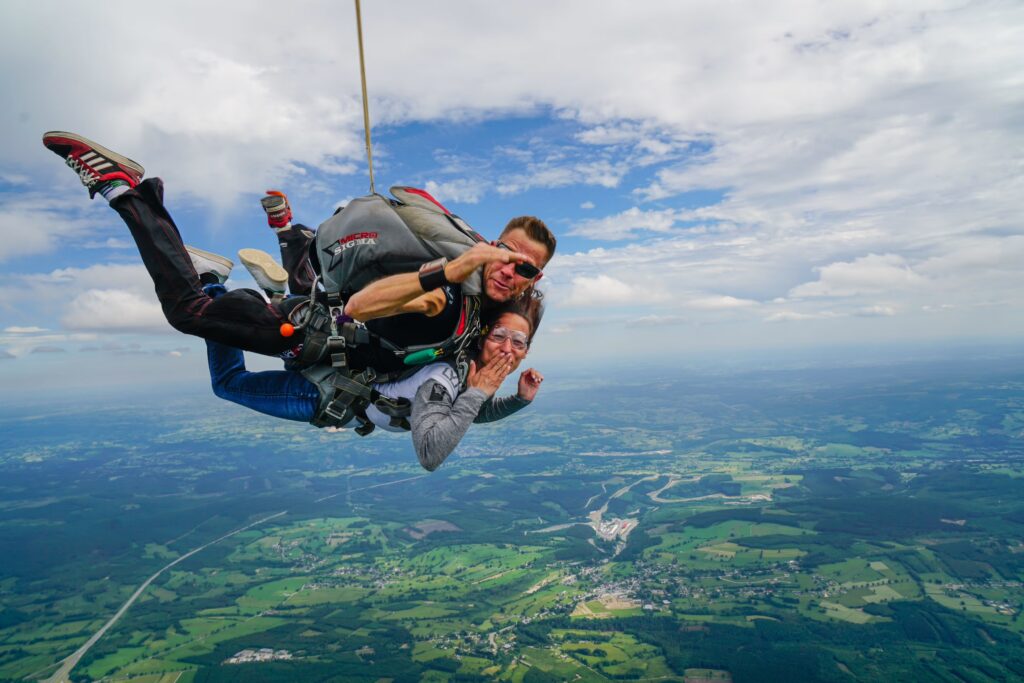
Every couple skydiving experience includes a safety briefing covering:
Ground School Topics:
- Equipment familiarization
- Exit procedures
- Body position during freefall
- Hand signals
- Landing procedures
- Emergency protocols
Duration: 20-45 minutes typically
Your Responsibility:
- Ask questions if anything is unclear
- Admit if you don’t understand instructions
- Disclose any medical concerns
- Sign liability waivers honestly
Insurance and Liability
Liability Waivers: All skydivers must sign liability waivers acknowledging risks. These are legally binding documents that:
- Release the facility from certain liabilities
- Acknowledge you understand the risks
- Confirm you meet health requirements
- Are standard industry practice
Travel Insurance: Consider travel insurance that covers:
- Adventure activities (some policies exclude skydiving)
- Medical emergencies
- Trip cancellation due to weather
- Cost: $50-150 typically for comprehensive coverage
Frequently Asked Questions
Q: Can my partner and I hold hands while skydiving?
A: During tandem skydiving, you cannot hold hands because each partner is harnessed to a separate instructor who controls the jump. However, instructors can coordinate to position you close together during freefall (typically 10-30 feet apart) for photos showing both of you. If both partners are certified solo skydivers, you can hold hands during freefall and under canopy. Many couples pursue certification specifically for this experience—it requires completing 25+ jumps and obtaining your USPA A-License.
Q: How much does couple skydiving cost on average?
A: Couple skydiving costs vary significantly by location and package. In the United States, expect $400-600 USD total for two basic tandem jumps without video. Standard packages with photo/video range from $650-900 USD per couple. International destinations like Switzerland ($900-1,300) or Dubai ($1,100-1,500) cost more but offer spectacular scenery. Premium packages with multiple camera angles and special services reach $1,400-2,500. Budget-friendly options exist in Thailand ($400-500 per couple) or during off-season promotions at major drop zones.
Q: Is couple skydiving safe for first-time jumpers?
A: Yes, tandem skydiving is extremely safe for first-time couples. The fatality rate for tandem skydiving is approximately 0.002 per 100,000 jumps, making it statistically safer than the drive to the drop zone. You’re harnessed to an experienced instructor who has completed hundreds or thousands of jumps and handles all technical aspects. Modern equipment includes two parachutes (main and reserve) plus Automatic Activation Devices that deploy the reserve if needed. The United States Parachute Association reported 2025 as the safest year in skydiving history with continuous safety improvements across all facilities.
Q: What if one partner is too scared to jump?
A: Approximately 15-20% of couple bookings involve one hesitant partner. The key is honest communication—never force someone who’s genuinely uncomfortable. However, most hesitant partners who complete the jump report being glad they did (92% according to post-jump surveys). If fear is the issue, visit the drop zone for a tour beforehand, watch positive videos together, and emphasize that instructors handle all technical aspects. Some drop zones offer tandem practice harness sessions on the ground. If your partner remains uncomfortable, have backup activities planned—resentment ruins the experience for both partners.
Q: Can we jump at the exact same time from the same plane?
A: Couples typically exit the aircraft within 5-15 seconds of each other rather than simultaneously from the same door. This provides necessary separation distance during freefall (you descend at slightly different rates) and ensures safety. However, you’ll be in the same aircraft, exit within seconds, and your instructors can coordinate to keep you within visual range during freefall and under canopy. Upon landing, you’ll touch down within minutes of each other. Some premium facilities offer helicopter jumps where couples can exit closer together, though still staggered by several seconds for safety.
Q: What should couples wear for skydiving?
A: Wear comfortable, athletic clothing suitable for the weather. Ideal outfit: jeans or athletic pants, t-shirt or long-sleeve shirt, and sneakers or athletic shoes. Avoid: loose jewelry, sandals, flip-flops, dresses, or extremely loose clothing. For couples coordinating, wear complementary colors that stand out in photos—avoid all white or all black. Secure or remove jewelry. Tie back long hair. You’ll wear a jumpsuit over your clothes provided by the facility, plus a harness, goggles, and sometimes a helmet. Consider bringing layers as aircraft cabins can be cool at altitude.
Q: Can you propose during a skydive?
A: Yes! Skydiving proposals have become increasingly popular, with approximately 5,000-7,000 occurring globally each year. Drop zones offer specialized proposal packages where they safely secure your ring during the jump, coordinate the moment after landing, and ensure professional documentation. The proposal typically happens immediately after landing while both partners are euphoric from the experience. Success rate is 99.7%. Costs range from $1,200-2,500 including jumps, video packages, and romantic setup. Popular proposal destinations include Interlaken (Switzerland), Queenstown (New Zealand), Hawaii, and Dubai. Most facilities have coordinated hundreds of proposals and handle logistics expertly.
Q: What’s the best anniversary gift—couple skydiving?
A: Couple skydiving ranks among the most memorable anniversary gifts. According to relationship studies, 87% of couples who skydive together report feeling closer immediately afterward, with 68% maintaining improved relationship satisfaction three months later. It’s particularly meaningful for milestone anniversaries (10th, 25th, 50th) as it demonstrates continued adventure and shared growth. The experience creates a unique “remember when” moment you’ll revisit for years. Many couples report their anniversary jump video becomes their most-watched home video. Best practice: Don’t surprise your partner without knowing their comfort level—discuss it beforehand unless you’re absolutely certain they’d be thrilled.
Q: How long does the entire couple skydiving experience take?
A: Plan for 3-4 hours total at the drop zone. Timeline breakdown: Check-in and paperwork (20-30 minutes), ground school safety training (20-45 minutes), gear up and wait for your flight (20-60 minutes depending on number of jumpers ahead), aircraft ascent (15-20 minutes), the jump itself (freefall 45-60 seconds + canopy 5-7 minutes), landing and gear removal (10 minutes), and reviewing/purchasing video packages (20-30 minutes). Weather delays can extend this significantly. Many couples make it a half-day experience, arriving mid-morning and finishing by early afternoon, leaving the rest of the day for celebration.
Q: Can pregnant women skydive with their partner?
A: No, pregnancy is an absolute disqualification for skydiving at any stage, with no exceptions at any legitimate drop zone. The rapid deceleration during parachute deployment creates forces that could harm the fetus, and the risk is considered unacceptable even in early pregnancy. If you discover you’re pregnant after booking, all professional facilities provide full refunds or allow transfer to your partner’s name. Consider tandem skydiving before trying to conceive or after postpartum recovery (typically 6-12 weeks with medical clearance). Many couples enjoy skydiving as a pre-pregnancy adventure or post-baby celebration of their partnership.
Q: Do couple skydiving packages include a discount?
A: Yes, most drop zones offer couple discounts or package deals. Typical savings range from 10-25% compared to booking two individual jumps. Couple packages often include additional benefits like coordinated jump timing, couple-focused photography, champagne landing service, or romantic setup options. The discount structure varies: some facilities offer fixed couple package pricing, others provide percentage discounts, and some include upgraded services at standard prices. Always mention you’re booking as a couple when inquiring—some discounts aren’t advertised but are available upon request. Booking direct with drop zones often yields better couple deals than third-party booking sites.
Q: What happens if weather cancels our couple skydiving?
A: Weather cancellations are standard industry practice and always result in free rescheduling or full refund—no legitimate facility charges for weather cancellations. Wind, rain, low clouds, or poor visibility can delay or cancel jumps. Completion rates vary by location: Dubai and Southern California see 85-95% successful jumps, while mountain locations like Interlaken average 60-75% due to variable conditions. Best practice: Build 2-3 potential jump days into your trip if possible. Most facilities track weather forecasts and notify you the evening before or morning of if conditions look unfavorable. Travel insurance can cover accommodation costs if your trip is primarily for skydiving and weather forces extension.
Q: Is there a weight limit for couple skydiving?
A: Yes, most tandem skydiving facilities have weight limits of 220-240 lbs per person, though this varies by location and equipment. Some facilities accommodate up to 260 lbs with specialized equipment, while others have stricter limits. These restrictions exist due to parachute engineering specifications—exceeding limits can compromise safe landing. The limit applies individually to each partner, not combined weight. Some facilities also consider BMI or body composition. If either partner is near the limit, call ahead to discuss options—many facilities have solutions. This is a standard safety requirement, handled professionally without judgment.
Q: Can senior couples go skydiving together?
A: Absolutely! There’s no upper age limit for skydiving, and seniors regularly jump into their 70s, 80s, and occasionally 90s. Many drop zones report that senior couples (60+) are among their most enthusiastic jumpers. Requirements: reasonable physical fitness, ability to lift legs for landing, and medical clearance (some facilities require doctor approval over 65-70). Several record-holders have completed skydives over age 100. The key is honest assessment of physical capability and choosing facilities with excellent safety records. Senior couple skydiving has become popular for milestone anniversaries (50th+) and bucket-list completion. Many facilities offer extra assistance and can adjust procedures for mobility considerations.
Q: How do we choose the best destination for couple skydiving?
A: Consider three factors: scenery, accessibility, and budget. For maximum scenic impact, mountain destinations like Interlaken or Queenstown are unmatched. For accessibility and value, domestic options (San Diego, Hawaii for US couples) minimize travel complexity. For first-time couples, choose locations with excellent weather reliability (Dubai, Southern California, Hawaii). For luxury experiences, Dubai offers premium facilities and service. For budget-conscious couples, Thailand or off-season destinations provide great value. Also consider: Can you combine skydiving with other trip activities? Is this for a special occasion requiring specific ambiance? Do you need proposal services? Read recent reviews focusing on couple experiences specifically—the best destination is one that matches your priorities.
Conclusion
Couple skydiving represents far more than an adrenaline-fueled adventure—it’s an investment in your relationship through shared experience, mutual vulnerability, and collective triumph. Whether you’re celebrating an anniversary, planning a proposal, seeking an extraordinary date, or simply wanting to create an unforgettable memory together, freefalling through the sky side by side offers intensity and connection that few activities can match.
Key Takeaways for Couples:
- Choose the Right Location – Match destinations to your priorities (scenery, budget, occasion, accessibility)
- Invest in Documentation – Professional video packages become priceless memories you’ll treasure forever
- Respect Each Partner’s Comfort Level – Force ruins the experience; honest communication enhances it
- Plan for Weather Flexibility – Build extra days into your itinerary to avoid disappointment
- Focus on the Shared Experience – The jump itself is remarkable, but the bonding happens throughout the entire process
As we progress through 2026, couple skydiving continues growing as both a relationship milestone and adventure travel staple. The industry has responded with improved safety standards, couple-specific packages, and enhanced services designed to make the experience as meaningful as it is thrilling. From the romantic alpine vistas of Switzerland to the tropical perfection of Hawaii, from the luxury of Dubai to the dramatic landscapes of New Zealand, the world offers extraordinary locations for couples to take the leap together.
The research is clear: couples who embrace novel, exciting experiences together strengthen their bonds, improve communication, and create lasting positive relationship effects. Skydiving amplifies these benefits through its unique combination of shared fear, mutual support, and collective achievement—all compressed into an intense, unforgettable few hours.
Ready to take your relationship to new heights—literally? Start by discussing with your partner which destinations resonate most, research drop zones with strong couple reputations, and take that first step toward one of the most memorable experiences you’ll ever share. The sky is calling, and the most extraordinary perspectives await.