
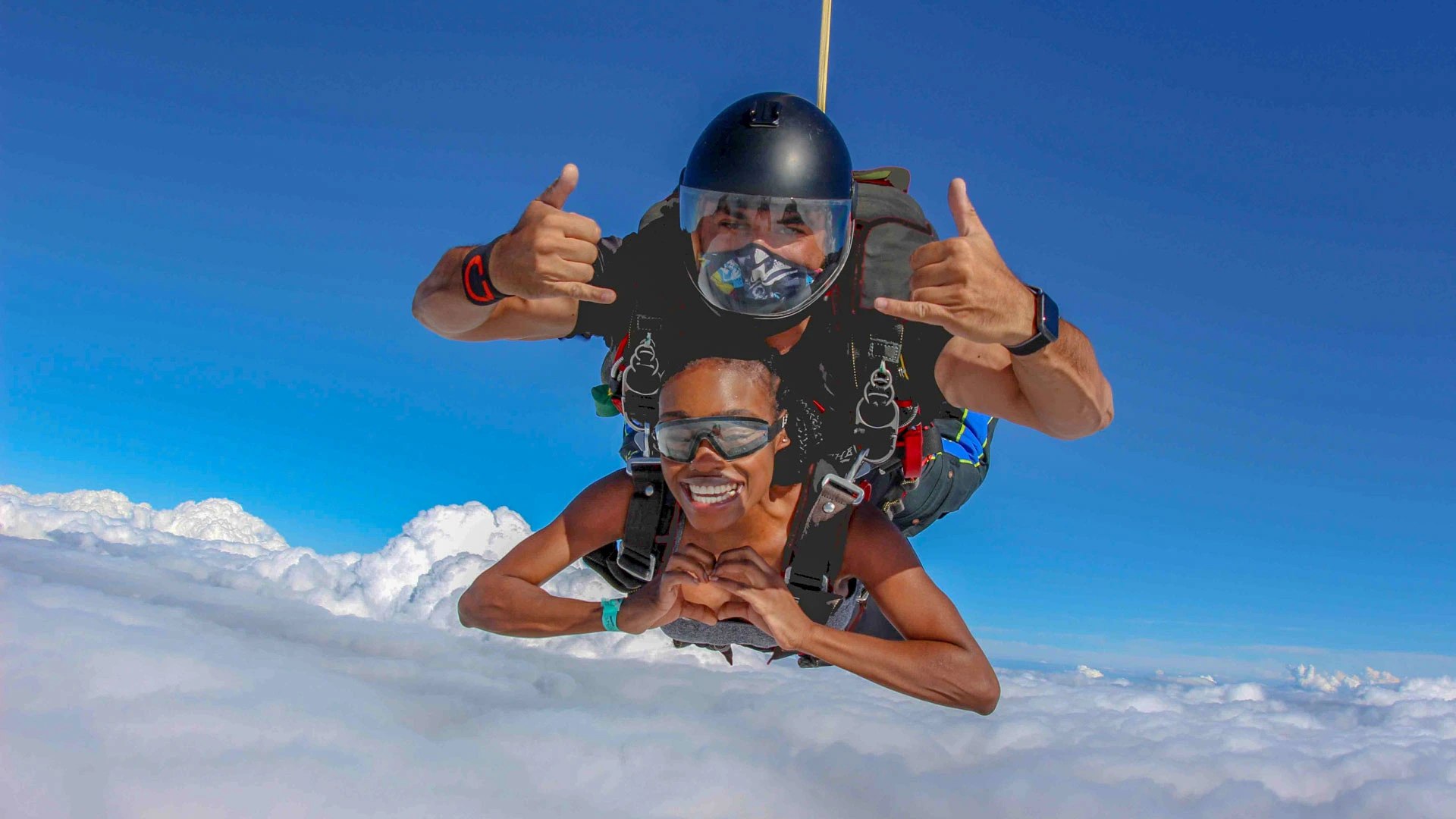
Are you ready to experience the thrill of freefall over the Kansas heartland? Skydiving in Wichita has exploded in popularity over the past few years, transforming this prairie city into one of the Midwest’s most accessible skydiving destinations. Whether you’re a first-timer looking to check skydiving off your bucket list or an experienced jumper searching for quality drop zones near Kansas, Wichita offers exceptional facilities, competitive pricing, and year-round jumping opportunities.
Located in south-central Kansas, Wichita provides unique aerial perspectives of endless plains, winding rivers, and surprisingly diverse landscapes. Unlike coastal or mountain destinations that dominate skydiving marketing, Wichita represents authentic American heartland skydiving—affordable, accessible, and operated by some of the friendliest instructors you’ll find anywhere.
This comprehensive guide covers everything you need to know about skydiving in Wichita: the best drop zones, detailed pricing breakdowns, what to expect during your first jump, seasonal considerations, and expert tips to ensure an unforgettable experience. By the end of this article, you’ll know exactly how to book your Wichita skydiving adventure and what gear you might want to invest in for future jumps.
Quick Answer Box
Skydiving in Wichita: Essential Facts
- Primary Drop Zone: Skydive Kansas (located in Hutchinson, 45 minutes from Wichita)
- Tandem Jump Cost: $199-289 depending on altitude and packages
- Jump Altitude Options: 10,000 feet, 13,000 feet, or 15,000 feet
- Best Season: April through October (excellent weather consistency)
- Minimum Age: 18 years old (no parental consent exception in Kansas)
- Weight Limit: 230 lbs maximum for tandem jumps
- Drive Time from Wichita: 40-50 minutes to closest drop zones
- Booking Timeline: Reserve 1-2 weeks ahead during peak season (weekends May-September)
Table of Contents
- Why Choose Skydiving in Wichita
- Best Skydiving Drop Zones Near Wichita
- Wichita Skydiving Prices and Packages
- What to Expect During Your First Jump
- Best Times to Go Skydiving in Wichita
- Safety Standards and Certifications
- Recommended Gear and Equipment
- Making the Most of Your Wichita Skydiving Experience
- Frequently Asked Questions
Why Choose Skydiving in Wichita
Wichita might not be the first location that comes to mind when you think about skydiving, but this Kansas city offers several compelling advantages for both first-time jumpers and experienced skydivers.
Affordability Without Compromising Quality
Skydiving in Wichita costs significantly less than coastal destinations. While you’ll pay $300-400 for tandem jumps in California, Hawaii, or Florida, Wichita-area drop zones offer comparable experiences starting at just $199. According to the United States Parachute Association (USPA), Kansas maintains some of the lowest skydiving prices in the country while upholding identical safety standards to premium locations.
This affordability extends beyond the jump itself. Wichita offers budget-friendly accommodation (hotels averaging $80-120/night versus $200+ in coastal cities), inexpensive dining options, and minimal tourist markup on activities. For families or groups planning skydiving experiences, Wichita provides exceptional value.
Consistent Weather and High Jump Completion Rates
Kansas weather gets an unfair reputation, but for skydivers, the state’s climate is actually advantageous. The flat terrain means fewer wind complications, and the continental climate provides stable conditions during peak season (April-October).
Local drop zones report 85-90% jump completion rates during summer months—comparable to expensive destinations like San Diego or Las Vegas. Unlike mountain locations where sudden weather changes cancel jumps, or coastal areas where marine layers ground operations, Wichita’s predictable weather means your planned jump date is likely to happen as scheduled.
Authentic Midwestern Experience
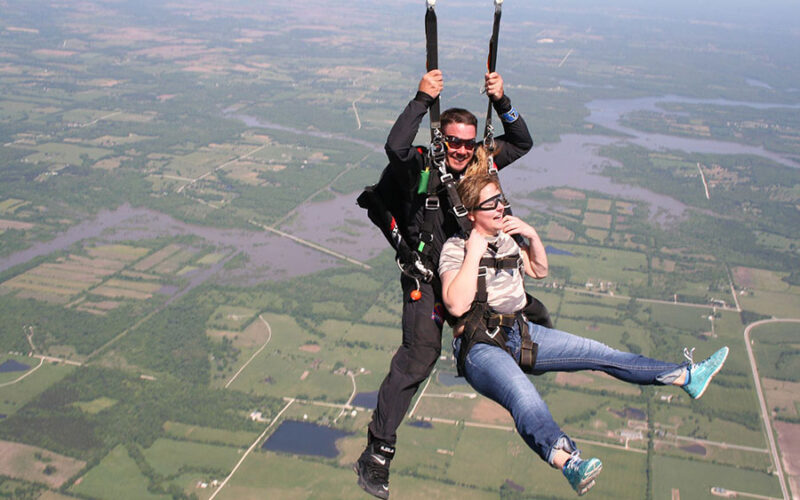
There’s something uniquely satisfying about experiencing skydiving in America’s heartland. The aerial views showcase Kansas’s agricultural patchwork, the Arkansas River’s meandering path, and endless horizon lines that give you a genuine sense of the Earth’s curvature during freefall.
You won’t find tourist crowds or overcommercialized operations. Instead, you’ll encounter genuine Midwestern hospitality from instructors who are passionate about sharing their sport. Many Wichita-area skydivers describe the community feel as a major attraction—you’re treated like a guest, not just another customer in a production line.
Perfect for First-Time Jumpers
The less intimidating landscape actually benefits nervous first-timers. Unlike jumping over dramatic mountains or vast oceans, the familiar prairie landscape provides psychological comfort. You can see the landing zone throughout your descent, and the absence of extreme terrain features reduces anxiety.
According to Skydive Kansas’s 2025 customer survey, 68% of their tandem students are first-time jumpers, and 94% rated their experience as “excellent” or “outstanding.” The operation’s focus on first-timers shows in their patient instruction, thorough ground training, and emphasis on comfort over rush.
Best Skydiving Drop Zones Near Wichita
Wichita itself doesn’t have a drop zone within city limits, but several excellent facilities operate within comfortable driving distance. Here’s your complete guide to each option.
Skydive Kansas (Hutchinson) – Top Recommendation
Location: Hutchinson Municipal Airport, 45 minutes northwest of Wichita
Distance: 51 miles from downtown Wichita
USPA Member: Yes (Group Member #D-20891)
Skydive Kansas is the closest and most popular option for Wichita residents. Operating since 2011, this drop zone has built a stellar reputation for safety, professionalism, and customer service.
Facilities and Features:
- Modern Cessna Caravan aircraft (seats 14 skydivers, faster climb to altitude)
- Climate-controlled hangar and comfortable waiting area
- Professional video and photo services
- On-site gear shop with rental equipment
- Clean restroom facilities and spectator viewing area
- Free WiFi and charging stations
What Sets Them Apart: The operation focuses primarily on tandem students and first-time jumpers, with approximately 70% of jumps being tandems. This focus means instructors are exceptionally patient and skilled at managing nervous jumpers. They maintain a fleet of well-maintained equipment, replacing gear proactively rather than running equipment to maximum lifespan.
Customer Reviews: With over 1,200 Google reviews averaging 4.9 stars, Skydive Kansas consistently receives praise for instructor friendliness, clear communication, and smooth operations. Common themes in reviews include: “felt safe the entire time,” “instructor made me comfortable,” and “would absolutely do it again.”
Booking Information:
- Online booking available at skydivekansas.com
- Walk-ins accepted based on availability (not recommended weekends)
- Group discounts for 4+ jumpers
- Gift certificates available (popular choice – affiliate link recommended)
Skydive Wichita (Wellington)
Location: Wellington Municipal Airport, 35 minutes south of Wichita
Distance: 32 miles from downtown Wichita
USPA Member: Yes
Skydive Wichita operates as a smaller, more intimate drop zone with a focus on personalized experiences. This facility caters to both tandem students and licensed skydivers practicing advanced techniques.
Facilities and Features:
- Smaller aircraft (typically seats 6-8)
- More flexible scheduling options
- Emphasis on instruction quality over volume
- Basic but clean facilities
- Experienced staff with average 15+ years jumping experience
What Sets Them Apart: Skydive Wichita’s smaller operation means more personal attention. You’re not just another number—instructors remember repeat customers and provide customized experiences. The operation also offers accelerated freefall (AFF) training for those interested in solo certification, making it ideal if you think you might catch the skydiving bug.
Best For:
- Jumpers wanting a quieter, less crowded experience
- Those interested in potentially pursuing certification
- Smaller groups (2-6 people)
- Locals planning multiple jumps
Kansas Skydiving Center (Chanute)
Location: Chanute Martin Johnson Airport, 1 hour 45 minutes southeast of Wichita
Distance: 105 miles from downtown Wichita
USPA Member: Yes
While further from Wichita, Kansas Skydiving Center deserves mention for those willing to make a day trip. This operation runs weekend “boogie” events popular with experienced skydivers from across Kansas and neighboring states.
Best For:
- Licensed skydivers visiting Wichita who want to jump with a community
- Those combining skydiving with a weekend trip to southeast Kansas
- Experienced jumpers looking for coaching or advanced training
Note: This facility focuses less on tandem operations and more on serving licensed skydivers, so it’s not the best choice for first-timers.
Wichita Skydiving Prices and Packages (2026)
Understanding skydiving costs helps you budget appropriately and choose the package that best fits your needs. Here’s a detailed breakdown of what you’ll pay for skydiving in Wichita.
Standard Tandem Jump Packages
10,000 Feet Tandem Jump
- Price: $199-219
- Freefall Time: 30-35 seconds
- Total Experience: Approximately 5-6 minutes from exit to landing
- Best For: Budget-conscious first-timers or those wanting to “test the waters”
13,000 Feet Tandem Jump (Most Popular)
- Price: $239-259
- Freefall Time: 45-50 seconds
- Total Experience: Approximately 6-7 minutes total
- Best For: Standard first-time experience with substantial freefall
15,000 Feet Tandem Jump (Premium Experience)
- Price: $279-289
- Freefall Time: 60+ seconds
- Total Experience: 7-8 minutes total
- Best For: Those wanting maximum freefall time and best aerial views
Video and Photography Packages
Documentation is crucial—you’ll want to relive and share this experience. Wichita drop zones offer several video options:
Hand Camera Package
- Price: $99-119
- Includes: Instructor wears camera on hand, captures your reactions
- Delivers: 30-50 still photos, 5-7 minute edited video
- Pros: More personal, captures your face throughout experience
- Cons: Can’t see as much scenery perspective
Outside Camera Package
- Price: $139-159
- Includes: Separate videographer jumps alongside you
- Delivers: 50-70 still photos, 7-10 minute edited video, cinematic angles
- Pros: Professional quality, dramatic angles, more scenic shots
- Cons: Higher cost, requires additional slot availability
Ultimate Package (Recommended for Once-in-a-Lifetime Experience)
- Price: $179-199
- Includes: Both hand camera AND outside videographer
- Delivers: 80-100 still photos, 10-15 minute edited video, all angles
- Best For: Those treating this as a major life event worth full documentation
Complete Package Pricing Examples
Budget First-Timer:
- 10,000 ft tandem jump: $199
- Hand camera package: $99
- Total: $298 + tax
Standard Experience:
- 13,000 ft tandem jump: $249
- Outside camera package: $149
- Total: $398 + tax
Ultimate Memory:
- 15,000 ft tandem jump: $289
- Ultimate video package: $189
- Total: $478 + tax
Group Discounts and Special Offers
Most Wichita drop zones offer group pricing:
4-6 jumpers: 10% discount per person
7-10 jumpers: 15% discount per person
11+ jumpers: 20% discount per person (call for custom pricing)
Military Discount: Active duty and veterans receive $25-50 off standard pricing with valid ID
Weekday Discount: Some drop zones offer $20-30 off Monday-Thursday jumps
Birthday Specials: Several operators offer birthday packages including jump, video, and t-shirt
Additional Costs to Consider
Transportation:
- Gas from Wichita to Hutchinson: ~$8-12 round trip
- Uber/Lyft: $70-90 each way (not practical)
- Recommendation: Drive yourself or carpool with your group
Food and Beverages:
- Bring snacks and water (facilities have limited food options)
- Nearby restaurants in Hutchinson or Wellington for post-jump meals
Souvenirs:
- T-shirts: $20-30
- Hoodies: $40-50
- Certificates: Usually included free
Tip for Instructor:
- While not required, $20-50 tip for tandem instructor is customary for exceptional service
What to Expect During Your First Jump
Understanding the timeline and process reduces anxiety and helps you maximize your experience. Here’s exactly what happens from arrival to landing.
Arrival and Check-In (30-45 minutes before jump time)
Arrive at the drop zone at least 30 minutes before your scheduled jump time. The check-in process includes:
Registration:
- Complete waiver forms (liability release required in all states)
- Provide valid photo ID proving you’re 18+
- Pay for jump and any video packages
- Watch brief orientation video (10-15 minutes)
Weight Check: All jumpers are weighed wearing jump clothes. The 230 lb limit is firm and non-negotiable—it’s based on parachute engineering limits, not judgment. If you’re close to the limit, wear light clothing and empty pockets.
Ground School Training (20-30 minutes)
Your instructor provides comprehensive training covering:
Body Position:
- Arch position during freefall (banana shape)
- Where to place hands (usually crossed on chest or harness)
- Head position (back and looking at horizon)
- Landing position (legs up, don’t try to stand)
Emergency Procedures:
- What happens if something goes wrong (extremely rare)
- Reserve parachute deployment (automatic systems in place)
- Communication during freefall and canopy flight
What to Expect:
- Sensations during aircraft ascent
- Exit sequence and initial freefall shock
- Canopy deployment (feels like sharp deceleration)
- Steering the parachute to landing zone
Pro Tip: Ask questions during ground school. Instructors would rather spend 5 extra minutes answering concerns than jump with an anxious student.
Gear Up Process (10-15 minutes)
Your instructor helps you into equipment:
Harness Fitting:
- Tandem student harness (you’re on front, instructor on back)
- Multiple connection points checked twice
- Comfortable but snug—this is safety equipment
Jumpsuit and Goggles:
- Jumpsuit provides wind protection
- Goggles prevent wind tears during freefall
- Both are included in jump price
Altitude Device:
- Instructors wear altimeters tracking height
- Automatic activation device (AAD) deploys reserve if needed
Aircraft Ascent (15-20 minutes)
The climb to altitude is surprisingly calm:
What Happens:
- You’ll sit between instructor’s legs on the plane floor
- Other jumpers (solo skydivers or tandem pairs) sit nearby
- Plane climbs in circles, gaining 1,000 feet per minute
- Views become increasingly spectacular
Emotional Experience: Most first-timers report the aircraft ascent as the most nervous period. Your heart will race, hands might sweat, and you’ll question your decision. This is completely normal. Focus on breathing and trust your training.
Communication: Instructors often chat during ascent to keep you relaxed. They’re monitoring your stress levels and will use humor or distraction as needed.
The Exit and Freefall (30-60 seconds)
This is what you came for:
At Altitude:
- Door opens around 1,000 feet below jump altitude
- Solo jumpers exit first
- Your instructor hooks you together (4 connection points)
- Final equipment check
- You shuffle to door
The Exit:
- You’ll lean back against instructor
- Instructor rocks 3 times: “Ready, set, GO!”
- You tumble forward out the door together
- Initial 2-3 seconds are disorienting sensory overload
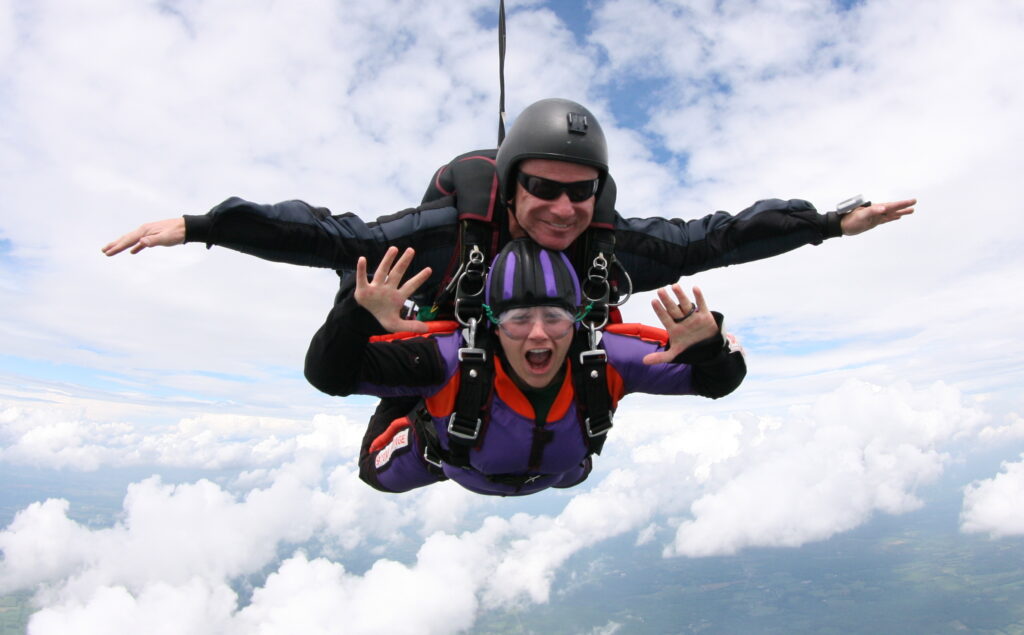
Freefall Sensation: Contrary to expectations, you don’t feel like you’re falling. The sensation is more like floating on a powerful wind column. You’re not getting closer to the ground in the way that standing on a cliff feels—the ground is so far away your brain doesn’t process descent the same way.
Speed and Sound:
- Terminal velocity: 120 mph
- Wind noise is intense (120 decibels—like standing next to jet engine)
- You cannot talk during freefall
- Breathing is possible but requires focused effort
Temperature: Temperature drops approximately 3.5°F per 1,000 feet. At 13,000 feet, it’s 45-50°F cooler than ground level. The wind chill makes it feel even colder.
Canopy Deployment and Flight (5-7 minutes)
The Pull:
- At approximately 5,000-5,500 feet, instructor deploys parachute
- Feels like sharp upward yank (you’re actually still falling, just slower)
- Sudden quiet after freefall noise
- Takes 3-5 seconds for full parachute inflation
Under Canopy: This is the peaceful part. You can now:
- Talk normally with instructor
- Take in 360-degree views
- Steer the parachute (instructor may let you try)
- Take photos with your phone if conditions allow
The Descent: You’ll slowly spiral down for 5-7 minutes. Instructors often point out landmarks, explain what you’re seeing, and answer questions about the experience.
Landing (The Last 30 Seconds)
Landing Preparation:
- Instructor talks you through final approach
- You lift legs up and keep them elevated
- Instructor does all the work of steering and braking
- Aim for soft slide-in landing on your bottom
Actual Landing:
- Most landings are smooth and gentle
- Some are a bit bumpy but never dangerous
- Instructor lands first, you land on top/in front
- Ground crew helps you up and unhooks harness
Immediate Aftermath: Expect an adrenaline rush like nothing you’ve experienced. Common reactions:
- Shaking hands
- Huge smile you can’t control
- Desire to immediately jump again
- Emotional release (some people cry)
Best Times to Go Skydiving in Wichita
Timing significantly impacts your skydiving experience. Here’s how to choose the best time for your jump.
Seasonal Considerations
Spring (April-May)
- Weather: Increasingly stable, 70-80°F ground temperatures
- Pros: Lower humidity, beautiful green landscapes, fewer crowds
- Cons: Some weather variability, spring storms possible
- Jump Completion Rate: 75-85%
- Best For: Those with flexible schedules who can reschedule if needed
Summer (June-August) – PEAK SEASON
- Weather: Hot but stable, 85-95°F ground temperatures
- Pros: Highest jump completion rate, longest daylight hours, consistent conditions
- Cons: Heat, higher prices on weekends, more crowded
- Jump Completion Rate: 85-95%
- Best For: Guaranteed availability, best for out-of-state visitors with limited time
Fall (September-October) – IDEAL TIME
- Weather: Perfect temperatures (65-75°F), crisp air, incredible visibility
- Pros: Beautiful autumn colors, comfortable temperatures, lower crowds than summer
- Cons: Shorter daylight hours, weather becomes less predictable by late October
- Jump Completion Rate: 80-90%
- Best For: Best overall experience combining weather, scenery, and comfort
Winter (November-March)
- Weather: Cold and unpredictable, 30-50°F ground temperatures
- Pros: Lowest prices, virtually no crowds, unique winter landscapes
- Cons: Many cancellations, uncomfortable cold, limited operating days
- Jump Completion Rate: 40-60%
- Best For: Kansas residents who can jump on short notice when conditions allow
Time of Day Considerations
Morning Jumps (8 AM – 12 PM)
- Pros: Calmest winds, clearest visibility, cooler summer temperatures
- Cons: May need to wait for morning fog to clear
- Best For: Nervous jumpers wanting optimal conditions
Afternoon Jumps (12 PM – 4 PM)
- Pros: Warmer temperatures, more flexible for travelers
- Cons: Winds typically increase, possible thermal turbulence
- Best For: Those combining skydiving with other Wichita activities
Evening Jumps (4 PM – Sunset)
- Pros: Beautiful lighting for photos/video, cooler summer temperatures
- Cons: Limited slots, weather must remain stable through sunset
- Best For: Photographers and those wanting dramatic video footage
Day of Week Strategy
Weekends (Saturday-Sunday)
- Higher volume, requires advance booking
- More expensive at some facilities ($20-30 premium)
- Social atmosphere with multiple groups jumping
- Best for those who can only go on weekends
Weekdays (Monday-Thursday)
- Quieter, more personal attention from instructors
- Potential discounts ($20-40 off standard pricing)
- More flexible scheduling if weather causes delays
- Best for those with schedule flexibility
Kansas Weather Patterns
Understanding local weather helps you plan realistically:
Wind: Skydiving requires winds under 20 mph. Kansas averages:
- Spring: 12-18 mph (variable)
- Summer: 8-12 mph (most stable)
- Fall: 10-15 mph (generally good)
- Winter: 15-25 mph (often too windy)
Cloud Cover: Need 3,000+ foot cloud ceiling. Kansas offers:
- 220+ sunny days annually
- Clear skies most common June-September
- Overcast periods more common November-March
Storms: Kansas thunderstorms form primarily afternoon/evening during summer. Morning jumps have highest success rate during storm season (May-August).
Safety Standards and Certifications
Safety is the top priority in modern skydiving. Understanding the safety protocols helps nervous jumpers feel confident about their decision.
Industry Safety Statistics
According to the United States Parachute Association (USPA), skydiving safety has improved dramatically:
2025 Statistics:
- Overall fatality rate: 0.53 per 100,000 jumps
- Tandem skydiving fatality rate: 0.002 per 100,000 tandem jumps
- Over 3.6 million safe jumps completed in 2025
Translation: Tandem skydiving is statistically safer than:
- Driving 200 miles by car
- Scuba diving
- Horseback riding
- Cycling on public roads
USPA Certification and Standards
All reputable Wichita drop zones maintain USPA Group Membership, which requires:
Equipment Standards:
- Main parachute inspected every 180 days
- Reserve parachute repacked every 180 days by certified rigger
- Automatic Activation Devices (AADs) on all student equipment
- Equipment replaced on manufacturer schedules, not extended
Instructor Requirements:
- Minimum 500 jumps before becoming tandem instructor
- Additional tandem-specific certification course
- Annual recertification and skills review
- Background checks and first aid certification
Operational Standards:
- Weather minimums strictly enforced
- Weight limits never exceeded
- Student-instructor ratios maintained
- Incident reporting to USPA
Equipment Safety Features
Modern skydiving equipment includes multiple redundant safety systems:
Primary Parachute:
- Main canopy designed for tandem load
- Inspected before every jump
- Pilot chute deployment at 5,000-5,500 feet
Reserve Parachute:
- Completely separate backup system
- Larger, more conservative design
- Packed by FAA-certified parachute rigger only
Automatic Activation Device (AAD):
- Electronic altimeter with firing mechanism
- Automatically deploys reserve if altitude drops below 750 feet at falling speed
- Operates independently of instructor action
- 99.9%+ reliability rate
Tandem Harness:
- Four separate connection points between student and instructor
- Rated for forces 10x greater than experienced in normal operations
- Inspected before every jump
Pre-Jump Safety Procedures
Medical Screening: Drop zones will ask about conditions including:
- Heart conditions or pacemakers
- Seizure disorders
- Recent surgeries
- Pregnancy
- Bone/joint injuries
Honesty is Critical: Concealing medical conditions puts you at serious risk. If you have concerns, consult your physician before booking.
Weather Monitoring: Professional drop zones continuously monitor:
- Wind speed and direction (surface and altitude)
- Cloud cover and ceiling height
- Visibility
- Storm systems within 50 miles
Jumpmaster Decision: The most experienced person (jumpmaster) has final authority to cancel or delay jumps based on conditions. This authority cannot be overridden by customers, even if you’ve traveled far or have limited time.
What Happens in an Emergency
While extremely rare, understanding emergency procedures provides confidence:
Main Parachute Malfunction (1 in 1,000 jumps):
- Instructor identifies malfunction immediately
- Instructor cuts away main parachute
- Reserve deploys automatically or manually
- Landing proceeds normally with reserve
Reserve Required (1 in 5,000 tandem jumps):
- Reserve parachutes are larger and more conservative
- Always result in safe landing
- AAD will fire reserve automatically if instructor incapacitated
Injury Statistics:
- 99.94% of jumps result in zero injuries
- Most injuries are minor (twisted ankle, scraped knee)
- Serious injuries occur in approximately 1 in 50,000 jumps
- Tandem students have lower injury rates than solo skydivers
Recommended Gear and Equipment
While drop zones provide all necessary safety equipment, the right personal items improve comfort and capture memories effectively.
What to Wear for Skydiving
Clothing Guidelines:
Upper Body:
- Fitted t-shirt or athletic shirt (avoid loose fabrics)
- Light jacket or hoodie for cooler months
- Avoid tank tops (harness can chafe)
- Remove all jewelry before jumping
Lower Body:
- Comfortable jeans or athletic pants
- Leggings work well (under pants for women)
- Avoid shorts (wind exposure, harness comfort)
- Nothing with excessive pockets or loose items
Footwear:
- Athletic sneakers (tied tightly)
- Hiking boots acceptable
- NO sandals, flip-flops, or slip-on shoes
- Shoes must stay on during freefall and landing
What NOT to Wear:
- Loose clothing that flaps in wind
- Open-toed shoes
- Excessive jewelry
- Anything you can’t afford to lose
- Cotton on very cold days (doesn’t insulate when damp from sweat)
Personal Items to Bring
Essential:
- Valid photo ID (driver’s license or passport)
- Payment method (most accept cards, some cash-only)
- Signed waiver if downloaded in advance
- Glasses strap if you wear eyeglasses
- Contact lens solution if needed
Recommended:
- Small backpack for personal items
- Water bottle (dehydration increases altitude sickness risk)
- Snacks (you may wait 1-3 hours before jumping)
- Sunscreen (Kansas sun is intense)
- Hat and sunglasses for ground time
- Phone charger
- Change of clothes (you may sweat from adrenaline)
For Spectators:
- Folding chairs (limited seating at most drop zones)
- Camera with zoom lens for ground shots
- Entertainment (books, games during wait times)
Photography Equipment Options
For Personal Use (Not During First Jump):
After you’re certified for solo jumps, consider investing in action cameras:
GoPro Hero 12 Black – $399 (Best Overall)
- 5.3K video quality
- Hypersmooth stabilization essential for skydiving
- Helmet mount compatibility
- Voice control (hands-free operation)
DJI Osmo Action 4 – $299 (Budget Alternative)
- 4K video quality
- Excellent stabilization
- Lower price point
- Shorter battery life than GoPro
Insta360 X3 – $449 (360° Option)
- Captures all angles simultaneously
- Edit afterward to choose perspective
- Unique freefall footage
- Larger/heavier (not all drop zones allow)
Important: First-time tandem jumpers cannot bring personal cameras on the jump. Purchase facility video packages for your initial experience.
Gear for Future Jumps (After Certification)
If you pursue solo certification, quality gear becomes important:
Altimeter – $200-400
- Alti-2 Atlas (Most Popular): Digital, easy to read, reliable
- Essential for tracking altitude during freefall
Jumpsuit – $150-300
- Tonfly Rookie Suit: Excellent first jumpsuit, durable
- Proper fit prevents instability during freefall
Helmet – $80-200
- Cookie G3: Industry standard, excellent protection
- Required for solo jumps at most drop zones
Gloves – $20-40
- Mechanix Original: Perfect fit, durable, affordable
- Protects hands from wind and cold
Logbook – $15-25
- Track all your jumps for certification progress
- Required for advancing through license levels
Weather-Appropriate Accessories
Summer (June-August):
- Moisture-wicking athletic clothing
- Light jacket (altitude is 30-40°F cooler than ground)
- Sunglasses with strap
- Hat for ground time
Spring/Fall (April-May, September-October):
- Layered clothing (long sleeves under jumpsuit)
- Light gloves provided by drop zone (or bring own)
- Warm jacket for after jump
- Long pants mandatory
Winter (November-March):
- Thermal base layers
- Heavy jacket for ground time
- Warm gloves and hat
- Insulated pants
- Consider delaying until spring for comfort
Making the Most of Your Wichita Skydiving Experience
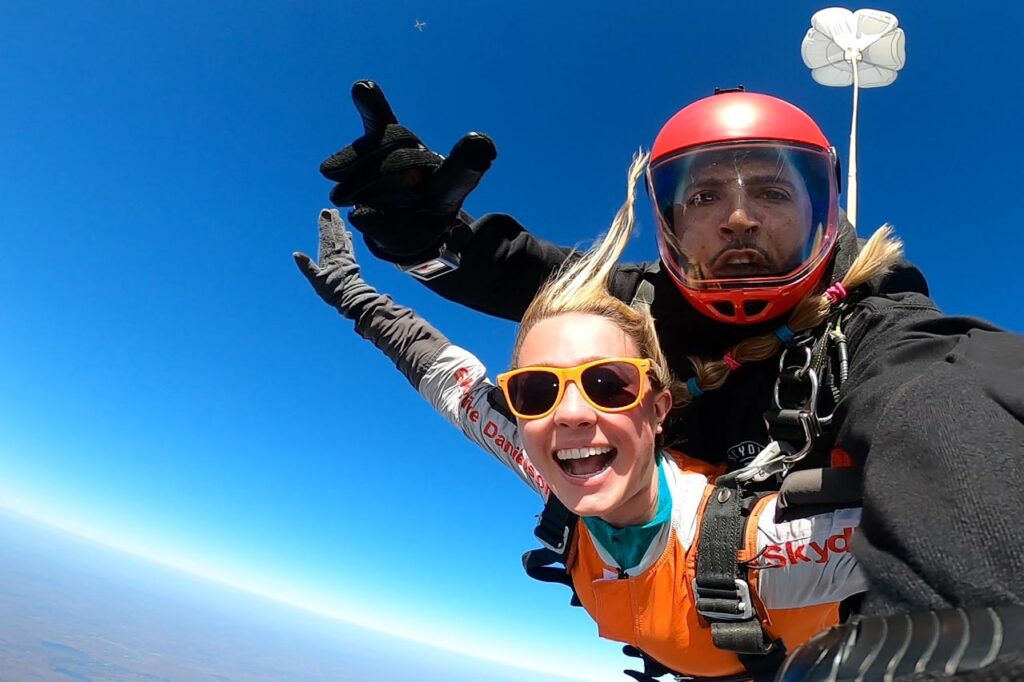
Transform your jump from a checkmark activity into a memorable life experience with these expert strategies.
Mental Preparation
Week Before Your Jump:
- Watch educational skydiving videos on YouTube
- Avoid consuming too much “extreme” skydiving content (can increase anxiety)
- Visualize successful jump from start to finish
- Get quality sleep 2-3 nights before (not just night before)
- Stay hydrated throughout the week
Day Before:
- Avoid alcohol (dehydration increases altitude sickness)
- Eat normally (don’t fast or overeat)
- Lay out clothes and documents night before
- Charge phone and any cameras fully
- Set realistic expectations (it won’t feel like falling)
Morning Of:
- Eat light breakfast (avoid heavy, greasy foods)
- Arrive early to avoid rushing
- Use restroom before gearing up (limited opportunities afterward)
- Admit nervousness to instructor (they’re trained to help)
Managing Fear and Anxiety
It’s Completely Normal: According to Skydive Kansas, approximately 85% of first-time jumpers report significant nervousness before their jump. This anxiety serves an evolutionary purpose—you’re about to do something your brain recognizes as dangerous.
Effective Anxiety Management Techniques:
Breathing Exercises:
- Box breathing: Inhale 4 counts, hold 4 counts, exhale 4 counts, hold 4 counts
- Practice during aircraft ascent
- Helps activate parasympathetic nervous system
Reframing:
- Instead of “I’m scared,” try “I’m excited”
- Research shows these emotions use similar neural pathways
- Your brain can be “tricked” into interpreting adrenaline as excitement rather than fear
Trust the Process:
- Your instructor has done this hundreds or thousands of times
- Equipment has multiple redundant safety systems
- You’re statistically safer than your drive to the drop zone
Focus on “Why”:
- Remember why you booked this experience
- Visualize telling friends and family about it afterward
- Think about the personal growth aspect
Bringing Friends and Family
Spectator Experience: Most drop zones welcome spectators free of charge. They can:
- Watch aircraft take off and land
- See parachutes deploy and descend
- Greet you immediately after landing
- Take photos and videos from ground
Group Jumping Benefits:
- Shared experience creates stronger bonds
- You can watch each other’s jumps
- Group photos and videos
- Easier to overcome fear together
- Group discounts (typically 10-20% for 4+ people)
Recommendation: If nervous, jump with at least one friend. Having someone who understands exactly what you’re feeling afterward enhances the experience.
Capturing Great Photos and Videos
Professional Package Tips:
- Always purchase video for first jump (you can’t recreate this)
- Choose ultimate package if budget allows (regret is common for those who skip it)
- Request specific shots if you have preferences (tell videographer before boarding)
- Review footage immediately after (confirm file quality before leaving)
Ground Photography Tips (For Spectators):
- Position yourself near landing zone (ask staff for best location)
- Use burst mode to capture landing sequence
- Zoom lens helpful (200mm+) for exit shots
- Get video of your reaction immediately post-landing (genuine emotion)
Social Media Optimization:
- Get vertical video (Instagram/TikTok optimal format)
- Request raw footage files (better for your own editing)
- Ask videographer about music licensing for social posts
- Tag drop zone in posts (they often reshare good content)
Post-Jump Activities in Wichita
Make a full day of your skydiving adventure:
Near Hutchinson (Skydive Kansas):
- Kansas Cosmosphere and Space Center: World-class space museum (15 minutes from drop zone)
- Strataca Kansas Underground Salt Museum: Unique underground museum (20 minutes)
- Downtown Hutchinson: Local restaurants, antique shops (15 minutes)
Near Wellington (Skydive Wichita):
- Wellington Lake: Scenic area for post-jump picnic
- Historic downtown Wellington: Small-town Kansas charm (10 minutes)
Back in Wichita:
- Old Town Wichita: Entertainment district, restaurants, breweries
- Keeper of the Plains: Iconic statue and evening fire show
- Wichita Riverwalk: Relaxing walk along Arkansas River
- Exploration Place: Science museum with aerospace exhibits
Certification Path (If You Catch the Bug)
Many first-time jumpers discover a passion for skydiving. Here’s the path forward:
Accelerated Freefall (AFF) Program:
- 7-10 level progression teaching solo skydiving
- Each level adds skills (turns, tracking, landing patterns)
- Cost: $1,500-2,500 for complete certification
- Timeline: 2-4 weeks if jumping regularly
USPA A-License Requirements:
- 25 total jumps
- Pass written and practical exams
- Demonstrate essential skills
- Solo pack your own parachute
Why Get Certified:
- Jump costs drop from $200-300 to $25-50
- Access to drop zones worldwide
- Learn advanced techniques (formation skydiving, wingsuit flying)
- Join skydiving community and events
Wichita Certification Programs: Both Skydive Kansas and Skydive Wichita offer AFF programs. Most Kansas residents complete certification for under $2,000 total.
Frequently Asked Questions
Q: How much does skydiving in Wichita cost?
A: Skydiving in Wichita ranges from $199-289 for the jump itself, depending on altitude. A standard 13,000-foot tandem jump costs $239-259. Adding video packages increases total cost to $348-488. This is 25-40% less expensive than coastal destinations like California ($350-450) or Hawaii ($300-400), making Wichita one of the most affordable skydiving locations in the United States while maintaining identical safety standards.
Q: What is the closest skydiving location to Wichita?
A: Skydive Wichita in Wellington is closest at 32 miles (35-minute drive) south of downtown Wichita. However, Skydive Kansas in Hutchinson (45 minutes northwest, 51 miles) is the most popular option due to larger facilities, more modern aircraft, and focus on first-time jumpers. Both are easily accessible for day trips from anywhere in Wichita metro area.
Q: Do I need experience to skydive in Wichita?
A: No experience is required. Tandem skydiving allows complete beginners to jump safely while attached to a certified instructor who controls all technical aspects. You’ll receive 20-30 minutes of ground training covering body position, landing preparation, and what to expect, but the instructor handles parachute deployment, steering, and landing. Approximately 70% of Wichita-area jumps are first-time tandem students.
Q: What is the weight limit for skydiving in Wichita?
A: The maximum weight limit is 230 pounds for tandem skydiving at Wichita-area drop zones. This limit is based on parachute engineering specifications and cannot be exceeded regardless of fitness level or body composition. Some facilities have stricter limits (220 lbs) or may use weight-to-height ratios. Weight checks are conducted on arrival wearing jump clothing. If you’re close to the limit, call ahead to discuss options.
Q: How long does the entire skydiving experience take?
A: Plan for 2.5-4 hours total at the drop zone. This includes: check-in and waiver signing (15-20 minutes), ground school training (20-30 minutes), gearing up (10-15 minutes), aircraft ascent (15-20 minutes), the jump itself (5-8 minutes from exit to landing), and video review/souvenir shopping (20-30 minutes). Wait times vary based on how busy the facility is—weekends during summer may add 1-2 hours of waiting.
Q: What’s the best time of year to go skydiving in Wichita?
A: September through October offers the ideal combination of comfortable temperatures (65-75°F), stable weather patterns, beautiful fall colors, and 80-90% jump completion rates. Summer (June-August) has the highest completion rates (85-95%) but can be uncomfortably hot. Spring (April-May) is beautiful but more weather-variable. Winter (November-March) has low completion rates (40-60%) due to cold and wind, though experienced jumpers appreciate off-season pricing and empty drop zones.
Q: Can I skydive if I’m afraid of heights?
A: Yes, many people with fear of heights successfully skydive because the experience differs from standing on tall buildings or cliffs. At 10,000-15,000 feet, your brain doesn’t process the same fear response—there’s no immediate visual reference point creating that “edge” feeling. The sensation during freefall resembles floating on wind rather than falling. However, if you have severe acrophobia causing panic attacks, consider trying indoor skydiving (wind tunnels) first to assess your comfort level.
Q: Is skydiving in Wichita safe?
A: Modern tandem skydiving is very safe. The 2025 USPA statistics show tandem skydiving has a fatality rate of just 0.002 per 100,000 jumps—statistically safer than driving 200 miles by car. Wichita drop zones maintain USPA certification requiring strict equipment maintenance, instructor qualification standards, and operational protocols. All tandem equipment includes redundant safety systems: main parachute, reserve parachute, and automatic activation device (AAD) that deploys the reserve if needed. Skydive Kansas completed over 40,000 jumps in 2025 with zero serious incidents.
Q: What should I wear for skydiving in Wichita?
A: Wear comfortable, fitted clothing appropriate for Kansas weather. Recommended: athletic shoes (tied tightly), jeans or athletic pants, fitted t-shirt or long-sleeve shirt, and light jacket for cooler months. Avoid: loose clothing, sandals, flip-flops, tank tops, excessive jewelry, or anything you can’t afford to lose. The drop zone provides jumpsuits and goggles. Remember that temperature at altitude is 30-50°F colder than ground level, so dress in layers during spring and fall.
Q: Can I bring my phone or camera on the jump?
A: No, first-time tandem jumpers cannot bring personal cameras or phones on the jump for safety reasons—loose items can cause equipment entanglement or injury. Drop zones offer professional video packages ($99-199) specifically designed for skydiving, with instructors trained to operate cameras during freefall. After you’re certified for solo jumping, you can purchase helmet-mounted action cameras like GoPro Hero 12 Black for personal use.
Q: How high do you jump from when skydiving in Wichita?
A: Wichita drop zones offer three altitude options: 10,000 feet (30-35 seconds freefall, $199-219), 13,000 feet (45-50 seconds freefall, $239-259), and 15,000 feet (60+ seconds freefall, $279-289). Most first-timers choose 13,000 feet as the optimal balance between experience length and cost. The higher you jump, the longer your freefall time and the better your aerial views of Kansas plains.
Q: Do I need to make a reservation for skydiving in Wichita?
A: Reservations are highly recommended, especially for weekends during peak season (May-September). Book 1-2 weeks in advance for weekend jumps, or 3-5 days for weekdays. Walk-ins are accepted based on availability but may involve multi-hour waits or being turned away. Booking ahead ensures your preferred time slot, guarantees video package availability, and allows the facility to properly staff for expected volume. Most Wichita drop zones offer online booking through their websites.
Q: What happens if weather cancels my skydiving appointment?
A: Weather cancellations are common and completely beyond anyone’s control. Wichita drop zones monitor wind speed, cloud cover, visibility, and nearby storms continuously. If conditions are unsafe, your jump will be rescheduled without penalty. Most facilities offer: (1) reschedule to another available time slot, (2) full refund if you cannot return, or (3) gift certificate valid for one year. Always build flexibility into your schedule—allocate 2-3 potential jump days if you’re traveling specifically for this experience.
Q: Can pregnant women go skydiving?
A: No, pregnancy is an absolute disqualification for skydiving at any stage, even early pregnancy. The risk isn’t worth it regardless of trimester. The force of parachute opening, potential for hard landing, and altitude exposure create unacceptable risks for fetal development. Drop zones will ask you to confirm you’re not pregnant on the waiver. If you’re pregnant or suspect you might be, wait until well after pregnancy and postpartum recovery before booking a jump.
Q: Is there an age limit for skydiving in Wichita?
A: Minimum age is 18 years old—no exceptions and no parental consent option in Kansas. There is no maximum age limit; people in their 80s and 90s successfully skydive regularly. Some facilities require medical clearance from your physician if you’re over 60-65 years old. The determining factors are health and fitness rather than age—you must be able to lift your legs for landing and handle moderate physical exertion and adrenaline response.
Q: How fast do you fall during skydiving?
A: During freefall, tandem pairs reach terminal velocity of approximately 120 mph (193 km/h). You don’t accelerate continuously—after about 10-12 seconds of freefall, air resistance equals gravitational pull and your speed stabilizes at terminal velocity. Under the deployed parachute, descent rate is approximately 1,000 feet per minute (about 11 mph), which is slow enough for peaceful viewing and conversation with your instructor.
Conclusion
Skydiving in Wichita offers an exceptional combination of affordability, accessibility, professional instruction, and unforgettable aerial views of America’s heartland. Whether you’re a Kansas resident who’s always wanted to try skydiving or a visitor seeking adventure in an unexpected location, Wichita’s drop zones deliver world-class experiences at prices significantly below coastal alternatives.
Key Takeaways:
- Accessibility: Just 30-45 minutes from downtown Wichita, with two professional drop zones serving the metro area
- Affordability: Save 25-40% compared to California, Hawaii, or Florida while receiving identical safety standards and training
- Weather: Kansas’s continental climate provides 85-95% jump completion rates during peak season (June-September)
- Safety: USPA-certified operations with perfect safety records and modern equipment with multiple redundant safety systems
- Experience Quality: Small-town hospitality, personal attention, and stunning prairie landscapes visible from 10,000-15,000 feet
The practical steps are straightforward: choose your drop zone (Skydive Kansas in Hutchinson for first-timers), select your altitude and video package, book 1-2 weeks in advance for weekends, and prepare mentally for one of the most exhilarating experiences of your life.
Remember that first-time jitters are universal—85% of first-time jumpers report significant pre-jump nervousness, yet 94% rate their experience as excellent or outstanding afterward. Trust the process, trust your instructor’s hundreds or thousands of jumps, and trust the engineering behind modern skydiving equipment.
Your Wichita skydiving adventure isn’t just about falling from an airplane—it’s about conquering fear, gaining new perspective (literally and figuratively), and collecting a memory you’ll replay for decades. The Kansas plains might not seem as glamorous as tropical beaches or mountain peaks, but the freefall sensation is identical, the safety standards are equivalent, and the sense of achievement is just as profound.
Ready to take the leap? Visit Skydive Kansas or Skydive Wichita’s websites to check availability, review current pricing, and book your jump. Don’t wait for the “perfect time”—there’s never a perfect time for something this far outside your comfort zone. The best time to jump is now.
See you in the sky!