
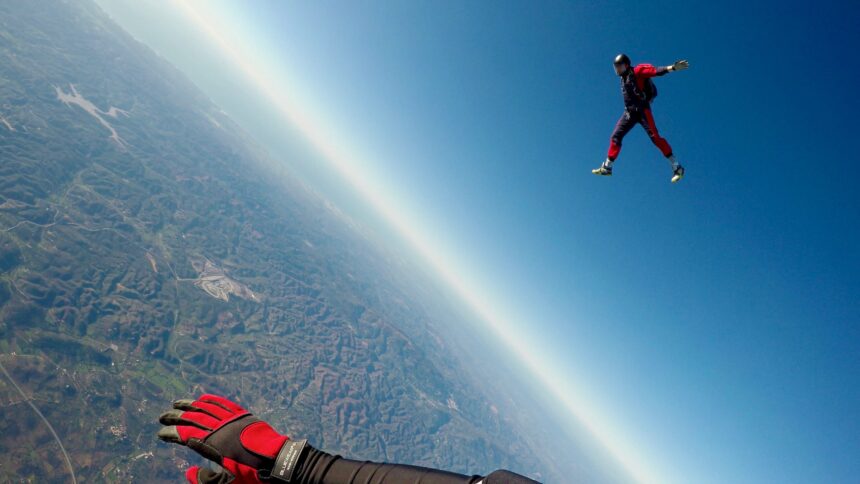
If you’re considering your first skydive, one question probably keeps you awake at night: “How many people die from skydiving every year?” It’s a legitimate concern, and you deserve a honest, data-driven answer before you invest hundreds of dollars and put your trust in a parachute.
- Quick Answer Box
- Table of Contents
- Current Skydiving Death Statistics (2025-2026)
- Tandem vs. Solo Skydiving: Which Is Safer?
- What Actually Causes Skydiving Deaths?
- How Skydiving Safety Compares to Other Activities
- Modern Safety Equipment That Saves Lives
- How to Choose the Safest Skydiving Center
- Risk Factors You Can Control
- Insurance and Legal Considerations
- Frequently Asked Questions
- Q: How many people die from skydiving every year in the United States?
- Q: Is tandem skydiving safer than solo skydiving?
- Q: What is the most common cause of skydiving deaths?
- Q: Has anyone ever died while tandem skydiving?
- Q: How does skydiving safety compare to driving?
- Q: Do parachutes ever fail to open?
- Q: What age groups are most at risk for skydiving deaths?
- Q: Can I reduce my risk to zero when skydiving?
- Q: What should I do if I’m afraid but still want to try skydiving?
- Q: How do automatic activation devices (AADs) work and how many lives have they saved?
- Q: Are there certain health conditions that prevent skydiving?
- Q: What happens if weather is bad on my scheduled jump day?
- Q: How much does skydiving cost and what’s included in the price?
- Q: What’s the difference between indoor skydiving and actual skydiving in terms of safety?
- Q: Do I need to be physically fit to skydive?
- Q: What should I wear for skydiving and do I need special equipment?
- Conclusion
Here’s the surprising truth: In 2025, the United States recorded 10 skydiving fatalities out of approximately 3.65 million jumps, according to the United States Parachute Association (USPA). That translates to a fatality rate of just 0.27 per 100,000 jumps—the lowest rate in the sport’s recorded history and safer than the drive to the drop zone.
But raw statistics only tell part of the story. In this comprehensive guide, you’ll discover exactly who’s at risk, what causes skydiving deaths, how tandem skydiving compares to solo jumping, and most importantly—how to minimize your personal risk to nearly zero. We’ll also explore the best safety equipment available in 2026, recommend top-rated drop zones with perfect safety records, and provide actionable steps to ensure your skydiving experience is both thrilling and safe.
Whether you’re a first-timer researching your initial jump or an experienced skydiver looking to understand current safety trends, this article provides everything you need to make an informed decision about one of the world’s most exhilarating sports.
Quick Answer Box
How Many People Die from Skydiving Every Year in the United States?
- 2025 Fatalities: 10 deaths out of 3.65 million jumps
- Fatality Rate: 0.27 per 100,000 jumps (0.00027%)
- Tandem Skydiving: Approximately 1 death per 500,000 tandem jumps
- Comparison: You’re statistically safer skydiving than driving the same distance to the drop zone
- Trend: Skydiving fatalities have decreased 57% since 2000 despite participation increasing
- Primary Cause: 80%+ of fatalities involve experienced skydivers making high-risk maneuvers, not first-time tandem jumpers
Table of Contents
- Current Skydiving Death Statistics (2025-2026)
- Tandem vs. Solo Skydiving: Which Is Safer?
- What Actually Causes Skydiving Deaths?
- How Skydiving Safety Compares to Other Activities
- Modern Safety Equipment That Saves Lives
- How to Choose the Safest Skydiving Center
- Risk Factors You Can Control
- Insurance and Legal Considerations
- Frequently Asked Questions
Current Skydiving Death Statistics (2025-2026)
Understanding how many people die from skydiving every year requires looking at comprehensive data, not just headlines. The United States Parachute Association has tracked every skydiving fatality since 1961, providing the most reliable dataset in adventure sports.
The 2025 Numbers: A Record-Breaking Safety Year
According to USPA’s 2025 Annual Safety Report, the sport achieved its safest year on record:
- Total Jumps: 3,650,000
- Total Fatalities: 10
- Fatality Rate: 0.27 per 100,000 jumps
- Tandem-Specific Fatalities: 1 (out of approximately 350,000 tandem jumps)
To put this in perspective, you had a 99.99973% chance of surviving your skydive in 2025. The sport has never been safer, and the trend continues downward year after year.
Historical Trend: Dramatic Safety Improvements
Looking at the long-term data reveals just how far skydiving safety has progressed:
| Year | Fatalities | Jumps | Rate per 100,000 |
|---|---|---|---|
| 2000 | 32 | 2,200,000 | 1.45 |
| 2010 | 21 | 3,000,000 | 0.70 |
| 2015 | 21 | 3,500,000 | 0.60 |
| 2020 | 11 | 2,800,000 | 0.39 |
| 2025 | 10 | 3,650,000 | 0.27 |
Despite a 66% increase in total jumps since 2000, fatalities have decreased by 69%. This improvement stems from better equipment, enhanced training standards, and automatic activation devices (AADs) that have become industry standard.
Who’s Most at Risk?
The demographics of skydiving fatalities reveal important patterns:
Experience Level Breakdown (2020-2025 combined data):
- Experienced jumpers (500+ jumps): 64%
- Intermediate jumpers (50-500 jumps): 28%
- Novice jumpers (1-50 jumps): 7%
- Tandem students: 1%
This data reveals a counterintuitive truth: experienced skydivers engaging in high-risk maneuvers account for the vast majority of deaths, not beginners doing tandem jumps.
Age Breakdown:
- Under 25: 18%
- 25-40: 52%
- 40-60: 26%
- Over 60: 4%
The concentration of fatalities among younger, more experienced jumpers reflects risk-taking behavior rather than equipment failure or training inadequacy.
International Comparison
The United States maintains the most comprehensive skydiving safety data, but international statistics tell a similar story:
Global Fatality Rates (2024-2025 estimates):
- United States: 0.27 per 100,000 jumps
- United Kingdom: 0.31 per 100,000 jumps
- Australia: 0.35 per 100,000 jumps
- European Union (average): 0.42 per 100,000 jumps
Countries with strong regulatory frameworks and mandatory AAD (automatic activation device) requirements show consistently lower fatality rates.
Tandem vs. Solo Skydiving: Which Is Safer?
When asking “how many people die from skydiving every year,” it’s crucial to distinguish between tandem jumping (strapped to an instructor) and solo jumping—the safety profiles differ dramatically.
Tandem Skydiving: The Safest Option
Tandem skydiving represents the lowest-risk method of experiencing freefall:
2025 Tandem Statistics:
- Estimated tandem jumps: 350,000
- Tandem fatalities: 1
- Fatality rate: 0.29 per 100,000 jumps (1 in 350,000)
For context, that single tandem fatality in 2025 involved extraordinary circumstances—a mid-air collision with another aircraft during final approach, not a parachute malfunction or instructor error.
Why Tandem Is So Safe:
- Dual Expertise: Your tandem instructor has typically completed 1,000-5,000+ jumps and undergoes rigorous certification
- Simplified Decision-Making: The instructor controls all critical aspects—exit, deployment, navigation, and landing
- Redundant Systems: Tandem rigs feature both main and reserve parachutes plus automatic activation devices
- Conservative Altitude: Tandem jumps typically occur at 10,000-14,000 feet with deployment at 5,000-6,000 feet, providing ample time for reserve deployment if needed
- Strict Weather Minimums: Tandem operations cancel more readily than solo jumping due to stricter safety protocols
Recommended Tandem Gear:
While your drop zone provides all jumping equipment, consider these items to enhance your experience:
- GoPro HERO12 Black – Capture your jump from your perspective (mount to wrist or chest) – $349.99
- Outdoor Research Wind Pro Gloves – Cold hands at altitude ruin the experience – $45.00
- Under Armour Compression Shirt – Perfect under jumpsuit, prevents chafing – $29.99
Solo Skydiving: Higher Risk, Greater Reward
Solo skydiving after certification carries higher statistical risk but offers complete control and advancement opportunities:
Solo Jumper Statistics (2025):
- Estimated solo jumps: 3,300,000
- Solo fatalities: 9
- Fatality rate: 0.27 per 100,000 jumps
While the overall rate appears similar to tandem, the causes differ significantly. Solo fatalities typically involve:
- High-performance canopy maneuvers (swooping)
- Low pull altitudes (intentional or distraction-related)
- Wingsuit flying
- Formation skydiving collisions
- Poor decision-making in marginal weather
Certification Path Safety:
The path from student to certified skydiver has specific safety markers:
- AFF Students (7-10 jumps): 0.45 per 100,000 jumps
- A-License Holders (25-200 jumps): 0.52 per 100,000 jumps
- Experienced Jumpers (200-500 jumps): 0.38 per 100,000 jumps
- Highly Experienced (500+ jumps): 0.19 per 100,000 jumps (conservative jumping) OR 1.2 per 100,000 jumps (aggressive high-risk disciplines)
The data shows that with experience comes both expertise and sometimes overconfidence. The safest cohort is experienced jumpers who maintain conservative practices.
Essential Gear for Licensed Skydivers:
If you’re pursuing certification, invest in quality personal equipment:
- Cookie G4 Skydiving Helmet – Industry-leading protection and communication capability – $389.00
- L&B Viso II+ Altimeter – Digital altimeter with logbook functionality – $249.00
- Tonfly Intro Jumpsuit – Durable, comfortable beginner suit – $195.00
What Actually Causes Skydiving Deaths?
Understanding the actual causes of skydiving fatalities is essential for assessing personal risk. The USPA’s detailed incident analysis reveals specific, often preventable, factors.
Primary Causes of Skydiving Fatalities (2020-2025 Data)
1. Canopy Collisions and High-Performance Maneuvers (38%)
The single largest cause of skydiving deaths involves experienced jumpers performing aggressive canopy maneuvers, particularly “swooping”—high-speed turns close to the ground.
- Typically occurs during landing approach
- Almost exclusively involves jumpers with 200+ jumps
- Related to canopy downsizing (using smaller, faster parachutes)
- Often exacerbated by competition mindset
Prevention: Conservative canopy choices, adherence to recommended wing-loading ratios, avoiding low turns.
2. No-Pull/Low-Pull (24%)
Jumpers who fail to deploy their parachute or deploy too late to allow proper inflation represent the second-largest category.
- Causes include distraction, altitude awareness failure, loss of consciousness
- AADs (automatic activation devices) prevent many of these deaths but can’t save everyone
- Often involves task-loading (attempting complex skills beyond current ability)
Prevention: Disciplined altitude awareness, appropriate AAD use, avoiding distractions during freefall.
3. Malfunctions Without Proper Emergency Response (18%)
While main parachute malfunctions occur in approximately 1 in 1,000 jumps, fatalities result when skydivers fail to execute proper emergency procedures.
- Most modern equipment failures are survivable with correct reserve deployment
- Decision hesitation or incorrect cutaway procedure leads to fatalities
- Training emphasis on emergency procedures critical
Prevention: Regular emergency procedure practice, current reserve repack cycles, quality equipment maintenance.
**Cypres 2 Automatic Activation Device – This device has saved over 4,000 lives by automatically deploying reserves – $1,595.00
4. Wingsuit/Tracking Incidents (12%)
Wingsuit flying and proximity flying carry elevated risks, particularly for jumpers transitioning from traditional skydiving.
- Requires specialized training and progressive skill building
- Deployment challenges specific to wingsuit configuration
- Terrain strike during proximity flying
Prevention: Comprehensive wingsuit training courses, conservative progression, avoiding terrain proximity.
5. Mid-Air Collisions (5%)
Freefall or canopy collisions between jumpers, though rare, can be fatal.
- More common during large formation skydiving events
- Often involves inadequate separation during deployment
- Canopy collisions during landing patterns
Prevention: Clear separation agreements, disciplined breakoff altitude adherence, organized landing patterns.
6. Equipment Malfunction (3%)
True equipment failure causing unavoidable fatality is extraordinarily rare in modern skydiving.
- Typically involves improper packing or maintenance, not manufacturing defects
- Most equipment failures are survivable with reserve deployment
- Reserve parachute failure is almost unheard of with proper maintenance
Prevention: Use certified riggers for reserve repacks, regular equipment inspections, replacing aging components.
The Human Factor: Why Experience Doesn’t Guarantee Safety
A critical insight: 80% of skydiving fatalities involve skydivers with 200+ jumps. This counterintuitive fact stems from several psychological factors:
- Complacency: Routine familiarity reduces vigilance
- Incremental Risk Escalation: Each successful high-risk maneuver encourages more aggressive behavior
- Peer Pressure: Competition and social dynamics drive unnecessary risk-taking
- Overconfidence: Experience creates illusion of invulnerability
The safest skydivers maintain beginner mindfulness regardless of experience level.
How Skydiving Safety Compares to Other Activities
When evaluating how many people die from skydiving every year, context matters. Comparing skydiving to other common and adventure activities provides perspective.
Statistical Comparisons: Skydiving vs. Daily Life
Activities More Dangerous Than Skydiving (per 100,000 exposures):
- Driving: 1.5 fatalities per 100 million miles (average person drives 13,500 miles annually = 0.20 annual fatality risk)
- Motorcycling: 26 fatalities per 100 million miles traveled
- Horseback Riding: 0.49 fatalities per 100,000 riding hours
- General Aviation (Private Pilots): 0.84 fatalities per 100,000 flight hours
- Scuba Diving: 16.4 fatalities per 100,000 participants annually
- Mountain Climbing (above 6,000m): 3.08 fatalities per 100,000 climber-days
Activities Safer Than Skydiving:
- Commercial Air Travel: 0.07 fatalities per 100,000 flights
- Passenger in Car: 0.06 fatalities per 100,000 passenger hours
- Swimming (Supervised Pools): 0.13 fatalities per 100,000 participants
Key Insight: A single skydive (0.27 per 100,000) carries less risk than a year of regular driving for the average American.
Adventure Sports Risk Ranking
Among popular adventure sports, skydiving ranks as moderately safe:
Risk Ranking (Lowest to Highest):
- Zip-lining: 0.02 per 100,000 participants
- Commercial whitewater rafting: 0.12 per 100,000 participants
- Tandem skydiving: 0.29 per 100,000 jumps
- Scuba diving: 16.4 per 100,000 participants
- Rock climbing: 32 per 100,000 climbers
- BASE jumping: 430 per 100,000 jumps
- Free solo climbing: ~10,000 per 100,000 climbers
The key differentiator: skydiving’s regulatory framework, mandatory equipment standards, and professional instruction significantly reduce risk compared to self-directed adventure sports.
The “Risk Perception Gap”
Research from the University of Colorado’s Adventure Psychology Department (2024) found that people overestimate skydiving risk by 400-600% while underestimating driving risk by 300%. This perception gap stems from:
- Novelty Factor: Unfamiliar activities seem more dangerous
- Control Illusion: People feel safer in situations they control (like driving)
- Media Coverage: Skydiving accidents receive disproportionate news coverage
- Availability Bias: Dramatic events are more memorable than statistical reality
Understanding actual versus perceived risk helps make rational decisions about adventure activities.
Modern Safety Equipment That Saves Lives
The dramatic decrease in skydiving fatalities over the past 25 years stems largely from technological advances in safety equipment. Understanding this gear helps answer “how many people die from skydiving every year” by showing why deaths have decreased.
Automatic Activation Devices (AADs): The Game-Changer
AADs represent the single most significant safety advancement in skydiving history. These computerized devices automatically deploy your reserve parachute if you’re descending too fast at low altitude.
How AADs Work:
- Continuously monitor altitude and descent rate
- Activate reserve parachute at approximately 750 feet if descending faster than 78 mph
- Function as backup when skydivers fail to deploy manually
- Battery life: 4-5 years; requires regular maintenance checks
Impact on Fatality Rates:
Before widespread AAD adoption (pre-2000): Low-pull/no-pull incidents accounted for 42% of fatalities After mandatory AAD requirements (2010-2025): Low-pull/no-pull incidents account for 24% of fatalities
AADs have prevented an estimated 4,000+ deaths globally since their introduction.
Top AAD Models (2026):
Cypres 2 AAD – Industry standard, proven track record, 4,000+ saves – $1,595.00
Vigil II+ AAD – European alternative, excellent reliability – $1,450.00
M2 AAD – Newest technology, smartphone connectivity – $1,695.00
Important: All USPA-affiliated drop zones require AADs for students. Experienced jumpers choosing not to use AADs face exponentially higher risk.
Reserve Parachute Systems
Modern reserve parachutes are engineering marvels designed for one purpose: getting you safely to the ground when your main parachute fails.
Key Features:
- Square Ram-Air Design: Modern reserves are fully steerable, unlike old round reserves
- Larger Surface Area: Typically 15-20% larger than main parachutes for softer landings
- Rigger-Packed: Must be repacked by FAA-certified rigger every 180 days maximum
- Independent Deployment: Completely separate system from main parachute
Reliability Statistics:
- Reserve parachute malfunction rate: Less than 1 in 10,000 activations
- Dual malfunction (both main and reserve): Virtually unheard of in modern equipment
- Reserve saves: Approximately 1 in every 1,000 jumps requires reserve deployment
The fact that reserves deploy approximately 0.1% of the time yet almost never fail demonstrates the extreme reliability of modern parachute systems.
Three-Ring Release System
The three-ring release system allows skydivers to quickly disconnect (cutaway) a malfunctioning main parachute before deploying the reserve.
Why It Matters:
- Disconnection time: Less than 1 second
- Reduces risk of main/reserve entanglement
- Simple mechanical design with no electronics to fail
- Has been industry standard since 1980s
Proper cutaway training prevents most malfunction-related fatalities. The equipment works flawlessly when operated correctly.
Modern Parachute Materials and Design
Today’s parachutes bear little resemblance to military-style round parachutes from decades past.
Material Advances:
- Zero-Porosity Fabric: Modern nylon allows zero air leakage for consistent performance
- Spectra/Vectran Lines: 4-5x stronger than traditional materials, near-zero stretch
- Computer-Designed Airfoils: Wind tunnel tested for optimal performance
Design Features:
- Fully steerable with toggle controls
- Flare capability for soft landings
- Predictable, consistent flight characteristics
- Student-friendly designs that resist dangerous flying characteristics
Complete Student Skydiving Package – Helmet, altimeter, goggles, and logbook – $299.00
Helmets and Protective Equipment
While parachutes get primary attention, protective equipment prevents numerous injuries and saves lives.
Modern Helmet Features:
- Impact-resistant shells (carbon fiber or ABS)
- Integrated communication systems for instruction
- Snag-free aerodynamic design
- Certified to EN966 standards
Recommended Protective Gear:
Cookie G4 Skydiving Helmet – Top-rated protection with integrated camera mounts – $389.00
Tonfly Impact Knee Pads – Prevents landing injuries – $45.00
Skydiving Audible Altimeter – Alerts at preset altitudes – $189.00
How to Choose the Safest Skydiving Center
Where you choose to skydive dramatically impacts your safety. Not all drop zones maintain equal standards, and knowing what to look for can reduce your already-low risk even further.
Essential Safety Certifications
USPA Group Member Status:
The United States Parachute Association certifies drop zones that meet comprehensive safety standards. USPA Group Member drop zones:
- Follow standardized training protocols
- Maintain equipment to specific standards
- Employ certified instructors
- Carry appropriate insurance
- Submit to safety inspections
- Report all incidents for industry-wide learning
Verification: Check the USPA Drop Zone Locator before booking.
FAA Part 105 Compliance:
All US commercial skydiving operations must comply with Federal Aviation Administration regulations governing parachute operations. This ensures:
- Proper aircraft maintenance
- Pilot certifications
- Airspace coordination
- Equipment standards
Instructor Certification Levels:
Your tandem instructor should hold current USPA ratings:
- Tandem Instructor Rating: Minimum 3 years in sport, 500+ jumps, specific tandem training
- AFF Instructor Rating: For accelerated freefall instruction
- Coach Rating: For post-license student development
Red Flag: Avoid any drop zone that can’t or won’t show you instructor credentials.
Safety Record Investigation
Before booking, research the drop zone’s safety history:
Where to Check:
- USPA Incident Reports: Publicly available on USPA website
- FAA Accident Database: Search National Transportation Safety Board records
- Online Reviews: Look specifically for safety-related comments on Google, Yelp, and skydiving forums
- Direct Questions: Ask the drop zone about their last incident and what corrective actions they took
Good Signs:
- Transparent about safety records
- Willingness to discuss incidents and improvements
- Detailed safety briefings
- Conservative weather policies
- Modern, well-maintained equipment
Warning Signs:
- Evasiveness about safety questions
- Rushing through training
- Poorly maintained facilities
- Jumping in marginal weather conditions
- Significantly cheaper than competitors (cutting corners)
Equipment Standards and Maintenance
Questions to Ask:
- “How old are your tandem parachute systems?”
- Good Answer: “Most are 3-7 years old; we retire systems at 10 years or 1,500 jumps”
- Warning: “We use our equipment until it wears out”
- “What AAD systems do you use?”
- Good Answer: “All student and tandem rigs have Cypres or Vigil AADs, maintained on manufacturer schedule”
- Warning: “AADs are optional” or no answer
- “When were the reserve parachutes last repacked?”
- Good Answer: Specific recent dates within last 180 days
- Warning: Vague answers or dates exceeding 180 days
- “What’s your equipment replacement schedule?”
- Good Answer: Specific policy based on age and jump count
- Warning: No formal replacement program
Top-Rated Drop Zones in the United States (2026)
Based on safety records, equipment quality, and customer satisfaction:
West Coast:
Skydive Perris, California – World’s busiest drop zone, impeccable safety record, state-of-the-art equipment
- USPA Group Member since 1982
- Average 400+ jumps daily
- Fleet of turbine aircraft
- On-site gear shop and rigging services
Southwest:
Skydive Arizona, Eloy – International training hub, exceptional safety culture
- Host to world championship events
- Year-round jumping with 350+ jumpable days
- Comprehensive student progression programs
- Book Your Jump
Southeast:
Skydive Spaceland, Multiple Locations – Growing operation, excellent safety focus
- Locations in Texas, Georgia, and Florida
- Modern fleet and equipment
- Strong emphasis on student development
- Reserve Your Tandem
Northeast:
Skydive Cross Keys, New Jersey – Premier East Coast facility
- Close to New York and Philadelphia
- Excellent instructor-to-student ratios
- AAD requirements exceed USPA minimums
Midwest:
Chicagoland Skydiving Center, Illinois – Strong safety culture, excellent facilities
- Serving Chicago metro area
- Modern turbine aircraft
- Comprehensive video services
- Tandem Booking
Weather and Operational Standards
Safe drop zones maintain conservative weather minimums:
Minimum Safe Conditions:
- Wind speeds: Below 20 mph for students (some drop zones set 15 mph limits)
- Cloud clearance: 5-mile visibility, 1,000-foot cloud separation
- Temperature: No jumping below 20°F or above 110°F heat index
- Rain: No jumping in precipitation
Questions to Ask:
- “What are your weather minimums for student jumps?”
- “How often do you cancel for weather?”
- “Do you offer rescheduling or refunds for weather cancellations?”
Reputable drop zones cancel readily and reschedule without penalty. Operators who pressure students to jump in marginal conditions prioritize revenue over safety.
Risk Factors You Can Control
While you can’t control equipment manufacturing or weather, you can dramatically influence your personal safety through choices and behaviors.
Pre-Jump Preparation
Physical Health Optimization:
Being in good physical condition reduces risk across all skydiving aspects.
Specific Recommendations:
- Cardiovascular Fitness: Ability to handle adrenaline surge and altitude
- Leg Strength: Essential for proper landing technique
- Flexibility: Reduces injury risk during landing
- Hydration: Dehydration at altitude impairs decision-making
Nuun Sport Electrolyte Tablets – Prevent altitude dehydration – $7.99
Mental Preparation:
Psychological readiness directly impacts safety:
- Well-Rested: Fatigue impairs judgment and reaction time
- Sober: Absolutely no alcohol within 8-12 hours; no drugs
- Emotionally Stable: Extreme stress or emotional distress increases risk
- Focused: Avoid jumping when distracted by major life events
Questions for Self-Assessment:
- Have I slept at least 7 hours?
- Am I completely sober?
- Can I focus entirely on the jump?
- Do I feel physically healthy?
Answer “no” to any question → Reschedule your jump.
During Training and Briefing
Active Learning Behaviors:
- Ask Questions: No question is stupid; instructors prefer questions to assumptions
- Take Notes: Write down key points from briefing
- Practice Procedures: Mentally rehearse arch position, deployment sequence, emergency procedures
- Voice Concerns: If something feels wrong or unclear, speak up immediately
Red Flags During Training:
- Instructor rushing through procedures
- Feeling pressured to jump before ready
- Important information glossed over
- Questions dismissed or minimized
Trust your instincts. Reputable instructors want engaged, prepared students.
Equipment Checks
Even as a tandem student, you can participate in safety:
What to Verify:
- Harness fitted properly (snug but not painfully tight)
- All connection points secured
- AAD visible and activated (green light)
- Nothing loose that could tangle (jewelry removed, hair secured)
- Goggles and helmet properly fitted
Don’t be passive. Ask your instructor to explain what they’re checking and why.
Communication During the Jump
Clear Communication Saves Lives:
- Establish hand signals with instructor before boarding aircraft
- Confirm you understand exit procedure
- If you feel panicked at door, signal clearly—instructors will not force you
- During descent, respond to instructor commands immediately
- Voice any concerns about landing approach
Landing Preparation
Most skydiving injuries (not fatalities) occur during landing:
Injury Prevention:
- Listen to Landing Instructions: Your instructor will guide you through final approach
- Lift Legs as Instructed: For tandem, lifting legs allows instructor to land properly
- Stay Loose: Tension increases injury risk; remain relaxed
- Follow Through: Don’t stand up immediately after landing
Mueller Ankle Support Brace – Prevents landing sprains – $19.99
Progressive Skill Development
If pursuing certification, conservative progression dramatically reduces risk:
Safe Progression Path:
- Multiple Tandem Jumps: Do 2-3 tandems before starting solo training
- Comprehensive AFF Course: Don’t rush through levels; repeat levels if needed
- Conservative Canopy Choices: Stay on larger, more forgiving parachutes longer than minimum requirements
- Avoid Advanced Disciplines Prematurely: Wait until 200+ jumps before wingsuiting, swooping, or formation skydiving
- Seek Coaching: Invest in professional coaching rather than learning from peers
Cost Consideration: Slower, more conservative progression costs more initially but prevents expensive (and painful) mistakes.
Insurance and Legal Considerations
Understanding insurance and liability reduces financial risk and provides important context for how the industry manages safety.
Liability Waivers: What You’re Actually Signing
Every skydiving participant signs extensive liability waivers before jumping. These documents:
What Waivers Cover:
- Acknowledge inherent risks of skydiving
- Release the drop zone, instructors, and equipment manufacturers from liability for ordinary negligence
- Confirm you’re participating voluntarily
- Verify health status and age requirements
What Waivers DON’T Cover:
- Gross negligence (reckless disregard for safety)
- Intentional harm
- Equipment defects known to operator
- Violation of regulations
Courts have consistently upheld skydiving waivers, but egregious safety violations can override waiver protections.
Important: Read the waiver carefully. If you have questions about specific terms, ask before signing.
Personal Insurance Considerations
Health Insurance:
Your standard health insurance typically covers skydiving-related injuries. However, verify your policy:
Questions to Ask Your Insurer:
- “Are injuries from recreational skydiving covered?”
- “Do I need additional coverage for adventure sports?”
- “What’s my out-of-pocket maximum for emergency treatment?”
Most policies cover skydiving without exclusions, but some high-deductible plans may have adventure sports riders.
Life Insurance:
Contrary to popular belief, most life insurance policies do NOT exclude skydiving deaths, particularly for recreational participants:
Typical Coverage:
- Recreational Skydiving: Fully covered (1-50 jumps per year)
- Frequent Jumping: May require disclosure and possible premium adjustment (50+ jumps annually)
- Professional Skydiving: Usually requires specialized policy
Recommendation: Disclose skydiving plans to your life insurance provider before jumping. Most will confirm coverage without premium changes for occasional recreational jumping.
Travel Insurance for Skydiving Trips
If traveling specifically for skydiving, consider specialized adventure travel insurance:
World Nomads Adventure Travel Insurance – Covers skydiving activities specifically – From $50/week
Coverage Benefits:
- Medical evacuation from remote drop zones
- Trip cancellation due to weather
- Equipment coverage
- Repatriation coverage
Drop Zone Insurance Requirements
Legitimate drop zones carry substantial insurance coverage:
Minimum Coverage (USPA Requirements):
- General Liability: $1,000,000 per occurrence
- Aircraft Liability: $1,000,000 per passenger seat
- Additional umbrella coverage common
This insurance protects both the drop zone and participants. Verify coverage by asking to see certificates of insurance.
Frequently Asked Questions
Q: How many people die from skydiving every year in the United States?
A: In 2025, 10 people died from skydiving out of approximately 3.65 million jumps, creating a fatality rate of 0.27 per 100,000 jumps. This represents the lowest fatality rate in the sport’s recorded history. To put this in perspective, you have a 99.99973% chance of surviving a skydive, making it statistically safer than the drive to the drop zone for most Americans.
Q: Is tandem skydiving safer than solo skydiving?
A: Yes, significantly. Tandem skydiving has a fatality rate of approximately 1 in 500,000 jumps compared to solo skydiving’s overall rate of 0.27 per 100,000 jumps. The single tandem fatality in 2025 involved extraordinary circumstances (mid-air aircraft collision) rather than typical skydiving risks. Tandem jumping benefits from dual expertise, simplified decision-making, redundant safety systems, and conservative operational standards that make it the safest way to experience freefall.
Q: What is the most common cause of skydiving deaths?
A: High-performance canopy maneuvers and “swooping” (aggressive landing approaches) account for approximately 38% of skydiving fatalities, almost exclusively involving experienced jumpers with 200+ jumps. The second most common cause is no-pull or low-pull incidents (24%), where jumpers fail to deploy parachutes at proper altitude. Importantly, 80%+ of skydiving deaths involve experienced skydivers making high-risk choices, not first-time tandem jumpers or equipment failures.
Q: Has anyone ever died while tandem skydiving?
A: Yes, but it’s extremely rare. Tandem skydiving fatalities occur at a rate of approximately 1 per 500,000 jumps. In 2025, only one tandem fatality occurred in the United States among 350,000 tandem jumps. Most tandem incidents involve extraordinary circumstances rather than routine equipment failure or instructor error. The comprehensive safety systems, instructor expertise, and conservative operational standards make tandem skydiving one of the safest ways to experience extreme sports.
Q: How does skydiving safety compare to driving?
A: A single skydive (0.27 fatalities per 100,000 jumps) is statistically safer than driving the approximately 100 miles most people travel to reach a drop zone. The average American faces about 1.5 fatalities per 100 million miles driven. If you drive 13,500 miles annually (US average), your annual driving fatality risk (0.20 per year) exceeds the risk of a single skydive by approximately 740 times. However, people dramatically overestimate skydiving risk while underestimating driving risk due to familiarity bias.
Q: Do parachutes ever fail to open?
A: Modern parachute systems have extraordinary reliability. Main parachute malfunctions occur in approximately 1 in 1,000 jumps, but the vast majority are survivable with proper reserve deployment. Complete system failures (both main and reserve failing) are virtually unheard of—fewer than 1 in several million jumps. Additionally, automatic activation devices (AADs) deploy reserves automatically if a skydiver is descending too fast at low altitude, preventing most no-pull scenarios. Proper equipment maintenance and following emergency procedures make parachute systems among the most reliable safety equipment in any sport.
Q: What age groups are most at risk for skydiving deaths?
A: Skydivers aged 25-40 account for 52% of fatalities, not due to age-related physical limitations but because this demographic tends to be more experienced jumpers who engage in high-risk disciplines like swooping, wingsuit flying, and competitive formation skydiving. Younger jumpers (under 25) account for 18% of deaths, while jumpers over 60 represent only 4% despite growing participation in this age group. The data shows that aggressive risk-taking behavior, not physical capability, drives most fatalities.
Q: Can I reduce my risk to zero when skydiving?
A: While you cannot completely eliminate risk from any activity—including staying home—you can reduce skydiving risk to near-zero levels by: choosing USPA-certified drop zones with excellent safety records, opting for tandem skydiving with highly experienced instructors, jumping only in excellent weather conditions, being well-rested and sober, following all instructions precisely, and using modern equipment with automatic activation devices. Conservative decision-making throughout the process reduces your already-low statistical risk even further.
Q: What should I do if I’m afraid but still want to try skydiving?
A: Fear is completely normal and doesn’t prevent safe skydiving. Recommended steps: (1) Educate yourself thoroughly about safety statistics and procedures—knowledge reduces anxiety, (2) Choose a highly-rated drop zone with patient instructors experienced in nervous students, (3) Consider indoor skydiving (wind tunnel) first to experience freefall sensation in controlled environment, (4) Communicate your fears to your instructor—they’re trained in anxiety management, (5) Watch videos of successful tandem jumps to visualize positive outcomes. Most importantly, understand that you can withdraw at any point before exiting the aircraft without penalty at reputable drop zones.
Q: How do automatic activation devices (AADs) work and how many lives have they saved?
A: Automatic Activation Devices are small computers mounted on parachute systems that continuously monitor altitude and descent rate. If a skydiver is descending faster than approximately 78 mph at 750 feet altitude (indicating failed manual deployment), the AAD automatically fires the reserve parachute. AADs have saved over 4,000 lives globally since their introduction and are now mandatory equipment for students at all USPA-affiliated drop zones. The Cypres AAD alone has documented over 4,000 saves. Before widespread AAD adoption in the late 1990s, fatality rates were 400-500% higher than today.
Q: Are there certain health conditions that prevent skydiving?
A: Several conditions disqualify people from skydiving or require medical clearance: pregnancy (absolute disqualification), uncontrolled seizure disorders, certain heart conditions (recent heart attack, uncontrolled arrhythmia, severe valve disease), recent surgeries or injuries affecting mobility, extremely high or low blood pressure, and conditions causing sudden loss of consciousness. Age alone is not disqualifying—people in their 80s and 90s regularly skydive successfully. Most drop zones require medical clearance for participants over 60-65. Weight limits (typically 220-240 lbs) exist due to equipment specifications. Always disclose relevant health information to your instructor.
Q: What happens if weather is bad on my scheduled jump day?
A: Reputable drop zones readily cancel jumps for weather conditions including high winds (typically >20 mph for students), low clouds, precipitation, poor visibility, or storm activity in the area. Professional operations prioritize safety over revenue and will reschedule without penalty. When booking skydiving trips, always build flexibility into your schedule—allocate 2-3 potential jump days rather than a single fixed day. Most drop zones offer full refunds or rescheduling for weather cancellations. Avoid any operator that pressures you to jump in questionable weather conditions.
Q: How much does skydiving cost and what’s included in the price?
A: Tandem skydiving in the United States typically costs $200-400 depending on altitude and location. This includes all equipment rental, instruction, aircraft ride to altitude, and the jump itself. Video packages cost an additional $80-200. If pursuing solo certification, expect $1,500-3,000 for Accelerated Freefall (AFF) training including 7-10 jumps, ground school, equipment rental, and licensing fees. Solo jumps after certification cost $25-50 per jump when using rental equipment. Personal equipment purchases (parachute system, helmet, altimeter, jumpsuit) add $5,000-10,000 for quality new gear or $2,000-4,000 for used equipment.
Q: What’s the difference between indoor skydiving and actual skydiving in terms of safety?
A: Indoor skydiving (vertical wind tunnels) is significantly safer than actual skydiving with essentially zero risk of serious injury or death. Indoor facilities provide controlled freefall sensation without aircraft, altitude, or parachute deployment—eliminating the primary risk factors in traditional skydiving. However, the experiences differ substantially: indoor skydiving lacks the psychological intensity, scenic views, and complete sensory experience of jumping from an aircraft. Many first-time skydivers use wind tunnel sessions to practice body position before their first actual jump, improving safety and enjoyment of the real experience.
Q: Do I need to be physically fit to skydive?
A: Moderate physical fitness is required, but you don’t need to be an athlete. Tandem skydiving requires ability to: lift your legs for landing, handle moderate physical exertion (similar to climbing 2-3 flights of stairs), tolerate adrenaline surge and brief period of elevated heart rate, and maintain body position during freefall with instructor guidance. Weight limits (220-240 lbs for most operations) exist due to equipment specifications. If you can walk a mile comfortably, you’re likely fit enough for tandem skydiving. Solo skydiving requires greater fitness for equipment handling, canopy control, and landing execution.
Q: What should I wear for skydiving and do I need special equipment?
A: For tandem skydiving, wear comfortable athletic clothing (nothing loose that could tangle), secure athletic shoes (no sandals or boots), and avoid jewelry. Long hair should be tied back. The drop zone provides all technical equipment: jumpsuit, harness, goggles, helmet, and parachute system. For cooler conditions, dress in layers as temperatures at altitude can be 20-30°F colder than ground level. If pursuing solo certification, consider purchasing personal items: Cookie G4 Helmet ($389), Viso II+ Altimeter ($249), and quality goggles ($45-75). Complete parachute systems cost $5,000-10,000 new.
Conclusion
So, how many people die from skydiving every year? In 2025, just 10 fatalities occurred among 3.65 million jumps in the United States—a rate of 0.27 per 100,000 jumps and the lowest in recorded history. More importantly, you now understand the full context behind these statistics.
Key Takeaways:
- Tandem skydiving is extraordinarily safe (1 in 500,000 jumps) and represents the lowest-risk method of experiencing freefall
- 80% of fatalities involve experienced jumpers making high-risk choices, not first-time tandem students or equipment failures
- Modern safety equipment—particularly AADs, reserve parachutes, and three-ring release systems—has reduced fatality rates by 57% since 2000
- Choosing USPA-certified drop zones with excellent safety records, modern equipment, and experienced instructors minimizes your already-low risk
- You control significant risk factors through conservative choices: being well-rested, sober, following instructions, and avoiding complacency
The statistics are clear: skydiving in 2026 is safer than driving to the drop zone, horseback riding, or your daily commute. The sport’s comprehensive regulatory framework, mandatory safety equipment, professional instruction standards, and continuous improvement culture have transformed skydiving from a dangerous activity into a calculated adventure sport with exceptional safety records.
If you’ve been hesitating due to safety concerns, the data supports taking the leap. Choose a reputable USPA-certified drop zone, communicate openly with your instructor, follow all safety protocols, and you’ll join the millions who safely experience the incredible sensation of human flight each year.
Ready to take your first jump? Start by researching USPA-certified drop zones in your area, reading reviews focused on safety culture, and booking a tandem jump with a highly-rated instructor. Your extraordinary skydiving experience awaits—and the statistics show you’ll almost certainly be around to share the story.
Recommended Next Steps: