
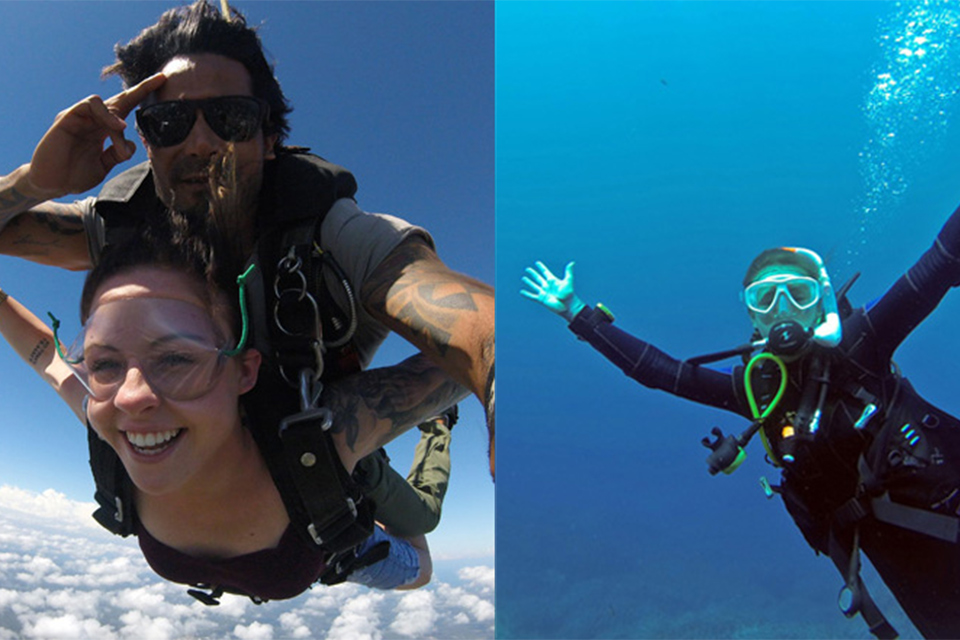
Skydiving and scuba diving are two of the most popular adventure sports in the world. Both activities attract thrill seekers looking for unforgettable experiences—one high above the earth and the other deep beneath the ocean.
Because both activities involve extreme environments, many people wonder how the risks compare. When analyzing skydiving vs scuba diving risk, statistics reveal interesting differences in accident rates, causes of incidents, and safety procedures.
Modern equipment, strict training standards, and safety regulations have significantly improved both sports over the past several decades. However, the type of risks involved in each activity is quite different.
This guide compares real statistics, explains the risks involved in each activity, and helps determine which sport is actually more dangerous.
Quick Answer: Skydiving vs Scuba Diving Risk
Both activities are considered relatively safe when performed with proper training and supervision.
However, estimated statistics suggest:
| Activity | Estimated Fatality Risk |
|---|---|
| Skydiving | ~1 death per 200,000 jumps |
| Scuba Diving | ~1 death per 200,000 dives (varies by source) |
While the fatality rates are similar, the types of risks involved are very different.
For a deeper breakdown of skydiving safety numbers, see our guide on odds of dying while skydiving.
How Skydiving Risk Works
Skydiving involves jumping from an aircraft at altitudes typically between 10,000 and 14,000 feet.
A standard skydive includes:
- safety briefing
- aircraft ascent
- freefall
- parachute deployment
- controlled landing
Because modern skydiving uses multiple backup systems, the probability of a serious accident is very low.
You can explore these statistics in our article on probability of skydiving accident.
How Scuba Diving Risk Works
Scuba diving takes place underwater and exposes divers to an entirely different set of risks.
Common scuba diving hazards include:
- decompression sickness
- equipment malfunction
- underwater disorientation
- oxygen toxicity
Unlike skydiving, scuba diving risks often increase with depth and dive duration.
Major Risk Differences Between Skydiving and Scuba Diving
Although the fatality rates may appear similar, the risk factors in these sports are different.
Environment
Skydiving occurs in open airspace, while scuba diving occurs underwater where breathing depends on specialized equipment.
Emergency Procedures
In skydiving, emergency procedures often involve deploying a reserve parachute.
In scuba diving, emergencies may require a controlled ascent to avoid decompression sickness.
Equipment Systems
Skydiving equipment includes multiple safety backups such as reserve parachutes and automatic activation devices.
You can learn more about these systems in our guide on skydiving equipment explained.
Skydiving Safety Improvements
Over the past several decades, skydiving has become dramatically safer.
Key improvements include:
- dual parachute systems
- automatic activation devices
- improved instructor training programs
- advanced parachute materials
Our article on skydiving safety record over time explains how these innovations have reduced accident rates.
Scuba Diving Safety Improvements
Scuba diving has also benefited from major safety improvements.
Modern scuba diving safety features include:
- dive computers
- improved breathing regulators
- decompression monitoring systems
- standardized dive training programs
These developments have significantly improved diving safety over time.
Which Sport Is More Dangerous?
When comparing skydiving vs scuba diving risk, both activities are considered relatively safe when proper training and safety guidelines are followed.
Skydiving risks are typically concentrated during landing and parachute deployment, while scuba diving risks are often related to depth and breathing equipment.
Because the risks occur in different environments, it is difficult to say that one sport is universally more dangerous than the other.
Factors That Affect Risk Levels
Several factors influence risk levels in both sports.
Experience Level
Beginners are usually supervised by instructors, which reduces risk.
Equipment Quality
Modern equipment and proper maintenance are essential for safety.
Environmental Conditions
Weather conditions affect skydiving, while water conditions and visibility affect scuba diving.
Conclusion
The comparison of skydiving vs scuba diving risk shows that both adventure sports are relatively safe when proper training and safety procedures are followed. Modern technology and improved training programs have dramatically reduced accident rates in both activities.
While skydiving involves aerial risks and scuba diving involves underwater hazards, both sports maintain strong safety records thanks to advanced equipment and professional supervision.
For adventure enthusiasts, understanding the real statistics behind these activities helps replace fear with facts and highlights the importance of proper training and preparation.
FAQs
Is skydiving more dangerous than scuba diving?
Both activities have similar overall fatality rates, but the types of risks involved are different.
What causes most skydiving accidents?
Most incidents occur during landing or due to human error.
What causes most scuba diving accidents?
Common causes include decompression sickness, equipment problems, and underwater disorientation.
Is skydiving safe for beginners?
Yes. Tandem skydiving with certified instructors is considered very safe.
Is scuba diving safe for beginners?
Yes. Beginners usually train under professional dive instructors before performing deeper dives.