

If you are serious about skydiving, the Accelerated Freefall program, commonly known as AFF, is the path you have to take. It is the gold standard training program that takes you from a complete beginner to a licensed solo skydiver. But before you book anything, the most common question people ask is this: how much does an AFF skydiving course actually cost?
The honest answer is that it depends on where you live, which drop zone you choose, and what is included in the package. In this complete guide, you will get a real, no-fluff breakdown of AFF course costs across all 8 levels, a state-by-state pricing comparison, a list of hidden fees most beginners overlook, and practical tips to reduce your total spend without compromising on safety.
What Is the AFF Skydiving Course?
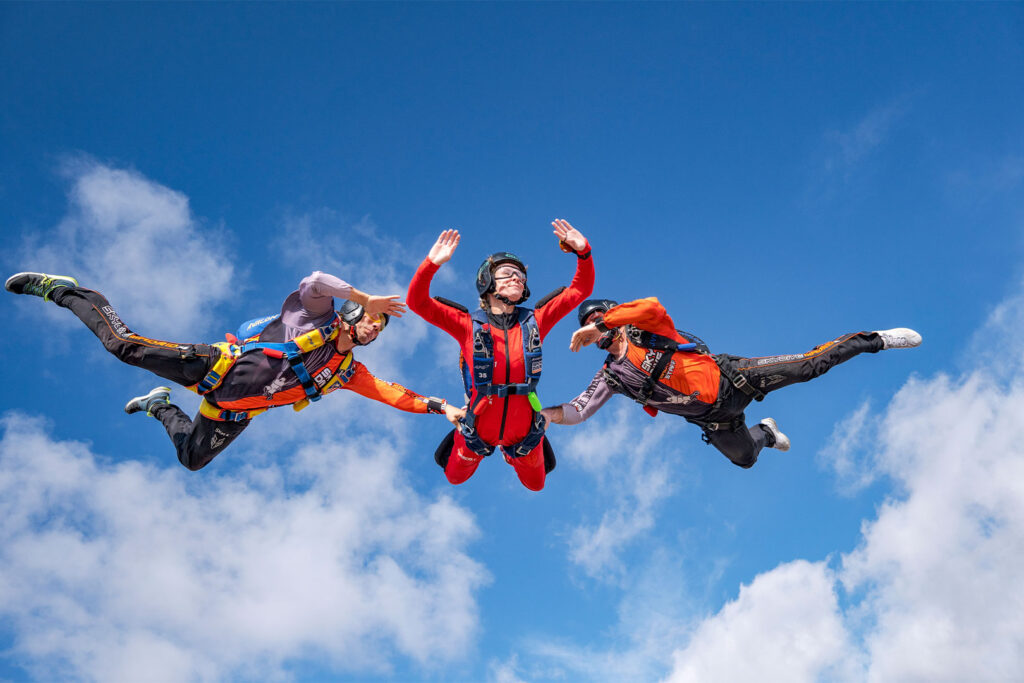
The Accelerated Freefall program is the most widely used training system in the world for learning to skydive solo. It is governed by the United States Parachute Association (USPA) in the US, the British Skydiving authority in the UK, the Australian Parachute Federation in Australia, and equivalent bodies in Canada and New Zealand.
The program consists of 8 structured jump levels, each building on the skills of the previous one. In levels 1 through 3, you jump with two instructors holding you in freefall. From levels 4 through 7, one instructor accompanies you. By level 8, you are jumping independently with ground radio guidance only.
After completing all 8 levels and logging a minimum of 25 solo jumps, you qualify for your USPA A-License, which allows you to jump at any certified drop zone in the world without supervision.
AFF Skydiving Course Cost: Full Level-by-Level Breakdown
Understanding the cost per level helps you budget accurately and avoid surprises. Here is what the typical AFF course costs across each level in the United States as of 2026.
Level 1 (First Jump with Two Instructors)
This level includes your full ground school training, which runs between 4 and 8 hours, plus your first freefall jump from 10,000 to 14,000 feet. Two certified instructors jump with you and maintain physical contact throughout freefall.
Typical cost: $175 to $350 depending on the drop zone and altitude.
Level 2 (Stability and Practice Pulls)
Your second jump focuses on maintaining a stable body position and practicing the deployment process. Still two instructors present.
Typical cost: $120 to $200 per jump.
Level 3 (Solo Practice Pulls)
You practice pulling your own parachute while instructors release their grip. A major confidence milestone.
Typical cost: $120 to $200 per jump.
Levels 4 and 5 (Turns and Forward Movement)
One instructor accompanies you. You learn to turn 90 and 180 degrees and to move forward and backward in freefall.
Typical cost: $100 to $175 per jump.
Levels 6 and 7 (Loops and Docking)
You learn backloops, frontloops, and how to dock on a stationary target. These are the most technically demanding levels.
Typical cost: $100 to $175 per jump.
Level 8 (Solo Jumps and Canopy Skills)
You jump solo, practicing everything independently. Your canopy control and landing accuracy are assessed.
Typical cost: $25 to $60 per solo jump (equipment rental may apply).
Total AFF Course Cost Estimate
| Package Type | Estimated Total Cost (USA) |
|---|---|
| Budget drop zone, shared packages | $1,400 to $1,800 |
| Mid-range drop zone, full package | $1,800 to $2,500 |
| Premium drop zone, high altitude | $2,500 to $3,500 |
| Additional solo jumps to reach 25 total | $25 to $60 each |
Most students spend between $1,800 and $2,800 total to complete the AFF course and earn their A-License.
AFF Course Cost by State (USA): 2026 Pricing Guide
Prices vary significantly depending on your location. Drop zones in states with higher operating costs, colder climates, or premium scenic views tend to charge more.
| State | Estimated AFF Package Cost |
|---|---|
| California | $2,200 to $3,500 |
| Florida | $1,800 to $2,800 |
| Texas | $1,700 to $2,600 |
| New York | $2,000 to $3,200 |
| Colorado | $2,000 to $3,000 |
| Washington | $1,900 to $2,800 |
| Arizona | $1,800 to $2,700 |
| Nevada | $1,900 to $3,000 |
| North Carolina | $1,600 to $2,400 |
| Ohio | $1,500 to $2,200 |
| Illinois | $1,700 to $2,500 |
| Georgia | $1,600 to $2,400 |
AFF Course Costs in Other English-Speaking Countries
| Country | Estimated AFF Package Cost |
|---|---|
| United Kingdom | £1,800 to £2,800 |
| Australia | AUD $2,500 to $4,000 |
| Canada | CAD $2,200 to $3,500 |
| New Zealand | NZD $2,800 to $4,200 |
What Is Included in an AFF Package?
When comparing prices across drop zones, make sure you understand what each package actually includes. A cheaper quote may look attractive until you realize it excludes essential items.
Most comprehensive AFF packages include the following.
Ground school classroom training covering equipment, freefall technique, emergency procedures, and canopy control. All equipment rental for each level including the rig, altimeter, helmet, and jumpsuit. Instructor fees for all staffed levels. Aircraft flights to altitude for every jump. Radio guidance during your canopy descent and landing.
What is often NOT included in the base price is worth paying close attention to. Video recording of your jumps, which most students want, typically costs an extra $50 to $100 per jump. Gear rental fees for your post-AFF solo jumps. USPA membership, which costs around $85 per year and is required to jump at most certified drop zones. License application fee of approximately $25. Additional repeat jumps if you need to redo a level.
Hidden Costs Most AFF Students Miss
Many people budget for the AFF course itself but are surprised by costs that appear afterward. Here are the most common ones.
Gear purchase is the biggest post-AFF expense. Once you have your license, you will want your own equipment. A complete beginner rig costs between $6,000 and $12,000 new, or $2,500 to $6,000 used. Your instructors and the staff at your drop zone will guide you on what to buy based on your skill level.
Reserve repack is a legal requirement in the US. Your reserve parachute must be repacked by a certified FAA rigger every 180 days. Each repack costs $80 to $150.
Jump fees after licensing at most drop zones run $20 to $40 per jump for experienced jumpers with their own gear. If you are renting gear, add another $20 to $35 per jump.
Affiliate Recommendation: If you are planning to buy your first skydiving rig after getting licensed, check out the gear buying guides at SkydiveGuides.com for honest, experience-based recommendations on beginner-friendly equipment that fits your budget.
How to Reduce Your AFF Course Cost Without Cutting Corners
There are several legitimate ways to reduce what you spend on your AFF training.
Book a full package upfront. Drop zones almost always offer a discount when you pay for the complete AFF course in one transaction rather than level by level. Discounts of 10 to 20 percent are common.
Jump in the off-season. Jumping in autumn or early spring at drop zones in temperate climates often comes with lower pricing and fewer crowds, which means more instructor availability and faster progression.
Ask about student or military discounts. Many drop zones offer reduced rates for full-time students, active military personnel, veterans, and first responders. These discounts are not always advertised, so ask directly.
Choose a drop zone with an onsite wind tunnel. If the drop zone has an indoor skydiving tunnel, you can practice body flight before your actual jumps. This reduces the number of repeat levels you need, saving money overall.
Progress quickly. Every time you have to repeat a level, you pay for it again. Showing up well-rested, reviewing the ground material the night before, and visualizing your dives reduces the chance of needing repeats.
Is the AFF Course Worth the Cost?
This is the question that sits behind every Google search on this topic. The honest answer is yes, for the right kind of person.
If you have done one or two tandem jumps and felt something shift inside you, that feeling does not go away. Tandem skydiving, as incredible as it is, puts you in the passenger seat. AFF puts you in control of your own body in freefall, your own parachute deployment, and your own landing.
The cost of an AFF course, when spread across the full skydiving journey that follows, becomes a relatively small one-time investment. Once you are licensed and own your own gear, jumping costs $20 to $40 per jump. People who jump 50 times a year for ten years recoup that initial training cost many times over in terms of pure experience value.
AFF vs Tandem: Which Should You Do First?
This is a common decision point for beginners. Here is the practical answer.
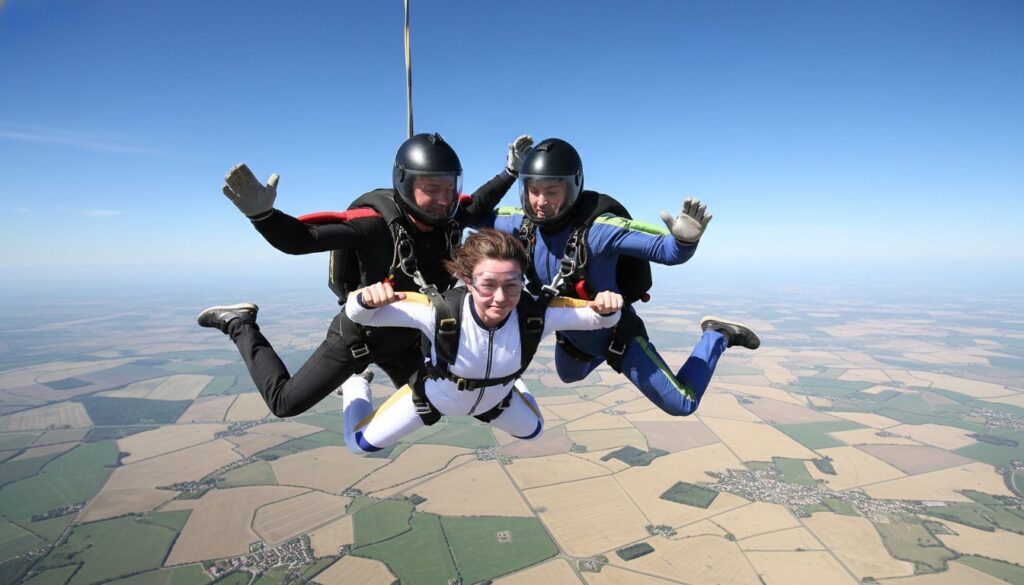
Tandem skydiving is the right starting point if you have never jumped before and want to experience freefall before committing to training. It is a low-risk way to confirm that you genuinely love the sport before spending $2,000 or more on a license course.
AFF is the right choice if you already know you want to skydive independently, you have done at least one tandem, and you are ready to commit. Some drop zones allow you to start AFF without a prior tandem, and this is perfectly acceptable.
Frequently Asked Questions
How long does it take to complete the AFF course? Most students complete the 8 levels of AFF within 2 to 8 weeks. Weather, scheduling availability, and how quickly you progress through each level all affect the timeline. Some highly motivated students complete the course in a single extended weekend at a busy drop zone.
Can I pay for AFF levels one at a time? Yes, most drop zones allow you to pay per level. However, buying the full package upfront almost always saves money. Discuss payment options with your chosen drop zone before committing.
What happens if I fail a level? You repeat it and pay the standard jump fee for that level again. Failing a level is common and nothing to be embarrassed about. Most instructors will give you detailed feedback so you know exactly what to work on.
Do I need to be physically fit to start AFF? You need to meet the weight and age requirements set by your drop zone (typically under 225 lbs and at least 18 years old). General fitness helps but elite athleticism is not required. Most healthy adults are physically capable of completing AFF.
Is AFF training recognized internationally? Yes. A USPA A-License is recognized at most drop zones worldwide. Some countries may require a brief skills verification jump, but your AFF training is universally respected within the global skydiving community.
What gear do I need to buy my own before starting AFF? Nothing. All equipment is provided and included in your AFF package. You only need to start thinking about purchasing gear after you earn your license.
How much does the USPA A-License cost in total? The license itself (application and processing) costs approximately $25 through USPA. Add annual USPA membership of around $85. Your total AFF course, solo jumps, and licensing fees combined will typically run $1,800 to $3,000 depending on your state and drop zone.