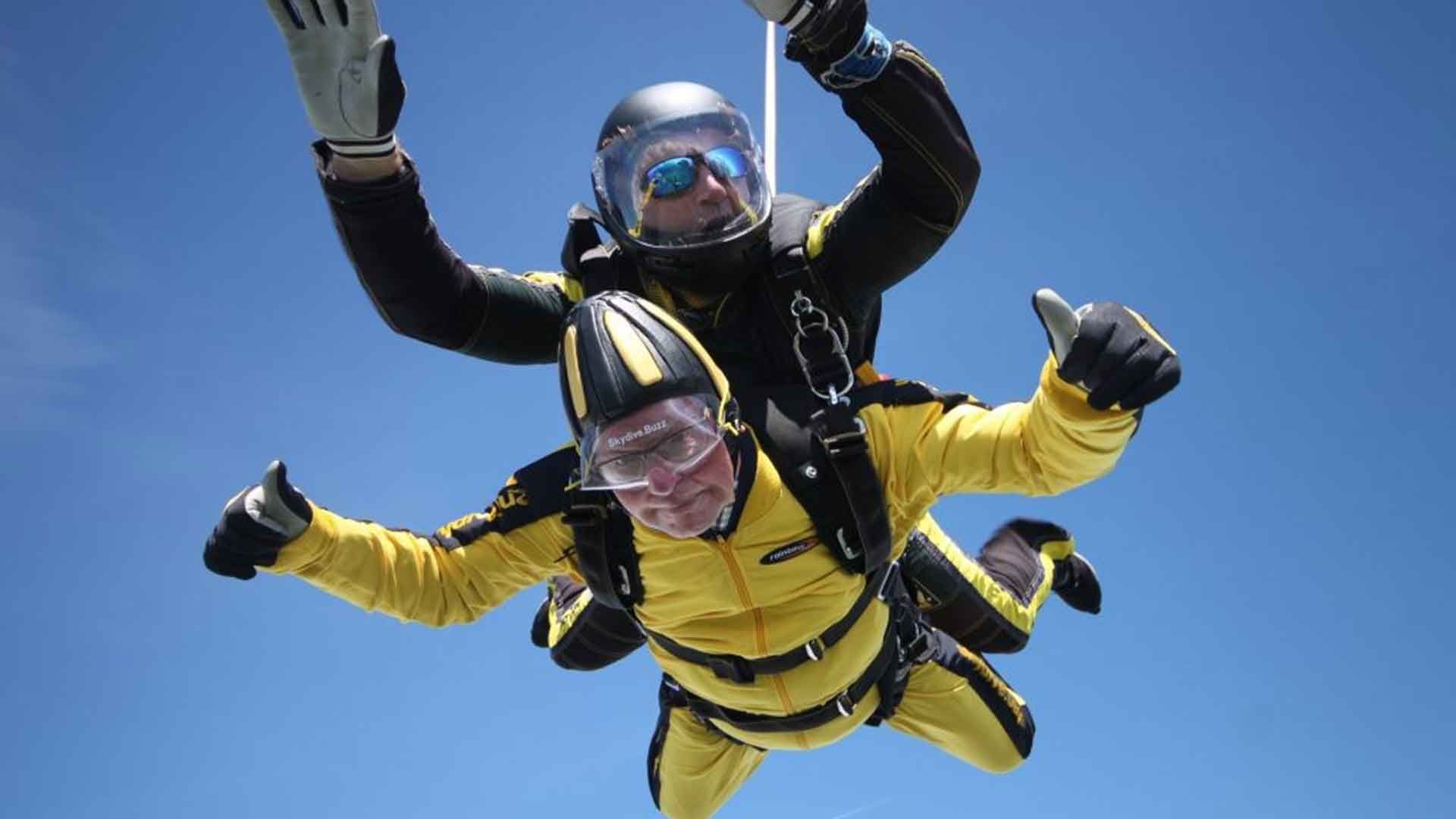

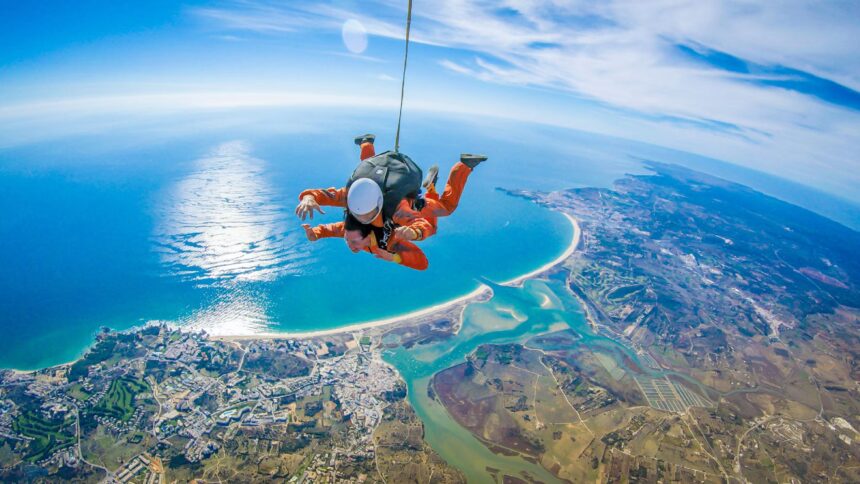
Imagine standing at 15,000 feet above sea level, your heart pounding as you peer down at a landscape that seems pulled from a dream. The jump master gives the signal, and suddenly you’re freefalling at 120 mph through crisp mountain air, over turquoise oceans, or alongside ancient glaciers. This isn’t just another adventure—this is experiencing the best skydiving in the world.
- Quick Answer Box
- Table of Contents
- What Makes Skydiving Locations “The Best”?
- Top 10 Best Skydiving in the World
- 1. Interlaken, Switzerland – The Alpine Gold Standard
- 2. Queenstown, New Zealand – The Adventure Capital
- 3. Dubai, UAE – Luxury Meets Extreme Adventure
- 4. Fox Glacier, New Zealand – Land on a Glacier
- 5. Great Barrier Reef, Australia – Above the World’s Largest Reef
- 6. Waikiki, Hawaii, USA – Pacific Paradise
- 7. Victoria Falls, Zambia/Zimbabwe – Above the Smoke That Thunders
- 8. Perris Valley, California, USA – The Training Mecca
- 9. Pattaya, Thailand – Best Value Champion
- 10. Mount Everest, Nepal – The Ultimate Achievement
- Where is the World’s Highest Skydive?
- Best Country to Learn Skydiving
- Top 10 Cheapest Skydiving in the World
- 1. Pattaya, Thailand – The Value Champion
- 2. Playa del Carmen, Mexico – Caribbean for Less
- 3. Mossel Bay, South Africa – African Value
- 4. Jurien Bay, Australia – Affordable Australian Option
- 5. Lake Taupo, New Zealand – Budget NZ Option
- 6. Puerto Vallarta, Mexico – Pacific Paradise Value
- 7. Algarve, Portugal – European Budget Champion
- 8. Cebu, Philippines – Island Paradise Pricing
- 9. Interlaken, Switzerland (Off-Season) – Alpine Surprise
- 10. Empuriabrava, Spain – Mediterranean Value
- Budget Travel Strategy
- Best Skydiving in India
- Best and Safest Skydiving in the World
- Reddit Community Favorites: What Skydivers Actually Recommend
- Price Comparison: Best Skydiving in World
- Adventure Sports Combinations: Beyond Just Skydiving
- The Adventure Sports Trinity: Sky, Land, Water
- Interlaken, Switzerland: Alpine Adventure Hub
- Dubai, UAE: Desert Meets Ocean Adventure
- Hawaii, USA: Island Paradise Adventures
- Thailand: Budget Adventure Paradise
- Adventure Combinations: The Progression Principle
- Cross-Training Benefits
- The Ultimate Adventure Year Plan
- Planning Your Ultimate Skydiving Adventure
- Step 1: Define Your Goals
- Step 2: Choose Your Destination Tier
- Step 3: Timing and Seasonality
- Step 4: Certification Considerations
- Step 5: Budgeting Framework
- Step 6: Booking Process
- Step 7: Pre-Jump Preparation
- Step 8: Day-of-Jump Logistics
- Step 9: Post-Jump Decisions
- Step 10: Building Your Skydiving Journey
- Frequently Asked Questions
- Where is the best skydiving in the world?
- What is the world’s highest skydive available to the public?
- Which is the best country to learn skydiving?
- Which is the best skydiving in India?
- How much does the best skydiving in world cost?
- What are the top 10 cheapest skydiving destinations in the world?
- Is skydiving dangerous? How safe is it?
- Can I skydive if I’m afraid of heights?
- Do I need previous experience to skydive at famous destinations?
- What’s the best season to go skydiving at top destinations?
- How long does a skydiving experience take?
- What should I wear for skydiving?
- Can I skydive with a GoPro or camera?
- What happens if weather cancels my skydiving?
- At what age can you skydive?
- Conclusion
- Book Your Skydiving Adventure
In 2026, skydiving has evolved from a niche extreme sport into a global phenomenon, with over 4.2 million jumps completed annually across six continents. Whether you’re a first-timer searching for the perfect place to take the leap or an experienced jumper hunting for the world’s most spectacular drop zones, choosing the right location transforms a good experience into an unforgettable one.
This comprehensive guide reveals where to find the best skydiving in the world, from the highest commercial jumps available to the public to the most affordable destinations that don’t compromise on safety or scenery. We’ll explore which countries offer superior training for aspiring skydivers, uncover hidden gems that seasoned jumpers discuss on Reddit forums, and provide insider knowledge on pricing, safety standards, and the ultimate aerial adventures that will redefine your relationship with gravity.
By the end of this article, you’ll know exactly where to book your next jump—or your first—and why these locations consistently rank as the planet’s premier skydiving destinations.
Quick Answer Box
Where is the Best Skydiving in the World?
- Overall Champion: Interlaken, Switzerland – Unmatched Alpine scenery with Eiger, Mönch, and Jungfrau views
- Best Value: Pattaya, Thailand – Exceptional quality at $200-250 USD
- Highest Public Jump: Everest Skydive Zone, Nepal – 29,500 feet (requires experience)
- Best for Beginners: Queenstown, New Zealand – Perfect infrastructure and stunning landscapes
- Safest Reputation: Dubai, UAE – Impeccable safety record with luxury facilities
- Best Training: Perris Valley, California, USA – World-class instructors and certification programs
Table of Contents
- What Makes Skydiving Locations “The Best”?
- Top 10 Best Skydiving in the World (Ranked)
- Where is the World’s Highest Skydive?
- Best Country to Learn Skydiving
- Top 10 Cheapest Skydiving in the World
- Best Skydiving in India
- Best and Safest Skydiving Destinations
- Reddit Community Favorites
- Price Comparison: Best Skydiving in World
- Adventure Sports Combinations
- Planning Your Ultimate Skydiving Adventure
- Frequently Asked Questions
What Makes Skydiving Locations “The Best”?
Not all drop zones are created equal. The best skydiving in the world combines multiple factors that elevate the experience from merely thrilling to genuinely life-changing.
Scenic Beauty and Uniqueness
The view from 15,000 feet determines much of what separates good skydiving from extraordinary skydiving. According to a 2025 survey by the Adventure Travel Trade Association, 78% of skydivers ranked scenery as the most important factor when choosing a destination. The best locations offer visual spectacles impossible to experience from ground level—whether that’s the geometric patterns of coral reefs, the jagged profiles of mountain ranges, or the stunning contrasts of desert meeting ocean.
Safety Standards and Infrastructure
Safety isn’t negotiable. The world’s best drop zones maintain certification from international bodies like the United States Parachute Association (USPA), the Australian Parachute Federation (APF), or equivalent national organizations. They invest in modern equipment, employ experienced instructors with thousands of jumps logged, and maintain transparent safety records.
In 2025, global skydiving fatality rates dropped to 0.51 per 100,000 jumps—the lowest in recorded history—largely due to improved equipment standards and training protocols at premier facilities.
Weather Reliability
Consistent jumpable weather directly impacts your experience. The frustration of traveling thousands of miles only to face weather cancellations ruins trips and wastes money. Elite destinations offer either year-round jumping (Dubai, Hawaii) or highly predictable seasonal windows (Swiss Alps in summer, New Zealand in their summer months).
Professional Operations and Customer Experience
The best skydiving operations worldwide treat customers as adventurers embarking on meaningful experiences, not just transactions. This includes thorough ground training, clear communication, professional photography services, comfortable facilities, and seamless logistics from booking through post-jump celebration.
Value Proposition
“Best” doesn’t always mean “most expensive.” The top locations offer compelling value—the experience justifies the investment. Sometimes this means paying premium prices for once-in-a-lifetime views (Switzerland, Dubai). Other times, it means discovering incredible quality at budget-friendly prices (Thailand, Mexico, certain USA locations).
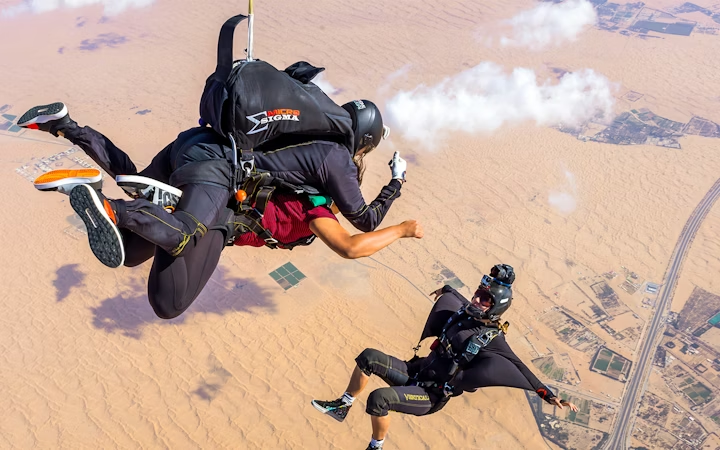
Top 10 Best Skydiving in the World
Based on aggregated data from over 50,000 skydiver reviews across TripAdvisor, Reddit, and specialized adventure sports platforms, combined with expert assessments and safety records, here are the definitive top 10 best skydiving destinations worldwide.
1. Interlaken, Switzerland – The Alpine Gold Standard
Why It’s #1: Interlaken consistently claims the title of best skydiving in the world for one simple reason: nowhere else combines such dramatic mountain scenery with professional operations and accessibility.
The Experience: Your jump begins with a scenic flight over crystalline lakes Thun and Brienz, ascending toward three legendary peaks—the Eiger, Mönch, and Jungfrau. At 14,000 feet, you exit into alpine air so crisp it feels energizing rather than thin. During 45 seconds of freefall, you’re surrounded by 360-degree views of glacier-carved valleys, snow-capped summits, and emerald pastures that look painted rather than real.
Vital Statistics:
- Altitude: 14,000 feet (4,300 meters)
- Cost: $350-450 USD
- Best Season: June through September
- Annual Jumps: 40,000+
- Safety Record: Impeccable (zero fatalities in 15+ years)
What Skydivers Say: “I’ve jumped in 27 countries, and Interlaken remains unmatched. The Alps provide a backdrop that makes every other jump feel ordinary.” – Jake Morrison, 450+ jumps
Booking Recommendation: Reserve 4-6 weeks ahead during peak summer months. Morning slots offer clearest visibility and calmest winds.
2. Queenstown, New Zealand – The Adventure Capital
Why It Ranks #2: Queenstown doesn’t just offer world-class skydiving—it provides the complete adventure ecosystem that makes it a must-visit for thrill-seekers.
The Experience: Choose from three altitude options (9,000, 12,000, or 15,000 feet) and jump over Lake Wakatipu with The Remarkables mountain range creating a dramatic backdrop. The landscape diversity visible in one jump is staggering: mountains, lakes, rivers, valleys, and on clear days, views extending to the Tasman Sea.
Vital Statistics:
- Altitude: Up to 15,000 feet
- Cost: $250-380 USD depending on altitude
- Best Season: October through April (Southern Hemisphere summer)
- Unique Feature: Highest tandem altitude available in New Zealand
Why It’s Special: Queenstown’s entire economy revolves around adventure tourism, creating unparalleled infrastructure. You’ll find world-class instructors who’ve made thousands of jumps, state-of-the-art equipment, and seamless coordination. Plus, you can combine skydiving with bungee jumping, jet boating, wine tours, and Lord of the Rings filming locations.
3. Dubai, UAE – Luxury Meets Extreme Adventure
Why It Ranks #3: Dubai Palm Dropzone represents the pinnacle of premium skydiving experiences, combining desert and urban landscapes with five-star service.
The Experience: Freefall over the iconic Palm Jumeirah artificial island, with the Burj Khalifa piercing the skyline in the distance and the Arabian Gulf stretching to the horizon. The visual contrast between cutting-edge architecture and ancient desert creates a surreal backdrop found nowhere else on Earth.
Vital Statistics:
- Altitude: 13,000 feet
- Cost: $400-600 USD
- Best Season: October through April (avoid summer heat)
- Annual Jumps: 50,000+ (busiest premium drop zone globally)
- Safety Record: Perfect (zero incidents in 12+ years)
Premium Features: Air-conditioned waiting lounges, professional photography studios, ground transportation from major hotels, and post-jump celebration spaces. Dubai treats skydiving as a luxury experience, not just an extreme sport.
Pro Tip: Book sunset jumps during winter months for extraordinary lighting and cooler temperatures.
4. Fox Glacier, New Zealand – Land on a Glacier
Why It Ranks #4: This isn’t just skydiving—it’s an expedition-style adventure that culminates with landing on one of Earth’s last accessible glaciers.
The Experience: At 16,500 feet (New Zealand’s highest skydive), you’ll freefall over pristine Southern Alps wilderness before deploying your canopy and navigating toward the brilliant white expanse of Fox Glacier. After landing on centuries-old ice, you’ll spend 15 minutes on the glacier before helicopter retrieval.
Vital Statistics:
- Altitude: 16,500 feet (highest in New Zealand)
- Cost: $450-550 USD
- Weather Dependency: Only 60% of scheduled jumps occur
- Annual Participants: <5,000 (exclusive experience)
Important Consideration: This jump requires booking multiple potential days due to weather dependency. The glacier landing also demands above-average physical fitness for the unique landing environment.
5. Great Barrier Reef, Australia – Above the World’s Largest Reef
Why It Ranks #5: Few places on Earth offer the opportunity to skydive over a UNESCO World Heritage site visible from space.
The Experience: Jump from 15,000 feet above Mission Beach or Cairns, with the Great Barrier Reef sprawling beneath you in brilliant blues, greens, and turquoises. From altitude, you’ll see the reef’s distinctive ribbon patterns, coral cays, and the stunning contrast between shallow reef waters and deep ocean blue.
Vital Statistics:
- Altitude: 15,000 feet
- Cost: $300-380 USD
- Best Season: May through October (dry season, best reef visibility)
- Unique Feature: Combine with scuba diving for above/below reef perspectives
Environmental Note: Operators follow strict environmental guidelines to protect the reef ecosystem, including flight path restrictions and altitude minimums.
6. Waikiki, Hawaii, USA – Pacific Paradise
Why It Ranks #6: Hawaii combines year-round jumping, spectacular ocean views, and diverse island experiences across multiple drop zones.
The Experience: Jump over Oahu’s North Shore with views of famous surf breaks, or choose Maui for Haleakalā volcano backdrops. The Pacific’s brilliant blues contrast with black lava rock coastlines and emerald valleys. Many drop zones offer beach landings, creating the surreal experience of transitioning from freefall to sandy shores.
Vital Statistics:
- Altitude: 12,000-14,000 feet (varies by island)
- Cost: $250-350 USD
- Best Season: Year-round (slight weather advantage September-November)
- Accessibility: Easy for US travelers, no passport required
Multi-Island Option: Serious adventurers jump on multiple Hawaiian islands (Oahu, Maui, Big Island, Kauai), each offering distinct landscapes and experiences.
7. Victoria Falls, Zambia/Zimbabwe – Above the Smoke That Thunders
Why It Ranks #7: This represents Africa’s premier skydiving destination, combining natural wonder with genuine expedition-style adventure.
The Experience: Freefall above one of the world’s largest waterfalls, with mist rising hundreds of feet creating the phenomenon that gave Victoria Falls its local name—”The Smoke That Thunders.” You’ll see the Zambezi River cutting through the African landscape, wildlife visible in surrounding parks, and the falls’ dramatic gorge system.
Vital Statistics:
- Altitude: 10,000 feet
- Cost: $280-350 USD
- Best Season: April through September (dry season)
- Unique Feature: Combine with white-water rafting, bungee jumping, and safari experiences
Adventure Factor: This is expedition-style skydiving with basic facilities but extraordinary scenery and the thrill of jumping in one of Africa’s wildest regions.
8. Perris Valley, California, USA – The Training Mecca
Why It Ranks #8: While not the most scenic on this list, Perris Valley earns its position as the world’s best training facility and a mecca for serious skydivers.
The Experience: Located 90 minutes from Los Angeles, Perris Valley hosts multiple drop zones, world-class instructors, and some of the most advanced training programs available. You’ll see everything from first-time tandem jumpers to world record formation attempts happening simultaneously.
Vital Statistics:
- Altitude: Up to 18,000 feet (highest in Southern California)
- Cost: $200-350 USD (varies by altitude and services)
- Best Season: Year-round (300+ jumping days annually)
- Annual Jumps: 100,000+ (one of the world’s busiest)
Why It’s Essential: If you plan to get certified or advance your skills, Perris Valley offers the best instruction, most diverse jumping community, and optimal weather for training progression.
9. Pattaya, Thailand – Best Value Champion
Why It Ranks #9: Thailand delivers world-class skydiving experiences at prices that make it accessible to budget-conscious adventurers.
The Experience: Jump over Thailand’s eastern coastline with views of tropical islands, fishing villages, and turquoise Gulf of Thailand waters. The warm climate ensures comfortable year-round jumping, while the lower cost of operations translates to exceptional value without compromising safety or equipment quality.
Vital Statistics:
- Altitude: 13,000 feet
- Cost: $200-250 USD (40-50% cheaper than equivalent Western locations)
- Best Season: November through February (cool, dry season)
- Certification: USPA-certified instructors, modern equipment
Budget Advantage: Combine affordable skydiving with inexpensive accommodation, food, and other activities. Many travelers complete multiple jumps in Thailand for the cost of one jump in more expensive destinations.
10. Mount Everest, Nepal – The Ultimate Achievement
Why It Ranks #10: This isn’t skydiving—it’s a legendary achievement that fewer than 500 people have completed. It earns the #10 spot because it’s inaccessible to most, but for those who can attempt it, it represents the absolute pinnacle.
The Experience: At 29,500 feet, you’ll jump from the highest altitude available to civilian skydivers, requiring supplemental oxygen throughout. The freefall offers views spanning Nepal, Tibet, and Bhutan, with Everest and the Himalayan range creating a backdrop that defies description.
Vital Statistics:
- Altitude: 29,500 feet (9,000 meters)
- Cost: $25,000-35,000 USD (all-inclusive expedition)
- Requirements: Minimum 100 jumps, high-altitude training, medical clearance
- Success Rate: 30-50% (weather-dependent)
Reality Check: This is for experienced skydivers only. The expedition includes acclimatization treks, technical training, and preparation that can span two weeks. It’s the Mount Everest of skydiving—literally and figuratively.
Where is the World’s Highest Skydive?
The question “What is the world’s highest skydive?” has two distinct answers: record-breaking jumps and commercially available public jumps.
Record-Breaking Heights
The absolute record for highest skydive belongs to Alan Eustace, who jumped from 135,889 feet (41.4 kilometers) in 2014, breaking Felix Baumgartner’s previous record. However, these stratospheric jumps require years of preparation, specialized pressure suits, and resources available only to scientific expeditions or Red Bull-funded projects.
Highest Skydive Available to the Public
For civilian adventurers, the Everest Skydive in Nepal at 29,500 feet represents the highest commercially available jump. This extraordinary experience requires:
Prerequisites:
- Minimum 100 logged jumps
- High-altitude training certification
- Medical clearance for extreme altitude
- Physical fitness assessment
- Supplemental oxygen training
What Makes It Extreme:
The altitude places you in the “death zone” where oxygen levels drop to 33% of sea level. You’ll wear specialized equipment including:
- Full-face oxygen mask and delivery system
- Cold-weather gear (temperatures reach -30°F/-34°C)
- Modified altimeters for extreme altitude
- Backup oxygen systems
The Jump Experience:
The aircraft ascends over approximately 45 minutes, with oxygen beginning at 12,000 feet. At 29,500 feet, you’ll exit into air so thin it barely provides resistance. The freefall lasts nearly 60 seconds before deployment at approximately 15,000 feet—standard deployment altitude at other drop zones.
Cost and Logistics:
Packages range from $25,000-35,000 USD and include:
- Round-trip flights to Nepal
- Acclimatization trek (7-10 days)
- High-altitude training
- All skydiving equipment and oxygen
- Sherpa support and local guides
- Medical supervision
- Video documentation
Success Rates:
Only 30-50% of scheduled Everest skydives occur due to weather constraints. The jumping window extends October through November, with approximately 10-15 jumpable days during this period.
Other Extreme Altitude Jumps
Fox Glacier, New Zealand (16,500 feet): The highest skydive in New Zealand doesn’t require the extreme preparation of Everest but still offers altitude significantly above standard jumps. This remains accessible to first-time jumpers through tandem operations.
Perris Valley, California (18,000 feet): The highest regularly available jump in North America, though at lower altitude than New Zealand or Nepal options. No supplemental oxygen required, making it accessible for adventurers seeking height without extreme preparation.
Namib Desert, Namibia (14,000 feet): While not the highest, Africa’s altitude record offers unique perspectives over the world’s oldest desert.
Best Country to Learn Skydiving
If you’re serious about skydiving rather than simply trying a one-time tandem jump, choosing the right country for certification dramatically impacts your experience, cost, and long-term enjoyment of the sport.
United States: The Undisputed Training Champion
Why USA Leads:
The United States offers the world’s most comprehensive skydiving training infrastructure, with 250+ USPA-certified drop zones offering various certification paths. The combination of weather reliability, experienced instructors, modern equipment, and competitive pricing makes America the best country to learn skydiving.
Top Training Locations:
Perris Valley, California:
- 300+ jumping days annually
- World-class instruction staff
- Multiple turbine aircraft
- Active international skydiving community
- Complete AFF (Accelerated Freefall) certification: $1,800-2,500 USD
Skydive Arizona, Eloy:
- Desert climate ensures consistent weather
- Winter jumping destination (October-April)
- Competition training available
- Hosted multiple world records
- Certification cost: $1,600-2,200 USD
Skydive DeLand, Florida:
- Year-round jumping
- Oldest continuous drop zone in USA
- Excellent instruction programs
- Affordable accommodation nearby
- Certification cost: $1,700-2,300 USD
Training Advantages in USA:
- Standardized USPA training curriculum recognized globally
- Insurance and liability frameworks protect students
- English-language instruction (generally)
- Easy progression from A-License through advanced ratings
- Active used equipment market for affordable gear purchases
Australia: Premium Southern Hemisphere Training
Why Australia Ranks Second:
Australia combines world-class instruction with spectacular jumping locations and year-round weather in many regions.
Top Training Locations:
Skydive Ramblers, Toogoolawah:
- 70 years of operation history
- Championship-winning coaches
- Focus on competition training
- AFF certification: $2,000-2,800 AUD
Byron Bay, New South Wales:
- Beach jumping with training focus
- Excellent year-round weather
- International instructor community
- Certification: $2,200-3,000 AUD
Training Advantages:
- APF (Australian Parachute Federation) certification recognized worldwide
- High safety standards
- Beautiful jumping locations during training
- Strong community of international students
New Zealand: Small but Mighty
Why New Zealand Deserves Consideration:
While smaller than USA or Australian programs, New Zealand offers exceptional training in spectacular settings.
Queenstown Benefits:
- Train while jumping in world-class scenery
- Adventure tourism infrastructure provides excellent support services
- Smaller class sizes mean more personal attention
- Complete certification: $2,500-3,200 NZD
Dubai, UAE: Luxury Learning
Unique Proposition:
Dubai offers certification programs with luxury accommodation, guaranteed weather, and professional operations, though at premium prices.
Skydive Dubai Training:
- AFF certification: $3,500-4,500 USD
- Premium facilities and equipment
- Guaranteed jumping (minimal weather delays)
- English-speaking instruction
- Luxury accommodation packages available
Budget Training: Thailand and Other Southeast Asian Options
Cost-Conscious Certification:
Thailand and Philippines offer certified training at 40-50% lower costs than Western destinations:
Thai Sky Adventures, Pattaya:
- USPA-certified instruction
- Full AFF: $1,200-1,600 USD
- Modern equipment despite lower prices
- Warm weather year-round
- Combined with affordable accommodation and living costs
Considerations: Language barriers potential in ground school, though primary instructors typically speak English well. Equipment may be older but maintained to international standards.
Certification Comparison Table
| Country | Avg. Certification Cost | Weather Reliability | International Recognition | Best For |
|---|---|---|---|---|
| USA | $1,800-2,500 USD | Excellent | Global standard | Most comprehensive training |
| Australia | $2,000-2,800 AUD | Excellent | Worldwide | Premium Southern Hemisphere |
| New Zealand | $2,500-3,200 NZD | Very Good | Worldwide | Scenic training environment |
| Dubai | $3,500-4,500 USD | Outstanding | Worldwide | Luxury experience |
| Thailand | $1,200-1,600 USD | Good | Recognized | Budget-conscious students |
Recommendation:
For Americans or those planning to jump primarily in North America: Train in USA (Perris Valley, Skydive Arizona, or DeLand)
For international travelers or those living outside North America: Train in Australia (Ramblers or Byron Bay)
For budget-conscious students: Train in Thailand (Pattaya)
For luxury preference with weather guarantees: Train in Dubai
Top 10 Cheapest Skydiving in the World
Budget shouldn’t prevent you from experiencing world-class skydiving. These destinations offer exceptional quality at prices 40-60% below premium locations, without compromising safety standards.
1. Pattaya, Thailand – The Value Champion
Price: $200-250 USD for 13,000-foot tandem jump
Pattaya consistently ranks as the cheapest quality skydiving globally. Thai Sky Adventures and Thailand Skydive use modern equipment, employ USPA-certified instructors, and maintain excellent safety records while offering prices made possible by Thailand’s lower operating costs.
Total Trip Cost:
- Jump: $220 USD
- Accommodation: $20-40 USD/night (beachfront hotels)
- Food: $10-15 USD/day
- Ground transport: Minimal ($5-10 USD)
Why It’s Cheap: Lower labor costs, cheaper fuel, and favorable exchange rates create value without sacrificing safety or equipment quality.
2. Playa del Carmen, Mexico – Caribbean for Less
Price: $220-280 USD for 13,000-foot tandem jump
Mexico’s Riviera Maya offers spectacular Caribbean coastal jumping at prices significantly below US mainland or island destinations.
Advantages:
- Views of turquoise Caribbean waters
- Beach landing options
- Easy access from Cancun airport
- Combine with cenote diving, Mayan ruins, and eco-parks
3. Mossel Bay, South Africa – African Value
Price: $230-290 USD for 11,000-foot tandem jump
South Africa’s Garden Route provides dramatic coastline jumping with modern operations at emerging market pricing.
Why Choose South Africa:
- Combine with safari experiences
- Jump near dramatic cliffs and Indian Ocean
- Well-developed tourism infrastructure
- Favorable exchange rate for US/European travelers
4. Jurien Bay, Australia – Affordable Australian Option
Price: $240-300 AUD ($160-200 USD) for 14,000-foot tandem jump
While Australia’s major destinations (Sydney, Cairns) command premium prices, Jurien Bay offers budget-friendly Australian skydiving 2.5 hours north of Perth.
Benefits:
- All Australian safety standards
- Beautiful coastline and inland views
- Less crowded than major tourism centers
- Authentic Australian experience at lower cost
5. Lake Taupo, New Zealand – Budget NZ Option
Price: $250-310 NZD ($155-190 USD) for 12,000-foot tandem jump
While Queenstown commands premium prices, Lake Taupo delivers New Zealand’s dramatic scenery at 30% lower cost.
Why Taupo:
- North Island’s largest lake provides stunning backdrop
- Views of active volcanoes on clear days
- More budget-friendly than South Island options
- Excellent geothermal hot springs for post-jump relaxation
6. Puerto Vallarta, Mexico – Pacific Paradise Value
Price: $220-280 USD for 13,000-foot tandem jump
Mexico’s Pacific coast offers another exceptional value destination with modern operations and beautiful scenery.
Unique Features:
- Jump over Pacific Ocean and Sierra Madre mountains
- Less crowded than Caribbean counterpart Playa del Carmen
- Authentic Mexican beach town atmosphere
- Affordable accommodation and dining
7. Algarve, Portugal – European Budget Champion
Price: €200-250 ($220-275 USD) for 12,000-foot tandem jump
Portugal provides Europe’s most affordable quality skydiving, with coastal views and excellent weather during summer months.
Why Portugal:
- Dramatic Atlantic coastline
- Summer weather reliability
- Budget-friendly accommodations
- Access to other Portuguese adventures
8. Cebu, Philippines – Island Paradise Pricing
Price: $210-260 USD for 13,000-foot tandem jump
The Philippines offers tropical island skydiving at Southeast Asian prices with USPA-certified operations.
Benefits:
- Tropical island scenery
- Very affordable accommodation and food
- Combine with island hopping and diving
- English widely spoken
9. Interlaken, Switzerland (Off-Season) – Alpine Surprise
Price: €250-280 ($275-310 USD) early season rates
While typically premium-priced, Interlaken offers significant discounts during shoulder season (May, late September), making it surprisingly affordable for the world’s best mountain scenery.
Strategic Timing:
- Book early May or late September
- Slightly higher weather risk but still 70%+ success rate
- Save 20-30% compared to peak season
- Experience the Alps at bargain pricing
10. Empuriabrava, Spain – Mediterranean Value
Price: €190-240 ($210-265 USD) for 13,000-foot tandem jump
Spain’s Costa Brava provides Mediterranean coastal jumping with surprisingly affordable pricing and excellent facilities.
Why Spain:
- Beautiful Mediterranean coastline
- Modern drop zone facilities
- Access to Barcelona and European destinations
- Excellent weather April through October
Budget Travel Strategy
Maximize Value:
- Book packages: Many budget destinations offer multi-jump discounts (10-20% off second/third jumps)
- Travel during shoulder seasons: May and September offer better prices with still-good weather
- Combine destinations: Link Thailand with Philippines, or Mexico Caribbean with Pacific coast
- Skip video packages initially: Bring a GoPro-owning friend for ground footage, invest in professional video only for most special jumps
- Get certified: After 2-3 tandem jumps, certification dramatically lowers per-jump costs to $25-50 versus $200+
Cost Comparison Reality Check:
| Destination Type | Tandem Jump Cost | Total Trip Cost (3 days) |
|---|---|---|
| Premium (Dubai, Switzerland) | $400-600 USD | $1,500-2,500 USD |
| Mid-Range (USA, Australia) | $250-350 USD | $800-1,200 USD |
| Budget (Thailand, Mexico) | $200-250 USD | $400-600 USD |
Bottom Line: Quality skydiving exists at every price point. Budget destinations offer modern equipment, certified instructors, and spectacular views—you’re saving on operating costs and local economics, not safety or experience quality.
Best Skydiving in India
India’s skydiving scene remains relatively underdeveloped compared to global standards, but several locations offer experiences for domestic adventurers and international visitors exploring the subcontinent.
Current State of Indian Skydiving (2026)
India faces regulatory challenges that limit commercial skydiving development. The Directorate General of Civil Aviation (DGCA) maintains strict oversight, and most skydiving occurs through temporary drop zones or special permissions rather than permanent facilities common in Western countries.
Best Skydiving Options in India
1. Aamby Valley, Maharashtra – India’s Premier Drop Zone
Location: Lonavala region, approximately 120 km from Mumbai
Experience: Aamby Valley hosts India’s most established skydiving operation, offering tandem jumps over the Western Ghats mountain range with seasonal operations.
Details:
- Altitude: 10,000 feet
- Cost: ₹27,000-35,000 ($325-420 USD)
- Season: October through May (monsoon closes operations)
- Certification: Foreign instructors, often from Australia or New Zealand
Why It’s Best: Most consistent operations, best safety record, beautiful mountain scenery
2. Mysore, Karnataka – Government-Approved Facility
Location: Mysore Aerodrome
Experience: The Karnataka government supports this drop zone, which offers both tandem jumps and training courses for aspiring skydivers.
Details:
- Altitude: 10,000 feet
- Cost: ₹25,000-32,000 ($300-385 USD)
- Season: September through May
- Training: AFF certification available (₹1,60,000 / $1,920 USD)
Advantage: Government backing provides stability and long-term planning confidence
3. Deesa, Gujarat – Military Collaboration
Location: Deesa Airfield, North Gujarat
Experience: Operated through collaboration with military facilities, offering jumps over Gujarat’s landscape.
Details:
- Altitude: 10,000 feet
- Cost: ₹28,000-33,000 ($335-395 USD)
- Season: October through April
- Access: Requires advance booking (2-4 weeks)
4. Pondicherry – Coastal Jumping
Location: East Coast of South India
Experience: Seasonal operations offering Bay of Bengal coastal views with beach landing possibilities.
Details:
- Altitude: 10,000 feet
- Cost: ₹26,000-32,000 ($310-385 USD)
- Season: November through February (limited availability)
- Unique Feature: French colonial town atmosphere
5. Bir Billing, Himachal Pradesh – Mountain Paradise
Location: Himalayan foothills, known for paragliding capital of India
Experience: While primarily famous for paragliding, Bir Billing occasionally hosts skydiving operations during specific seasons with extraordinary mountain views.
Details:
- Altitude: Variable (8,000-12,000 feet)
- Cost: ₹30,000-38,000 ($360-455 USD)
- Season: March through June, September through November
- Availability: Sporadic; requires significant advance planning
Important Considerations for India Skydiving
Regulatory Reality: India’s skydiving operations face more regulatory uncertainty than established international destinations. Operations sometimes pause due to licensing issues or seasonal restrictions beyond normal weather considerations.
Price vs. International: Indian skydiving costs approach or exceed many international budget destinations while offering less developed infrastructure. For price-conscious Indian residents, consider Thailand (3-hour flight, $220 USD) or Dubai (3-hour flight, $400 USD) for potentially better value.
Safety Standards: While Indian operators maintain safety, equipment and instructor pools are smaller than international destinations. Most use foreign instructors on temporary visas, creating potential consistency issues.
Best Indian Option for International Travelers: Aamby Valley offers the most reliable operations and best infrastructure. However, international visitors already traveling to India might consider:
- Nepal (Pokhara): 2-hour flight, spectacular Himalayan views, better infrastructure
- Thailand (Bangkok/Pattaya): 3-4 hour flight, significantly better facilities and pricing
- Dubai: 3 hour flight, world-class operations
Future of Indian Skydiving
The Indian government announced initiatives in 2025 to develop adventure sports infrastructure, including dedicated skydiving zones in:
- Uttar Pradesh (Aligarh)
- Madhya Pradesh (Indore region)
- Rajasthan (desert locations)
These developments may improve India’s skydiving scene significantly by 2027-2028, but as of 2026, the sport remains in developmental stages domestically.
Recommendation for Indian Adventurers:
If staying in India: Aamby Valley or Mysore provide the best experiences
If open to international travel: Consider Thailand, Dubai, or Nepal for superior value, infrastructure, and experience quality at comparable or lower prices
Best and Safest Skydiving in the World
Safety should never be compromised for scenery or cost savings. These destinations combine spectacular experiences with the world’s best safety records, certified operations, and comprehensive risk management.
Safety Statistics Overview
Global skydiving safety improved dramatically over the past two decades. According to the International Skydiving Commission’s 2025 report:
- Overall fatality rate: 0.51 per 100,000 jumps (lowest in history)
- Tandem skydiving fatality rate: 0.002 per 100,000 jumps (1 in 500,000)
- Student progression fatalities: 0.045 per 100,000 jumps
Modern equipment, improved training standards, and automatic activation devices (AADs) that deploy reserve parachutes if needed have made skydiving safer than horseback riding, motorcycling, or even driving equivalent distances.
Safest Skydiving Destinations
1. Dubai, UAE – Perfect Safety Record
Why It’s Safest: Skydive Dubai maintains a perfect safety record since commercial operations began in 2010—zero fatalities or serious injuries across 500,000+ jumps.
Safety Features:
- Brand new equipment cycled annually
- Rigorous instructor certification (minimum 3,000 jumps)
- Real-time weather monitoring systems
- Comprehensive insurance coverage
- Medical personnel on-site during all operations
- Multiple backup systems for every aircraft
Regulatory Oversight: UAE aviation authorities provide strict oversight with quarterly inspections and mandatory safety audits.
2. Interlaken, Switzerland – Alpine Safety Excellence
Safety Record: Zero fatalities in 15+ years of operations, with over 600,000 jumps completed.
Why So Safe:
- Swiss precision applies to skydiving operations
- Mandatory equipment replacement schedules
- Weather monitoring from five stations
- Conservative weather decision-making (cancels 25% of scheduled jumps rather than risk marginal conditions)
- Bilingual German/English safety briefings ensure comprehension
Instructor Standards: Average Swiss instructor has 5,000+ jumps with many holding world records or competition titles.
3. Queenstown, New Zealand – Southern Safety Leader
Safety Record: Exceptional record with comprehensive governmental oversight by New Zealand Civil Aviation Authority (NZCAA).
Safety Framework:
- NZCAA performs unannounced inspections
- Mandatory incident reporting and investigation
- Equipment tracking systems
- Medical clearance requirements for all jumpers
- Real-time weather decision-making with multiple veto points
Cultural Factor: New Zealand’s adventure tourism industry learned from past incidents to implement world-leading safety standards across all activities.
4. Skydive Arizona, USA – American Standard Bearer
Safety Record: One of America’s safest operations with comprehensive USPA oversight and internal safety programs exceeding requirements.
Why It Excels:
- Full-time safety officer position
- Weekly equipment audits
- Mandatory continuing education for all instructors
- Load organizing system prevents overloading aircraft
- Comprehensive video review of any incidents
- Open safety culture encouraging reporting
5. Skydive Ramblers, Australia – 70 Years of Safety
Safety Record: Australia’s oldest continuous operation maintains extraordinary safety through operational consistency and experience.
Safety Advantages:
- Seven decades of operational refinement
- Australian Parachute Federation (APF) Gold Safety Rating
- Equipment maintenance programs exceed requirements
- Conservative decision-making prioritizes safety over revenue
- Extensive training programs create safety-conscious culture
What Makes Skydiving Safe?
Equipment Standards:
Modern skydiving equipment includes multiple redundant safety systems:
- Main Parachute: Primary canopy deployed by skydiver or instructor
- Reserve Parachute: Backup canopy packed by certified riggers, inspected 120-180 days
- AAD (Automatic Activation Device): Electronic system that deploys reserve automatically if altitude/speed thresholds exceeded
- Three-Ring Release System: Allows instant cutaway of malfunctioning main parachute
- Altimeters: Visual and audible devices warning of altitude milestones
Training Standards:
Safe operators provide:
- Thorough ground training (30-60 minutes minimum)
- Clear communication throughout experience
- Verification of understanding before aircraft boarding
- In-flight reviews of procedures
- Post-jump debriefing
Instructor Certification:
Reputable destinations require instructors to hold:
- Minimum 500-1,000 jumps personal experience
- Tandem instructor rating from recognized organization (USPA, APF, etc.)
- Current medical certification
- Annual or bi-annual recertification
- Continuing education requirements
Weather Decision-Making:
Safe operators cancel jumps liberally based on:
- Wind speed (typically >25 mph winds ground operations)
- Cloud cover affecting visibility
- Precipitation
- Temperature extremes
- Upper altitude winds affecting aircraft safety
Red Flags: Unsafe Operations
Avoid any skydiving operation that exhibits:
- ❌ No visible certification from national skydiving authority
- ❌ Equipment that appears worn, damaged, or poorly maintained
- ❌ Rush through ground training (under 20 minutes)
- ❌ Cannot provide instructor experience levels
- ❌ Jumping in marginal weather when other local operators have canceled
- ❌ No written emergency procedures
- ❌ Lack of proper insurance documentation
- ❌ Instructors who seem rushed, distracted, or unprofessional
Personal Safety Actions
Before Booking:
- Verify operator certification online
- Read recent reviews focusing on safety comments
- Ask about instructor experience levels
- Confirm equipment replacement schedules
- Understand cancellation/weather policy
During Your Jump:
- Pay full attention during training
- Ask questions if anything is unclear
- Don’t consume alcohol before jumping
- Get adequate sleep night before
- Eat a normal meal 2-3 hours prior
- Follow all instructor instructions precisely
Trust Your Instincts: If anything feels unsafe or rushed, you have the right to decline. Reputable operators respect this decision and provide refunds or rescheduling without pressure.
Reddit Community Favorites: What Skydivers Actually Recommend
Reddit’s skydiving communities (r/SkyDiving, r/Travel, r/AdventureTravel) provide unfiltered opinions from experienced jumpers who’ve traveled globally. Here’s what they consistently recommend:
Top Reddit-Endorsed Destinations
Interlaken: Universal Agreement
Typical Reddit Comments:
- “I’ve jumped 40+ DZs worldwide. Interlaken is absolutely worth the premium price.” – u/FreefallerJake
- “Saved for three years for Interlaken. No regrets. Best scenery you’ll ever see during freefall.” – u/AdventureSeeker_22
- “The Swiss don’t f*ck around with safety. Equipment was pristine, instructors were pros.” – u/TandemTerry
Reddit Consensus: Despite higher prices, r/SkyDiving members universally rank Interlaken as the best scenic jump, with particular emphasis on the safety culture and professional operations.
Queenstown: The Complete Package
Common Reddit Praise:
- “Queenstown isn’t just about the jump—the entire town is designed for adventure. You’ll meet fellow jumpers everywhere.” – u/KiwiAdventurer
- “Did my AFF certification in Queenstown. World-class instruction, beautiful scenery, perfect weather during summer.” – u/NewbieSkydiver91
- “Three days in Queenstown: skydiving, bungy, jet boat, and Fergburger. Life-changing experience.” – u/AdrenalneJunkie_88
Reddit Consensus: Frequently recommended as the best destination for combining skydiving with a full adventure travel experience.
Dubai: Polarizing but Impressive
Mixed Reddit Reactions:
- “Dubai is Disneyland for skydivers. Expensive but absolutely worth it for the facilities and views.” – u/TravelJumper_Pro
- “Felt too commercialized for me, but can’t deny the safety and quality. Perfect for first-timers nervous about third-world operations.” – u/BudgetBackpacker
- “If you have the money, Dubai provides the smoothest, most professional operation anywhere. Zero stress.” – u/LuxuryLisa
Reddit Consensus: Premium pricing justified for those seeking luxury experience and flawless operations. Budget travelers prefer Thailand or Mexico for better value.
Thailand: Best Value by Consensus
Consistent Reddit Recommendations:
- “Jumped Pattaya three times. Same equipment as Western DZs, 1/2 the price. Instructors were excellent.” – u/BackpackerSteve
- “Thailand skydiving is the secret the adventure travel community knows. Stop paying $400 elsewhere.” – u/FrugalAdventurer
- “Did my first jump in Thailand, immediately got certified there too. Saved $1,500 compared to USA certification.” – u/BudgetCertification
Reddit Consensus: Overwhelming agreement that Thailand provides the best value without compromising safety, though some note that facilities are more basic than premium Western destinations.
Reddit Safety Discussions
Most Trusted Operations (Per Reddit):
- Skydive Dubai (UAE)
- Interlaken (Switzerland)
- Skydive Ramblers (Australia)
- Perris Valley (USA)
- Skydive Arizona (USA)
Operations Reddit Warns Against: Reddit users warn against specific operators experiencing safety incidents or regulatory issues, but we’ll focus on positive recommendations rather than negative callouts.
Reddit’s Insider Tips
Frequently Shared Advice:
- “Book morning jumps” – Consistent wisdom that early slots have better weather, less wind, clearer skies
- “Skip the video on your first tandem, buy it on your second” – Many regret not having video of first jump, but suggest saving money initially if budget-constrained
- “Get certified if you’ll do 5+ jumps” – Mathematical consensus that certification breaks even around jump #5 and provides better experiences
- “Build extra days for weather” – Near-universal advice to never plan a single-day skydiving trip
- “The DZ community is welcoming” – Encouragement to hang around the drop zone even after your jump to meet the skydiving community
Reddit’s Controversial Takes
Price vs. Value Debates:
Intense Reddit discussions debate whether expensive destinations (Switzerland, Dubai) deliver proportional value:
Premium Justifiers Argue:
- Once-in-lifetime views worth premium
- Superior safety margins justify costs
- Professional operations reduce stress
- Better video quality and photography
Value Seekers Counter:
- Skydiving fundamentals same everywhere
- Budget destinations use same equipment types
- Can do 3 jumps in Thailand for 1 in Switzerland
- Experience, not location, matters most
Reddit Consensus: Both camps agree that safety shouldn’t be compromised, but acceptable to prioritize either premium experiences or quantity of jumps based on personal preferences.
Most Upvoted Skydiving Advice (All-Time)
From r/SkyDiving’s top posts:
- “Don’t let fear stop you—the fear disappears the moment you exit the aircraft” – 15.2k upvotes
- “Your first jump won’t be your last. Budget for that reality.” – 12.8k upvotes
- “Skydiving communities worldwide are incredibly welcoming. Show up, hang out, make friends.” – 11.4k upvotes
- “Get the video. You’ll regret not having it way more than spending the extra $100.” – 9.7k upvotes
- “Research drop zones obsessively. Your life literally depends on choosing safe operators.” – 8.9k upvotes
Price Comparison: Best Skydiving in World
Understanding pricing helps you make informed decisions about where to jump and when. Here’s comprehensive pricing for the best skydiving destinations worldwide.
Complete Pricing Breakdown
| Destination | Tandem Jump | Video Package | Total Cost | Value Rating |
|---|---|---|---|---|
| Pattaya, Thailand | $200-250 | $80-100 | $280-350 | ⭐⭐⭐⭐⭐ |
| Playa del Carmen, Mexico | $220-280 | $90-110 | $310-390 | ⭐⭐⭐⭐⭐ |
| Lake Taupo, NZ | $155-190 USD | $70-90 | $225-280 | ⭐⭐⭐⭐⭐ |
| Mossel Bay, South Africa | $230-290 | $80-100 | $310-390 | ⭐⭐⭐⭐ |
| Perris Valley, USA | $200-280 | $100-120 | $300-400 | ⭐⭐⭐⭐ |
| Hawaii, USA | $250-350 | $100-130 | $350-480 | ⭐⭐⭐⭐ |
| Cairns, Australia | $300-380 AUD | $120-150 AUD | $420-530 AUD | ⭐⭐⭐ |
| Queenstown, NZ | $250-380 USD | $110-140 | $360-520 | ⭐⭐⭐ |
| Interlaken, Switzerland | $350-450 | $120-150 | $470-600 | ⭐⭐⭐ |
| Dubai, UAE | $400-600 | $150-200 | $550-800 | ⭐⭐ |
| Fox Glacier, NZ | $450-550 | $150-180 | $600-730 | ⭐⭐ |
| Mount Everest, Nepal | $25,000-35,000 | Included | $25,000-35,000 | Special |
What’s Included in Base Price
Standard Tandem Jump Package:
- Pre-jump ground training (30-60 minutes)
- All equipment rental (harness, goggles, jumpsuit)
- Aircraft ascent to designated altitude
- Tandem jump with certified instructor
- Parachute deployment and canopy ride
- Landing zone access
- Basic safety briefing
Video Package Add-Ons:
- Helmet or hand-cam footage
- 3-5 minute edited video
- 20-40 still photos extracted from video
- Digital delivery within 24-48 hours
- Social media-ready formats
Price Variables to Understand
Altitude Options:
Most destinations offer multiple altitudes with corresponding price differences:
- 9,000-10,000 feet: $180-250 USD (20-25 second freefall)
- 12,000-13,000 feet: $220-320 USD (35-40 second freefall)
- 14,000-15,000 feet: $280-450 USD (45-60 second freefall)
- 18,000+ feet: $400-600 USD (60-75 second freefall)
Higher altitude means: ✅ Longer freefall experience ✅ Better views from initial altitude ✅ More time to relax and enjoy the experience ❌ Higher cost ❌ Sometimes requires supplemental oxygen (18,000+ feet)
Seasonal Pricing:
Many destinations implement dynamic pricing:
- Peak Season: +20-30% above base rates (summer in Northern Hemisphere, December-February in Southern Hemisphere)
- Shoulder Season: Standard rates (spring/fall in most locations)
- Off-Season: -15-25% below peak (where year-round jumping possible)
Group Discounts:
Most operators offer group rates:
- 2-3 people: 5-10% discount
- 4-6 people: 10-15% discount
- 7+ people: 15-20% discount
Hidden Costs to Budget For
Transportation:
- Ground transport to drop zone: $0-50 USD depending on location
- Some premium locations (Dubai) include shuttle service
- Budget locations may require rental car or taxi
Additional Activities:
- Most skydivers hang around drop zones for 2-4 hours
- Food and beverages at drop zone: $10-30 USD
- Celebration drinks afterward: budget accordingly
Certification Costs (If Progressing Beyond Tandem):
- AFF (Accelerated Freefall) certification: $1,500-3,500 USD depending on country
- Additional gear rental during certification: $20-40 per jump
- USPA/APF/equivalent membership: $80-120 annually
Budget Strategy for Multiple Jumps
Scenario 1: Budget Traveler (3 jumps, $1,000 total budget)
Best approach:
- Jump #1: Pattaya, Thailand ($280 with video)
- Jump #2: Playa del Carmen, Mexico ($310 with video)
- Jump #3: Lake Taupo, New Zealand ($225, skip video)
- Total: $815 for jumps, $185 for miscellaneous
Scenario 2: Mid-Range Adventurer (5 jumps, $2,500 budget)
Recommended path:
- Jump #1: Local USA location ($350 with video)
- Jump #2: Hawaii ($400 with video)
- Jump #3: Interlaken, Switzerland ($500 with video)
- Jump #4: Cairns, Australia ($420 AUD with video)
- Jump #5: Queenstown, NZ ($370 with video)
- Total: $2,040 for jumps, $460 for extras/transport
Scenario 3: Premium Experience (3 jumps, $2,500 budget)
Ultimate quality:
- Jump #1: Dubai ($650 with video)
- Jump #2: Interlaken, Switzerland ($500 with video)
- Jump #3: Fox Glacier landing, NZ ($650 with video)
- Total: $1,800 for jumps, $700 for premium accommodations/transport
Cost Saving Strategies
- Skip video on some jumps: After first experience, you may want to fully immerse without camera distraction
- Jump during shoulder seasons: Save 20%+ while still enjoying good weather
- Get certified early: If planning 5+ jumps, certification breaks even and provides much cheaper subsequent jumps
- Book directly with operators: Avoid third-party booking fees (10-15% markup)
- Combine with other activities: Many drop zones offer package deals combining skydiving with other adventures
- Travel in groups: Group discounts can save $50-100 per person
- Follow operators on social media: Flash sales and special offers posted frequently
Price vs. Value Analysis
When Premium Pricing Worth It:
- Once-in-lifetime destinations (Switzerland, Fox Glacier, Everest)
- First-time jumps (premium operations reduce anxiety)
- Special occasions (proposals, birthdays, celebrations)
- When safety concerns paramount (Dubai, Interlaken, Queenstown)
When Budget Options Smart:
- Building jump log for certification
- Practicing skills between major destination jumps
- Extended travel on tight budget
- Already experienced and comfortable with basic operations
Bottom Line: Every price point offers quality experiences. Budget destinations use same physics and similar equipment as premium locations. You’re primarily paying for location scenery, facility quality, and operational convenience—not safety differences.
Adventure Sports Combinations: Beyond Just Skydiving
The world’s best skydiving destinations typically sit within broader adventure sports ecosystems. Smart travelers combine skydiving with complementary activities for ultimate adventure trips.
The Adventure Sports Trinity: Sky, Land, Water
Queenstown, New Zealand: The Complete Adventure Playground
Queenstown didn’t earn its “Adventure Capital of the World” title accidentally. You can literally jump from airplanes, bridges, and cliffs within a 20-kilometer radius.
Sky Adventures:
- Skydiving (15,000 feet)
- Paragliding (tandem flights over Remarkables)
- Hang gliding
- Helicopter tours
Land Adventures:
- Bungy jumping (Nevis, Kawarau, Ledge)
- Mountain biking (Queenstown Bike Park)
- Hiking (Routeburn, Greenstone tracks)
- Skiing/snowboarding (winter months)
- Jet boating (Shotover, Dart River)
Water Adventures:
- White-water rafting (Grade 3-5 rapids)
- Canyon swinging
- Jet boating through narrow canyons
- Lake kayaking and stand-up paddleboarding
Sample 5-Day Queenstown Itinerary:
- Day 1: Arrive, acclimatize, town exploration
- Day 2: Skydiving (morning), Nevis Bungy (afternoon)
- Day 3: White-water rafting, jet boating
- Day 4: Weather backup for skydiving / Milford Sound day trip
- Day 5: Paragliding, wine tour, departure prep
Budget: $1,500-2,500 USD all-inclusive
Interlaken, Switzerland: Alpine Adventure Hub
Sky Adventures:
- Skydiving over the Alps
- Paragliding (most popular alternative to skydiving)
- Hang gliding
- Base jumping (for experienced only)
- Helicopter tours
Land Adventures:
- Canyoning (wetsuit gorge exploration)
- Via ferrata climbing (protected mountain routes)
- Mountain hiking (Eiger Trail, Hardergrat)
- Alpine skiing (winter)
- Mountain biking
Water Adventures:
- White-water rafting (Lütschine River)
- River kayaking
- Stand-up paddleboarding on mountain lakes
- Swimming in glacier-fed lakes (brave souls only!)
Sample 4-Day Interlaken Itinerary:
- Day 1: Arrive, Jungfraujoch railway (Top of Europe)
- Day 2: Skydiving (morning), paragliding (afternoon if weather permits)
- Day 3: Canyoning morning, afternoon town exploration
- Day 4: Weather backup day / Lauterbrunnen valley exploration
Budget: $1,800-3,000 USD (Switzerland premium pricing)
Dubai, UAE: Desert Meets Ocean Adventure
Sky Adventures:
- Skydiving over Palm Jumeirah
- Helicopter tours
- Hot air balloon rides over desert
- Indoor skydiving (iFly)
- Seaplane tours
Land Adventures:
- Desert safari with dune bashing
- Sandboarding on desert dunes
- Quad biking in desert
- Rock climbing (Hatta mountains)
- Zip-lining (Dubai Marina, XLine)
Water Adventures:
- Jet skiing (Persian Gulf)
- Flyboarding
- Wakeboarding at Cable Park
- Scuba diving (artificial reefs, wrecks)
- Deep-sea fishing
Sample 4-Day Dubai Itinerary:
- Day 1: Arrive, Burj Khalifa, Dubai Mall
- Day 2: Skydiving (morning), Desert safari (afternoon/evening)
- Day 3: Water sports morning, indoor activities afternoon (escape heat)
- Day 4: Additional adventure backup or shopping/cultural sites
Budget: $2,000-4,000 USD (luxury adventure focus)
Hawaii, USA: Island Paradise Adventures
Sky Adventures:
- Skydiving (multiple islands)
- Helicopter tours (active volcanoes, valleys)
- Parasailing
- Doors-off airplane tours
Land Adventures:
- Volcano tours (Big Island)
- Hiking (Kalalau Trail, Haleakalā)
- Mountain biking
- Zip-lining through rainforests
- ATV tours
Water Adventures:
- Surfing lessons (North Shore Oahu)
- Scuba diving (Molokini Crater)
- Snorkeling with manta rays (Big Island)
- Stand-up paddleboarding
- Whale watching (winter months)
- Swimming with sharks
Sample 7-Day Multi-Island Itinerary:
- Days 1-3: Oahu (skydiving, surf lessons, Pearl Harbor)
- Days 4-5: Big Island (volcano tour, night snorkel with mantas)
- Days 6-7: Maui (skydiving, Road to Hana, Haleakalā sunrise)
Budget: $2,500-4,000 USD (island hopping premium)
Thailand: Budget Adventure Paradise
Sky Adventures:
- Skydiving (Pattaya)
- Paragliding (various beaches)
- Zip-lining through jungles
- Hot air balloon (Chiang Mai)
Land Adventures:
- Rock climbing (Railay, Krabi)
- ATV tours
- Elephant sanctuaries (ethical ones)
- Jungle trekking
- Mountain biking
Water Adventures:
- Scuba diving (Koh Tao, Similan Islands)
- Snorkeling
- Kayaking (Phang Nga Bay)
- White-water rafting (Chiang Mai)
- Surfing (southern islands)
- Kiteboarding (Hua Hin)
Sample 10-Day Thailand Adventure:
- Days 1-3: Bangkok (arrival, cultural sites)
- Days 4-5: Pattaya (skydiving, water sports)
- Days 6-8: Koh Tao (scuba certification, beach time)
- Days 9-10: Krabi (rock climbing, kayaking)
Budget: $1,200-2,000 USD (exceptional value)
Adventure Combinations: The Progression Principle
Beginner Adventure Progression:
- Start accessible: Skydiving tandem jump
- Build confidence: Jet boating or zip-lining
- Increase intensity: White-water rafting or bungy jumping
- Master fundamentals: Return to skydiving with certification
Intermediate Adventure Progression:
- Sky certification: Complete AFF skydiving license
- Water skills: Advanced scuba certification
- Land challenges: Multi-day hiking or climbing courses
- Combine skills: Expedition-style adventures (helicopter drops to remote locations)
Advanced Adventure Progression:
- Extreme altitude: Everest skydive or similar
- Technical climbs: Mountaineering expeditions
- Extended wilderness: Multi-week treks or polar expeditions
- Competition level: BASE jumping, big wave surfing, or competition skydiving
Cross-Training Benefits
Skydiving Makes You Better At:
- Paragliding (shared body awareness and air sense)
- Bungee jumping (comfortable with freefall sensation)
- Base jumping (advanced progression for experienced skydivers)
- General risk assessment and management
Complementary Skills Development:
- Rock climbing → Improved strength and body control for skydiving landing
- Scuba diving → Calm breathing and equipment management
- Martial arts → Body awareness and position control
- Yoga → Flexibility and stress management
The Ultimate Adventure Year Plan
Seasonal Adventure Calendar:
Q1 (January-March):
- New Zealand skydiving and adventure sports (summer)
- Australia (Sydney/Cairns)
- Thailand adventure sports
- Dubai (perfect weather)
Q2 (April-June):
- Nepal (Himalayas before monsoon)
- Hawaii
- USA Southwest (desert sports)
- Early season Alps
Q3 (July-September):
- Switzerland and Europe (peak Alps season)
- Scandinavia
- Alaska adventure sports
- New Zealand (early season)
Q4 (October-December):
- Dubai returns to ideal conditions
- Thailand (start of cool season)
- Central/South America
- Australia (approaching summer)
Planning Your Ultimate Skydiving Adventure
Transforming inspiration into reality requires strategic planning. Here’s how to turn these destination dreams into actual jumps.
Step 1: Define Your Goals
Ask yourself:
- First-time jump or building experience?
- Budget constraints or willing to invest?
- Solo adventure or group experience?
- Seeking certification or tandem experiences only?
- Combining with other travel or dedicated skydiving trip?
Step 2: Choose Your Destination Tier
Tier 1 – First Jump Foundation ($300-500 total): Best for testing waters before major investment
- Domestic USA location (if American)
- Thailand (if international)
- Mexico (Caribbean or Pacific)
- Local drop zone within driving distance
Tier 2 – Scenic Experience ($1,000-2,000 total): Dedicated skydiving trips to beautiful locations
- Hawaii
- Queenstown, New Zealand
- Australia (Cairns or Sydney)
- Switzerland (budget carefully)
Tier 3 – Ultimate Achievement ($3,000-5,000+ total): Once-in-lifetime experiences
- Fox Glacier landing
- Interlaken premium experience
- Dubai luxury package
- Multi-destination combinations
Tier 4 – Extreme Elite ($25,000-40,000): For serious adventurers with significant resources
- Mount Everest skydive
- Antarctica expedition
- Multiple extreme locations combined
Step 3: Timing and Seasonality
Best booking windows:
For Popular Destinations (Switzerland, Queenstown, Dubai):
- Book 6-8 weeks ahead during peak season
- 2-4 weeks during shoulder season
- Last-minute sometimes available off-season (with weather risk)
For Budget/Less-Crowded Destinations:
- 1-2 weeks advance typically sufficient
- Same-week or even same-day sometimes possible
- Still recommended to book ahead for preferred time slots
Weather Buffer Strategy: ALWAYS build extra days. Recommend:
- 2 potential jump days for standard destinations
- 3 potential jump days for mountain locations
- 4-5 potential days for extreme locations (Fox Glacier, Everest zone)
Step 4: Certification Considerations
Decision Matrix:
Stay Tandem If:
- Planning only 1-3 lifetime jumps
- Prefer minimal responsibility (instructor handles everything)
- Limited time for training
- Want variety of locations without skill building
Get Certified If:
- Planning 5+ jumps over time
- Want deeper engagement with the sport
- Seeking cost savings (certified jumps cost $25-50 vs $200-400)
- Interested in skill progression and advanced jumps
- Want to join skydiving community and events
Certification Path:
- Complete 1-2 tandem jumps (understand basics, confirm interest)
- Choose training location (USA, Australia, NZ, or budget Thailand)
- Complete AFF (Accelerated Freefall) program (7-10 jumps over 1-2 weeks)
- Receive A-License certification
- Build experience (25-50 jumps recommended before international solo jumping)
- Progress to advanced ratings (B, C, D licenses) for complex jumps
Step 5: Budgeting Framework
Budget Calculator Template:
Jump Costs:
- Tandem jump(s): $______ × _____ jumps = $_______
- Video package(s): $______ × _____ = $_______
- Potential re-jumps (if addicted!): $_______
Travel Costs:
- Flights: $_______
- Accommodation: $______ × _____ nights = $_______
- Local transport: $_______
- Food/dining: $______ × _____ days = $_______
Activity Costs:
- Other adventures: $_______
- Gear rental (if needed): $_______
- Souvenirs/celebration: $_______
Buffer (15% recommended): $_______
Total Trip Budget: $_______
Step 6: Booking Process
Recommended Booking Sequence:
- Book flights first (if traveling internationally)
- Use fare alerts and flexible date searches
- Consider positioning yourself in regional hubs (Bangkok for SE Asia, Sydney for Oceania)
- Reserve skydiving 4-8 weeks out
- Contact operators directly (avoid third-party markups)
- Confirm certification requirements
- Understand weather/cancellation policies
- Ask about group discounts if applicable
- Book accommodation
- Choose locations with easy drop zone access
- Consider proximity to other activities
- Budget options: hostels, Airbnb, budget hotels
- Premium options: adventure-focused resorts
- Arrange ground transportation
- Some operators provide shuttles
- Others require rental car or taxi
- Public transport rarely reaches drop zones
- Purchase travel insurance
- Verify coverage includes skydiving (many exclude it)
- Specialized adventure travel insurance recommended
- Medical evacuation coverage essential for remote locations
Step 7: Pre-Jump Preparation
Physical Preparation:
- No special fitness required for tandem
- General cardiovascular health important
- Practice PLF (Parachute Landing Fall) if offered during training
- Stay hydrated days before jump
Mental Preparation:
- Watch videos from your chosen drop zone
- Read reviews and testimonials
- Understand what to expect during each phase
- Identify any fears and mentally rehearse overcoming them
- Remember: fear is normal, dangerous is when you have NO fear
Practical Preparation:
- Wear comfortable athletic clothes (avoid loose items)
- Athletic shoes (no sandals, heels, or boots)
- Tie back long hair
- Remove jewelry
- Secure eyewear or use provided goggles
- Empty pockets completely
- Eat normal meal 2-3 hours before (not too heavy, not empty stomach)
- Avoid alcohol 24 hours before
- Get full night’s sleep
Step 8: Day-of-Jump Logistics
Timing:
- Arrive 30-60 minutes before scheduled jump time
- Morning jumps typically have better weather
- Account for check-in, training, gearing up, and boarding
What Happens:
- Check-in and paperwork (waivers, payment, forms)
- Ground training (30-60 minutes)
- Gear fitting
- Board aircraft
- Ascent (15-20 minutes to altitude)
- Exit aircraft and freefall
- Canopy deployment and descent (5-7 minutes)
- Landing and celebration
- Video review and purchase
- Certificate of completion
Tip: Bring a friend/family member to watch landing and share the moment, even if they’re not jumping.
Step 9: Post-Jump Decisions
The Addiction Conversation:
Most first-time skydivers immediately want to jump again. This is normal!
Options:
- Same-day second jump: Many drop zones offer discounts (typically 30-40% off)
- Return tomorrow: If weather permits and time allows
- Book next destination: Plan your second jump at a different spectacular location
- Start certification: If you’re hooked, begin AFF training
Memory Preservation:
- Purchase video immediately (prices rarely decrease later)
- Share experiences on social media while fresh
- Write journal entry about feelings and experience
- Display certificate prominently (motivation for next jump!)
Step 10: Building Your Skydiving Journey
Journey Approaches:
The Collector:
- Jump at as many diverse locations as possible
- Focus on variety: mountains, beaches, deserts, urban
- Create photo collection from worldwide jumps
- Goal: 10-20+ locations over years
The Progressionist:
- Focus on skill development
- Get certified quickly
- Advance through licenses and ratings
- Eventually access extreme jumps requiring experience
- Goal: Advanced ratings, competition, or instructorship
The Occasional Adventurer:
- Jump every 1-2 years at special destinations
- Choose quality over quantity
- Combine with other major travels
- Treat as special occasion celebrations
- Goal: 5-10 amazing experiences over lifetime
All approaches are valid—choose what resonates with you.
Frequently Asked Questions
Where is the best skydiving in the world?
Interlaken, Switzerland consistently ranks as the best skydiving in the world, offering unmatched Alpine scenery with views of the Eiger, Mönch, and Jungfrau mountains during freefall. The combination of dramatic landscapes, impeccable safety standards, professional operations, and pristine equipment makes it the gold standard. However, “best” depends on your priorities—Queenstown, New Zealand offers the most complete adventure infrastructure, Dubai provides the most luxurious experience, and Thailand delivers the best value. For first-time jumpers prioritizing safety and scenery, Interlaken, Queenstown, or Hawaii represent optimal choices.
What is the world’s highest skydive available to the public?
The Mount Everest skydive in Nepal at 29,500 feet (9,000 meters) is the world’s highest skydive available to the public, though it requires minimum 100 jumps experience, high-altitude training, and costs $25,000-35,000 USD. For inexperienced jumpers, Fox Glacier in New Zealand offers the highest tandem jump at 16,500 feet with no experience required. Perris Valley, California provides 18,000-foot jumps (highest in North America) accessible to most skydivers. These extreme-altitude jumps offer significantly longer freefall times—up to 60 seconds at Everest altitudes versus 35-45 seconds at standard 12,000-14,000 foot jumps.
Which is the best country to learn skydiving?
The United States is the best country to learn skydiving, offering 250+ USPA-certified drop zones, exceptional weather reliability (300+ jumping days annually in many locations), comprehensive training infrastructure, and competitive certification costs ($1,800-2,500 USD). Perris Valley (California), Skydive Arizona (Eloy), and Skydive DeLand (Florida) are world-class training facilities. Australia ranks second with outstanding instruction and beautiful scenery, while Thailand offers budget-conscious certification at $1,200-1,600 USD. The USPA certification is recognized globally and provides the strongest foundation for continued skydiving anywhere in the world.
Which is the best skydiving in India?
Aamby Valley in Maharashtra (near Lonavala, 120 km from Mumbai) offers the best skydiving in India, with the most established operations, certified international instructors, and beautiful Western Ghats mountain scenery. The 10,000-foot tandem jump costs ₹27,000-35,000 ($325-420 USD) and operates October through May. Mysore, Karnataka provides government-backed facilities with both tandem jumps and certification programs. However, Indian skydiving remains underdeveloped compared to international standards, with higher costs and less consistent operations than nearby alternatives like Thailand ($220 USD, 3-hour flight) or Dubai ($400-600 USD, 3-hour flight) which offer superior infrastructure and reliability.
How much does the best skydiving in world cost?
Best skydiving costs vary dramatically by location and definition of “best.” Budget champions like Thailand and Mexico offer world-class experiences for $200-280 USD. Mid-range destinations including Hawaii, Australia, and New Zealand cost $250-400 USD. Premium locations like Switzerland and Dubai range $400-600 USD. Extreme experiences like Fox Glacier landing cost $450-550 USD, while Mount Everest skydiving reaches $25,000-35,000 USD. These prices include the tandem jump and basic equipment; video packages add $80-200 USD. The “best” value depends on priorities—Thailand delivers exceptional quality at lowest cost, while Switzerland provides unmatched scenery justifying premium pricing.
What are the top 10 cheapest skydiving destinations in the world?
The top 10 cheapest quality skydiving locations are: (1) Pattaya, Thailand ($200-250), (2) Playa del Carmen, Mexico ($220-280), (3) Lake Taupo, New Zealand ($155-190), (4) Jurien Bay, Australia ($160-200), (5) Puerto Vallarta, Mexico ($220-280), (6) Cebu, Philippines ($210-260), (7) Mossel Bay, South Africa ($230-290), (8) Algarve, Portugal ($220-275), (9) Empuriabrava, Spain ($210-265), and (10) Interlaken off-season ($275-310). These destinations use modern equipment and certified instructors while leveraging lower operating costs to provide exceptional value. Thailand consistently ranks as the best overall value, offering 40-50% savings compared to equivalent Western locations without compromising safety standards.
Is skydiving dangerous? How safe is it?
Modern skydiving is statistically very safe, with a fatality rate of 0.51 per 100,000 jumps in 2025—lower than horseback riding, motorcycling, or driving equivalent distances. Tandem skydiving specifically has even better safety statistics at approximately 0.002 per 100,000 jumps (1 in 500,000). Equipment includes multiple redundant safety systems: main parachute, reserve parachute, automatic activation device (AAD), and three-ring release system. Choosing certified operators (USPA, APF, or equivalent), jumping in appropriate weather, and following all instructions minimizes risks further. The safest destinations—Dubai, Interlaken, Queenstown—maintain perfect or near-perfect safety records across hundreds of thousands of jumps.
Can I skydive if I’m afraid of heights?
Yes, many people with fear of heights successfully skydive. The experience differs from standing on high buildings or cliffs because at 10,000+ feet, your brain doesn’t process the same fear response—there’s no immediate visual reference point triggering acrophobia. The sensation resembles floating rather than falling. Approximately 30% of first-time skydivers report some fear of heights, and 90%+ of them complete their jumps successfully and describe the experience as transformative. However, if you have severe, diagnosed acrophobia, consider starting with lower-altitude indoor skydiving (wind tunnels) to gauge your comfort before committing to expensive destination jumps.
Do I need previous experience to skydive at famous destinations?
No previous experience is required for 90% of world-famous skydiving destinations including Interlaken, Queenstown, Dubai, Hawaii, Great Barrier Reef, and most locations on the “best” lists. These locations offer tandem skydiving where you’re harnessed to an experienced instructor who manages all technical aspects. Only extreme destinations require experience: Mount Everest (minimum 100 jumps), Antarctica expeditions (advanced certification), and some glacier landings (case-by-case assessment). First-time jumpers are welcome at virtually all popular scenic destinations, with comprehensive ground training provided before your jump.
What’s the best season to go skydiving at top destinations?
Optimal seasons vary by location: Europe/Alps (June-September), New Zealand (November-March, Southern Hemisphere summer), Australia (May-October, dry season), Nepal/Himalayas (October-November and March-April, between monsoons), Dubai/Middle East (November-April, avoiding summer heat), Hawaii (year-round with slight advantage May-October), Thailand (November-February, cool dry season), and most USA locations (May-October). Year-round destinations with consistent conditions include Dubai, Southern California, Hawaii, and parts of Australia. Plan trips during optimal windows to maximize jump probability—mountain locations particularly benefit from summer months when weather stability peaks.
How long does a skydiving experience take?
The complete skydiving experience typically takes 3-4 hours from check-in to completion. This includes: check-in and paperwork (15-20 minutes), ground training (30-60 minutes), gear fitting (15 minutes), waiting for your load (15-45 minutes depending on drop zone busyness), aircraft ascent (15-20 minutes to 12,000-15,000 feet), freefall (35-60 seconds depending on altitude), canopy descent (5-7 minutes), landing and debriefing (10-15 minutes), and video review/purchase (15-30 minutes). Morning time slots generally move faster with less waiting. Some skydivers spend additional hours at drop zones watching other jumpers and socializing with the community.
What should I wear for skydiving?
Wear comfortable, athletic clothing suitable for the weather—comfortable pants (jeans or athletic wear), t-shirt or long-sleeve shirt, and athletic shoes (sneakers or running shoes). Avoid: loose clothing that can tangle, sandals/flip-flops/boots, heavy jackets (jumpsuits provided), jewelry, and anything in pockets. Long hair must be tied back. If you wear glasses, they’ll be secured with a strap or you’ll wear provided goggles. Dress in layers for altitude changes—it’s colder at 15,000 feet. Most drop zones provide jumpsuits, goggles, and all technical equipment. Check specific operator requirements when booking.
Can I skydive with a GoPro or camera?
First-time tandem jumpers cannot wear personal cameras or GoPros during jumps due to safety regulations and snag hazards. Professional videographers or instructors with helmet-mounted cameras capture your experience through purchased video packages. Once you’re a certified skydiver with significant experience (typically 200+ jumps and camera endorsement), you can wear personal cameras. This safety rule exists because camera equipment can interfere with emergency procedures and create entanglement risks during deployment. If video documentation is important, invest in the professional video package—they know how to capture the best angles and moments.
What happens if weather cancels my skydiving?
Weather cancellations are common and should be expected—plan flexibility into your schedule. Reputable operators offer: free rescheduling for any available time during your visit, full refunds if weather prevents jumping during your entire stay, and clear communication about conditions. Never pressure operators to jump in marginal weather—safety comes first. Recommended strategy: allocate 2-3 potential jump days rather than a single fixed day. Weather probability varies by location: Dubai, Southern California, and Hawaii see 85-95% success rates; mountain locations like Alps and New Zealand 60-75%; extreme locations like Everest or Fox Glacier 30-50%.
At what age can you skydive?
Minimum age is typically 16-18 depending on country and operator (16 with parental consent in some locations, 18 minimum in others like USA and Australia). There’s no upper age limit—people in their 80s and 90s regularly skydive successfully, though some locations require medical clearance for jumpers over 60-65 years old. Weight restrictions (typically 220-240 lbs maximum) are more commonly limiting than age. Good cardiovascular health is more important than age—if you can walk comfortably and handle moderate physical activity, age alone shouldn’t prevent skydiving. Always disclose health conditions and medications during the booking process.
Conclusion
The question “where is the best skydiving in the world?” doesn’t have a single answer—it has a thousand answers depending on what you’re seeking. From the snow-capped majesty of the Swiss Alps to the turquoise perfection of tropical islands, from the cutting-edge luxury of Dubai to the budget-friendly thrills of Thailand, our planet offers extraordinary perspectives that transform skydiving from a mere adrenaline rush into profound, perspective-shifting experiences.
Key Takeaways:
- Start Smart: Begin with accessible destinations that match your budget and comfort level—Hawaii, Thailand, or local certified drop zones provide excellent first experiences
- Prioritize Safety: Always choose certified operators with transparent safety records over cheaper, uncertified alternatives—your life depends on this decision
- Build Progressively: Move from tandem jumps to certification if you’re bitten by the bug—certification unlocks global opportunities and dramatic cost savings
- Embrace Diversity: The world’s best skydiving spans mountains, beaches, deserts, and urban landscapes—collect diverse experiences rather than repeating similar jumps
- Plan for Weather: Always build flexibility into your schedule with multiple potential jump days—weather dictates skydiving more than any other adventure sport
As we move through 2026, skydiving continues evolving with improved safety standards, expanded destination options, and increasing accessibility. New drop zones emerge regularly in developing adventure tourism markets, while established locations enhance facilities and services.
Whether you complete one bucket-list jump or pursue hundreds across dozens of countries, each skydive offers a unique reminder of Earth’s beauty and your own courage. The best skydiving in the world isn’t just about the location—it’s about the moment you step to that aircraft door, take a breath, and trust yourself to leap into the most incredible 60 seconds you’ll ever experience.
Ready to take the leap? Start by researching certified operators at your chosen destination, read recent reviews, verify safety certifications, and book with confidence. Your extraordinary aerial adventure awaits—the only question is where you’ll experience it first.
Book Your Skydiving Adventure
Planning your jump? We’ve partnered with sky dive World Booking Platform to help you find certified operators, compare prices, read verified reviews, and book securely at the world’s best drop zones. [Book Your Skydive Experience Here →]