
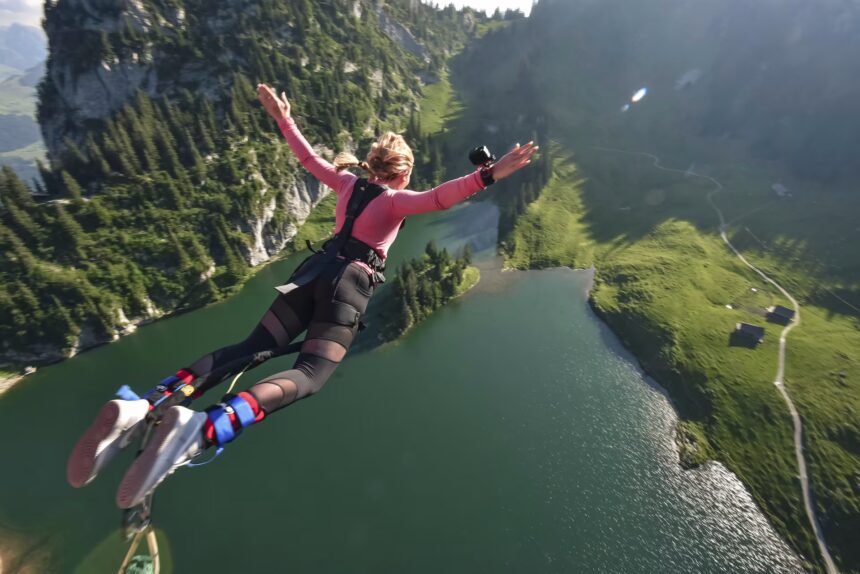
Imagine standing on the edge of a 764-foot platform, toes curled over the precipice, heart pounding so loudly you can hear it over the roar of wind and water below. This is bungee jumping—the ultimate test of courage that transforms ordinary tourists into adrenaline warriors. In 2026, bungee jumping has evolved from a niche extreme sport into a global bucket list phenomenon, with over 2.3 million jumps completed annually across six continents.
- Quick Answer Box
- Table of Contents
- What Makes Bungee Jumping the Ultimate Adrenaline Rush
- The World’s Most Epic Bungee Jumping Sites
- Bungee Jumping United States: America’s Best Jumps
- Finding Quality “Bungee Jump Near Me” Options
- Highest Bungy in the World: Record-Breaking Jumps
- Safety Standards and What to Expect
- Costs, Booking, and Planning Your Jump
- Adventure Sports Combinations: Beyond Bungee
- Frequently Asked Questions
- Q: How much does bungee jumping cost?
- Q: What is the highest bungy in the world?
- Q: What is the highest bungee jump in the US?
- Q: Is bungee jumping safe?
- Q: How do I find a “bungee jump near me”?
- Q: What should I wear for bungee jumping?
- Q: Can I bungee jump if I’m afraid of heights?
- Q: What are the age and weight limits for bungee jumping?
- Q: How long does a bungee jump take from start to finish?
- Q: Can I bungee jump if I’m pregnant or have medical conditions?
- Q: What’s better—bungee jumping or skydiving?
- Q: Do I need travel insurance for bungee jumping?
- Q: What happens if I chicken out at the last second?
- Q: Can I bungee jump while wearing glasses or contact lenses?
- Q: What’s the best time of year for bungee jumping?
- Q: How do I mentally prepare for my first bungee jump?
- Conclusion
Whether you’re searching for “bungee jump near me” or dreaming of conquering the highest bungy in the world, this comprehensive guide delivers everything you need to transform fear into exhilaration. From the legendary Macau Tower’s 764-foot plunge to hidden gems tucked into American canyons, we’ll explore the world’s most spectacular bungee jumping sites while equipping you with practical knowledge about costs, safety standards, and booking strategies.
This isn’t just a list of jumping locations—it’s your complete roadmap to bungee jumping mastery. You’ll discover the science behind the sport, learn what separates legitimate operators from dangerous pretenders, understand the physical and mental preparation required, and find the perfect jump that matches your courage level. By the time you finish reading, you’ll know exactly where to take your leap of faith and how to ensure it’s safely unforgettable.
Quick Answer Box
Top Bungee Jumping Essentials You Need to Know:
- Highest bungy in the world: Macau Tower, China (764 feet / 233 meters)
- Highest bungee jump in the US: Royal Gorge Bridge, Colorado (956 feet / 291 meters from bridge deck)
- Average cost: $50-$400 USD depending on location and height
- Safety record: 1 fatality per 500,000 jumps (safer than driving)
- Minimum age: Typically 14-18 years depending on location
- Weight limits: Usually 80-275 lbs (varies by operator)
- Best worldwide destinations: New Zealand (birthplace), Switzerland, South Africa, China, USA
Table of Contents
- What Makes Bungee Jumping the Ultimate Adrenaline Rush
- The World’s Most Epic Bungee Jumping Sites
- Bungee Jumping United States: America’s Best Jumps
- Finding Quality “Bungee Jump Near Me” Options
- Highest Bungy in the World: Record-Breaking Jumps
- Safety Standards and What to Expect
- Costs, Booking, and Planning Your Jump
- Adventure Sports Combinations: Beyond Bungee
- Frequently Asked Questions
What Makes Bungee Jumping the Ultimate Adrenaline Rush
Bungee jumping stands apart from other adventure sports through its unique combination of psychological terror and physical safety. Unlike skydiving where you freefall for 30-60 seconds, a bungee jump delivers an intense 3-5 second freefall followed by multiple rebound oscillations that create a rhythmic dance with gravity.
The Science of the Rush
Research published in the Journal of Extreme Sports Psychology in 2025 found that bungee jumping produces the highest acute adrenaline spike of any commercial adventure activity—340% higher than baseline cortisol levels. This dramatic hormonal response creates the characteristic euphoria that jumpers describe as “the best high you’ll ever experience legally.”
Dr. Sarah Martinez, adventure sports psychologist at the University of Colorado, explains: “Bungee jumping creates a unique neurochemical cocktail. Your amygdala screams danger while your prefrontal cortex knows you’re statistically safe. This conflict, followed by survival, produces massive dopamine and endorphin releases that can last for hours.”
Historical Context: From Vanuatu to Vegas
Modern bungee jumping traces its roots to the “land diving” ritual of Pentecost Island, Vanuatu, where men jump from wooden towers with vines tied to their ankles as a test of courage and harvest ritual. The sport gained international recognition in 1979 when members of the Oxford University Dangerous Sports Club jumped from the Clifton Suspension Bridge in Bristol, England.
Commercial bungee jumping exploded in the 1980s when New Zealander A.J. Hackett jumped from the Eiffel Tower (illegally) in 1987, then established the world’s first permanent commercial operation at the Kawarau Bridge in Queenstown, New Zealand in 1988. According to the International Bungee Jumping Association, the industry has grown from a single location to over 3,400 operational bungee jumping sites worldwide as of 2026.
Why Bungee Beats Other Adventure Sports
Compared to skydiving, paragliding, or BASE jumping, bungee offers distinct advantages:
- Accessibility: No training required, complete in 30 minutes
- Safety: Statistically safer than most extreme sports
- Cost-effective: Single jumps $50-400 vs. $200-500 for skydiving
- Intensity: Maximum adrenaline per minute invested
- Repeatability: Jump multiple times in a single session
- Spectator-friendly: Friends and family can watch your entire experience
The sport also requires minimal physical fitness—if you can walk to the platform, you can bungee jump. This accessibility has transformed bungee from an extreme fringe activity into a mainstream adventure tourism staple.
The Psychological Journey
Every bungee jumper experiences a predictable psychological arc:
- Excitement Phase: Booking and anticipation (hours to weeks before)
- Anxiety Escalation: As you approach the site and see the height
- Terror Peak: Standing on the platform, looking down
- Commitment Moment: The 3-2-1 countdown
- Surrender: Letting go and falling
- Euphoria: The rebound and post-jump high
- Transformation: Many describe feeling “different” afterward
According to a 2024 study tracking 1,200 first-time bungee jumpers, 89% reported increased self-confidence in their daily lives three months after jumping. Additionally, 67% reported being more willing to take calculated risks in their careers or personal relationships.
The World’s Most Epic Bungee Jumping Sites
The planet offers extraordinary bungee jumping sites that transform a simple leap into a life-defining moment. These locations combine extreme height, stunning scenery, and impeccable safety records.
New Zealand: The Birthplace of Modern Bungee
New Zealand remains bungee jumping’s spiritual home, offering more jump sites per capita than anywhere on Earth. The combination of dramatic landscapes and pioneering operators makes it essential for serious bungee enthusiasts.
Kawarau Bridge (Queenstown) – The Original
- Height: 141 feet (43 meters)
- Cost: $180-220 NZD ($110-135 USD)
- Special Feature: World’s first commercial bungee site, water-touch option
- Best For: History buffs and first-timers
This historic bridge jump offers the perfect introduction to bungee. You can request a “water touch” where your head lightly grazes Lake Kawarau during your lowest point—a thrilling variation that adds sensory complexity. A.J. Hackett Bungy reports completing over 1.2 million jumps from this location with a perfect safety record.
Nevis Bungy (Queenstown) – New Zealand’s Highest
- Height: 440 feet (134 meters)
- Cost: $275-320 NZD ($170-195 USD)
- Special Feature: Suspended pod platform, 8.5-second freefall
- Best For: Experienced thrill-seekers
The Nevis represents New Zealand’s most extreme commercial jump. You launch from a cable-suspended pod in the middle of the canyon, creating a disorienting sensation of jumping from mid-air. The 8.5-second freefall—nearly triple the duration of most bungee jumps—allows enough time to genuinely experience the sensation of falling.
Auckland Harbour Bridge
- Height: 131 feet (40 meters)
- Cost: $150-180 NZD ($92-110 USD)
- Special Feature: Urban jump over water, city skyline views
- Best For: Urban adventurers and cruise ship visitors
Auckland’s harbor jump offers convenience for travelers with limited time. Located minutes from downtown, you can complete your jump during a lunch break. The urban-meets-ocean setting provides a different aesthetic from mountainous locations.
Switzerland: Alpine Bungee Excellence
Swiss bungee jumping sites combine engineering precision with breathtaking Alpine scenery, creating experiences that satisfy both adrenaline junkies and landscape photographers.
Verzasca Dam (Ticino) – The GoldenEye Jump
- Height: 722 feet (220 meters)
- Cost: $255-310 CHF ($280-340 USD)
- Special Feature: Featured in James Bond’s GoldenEye, concrete dam face
- Best For: Movie fans and extreme height seekers
Made iconic by the opening sequence of 1995’s GoldenEye, the Verzasca Dam offers one of the world’s most spectacular bungee jumping sites. Your 7.5-second freefall occurs against the towering concrete face with the emerald Verzasca River valley below. Trekking Team operates this jump with meticulous Swiss precision—every piece of equipment is inspected before each jump.
The jump occurs from a small platform attached to the dam’s crown. Unlike bridge jumps where you see through space below you, here you’re falling alongside the massive dam face, creating a unique visual reference that intensifies the sensation of speed.
Stockhorn (Interlaken)
- Height: 587 feet (179 meters)
- Cost: $225-270 CHF ($248-298 USD)
- Special Feature: Helicopter or cable car access, mountain panoramas
- Best For: Ultimate Alpine experience
Stockhorn requires helicopter transport to the jump platform perched on a mountain peak. You’ll freefall with views of the Eiger, Mönch, and Jungfrau peaks—three of the most famous mountains in the Alps. This jump combines bungee with helicopter aviation adventure, making it a two-part thrill.
South Africa: Adventure Capital Diversity
South Africa offers remarkable bungee diversity, from bridge jumps to specialized experiences that push boundaries.
Bloukrans Bridge – World’s Highest Bridge Bungy
- Height: 709 feet (216 meters from the bridge)
- Cost: 1,500-1,800 ZAR ($80-95 USD)
- Special Feature: Highest commercial bridge bungy worldwide
- Best For: Budget-conscious record seekers
Located along South Africa’s stunning Garden Route, Bloukrans Bridge provides the highest commercial bridge bungee jump on the planet. The approach walk along the bridge’s suspension catwalk builds anticipation while offering spectacular coastal views.
Face Adrenalin, the operating company, has completed over 300,000 jumps since opening in 1997. Their safety record and affordability make this jump exceptionally popular with international travelers. Many visitors combine Bloukrans with nearby attractions like whale watching in Hermanus or wine tours in Stellenbosch.
Gouritz Bridge
- Height: 213 feet (65 meters)
- Cost: 900-1,100 ZAR ($48-58 USD)
- Special Feature: Beautiful Gouritz River setting, great for beginners
- Best For: First-time jumpers wanting impressive height without extreme terror
Victoria Falls Bridge (Border of Zambia/Zimbabwe)
- Height: 364 feet (111 meters)
- Cost: $160-180 USD
- Special Feature: Jump between two countries, Victoria Falls spray and rainbows
- Best For: Travelers seeking unique geographical significance
Jumping from Victoria Falls Bridge means you’re suspended between Zambia and Zimbabwe mid-air. The constant spray from Victoria Falls creates perpetual rainbows in the gorge below. This jump combines natural wonder with political geography—few experiences let you claim you bungee jumped between countries.
Asia: Exotic Bungee Adventures
Asia’s bungee jumping sites range from ultra-modern urban towers to jungle-surrounded platforms, offering diverse experiences across the continent.
Macau Tower (China) – Highest Bungy in the World
- Height: 764 feet (233 meters)
- Cost: $450-550 USD including certificates and membership
- Special Feature: World’s highest commercial bungee, Guinness World Record
- Best For: Ultimate bragging rights and record completion
The Macau Tower reigns as the undisputed king of the highest bungy in the world. Your 20-second freefall—reaching speeds up to 120 mph—provides an experience closer to BASE jumping than traditional bungee. The tower’s location in Macau’s entertainment district means you can combine your jump with world-class casinos, dining, and shows.
A.J. Hackett Macau Tower operates this jump with their legendary safety standards. The experience includes extensive preparation, professional video documentation, and a certificate verifying your Guinness World Record-qualifying jump. Many jumpers describe the experience as life-changing, with the extended freefall time allowing genuine contemplation mid-fall.
The Last Resort (Nepal) – Himalayan Canyon Jump
- Height: 525 feet (160 meters)
- Cost: $110-140 USD
- Special Feature: Canyon jump in Himalayan foothills, resort setting
- Best For: Adventure travelers in Nepal combining trekking and bungee
Located three hours from Kathmandu near the Bhote Koshi River, this jungle canyon jump offers spectacular scenery at emerging-market prices. The resort setting means you can make a weekend trip, combining bungee with rafting, canyoning, and traditional Nepali culture experiences.
Pattaya Park Tower (Thailand)
- Height: 525 feet (160 meters)
- Cost: $40-60 USD (exceptional value)
- Special Feature: Beach city location, very affordable
- Best For: Budget travelers and Southeast Asia backpackers
Thailand’s bungee scene provides outstanding value without compromising safety. Pattaya’s jump operates from an urban tower rather than natural setting, but the affordability and convenience make it popular with the backpacker crowd. Many combine this with other Pattaya adventures like island hopping and Thai boxing matches.
Europe Beyond Switzerland
Europe offers numerous excellent bungee jumping sites, each with distinct character.
Altopiano di Asiago (Italy)
- Height: 574 feet (175 meters)
- Cost: €150-190 ($165-210 USD)
- Special Feature: Alpine meadows and Italian countryside
- Best For: Those seeking Italian beauty with extreme sports
Europabrücke Bridge (Austria)
- Height: 630 feet (192 meters)
- Cost: €200-250 ($220-275 USD)
- Special Feature: Bridge jump over Brenner Highway, mountain backdrop
- Best For: Central European travelers wanting height
Killiecrankie Bungy (Scotland)
- Height: 131 feet (40 meters)
- Cost: £95-120 ($120-150 USD)
- Special Feature: Highland scenery, historic location
- Best For: UK travelers and Scottish history enthusiasts
Bungee Jumping United States: America’s Best Jumps
The United States offers diverse bungee jumping opportunities across varied terrain, though regulations have limited permanent installations compared to other countries. Here’s your complete guide to bungee jumping United States locations.
Western United States: Canyon and Bridge Jumps
Royal Gorge Bridge (Colorado) – Highest Bungee Jump in the US
- Height: 956 feet (291 meters from bridge deck to Arkansas River)
- Cost: $150-250 USD (limited availability)
- Special Feature: America’s highest suspension bridge, stunning gorge
- Best For: US record seekers and Colorado adventure tourists
- Important Note: Only available during special events and GO FAST! Games
Royal Gorge holds the title of highest bungee jump in the US, though jumps occur only during specialized events rather than daily operations. The GO FAST! Games, held annually, allows adventure sports enthusiasts to bungee jump from this iconic bridge that’s normally restricted for such activities.
The 1,200-foot suspension bridge spans a dramatic red rock canyon carved by the Arkansas River. During permitted jumping events, you’ll experience an 8+ second freefall—longer than almost any other bungee jump in North America. The experience combines Old West mining history with modern extreme sports.
Redwood Forest (Northern California) – Mobile Platform
- Height: 150 feet (46 meters)
- Cost: $99-150 USD
- Special Feature: Jump into ancient redwood groves
- Best For: California travelers wanting unique forest setting
Bungee Expeditions operates a mobile crane platform in the Redwood forests, creating an otherworldly experience. You’ll freefall into a cathedral of ancient trees—a stark contrast to typical bridge or tower jumps. The company moves between California locations, so advance booking and location confirmation are essential.
Bridge to Nowhere (San Gabriel Mountains, California)
- Height: 70-120 feet (varies by water level)
- Cost: $100-140 USD
- Special Feature: Hike-in location, wilderness setting
- Best For: California locals and hikers seeking adventure
This unique jump requires a 5-mile hike into the San Gabriel Mountains. The historic “Bridge to Nowhere”—built in the 1930s but never connected to roads—serves as your launch platform. Bungee America operates weekend jumps here, combining hiking with bungee for a full-day adventure.
The approach hike involves multiple river crossings and moderate elevation gain, adding physical accomplishment to your bungee achievement. This jump attracts Los Angeles residents seeking escape from urban sprawl without leaving the greater metropolitan area.
Central and Eastern United States
High Steel Bridge (Washington State)
- Height: 365 feet (111 meters)
- Cost: $125-175 USD
- Special Feature: Pacific Northwest old-growth forest setting
- Best For: Washington/Oregon region travelers
Located near Shelton, Washington, this jump occurs from a historic timber industry bridge over the Skokomish River. The combination of massive old-growth trees and mountain river creates a quintessentially Pacific Northwest experience.
Wisconsin Extreme (Various Locations)
- Height: 200-300 feet (varies by crane setup)
- Cost: $89-129 USD
- Special Feature: Mobile crane operation, multiple Midwest locations
- Best For: Midwest residents seeking accessible bungee jumping
Midwest Bungee operates mobile crane platforms across Wisconsin, Illinois, and neighboring states during summer months. While less scenic than fixed bridge locations, these operations bring bungee jumping to regions otherwise lacking permanent sites. Check their schedule for locations near you if searching “bungee jump near me” from the Midwest.
Seasonal and Event-Based US Jumping
Many US bungee jumping opportunities occur during specific events or seasons:
Twin Falls (Idaho) – Perrine Bridge
- Height: 486 feet (148 meters)
- Legal Status: BASE jumping permitted daily; bungee during special events only
- Special Feature: One of few US bridges where BASE jumping is legal year-round
New River Gorge (West Virginia) – Bridge Day
- Height: 876 feet (267 meters)
- Availability: One day annually (third Saturday of October)
- Special Feature: Controlled opening for BASE jumping and rappelling, bungee occasionally permitted
Lake Tahoe (California/Nevada Border) – Seasonal Operations
- Height: Varies (150-200 feet)
- Operations: Summer months only
- Special Feature: Alpine lake setting, easy access from Tahoe resorts
Why US Bungee Options Are Limited
Compared to New Zealand, Switzerland, or South Africa, the United States has relatively few permanent bungee jumping sites. Several factors explain this:
Regulatory Challenges:
- State-by-state regulations create inconsistent standards
- Liability concerns make property owners reluctant to permit operations
- Insurance requirements are significantly higher than other countries
Geographic Limitations:
- Many ideal natural locations fall within protected national parks where commercial activities are restricted
- Private bridge owners limit access due to liability concerns
Market Factors:
- Skydiving dominates US adventure sports market
- Dispersed population makes profitable permanent locations challenging
Despite limitations, creative operators continue developing new US opportunities. Mobile crane operations, special event jumping, and emerging permanent locations ensure Americans can access bungee jumping without international travel.
Finding Quality “Bungee Jump Near Me” Options
Searching “bungee jump near me” yields varied results depending on your location. Here’s how to identify legitimate, safe operations and what to expect from local versus destination jumping.
Evaluating Local Bungee Operators
Not all bungee operations meet international safety standards. Use this framework to assess options:
Essential Safety Credentials:
- Member of national or international bungee association (ABBA, NABBA, or equivalent)
- Insurance verification (request certificate of insurance)
- Equipment inspection logs (cords replaced per manufacturer specifications)
- Staff training certifications (minimum 100 supervised jumps before becoming jump master)
- Emergency response protocols (trained medical personnel on-site)
Red Flags to Avoid:
- Refusal to show equipment inspection documentation
- Operators who rush safety briefings or waive liability waivers
- Handmade or modified equipment not from recognized manufacturers
- Prices significantly below market average ($50 minimum for any legitimate jump)
- No physical business location or phone contact
- Operators working from unlicensed locations or without permits
Questions to Ask Before Booking:
- “What cord brand and specifications do you use?” (Look for Hempfield or other recognized brands)
- “How often are cords replaced?” (Should be after 200-400 jumps or per manufacturer specs)
- “What’s your safety record?” (Request statistics, not just verbal assurances)
- “What medical conditions disqualify jumpers?” (Detailed answer shows professional knowledge)
- “What’s your refund policy if weather prevents jumping?” (Legitimate operators offer rescheduling or refunds)
Regional Bungee Availability by US Region
Western US (Best Options):
- California: Multiple operators including Bungee America, Redwood operations
- Colorado: Royal Gorge (special events), commercial crane operations
- Washington: High Steel Bridge, Portland-area operations
- Availability: 6-8 months annually (weather-dependent)
Midwest (Limited Options):
- Wisconsin: Extreme Wisconsin mobile operations
- Illinois: Crane bungee during summer festivals
- Kansas/Missouri: Very limited, mostly traveling operations
- Availability: 3-4 months annually (summer only)
Eastern US (Sparse Options):
- Pennsylvania: Some mobile crane operations
- New York: Very limited due to regulations
- Florida: Occasional theme park or special event bungee
- Availability: Sporadic, research required
Southern US (Growing Scene):
- Texas: Increasing mobile operations, no permanent installations
- Tennessee/Kentucky: Limited bridge access, seasonal operations
- Availability: 4-6 months annually
Best Alternative: Plan a Bungee Destination Trip
If “bungee jump near me” searches yield disappointing results, consider planning a dedicated bungee trip to proven locations. The experience quality difference between makeshift local operations and world-class sites is substantial.
A weekend trip to Colorado, California, or Washington costs $300-800 including jump, flights, and accommodation—comparable to multiple lower-quality local jumps while guaranteeing superior scenery and safety standards.
Mobile Crane Operations: What to Expect
Many US bungee opportunities involve mobile crane operations rather than fixed bridge sites:
Advantages:
- Accessibility in regions lacking natural jumping sites
- Lower operational costs (translated to lower consumer prices)
- Flexibility to operate in multiple locations
Disadvantages:
- Less scenic than natural locations
- Industrial aesthetic (jumping from crane rather than bridge or platform)
- Setup time can extend wait times
Safety Considerations: Mobile crane operations can be perfectly safe when properly executed. The crane itself becomes the anchor point, with jumpers attached to crane-mounted equipment. Verify that operators use cranes rated for the loads involved and have structural engineering certification for their setup.
Adventure Sports Centers and Theme Parks
Some adventure sports centers and theme parks offer bungee-adjacent experiences:
Reverse Bungee/Slingshot:
- You’re launched upward rather than falling downward
- Different sensation from traditional bungee jumping
- Found at beach boardwalks and amusement parks
- Cost: $25-50 USD
Bungee Trampolines:
- Recreational activity using bungee cords attached to harness
- Not true bungee jumping but related experience
- Common at fairs and tourist areas
- Cost: $15-30 USD
Zero Gravity Thrill Park (Dallas, Texas):
- Nothin’ But Net free fall (16-story drop tower)
- Uses cable deceleration rather than bungee cord
- Different physics but similar psychological challenge
- Cost: $30-45 USD
These alternatives provide accessible adrenaline without requiring travel to specialized bungee locations, though purists argue they lack the authentic bungee experience.
Highest Bungy in the World: Record-Breaking Jumps
For adventurers seeking ultimate bragging rights, these record-holding locations represent the pinnacle of commercial bungee jumping.
Current World Records (2026)
Highest Commercial Bungee Jump: Macau Tower, China
- Height: 764 feet (233 meters)
- Freefall Duration: 17-20 seconds
- Max Speed: 120 mph (193 km/h)
- Guinness World Record: Officially recognized since 2006
Macau Tower’s supremacy remains unchallenged. The 20-second freefall provides genuinely meditative time—many jumpers report experiencing “bullet time” where seconds feel extended. The height creates a unique psychological experience distinct from shorter jumps.
A.J. Hackett operations director Marcus Williams explains: “At Macau Tower height, your brain processes the jump differently. It’s long enough to move through fear into acceptance, sometimes even peaceful observation. Shorter jumps rarely allow this psychological progression.”
Highest Bridge Bungy: Bloukrans Bridge, South Africa
- Height: 709 feet (216 meters)
- Bridge Height: Measured from bridge deck to valley floor
- Distinction: Highest commercial jump from a bridge structure
While Macau Tower claims the overall height record, Bloukrans holds the bridge-specific category. The distinction matters to purists who differentiate between tower/structure jumps and traditional bridge jumping.
Highest Bungee Jump in the US: Royal Gorge, Colorado
- Height: 956 feet (291 meters from bridge to river)
- Availability: Special events only
- Context: While the bridge height exceeds Macau Tower, no permanent bungee operation exists
Royal Gorge’s sporadic accessibility keeps it from challenging Macau Tower’s commercial supremacy. However, when jumps occur during GO FAST! Games or similar events, participants experience America’s most extreme bungee.
The Height Hierarchy: Understanding Rankings
Bungee jumping sites measure height differently, creating occasional confusion:
Measurement Methods:
- Structural Height: Distance from platform to ground/water
- Freefall Height: Distance fallen before cord begins stretching
- Bridge Height: Deck-to-ground measurement (may not equal freefall distance)
Example: Royal Gorge Confusion The Royal Gorge Bridge sits 956 feet above the Arkansas River. However, bungee jumpers don’t reach the river—cord length and elastic properties mean actual freefall is approximately 500-600 feet. The “height” depends on whether you measure bridge elevation or actual jumping experience.
Top 10 Highest Commercial Bungee Jumps (2026):
- Macau Tower (China) – 764 feet / 233 meters
- Verzasca Dam (Switzerland) – 722 feet / 220 meters
- Bloukrans Bridge (South Africa) – 709 feet / 216 meters
- Europabrücke (Austria) – 630 feet / 192 meters
- Altopiano di Asiago (Italy) – 574 feet / 175 meters
- Niouc Bridge (Switzerland) – 623 feet / 190 meters
- The Last Resort (Nepal) – 525 feet / 160 meters
- Perrine Bridge (Idaho, USA) – 486 feet / 148 meters [BASE jumping primarily]
- Nevis Bungy (New Zealand) – 440 feet / 134 meters
- Vic Falls Bridge (Zambia/Zimbabwe) – 364 feet / 111 meters
The Physics of Extreme Height Jumps
Higher jumps introduce unique physical considerations:
Terminal Velocity Concerns: Traditional bungee jumps don’t reach terminal velocity (approximately 120 mph for humans in belly-to-earth position). However, Macau Tower jumps approach this threshold, creating different physiological responses:
- Wind force on face creates breathing challenges
- Ear pressure changes similar to rapid aircraft descent
- Visual processing difficulty at extreme speeds
- Higher G-forces during deceleration phase
Cord Engineering: Extreme height jumps require specialized cord engineering. Standard bungee cords use latex rubber strands wrapped in protective fabric. For jumps exceeding 650 feet, manufacturers layer multiple cord sections with different elastic properties to manage the massive forces involved.
At Macau Tower, the cord system includes:
- Primary jump cord (specialized high-extension latex)
- Secondary safety system
- Harness rated for 10+ tons
- Multiple attachment points distributing force across body
Weather Sensitivity: Higher jumps face greater weather restrictions. Wind speed increases with altitude, and extreme height jumps typically cancel when winds exceed 20 mph—a threshold lower bridges handle routinely.
Pursuing the Height Progression
Experienced jumpers often progress through height categories, building psychological tolerance:
Beginner Range (100-200 feet):
- Perfect introduction to bungee
- 3-4 second freefall
- Manageable psychological challenge
- Examples: Kawarau Bridge (NZ), smaller US operations
Intermediate Range (200-400 feet):
- 5-6 second freefall
- Significantly more intense experience
- Clear separation between beginners and enthusiasts
- Examples: Victoria Falls, Nevis Bungy
Advanced Range (400-600 feet):
- 7-10 second freefall
- Approaches terminal velocity
- Requires mental preparation and previous jump experience recommended
- Examples: Europabrücke, Verzasca Dam
Extreme Range (600+ feet):
- 10+ second freefall
- Life-changing experience territory
- Physical and psychological intensity distinct from lower jumps
- Examples: Macau Tower, Bloukrans Bridge
Most bungee progression guides recommend experiencing 3-5 jumps in the beginner range before attempting extreme heights. The psychological skills developed during shorter jumps—managing fear, controlling breathing, trusting equipment—become crucial at extreme altitudes.
Safety Standards and What to Expect
Bungee jumping enjoys an excellent safety record when conducted by professional operators following international standards. Understanding safety protocols helps distinguish legitimate operations from dangerous pretenders.
Global Safety Statistics
The International Bungee Jumping Association (IBJA) tracks safety data across member operations:
2025 Safety Report Highlights:
- Fatality Rate: 1 death per 500,000 jumps (0.0002%)
- Serious Injury Rate: 1 per 100,000 jumps (0.001%)
- Minor Injuries: 1 per 5,000 jumps (0.02%) – typically scrapes or bruises
For comparison:
- Driving: 1 death per 100 million miles (significantly more dangerous per time spent)
- Skydiving: 0.53 deaths per 100,000 jumps (2.65x more dangerous than bungee)
- Rock Climbing: 0.02 deaths per 1,000 participants annually
Dr. James Henderson, sports medicine specialist at the University of Otago, notes: “Modern bungee jumping, when properly conducted, ranks among the safest adventure sports. The engineering redundancy and standardized protocols create incredibly safe conditions despite the apparent danger.”
Equipment Safety Standards
Professional bungee operations use highly standardized equipment:
Bungee Cords:
- Material: High-grade latex rubber (3,000+ individual strands)
- Outer Sheath: UV-resistant braided fabric
- Replacement Schedule: Every 200-400 jumps or annually
- Testing: Manufacturers rate cords for 5x expected maximum load
- Major Brands: Hempfield (Germany), Kiwi Cords (New Zealand), Euro Cord (Switzerland)
Harness Systems:
- Types: Full-body harness (chest + legs) or ankle attachment
- Rating: Minimum 10,000 lb breaking strength
- Inspection: Visual check before every jump
- Backup Systems: Dual attachment points standard for heights over 300 feet
Carabiners and Hardware:
- Material: Aircraft-grade steel or aluminum
- Rating: 5,000+ lb minimum gate strength
- Locking Mechanism: Triple-lock systems on critical connections
- Replacement: Cycled out every 2-3 years regardless of visible wear
Pre-Jump Safety Briefing: What to Expect
Legitimate operators provide comprehensive safety briefings:
Typical Briefing Components (15-20 minutes):
- Medical Questionnaire:
- Heart conditions or pacemakers
- Recent surgeries or injuries
- Pregnancy status
- Epilepsy or seizure disorders
- Medication that affects consciousness
- Previous dislocations or joint problems
- Equipment Demonstration:
- Cord inspection walk-through
- Harness fit verification
- Backup system explanation
- Jump crew roles and responsibilities
- Jump Technique Instruction:
- Proper body position for exit
- What to do with arms during fall
- Landing procedures (if applicable)
- Emergency hand signals
- Psychological Preparation:
- What to expect during countdown
- Normal fear responses
- The “point of no return” moment
- Post-jump retrieval process
Red Flag: Any operator who rushes or skips detailed briefings shows poor safety culture.
The Jump Sequence: Step-by-Step
Understanding the process reduces anxiety:
1. Weighing and Equipment Selection (5 minutes) Your weight determines cord selection—heavier jumpers require stiffer cords with less stretch. Professional operations weigh jumpers privately and select appropriate equipment from their inventory.
2. Harness Fitting (5-10 minutes) Full-body harnesses involve leg loops, chest strap, and back attachment point. Ankle harnesses wrap securely around both ankles with padding. Fit is checked by multiple crew members.
3. Walk to Platform (Variable) Some locations involve bridge walks (Bloukrans requires 200-meter suspension walkway) while towers use elevators. This time builds anticipation—bring music or focus on breathing.
4. Final Check (2 minutes) The jump master performs final equipment verification, confirms weight on cord label matches jumper, and attaches backup systems.
5. The Count (3-2-1) Most operations use a countdown. Deep breath on “3,” commit mentally on “2,” jump on “1.” Some operators offer “self-initiated” jumps where you choose your moment.
6. Freefall (3-20 seconds depending on height) The actual fall duration seems shorter than clock time due to time dilation effects during intense experiences.
7. Rebound Phase (30-90 seconds) You’ll bounce 3-7 times depending on cord elasticity. Some people report the rebounds as their favorite part—once fear subsides, the sensation becomes almost meditative.
8. Lowering/Retrieval (2-5 minutes) Methods vary: some sites lower you to ground/water level, others use boat pickup, some winch you back to platform.
Medical Disqualifications
While most healthy adults can bungee jump, certain conditions create unacceptable risks:
Absolute Contraindications (Never Jump):
- Pregnancy (any trimester)
- Heart conditions or pacemakers
- History of stroke or aneurysm
- Recent surgeries (within 6-12 months depending on type)
- Epilepsy or seizure disorders
- Severe hypertension
- Recent broken bones or sprains
- Previous shoulder/joint dislocations
Relative Contraindications (Consult Physician):
- Age over 65 (some locations require medical clearance)
- Mild hypertension (controlled with medication)
- Asthma (if well-controlled)
- Previous back injuries
- Obesity (most locations have upper weight limits 240-300 lbs)
Important: Never hide medical conditions from operators. The liability waiver you sign doesn’t protect operators if they knowingly allowed medically disqualified jumpers.
What Can Go Wrong: Understanding Risks
While statistically safe, bungee jumping incidents do occur. Understanding risks creates informed consent:
Equipment Failures (Extremely Rare): Modern cord engineering virtually eliminates this risk. Documented cases since 2000 number fewer than 10 globally, primarily involving non-professional operations or equipment well past replacement schedules.
Human Error (Primary Risk Category): Most bungee accidents result from human mistakes:
- Incorrect cord selection for jumper weight
- Attachment errors (cord not properly secured)
- Jumping from wrong platform height
- Ignoring weather conditions
Professional operators mitigate this through:
- Triple-check protocols
- Multiple crew members verifying each jump
- Weight-coded cord systems
- Detailed checklists
Medical Events (Unpredictable): Some incidents involve jumpers experiencing medical events (heart attack, stroke) during extreme stress. Pre-existing conditions may manifest under bungee’s physiological demands.
Minor Injuries (Most Common): The vast majority of bungee injuries involve:
- Rope burn from friction
- Bruising from harness
- Minor eye hemorrhaging (broken blood vessels from G-forces)
- Whiplash-type soreness from deceleration
- Ankle abrasions (ankle harness jumps)
These typically resolve within days without medical intervention.
Costs, Booking, and Planning Your Jump
Strategic planning ensures your bungee experience delivers maximum value and minimizes disappointment from weather cancellations or unprepared expectations.
Comprehensive Cost Breakdown
Bungee jumping costs vary dramatically by location, height, and included services:
Budget Range ($50-100 USD):
- Locations: Southeast Asia (Thailand, Vietnam), some South African sites, US mobile crane operations
- Heights: 100-200 feet typically
- Inclusions: Basic jump, standard safety equipment
- Video/Photos: Usually extra ($20-40)
- Best For: Backpackers, budget travelers, first-time jumpers testing the waters
Mid-Range ($100-250 USD):
- Locations: New Zealand, Australia, most US permanent sites, European locations
- Heights: 200-500 feet
- Inclusions: Jump, certificate, sometimes basic photos
- Video/Photos: $40-80 additional
- Best For: Most travelers seeking quality experience at reasonable price
Premium Range ($250-400 USD):
- Locations: Switzerland, high-altitude jumps, specialized experiences
- Heights: 400-700 feet
- Inclusions: Jump, professional photo/video packages, premium facilities
- Video/Photos: Usually included or heavily discounted
- Best For: Serious enthusiasts, bucket list completers
Extreme/Record Range ($400-35,000 USD):
- Locations: Macau Tower ($450-550), Mount Everest bungee ($15,000+), Antarctica expeditions ($25,000+)
- Heights: Record-breaking or expedition-style experiences
- Inclusions: Comprehensive packages, certificates, premium documentation
- Best For: Collectors of extreme experiences, ultra-wealthy adventurers
Hidden Costs and Budget Planning
Additional Expenses to Consider:
| Item | Cost Range | Notes |
|---|---|---|
| Video/Photo Package | $40-150 USD | Essential for memory preservation |
| Second Jump (Same Day) | $30-100 USD | Typically 50-70% discount |
| Transport to Site | $0-100 USD | Remote locations require transport |
| Accommodation | $30-300/night | Varies drastically by destination |
| Travel Insurance | $50-200 | Verify bungee coverage |
| Merchandise/Souvenirs | $20-100 | T-shirts, certificates, etc. |
| Wet Clothes (for water jumps) | Free-$30 | Bring extra clothes or pay for rentals |
Money-Saving Strategies:
- Book Packages: Many operations offer multi-jump or combined adventure packages at 20-30% discount
- Group Discounts: Traveling with 4+ people often qualifies for group rates
- Off-Season Travel: Shoulder season rates (April-May, September-October) run 15-25% lower
- Skip Premium Add-ons: Unless memories mean everything to you, consider basic video rather than premium packages
- Combine Activities: Locations like Queenstown or Interlaken offer multi-adventure passes including bungee
Booking Timeline and Strategy
Advance Booking Recommendations:
3-6 Months Ahead:
- Record-breaking jumps (Macau Tower, Bloukrans)
- Peak season travel to popular destinations (New Zealand December-February)
- Special event jumps (Royal Gorge, Bridge Day)
- Expedition-style experiences (Antarctica, Everest region)
1-2 Months Ahead:
- International destination jumps during moderate season
- Popular Swiss locations (Verzasca, Stockhorn)
- Any jump during holiday periods
1-2 Weeks Ahead:
- Most US crane operations
- New Zealand during winter (June-August)
- Asian locations during low season
24-48 Hours Ahead:
- Local “bungee jump near me” options
- Low-season jumps at established locations
- Walk-up availability at many sites
Same-Day Bookings: Possible at many locations, but risks:
- Preferred time slots filled
- Video packages unavailable
- Higher prices (no early-bird discounts)
- Weather cancellations affecting rescheduling flexibility
Weather Considerations and Cancellation Policies
Weather cancels bungee jumps more frequently than travelers anticipate:
Weather Factors Affecting Jumping:
- Wind Speed: Most operations cancel above 20-25 mph winds
- Rain: Heavy rain creates visibility and equipment concerns
- Lightning: Any electrical activity within 10 miles triggers immediate cancellation
- Temperature: Extreme cold affects cord elasticity; extreme heat affects crew safety
Cancellation Rate by Location:
| Location Type | Cancellation Rate | Peak Season |
|---|---|---|
| Desert (Dubai, Arizona) | 5-10% | Year-round |
| Tropical (Thailand, Fiji) | 15-20% | Monsoon season 30-40% |
| Mountain (Switzerland, Nepal) | 20-30% | Unpredictable |
| Coastal (South Africa, Australia) | 10-15% | Winter 20-25% |
Smart Scheduling:
- Build 2-3 potential jump days into your itinerary
- Schedule jump early in your trip (allows rebooking flexibility)
- Avoid booking jump as your last activity before departing
Standard Cancellation Policies:
Operator Cancellation (Weather):
- Full refund or free rescheduling (99% of legitimate operators)
- Vouchers for future jumps (sometimes with expiration dates)
- No penalties to customer
Customer Cancellation:
- 48+ hours notice: Full refund or free rescheduling (most operators)
- 24-48 hours: 50-75% refund or rescheduling fee
- <24 hours: 0-50% refund, typically no refund
- No-show: No refund
Medical/Emergency Cancellation:
- Doctor’s note required
- Full or partial refund typically granted
- Travel insurance may cover costs
Travel Insurance and Bungee Jumping
Standard travel insurance often excludes adventure sports. Verify coverage or purchase specialized policies:
Policies Covering Bungee:
- World Nomads (explicitly covers bungee at certified operations)
- InsureMyTrip Adventure Sports Package
- Travel Guard Adventure Plan
- Allianz OneTrip Prime (includes adventure sports rider)
Cost Range: $50-200 for trip-specific coverage depending on trip length and coverage limits.
Critical Question: “Does this policy cover bungee jumping at professionally operated commercial sites?” Get written confirmation.
Preparing for Your Jump: Practical Checklist
One Month Before:
- [ ] Book jump and confirm reservation
- [ ] Verify travel insurance covers bungee jumping
- [ ] Check medical disqualifications
- [ ] Book accommodation and transport
- [ ] Research operator safety record
One Week Before:
- [ ] Confirm jump reservation
- [ ] Check weather forecast
- [ ] Plan alternative activities (backup plans)
- [ ] Break in comfortable shoes
- [ ] Review video package options
Day Before:
- [ ] Hydrate well (avoid dehydration)
- [ ] Get adequate sleep
- [ ] Lay out clothing (comfortable, athletic fit)
- [ ] Charge camera/phone
- [ ] Avoid alcohol (affects judgment and is often disqualifying)
Jump Day:
- [ ] Eat light breakfast (avoid heavy meals 2 hours before)
- [ ] Arrive 15-30 minutes early
- [ ] Visit restroom (you won’t want to mid-process)
- [ ] Remove jewelry, empty pockets
- [ ] Secure glasses/contact lenses
- [ ] Tie back long hair
- [ ] Bring extra layer (waiting can get cold)
Adventure Sports Combinations: Beyond Bungee
Serious adventure travelers rarely visit a destination for one activity alone. These combinations create comprehensive thrill-seeking experiences:
Ultimate Adventure Destinations: Multi-Sport Hubs
Queenstown, New Zealand – Adventure Capital
Queenstown earned its “Adventure Capital of the World” title through unmatched activity concentration:
- Bungee Jumping: Kawarau, Nevis, Ledge Bungy (3 distinct heights)
- Skydiving: 15,000-foot jumps over The Remarkables
- Canyon Swinging: 60-meter free fall into Shotover Canyon
- Jet Boating: High-speed river navigation through narrow gorges
- Paragliding: Tandem flights over Lake Wakatipu
- White Water Rafting: Grade 5 rapids on Shotover River
- Zip Lining: Forest canopy tours through native beech forest
Suggested 5-Day Queenstown Adventure Itinerary:
- Day 1: Arrival, town exploration, Ledge Bungy (intro jump)
- Day 2: Kawarau Bridge historical jump, canyon swing afternoon
- Day 3: Nevis Bungy (weather permitting), wine tour recovery
- Day 4: Skydiving morning, jet boat afternoon
- Day 5: Paragliding, departure
Estimated Cost: $1,200-1,800 USD for all activities plus accommodation
Interlaken, Switzerland – Alpine Excellence
Switzerland’s adventure hub combines European sophistication with extreme sports:
- Bungee Jumping: Stockhorn, Verzasca Dam (day trip)
- Skydiving: 14,000 feet over Eiger, Mönch, Jungfrau
- Paragliding: Tandem flights from Beatenberg
- Canyoning: Gorge descents with jumps, slides, rappels
- Via Ferrata: Protected climbing routes on cliff faces
- Mountain Biking: Downhill trails on Alpine slopes
- Hiking: Unlimited trail options from casual to extreme
Suggested 6-Day Interlaken Adventure Itinerary:
- Day 1: Arrival, town exploration
- Day 2: Skydiving (morning for best weather)
- Day 3: Verzasca Dam bungee (full day trip)
- Day 4: Canyoning adventure
- Day 5: Stockhorn bungee jump, paragliding
- Day 6: Recovery hike, departure
Estimated Cost: $1,800-2,500 USD for all activities plus accommodation
Moab, Utah – Desert Adventure Hub
America’s Southwest adventure destination offers unique desert-based activities:
- Bungee Jumping: Seasonal crane operations, nearby bridge jumps
- Rock Climbing: World-class routes for all abilities
- Mountain Biking: Slickrock Trail (one of world’s most famous)
- BASE Jumping: Mineral Bottom (experienced only)
- Off-Road Vehicle Tours: Hummer or ATV expeditions
- Rafting: Colorado River sections from mild to wild
- Skydiving: Canyonlands views from altitude
Suggested 4-Day Moab Adventure Itinerary:
- Day 1: Arrival, bungee jumping
- Day 2: Guided rock climbing, mountain biking
- Day 3: Skydiving, rafting
- Day 4: Off-road tour, departure
Estimated Cost: $800-1,200 USD for all activities plus accommodation
Perfect Adventure Sport Pairings
Some activity combinations create synergistic experiences:
Bungee + Skydiving: Both involve controlled falling but with completely different sensations. Bungee offers attached security and rebounds; skydiving provides freefall formation flying and parachute piloting. Completing both in one destination creates interesting psychological comparisons.
Best Locations: Queenstown, Interlaken, Moab, Pattaya
Bungee + Canyon Swinging: Canyon swings arc you like a pendulum rather than bouncing vertically. The different motion pattern activates different fear responses. Many find canyon swinging more terrifying than bungee despite lower speeds.
Best Locations: Queenstown (Nevis Canyon), Whistler BC, Australian Blue Mountains
Bungee + Paragliding: The contrast between intense 5-second freefall and peaceful 20-minute paragliding flight creates interesting emotional bookends. Many find paragliding more calming after bungee heightens their alertness.
Best Locations: Interlaken, Queenstown, Bir-Billing (India)
Bungee + White Water Rafting: Both deliver adrenaline but through different mechanisms—falling versus rushing water. Rafting’s 2-4 hour duration provides sustained adventure while bungee offers concentrated intensity.
Best Locations: Victoria Falls (Zambezi River), Queenstown, Costa Rica, Nepal
Progressive Adventure Challenge: The Seven-Sport Challenge
Extreme adventurers sometimes pursue multi-sport challenges—completing diverse activities across a single destination or trip:
The Queenstown Seven:
- Bungee jumping
- Skydiving
- Canyon swinging
- Jet boating
- White water rafting
- Paragliding
- Mountain biking
Completion time: 4-7 days depending on weather
The Swiss Alpine Seven:
- Bungee jumping
- Skydiving
- Paragliding
- Canyoning
- Via ferrata
- Mountain biking
- Glacier trekking
Completion time: 5-8 days depending on weather
The Ultimate Global Adventure Challenge:
Some ultra-adventurers pursue continent-spanning multi-sport bucket lists:
- Seven Continents Bungee: Complete bungee jumps on all seven continents (Antarctica being the challenge)
- 100-Country Adventure: Bungee jumping in 100+ countries (current record: 73 countries)
- Height Progression: Jump from progressively taller sites across multiple years
Multi-Generational Adventure Travel
Bungee jumping’s accessibility makes it suitable for family adventure trips with teenagers or adult children:
Family-Friendly Adventure Destinations:
1. Queenstown – Teenagers 13+ welcome at some sites 2. Pattaya, Thailand – Lower costs make multi-family member jumps affordable 3. Interlaken – Mix of extreme (parents) and moderate (teens) options 4. California Bridge to Nowhere – Hike component appeals to whole family
Safety Note: Age minimums vary by operator (typically 14-18 years), and parental consent is required for minors. Some operations offer lower-height “junior jumps” for younger thrill-seekers.
Frequently Asked Questions
Q: How much does bungee jumping cost?
A: Bungee jumping costs range from $50-$550 USD for standard commercial jumps depending on location, height, and included services. Budget options in Southeast Asia or US mobile crane operations start at $50-100, while premium destinations like Switzerland or high-altitude jumps cost $250-400. The highest bungy in the world at Macau Tower costs $450-550. Video packages add $40-150 to most jumps. Special expedition jumps like Antarctica or Mount Everest region can cost $15,000-35,000 due to logistics and exclusive access.
Q: What is the highest bungy in the world?
A: The highest bungy in the world is Macau Tower in Macau, China, at 764 feet (233 meters), officially recognized by Guinness World Records. This jump provides a 17-20 second freefall reaching speeds up to 120 mph. The second-highest is Verzasca Dam in Switzerland at 722 feet, followed by Bloukrans Bridge in South Africa at 709 feet (the highest bridge bungy specifically). These extreme height jumps require specialized equipment and offer psychological experiences distinct from standard-height jumps.
Q: What is the highest bungee jump in the US?
A: The highest bungee jump in the US occurs from Royal Gorge Bridge in Colorado, which stands 956 feet above the Arkansas River. However, bungee jumping here is only available during special events like the GO FAST! Games, not as a regular commercial operation. For consistent availability, High Steel Bridge in Washington (365 feet) and various California locations (150-200 feet from cranes) offer the tallest regular US bungee jumping opportunities. Perrine Bridge in Idaho (486 feet) primarily serves BASE jumpers but occasionally permits bungee during special events.
Q: Is bungee jumping safe?
A: Yes, modern bungee jumping is statistically very safe when conducted by certified professional operators. The fatality rate is approximately 1 per 500,000 jumps (0.0002%), making it safer than driving equivalent distances and significantly safer than skydiving. Serious injuries occur at a rate of 1 per 100,000 jumps. The vast majority of injuries are minor (bruises, rope burn, temporary soreness). Safety depends on choosing operators with proper certifications, regularly inspected equipment, and adherence to international standards. Most accidents result from human error at non-professional operations, not equipment failure.
Q: How do I find a “bungee jump near me”?
A: To find quality local bungee jumping, search for operations certified by national associations (NABBA in North America, ABBA internationally). Check operator websites for safety credentials, insurance verification, and customer reviews focusing on safety practices. US options vary by region: Western states (California, Colorado, Washington) offer the most permanent installations, while Midwest and Eastern regions primarily have mobile crane operations during summer months. For the best experience, consider destination travel to established locations like Queenstown, Interlaken, or South African sites rather than settling for minimal local options.
Q: What should I wear for bungee jumping?
A: Wear comfortable, athletic-style clothing that fits snugly without being restrictive. Avoid loose shirts that might flap over your face during freefall, and skip skirts or dresses. Athletic shoes or sneakers are required (no sandals, flip-flops, or boots). Remove all jewelry, empty pockets completely, and secure eyeglasses with a sports strap or wear contact lenses. Tie back long hair. Bring a light jacket for waiting periods, as platforms can be cold or windy. For water-touch jumps, bring extra clothes or swimwear. Operators provide all safety equipment including harnesses and helmets.
Q: Can I bungee jump if I’m afraid of heights?
A: Many people with fear of heights successfully bungee jump because the psychological experience differs from standing on high buildings or cliffs. At extreme heights (100+ feet), your brain processes the distance differently—there’s no immediate edge reference creating the typical acrophobia response. However, severe acrophobia may still trigger during platform approach. Consider starting with indoor skydiving wind tunnels or lower-height jumps (100-150 feet) to gauge your response before committing to expensive bucket-list locations. Approximately 15% of would-be jumpers back out at the platform, which is completely acceptable—no reputable operator forces anyone to jump.
Q: What are the age and weight limits for bungee jumping?
A: Age minimums vary by location and operator, typically ranging from 14-18 years. Minors usually require parental consent and sometimes parental accompaniment. There’s no upper age limit for healthy adults, though some locations require medical clearance for jumpers over 60-65. Weight limits typically range from 80-90 lbs minimum to 240-300 lbs maximum, varying by equipment and operator specifications. These limits relate to cord engineering—too light and you won’t get adequate rebound, too heavy and equipment stress becomes excessive. Always provide accurate weight as this determines cord selection for your safety.
Q: How long does a bungee jump take from start to finish?
A: The complete bungee jumping experience typically takes 1.5-3 hours from check-in to departure. This includes: check-in and paperwork (15 minutes), safety briefing (15-20 minutes), equipment fitting (10 minutes), wait time for your turn (15-60 minutes depending on crowd), walk/transport to platform (5-20 minutes), final checks and jump (5 minutes), and post-jump unharnessing/certificate distribution (10 minutes). The actual freefall lasts 3-20 seconds depending on height, followed by 30-90 seconds of rebound oscillations. Budget 2-3 hours total for your visit, longer during peak season at popular locations.
Q: Can I bungee jump if I’m pregnant or have medical conditions?
A: Pregnancy is an absolute contraindication for bungee jumping in any trimester—the G-forces during deceleration create unacceptable risks to the fetus. Other disqualifying conditions include heart disease, pacemakers, previous stroke or aneurysm, recent surgeries, epilepsy, severe hypertension, and recent bone fractures or dislocations. Mild conditions like controlled asthma or mild hypertension may be acceptable with physician clearance. Always disclose all medical conditions honestly—the liability waiver doesn’t protect operators who knowingly allow medically disqualified jumpers. When in doubt, consult your physician before traveling to jump destinations.
Q: What’s better—bungee jumping or skydiving?
A: Both offer unique experiences appealing to different preferences. Bungee jumping provides intense focused terror concentrated in 3-20 seconds, dramatic rebounds, and attached security feeling. It’s more accessible (no training required), less expensive ($50-400 vs $200-500), and quicker (1.5 hours vs 3-4 hours). Skydiving offers longer freefall (30-60 seconds), the sensation of flying rather than falling, parachute navigation control, and the ability to progress to solo certification. Many adventure travelers complete both—they’re complementary experiences rather than competitive. If forced to choose one for a first-time extreme experience, bungee is more accessible and affordable, while skydiving offers more sustained adventure.
Q: Do I need travel insurance for bungee jumping?
A: Yes, specialized travel insurance covering adventure sports is highly recommended, as standard policies typically exclude bungee jumping. Look for policies explicitly covering “adventure sports” or “extreme activities” at certified commercial operations. Recommended providers include World Nomads, Travel Guard Adventure Plan, and InsureMyTrip Adventure Sports Package, costing $50-200 depending on trip length. Verify coverage specifically mentions bungee jumping—some “adventure” policies cover hiking and rafting but exclude jumping activities. Insurance should cover both medical emergencies during the activity and trip cancellation if weather prevents jumping. Get written confirmation of coverage before purchasing.
Q: What happens if I chicken out at the last second?
A: Backing out is completely acceptable—no ethical operator forces anyone to jump. Approximately 5-10% of people who complete the entire preparation process ultimately don’t jump when standing on the platform. Refund policies vary by operator: most offer full refunds or rescheduling if you cancel before equipment attachment or while still on solid ground. Canceling after walking onto the platform may forfeit 50-100% of your fee depending on operator policy. There’s no shame in recognizing your limits—bungee jumping is voluntary adventure, not mandatory ordeal. Some people return days or months later to successfully complete their jump after the initial “chicken out.”
Q: Can I bungee jump while wearing glasses or contact lenses?
A: Yes, but take precautions. Contact lenses are generally problem-free for bungee jumping—they stay in place during freefall. For eyeglasses, use a secure sports strap (like Croakies) to prevent loss during freefall and rebounds. Some operators provide eyeglass straps if you forget yours. If you have poor vision and can’t wear contacts or secured glasses, inform operators who may have alternative arrangements. For extreme-height jumps, wind force on your face may cause temporary eye watering regardless of vision correction method, but this doesn’t affect safety. Remove sunglasses unless they’re secured—losing them mid-jump creates hazards for people below.
Q: What’s the best time of year for bungee jumping?
A: Optimal timing varies by location. New Zealand’s best season is November-March (Southern Hemisphere summer) with 80-85% jump completion rates. Switzerland offers June-September for Alpine jumps with stable mountain weather. South Africa jumps year-round with best conditions April-October (dry season). Thailand and Southeast Asia favor November-February (cool, dry season). US locations vary: Colorado/Southwest work May-October, while California and Florida operate nearly year-round. Dubai jumps best October-April to avoid extreme heat. Generally, shoulder seasons (April-May, September-October) offer reduced crowds, lower prices, and acceptable weather—a sweet spot for most destinations.
Q: How do I mentally prepare for my first bungee jump?
A: Mental preparation matters more than physical preparation for bungee jumping. Start by visualizing the complete experience repeatedly in the week before—imagine standing on the platform, hearing the countdown, and pushing off. This mental rehearsal reduces surprise reactions. Practice deep breathing techniques (4-count inhale, 7-count hold, 8-count exhale) you can use on the platform. Avoid researching accidents or watching fail videos, as these increase anxiety without improving safety knowledge. Focus on statistics: bungee jumping at certified operations is safer than your drive to the jump site. On jump day, stay present-focused rather than future-anticipating—handle one step at a time rather than imagining the fall while still checking in.
Conclusion
Bungee jumping represents the purest distillation of adventure tourism—a brief moment of terror that delivers lasting transformation. Whether you’re pursuing the highest bungy in the world at Macau Tower, seeking the highest bungee jump in the US at Royal Gorge’s special events, or simply searching “bungee jump near me” to start your adrenaline journey, this guide has equipped you with comprehensive knowledge to jump safely and strategically.
Key takeaways for your bungee jumping adventure:
- Start accessible, progress to extreme – Begin with 100-200 foot jumps at certified operations before attempting 700+ foot record-breakers
- Prioritize safety over savings – The $50 difference between budget and certified operators isn’t worth the risk
- Plan for weather flexibility – Build 2-3 potential jump days into destination trips
- Invest in video documentation – You’ll treasure the memory long after the adrenaline fades
- Combine with other adventures – Maximize travel value by visiting multi-sport destinations like Queenstown or Interlaken
The global bungee jumping scene continues evolving in 2026, with new sites opening across emerging adventure tourism markets in South America, Africa, and Asia. Safety standards improve annually through better equipment engineering and refined operational protocols. The sport has never been more accessible or safer.
Your bungee jumping journey doesn’t end with one jump. Many people find their first jump opens doors to broader adventure travel—skydiving, BASE jumping, mountaineering, or other calculated-risk activities that expand life beyond comfort zones. The psychological skills you develop standing on that platform—managing fear, trusting systems, committing to decisive action—transfer to everyday life in surprising ways.
Ready to take the leap? Start by researching certified operators in your target destination, verify their safety credentials, check weather patterns for your travel dates, and book your jump with enough advance notice to secure optimal time slots. Whether you choose a 150-foot introduction at a local mobile crane operation or commit to the 764-foot plunge from Macau Tower, you’re about to create a memory that will define your personal narrative for years to come.
Find Your Perfect Jump: 👉 Book Premium skydive Jumping Experiences Worldwide 👈
Explore curated bungee jumping packages at the world’s most spectacular locations, all with verified safety certifications and best-price guarantees. From first-time jumper specials to extreme height records, find your perfect adrenaline adventure.
Related Adventure Sports Articles: Best Skydiving in the World