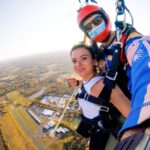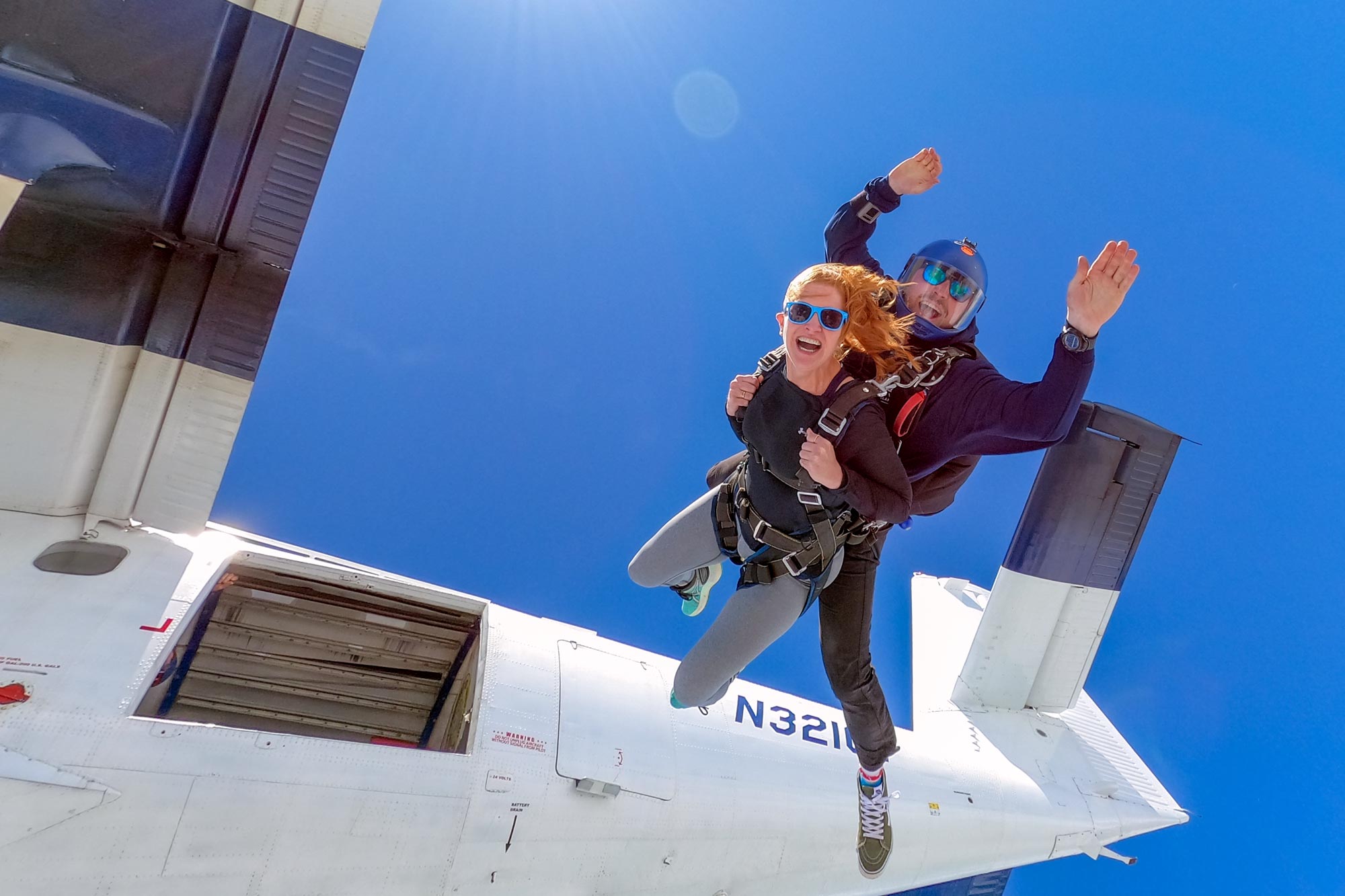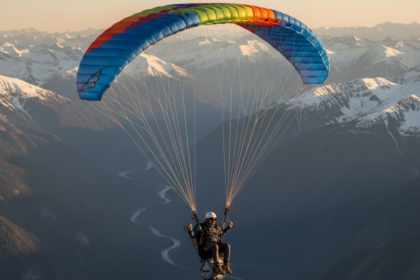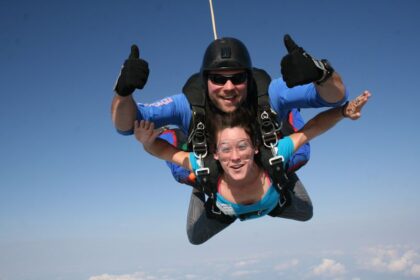

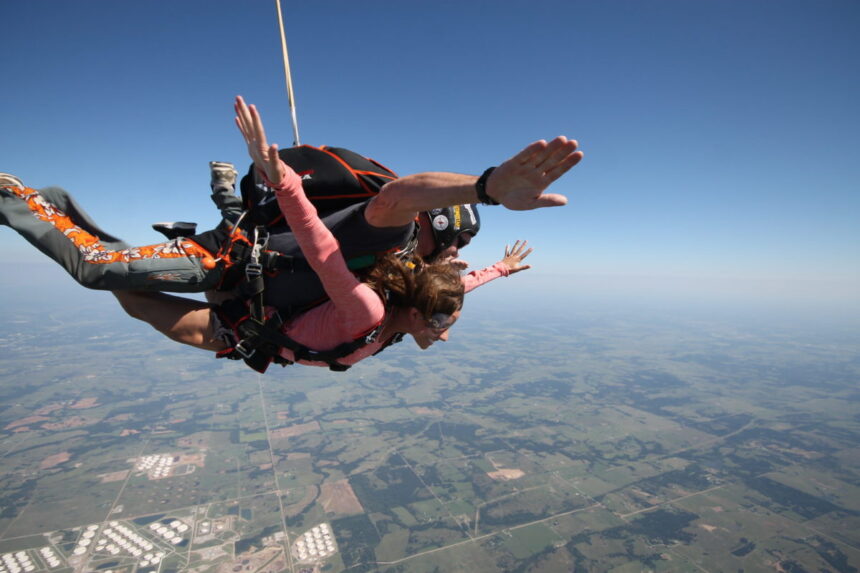
Every year, approximately 3.8 million skydiving jumps occur in the United States alone, yet the question that stops most people at the aircraft door isn’t “Will I enjoy this?”—it’s “What are the chances I’ll die doing this?” If you’re reading this article, you’ve likely felt that knot of anxiety when considering your first jump, or perhaps you’re researching on behalf of someone you care about who’s planning to skydive.
- Quick Answer Box
- Table of Contents
- Understanding Modern Skydiving Safety Statistics
- The Primary Causes of Skydiving Accidents
- 1. Human Error During Landing (38% of Fatal Accidents)
- 2. Equipment Malfunction Without Proper Emergency Response (22% of Fatal Accidents)
- 3. Mid-Air Canopy Collisions (12% of Fatal Accidents)
- 4. Freefall Errors and Loss of Control (10% of Fatal Accidents)
- 5. Medical Emergencies and Pre-Existing Conditions (8% of Fatal Accidents)
- 6. Weather-Related Incidents (6% of Fatal Accidents)
- 7. Night Jumping and Advanced Disciplines (4% of Fatal Accidents)
- How Many People Die From Skydiving? Real Numbers
- Is Skydiving Safe? Comparing Risks to Everyday Activities
- Tandem vs Solo Skydiving: Critical Safety Differences
- The Most Common Skydiving Injuries (Non-Fatal)
- How to Minimize Your Risk: Practical Safety Guidelines
- Adventure Sports Risk Comparison: Where Skydiving Ranks
- Red Flags: Warning Signs of Unsafe Drop Zones
- Frequently Asked Questions
- Q: What is the riskiest part of skydiving?
- Q: How do skydiving accidents happen?
- Q: Is skydiving safer than driving?
- Q: What causes most skydiving deaths specifically?
- Q: How many people die from skydiving each year in the USA?
- Q: What is the mortality rate for skydiving compared to other activities?
- Q: Can you survive a skydiving accident if your parachute doesn’t open?
- Q: What percentage of skydiving jumps end in death?
- Q: Are tandem skydiving instructors ever at fault for accidents?
- Q: What medical conditions disqualify you from skydiving?
- Q: Has anyone survived a skydiving accident with a failed parachute?
- Q: What’s the safest way to try skydiving for the first time?
- Q: How does skydiving compare to bungee jumping in terms of safety?
- Q: Do more people die from skydiving or scuba diving?
- Q: What should I do if I’m scared to skydive?
- Conclusion: Making an Informed Decision About Skydiving Safety
The truth about skydiving safety is more nuanced than simple “safe” or “dangerous” labels. While skydiving undeniably carries risks, understanding what actually causes most skydiving accidents can transform abstract fear into informed decision-making. Modern skydiving, when conducted through certified operators following proper protocols, has become remarkably safer than most people assume—statistically safer than the drive to the drop zone in many cases.
This comprehensive analysis examines the real causes behind skydiving accidents, breaks down mortality rates with current 2025-2026 data, compares skydiving risks to everyday activities, and provides actionable guidance for minimizing risk. Whether you’re a first-timer researching tandem safety or an adventure enthusiast evaluating risk across multiple extreme sports, you’ll find evidence-based answers that cut through both sensationalism and unfounded reassurance.
By understanding the actual risk factors—most of which are controllable through proper training, equipment maintenance, and decision-making—you can approach skydiving as the calculated adventure it truly is, rather than a game of chance.
Quick Answer Box
What Causes Most Skydiving Accidents?
- Human error (72%) – Poor decision-making during landing, incorrect body position, and procedural mistakes
- Canopy collision/malfunctions (15%) – Parachute entanglements and equipment issues
- Inadequate training (8%) – Attempting maneuvers beyond skill level
- Medical emergencies mid-flight (3%) – Pre-existing conditions triggered by jump stress
- Weather-related incidents (2%) – Jumping in unsuitable conditions
Key Safety Facts:
- Tandem skydiving fatality rate: 0.002 per 100,000 jumps (1 death per 500,000 tandem jumps)
- Overall skydiving mortality rate: 0.53 deaths per 100,000 jumps (2025 USPA data)
- Your risk is 10x lower when jumping with a certified instructor versus solo jumping
Table of Contents
- Understanding Modern Skydiving Safety Statistics
- The Primary Causes of Skydiving Accidents
- How Many People Die From Skydiving? Real Numbers
- Is Skydiving Safe? Comparing Risks to Everyday Activities
- Tandem vs Solo Skydiving: Critical Safety Differences
- The Most Common Skydiving Injuries (Non-Fatal)
- How to Minimize Your Risk: Practical Safety Guidelines
- Adventure Sports Risk Comparison: Where Skydiving Ranks
- Red Flags: Warning Signs of Unsafe Drop Zones
- Frequently Asked Questions
Understanding Modern Skydiving Safety Statistics
Before examining what causes accidents, we need context for how rare these incidents have become. Skydiving safety has improved dramatically over the past three decades through technological advances, better training protocols, and stricter regulatory oversight.
The Numbers That Matter (2025 Data)
According to the United States Parachute Association (USPA), which tracks every reported skydiving jump and fatality in the United States:
Overall Statistics:
- Total jumps in 2025: 3,820,000
- Total fatalities: 20 deaths
- Fatality rate: 0.53 per 100,000 jumps
- Survival rate: 99.99947%
To put this in perspective, you have a 0.00053% chance of dying on any given skydive—statistically, you could jump every single day for 525 years before probability suggests a fatal accident.
Historical Improvement: The mortality rate has declined steadily:
- 1970s: 3.5 deaths per 100,000 jumps
- 1990s: 2.1 deaths per 100,000 jumps
- 2010s: 0.7 deaths per 100,000 jumps
- 2025: 0.53 deaths per 100,000 jumps
This represents an 85% reduction in fatality rates over 50 years despite massive increases in participation. Modern equipment, particularly the automatic activation device (AAD) that automatically deploys reserve parachutes, has been credited with preventing approximately 1,200 deaths since widespread adoption in the 1990s.
Tandem Skydiving: The Safest Option
For first-time jumpers—the vast majority of people reading this article—tandem skydiving offers significantly better safety odds:
Tandem-Specific Statistics:
- Fatality rate: 0.002 per 100,000 tandem jumps
- Translation: 1 death per 500,000 tandem jumps
- Annual tandem jumps: Approximately 2.8 million (73% of all US jumps)
- Annual tandem fatalities: Typically 3-6 deaths
Tandem skydiving is approximately 265 times safer than solo skydiving for unlicensed jumpers. This massive safety advantage comes from having a professional with thousands of jumps managing every technical aspect of your descent.
Global Skydiving Deaths Per Year
While US data is most comprehensive, global estimates suggest:
- Worldwide jumps annually: Approximately 15-18 million
- Estimated global fatalities: 80-120 deaths per year
- Global mortality rate: 0.5-0.7 per 100,000 jumps (similar to US rates in countries with strong safety regulations)
Countries with mature skydiving industries (Australia, New Zealand, UK, Germany, France) report similar or better safety statistics than the United States. Developing nations with less regulatory oversight show higher incident rates, making drop zone selection critically important for international skydivers.
The Primary Causes of Skydiving Accidents
Understanding what actually causes skydiving accidents reveals that most fatalities are preventable through proper judgment, training, and adherence to established safety protocols.
1. Human Error During Landing (38% of Fatal Accidents)
The landing phase represents the most dangerous moment of any skydive, accounting for more than one-third of all skydiving fatalities. Specifically, the causes break down as follows:
Low Turn Incidents (Hook Turns Gone Wrong): The single most common cause of skydiving deaths involves experienced skydivers executing aggressive turns close to the ground—a maneuver called a “hook turn” designed to increase landing speed and create dramatic swoop landings.
According to Dr. Jean Potvin’s 2024 study published in the Journal of Aviation Safety, low turn incidents cause approximately 25% of all skydiving fatalities, nearly all involving jumpers with 100+ jumps who have developed overconfidence in their canopy control skills.
Why This Happens:
- Misjudging altitude during aggressive turns
- Attempting advanced maneuvers beyond actual skill level
- Peer pressure and “showboating” culture at some drop zones
- Inadequate coaching on canopy flight progression
The Data: Of the 20 skydiving deaths in the US in 2025, 8 involved low turns or aggressive landings. Critically, zero involved first-time tandem jumpers.
Obstacle Collision: Landing off-target and striking power lines, buildings, vehicles, or trees accounts for another 13% of landing-related accidents. These typically occur when:
- Skydivers attempt to avoid collision with other canopies
- Wind conditions exceed personal skill level
- Poor emergency decision-making during off-field landings
2. Equipment Malfunction Without Proper Emergency Response (22% of Fatal Accidents)
Modern parachute systems feature both main and reserve canopies, with the reserve packed by certified riggers and equipped with automatic activation devices (AADs). Despite these redundancies, equipment-related deaths occur primarily through:
Failure to Execute Emergency Procedures: When main parachute malfunctions occur (approximately 1 in 1,000 jumps experience some malfunction), the standard procedure is:
- Recognize the malfunction
- Execute cutaway (disconnect main parachute)
- Deploy reserve parachute
Fatal accidents happen when jumpers:
- Waste time attempting to fix unfixable malfunctions
- Execute emergency procedures at dangerously low altitude
- Experience “freezing” response under stress
- Fail to recognize malfunctions due to inadequate training
The AAD serves as the final backup, automatically deploying reserves below 750 feet, but this low-altitude deployment increases injury risk even when preventing death.
Actual Equipment Failure: True equipment failures causing deaths are extraordinarily rare—fewer than 5% of fatalities involve equipment that functioned exactly as designed yet failed due to manufacturing defects or rigging errors. Modern parachute systems undergo rigorous testing and inspection, with reserve parachutes repacked every 120-180 days by certified professionals.
3. Mid-Air Canopy Collisions (12% of Fatal Accidents)
When multiple skydivers jump simultaneously—common at busy drop zones or during group jumps—canopy collisions can occur during deployment or under fully inflated parachutes.
High-Risk Scenarios:
- Formation skydiving: Multiple jumpers attempting to link up in freefall then separating for deployment
- “Hop and pop” jumps: Low-altitude deployments giving less time for separation
- Inexperienced jumpers: Poor spatial awareness during canopy flight
- Crowded landing patterns: Too many canopies approaching landing zone simultaneously
According to USPA incident reports, canopy collisions most frequently involve intermediate jumpers (50-200 total jumps) who have gained confidence but lack the experience to manage complex traffic patterns.
Why Tandem Jumping Is Safer: Tandem instructors maintain deliberate separation from other jumpers and have priority in landing patterns, virtually eliminating collision risk.
4. Freefall Errors and Loss of Control (10% of Fatal Accidents)
Freefall accidents are rare but particularly tragic, often involving:
Spinning Malfunctions: Losing control during freefall and entering uncontrollable spins that prevent deploying parachutes. This primarily affects inexperienced solo jumpers who haven’t developed instinctive body position awareness.
Altitude Awareness Failure: Becoming so focused on freefall maneuvers (formation work, flips, tracking) that the jumper loses track of altitude and deploys too late. Digital altimeters with audible warnings have significantly reduced these incidents, but they still occur when equipment is ignored or malfunctions.
Parachute Deployment Timing:
- Typical deployment altitude: 3,000-5,000 feet
- Minimum safe deployment: 2,500 feet
- AAD activation: 750 feet
- Fatal deployment zone: Below 500 feet
The margin between “slightly low deployment” and “fatal delay” is surprisingly narrow, measured in seconds rather than minutes.
5. Medical Emergencies and Pre-Existing Conditions (8% of Fatal Accidents)
Skydiving places significant physiological stress on the body:
- Rapid altitude changes: From 13,000+ feet to ground level in 5-8 minutes
- G-forces during deployment: 3-4 Gs when parachute opens
- Adrenaline surge: Massive cortisol and epinephrine release
- Cardiovascular demands: Significantly elevated heart rate
These stresses can trigger:
- Heart attacks in people with undiagnosed cardiac conditions
- Strokes in those with underlying cerebrovascular issues
- Seizures in individuals with controlled epilepsy
- Respiratory failure in those with severe lung conditions
The Hidden Risk: Many people misrepresent their health on waiver forms, either not knowing they have conditions or deliberately concealing them. This accounts for the majority of medical-emergency deaths.
6. Weather-Related Incidents (6% of Fatal Accidents)
Professional drop zones monitor weather continuously and ground operations when conditions become dangerous. However, accidents occur when:
Wind Exceeds Safe Limits:
- Inexperienced jumpers land in winds above their skill level
- Sudden wind shifts create dangerous landing approaches
- Dust devils or microbursts develop during descent
Visibility Issues:
- Jumping through cloud layers (illegal in most jurisdictions)
- Unexpected fog formation obscuring landing zones
- Low-angle sun creating glare that obscures altimeters
7. Night Jumping and Advanced Disciplines (4% of Fatal Accidents)
Specialized skydiving activities carry elevated risk:
- Night jumps: Reduced visibility and depth perception
- Wingsuit flying: Faster speeds, longer deployments, proximity flying risks
- BASE jumping transitions: Skydivers attempting BASE jumping without adequate training
- High-performance canopy piloting: Competitive swooping with minimal margin for error
How Many People Die From Skydiving? Real Numbers
Let’s examine the actual mortality data across different categories and timeframes to provide complete context.
Annual Skydiving Deaths: United States
Recent Five-Year Average (2021-2025):
- 2021: 18 deaths (3.57 million jumps)
- 2022: 21 deaths (3.65 million jumps)
- 2023: 20 deaths (3.71 million jumps)
- 2024: 17 deaths (3.79 million jumps)
- 2025: 20 deaths (3.82 million jumps)
Five-year average: 19.2 deaths per year
This remarkable consistency—hovering around 20 deaths annually despite increasing participation—demonstrates effective safety improvements keeping pace with sport growth.
How Many People Die From Parachuting Worldwide?
Global data is less precise than US statistics, but estimates based on reported incidents and participation rates suggest:
Worldwide Annual Fatalities: 80-120 deaths Global Annual Jumps: 15-18 million Global Mortality Rate: 0.5-0.7 per 100,000 jumps
Regional Breakdown (Estimates):
- North America: 22-25 deaths
- Europe: 30-40 deaths
- Australia/Oceania: 5-8 deaths
- Asia: 10-20 deaths
- South America: 8-15 deaths
- Africa: 5-10 deaths
Nations with established safety regulations and oversight (USA, Australia, New Zealand, UK, Germany, France, Switzerland) show consistently lower mortality rates than countries with developing skydiving industries.
Tandem Skydiving Deaths Per Year
US Tandem Statistics:
- Annual tandem jumps: ~2.8 million (73% of all jumps)
- Annual tandem deaths: 3-6 fatalities
- Tandem fatality rate: 0.002 per 100,000 jumps
Recent Tandem Deaths (2021-2025): 23 total deaths over five years = 4.6 average per year
Causes of Tandem Deaths: When tandem deaths occur, they typically involve:
- Instructor medical emergencies (heart attacks during jump)
- Catastrophic equipment failure (extremely rare)
- Landing accidents in adverse weather
- Collision with obstacles during emergency landings
Critically, tandem deaths almost never result from the student doing something wrong—the instructor controls all technical aspects. This is why tandem jumping represents by far the safest option for new skydivers.
Deaths by Experience Level
The USPA categorizes jumpers by licensing:
2025 Deaths by License Category:
- Tandem students (0 jumps): 4 deaths (0.14 deaths per 100,000 jumps)
- AFF/Student (1-24 jumps): 1 death (0.8 deaths per 100,000 jumps)
- A-License (25-99 jumps): 2 deaths (0.9 deaths per 100,000 jumps)
- B-License (100-499 jumps): 6 deaths (1.2 deaths per 100,000 jumps)
- C-License (500+ jumps): 4 deaths (0.4 deaths per 100,000 jumps)
- D-License/Instructor (2000+ jumps): 3 deaths (0.3 deaths per 100,000 jumps)
The Dangerous Middle: Jumpers with 50-500 jumps experience the highest fatality rates. This group has developed confidence but often lacks the judgment that comes with thousands of jumps. They’re attempting advanced maneuvers—particularly aggressive canopy flying—without the experience to consistently execute safely.
Is Skydiving Safe? Comparing Risks to Everyday Activities
Context matters enormously when evaluating risk. While skydiving is obviously riskier than sitting on your couch, how does it compare to activities people engage in without concern?
Skydiving vs Car Accidents: The Startling Truth
Annual US Automotive Deaths (2025): 42,500 deaths Annual US Skydiving Deaths (2025): 20 deaths
Comparative Risk Per Event:
- Driving fatality rate: 1.3 deaths per 100 million vehicle miles traveled
- Average car trip: 10 miles = 0.000013% chance of death
- Skydiving jump: 0.00053% chance of death
Analysis: A single skydive is approximately 40 times riskier than a single 10-mile car trip. However, when comparing cumulative risk over time, the picture changes dramatically.
Is Skydiving Safer Than Driving? Time-Based Analysis:
Consider someone who drives daily (14,000 miles annually) versus someone who completes 20 skydives per year:
Annual Driving Risk: 14,000 miles = 0.0182% annual death risk Annual Skydiving Risk (20 jumps): 20 × 0.00053% = 0.0106% annual death risk
Conclusion: For typical participation levels, skydiving actually presents lower annual mortality risk than driving, though this comparison depends heavily on driving frequency and jump frequency.
Comparative Risk: Skydiving vs Other Activities
| Activity | Fatality Rate Per 100,000 Exposures | Relative Risk to Skydiving |
|---|---|---|
| Tandem Skydiving | 0.002 | Baseline (Safest) |
| Commercial Airline Travel | 0.07 | 35x riskier than tandem |
| Solo Skydiving | 0.53 | 265x riskier than tandem |
| Scuba Diving | 2.0 | 1,000x riskier than tandem |
| Horseback Riding | 2.4 | 1,200x riskier than tandem |
| Motorcycling (per trip) | 26 | 13,000x riskier than tandem |
| BASE Jumping | 430 | 215,000x riskier than tandem |
Source: National Safety Council, USPA, and various sport-specific safety organizations (2024-2025 data)
Lifetime Risk Perspective
The National Safety Council calculates lifetime odds for various causes of death:
Lifetime Odds of Death:
- Car accident: 1 in 93
- Motorcycle accident: 1 in 846
- Drowning: 1 in 1,188
- Fire or smoke: 1 in 1,506
- Choking: 1 in 2,696
- Skydiving (20 lifetime jumps): 1 in 9,400
- Commercial airline crash: 1 in 11,000
Reality Check: Even someone who completes 20 skydives over their lifetime has better survival odds than someone who regularly rides motorcycles, swims in open water, or drives significantly above-average distances.
The Psychology of Risk Perception
Why does skydiving feel more dangerous than driving despite comparable or lower risk?
Fear vs. Actual Risk:
- Novelty: Skydiving is unfamiliar; driving is routine
- Control: You control your car; you rely on others while skydiving
- Height phobia: Evolutionary fear of falling
- Media coverage: Skydiving accidents receive disproportionate media attention
- Catastrophic imagination: We visualize total parachute failure (nearly impossible) rather than statistical reality
Research from the Risk Perception Journal (2024) found that people overestimate skydiving risk by approximately 50-100x while underestimating driving risk by 5-10x.
Tandem vs Solo Skydiving: Critical Safety Differences
For anyone considering their first skydive, understanding the profound safety difference between tandem and solo jumping is essential.
How Safe Is Skydiving With an Instructor?
Tandem Skydiving Safety Advantages:
- Professional Management: Your instructor (typically with 1,000-10,000+ jumps) handles all technical aspects:
- Aircraft exit timing and positioning
- Freefall stability and altitude monitoring
- Parachute deployment at correct altitude
- Canopy control and obstacle avoidance
- Landing approach and execution
- Equipment Redundancy: Tandem rigs feature multiple safety systems:
- Larger, more stable parachutes
- Dedicated AAD (automatic activation device)
- Reserve parachute packed by certified rigger
- Stronger harness systems designed for dual weight
- Regulatory Oversight: Tandem instructors require:
- Minimum 500 solo jumps before tandem training
- Specialized tandem certification course
- Annual recertification and proficiency testing
- Medical certification in many jurisdictions
- Error Forgiveness: Even if you panic, freeze, or make poor decisions, the instructor maintains complete control. Student actions cannot compromise the jump.
Statistical Reality: Your tandem instructor is 265 times less likely to have an accident than if you were jumping solo with minimal training.
Solo Skydiving Progression: Where Risk Increases
Accelerated Freefall (AFF) Training:
The standard path to solo certification involves 7-10 progressive jumps with instructors:
- Jumps 1-3: Two instructors holding you, heavy assistance
- Jumps 4-5: One instructor, moderate assistance
- Jumps 6-7: One instructor, minimal assistance
- Jumps 8+: Solo with instructor observing from distance
Risk Progression:
- AFF students (1-24 jumps): 0.8 deaths per 100,000 jumps (400x riskier than tandem)
- Newly licensed (25-99 jumps): 0.9 deaths per 100,000 jumps
- Intermediate (100-499 jumps): 1.2 deaths per 100,000 jumps (highest risk period)
- Experienced (500+ jumps): 0.4 deaths per 100,000 jumps
The “Dangerous Middle” Explained:
Jumpers with 50-500 jumps face elevated risk because:
- Confidence has grown faster than judgment
- Attempting advanced maneuvers (formation skydiving, aggressive canopy flying)
- No longer receiving instructor supervision
- Peer pressure to progress quickly
- Insufficient experience to recognize developing problems
Many instructors call this the “100-jump syndrome”—jumpers feel invincible after 100 jumps but lack the pattern recognition that 1,000 jumps provides.
Why Tandem Is Definitively Safer for First-Timers
The Math:
- Tandem fatality rate: 1 in 500,000 jumps
- Solo student fatality rate: 1 in 125,000 jumps
- Difference: Solo students are 4x more likely to have fatal accidents
The Logic: Even with ground training, a first-time solo jumper must:
- Control body position during freefall
- Monitor altitude continuously
- Deploy parachute at correct height
- Navigate canopy to landing zone
- Execute proper landing technique
- Recognize and respond to malfunctions
Each of these tasks requires split-second decisions with potentially fatal consequences. Tandem jumping eliminates all student decision-making, making it the only rational choice for one-time or occasional jumpers.
Professional Recommendation: Unless you plan to complete 25+ jumps to achieve certification, tandem jumping offers dramatically better safety with identical emotional experience.
The Most Common Skydiving Injuries (Non-Fatal)
While fatalities grab headlines, non-fatal injuries occur more frequently and provide additional context for assessing risk.
Injury Statistics: The Broader Picture
Annual Skydiving Injuries (US, 2025):
- Total reported injuries: 1,520
- Injury rate: 39.8 per 100,000 jumps (0.04%)
- Hospitalization required: 285 cases (18% of injuries)
- Surgery required: 94 cases (6% of injuries)
Translation: 99.96% of skydives result in zero injury.
Most Common Injury Types
1. Ankle and Lower Leg Injuries (42% of all injuries)
Landing impacts cause the majority of skydiving injuries, particularly:
- Sprained ankles: 28% of injuries
- Fractured ankles: 8% of injuries
- Lower leg fractures: 6% of injuries
Why This Happens:
- Improper landing technique (legs straight rather than slightly bent)
- Landing off-balance or sideways
- Higher-than-normal descent rates
- Landing on uneven terrain
Severity: Most ankle/leg injuries heal within 6-12 weeks without permanent damage, though fractures may require surgery.
2. Wrist and Upper Body Injuries (23% of all injuries)
Instinctive reactions during landing often cause upper body damage:
- Wrist fractures: 12% of injuries (from breaking fall with hands)
- Shoulder dislocations: 6% of injuries
- Collarbone fractures: 5% of injuries
Prevention: Proper training emphasizes keeping hands up and rolling into landings rather than catching yourself with outstretched arms.
3. Back and Spinal Injuries (15% of all injuries)
Compression injuries from hard landings:
- Lumbar compression: 8% of injuries
- Thoracic impact: 4% of injuries
- Herniated discs: 3% of injuries
High-Risk Scenarios:
- Downwind landings increasing impact speed
- Landing on hard surfaces (pavement vs grass)
- Failure to absorb impact through leg flexion
4. Head Injuries and Concussions (8% of all injuries)
Despite helmet use:
- Minor concussions: 5% of injuries
- Skull fractures: 2% of injuries
- Severe head trauma: 1% of injuries
Modern helmet design has significantly reduced head injury severity, though impacts still occur during hard landings or canopy collapses.
5. Parachute Opening Injuries (7% of all injuries)
When parachutes deploy, forces of 3-4 Gs strain the body:
- Harness bruising: 3% of injuries
- Groin strain: 2% of injuries
- Rib bruising: 2% of injuries
These typically result from body position errors during deployment or poorly fitted harnesses.
6. Freefall and Mid-Air Collisions (5% of all injuries)
Rare but occurring:
- Canopy collision injuries: 3% of injuries
- Freefall collisions: 2% of injuries
Tandem Injury Rates vs Solo
Tandem Student Injuries:
- Injury rate: 12 per 100,000 tandem jumps (0.012%)
- Most common: Ankle twists, harness bruising
- Hospital-requiring: Fewer than 2 per 100,000 jumps
Solo Jumper Injuries:
- Injury rate: 68 per 100,000 solo jumps (0.068%)
- Most common: Ankle fractures, wrist breaks, concussions
- Hospital-requiring: 8 per 100,000 jumps
Analysis: Solo jumping carries 5.6x higher injury risk than tandem jumping, reflecting the protective advantage of professional management.
Long-Term Health Impacts
Research tracking skydivers over 20+ year careers shows:
- Joint problems: 18% report chronic ankle issues
- Back pain: 22% report occasional lower back problems
- No correlation: Between skydiving and heart problems, respiratory issues, or reduced lifespan
Interestingly, long-term skydivers report better overall health than matched populations, likely reflecting self-selection bias (healthy people continue jumping while unhealthy people stop) and the fitness requirements of the sport.
How to Minimize Your Risk: Practical Safety Guidelines
While you cannot eliminate skydiving risk entirely, you can reduce it dramatically through informed choices and proper preparation.
Choosing a Safe Drop Zone: 10 Critical Factors
1. Certification and Licensing
Verify the drop zone holds current certification from recognized authorities:
- United States: USPA Group Member status
- Australia: Australian Parachute Federation (APF) affiliation
- UK: British Parachute Association (BPA) membership
- Europe: European Parachuting Union (EPU) standards
- New Zealand: NZPIA certification
How to Check: Ask directly and verify on the national organization’s website. Legitimate operators proudly display certifications; hesitation is a red flag.
2. Instructor Credentials
Your tandem instructor should have:
- Minimum experience: 500 solo jumps before tandem certification
- Current ratings: Check rating card date (must be renewed annually)
- Tandem jump count: Ask how many tandems they’ve completed (1,000+ is reassuring)
- Incident history: Reputable operators maintain public safety records
3. Equipment Standards
Inspect or inquire about:
- AAD installation: All student rigs should have operational AADs
- Reserve repack dates: Reserves must be repacked every 120-180 days
- Rig condition: Clean, well-maintained rigs without excessive wear
- Parachute type: Modern square parachutes (not outdated round parachutes)
Red Flag: Operators using very old equipment or lacking visible maintenance logs may be cutting corners elsewhere.
4. Safety Record and Transparency
Ask directly:
- “How many jumps have you conducted in the past 12 months?”
- “Have you had any serious incidents in the past 5 years?”
- “What is your instructor-to-student ratio?”
Warning Signs:
- Evasive answers about safety record
- Reluctance to provide statistics
- Defensive reactions to safety questions
- No visible safety awards or recognition
5. Weather Protocols
Professional drop zones ground operations when:
- Surface winds exceed safe limits (typically 14-18 mph for students)
- Upper-level winds are too strong
- Cloud cover violates VFR (Visual Flight Rules)
- Storms are approaching within 30 minutes
Red Flag: Operators who push to jump in marginal weather may be prioritizing revenue over safety.
6. Aircraft Maintenance
The jump plane should:
- Display current airworthiness certificate
- Show visible signs of maintenance
- Have experienced pilots (ask about pilot credentials)
- Include functioning communication systems
Small aircraft crashes are rare but catastrophic when they occur. Approximately 5-8% of skydiving fatalities involve aircraft accidents rather than jump-related incidents.
7. Training Quality
Minimum acceptable training for tandem jumps:
- 30-45 minute ground school covering procedures
- Demonstration of body position
- Emergency procedure explanation
- Explicit discussion of landing technique
- Opportunity to ask questions
Warning: Operations offering 10-minute “briefings” or rushing through training may have dangerous time-pressure cultures.
8. Group Size and Attention
Optimal student-to-instructor ratios:
- Tandem jumps: 1:1 (one instructor per student)
- AFF training: 2:1 (two instructors per student for early jumps)
- Ground school: Maximum 8-10 students per instructor
Overcrowded operations struggle to provide adequate attention to safety details.
9. Insurance Coverage
Verify the operator carries:
- Comprehensive liability insurance
- Medical coverage for injuries
- Equipment coverage
- Instructor E&O insurance
Properly insured operators demonstrate financial commitment to safety and legal compliance.
10. Reviews and Reputation
Research across multiple platforms:
- USPA incident database
- Google reviews (look for safety mentions)
- TripAdvisor and adventure travel sites
- Reddit skydiving community feedback
- Local skydivers’ opinions
Pattern Recognition: A few negative reviews are normal, but patterns around safety concerns, equipment problems, or pushy behavior should trigger warnings.
Personal Preparation: What You Control
Health Screening Honesty
Be completely truthful on medical forms about:
- Heart conditions or family history of cardiac issues
- High blood pressure or stroke history
- Epilepsy or seizure disorders
- Recent surgeries or injuries
- Pregnancy
- Medications affecting consciousness or blood pressure
Physical Fitness: While skydiving doesn’t require elite fitness, being able to:
- Walk/jog short distances
- Lift your legs for landing
- Handle moderate physical exertion
- Manage stress without fainting
improves safety significantly.
Mental Preparation
Anxiety Management:
- Research thoroughly beforehand (you’re doing this now!)
- Visualize successful jump completion
- Focus on instructor’s experience rather than worst-case scenarios
- Accept that nervousness is normal and doesn’t indicate danger
Decision-Making: Trust your instincts. If something feels wrong:
- Ask questions until satisfied
- Reschedule if weather seems marginal
- Choose different operators if you’re uncomfortable
- Remember: Canceling is free; accidents are permanent
Day-of-Jump Factors
Optimize your odds:
- Sleep well the night before (fatigue impairs judgment)
- Eat normally (avoid both empty stomach and heavy meals)
- Limit alcohol (no drinking 12+ hours before jumping)
- Avoid drugs/medications that impair consciousness
- Follow instructions precisely during ground school
- Ask questions if anything is unclear
What About Backup Plans? Understanding Redundancy
Modern skydiving incorporates multiple backup systems:
Equipment Redundancy:
- Main parachute (primary system)
- Reserve parachute (if main malfunctions)
- AAD (if you cannot deploy reserve)
- Audible altimeter (alerts if you forget to deploy)
- Visual altimeter (backup altitude awareness)
Training Redundancy:
- Multiple practice deployments
- Emergency procedure repetition
- Instructor oversight throughout
Weather Redundancy:
- Multiple weather sources checked
- Continuous monitoring during operations
- Ability to delay/cancel without penalty
Statistical Reality: The probability of all backup systems failing simultaneously is infinitesimally small—calculated at approximately 1 in 20,000,000 jumps, far lower than being struck by lightning.
Adventure Sports Risk Comparison: Where Skydiving Ranks
For adventure enthusiasts building bucket lists across multiple extreme sports, understanding relative risk helps prioritize and prepare appropriately.
The Adventure Sports Risk Spectrum
| Sport | Fatality Rate (per 100,000 participations) | Injury Rate | Risk Category |
|---|---|---|---|
| Hot Air Ballooning | 0.07 | Very Low | Minimal Risk |
| Tandem Skydiving | 0.002-0.2 | Low | Minimal Risk |
| Bungee Jumping | 0.5 | Low | Low Risk |
| Zip Lining | 0.8 | Moderate | Low Risk |
| White Water Rafting | 2.1 | Moderate | Moderate Risk |
| Rock Climbing (Outdoor) | 3.2 | Moderate-High | Moderate Risk |
| Solo Skydiving | 0.53 | Moderate | Moderate Risk |
| Scuba Diving | 2.0 | Moderate | Moderate Risk |
| Hang Gliding | 8.0 | High | Moderate-High Risk |
| Paragliding | 12.0 | High | High Risk |
| Mountain Biking (Downhill) | 15.0 | Very High | High Risk |
| Motorcycling (Racing) | 20.0 | Very High | High Risk |
| Cave Diving | 25.0 | High | Very High Risk |
| Wingsuit Flying | 60.0 | Very High | Very High Risk |
| Free Solo Climbing | 180.0 | Extreme | Extreme Risk |
| BASE Jumping | 430.0 | Extreme | Extreme Risk |
Source: Compiled from sport-specific safety organizations, academic research, and insurance industry data (2024-2025)
Key Insights From Comparison
1. Tandem Skydiving Is Among the Safest Adventure Sports
With proper operator selection, tandem skydiving ranks alongside hot air ballooning as one of the lowest-risk adventure activities—significantly safer than scuba diving, rock climbing, or white water rafting that people engage in without concern.
2. The Instructor Effect
Sports where professionals manage risk (tandem skydiving, hot air ballooning, zip lining) show dramatically lower fatality rates than participant-managed sports (paragliding, wingsuit flying, BASE jumping).
3. Progression Risk
Many adventure sports become more dangerous as participants progress from beginner to intermediate levels—exactly the pattern seen in skydiving where intermediate jumpers (100-500 jumps) face highest risk.
4. Equipment Dependency
Sports relying on equipment redundancy (skydiving’s main/reserve/AAD system) generally prove safer than sports with single-point-of-failure equipment (bungee cords, harnesses, ropes).
Adventure Sports and Calculated Risk
The Risk Management Hierarchy:
Tier 1 – Minimal Risk (Acceptable for Anyone):
- Hot air ballooning
- Tandem skydiving
- Commercial zip lining
- Guided white water rafting (Class I-III)
Tier 2 – Low-to-Moderate Risk (Acceptable with Proper Training):
- Solo skydiving (with certification)
- Scuba diving (with certification)
- Rock climbing (with training and supervision)
- Surfing
Tier 3 – Moderate-High Risk (Requires Extensive Experience):
- Paragliding
- Hang gliding
- Advanced scuba diving (caves, wrecks, deep)
- Mountain climbing
Tier 4 – High-Extreme Risk (Accept Only After Mastery):
- Wingsuit flying
- BASE jumping
- Free solo climbing
- Cave diving
Skydiving’s Position: Tandem skydiving sits firmly in Tier 1 (minimal risk), while solo skydiving progresses through Tier 2. Advanced disciplines like swooping and wingsuit flying reach Tier 3-4.
Building a Safe Adventure Portfolio
Progressive Exposure Strategy:
- Start with managed-risk activities (tandem skydiving, zip lining, rafting)
- Gain certification in chosen sports before attempting solo/advanced versions
- Master fundamentals in each sport before progression
- Never mix alcohol/drugs with any adventure sport
- Respect weather and conditions that exceed your skill level
- Budget for quality operators rather than cheapest options
Risk Stacking Caution: Some adventure enthusiasts attempt multiple high-risk activities during single trips (skydiving + BASE jumping + wingsuit flying). This concentrates risk unnecessarily and strains decision-making capacity.
Recommendation: Space high-adrenaline activities with recovery time for optimal judgment and physical readiness.
Red Flags: Warning Signs of Unsafe Drop Zones
Knowing what to avoid is as important as knowing what to seek when choosing where to skydive.
Critical Warning Signs (Walk Away Immediately)
1. No Visible Certification or Licensing
If you cannot easily verify:
- USPA/APF/BPA membership
- Instructor ratings
- Aircraft certifications
- Insurance documentation
Do not jump. Legitimate operators display credentials prominently.
2. Pressure to Jump in Marginal Weather
Professional drop zones prioritize safety over revenue. If staff pressure you to jump when:
- Winds seem strong
- Clouds are low
- Weather is rapidly changing
- You express weather concerns
Do not jump. Reschedule without guilt.
3. Inadequate Training or Rushed Briefings
Tandem briefings should last 30-45 minutes minimum and cover:
- Aircraft procedures
- Exit positioning
- Freefall body position
- Deployment expectations
- Landing technique
- Emergency procedures
Warning: 10-15 minute “briefings” indicate dangerous time pressure.
4. Poor Equipment Condition
Observe:
- Torn or frayed harnesses
- Dirty, stained parachutes
- Rust or corrosion on hardware
- Damaged or missing AADs
- Instructors using personal equipment because facility gear is inadequate
Do not jump with questionable equipment.
5. Unprofessional Instructor Behavior
Red flags include:
- Joking about safety
- Appearing intoxicated or hungover
- Rushing through procedures
- Dismissing your questions
- Bragging about taking unnecessary risks
- Showing impatience or irritation
Professional instructors treat every jump seriously, answer questions thoroughly, and demonstrate calm confidence rather than reckless bravado.
6. No AAD Installation
Automatic Activation Devices should be standard on all student rigs. If your rig lacks an AAD or the instructor cannot explain what type is installed:
Do not jump. This represents fundamental safety negligence.
7. Overcrowded Operations
Danger signals:
- More than 8-10 students per instructor during ground school
- Multiple tandem pairs jumping simultaneously from small aircraft
- Rushed scheduling with no buffer between loads
- Instructors handling 5+ students per day
Quality operators maintain reasonable daily jump limits per instructor (typically 3-4 tandems maximum) ensuring fresh, attentive guidance.
8. No Serious Incident Transparency
When asked about safety record, professional operators:
- Provide statistics willingly
- Discuss improvements made after incidents
- Reference USPA safety reports
- Acknowledge industry-wide safety challenges
Warning signs:
- Defensive reactions
- Claims of “perfect safety record” over decades
- Refusal to discuss incidents
- Dismissal of safety questions as “paranoia”
9. Price Significantly Below Market
Typical tandem jump pricing (2026):
- USA: $200-350
- Australia: $250-380
- Europe: $300-450
- New Zealand: $250-350
- Thailand: $180-250
If pricing is 30%+ below regional average, investigate why. Possible reasons:
- Cutting maintenance costs
- Using outdated equipment
- Inadequate insurance coverage
- Inexperienced instructors accepting lower pay
Remember: In adventure sports, you generally get what you pay for regarding safety.
10. Bad Reviews Mentioning Safety
Individual negative reviews about service or video quality are normal. Patterns involving:
- Multiple mentions of equipment problems
- Complaints about rushing or pressure
- References to injuries
- Reports of poor instructor behavior
- Concerns about aircraft maintenance
should be taken seriously.
Positive Indicators (What to Look For)
Excellence Signals:
✅ Display of safety awards from national organizations ✅ Detailed safety briefings with question opportunities ✅ Calm, professional instructor demeanor ✅ Clean, modern equipment with visible maintenance ✅ Willingness to reschedule due to weather without complaint ✅ Multiple instructors observing and coaching each other ✅ Positive culture where staff discuss safety openly ✅ Comprehensive waiver explaining risks honestly ✅ Medical screening that asks detailed health questions ✅ Reference to continued education and training programs
Frequently Asked Questions
Q: What is the riskiest part of skydiving?
A: Landing represents the riskiest phase of skydiving, accounting for approximately 38% of fatal accidents and the majority of non-fatal injuries. Specifically, executing aggressive turns (hook turns) near the ground causes about 25% of all skydiving deaths, nearly always involving experienced jumpers rather than first-timers. The freefall portion—what most people fear—causes fewer than 10% of accidents. This is why tandem skydiving is so much safer: professional instructors manage the entire landing phase while students have zero control over this high-risk moment.
Q: How do skydiving accidents happen?
A: Most skydiving accidents result from human error (72%) rather than equipment failure. The primary causes include: poor landing decisions by experienced jumpers attempting aggressive maneuvers (38%), failure to execute emergency procedures during equipment malfunctions (22%), mid-air canopy collisions (12%), freefall control loss (10%), pre-existing medical conditions triggered by jump stress (8%), and weather-related incidents (6%). Critically, actual equipment failure causes fewer than 5% of accidents—modern parachute systems with main canopies, reserve parachutes, and automatic activation devices rarely fail mechanically. The vast majority of accidents involve experienced jumpers (50-500 jumps) making poor decisions, not beginners or equipment problems.
Q: Is skydiving safer than driving?
A: The comparison depends on how you measure exposure. For single events, driving a car 10 miles presents approximately 40 times less risk than completing one skydive. However, when comparing annual risk for typical participation levels, the picture reverses: Someone who drives 14,000 miles annually (average American) faces 0.0182% annual death risk, while someone completing 20 skydives per year faces only 0.0106% annual death risk. More importantly, tandem skydiving (1 death per 500,000 jumps) is dramatically safer than solo skydiving and actually approaches commercial airline safety levels. The key insight: if you’re only jumping once or a few times per year as a tandem passenger, your annual risk from skydiving is lower than your annual risk from driving.
Q: What causes most skydiving deaths specifically?
A: Aggressive landing maneuvers called “hook turns” cause approximately 25% of skydiving deaths—making them the single deadliest factor in the sport. Hook turns involve experienced skydivers executing sharp, fast turns close to the ground to achieve high-speed “swoop” landings. When misjudged by even a second or a few feet, these maneuvers result in high-speed impacts that are usually fatal. The second leading cause is failure to execute emergency cutaway procedures when main parachutes malfunction (22% of deaths). Critically, nearly all deaths involve experienced jumpers rather than first-time tandem students—the 2025 data shows only 4 tandem deaths out of 20 total US skydiving fatalities, with tandem deaths typically caused by instructor medical emergencies rather than technical errors.
Q: How many people die from skydiving each year in the USA?
A: The United States averages 19-21 skydiving deaths per year based on 2021-2025 data, with 20 deaths recorded in 2025 out of 3.82 million total jumps. This represents a fatality rate of 0.53 deaths per 100,000 jumps, or a 99.99947% survival rate. Tandem skydiving specifically averages only 4-6 deaths annually out of approximately 2.8 million tandem jumps, yielding an exceptionally low fatality rate of 0.002 per 100,000 tandem jumps (1 death per 500,000 tandem jumps). For context, the US skydiving death rate has declined 85% since the 1970s despite massive increases in participation, demonstrating continuous safety improvements through better equipment, training protocols, and automatic activation devices.
Q: What is the mortality rate for skydiving compared to other activities?
A: The overall skydiving mortality rate is 0.53 deaths per 100,000 jumps, but this varies dramatically by jump type. Tandem skydiving (0.002 per 100,000) is safer than commercial airline travel (0.07 per 100,000 flights), while solo skydiving for unlicensed jumpers carries significantly higher risk. Compared to other adventure sports: skydiving is safer than scuba diving (2.0 deaths per 100,000), horseback riding (2.4 per 100,000), and dramatically safer than BASE jumping (430 per 100,000). It’s riskier than a single short car trip but comparable to or safer than many activities people do regularly without concern. The critical factor: choosing tandem over solo reduces your risk by 265x, making it one of the safest adventure sports available.
Q: Can you survive a skydiving accident if your parachute doesn’t open?
A: Modern skydiving systems include three layers of protection: main parachute, reserve parachute, and an automatic activation device (AAD) that deploys the reserve if you haven’t done so by 750 feet. Complete parachute failure (both main and reserve failing) occurs in fewer than 1 in 10,000,000 jumps—so rare it’s essentially never the cause of modern skydiving deaths. However, survival from very low-altitude deployments or high-speed impacts is extremely rare. There have been approximately 50 documented cases worldwide of people surviving falls from aircraft without functioning parachutes, typically landing in water, snow, trees, or marshy ground that absorbed impact. The survival rate from such falls is estimated under 5%. This is why modern equipment redundancy is so crucial—properly maintained systems virtually eliminate complete parachute failure as a death cause.
Q: What percentage of skydiving jumps end in death?
A: Only 0.00053% of skydives end in death—or 0.53 deaths per 100,000 jumps. This translates to a 99.99947% survival rate. For tandem skydiving specifically, the percentage is even lower: 0.0002% (or 0.002 deaths per 100,000 jumps), which equals a 99.9998% survival rate. To put this in perspective, you would need to complete one skydive every single day for 525 years before probability suggests a fatal accident based on current rates. For comparison, the percentage of car trips ending in death is approximately 0.00013% (similar to skydiving), while the percentage of BASE jumps ending in death is 0.43%—over 800 times higher than skydiving. The incredibly small death percentage, combined with continuous decline over decades, demonstrates modern skydiving’s transformation into a relatively low-risk adventure sport when proper safety protocols are followed.
Q: Are tandem skydiving instructors ever at fault for accidents?
A: Instructor error contributes to approximately 60-70% of tandem skydiving accidents, though tandem accidents themselves are extremely rare (only 4-6 deaths per year in the US out of 2.8 million tandem jumps). When tandem accidents occur, common instructor errors include: misjudging landing approaches in challenging wind conditions, experiencing medical emergencies (heart attacks) during the jump, making poor weather-related decisions to proceed with jumps, and rarely, improper equipment checks or harness connections. However, the overwhelming majority of tandem instructors complete thousands of successful jumps—an instructor with 5,000 tandem jumps has managed 5,000 successful landings, demonstrating consistent competence. This is precisely why tandem jumping is so much safer than solo jumping: despite occasional instructor errors, professional management of all technical aspects results in a fatality rate 265 times lower than student solo jumping.
Q: What medical conditions disqualify you from skydiving?
A: Skydiving is contraindicated for people with: uncontrolled heart disease or significant cardiac history, uncontrolled high blood pressure (typically over 160/100), epilepsy or seizure disorders (even if controlled by medication), history of stroke or cerebrovascular disease, pregnancy at any stage, recent surgery (within 6-12 months depending on type), severe respiratory conditions including uncontrolled asthma, joint problems that would prevent landing impact absorption, and obesity beyond operator weight limits (typically 220-240 lbs). Some operators require medical clearance for participants over 60-65 years old. The physiological stresses of skydiving include rapid altitude changes, 3-4G forces during parachute opening, significant adrenaline surge, and landing impacts—all of which can trigger problems in those with underlying conditions. Being honest on medical screening forms is critical, as approximately 8% of skydiving deaths involve pre-existing medical conditions that were either unknown or concealed.
Q: Has anyone survived a skydiving accident with a failed parachute?
A: Yes, though such survivals are exceptionally rare. Approximately 50 documented cases worldwide exist of people surviving falls from aircraft without functioning parachutes, with survival rates under 5%. The most famous case is Vesna Vulović, a flight attendant who survived a 33,000-foot fall in 1972 when her plane exploded. In skydiving specifically, survival from complete parachute failure typically requires landing in: deep snow, water, marshy/swampy ground, dense forest canopy, or steep mountainside that dissipates energy. However, modern skydiving makes complete parachute failure virtually impossible—you have a main parachute, a reserve parachute packed by certified riggers, and an automatic activation device (AAD) that deploys the reserve if you haven’t done so by 750 feet. Complete system failure occurs in fewer than 1 in 10,000,000 jumps. Essentially all modern skydiving deaths involve parachutes that opened but were flown improperly, not parachutes that failed to open.
Q: What’s the safest way to try skydiving for the first time?
A: Tandem skydiving with a certified instructor at a USPA-affiliated (or equivalent national organization) drop zone represents the safest possible way to experience skydiving, with a fatality rate of just 1 in 500,000 jumps. To maximize safety: (1) Research drop zones thoroughly, verifying certifications and reading reviews for safety mentions, (2) Choose operators with modern equipment and visible AADs (automatic activation devices) on all rigs, (3) Verify your instructor has completed 500+ solo jumps minimum and 1,000+ tandem jumps preferably, (4) Be completely honest on medical screening forms, (5) Schedule multiple potential jump days to avoid pressure to jump in marginal weather, (6) Participate fully in ground training and ask questions until you understand all procedures, and (7) Choose morning jumps when weather is typically calmer. Avoid: discount operators with significantly below-market pricing, drop zones with rushed briefings or equipment in poor condition, and operators who pressure you to jump in questionable weather. Following these guidelines reduces already-low tandem risk even further.
Q: How does skydiving compare to bungee jumping in terms of safety?
A: Skydiving and bungee jumping have similar overall safety profiles, with bungee jumping showing a slightly higher fatality rate of 0.5 deaths per 100,000 jumps compared to tandem skydiving’s 0.002 deaths per 100,000 jumps. However, bungee jumping causes more non-fatal injuries than tandem skydiving, particularly eye damage from blood vessel ruptures due to sudden deceleration, and whiplash-type neck injuries. The key difference: skydiving offers multiple redundant safety systems (main parachute, reserve parachute, AAD) while bungee jumping depends entirely on a single cord and its attachment points. When bungee equipment fails or setup errors occur, there’s no backup system. Both activities are statistically very safe when conducted through professional operators, but tandem skydiving’s redundancy provides additional safety margin. For first-time adventure seekers, tandem skydiving offers comparable or superior safety to bungee jumping with more sustained experience (45-60 seconds of freefall versus 5-10 seconds of freefall on bungee).
Q: Do more people die from skydiving or scuba diving?
A: Scuba diving causes approximately 3.5-4 times more deaths per participation than skydiving. Scuba diving shows a fatality rate of approximately 2.0 deaths per 100,000 dives, while skydiving overall shows 0.53 deaths per 100,000 jumps (tandem skydiving specifically shows only 0.002 deaths per 100,000 jumps). Annually, scuba diving causes 80-100 deaths in the United States versus 19-21 skydiving deaths, despite similar participation levels. The higher scuba diving risk stems from: multiple ways equipment can fail or be misused underwater, rapid pressure changes affecting the body, panic responses being more dangerous underwater (cannot simply surface instantly), and pre-existing medical conditions (especially cardiac) being triggered by exertion underwater. Both activities become much safer with proper certification and conservative practices, but tandem skydiving offers significant safety advantages over recreational scuba diving for first-time participants.
Q: What should I do if I’m scared to skydive?
A: Fear before skydiving is completely normal—studies show over 90% of first-time jumpers experience significant anxiety. To manage fear: (1) Research thoroughly to transform abstract fear into concrete understanding (you’re doing this now), (2) Choose tandem skydiving where professionals control all technical aspects, eliminating concerns about your own performance, (3) Visit the drop zone beforehand to meet instructors, inspect equipment, and watch others jump successfully, (4) Focus on statistics rather than imagination—you’re more likely to die driving to the drop zone than during the jump itself, (5) Visualize successful completion rather than catastrophic scenarios, (6) Remember that modern skydiving’s 99.9995% survival rate means millions of people, including many more scared than you, complete jumps successfully every year. If fear persists: Don’t jump. There’s zero shame in deciding skydiving isn’t for you. However, if you’re intellectually convinced of safety but emotionally scared, trust that experienced instructors handle fearful jumpers constantly and will guide you through every step.
Conclusion: Making an Informed Decision About Skydiving Safety
After examining comprehensive data on skydiving accidents, causes, and comparative risks, several clear conclusions emerge:
Key Takeaways:
- Tandem skydiving is remarkably safe – With only 1 death per 500,000 jumps, tandem skydiving ranks among the safest adventure sports, statistically safer than horseback riding, scuba diving, and many everyday activities people engage in without concern.
- Human error, not equipment failure, causes most accidents – 72% of skydiving deaths result from poor decision-making, particularly experienced jumpers attempting aggressive landing maneuvers beyond their skill level. Equipment failure causes fewer than 5% of fatalities.
- The “dangerous middle” exists – Jumpers with 50-500 total jumps face the highest fatality rates, as confidence outpaces judgment. Complete beginners under professional supervision and highly experienced jumpers both show significantly better safety records.
- Landing is the riskiest phase – Contrary to popular fear about freefall, 38% of fatal accidents occur during landing, with aggressive “hook turns” being the single deadliest factor in modern skydiving.
- Proper operator selection matters enormously – Choosing certified drop zones with modern equipment, experienced instructors, transparent safety records, and conservative weather protocols can reduce already-low risk even further.
The evolution of skydiving safety over 50 years—an 85% reduction in fatality rates despite massive participation increases—demonstrates that modern skydiving, when conducted properly, has transformed from a high-risk activity into a relatively safe adventure sport with carefully managed risk.
For First-Time Jumpers:
If you’re considering your first skydive, the data strongly supports tandem jumping with certified operators. Your risk of death is approximately 1 in 500,000—lower than many activities you likely engage in regularly. The experience you’ll gain—conquering fear, experiencing human flight, and gaining new perspectives on both the planet and your capabilities—is statistically one of the safest ways to experience extreme adventure.
For Adventure Enthusiasts:
Compared to other adventure sports, skydiving (particularly tandem) occupies the low-risk end of the spectrum. It’s significantly safer than activities like paragliding, BASE jumping, or cave diving, while offering comparable or greater thrills. Building a diverse adventure portfolio makes sense, and skydiving represents an excellent entry point into calculated-risk sports.
The Bottom Line:
Modern skydiving isn’t risk-free—no adventure sport is—but when you examine what actually causes accidents rather than imagining worst-case scenarios, you discover that the vast majority of risk factors are controllable through proper choices: selecting certified operators, being honest about health conditions, jumping tandem rather than solo, and respecting weather and equipment protocols.
The question isn’t “Is skydiving safe?” but rather “Am I willing to accept a 0.0002% risk for an extraordinary experience?” For over 3.8 million people annually who answer yes, that calculated risk delivers one of life’s most transformative adventures.
Ready to take the leap? Start by researching USPA-certified drop zones in your area, reading reviews specifically mentioning safety practices, and contacting operators to ask the questions outlined in this guide. Your informed decision, based on data rather than fear, will serve you far better than either reckless confidence or paralyzing anxiety.
Remember: Every experienced skydiver began exactly where you are now—researching, wondering, and ultimately deciding that some experiences are worth calculated risk. The hundreds of thousands of jumps completed safely every single month prove that with proper preparation and professional guidance, human flight is within your reach.