

Skydiving is one of the most thrilling adventure sports in the world. The idea of jumping from an aircraft thousands of feet above the ground naturally raises questions about safety and risk.
- Key Skydiving Safety Statistics in 2026
- Why the Death Rate in Skydiving Is Lower Than People Expect
- Understanding How Skydiving Accidents Happen
- Tandem Skydiving Safety for First-Time Jumpers
- How Skydiving Equipment Reduces Risk
- The Role of Training and Certification
- How Weather Conditions Affect Skydiving Safety
- Comparing Skydiving Risk to Everyday Activities
- Why Safety Records Continue to Improve
- Tips to Make Your First Skydive Safer
- Is Skydiving Safe for Beginners?
- Frequently Asked Questions
- Final Thoughts
Many first-time jumpers search online to understand the death rate in skydiving before booking their first experience. While skydiving involves risk like any extreme sport, modern training, equipment, and safety regulations have made it significantly safer than most people expect.
This guide explains the real statistics, how accidents happen, how the industry reduces risk, and what beginners should know before making their first jump.
Key Skydiving Safety Statistics in 2026

Modern skydiving safety has improved dramatically due to better equipment, automated systems, and strict training standards.
Important statistics include:
- The death rate in skydiving is roughly 0.28 fatalities per 100,000 jumps in recent global reports.
- More than 3 to 4 million skydives are completed each year worldwide.
- Tandem skydiving (the type beginners do) has the lowest accident rate.
- Fatal incidents are far more common among experienced solo jumpers, not first-timers.
To understand this better, consider that the odds of dying during a skydive are roughly 1 in 350,000 jumps.
For perspective:
| Activity | Estimated Risk Level |
|---|---|
| Skydiving | 1 in ~350,000 jumps |
| Driving a car (annual risk) | Much higher |
| Scuba diving | Higher than skydiving |
| Mountaineering | Significantly higher |
These numbers show why skydiving is often called an extreme sport with controlled risk.
Why the Death Rate in Skydiving Is Lower Than People Expect
Skydiving may appear dangerous because of the height and speed involved, but modern systems are designed with multiple safety layers.
Three major improvements have helped reduce the death rate in skydiving:
- Advanced parachute design
- Automatic activation devices (AAD)
- Structured instructor training
Each jump also includes strict pre-jump equipment checks and weather monitoring.
Because of these measures, accidents today are far less common than they were decades ago.
Understanding How Skydiving Accidents Happen
Most skydiving accidents do not happen because of equipment failure. Instead, investigations show that the majority of incidents occur due to human decision-making during advanced jumps.
Common Causes of Skydiving Fatalities
1. High-Speed Landing Maneuvers
Experienced jumpers sometimes perform aggressive turns near the ground to increase landing speed. This maneuver, known as canopy swooping, carries additional risk.
2. Low Altitude Deployment
Waiting too long to open the parachute leaves less time to correct issues.
3. Lack of Experience with Advanced Equipment
Some jumpers transition to smaller, faster parachutes too quickly.
4. Weather Misjudgment
Strong winds or turbulence can complicate landings.
For beginner tandem jumps, these risks are significantly reduced because the instructor manages the equipment and landing.
Tandem Skydiving Safety for First-Time Jumpers
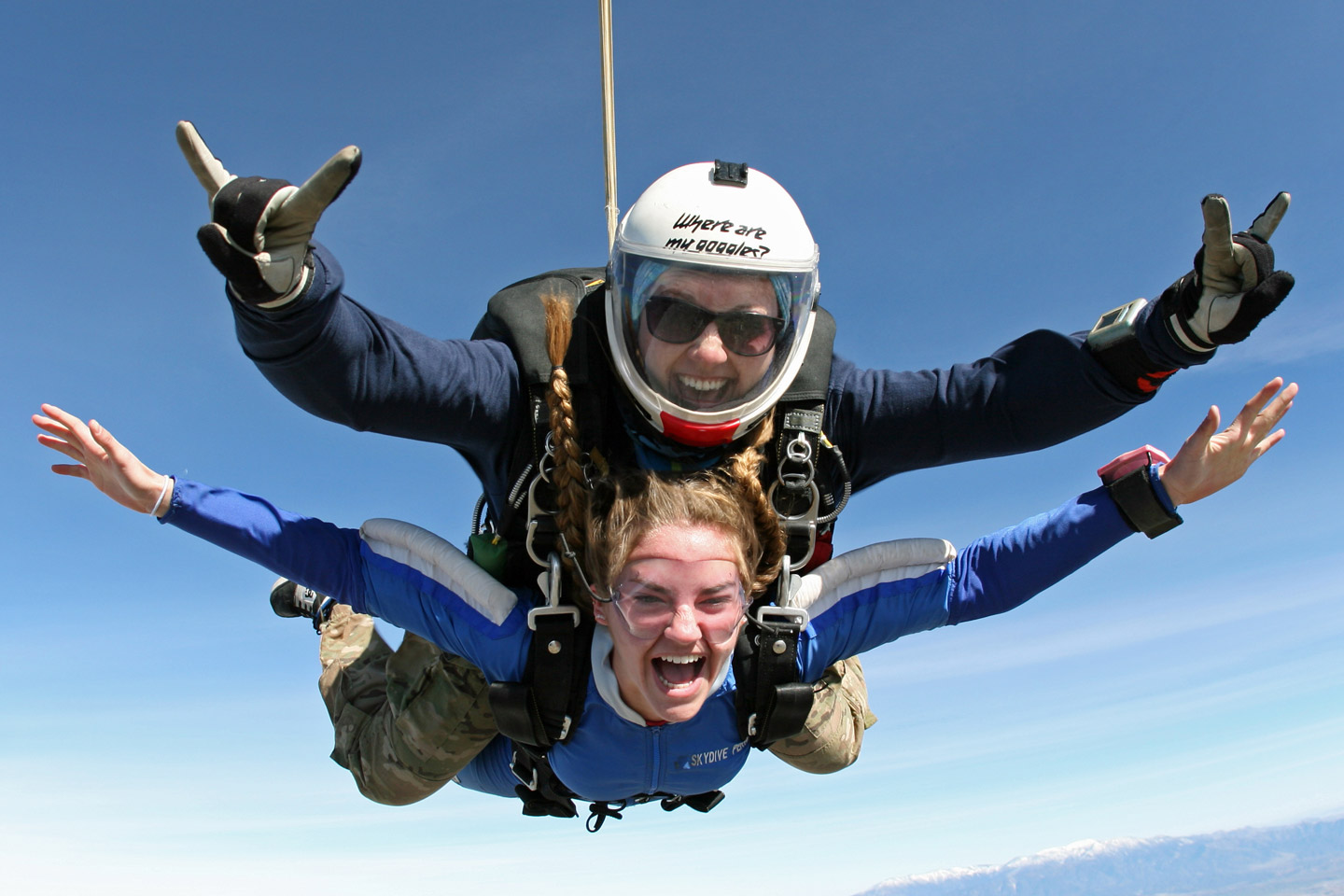
Most beginners experience skydiving through tandem jumps, where a certified instructor is attached to the student via a harness system.
Tandem skydiving includes several safety advantages.
Instructor Control
The instructor handles:
- Parachute deployment
- Navigation
- Landing
Automatic Safety Systems
Modern tandem rigs include automatic activation devices that deploy the reserve parachute if necessary.
Equipment Redundancy
Every skydive includes:
- A main parachute
- A reserve parachute
- A computerized safety backup system
Because of these protections, tandem skydiving has one of the lowest fatality rates in adventure sports.
How Skydiving Equipment Reduces Risk
The technology behind skydiving gear has improved dramatically over the last few decades.
Modern parachute systems are engineered with multiple layers of safety.
Parachute Systems
Each skydiver carries two parachutes:
- Main parachute used during normal jumps
- Reserve parachute used if the main canopy fails
Reserve parachutes are packed by certified professionals and inspected regularly.
Automatic Activation Devices (AAD)
AAD technology monitors altitude and speed. If a skydiver is still in freefall at a critical altitude, the device automatically deploys the reserve parachute.
This system has saved thousands of lives worldwide.
Altimeters and Visual Indicators
Skydivers also use wrist-mounted or helmet-mounted altimeters to monitor altitude throughout the jump.
The Role of Training and Certification
Professional training programs are another reason the death rate in skydiving has decreased.
Skydiving organizations require strict certification before allowing solo jumps.
Training for Beginner Skydivers
First-time jumpers typically go through:
- Ground training sessions
- Equipment familiarization
- Safety procedure instruction
- Emergency response practice
These sessions usually last 30–60 minutes before the jump.
Advanced Training Programs
For people who want to skydive independently, programs such as accelerated freefall training teach:
- Stable body positioning
- Emergency procedures
- Safe canopy control
Training significantly reduces risk during independent jumps.
How Weather Conditions Affect Skydiving Safety

Weather is one of the most important safety factors in skydiving.
Professional drop zones carefully monitor weather conditions before allowing aircraft takeoff.
Conditions That Cancel Skydives
Skydiving operations may pause due to:
- High winds
- Storm activity
- Poor visibility
- Heavy cloud cover
By avoiding dangerous conditions, skydiving centers maintain excellent safety records.
Comparing Skydiving Risk to Everyday Activities
People often assume skydiving is extremely dangerous, but statistics show the risk is often lower than expected.
Risk Comparison
| Activity | Estimated Risk |
|---|---|
| Skydiving | Very low per jump |
| Motorcycle riding | Much higher |
| Long-distance driving | Higher |
| Rock climbing | Higher |
| BASE jumping | Extremely high |
BASE jumping, which involves jumping from buildings or cliffs, carries much higher fatality rates because there is far less time to deploy parachutes.
Skydiving, by contrast, occurs from 10,000 to 15,000 feet, giving ample time for controlled deployment.
Why Safety Records Continue to Improve
The skydiving industry has focused heavily on improving safety over the last several decades.
Several factors contribute to declining accident rates.
Technology Innovation
Equipment is lighter, stronger, and more reliable than older designs.
Better Training
Training programs emphasize risk management and decision-making.
Drop Zone Regulations
Professional drop zones enforce strict operational standards.
Safety Culture
Experienced skydivers actively promote safety practices for new participants.
Tips to Make Your First Skydive Safer
If you are planning your first jump, there are several ways to reduce risk and maximize safety.
Choose a Reputable Drop Zone
Look for locations with:
- Certified instructors
- Modern equipment
- Strong safety records
Follow Instructor Guidance
Always follow the instructions provided during training and the jump.
Avoid Risky Behavior
Do not attempt advanced maneuvers during your first jump.
Stay Calm and Relaxed
A relaxed body position helps maintain stability during freefall.
Is Skydiving Safe for Beginners?
For most healthy adults, tandem skydiving is considered a safe and controlled introduction to the sport.
Safety procedures, modern equipment, and professional instructors work together to minimize risk.
The biggest surprise for many first-time jumpers is that the experience feels smooth and peaceful rather than chaotic.
Frequently Asked Questions
What is the actual death rate in skydiving?
The estimated death rate in skydiving is approximately 0.28 fatalities per 100,000 jumps, making it safer than many other adventure activities.
Is tandem skydiving safer than solo skydiving?
Yes. Tandem skydiving is significantly safer because a trained instructor manages the equipment and landing process.
Do parachutes fail often?
Parachute failures are extremely rare. Even if the main parachute fails, skydivers have a reserve parachute and automatic activation device for backup.
How high do skydivers jump from?
Most tandem skydives occur between 10,000 and 15,000 feet, providing enough altitude for safe deployment and controlled descent.
What is the safest type of skydiving?
Tandem skydiving is widely considered the safest option for beginners because experienced instructors control the jump.
Final Thoughts
The death rate in skydiving is far lower than most people expect. Thanks to advanced equipment, strict training, and improved safety culture, skydiving has become one of the most regulated adventure sports.
While no extreme activity is completely risk-free, millions of people safely enjoy skydiving every year.
Dubai is one of the most searched skydiving locations in the world, which is why people often ask about its safety record. If you want a deeper breakdown of incidents, regulations, and real statistics, you can check the full report on skydive dubai death rate today here
Understanding location-specific safety data can help first-time jumpers make informed decisions.
For many participants, the experience is not only thrilling but also life-changing—offering a unique perspective of the world from thousands of feet above the ground.