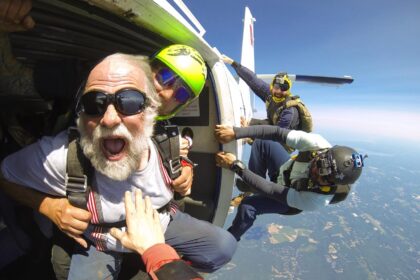


Standing at the open door of an airplane 13,000 feet above the ground is a moment that changes you. Your heart pounds, your palms sweat, and somewhere deep in your mind, a voice asks the question that brought you to this article: how many people die a year from parachuting?
- Understanding the Real Statistics Behind Parachuting Deaths
- Why Most People Overestimate Parachuting Risk
- Who Actually Dies From Parachuting and Why
- How Modern Safety Systems Have Transformed Parachuting
- Comparing Parachuting Risk to Other Adventure Activities
- What Makes Tandem Parachuting Especially Safe
- Common Myths About Parachuting Deaths Debunked
- What You Can Do to Minimize Your Risk
- The Role of Regulation in Reducing Parachuting Deaths
- Real Stories Behind the Statistics
- Frequently Asked Questions About Parachuting Deaths
- Making Your Decision Based on Facts, Not Fear
I remember meeting James at a dropzone last spring. He had driven three hours to finally conquer his lifelong fear of heights. He told me he had spent months researching parachuting deaths, reading accident reports, and trying to understand the real risks. What he discovered completely changed his perspective. The numbers weren’t just lower than he expected, they were shockingly different from what popular culture had led him to believe.
This article exists because too many people make decisions based on fear rather than facts. Whether you’re considering your first jump, supporting a loved one who wants to try parachuting, or simply curious about the reality behind the headlines, understanding the actual statistics can transform your entire perspective on this incredible sport.
Understanding the Real Statistics Behind Parachuting Deaths
When we talk about how many people die a year from parachuting, we need to look at reliable data from organizations that track every single jump. The United States Parachute Association maintains comprehensive records of all skydiving activity at member dropzones across the country, and their transparency about safety statistics sets the standard for the entire industry.
Recent data shows that in the United States alone, approximately 3.3 to 4 million parachute jumps occur annually. Out of these millions of descents, fatal accidents remain remarkably rare. The average number of parachuting fatalities in the United States typically ranges between 13 and 21 deaths per year, depending on various factors including weather patterns, the number of jumps performed, and the types of activities skydivers engage in.
To put these numbers into proper context, we need to calculate the fatality rate per jump. When you divide the number of deaths by the total number of jumps, you get approximately 0.39 fatalities per 100,000 jumps. This translates to a 99.9996 percent survival rate. Think about that for a moment. Out of every million jumps performed, only about four result in a fatality.
These statistics represent all types of parachuting, from first-time tandem jumps with an instructor to highly experienced skydivers performing advanced maneuvers. When we isolate the numbers for tandem jumps, which is how most people experience their first parachute descent, the safety record becomes even more impressive. Tandem jumps have a fatality rate of approximately one death per 500,000 jumps.
Why Most People Overestimate Parachuting Risk
There’s a fascinating psychological phenomenon at work when people think about parachuting deaths. Our brains are wired to overestimate risks associated with activities that feel unfamiliar or scary, while underestimating risks from everyday activities we’ve normalized. This cognitive bias explains why many people fear parachuting more than statistically more dangerous activities they do without a second thought.
Media coverage plays a significant role in shaping these perceptions. When a parachuting accident occurs, it often makes headlines because it fits a dramatic narrative. However, the millions of successful jumps that happen every year receive no media attention whatsoever. This creates a distorted view where accidents seem more common than they actually are.
Compare this to car accidents, which claim over 40,000 lives annually in the United States alone. Because driving is so common, individual car accidents rarely make national news unless they involve unusual circumstances. Yet you’re statistically far more likely to be involved in a fatal car accident during your drive to the dropzone than during your actual parachute jump. The car vs skydiving death statistics risk comparison reveals just how much safer parachuting has become relative to activities we engage in daily.
Another factor is the visual drama of parachuting. Jumping from an airplane looks dangerous, and our evolutionary instincts scream warnings about falling from heights. These instincts served our ancestors well, but they don’t account for modern equipment, training, and safety systems. Your body doesn’t know the difference between jumping without a parachute and jumping with a state-of-the-art parachute system backed by multiple redundant safety features.
The fear of losing control also amplifies perceived risk. In a car, you’re at the steering wheel. When parachuting, especially for tandem jumps, you’re trusting your life to someone else and to equipment you don’t fully understand. This loss of control feels frightening even when the actual risk is minimal. Understanding the statistics helps rational thinking override these emotional responses.
Who Actually Dies From Parachuting and Why
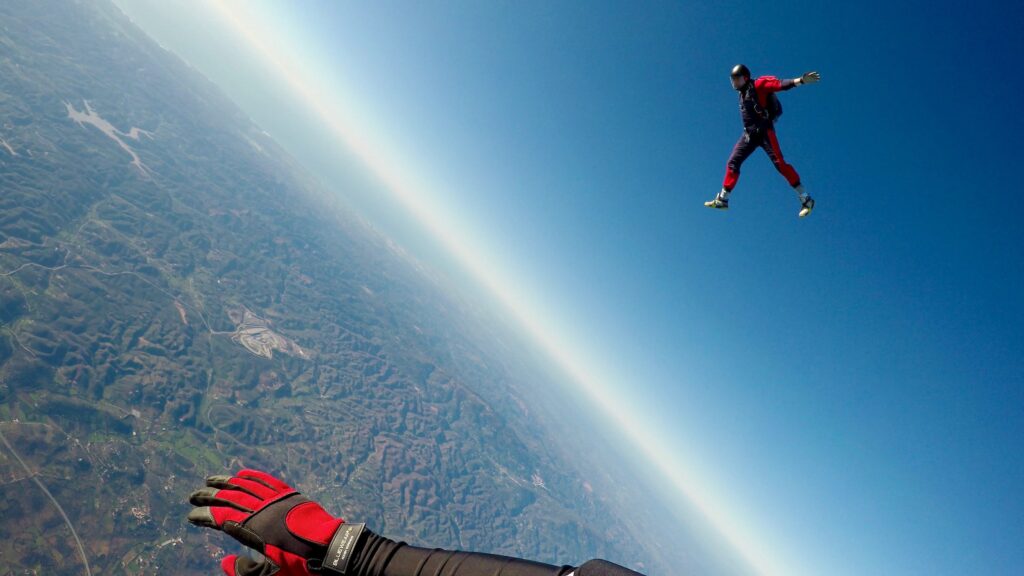
This is where the statistics become really interesting and informative. When you examine who dies from parachuting accidents, a clear pattern emerges that should be reassuring if you’re considering your first jump. The vast majority of parachuting fatalities do not involve first-time tandem jumpers following standard procedures with certified instructors.
Instead, most parachuting deaths involve experienced jumpers with hundreds or thousands of jumps under their belts. These aren’t accidents caused by equipment failure or lack of knowledge. They typically involve experienced parachutists pushing boundaries, attempting advanced maneuvers, or making judgment errors during high-risk activities.
According to detailed accident analysis, many fatal incidents involve swooping, which is a high-speed, low-altitude turn performed by advanced jumpers to achieve dramatic landings. While swooping looks spectacular, it requires split-second timing and leaves minimal room for error. Other common factors include experienced jumpers flying high-performance parachutes that are more responsive but less forgiving than student equipment.
Wingsuit flying represents another category where fatal accidents are more common. Wingsuits allow skydivers to glide horizontally through the air at high speeds, but they also introduce additional complexity and risk. Similarly, canopy formations where multiple parachutists fly their open canopies in close proximity require exceptional skill and create opportunities for collision if someone makes a mistake.
What does this mean for someone considering their first jump? It means the conservative, controlled approach used for tandem students is incredibly effective at preventing accidents. You won’t be swooping, flying a high-performance canopy, wearing a wingsuit, or attempting formations. You’ll be doing exactly what millions of other first-time jumpers have done safely: exiting the aircraft at proper altitude, freefalling in a stable position, deploying a parachute designed for reliability over performance, and landing in a designated area under the complete control of a certified instructor.
The specific causes of parachuting fatalities also tell an important story. Equipment malfunction accounts for a very small percentage of deaths, thanks to modern design standards and rigorous maintenance requirements. When equipment issues do occur, reserve parachutes and automatic activation devices provide backup systems that usually prevent fatal outcomes.
Human error remains the leading cause of parachuting accidents, but this error almost always involves decisions made by experienced jumpers rather than students following instructor guidance. Poor judgment about weather conditions, failure to maintain proper altitude awareness, incorrect emergency procedures, or attempting maneuvers beyond one’s skill level all fall into this category. These are not factors that affect tandem students who aren’t making any of these decisions.
How Modern Safety Systems Have Transformed Parachuting
If you had asked about parachuting deaths thirty or forty years ago, the statistics would have painted a very different picture. The dramatic improvement in safety over recent decades stems from revolutionary advances in equipment design, training methods, and safety culture within the parachuting community.
The single most important safety innovation is the automatic activation device, or AAD. This small electronic computer measures your altitude and descent rate hundreds of times per second. If the device detects that you’re still in freefall below a certain altitude, typically around 750 feet, it automatically fires a cutting device that deploys your reserve parachute. This system has saved countless lives in situations where jumpers became unconscious, disoriented, or otherwise unable to deploy their parachute manually.
Modern parachute designs represent another quantum leap forward in safety. Today’s canopies are engineered with characteristics that make them far more forgiving than older models. They’re designed to open reliably even in less-than-perfect conditions. The materials are stronger and more durable, with built-in redundancies that minimize the risk of catastrophic failure. The rigging systems include multiple checkpoints that make it virtually impossible to pack a parachute incorrectly without noticing the error.
Reserve parachutes have also evolved significantly. Every parachuting system includes a reserve parachute that’s packed by certified riggers and inspected on a regular schedule, typically every 120 to 180 days whether it’s been used or not. These reserve parachutes are specifically designed for reliability under emergency conditions and are rigorously tested to ensure they’ll open quickly and fly predictably.
Training methods have kept pace with equipment improvements. Video debriefing allows students to see exactly what they did right and wrong on each jump, accelerating the learning process and helping identify problems before they become dangerous. Simulators let people practice emergency procedures repeatedly in a zero-risk environment. The quality of instruction has improved as teaching methods have become more standardized and evidence-based.
Weather monitoring technology has also contributed to safety improvements. Dropzones now have access to sophisticated weather data that helps them make informed decisions about when conditions are safe for jumping. Wind meters, cloud height monitors, and weather radar all provide real-time information that prevents jumps in marginal conditions.
Perhaps most importantly, the culture within the parachuting community has shifted toward prioritizing safety over bravado. Experienced jumpers are more willing to speak up when they see unsafe behavior. Dropzones are more proactive about grounding jumpers who show poor judgment. The entire community has embraced a mindset where it’s not only acceptable but expected to refuse a jump if conditions don’t feel right.
Comparing Parachuting Risk to Other Adventure Activities
Putting parachuting deaths in context requires comparing them to other activities, both everyday and adventurous. When you do this comparison, parachuting emerges as surprisingly safe relative to many activities that people don’t think twice about.
Let’s start with other adventure sports. Rock climbing results in approximately 30 deaths per year in the United States, despite having far fewer total participants than parachuting. Scuba diving claims around 80 to 100 lives annually. Motorcycle riding, which many people do regularly for transportation or recreation, results in over 5,000 deaths per year. Even bicycle riding causes more fatalities annually than parachuting, with roughly 800 to 1,000 deaths per year.
When we look at common recreational activities, the comparison becomes even more striking. Swimming and water-related activities cause approximately 3,500 to 4,000 drowning deaths annually in the United States. Lightning strikes kill an average of 20 people per year, which is roughly the same as parachuting deaths despite lightning being a completely random hazard rather than a chosen activity.
The skydiving deaths per year worldwide data shows similar patterns in other countries with active parachuting communities. The safety record is consistently strong across developed nations with proper regulatory oversight and established training standards.
This doesn’t mean these other activities are terribly dangerous or that you should avoid them. It simply demonstrates that we’ve normalized certain risks while being disproportionately afraid of others. Your daily commute, your weekend bike ride, or your swim at the beach all carry risk that you’ve accepted as reasonable. Parachuting, when conducted properly with certified instructors and modern equipment, carries comparable or lower risk per instance of participation.
What Makes Tandem Parachuting Especially Safe
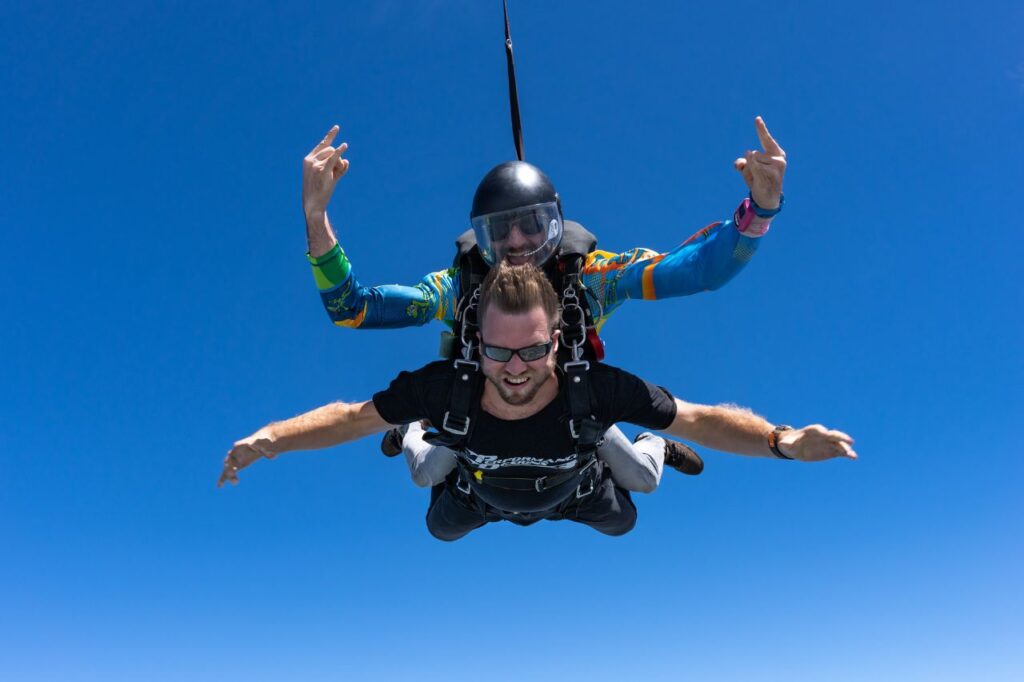
If you’re considering your first jump, you’ll almost certainly do a tandem jump where you’re securely attached to an experienced instructor throughout the entire experience. Understanding why tandem jumping is the safest form of parachuting can help ease your concerns about that first leap.
Tandem instructors must meet rigorous certification requirements. Before someone can take passengers on tandem jumps, they must first earn their basic parachuting license through dozens of solo jumps. Then they need to accumulate several hundred additional jumps to build experience. Only then can they begin tandem instructor training, which involves both ground school and supervised evaluation jumps. The entire process typically takes several years and weeds out anyone who doesn’t demonstrate both technical skill and excellent judgment.
The equipment used for tandem jumping is specifically designed with extra safety margins. Tandem parachute systems are larger and stronger than solo systems, built to handle the weight of two people with plenty of reserve capacity. Every tandem rig includes a main parachute, a reserve parachute, and an automatic activation device. The harness system that connects you to your instructor is designed with multiple redundant attachment points and heavy-duty components.
Perhaps most importantly, the tandem system removes nearly all decision-making from the student. Your instructor chooses when weather conditions are acceptable. They decide when to exit the aircraft. They control the freefall position. They deploy the parachute. They fly the approach and landing pattern. You’re literally along for the ride, attached to someone who has done this hundreds or thousands of times.
This complete control by an expert is why tandem jumping has such an exceptional safety record. The fatality rate for tandem students is approximately one in 500,000 jumps, making it statistically one of the safest ways to experience extreme sports. You’re not learning to parachute on your first jump, you’re experiencing it under the complete management of a professional whose only job is to get both of you safely back to the ground.
The pre-jump training you receive as a tandem student is deliberately simple because your role is deliberately simple. You’ll learn proper body position for exit and freefall, where to place your hands, and how to land. That’s essentially it. You don’t need to know how to deploy the parachute, how to handle malfunctions, or how to navigate to the landing area. Your instructor handles all of that.
Common Myths About Parachuting Deaths Debunked
Let’s address some persistent myths about parachuting deaths that cause unnecessary fear and misunderstanding about the actual risks involved.
Myth number one: parachutes frequently fail to open. In reality, modern parachute deployment systems are incredibly reliable. The failure rate for main parachutes is extremely low, well under one percent of jumps. Even when a main parachute does malfunction, which might mean anything from opening slightly off-heading to developing line twists, these situations are usually manageable. And if they’re not manageable, you have a reserve parachute and an automatic activation device as backup systems.
Myth number two: most parachuting deaths involve first-time jumpers. As we’ve discussed, the statistics show exactly the opposite. First-time tandem jumpers have an exceptional safety record. Most fatalities involve experienced jumpers with hundreds or thousands of jumps who are attempting advanced maneuvers or flying high-performance equipment.
Myth number three: parachuting is getting more dangerous as more people try it. Actually, the opposite is true. Despite more people parachuting than ever before, the fatality rate per jump has steadily decreased over the decades. Improved equipment, better training, and stronger safety culture have all contributed to making the sport safer even as participation has increased.
Myth number four: you’ll definitely get hurt even if you survive. While minor injuries like bruises or sprains can occasionally occur, serious injuries are quite rare in modern parachuting. The vast majority of jumps result in completely uneventful landings with no injury whatsoever. Landing techniques and equipment design have both improved to minimize impact forces.
Myth number five: if anything goes wrong, you’re doomed. Modern parachuting systems include multiple layers of redundancy specifically designed to handle problems. If your main parachute malfunctions, you have emergency procedures, a reserve parachute, and an automatic activation device. Problems that would have been fatal decades ago are now routinely resolved without incident.
What You Can Do to Minimize Your Risk
While tandem parachuting is already very safe, there are steps you can take to minimize your risk even further. These aren’t complicated measures, they’re simply smart choices about how, when, and where you jump.
First, choose your dropzone carefully. Look for facilities that are members of the United States Parachute Association or the equivalent organization in your country. USPA membership indicates that a dropzone follows established safety standards and maintains appropriate insurance. Check online reviews, but focus on comments about safety and professionalism rather than just fun factor. A great dropzone prioritizes safety even when it means saying no to jumpers or grounding operations due to weather.
Second, be completely honest during the health screening process. Dropzones ask about medical conditions for good reason. Certain health issues can increase risk or make parachuting inadvisable. If you have any concerns about whether a medical condition affects your ability to jump safely, get clearance from your doctor before booking. Don’t hide health information because you’re worried about being turned away. The screening process exists to protect you.
Third, pay close attention during training. Even though the pre-jump briefing for tandem students is relatively short, it covers important information about body position, what to expect, and how to land. Ask questions if anything is unclear. Your instructor wants you to understand what’s happening and will appreciate your engagement with the safety information.
Fourth, respect weather conditions and trust your instructor’s judgment. If you arrive at the dropzone and weather looks marginal, don’t pressure your instructor or the dropzone staff to take you up. Professional instructors will err on the side of caution and will gladly reschedule your jump rather than operate in questionable conditions. This conservative approach to weather decision-making is one of the most important factors in maintaining parachuting’s strong safety record.
Fifth, follow your instructor’s directions exactly during the jump. Your instructor will give you specific guidance about body position during exit, what to do during freefall, and how to position yourself for landing. Listen carefully and do precisely what they tell you. They have the experience to handle any situation that might arise, but they need you to cooperate with their instructions.
Finally, be in the right mental state for jumping. If you’re extremely anxious to the point where you can’t focus on instructions, or if you’ve consumed alcohol or medications that affect judgment, it’s better to reschedule. Parachuting requires you to be alert and able to follow directions, even though your instructor is handling the technical aspects.
The Role of Regulation in Reducing Parachuting Deaths
One of the key reasons parachuting has become progressively safer is the comprehensive regulatory framework that governs the sport. Understanding this oversight helps explain why modern parachuting deaths are so rare compared to earlier decades.
In the United States, the Federal Aviation Administration regulates certain aspects of parachuting, particularly those related to aircraft operations and airspace use. Pilots must meet specific certification requirements for dropping parachutists. Aircraft must meet maintenance standards. Dropzones must operate within designated airspace and coordinate with air traffic control when necessary.
The United States Parachute Association serves as the sport’s primary self-governing body, setting detailed standards for training, equipment, and dropzone operations. USPA certifies instructors at multiple levels, from basic coaches to senior tandem instructors. They maintain the Integrated Student Program, which standardizes training for people learning to jump solo. They publish the Skydivers Information Manual, a comprehensive reference that covers everything from basic technique to advanced safety procedures.
USPA also investigates every fatal accident that occurs at member dropzones. These investigations aren’t about assigning blame but about understanding what happened and identifying lessons that can prevent future accidents. The findings are shared throughout the community, allowing dropzones and instructors across the country to learn from incidents and adjust procedures accordingly.
Individual dropzones implement their own safety procedures on top of these industry-wide standards. They conduct daily equipment inspections. They establish local rules based on their specific conditions, terrain, and aircraft. Many dropzones employ safety and training advisors whose entire job is monitoring operations and identifying potential hazards before they become problems.
Equipment manufacturers must meet stringent design and testing standards. Parachutes undergo extensive testing before they’re approved for use. Harness systems must meet strength requirements with significant safety factors built in. Automatic activation devices are certified by aviation authorities and must demonstrate reliability through extensive testing.
Reserve parachutes receive special attention in the regulatory system. They must be inspected and repacked by FAA-certified parachute riggers every 120 to 180 days, regardless of whether they’ve been used. This regular professional inspection ensures that if a reserve is needed, it will be in perfect condition. The rigger who packs your reserve puts their name and certificate number in your logbook, creating accountability and traceability.
International standards also play a role in maintaining safety across borders. The International Parachuting Commission coordinates safety efforts globally, sharing data and best practices among nations. This international cooperation means that safety innovations developed in one country quickly spread throughout the worldwide parachuting community.
Real Stories Behind the Statistics
Numbers tell an important story, but sometimes personal experiences help make those numbers meaningful. Let me share some stories that illustrate the reality behind parachuting statistics.
Sarah was a 42-year-old accountant who had wanted to skydive since college but kept putting it off due to fear. She spent months researching parachuting deaths and accident reports. What finally convinced her to jump wasn’t ignoring the statistics but understanding them properly. She realized she’d been engaging in statistically riskier activities throughout her life without fear simply because they were familiar. Her tandem jump was completely uneventful, and she landed with a huge smile and zero injuries.
Michael was an experienced jumper with over 800 jumps who became part of the statistics, not through death but through injury. He was attempting a challenging swoop maneuver at low altitude when he misjudged his approach and landed hard, breaking his ankle. His story illustrates the pattern we’ve discussed: most parachuting accidents involve experienced jumpers pushing boundaries, not students following standard procedures. Michael recovered fully and continues jumping, but with a renewed respect for the risks involved in advanced maneuvers.
Jennifer worked as a tandem instructor for over a decade, completing more than 3,000 tandem jumps without a single serious incident. Her career exemplifies the safety record of properly conducted tandem operations. She attributes her perfect safety record to conservative decision-making, thorough equipment checks, clear communication with students, and willingness to refuse jumps when conditions aren’t ideal. Her professional approach represents the standard throughout the industry.
The dropzone at Perris Valley in California has conducted over 4 million jumps since opening. While fatal accidents have occurred there over the decades, as they have at virtually every dropzone operating long enough, the overwhelming majority of those millions of jumps resulted in completely safe landings. The facility’s longevity and continued operation demonstrate that parachuting can be conducted safely at scale when proper procedures are followed.
These stories remind us that behind every statistic are real people making real decisions. The low number of parachuting deaths reflects millions of individual jumps where instructors made good decisions, where equipment worked as designed, where weather conditions were properly evaluated, and where safety procedures were followed.
Frequently Asked Questions About Parachuting Deaths
How many people die a year from parachuting worldwide?
Exact worldwide numbers are difficult to determine because not all countries track parachuting statistics as carefully as organizations like USPA do in the United States. However, estimates suggest that worldwide parachuting deaths number in the low hundreds annually across all countries where the sport is practiced. Given that millions of jumps occur globally each year, this translates to a very low fatality rate. Countries with established safety regulations and professional standards tend to have safety records similar to or better than the United States.
Is tandem parachuting safer than solo jumping?
Yes, tandem parachuting is significantly safer than solo jumping for beginners. The fatality rate for tandem jumps is approximately one death per 500,000 jumps, compared to a higher rate for solo student jumps and experienced jumper operations. This difference exists because tandem students are completely controlled by certified instructors who make all critical decisions, while solo jumpers must handle all aspects of the jump themselves.
What is the most common cause of parachuting deaths?
Human error is the leading cause of parachuting fatalities, accounting for the vast majority of accidents. This includes poor decision-making about weather conditions, failure to maintain altitude awareness, incorrect emergency procedures, and attempting maneuvers beyond one’s skill level. Equipment malfunction is actually quite rare thanks to modern design standards and maintenance requirements.
Has parachuting become safer over time?
Yes, parachuting has become dramatically safer over the past several decades. The fatality rate per jump has decreased significantly thanks to improved equipment design, better training methods, automatic activation devices, and a stronger safety culture within the community. Despite more people parachuting than ever before, the number of deaths has remained relatively stable or decreased, meaning the risk per jump has gone down substantially.
Can parachuting deaths be prevented?
While it’s impossible to eliminate all risk from any activity, the vast majority of parachuting deaths are preventable. Most fatal accidents involve decisions or behaviors that violated established safety procedures. Following proper training, respecting weather limitations, maintaining equipment correctly, and avoiding maneuvers beyond one’s skill level would prevent most parachuting fatalities.
What happens if both parachutes fail?
Complete failure of both main and reserve parachutes is extremely rare in modern parachuting. Parachute systems are designed with multiple redundancies, and reserve parachutes are specifically engineered for reliability. Additionally, automatic activation devices will deploy the reserve if you’re still falling at low altitude. The scenario where all these systems fail simultaneously is vanishingly unlikely, which is why equipment malfunction accounts for such a small percentage of parachuting deaths.
Making Your Decision Based on Facts, Not Fear
After reading this comprehensive look at how many people die a year from parachuting, you now have the factual information needed to make an informed decision about whether this activity is right for you. The statistics clearly show that modern parachuting, especially tandem jumping with certified instructors, is far safer than popular perception suggests.
The key takeaway is this: approximately 13 to 21 people die annually from parachuting in the United States out of roughly 3.3 to 4 million jumps. This translates to a 99.9996 percent survival rate. For tandem jumping specifically, the rate is even better at approximately one death per 500,000 jumps. These numbers put parachuting in perspective as a manageable risk, not the death-defying activity it’s often portrayed as.
Your decision should be based on your personal comfort with this level of risk, your health status, and your desire for the experience. What it shouldn’t be based on is exaggerated fear stemming from misconceptions about how dangerous parachuting really is. You now know that you’re statistically more likely to be injured or killed during your drive to the dropzone than during your actual jump.
If you decide to try parachuting, choose a reputable dropzone that’s a member of USPA or your country’s equivalent organization. Select a facility with experienced instructors, well-maintained equipment, and a strong safety culture. Follow all instructions carefully, be honest about your health, and respect weather conditions. With these precautions, you’ll be participating in one of the most thrilling activities available while maintaining an excellent safety profile.
Ready to experience the thrill of freefall for yourself? Visit Skydive Guides to find certified dropzones near you, learn more about what to expect on your first jump, and get answers to any remaining questions. Thousands of people safely complete their first tandem jump every single day. With the right preparation and mindset, you could be next.
The fear is natural. The statistics are reassuring. The experience is unforgettable. Now that you understand the real numbers behind parachuting deaths, you can make your decision based on facts rather than fear.