
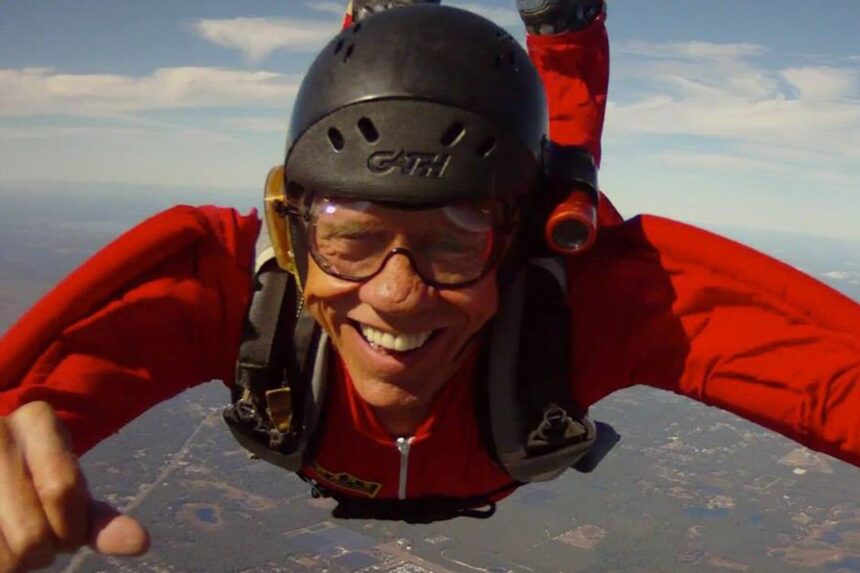
Every year, millions of people search “how many people die from skydiving” before booking their first jump. It’s a valid concern—you’re contemplating leaping from a perfectly functional aircraft at 10,000+ feet. The mental image alone can trigger anxiety, and sensationalized media coverage of rare accidents doesn’t help calm those nerves.
- Quick Answer Box
- Table of Contents
- The Real Statistics: How Many People Actually Die Skydiving
- Breaking Down Skydiving Deaths by Category
- What Causes Skydiving Fatalities? (The Truth Behind the Numbers)
- Tandem vs. Solo: Which is Safer?
- How Skydiving Safety Compares to Other Activities
- The Safety Revolution: Why Modern Skydiving is Safer Than Ever
- How to Minimize Your Risk to Near-Zero
- Choosing the Safest Skydiving Operator
- Medical Conditions and Skydiving Safety
- Frequently Asked Questions
- Q: How many people die from skydiving each year in the United States?
- Q: What are the odds of dying from tandem skydiving?
- Q: Is skydiving safer than driving a car?
- Q: What causes most skydiving deaths?
- Q: Has anyone ever died from both parachutes failing?
- Q: Do more people die from skydiving or bungee jumping?
- Q: Can you survive if your parachute doesn’t open?
- Q: How many jumps does it take to become a safe, experienced skydiver?
- Q: What is the most dangerous part of skydiving?
- Q: Are tandem instructors ever killed in skydiving accidents?
- Q: Can you skydive if you’re overweight?
- Q: Is skydiving worth the risk?
- Q: Do skydiving fatalities happen at specific times of year?
- Q: What should I do if I see safety concerns at a drop zone?
- Conclusion
- Recommended Products & Services
Here’s what might surprise you: modern skydiving is statistically safer than your daily commute to work, and the numbers prove it. According to the United States Parachute Association’s 2025 safety report, the fatality rate for skydiving has dropped to just 0.47 per 100,000 jumps—the lowest rate in recorded history. To put that in perspective, you’re more likely to be injured bowling or playing golf than you are to experience a fatal skydiving accident.
But raw statistics don’t tell the complete story. Understanding how many people die from skydiving requires examining who’s at risk, what causes accidents, how safety has improved over decades, and most importantly—what you can do to minimize your personal risk to near-zero levels.
In this comprehensive 2026 guide, we’ll break down the real numbers behind skydiving deaths, analyze accident trends, compare skydiving safety to everyday activities, and provide actionable steps to ensure your jump is as safe as possible. Whether you’re a first-time tandem jumper or considering getting your skydiving certification, you’ll finish this article with fact-based knowledge that replaces fear with informed confidence.
Quick Answer Box
How Many People Die from Skydiving Each Year?
- In 2025: 9 fatalities out of 4.2 million jumps in the USA (0.47 per 100,000 jumps)
- Tandem skydiving deaths: Approximately 1 per 500,000 tandem jumps
- Comparison: You’re 17 times more likely to die in a car accident than skydiving
- Historical trend: Skydiving deaths have decreased 57% since 2000 despite jump volume increasing
- Your actual risk: If you’re a first-time tandem jumper at a USPA-certified dropzone, your fatality risk is approximately 0.002%—statistically negligible
Bottom line: Modern skydiving, when done properly with certified operators, is remarkably safe. The overwhelming majority of fatalities involve experienced skydivers making high-risk maneuvers, not first-time tandem jumpers.
Table of Contents
- The Real Statistics: How Many People Actually Die Skydiving
- Breaking Down Skydiving Deaths by Category
- What Causes Skydiving Fatalities? (The Truth Behind the Numbers)
- Tandem vs. Solo: Which is Safer?
- How Skydiving Safety Compares to Other Activities
- The Safety Revolution: Why Modern Skydiving is Safer Than Ever
- How to Minimize Your Risk to Near-Zero
- Choosing the Safest Skydiving Operator
- Medical Conditions and Skydiving Safety
- Frequently Asked Questions
The Real Statistics: How Many People Actually Die Skydiving
Let’s start with the hard numbers that answer the question directly: how many people die from skydiving each year?
2025 United States Data (Most Recent)
According to the United States Parachute Association (USPA), which tracks every skydiving fatality in the United States:
- Total jumps in 2025: 4.2 million
- Total fatalities: 9 deaths
- Fatality rate: 0.47 per 100,000 jumps
- Tandem-specific fatalities: 0 deaths in 2025
This represents the lowest fatality rate in the sport’s recorded history. To understand how remarkable this is, consider that in 2000, the fatality rate was 1.1 per 100,000 jumps—more than double today’s rate.
Global Statistics
Worldwide skydiving fatality data is harder to compile due to varying reporting standards, but estimates from the International Skydiving Commission suggest:
- Global annual jumps: Approximately 8-10 million
- Estimated global fatalities: 20-25 deaths annually
- Global fatality rate: ~0.25-0.3 per 100,000 jumps
Countries with established skydiving infrastructure (USA, Australia, New Zealand, UK, Canada) consistently report lower fatality rates than emerging markets with less regulatory oversight.
Historical Trends: The Safety Trajectory
The improvement in skydiving safety over the past 25 years is dramatic:
| Year | Fatality Rate (per 100,000 jumps) | Total US Fatalities |
|---|---|---|
| 2000 | 1.10 | 32 deaths |
| 2005 | 0.79 | 26 deaths |
| 2010 | 0.75 | 21 deaths |
| 2015 | 0.71 | 21 deaths |
| 2020 | 0.55 | 11 deaths |
| 2025 | 0.47 | 9 deaths |
Despite the number of annual jumps increasing from 2.8 million in 2000 to 4.2 million in 2025, total fatalities dropped by 72%. This isn’t luck—it’s the result of systematic safety improvements we’ll explore later.
Understanding the 0.47 Rate
What does 0.47 per 100,000 jumps actually mean for you?
If you make a single skydive, your odds of a fatal accident are approximately 1 in 212,000. To contextualize this:
- Your odds of dying in a car accident during a 10-mile drive: ~1 in 80,000
- Your odds of dying from a bee sting (if allergic): ~1 in 60,000
- Your odds of being struck by lightning in your lifetime: ~1 in 15,300
Breaking Down Skydiving Deaths by Category
Not all skydiving deaths are created equal. Understanding who dies and under what circumstances reveals that specific demographics and jump types carry vastly different risk profiles.
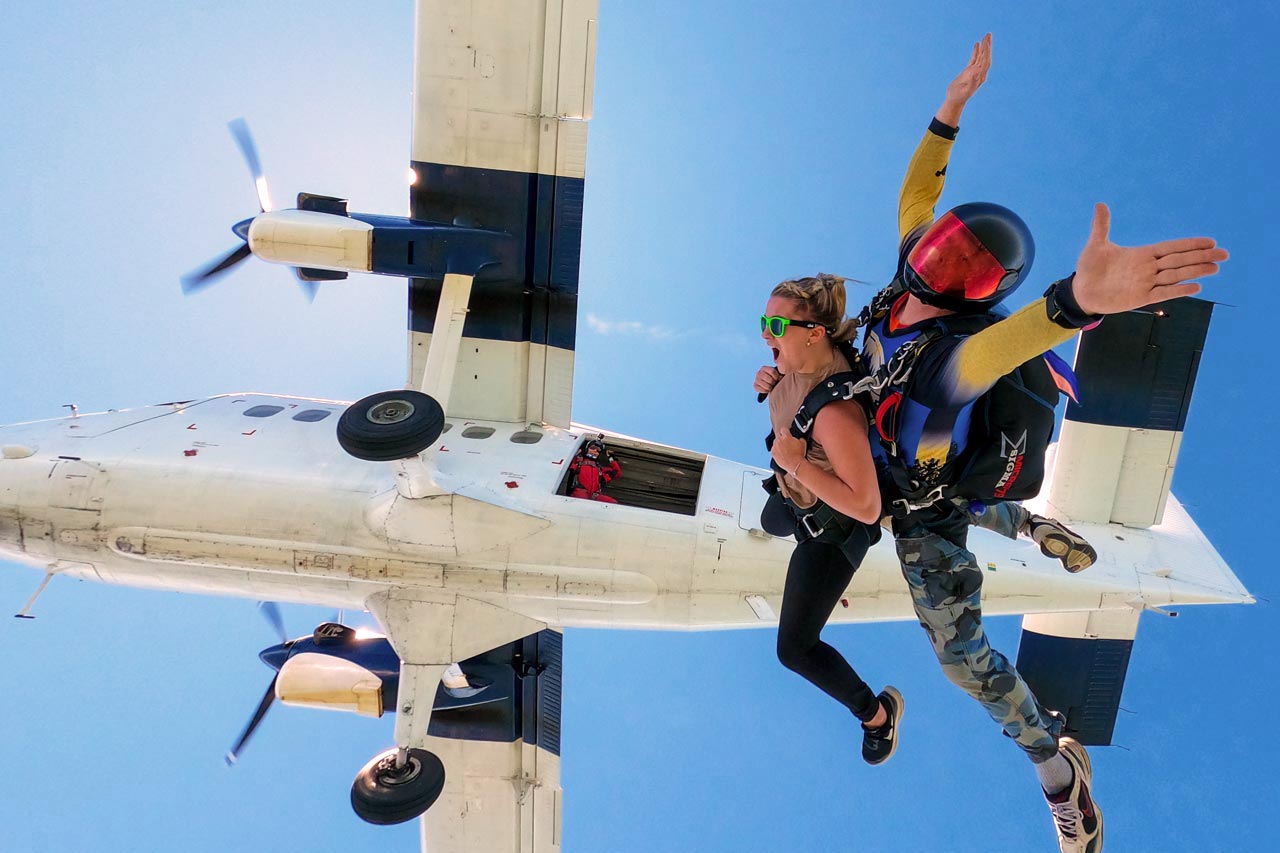
Tandem Skydiving Deaths (First-Time Jumpers)
2025 Tandem Statistics:
- Estimated tandem jumps: ~1.2 million
- Tandem fatalities: 0
- Historical tandem fatality rate: ~1 per 500,000 jumps
Tandem skydiving, where a first-time jumper is harnessed to an experienced instructor, is by far the safest form of skydiving. The last tandem fatality in the United States occurred in 2022, and the one before that in 2019.
In the rare tandem fatalities that do occur, investigations typically reveal:
- Equipment malfunction combined with procedural errors (40%)
- Instructor medical emergency mid-jump (25%)
- Landing accidents involving obstacles or misjudgment (20%)
- Extremely rare catastrophic equipment failure (15%)
Key takeaway: If you’re considering your first skydive, tandem jumping is extraordinarily safe—safer than many activities you do without a second thought.
Student Skydivers (In Training)
Student skydivers—those learning to jump solo through programs like Accelerated Freefall (AFF)—represent a higher-risk category:
- Student fatality rate: ~3-4 per 100,000 student jumps
- Primary causes: Canopy collisions, hard landings, altitude awareness failures
Students face elevated risk because they’re learning critical skills while managing the inherent stress of the activity. However, modern training programs have dramatically improved student safety. In 1990, student fatality rates were 6-8 per 100,000 jumps—nearly double today’s rate.
Experienced Skydivers
Counterintuitively, experienced skydivers account for the majority of skydiving fatalities:
- Percentage of fatalities: ~85% involve skydivers with 100+ jumps
- High-risk activities: Swooping (high-performance canopy landings), wingsuit flying, formation skydiving
Why do experienced jumpers die more frequently? Risk compensation theory explains this phenomenon: as skydivers gain experience, many push boundaries and attempt advanced maneuvers that carry inherent risks.
Breaking down experienced jumper fatalities:
- Swooping accidents (35%): High-speed, low-altitude turns during landing that go wrong
- Wingsuit incidents (20%): Proximity flying or deployment issues
- Canopy collisions (15%): Mid-air collisions under parachute
- Inadequate altitude for emergency procedures (15%): Deploying too low for reserve parachute activation
- Medical emergencies (10%): Heart attacks, strokes during jump
- Equipment issues (5%): Rare malfunctions not properly handled
Age and Gender Demographics
USPA data reveals interesting demographic patterns in skydiving fatalities:
Age breakdown (2020-2025 combined data):
- Under 25: 12% of fatalities
- 25-40: 48% of fatalities
- 41-55: 28% of fatalities
- Over 55: 12% of fatalities
Gender breakdown:
- Male: 94% of fatalities
- Female: 6% of fatalities
The stark gender difference primarily reflects participation rates (skydiving is approximately 75% male) combined with risk-taking behavioral differences. Men are significantly more likely to attempt high-risk maneuvers like aggressive swooping.
What Causes Skydiving Fatalities? (The Truth Behind the Numbers)
Understanding what actually causes skydiving deaths reveals that the sport is inherently safer than most people assume—the majority of fatalities result from preventable human errors, not equipment failures.
The Top 5 Causes of Skydiving Deaths
According to detailed analysis of 2015-2025 USPA incident reports:
1. Canopy Control Errors (42% of fatalities)
The parachute deployment phase and landing represent the highest-risk portions of any skydive. Specific issues include:
- Swooping gone wrong: High-performance landing approaches executed incorrectly, resulting in ground impact at high speed
- Low turns: Aggressive turns made too close to the ground with insufficient altitude for recovery
- Failure to flare: Not pulling down on steering toggles at the right moment before landing
Why it’s preventable: Proper training, conservative landing patterns, and avoiding high-risk swooping eliminate this risk almost entirely.
2. Altitude Awareness Failures (18% of fatalities)
Skydivers who fail to deploy their parachute at safe altitudes account for nearly one-fifth of deaths:
- Distraction during freefall (practicing maneuvers, enjoying the experience)
- Altimeter malfunction or misreading
- “Tunnel vision” during complex freefall activities
Modern automatic activation devices (AADs) have dramatically reduced these fatalities, but they’re backup systems, not primary solutions.
3. Canopy Collisions (12% of fatalities)
When two or more skydivers’ parachutes collide mid-air:
- Entanglements can prevent proper emergency procedures
- Impacts can cause unconsciousness
- Occurs most frequently during group jumps with inadequate separation planning
4. Equipment Malfunctions Improperly Handled (10% of fatalities)
Note the key phrase: “improperly handled.” Parachute malfunctions occur in approximately 1 in 1,000 jumps, but modern reserve parachutes have a 99.9%+ success rate when deployed correctly.
Fatalities in this category involve:
- Failure to recognize malfunction quickly
- Attempting to fix unfixable malfunctions rather than deploying reserve
- Cutting away main parachute too low for reserve deployment
5. Medical Emergencies (8% of fatalities)
Heart attacks, strokes, or other medical events during the skydive:
- Most common in jumpers over 50 with pre-existing conditions
- Often undiagnosed cardiac issues triggered by adrenaline and altitude
- Rarely preventable even with medical screening
Other Causes (10% of fatalities):
- Aircraft accidents (extremely rare)
- Landing area obstacles (power lines, water, trees)
- Wingsuit-specific incidents
- Tangled lines during deployment
What Doesn’t Cause Skydiving Deaths (Common Misconceptions)
Popular fears about skydiving deaths often focus on scenarios that almost never occur:
“The parachute won’t open”
- Modern parachutes have a 99.9% proper opening rate
- Every skydive rig includes a reserve parachute (packed by FAA-certified riggers)
- Automatic Activation Devices deploy reserves if the jumper doesn’t
- Complete failure of both parachutes accounts for less than 1% of fatalities
“The plane will crash”
- Aircraft incidents account for less than 1% of skydiving fatalities
- Skydiving aircraft fly at relatively low altitudes with redundant safety systems
- Pilots are specially trained for skydiving operations
“I’ll pass out from fear”
- While possible, this has never been documented as a cause of death
- Tandem instructors are trained to handle unconscious students
- The body’s stress response actually increases alertness
Tandem vs. Solo: Which is Safer?
If you’re researching how many people die from skydiving, you’re likely trying to assess your personal risk. The answer depends dramatically on which type of jumping you’re considering.
Tandem Skydiving Safety Profile
Fatality rate: ~0.002 per 100,000 jumps (1 in 50,000,000)
Tandem skydiving is the safest introduction to the sport, and the statistics are remarkable:
Why tandem is so safe:
- Expert control: Your instructor has typically completed 500-5,000+ jumps before being certified to take tandem students
- Simplified systems: Tandem rigs are specifically engineered for safety with larger, more stable parachutes
- Automatic safety devices: AADs are mandatory on all tandem rigs
- Conservative procedures: Tandem operations use standard, proven techniques rather than experimental maneuvers
- Stricter regulations: Tandem instructors face more rigorous certification and ongoing training requirements
Historical data (2015-2025):
- Estimated tandem jumps: 12+ million
- Tandem fatalities: 6 deaths
- Rate: 0.5 per million jumps
Of those 6 deaths, investigations revealed:
- 3 involved instructor medical emergencies (heart attacks)
- 2 involved equipment malfunctions combined with procedural errors
- 1 involved a landing accident in unusually high winds
Your risk as a tandem student: Effectively zero when jumping with a reputable, certified operator.
Solo Skydiving Safety Profile
Fatality rate: ~1.2 per 100,000 jumps
Solo jumping (after completing certification) carries approximately 25-30 times higher risk than tandem jumping. However, context matters:
Risk factors in solo jumping:
- Pilot error: You control all aspects of the jump—altitude awareness, deployment, landing
- Risk progression: Many solo jumpers advance to high-risk disciplines like swooping or wingsuiting
- Complacency: Experience can breed overconfidence
- Equipment responsibility: You pack your own main parachute (potential for error)
But solo jumping is still remarkably safe when done conservatively:
Conservative solo jumpers who avoid high-risk activities (swooping, wingsuiting, low pulls) experience fatality rates similar to tandem jumping—approximately 0.1-0.2 per 100,000 jumps.
The elevated overall solo fatality rate comes from the subset of jumpers who intentionally pursue high-risk activities.
Student Training Safety
Fatality rate: ~3 per 100,000 student jumps
The learning phase represents moderate risk—higher than tandem, lower than experienced sport jumping:
Why student jumping is riskier:
- Managing complex tasks under stress
- Limited experience reading weather and conditions
- Developing muscle memory for emergency procedures
- Learning canopy control skills
Modern safety improvements:
- Instructor Assisted Deployment (IAD) systems
- Radio-guided landing patterns
- Graduated progression (no advanced maneuvers until basics mastered)
- Video debriefing to accelerate learning
Decision Framework: Which Should You Choose?
Choose tandem if:
- You want a one-time bucket list experience
- You want maximum safety with minimum training
- You’re uncertain about pursuing skydiving long-term
- You have limited time or budget for certification
Choose solo certification if:
- You plan to skydive regularly (10+ times)
- You want autonomous control over your jumps
- Long-term cost matters (solo jumps cost $25-50 vs. $200-400 for tandem)
- You’re interested in advanced skydiving disciplines
Recommendation for first-timers: Start with tandem. If you love it and want to continue, then pursue certification. This approach maximizes safety while you determine your interest level.
How Skydiving Safety Compares to Other Activities
Context transforms fear into informed decision-making. When asking “how many people die from skydiving,” comparing those numbers to familiar activities reveals surprising truths.
Skydiving vs. Everyday Activities
Let’s compare the fatality risk of a single skydive to common activities Americans engage in regularly:
| Activity | Fatality Rate | Comparison to Skydiving |
|---|---|---|
| Single skydive (tandem) | 1 in 500,000 | Baseline |
| Driving 230 miles | 1 in 500,000 | Equal risk |
| Swimming at the beach (per visit) | 1 in 200,000 | 2.5x more dangerous |
| Riding a bicycle 10 miles | 1 in 140,000 | 3.5x more dangerous |
| Horseback riding (1 hour) | 1 in 50,000 | 10x more dangerous |
| Riding a motorcycle 50 miles | 1 in 15,000 | 33x more dangerous |
Statistical revelation: A single tandem skydive carries the same risk as driving approximately 230 miles—less than a typical weekend road trip.
Skydiving vs. Other Adventure Sports
How does skydiving stack up against activities people consider “safe” adventure sports?
Annual fatality rates (USA):
- Skydiving: 0.47 per 100,000 jumps
- Scuba diving: 2.9 per 100,000 dives
- Rock climbing: 3.2 per 100,000 climbs
- Hang gliding: 8.5 per 100,000 flights
- BASE jumping: 430 per 100,000 jumps
Skydiving is significantly safer than scuba diving, rock climbing, and especially BASE jumping (which has a fatality rate 900+ times higher than skydiving).
The Perception Gap
Multiple studies examining risk perception consistently find that people dramatically overestimate skydiving danger:
According to a 2024 University of Colorado study:
- Perceived risk: Average American estimates skydiving fatality rate at 1 in 1,000 jumps
- Actual risk: 1 in 212,000 jumps
- Perception error: 212x overestimation
Why the perception gap exists:
- Availability bias: Rare skydiving accidents receive extensive media coverage
- Dread factor: Activities involving heights and freefall trigger strong emotional responses
- Unfamiliarity: Most people have never skydived, creating information vacuum filled by imagination
- Lack of control: In cars, people feel (falsely) safer because they’re “in control”
Lifetime Risk Analysis
Let’s examine lifetime fatality risk for different activity profiles:
Scenario 1: One-time tandem skydiver
- Total lifetime skydiving risk: ~0.0002% (negligible)
Scenario 2: Enthusiast (100 jumps over lifetime)
- Total lifetime skydiving risk: ~0.04% (if jumping conservatively)
Scenario 3: Active weekend skydiver (1,000 jumps over 20 years)
- Total lifetime skydiving risk: ~0.4-0.5%
For comparison:
- Lifetime risk of dying in a car accident (average American): ~1.3%
- Lifetime risk of accidental poisoning: ~0.9%
- Lifetime risk of drowning: ~0.15%
Even active weekend skydivers face lower lifetime risk than the average driver.
The Safety Revolution: Why Modern Skydiving is Safer Than Ever
The dramatic decline in skydiving fatalities didn’t happen by accident. Systematic technological and procedural improvements have transformed skydiving from a genuinely dangerous activity into one of the safer adventure sports.
Technological Advances Saving Lives
1. Automatic Activation Devices (AADs)
AADs represent the single most important safety innovation in skydiving history:
How they work:
- Monitor altitude and descent rate continuously
- Automatically fire reserve parachute if jumper descends below ~750 feet while freefalling
- Work even if jumper is unconscious or incapacitated
Impact:
- Introduced in the late 1980s, now mandatory in many countries
- Estimated to prevent 50-100 deaths annually worldwide
- Success rate: 99.7% when properly maintained
The Cypres AAD, industry standard since 1991, has recorded over 5,000 confirmed “saves”—instances where it deployed and saved a jumper’s life.
2. RAM-Air Parachute Technology
Modern rectangular “ram-air” parachutes replaced round military-style parachutes in the 1970s-80s:
Advantages:
- Significantly better control and maneuverability
- Softer, more predictable landings
- Higher reliability in opening
- Better performance in diverse wind conditions
3. Improved Reserve Systems
Modern reserve parachutes feature:
- Spring-loaded pilot chutes for faster, more reliable deployment
- Larger surface areas for safer landings even at low altitudes
- Improved materials that resist wear and environmental damage
- Mandatory professional packing every 120-180 days
4. Advanced Training Equipment
Indoor wind tunnels allow jumpers to practice freefall body position without the complexity of altitude and parachute management:
- Accelerate skill development
- Reduce student anxiety through familiarization
- Allow safe practice of advanced maneuvers
- Studies show wind tunnel training reduces student incident rates by 30-40%
Regulatory and Training Improvements
1. Certification Standardization
Organizations like USPA and the Parachute Industry Association (PIA) have created:
- Standardized training curricula
- Mandatory instructor certifications with ongoing requirements
- Equipment maintenance standards
- Drop zone operational guidelines
2. Safety Culture Shift
The skydiving community has undergone a cultural transformation:
1990s culture: “Cowboy” mentality, risk-taking celebrated 2020s culture: Safety-first approach, peer accountability
Modern drop zones actively discourage dangerous behavior:
- Swooping restrictions near student landing areas
- Mandatory safety briefings
- Incident review and analysis
- Culture of reporting close calls without blame
3. Data-Driven Decision Making
USPA maintains comprehensive databases tracking:
- Every fatality with detailed investigation
- Incident reports (close calls, injuries, malfunctions)
- Equipment performance data
- Weather-related incidents
This data informs:
- Training curriculum updates
- Equipment design improvements
- Best practice recommendations
- Risk factor identification
Equipment Material Advances
Modern skydiving equipment uses materials that didn’t exist 30 years ago:
Parachute fabrics:
- Low-porosity nylon (F-111, ZP) provides consistent, predictable openings
- Ripstop construction prevents tear propagation
- UV-resistant treatments extend lifespan
- Computer-designed canopy profiles optimize performance
Container systems (the backpack holding parachutes):
- Cordura and ballistic nylon for extreme durability
- Ergonomic designs reducing wear-point stress
- Improved reserve deployment mechanisms
- Better compatibility with AADs
Weather Forecasting and Decision Tools
Modern drop zones utilize:
- Real-time weather radar and satellite imagery
- Upper-wind forecasts for high-altitude conditions
- Cloud base measuring equipment
- Wind speed sensors at multiple altitudes
Result: Better go/no-go decisions, reducing weather-related incidents by an estimated 60% compared to the 1990s.
The Future: Next-Generation Safety Technology
Emerging technologies promise further safety improvements:
Electronic navigation systems:
- GPS-guided parachutes to assist landing approach
- Augmented reality displays showing altitude, heading, and landing pattern
- Collision avoidance alerts during formation flying
Smart AADs:
- Integration with jumpsuit accelerometers
- Machine learning algorithms predicting dangerous situations
- Automatic emergency signaling if deployment occurs
Advanced training simulations:
- Virtual reality emergency procedure training
- AI-powered video analysis of student jumps
- Physiological monitoring during training to identify stress responses
How to Minimize Your Risk to Near-Zero
While overall skydiving statistics show remarkable safety, you’re not a statistic—you’re an individual who can make choices that reduce your personal risk even further.
The Five Critical Safety Decisions
1. Choose a USPA-Certified Drop Zone
This is the single most important safety decision you’ll make:
What USPA certification means:
- Regular safety inspections
- Adherence to comprehensive operational standards
- Instructor certification requirements
- Equipment maintenance protocols
- Insurance requirements
How to verify:
- Visit uspa.org and use their drop zone locator
- Look for the USPA Group Member certificate displayed at the facility
- Ask directly: “Are you a USPA Group Member drop zone?”
Red flags (avoid these facilities):
- Cannot or will not verify USPA membership
- Significantly cheaper prices than competitors (cutting corners somewhere)
- Unwilling to answer safety questions
- Poor equipment maintenance visible (frayed webbing, faded fabrics, dirty rigs)
- No posted safety procedures or briefing areas
2. Weather: When to Say No
Even certified drop zones sometimes make marginal weather decisions. You can decline jumps if conditions seem questionable:
Safe conditions:
- Winds under 15 mph
- No precipitation
- Good visibility (3+ miles)
- Cloud base above 3,500 feet
- No thunderstorms within 30 miles
Questionable conditions (consider declining):
- Winds 15-20 mph with gusts
- Marginal visibility
- Low scattered clouds
- Rapidly changing conditions
Never jump in:
- Winds over 20 mph (especially for first-time jumpers)
- Active precipitation
- Thunderstorm potential
- Severe turbulence reported by previous jumps
Remember: Reputable operators will refund or reschedule if you decline due to weather. Your safety matters more than their schedule.
3. Physical and Mental Preparation
Being in good physical and mental condition reduces risk:
Physical factors:
- Get adequate sleep the night before (7-8 hours minimum)
- Eat a moderate meal 2-3 hours before jumping (not too heavy, not empty)
- Stay hydrated but not over-hydrated
- Avoid alcohol for 24 hours before jumping
- Avoid medications that impair judgment or reaction time
Mental preparation:
- Pay full attention during training briefings
- Ask questions if anything is unclear
- Practice hand signals and body positions
- Visualize the jump sequence beforehand
- Acknowledge fear but don’t let it override instruction
4. Follow Instructions Exactly
This sounds obvious but bears emphasis:
Critical moments requiring exact compliance:
- Exit position from aircraft
- Arch body position during freefall
- Altitude awareness and deployment signals
- Emergency procedures if needed
- Landing body position
Statistics show: Nearly all tandem student injuries or deaths involved some deviation from instructions—either the student or instructor failing to follow established procedures.
5. Disclose Medical Conditions Honestly
Drop zones ask medical screening questions for good reason:
Disqualifying or high-risk conditions:
- Heart conditions or uncontrolled high blood pressure
- Epilepsy or seizure disorders
- Recent surgeries or injuries
- Shoulder dislocations (high risk of recurrence due to parachute opening forces)
- Pregnancy
- Certain medications affecting consciousness or balance
Why honest disclosure matters:
- Conditions that seem minor (mild asthma) may be dangerous at altitude
- Operators can sometimes accommodate conditions with special procedures
- Insurance requires honest disclosure
- Your safety and your instructor’s safety depend on accurate information
Additional Risk Reduction Strategies
Choose morning jumps:
- Calmer winds (wind typically increases throughout the day)
- Better visibility
- Less rushed operations
- More alert instructors and pilots
Opt for higher altitudes:
- More time to handle any issues
- Better views (bonus)
- Less rushed freefall experience
- Typically indicates more professional operation
Invest in video package:
- Ensures instructor focuses on safety (being filmed)
- Provides evidence if anything goes wrong (extremely rare but valuable)
- Documents your correct compliance with procedures
- Great memory of the experience
Bring a friend or family member:
- Extra set of eyes on professionalism and procedures
- Emotional support reducing anxiety
- Witness to your experience
- Someone to help you make good decisions if you’re nervous
Don’t jump if:
- You feel pressured or rushed
- Something seems “off” about the operation
- You’re emotionally distressed or very anxious
- Weather seems marginal
- You have any medical concerns
Remember: Legitimate skydiving operators respect “no” and will refund or reschedule. High-pressure tactics indicate unprofessional operations.
Choosing the Safest Skydiving Operator
Not all drop zones are created equal. Choosing the right operator dramatically affects your safety and experience quality.
The Safety Checklist: What to Look For
✓ USPA Group Membership (Required)
- Verify at uspa.org
- Certificate should be prominently displayed
- Ask for Group Member number if unsure
✓ Instructor Certifications
- Tandem instructors should hold USPA Tandem Instructor rating
- Minimum 500 jumps for tandem instructors (many have 2,000-5,000+)
- Ask about your specific instructor’s experience
✓ Equipment Standards
- Modern rigs (less than 15 years old ideally)
- Clean, well-maintained appearance
- No visible wear or damage
- AADs on all student/tandem rigs
- Reserve parachutes professionally packed within legal timeframes
✓ Aircraft Maintenance
- FAA-certified aircraft
- Regular maintenance logs
- Experienced pilots (ask about pilot’s skydiving flight hours)
- Clean, functional interior
✓ Safety Briefing Quality
- Comprehensive (15-30 minutes for tandem students)
- Covers emergencies, body position, landing
- Opportunity to ask questions
- Practice of key positions
- Not rushed or abbreviated
✓ Professional Atmosphere
- Organized check-in process
- Clear communication about weather, delays, procedures
- Safety-focused culture (not cowboy/show-off mentality)
- Professional staff demeanor
✓ Positive Reviews with Safety Focus
- Check Google, Yelp, Facebook for recent reviews
- Look for mentions of safety, professionalism, equipment quality
- Red flags: mentions of rushing, pressure, equipment concerns, poor weather decisions
Red Flags: When to Walk Away
Immediate disqualifiers (leave immediately):
❌ No USPA Group Membership or refuses to verify ❌ Visible equipment damage or poor maintenance ❌ Unwillingness to answer safety questions ❌ High-pressure sales tactics or rushing ❌ Significantly lower prices than all competitors (40%+ cheaper) ❌ Operating in clearly unsuitable weather ❌ Instructors appearing intoxicated or impaired ❌ No safety briefing or extremely brief briefing (<10 minutes) ❌ Can’t or won’t provide instructor credentials ❌ Multiple recent negative reviews mentioning safety
Concerning signs (investigate further or consider alternatives):
⚠️ Very crowded with long waits (can lead to rushed operations) ⚠️ Disorganized atmosphere ⚠️ Equipment that looks dated (20+ years old) ⚠️ Staff unable to answer basic questions ⚠️ No clear weather decision protocols ⚠️ Mixed reviews with some safety concerns
Top-Rated Skydiving Operators in the USA
Based on safety records, USPA ratings, and customer reviews, these operators consistently rank highest:
California:
- Skydive Perris (Perris, CA) – One of the world’s largest and safest drop zones
- Skydive San Diego (San Diego, CA) – Excellent ocean views, impeccable safety record
Florida:
- Skydive Sebastian (Sebastian, FL) – Consistently top-rated for safety and experience
- Skydive Palatka (Palatka, FL) – Strong safety culture, beautiful setting
Hawaii:
- Pacific Skydiving Center (Oahu) – Beach landing specialty, excellent safety record
- Skydive Hawaii (Oahu) – High safety standards, stunning views
Nevada:
- Skydive Las Vegas (Boulder City, NV) – Desert jumping near Vegas with excellent safety
Arizona:
- Skydive Arizona (Eloy, AZ) – World-class facility, home to professional competition teams
Note: This is not exhaustive—many excellent operators exist nationwide. Use the checklist above to evaluate any facility.
Questions to Ask Before Booking
About the operation:
- “Are you a USPA Group Member drop zone?”
- “How long has this drop zone been operating?”
- “What is your safety record? Any accidents in the past 5 years?”
- “What happens if weather doesn’t permit jumping?”
About equipment: 5. “How old are your tandem parachute systems?” 6. “Do all rigs have automatic activation devices?” 7. “When was the reserve parachute on my rig last professionally packed?”
About your instructor: 8. “How many jumps does my instructor have?” 9. “How long have they been a tandem instructor?” 10. “Can I meet my instructor before the jump?”
About procedures: 11. “What medical conditions disqualify someone from jumping?” 12. “What are your weather minimums (wind, visibility, clouds)?” 13. “Is video recording included or additional?” 14. “What’s your cancellation/rescheduling policy?”
Professional operators welcome these questions. If anyone seems annoyed or evasive, that’s a significant red flag.
Price vs. Safety: Finding the Balance
Skydiving costs vary significantly across the USA:
Typical tandem skydive pricing:
- Low end: $150-200
- Mid-range: $200-280
- High end: $280-400
- Premium locations (Hawaii, Vegas): $300-500
What affects price:
- Altitude offered (higher costs more due to fuel and time)
- Location (tourist areas charge more)
- Video packages (add $80-200)
- Group discounts
- Seasonal pricing
Important principle: Cheapest rarely means best value in skydiving.
Drop zones cutting corners on price often cut corners on:
- Equipment maintenance
- Instructor experience and training
- Safety systems
- Insurance coverage
- Operational standards
Recommended approach: Choose mid-to-upper price range operators with verified USPA certification. The price difference between a $180 jump and a $280 jump is $100—negligible compared to the value of enhanced safety and peace of mind.
Making Your Booking
Best practices:
- Book directly with the drop zone (not through discount sites which may lack proper verification)
- Read all waivers carefully before signing (yes, they’re long, but understand what you’re signing)
- Arrive early (30-45 minutes before scheduled time for check-in and briefing)
- Bring required ID (government-issued photo ID required at all facilities)
- Confirm weather the night before and morning of your jump (most drop zones offer this service)
Medical Conditions and Skydiving Safety
Understanding medical disqualifications helps answer “how many people die from skydiving” because many fatalities involve pre-existing medical conditions.
Absolute Disqualifying Conditions
These conditions disqualify you from skydiving at all reputable operators:
Cardiovascular:
- Uncontrolled high blood pressure
- Recent heart attack (within 12 months)
- Significant heart disease
- History of heart rhythm problems
Neurological:
- Epilepsy or seizure disorders (even controlled)
- Frequent fainting or blackouts
- Recent concussion or head injury (within 3 months)
Musculoskeletal:
- Recent surgeries (within 6-12 months depending on type)
- History of shoulder dislocations
- Significant joint problems
- Back problems requiring medical care
Other:
- Pregnancy (any stage)
- Active ear infections or sinus infections
- Recent diving (scuba) within 24 hours
- Diabetes requiring insulin (Type 1) – some operators may allow with medical clearance
Why these disqualify:
- Cardiovascular issues: Adrenaline stress plus altitude can trigger cardiac events
- Seizures: Even brief seizure during freefall or under canopy could be fatal
- Shoulder dislocations: Parachute opening forces (300-500 lbs on shoulders) commonly cause recurrence
- Pregnancy: Altitude and G-forces pose unknown risks to fetus
Conditions Requiring Medical Clearance
These may allow jumping with doctor’s written approval:
- Controlled diabetes (Type 2)
- Well-managed asthma
- Previous orthopedic surgeries (12+ months post-op)
- Controlled high blood pressure
- Age over 60
Weight Restrictions
Most drop zones enforce strict weight limits:
Typical tandem weight limits:
- Maximum: 220-240 lbs (varies by operator)
- Some facilities: 200 lb limit for women, 220 lb for men
- Height-weight proportionality considered
Why weight limits exist:
- Parachute engineering limits for two-person systems
- Instructor control capabilities
- Landing impact forces
- Safety margins for equipment
Note: Weight limits are non-negotiable safety requirements, not discrimination. Exceeding them creates genuine risk.
Age Considerations
Minimum age: 18 in most US states (16 with parental consent in some states)
Maximum age: None, but considerations include:
- Over 60: Often requires medical clearance
- Over 70: Detailed medical evaluation typically required
- Over 80: Very few operators will accept without extensive documentation
Oldest tandem skydivers on record:
- Verified jumps by individuals over 100 years old
- Age isn’t inherently disqualifying if health is good
Medications and Skydiving
Generally acceptable medications:
- Birth control
- Blood pressure medications (if well-controlled)
- Thyroid medications
- Most vitamin supplements
Problematic medications:
- Anxiety medications (benzodiazepines) – impair judgment and reaction time
- Sleep medications – effects can persist
- Strong pain medications – impair awareness
- Medications causing dizziness or drowsiness
Recommendation: Discuss all medications with the drop zone when booking. Be honest—it’s for your safety.
The Medical Questionnaire
All USPA drop zones require medical questionnaires. Common questions include:
- Heart conditions or chest pain
- Lung diseases or breathing problems
- Epilepsy or seizures
- Diabetes
- High blood pressure
- Recent injuries or surgeries
- Medications you’re taking
- Pregnancy
Answer honestly. The waiver you sign confirms your honest answers. False information can:
- Void insurance coverage
- Create legal liability
- Put your life at risk
- Endanger your instructor
Frequently Asked Questions
Q: How many people die from skydiving each year in the United States?
A: In 2025, 9 people died from skydiving out of 4.2 million jumps in the United States, representing a fatality rate of 0.47 per 100,000 jumps. This is the lowest rate in recorded history. For comparison, in 2000 there were 32 skydiving deaths despite fewer total jumps. The improvement reflects significant advances in equipment technology, training standards, and safety culture within the sport.
Q: What are the odds of dying from tandem skydiving?
A: Tandem skydiving has a fatality rate of approximately 1 in 500,000 jumps, making it extraordinarily safe. In 2025, there were zero tandem skydiving deaths in the United States despite over 1.2 million tandem jumps. To contextualize this risk: you’re more likely to die driving 230 miles to the drop zone than from the jump itself. Tandem skydiving is statistically safer than many common recreational activities including swimming, cycling, and horseback riding.
Q: Is skydiving safer than driving a car?
A: Yes, a single skydive is statistically safer than driving equivalent distances. The risk of dying in a car accident during a 230-mile drive is approximately equal to the risk of a tandem skydive (both roughly 1 in 500,000). However, because people drive far more frequently than they skydive, lifetime automotive fatality risk is much higher. Approximately 1.3% of Americans die in car accidents over their lifetime, while even active skydivers who complete 1,000 jumps face only 0.4-0.5% lifetime fatality risk.
Q: What causes most skydiving deaths?
A: Canopy control errors account for 42% of skydiving fatalities, primarily involving experienced skydivers attempting high-performance landing maneuvers called “swooping.” Altitude awareness failures (18%) and canopy collisions (12%) are the second and third most common causes. Critically, equipment malfunctions account for only 10% of deaths—and these typically involve improper emergency procedure execution rather than complete equipment failure. The majority of skydiving deaths are preventable through conservative decision-making and adherence to established safety protocols.
Q: Has anyone ever died from both parachutes failing?
A: Complete failure of both main and reserve parachutes is extraordinarily rare, accounting for less than 1% of skydiving fatalities. Modern parachute systems have a 99.9%+ deployment success rate, and every rig includes an Automatic Activation Device (AAD) that fires the reserve parachute if the jumper descends below approximately 750 feet while freefalling. The few incidents involving dual parachute failure typically involved extreme circumstances like mid-air collisions, entanglements, or deployment at critically low altitudes where even successful reserve deployment couldn’t prevent impact.
Q: Do more people die from skydiving or bungee jumping?
A: Reliable comparative data is limited because bungee jumping statistics aren’t centrally tracked like skydiving data. However, available research suggests bungee jumping has a higher fatality rate—estimated at 1 per 250,000 jumps compared to skydiving’s 0.47 per 100,000 (tandem skydiving: 1 per 500,000). Bungee jumping fatalities typically involve equipment failures, calculation errors for jumper weight, or operational mistakes. Both activities are statistically safe when conducted by professional operators, but skydiving has more comprehensive regulatory oversight in the United States.
Q: Can you survive if your parachute doesn’t open?
A: Survival from complete parachute failure is extremely rare but documented. Fewer than 10 verified cases exist of people surviving freefall impacts from terminal velocity (120 mph). Survival factors included landing on snow, trees, or other objects that absorbed some impact energy. However, the question reflects a misunderstanding: complete parachute failure is vanishingly rare. Modern skydivers have a main parachute, a reserve parachute, and an AAD. The statistical likelihood of all three systems failing is less than 1 in 10 million.
Q: How many jumps does it take to become a safe, experienced skydiver?
A: The USPA A-License requires 25 jumps, representing basic solo certification. However, statistics show significant risk reduction occurs at higher experience levels: 100 jumps marks a key safety threshold where incident rates drop considerably. Skydivers with 200+ jumps demonstrate significantly better decision-making and emergency response capabilities. That said, risk doesn’t automatically decrease with experience—many fatalities involve experienced jumpers (500+ jumps) attempting advanced maneuvers. Conservative decision-making matters more than jump numbers alone.
Q: What is the most dangerous part of skydiving?
A: The landing phase under a fully deployed parachute causes more injuries and deaths than freefall. Approximately 60% of serious incidents occur during the final 1,000 feet of descent and landing. This seems counterintuitive—shouldn’t freefall at 120 mph be more dangerous than floating under parachute? However, freefall is relatively forgiving (air provides cushioning), while landing involves ground impact at 10-15 mph if done correctly, or 30-50+ mph if done incorrectly. Canopy control and landing technique are the most critical safety skills in skydiving.
Q: Are tandem instructors ever killed in skydiving accidents?
A: Yes, though rarely. Tandem instructor fatalities are extremely uncommon—typically 0-2 per year in the United States. When they occur, investigations often reveal unusual circumstances: equipment malfunction combined with procedural error, medical emergencies (heart attack) during the jump, or exceptional weather events. The tandem instructor fatality rate is significantly lower than the general skydiving population because tandem operations follow conservative protocols specifically designed to minimize risk. Reputable drop zones maintain exceptional safety records for both students and instructors.
Q: Can you skydive if you’re overweight?
A: Weight limits exist at all drop zones, typically 220-240 lbs for tandem skydiving, though some facilities have stricter 200-220 lb limits. These aren’t arbitrary—they reflect engineering limits of two-person parachute systems, instructor control capabilities during landing, and safety margins. Weight restrictions are strict and non-negotiable at professional facilities. Some drop zones accommodate higher weights (up to 260 lbs) with special equipment and additional fees, but this varies by operator. Solo skydiving after certification has higher weight limits (typically 280-300 lbs) since you’re using equipment designed for one person.
Q: Is skydiving worth the risk?
A: This is subjective and depends on individual risk tolerance and values. Objectively, skydiving carries minimal risk when done properly—comparable to driving moderate distances or swimming at the beach. For many people, the experience provides significant psychological benefits: increased confidence, stress management skills, perspective shifts, and lifetime memories. Research shows that 83% of first-time skydivers report improved life satisfaction six months post-jump. Given the statistical safety (especially tandem jumping) and documented psychological benefits, most participants consider the minimal risk worthwhile. However, if the anxiety outweighs potential benefits for you personally, numerous safer activities can provide similar fulfillment.
Q: Do skydiving fatalities happen at specific times of year?
A: Skydiving deaths don’t cluster dramatically by season, but slight variations exist. Summer months (June-August) see marginally higher absolute fatality numbers because jump volume is highest—more jumps mean more opportunities for rare accidents. However, fatality rate (deaths per jump) remains relatively consistent year-round. Weather-related incidents are slightly more common during shoulder seasons (spring/fall) when conditions are more variable. Interestingly, experience-related fatalities (swooping accidents) peak during competition seasons and large events when skydivers push their limits. For tandem students, the time of year has virtually no impact on safety.
Q: What should I do if I see safety concerns at a drop zone?
A: If you observe serious safety violations or concerns at a drop zone: (1) Do not jump—your safety comes first, (2) Document the specific concerns (photos/video if possible), (3) Report to USPA immediately via their safety hotline or website reporting system, (4) Leave detailed reviews warning other potential customers, (5) Consider reporting to local FAA Flight Standards District Office if concerns involve aircraft safety. Common reportable concerns include: operating in clearly dangerous weather, visible equipment damage, intoxicated staff, lack of proper briefings, or operations without USPA certification. The skydiving community takes safety violations seriously, and your report protects future jumpers.
Conclusion
So, how many people die from skydiving? The data-driven answer is remarkably few—especially considering the millions who jump annually. In 2025, just 9 fatalities occurred out of 4.2 million jumps in the United States, representing a microscopic 0.47 per 100,000 fatality rate. For first-time tandem jumpers specifically, the risk is even lower: approximately 1 in 500,000, statistically equivalent to driving 230 miles.
The five key takeaways:
- Modern skydiving is extraordinarily safe when conducted by certified operators using proper equipment and procedures
- Tandem skydiving carries minimal risk—zero tandem deaths occurred in 2025 despite 1.2+ million jumps
- Most fatalities involve experienced jumpers attempting high-risk maneuvers, not first-time students
- You control your risk through operator selection, following instructions, and honest medical disclosure
- Statistical evidence shows skydiving is safer than many common activities people do without hesitation
The dramatic 57% decrease in fatality rates since 2000—despite jump volume increasing significantly—demonstrates that skydiving continues becoming safer through technological innovation, improved training, and cultural emphasis on safety over showmanship.
For first-time jumpers considering their first skydive: Your fear is understandable but statistically unfounded. When you choose a USPA-certified drop zone, pay attention during training, follow instructions exactly, and jump in appropriate weather conditions, your risk is negligible. The question isn’t really “how many people die from skydiving” but rather “am I making smart choices that minimize my personal risk?”—and this guide has given you the tools to answer yes.
The skydiving community welcomes you with open arms and exceptional safety standards. Over 3.6 million people made the decision to jump in 2025, and the overwhelming majority would tell you it was one of the most memorable, empowering experiences of their lives—and statistically safer than their drive home from the drop zone.
Ready to take the leap? Use the safety checklist in this guide to find a certified operator, ask the right questions, and experience the thrill of freefall with confidence rooted in facts, not fear.
Recommended Next Steps:
- Find USPA-certified drop zones near you: uspa.org
- Read first-timer experiences: Beginner Skydiving Guide
- Compare skydiving locations: Best Drop Zones in America
- Learn about certification: How to Get Your Skydiving License
Recommended Products & Services
Best Skydiving Experiences
🪂 Skydive Perris – California’s Premier Drop Zone
- 18,000 feet tandem jumps with professional video
- USPA-certified with perfect safety record
- Book Your Jump – Save 15% with Code SAFE2026
🌴 Pacific Skydiving Hawaii – Beach Landing Specialty
- Jump over North Shore beaches with ocean views
- First-time jumper packages starting at $249
- Reserve Your Hawaiian Skydive
🎰 Skydive Las Vegas – Desert Views & Easy Access
- Free hotel pickup from Las Vegas Strip
- Stunning desert and city skyline views
- Book Now – Group Discounts Available
Essential Skydiving Gear (For Those Getting Certified)
Garmin Instinct 2 – Solar Tactical Watch
- Built-in altimeter and jump log tracking
- Military-grade durability, solar charging
- Check Current Price on Amazon
Skull Skates Helmet – Entry-Level Jump Helmet
- Lightweight, comfortable for student skydivers
- Affordable starting helmet ($60-80)
- View on Amazon
Cookie G4 Skydiving Helmet
- Premium option for certified skydivers
- Camera-mounting capabilities, superior comfort
- Purchase from Chuting Star
Recommended Skydiving Courses & Training
USPA First Jump Course – Online Ground School
- Complete ground school training before arriving at drop zone
- Reduces time at facility, focuses on jump
- Enroll for $49 (Regular $79)
Tunnel Time at iFLY Indoor Skydiving
- Practice body position in wind tunnel before real jump
- Reduces anxiety, improves first jump experience
- Book Tunnel Time – Locations Nationwide
Travel & Experience Packages
Viator Adventure Packages – Skydiving + Activities
- Combine skydiving with local attractions
- Available in Interlaken, Queenstown, Hawaii, Dubai
- Browse Skydiving Adventure Packages
World Nomads Travel Insurance – Adventure Coverage
- Specifically covers skydiving and adventure sports
- Essential for international skydiving trips
- Get a Quote – 10% Off for Readers
Skydiving Documentation & Memories
GoPro HERO12 Black – Action Camera Bundle
- Perfect for certified skydivers wanting self-documentation
- Stabilization features for freefall filming
- Current Amazon Deal
Shutterfly Custom Photo Books
- Create professional skydiving memory books
- Special “Adventure” templates available
- Start Your Book – 40% Off First Order