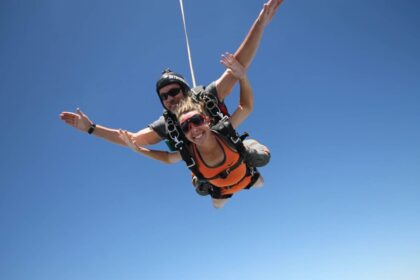

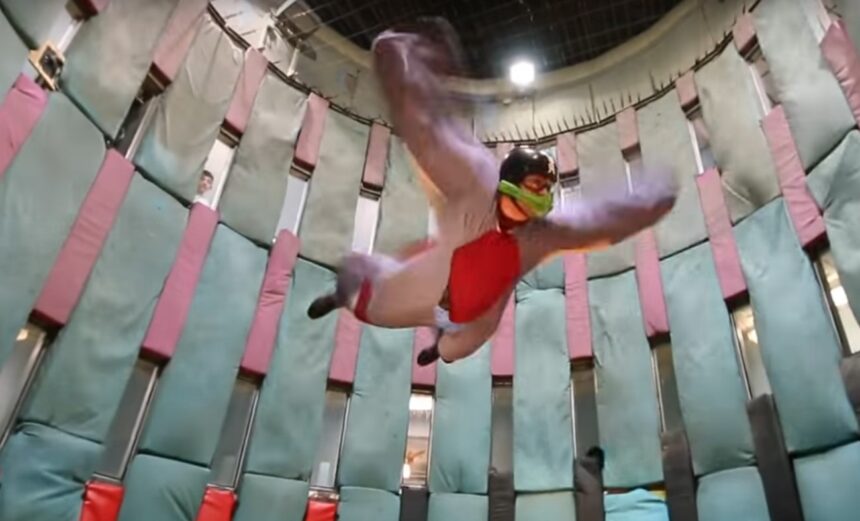
Imagine soaring through the air like a skydiver, feeling the rush of freefall, and defying gravity—all without jumping from an airplane 10,000 feet above the ground. Welcome to the revolutionary world of indoor skydiving in Pigeon Forge, Tennessee, where cutting-edge vertical wind tunnel technology delivers authentic skydiving sensations in a controlled, accessible environment.
- Quick Answer Box
- Table of Contents
- What Makes Indoor Skydiving Pigeon Forge Unique
- The Science Behind Vertical Wind Tunnels
- Complete First-Timer’s Guide: What to Expect
- Step 1: Arrival and Check-In (15-20 minutes)
- Step 2: Gear Distribution and Fitting (10 minutes)
- Step 3: Ground School Training (15-20 minutes)
- Step 4: Suiting Up and Chamber Entry (5 minutes)
- Step 5: Your First Flight (60 seconds)
- Step 6: Debrief Between Flights (2-3 minutes)
- Step 7: Second Flight and Beyond (60+ seconds)
- Step 8: Post-Flight and Departure (10 minutes)
- Pricing, Packages, and How to Save Money
- Indoor vs Outdoor Skydiving: Understanding the Differences
- Who Can Fly? Age, Weight, and Health Requirements
- Advanced Flying: From Beginner to Wind Tunnel Expert
- Planning Your Pigeon Forge Adventure Sports Itinerary
- Safety Standards and What Makes It Safe for Everyone
- Frequently Asked Questions
- Q: How much does indoor skydiving cost in Pigeon Forge?
- Q: What should I wear for indoor skydiving?
- Q: Is indoor skydiving scary or dangerous?
- Q: Can kids do indoor skydiving in Pigeon Forge?
- Q: How long does the indoor skydiving experience take?
- Q: Do I need to make a reservation or can I walk in?
- Q: What’s the weight limit for indoor skydiving?
- Q: Is indoor skydiving the same as real skydiving?
- Q: Can people with disabilities do indoor skydiving?
- Q: How does indoor skydiving compare to outdoor skydiving for training?
- Q: What happens if I panic during the flight?
- Q: Can I fly if I have asthma or breathing issues?
- Q: How many times should I fly to get good at it?
- Q: Where can I book indoor skydiving Pigeon Forge and get the best deals?
- Conclusion
Indoor skydiving Pigeon Forge has transformed from a novel attraction into one of the Smoky Mountains’ most sought-after adventure experiences. Located in the heart of Tennessee’s premier tourist destination, Pigeon Forge’s indoor skydiving facility attracts over 100,000 visitors annually—from first-time flyers to professional skydivers honing their skills. Whether you’re a thrill-seeker looking for your next adrenaline fix, a family seeking unique bonding experiences, or someone who’s always dreamed of flying but hasn’t been ready to jump from an aircraft, indoor skydiving offers the perfect solution.
This comprehensive guide explores everything you need to know about indoor skydiving in Pigeon Forge: how the technology works, what to expect during your flight, pricing and packages, safety protocols, and how this experience compares to traditional outdoor skydiving. You’ll also discover why Pigeon Forge has become a premier destination for wind tunnel flying and how to maximize your visit to this remarkable facility. By the end, you’ll understand why thousands of adventure sports enthusiasts choose indoor skydiving as their gateway to experiencing human flight.
Quick Answer Box
Indoor Skydiving Pigeon Forge – Key Facts:
- Location: Flyaway Indoor Skydiving, 3106 Parkway, Pigeon Forge, TN 37863
- Technology: State-of-the-art vertical wind tunnel with winds up to 175 mph
- Age Requirements: Ages 3 and up can fly (no upper age limit)
- Price Range: $69.99-$199.99 per person depending on package selection
- Flight Duration: 2 flights of 60 seconds each in basic packages (equivalent to 2 skydives)
- No Experience Needed: Complete training provided, no prerequisites required
- Open Year-Round: Indoor facility unaffected by weather conditions
- Perfect For: Families, adventure seekers, team building, special occasions, skydiving training
Table of Contents
- What Makes Indoor Skydiving Pigeon Forge Unique
- The Science Behind Vertical Wind Tunnels
- Complete First-Timer’s Guide: What to Expect
- Pricing, Packages, and How to Save Money
- Indoor vs Outdoor Skydiving: Understanding the Differences
- Who Can Fly? Age, Weight, and Health Requirements
- Advanced Flying: From Beginner to Wind Tunnel Expert
- Planning Your Pigeon Forge Adventure Sports Itinerary
- Safety Standards and What Makes It Safe for Everyone
- Frequently Asked Questions
What Makes Indoor Skydiving Pigeon Forge Unique
Pigeon Forge, Tennessee, already famous for Dollywood, the Great Smoky Mountains, and family entertainment, added indoor skydiving to its adventure sports portfolio, creating a perfect storm of accessibility and excitement. But what sets indoor skydiving Pigeon Forge apart from the 50+ wind tunnel facilities across the United States?
Prime Location in America’s Vacation Capital
Situated along the bustling Parkway in Pigeon Forge, Flyaway Indoor Skydiving occupies a strategic position minutes from major attractions. According to Visit Pigeon Forge tourism statistics, over 11 million visitors explore this mountain town annually, making it the perfect testing ground for adventure activities. The facility’s central location means you can combine indoor skydiving with visits to Dollywood, Titanic Museum, or mountain hiking—creating comprehensive adventure itineraries that appeal to diverse travel groups.
Cutting-Edge Vertical Wind Tunnel Technology
Flyaway Indoor Skydiving features a recirculating vertical wind tunnel manufactured by Tornado Tunnel Systems, representing the latest generation of indoor flight technology. The tunnel measures 14 feet in diameter with a flight chamber height of 40 feet, generating stable, controlled winds from 40 mph to 175 mph. This range accommodates everyone from nervous first-timers to professional skydivers practicing complex aerial maneuvers.
The facility’s wind generation system consists of four precisely calibrated fans producing over 1,000 horsepower combined. Computer-controlled airflow adjustments occur in real-time, responding to the flyer’s body position and weight to maintain smooth, consistent flight conditions. This technological sophistication creates flight experiences that closely replicate actual skydiving sensations.
Family-Friendly Adventure Sports Philosophy
Unlike traditional outdoor skydiving with strict age and health restrictions, indoor skydiving Pigeon Forge welcomes participants as young as three years old. This inclusivity transforms the activity from an individual thrill-seeking pursuit into a shared family adventure. Grandparents fly alongside grandchildren, creating multi-generational memories impossible with most extreme sports.
The facility’s design reflects this family-first approach. Viewing areas allow non-flying family members to watch and photograph from climate-controlled comfort. Birthday party packages, group discounts, and special occasion add-ons make indoor skydiving accessible for celebrations ranging from children’s parties to corporate team-building events.
Weather-Independent Adventure
Tennessee’s Smoky Mountains region experiences unpredictable weather—sudden storms, winter snow, summer heat, and spring rain can derail outdoor adventure plans. Indoor skydiving Pigeon Forge operates 365 days annually, unaffected by external conditions. This reliability proves invaluable for tourists with limited vacation time who can’t afford weather-related cancellations that plague outdoor skydiving operations (which cancel 15-25% of scheduled jumps due to weather).
Integration with Pigeon Forge’s Adventure Sports Ecosystem
Pigeon Forge has cultivated an adventure sports identity beyond its traditional family entertainment roots. The town now offers zip-lining through mountain forests, whitewater rafting on the Pigeon River, alpine coasters, mountain coasters, ropes courses, and now indoor skydiving. This ecosystem creates opportunities for adventure progression—visitors might start with indoor skydiving, graduate to zip-lining, and eventually attempt outdoor skydiving at nearby drop zones in Knoxville or Chattanooga.
Professional Training That Builds Real Skills
What distinguishes Pigeon Forge’s facility from simple entertainment venues is its commitment to actual skill development. Certified instructors, many with thousands of skydives logged, provide structured coaching that translates to outdoor skydiving competency. The International Bodyflight Association (IBA) recognizes wind tunnel time as legitimate training hours, meaning skills developed at indoor skydiving Pigeon Forge directly apply to outdoor skydiving certification programs.
The Science Behind Vertical Wind Tunnels
Understanding how indoor skydiving works enhances appreciation for the technology and helps first-timers visualize what they’ll experience.
How Vertical Wind Tunnels Create “Freefall”
Vertical wind tunnels generate upward-flowing wind at speeds matching terminal velocity—the speed skydivers reach during freefall (typically 120 mph for belly-to-earth position, up to 180 mph for head-down flying). When you enter the flight chamber, this upward airflow supports your body weight, creating sustained “freefall” without actual falling.
The physics follows Bernoulli’s principle and Newton’s third law. The tunnel’s fans pull air from the top of the chamber, force it through straightening vanes and conditioning systems, then push it upward through the flight chamber at precisely controlled speeds. Your body position and surface area determine how much lift the airflow generates—arch your back and spread your arms, you’ll float higher; streamline your body, you’ll descend.
The Engineering Behind Smooth Flight
Creating stable, predictable airflow requires sophisticated engineering. The tunnel’s design includes:
Contraction Zone: Air accelerates as it moves from the wide base into the narrower flight chamber, increasing wind speed while reducing turbulence.
Straightening Vanes: Honeycomb-structure vanes eliminate swirling and create uniform upward flow.
Diffuser Section: Above the flight chamber, the tunnel widens again, slowing airflow before it returns to the fans.
Sound Dampening: Modern tunnels incorporate acoustic engineering reducing noise levels to 85-90 decibels in the flight chamber—loud but not damaging with proper ear protection.
According to Tunnel Tech International’s 2025 industry report, modern wind tunnels achieve airflow consistency within 2-3% across the flight chamber, creating predictable flying conditions that older designs couldn’t match.
Why It Feels Like Real Skydiving
Neurologically and physiologically, your body experiences indoor skydiving similarly to outdoor freefall. The vestibular system in your inner ear detects motion and spatial orientation based on acceleration forces—not based on whether you’re actually falling or being held aloft by wind. When properly positioned in a wind tunnel, the sensations replicate freefall: the rush of air against your body, the floating sensation, the need for body position adjustments to maintain stability.
The primary differences involve visual cues and psychological context. In outdoor skydiving, you see the ground approaching during descent. In wind tunnels, your visual field remains constant, which some flyers find easier psychologically. Additionally, tunnel flying occurs at ground level without the commitment anxiety of aircraft exit.
Energy Consumption and Environmental Impact
Operating a vertical wind tunnel requires significant electrical power—approximately 1,000-1,500 kilowatt-hours during a typical operating day. Flyaway Indoor Skydiving has implemented energy efficiency measures including variable-speed drive motors that adjust fan speed based on flyer requirements rather than running at maximum power constantly. LED lighting and HVAC optimization further reduce environmental impact.
Complete First-Timer’s Guide: What to Expect
Walking into an indoor skydiving facility for the first time can feel overwhelming. Here’s exactly what happens from arrival to completion, removing uncertainty and building confidence.
Step 1: Arrival and Check-In (15-20 minutes)
Arrive 30-45 minutes before your scheduled flight time. The check-in process involves:
- Signing liability waivers (minors require parent/guardian signatures)
- Providing identification and confirmation details
- Reviewing health and safety declarations
- Weight verification (important for flight instructor planning)
- Payment processing if you booked online without prepayment
Pro tip: Complete waivers online before arrival to streamline check-in and maximize flying time.
Step 2: Gear Distribution and Fitting (10 minutes)
After check-in, staff members provide flight gear including:
Flight Suit: Full-body jumpsuit worn over your clothing. The suit’s loose material catches air, helping you float. Available in all sizes from children to XXL adults.
Helmet: Protects your head and includes ear protection. Adjustable straps ensure secure fit.
Goggles: Prevents wind from drying your eyes. Anti-fog coating maintains visibility.
Earplugs: Optional but recommended, as tunnel noise reaches 85-90 decibels.
The gear fitting ensures proper safety while allowing freedom of movement. Staff members check all equipment before you proceed to training.
Step 3: Ground School Training (15-20 minutes)
Certified instructors conduct mandatory training covering:
Body Position Basics: The fundamental “belly-to-earth” position—arched back, chin up, arms extended at 90-degree angles, legs bent with toes pointed. This position creates maximum surface area for the wind to support your weight.
Hand Signals: Since verbal communication is impossible in the loud tunnel environment, instructors use standardized hand signals:
- Legs straight/bent
- Chin up/down
- Relax/stiffen
- Arms in/out
Entry and Exit Procedures: How to enter the flight chamber safely, how your instructor will support you, and how to exit when your flight concludes.
Emergency Protocols: What happens if you panic, feel uncomfortable, or need to stop immediately. The universal “X” signal (cross arms over chest) tells your instructor to end the flight.
Training videos supplement instructor demonstrations, showing actual flights and common beginner mistakes. Don’t hesitate to ask questions—instructors expect and welcome them.
Step 4: Suiting Up and Chamber Entry (5 minutes)
After training, you’ll don your gear completely and proceed to the tunnel staging area. Your instructor performs final equipment checks, ensuring helmet security, jumpsuit zippers, and goggles fit properly.
When it’s your turn, you’ll approach the tunnel door. The instructor enters first, then signals you to step into the airflow. This moment generates the most anxiety for first-timers, but remember: you’re stepping into something that will hold you up, not stepping into a void.
Step 5: Your First Flight (60 seconds)
The moment you enter the flight chamber, powerful upward wind hits you. Your instructor immediately stabilizes you, holding your flight suit while you find your body position. The first 10-15 seconds involve adjustment as you:
- Feel the wind’s power against your body
- Adjust your arch and arm position
- Find your balance point where you float effortlessly
- Begin to relax into the sensation
Most beginners experience an immediate “aha!” moment around the 20-second mark when muscle tension releases and floating becomes natural. Your instructor makes continuous position adjustments through hand signals and physical guidance, teaching you to control your flight through subtle body movements.
By flight’s end, many first-timers achieve brief periods of unassisted floating—genuine human flight even if only for seconds.
Step 6: Debrief Between Flights (2-3 minutes)
Basic packages include two 60-second flights with a brief break between. Your instructor provides feedback:
- What you did well
- Specific improvements for the second flight
- Adjustments to try
- Encouragement and coaching
This personalized coaching accelerates learning, making second flights noticeably better than first attempts.
Step 7: Second Flight and Beyond (60+ seconds)
Your second flight builds on first-flight lessons. With reduced anxiety and better body awareness, you’ll likely:
- Achieve longer periods of unassisted flight
- Experience altitude changes (rising and descending in the tunnel)
- Possibly try gentle turning or movement (instructor-dependent)
- Feel the addictive sensation that creates wind tunnel enthusiasts
Higher-tier packages include additional flights (3-5 total) and “high flights”—where the instructor takes you to the top of the 40-foot chamber for a thrilling elevated experience.
Step 8: Post-Flight and Departure (10 minutes)
After completing your flights:
- Return all gear to designated areas
- Collect any purchased video/photo packages
- Schedule additional flights if desired (many people book return visits immediately)
- Receive digital certificates commemorating your flight
Pricing, Packages, and How to Save Money
Indoor skydiving Pigeon Forge offers multiple package options catering to different budgets, group sizes, and experience levels. Understanding the pricing structure helps you maximize value.
Standard Individual Packages (2026 Pricing)
Basic Flight Package – $69.99
- 2 flights (60 seconds each)
- All gear rental included
- Ground school training
- Instructor guidance throughout
- Best for: First-time flyers wanting to try the experience
Premium Flight Package – $109.99
- 3 flights (60 seconds each)
- All gear rental
- Training and instruction
- One “high flight” to top of chamber
- Best for: Those wanting extended experience and progression
Ultimate Experience – $159.99
- 5 flights (60 seconds each)
- Extended coaching session
- Multiple high flights
- Personalized skill development
- Best for: Serious adventure seekers or those considering pursuing bodyflight
Family and Group Packages
Family Package (4 people) – $249.99
- 2 flights per person (8 total flights)
- $20 savings compared to individual pricing
- All gear for entire group
- Group training session
- Best for: Families with 2 adults + 2 children or similar configurations
Group Adventures (5+ people) – Starting at $59.99 per person
- Minimum 5 participants required
- Pricing decreases with group size
- Private group training sessions available
- Corporate team-building options with custom activities
- Best for: Corporate outings, school groups, large families, celebrations
Add-Ons and Upgrades
Video and Photo Package – $29.99-$49.99
- Professionally edited flight video
- Still photos from multiple angles
- Digital delivery within 24 hours
- Highly recommended for first-time flights
Additional Flight Time – $19.99 per 60-second flight
- Add individual flights to any package
- No limit to how many you can add
- Purchased day-of or in advance
Private Coaching Session – $199.99
- One-on-one instructor time
- 10-15 minutes of focused skill development
- Ideal for outdoor skydivers training specific maneuvers
- Serious progression for aspiring competitive flyers
Special Occasion Packages
Birthday Party Package – Starting at $399.99
- 10 flights distributed among guests
- Private party room for 90 minutes
- Party host coordination
- Digital invitations
- Accommodates up to 15 total guests (including non-flyers)
Proposal Package – $299.99
- Private tunnel time (10 minutes)
- Professional videography
- Custom banner in flight chamber
- Champagne celebration post-flight
- Coordinator assistance for perfect timing
How to Save Money on Indoor Skydiving Pigeon Forge
Online Booking Discounts: Book through the facility’s website for 10-15% savings compared to walk-in pricing. Early booking (7+ days advance) sometimes qualifies for additional discounts.
Off-Peak Visiting: Tuesday-Thursday visits typically cost less than weekend rates. Morning time slots (before 11 AM) may offer reduced pricing.
Bundle with Other Attractions: Some Pigeon Forge attraction bundling websites offer combo deals pairing indoor skydiving with Dollywood tickets, dinner shows, or other activities.
Military and First Responder Discounts: Active duty military, veterans, police, firefighters, and EMTs receive 10% discounts with valid ID.
Birthday Month Specials: Some facilities offer birthday discounts when you fly during your birth month (bring valid ID).
Return Visitor Programs: Flying multiple times? Ask about loyalty programs or punch cards that reduce per-flight costs for regular visitors.
Group Organization: Coordinate with friends, extended family, or coworkers to reach group pricing thresholds (5+ people) for significant per-person savings.
Comparing Value: Indoor Skydiving vs. Outdoor Skydiving
For comparison, a single outdoor tandem skydive in Tennessee costs $200-300, provides approximately 45-60 seconds of freefall, and requires extensive travel to drop zones plus weather-dependent scheduling. Indoor skydiving Pigeon Forge delivers comparable freefall time at significantly lower cost, with guaranteed availability and no weather concerns.
For those considering outdoor skydiving certification, wind tunnel time provides valuable skill development. Professional skydivers estimate that 15 minutes of tunnel time (approximately $300-400) equals the skill development of 50-100 outdoor skydives ($10,000-20,000 worth of outdoor jumping).
Indoor vs Outdoor Skydiving: Understanding the Differences
Many people wonder whether indoor skydiving is “real” skydiving or just a simulation. The answer lies somewhere between—it’s authentic human flight with some key differences from aircraft-based skydiving.
What’s Identical Between Indoor and Outdoor
Physical Sensations: The rush of wind against your body, the floating feeling, and the body position requirements remain virtually identical. Your vestibular system can’t distinguish between falling through air and being held aloft by upward-moving air.
Skill Development: Body position control, stability, and aerial maneuvering techniques transfer directly between indoor and outdoor environments. Professional skydivers regularly train in wind tunnels to refine skills without the expense and time requirements of aircraft-based jumping.
Freefall Duration: Both experiences provide similar freefall timeframes. A standard outdoor skydive from 10,000-14,000 feet offers 30-60 seconds of freefall before parachute deployment. Indoor skydiving flights typically last 60 seconds, providing equivalent or greater freefall time.
Adrenaline Response: While psychological intensity differs, both activities trigger significant adrenaline releases. First-time indoor flyers report elevated heart rates, excitement, and post-flight euphoria comparable to outdoor skydiving experiences.
What’s Different
Altitude and Exit Anxiety: Outdoor skydiving includes the psychological challenge of aircraft exit at 10,000+ feet. For some, this represents the experience’s defining moment; for others, it’s unwelcome anxiety. Indoor skydiving eliminates this element, making it psychologically easier for nervous individuals.
Parachute Ride: Outdoor skydiving includes 5-7 minutes under parachute canopy—a peaceful, scenic glide to landing that many skydivers consider the experience’s best part. Indoor skydiving focuses exclusively on freefall simulation without the parachute component.
Environmental Variables: Outdoor skydiving exposes you to actual altitude, temperature changes, and exiting a moving aircraft. Indoor skydiving occurs in a controlled environment at ground level with consistent conditions.
Weather Dependency: Outdoor operations cancel 15-25% of scheduled jumps due to wind, rain, low clouds, or poor visibility. Indoor facilities operate regardless of weather, ensuring reliable scheduling.
Scenic Views: Outdoor skydiving provides stunning aerial views of landscapes, cityscapes, or natural features. Indoor facilities offer views of the tunnel walls and spectator areas—less scenic but less distraction from focusing on flight technique.
Accessibility: Outdoor skydiving typically requires participants to be 18+ years old (16 with parental consent in some locations), meet strict weight limits (usually under 220-240 lbs), and pass health screenings. Indoor skydiving welcomes ages 3+, accommodates higher weight limits (up to 300 lbs at some facilities), and has more relaxed health requirements.
Cost Comparison:
- Outdoor tandem skydive: $200-400 for single experience
- Indoor skydiving: $70-160 for 2-5 flights totaling 2-5 minutes of flight time
- Outdoor solo certification (USPA A-License): $2,500-3,500
- Indoor equivalent training: $500-1,000
Which One Should You Choose?
Choose Indoor Skydiving Pigeon Forge If:
- You want to experience freefall without aircraft commitment
- You’re traveling with young children or diverse age groups
- Weather reliability is important for your vacation schedule
- You want multiple flights to develop actual skills
- You’re interested in serious training for outdoor skydiving
- Budget constraints make outdoor skydiving prohibitive
- You have physical limitations that prevent outdoor jumping
Choose Outdoor Skydiving If:
- You specifically want the experience of jumping from an aircraft
- Scenic aerial views are a priority
- The parachute canopy ride appeals to you
- You’re comfortable with height and aircraft exit
- You want the full traditional skydiving experience
- You’re pursuing skydiving certification
The Ideal Combination: Using Indoor to Prepare for Outdoor
Many successful outdoor skydivers begin with indoor training. Wind tunnel time builds body awareness, stability, and confidence that directly translate to better outdoor skydiving experiences. According to the USPA, students with 10+ minutes of tunnel time before their first outdoor jump progress 30-40% faster through certification programs and report significantly higher enjoyment levels.
The recommended pathway: Start with indoor skydiving Pigeon Forge to learn basic body flight, then progress to outdoor tandem skydiving at nearby Tennessee drop zones, and finally pursue solo certification with a foundation of tunnel-developed skills.
Who Can Fly? Age, Weight, and Health Requirements
Indoor skydiving’s accessibility represents one of its greatest advantages over traditional skydiving, though some restrictions apply to ensure participant safety.
Age Requirements
Minimum Age: 3 Years Old
Indoor skydiving Pigeon Forge welcomes children as young as three, making it one of few genuine adventure sports accessible to preschoolers. However, age-specific considerations apply:
Ages 3-7: Children this young can fly with proper instruction, though attention spans and comfort levels vary significantly. Staff members recommend:
- Shorter flight packages (2 flights maximum initially)
- Parent/guardian presence during training
- Realistic expectations—some young children love it immediately; others need acclimation
- Morning time slots when children are most alert
Ages 8-12: This age group typically adapts quickly to wind tunnel flying. They’re old enough to understand instructions while young enough to lack fear responses that sometimes inhibit older beginners. Many future competitive flyers begin training in this age range.
Ages 13-17: Teenagers excel at indoor skydiving, often progressing to advanced maneuvers within single sessions. This age group frequently uses tunnel time to prepare for outdoor skydiving at age 16-18 (depending on state regulations).
Ages 18+: Adults of all ages participate successfully. The facility has accommodated flyers into their 80s and 90s with appropriate health clearance.
Maximum Age: None
No upper age limit exists, though seniors should honestly assess physical capabilities and discuss any concerns with facility staff before booking.
Weight Requirements
Minimum Weight: Approximately 40 pounds
Children under 40 pounds may struggle to achieve sustainable flight, as the wind’s force can overwhelm smaller bodies. However, this varies based on individual body composition and coordination.
Maximum Weight: 300 pounds
Most facilities accommodate flyers up to 300 pounds, significantly higher than the 220-240 pound limits common in outdoor tandem skydiving. However, weight distribution matters—two people at 250 pounds with different body compositions may have different flight experiences based on how that weight is distributed.
Weight Considerations:
- Higher weights require higher wind speeds, which increases difficulty for first-time flyers
- Staff members assess individual situations rather than applying rigid cutoffs
- Honesty during booking ensures appropriate instructor assignment and wind speed preparation
Health and Physical Requirements
Indoor skydiving imposes physical demands similar to moderate aerobic exercise. Participants should have:
Cardiovascular Health: No recent heart attacks, uncontrolled high blood pressure, or significant cardiovascular conditions. The activity elevates heart rate and triggers adrenaline responses.
Musculoskeletal Stability: Ability to maintain arched body position and support your weight on arms and legs. Recent injuries to shoulders, back, or neck may create complications.
Pregnancy: Pregnant individuals cannot participate at any trimester due to unknown risks of high-speed wind forces on developing fetuses.
Disqualifying Conditions (Always):
- Pregnancy
- Recent surgeries (within 6 months, depending on procedure)
- Dislocated shoulders or history of frequent shoulder dislocations
- Severe osteoporosis or bone fragility
- Uncontrolled seizure disorders
Conditions Requiring Medical Clearance:
- Heart conditions or cardiovascular concerns
- Respiratory conditions (asthma may be acceptable with clearance)
- Previous neck or back injuries
- Joint replacements
- Neurological conditions
- Age over 65 (some facilities require physician approval)
Conditions Generally Acceptable with Precautions:
- Controlled asthma (with inhaler available)
- Mild to moderate physical disabilities
- Hearing or visual impairments (with accommodations)
- Autism spectrum or sensory processing differences (discuss needs with staff in advance)
Special Accommodations
Indoor skydiving Pigeon Forge works to accommodate participants with various abilities:
Wheelchair Users: Many wheelchair users fly successfully. Staff assists with tunnel entry, and flights can be modified based on individual capabilities.
Deaf or Hard of Hearing: Since tunnel noise prevents verbal communication anyway, deaf participants adapt seamlessly to the hand signal communication system. Interpreters can accompany participants during ground school.
Visual Impairments: Blind or visually impaired flyers participate successfully using tactile feedback and instructor physical guidance rather than visual cues.
Autism or Sensory Processing: The facility offers accommodations including:
- Private tour of facility before flight day to reduce anxiety
- Noise-canceling headphones during ground school
- Modified training approaches
- Patient, experienced instructors familiar with diverse learning styles
Cognitive Differences: Participants with Down syndrome, intellectual disabilities, or cognitive differences fly regularly with appropriate support. Staff members adjust training approaches and flight expectations based on individual capabilities.
Advanced Flying: From Beginner to Wind Tunnel Expert
While most visitors experience indoor skydiving as a one-time adventure activity, an entire subculture of serious tunnel flyers uses facilities like Pigeon Forge’s for skill development, competition training, and pursuing bodyflight as a dedicated sport.
The Progression Pathway
Level 1: First-Time Flying (Flights 1-5)
Your initial flights focus on fundamental stability in belly-to-earth position. Goals include:
- Maintaining stable body position without instructor support
- Responding correctly to instructor hand signals
- Controlling altitude through subtle arch adjustments
- Achieving relaxed, efficient flight
Most people accomplish basic stability within 2-3 minutes (2-3 flights) of tunnel time, though individual progression varies.
Level 2: Independent Flight (5-15 minutes tunnel time)
Once you maintain position independently, training advances to:
- Turns and rotations while maintaining stability
- Forward and backward movement
- Controlled ascents and descents
- Flying in formation with instructors
This stage typically requires 5-15 minutes of tunnel time (8-15 flights), costing approximately $150-300.
Level 3: Intermediate Maneuvers (15-30 minutes tunnel time)
Intermediate flyers learn dynamic movements:
- Back flying (flying face-up instead of face-down)
- Transitions from belly to back positions
- Sit flying (vertical seated position)
- Head-up orientations
- Linked maneuvers and flow sequences
Reaching intermediate proficiency represents significant commitment—30 minutes of tunnel time costs $500-600 but provides skill levels that would require 100+ outdoor skydives to develop.
Level 4: Advanced Dynamics (30+ minutes tunnel time)
Advanced tunnel flyers execute:
- Head-down flying (vertical inverted position)
- Dynamic transitions between all orientations
- Freefly techniques (vertical flying positions)
- Competition-level choreography
- High-speed maneuvers
Level 5: Expert/Competitive (100+ minutes tunnel time)
Elite tunnel flyers compete internationally in disciplines including:
- Formation Skydiving (4-way and 8-way teams)
- Freestyle (artistic solo flying)
- Freefly (vertical formation flying)
- Speed (fastest completion of required maneuvers)
Competition and Professional Opportunities
The International Bodyflight Association (IBA) sanctions wind tunnel competitions worldwide. Events include:
FAI World Cup of Indoor Skydiving: International championship featuring teams from 30+ countries competing across multiple disciplines.
National Championships: Country-specific competitions including USA Nationals, European Championships, and regional tournaments.
Prize Money: Top competitors earn $5,000-25,000 annually through competition winnings, though most tunnel athletes maintain other careers while competing.
Professional Applications Beyond Competition:
Military Training: Special forces and pararescue units use wind tunnels for HALO (High Altitude Low Opening) and HAHO (High Altitude High Opening) training.
Stunt Work: Film and television productions hire expert tunnel flyers for aerial choreography, stunt coordination, and on-camera performances.
Coaching: Experienced tunnel flyers become certified coaches, earning $30-60 per hour teaching others.
Equipment Testing: Gear manufacturers employ tunnel flyers to test new skydiving equipment designs in controlled environments.
How Indoor Skydiving Pigeon Forge Supports Progression
Serious flyers purchase block time packages:
10-Hour Block: $1,800-2,200 (significant per-minute savings) 20-Hour Block: $3,400-4,000 (for dedicated athletes) Monthly Unlimited: $2,500-3,000 (serious competitors only)
The facility offers progression coaching, video analysis, and structured training programs for flyers pursuing advanced skills or competition careers.
Planning Your Pigeon Forge Adventure Sports Itinerary
Pigeon Forge and the surrounding Gatlinburg/Smoky Mountains region offer extraordinary adventure sports variety. Indoor skydiving fits perfectly into comprehensive thrill-seeking itineraries.
The Ultimate 3-Day Pigeon Forge Adventure Weekend
Day 1: Vertical Adventures
- Morning: Indoor skydiving at Flyaway (arrive 9 AM)
- Midday: Lunch at Local Goat or Mellow Mushroom
- Afternoon: TopJumpers trampoline and extreme dodgeball park
- Evening: Dinner show at Paula Deen’s Lumberjack Feud or Dolly Parton’s Stampede
Day 2: Mountain Thrills
- Morning: Zip-lining through Smoky Mountain canopy with Outdoor Adventures
- Afternoon: White water rafting on Pigeon River (Class III-IV rapids)
- Evening: Relaxation at hotel pool or explore Gatlinburg’s SkyBridge
Day 3: Speed and Heights
- Morning: Rocky Top Mountain Coaster (longest downhill alpine coaster in Smokies)
- Midday: ATV tours through mountain trails
- Afternoon: Return indoor skydiving session to practice skills from Day 1
- Evening: Farewell dinner at The Peddler Steakhouse
Family-Friendly Adventure Itinerary (5 Days)
Day 1: Arrival and Indoor Skydiving
- Check into family-friendly resort
- Afternoon indoor skydiving session (entire family)
- Evening: Explore Pigeon Forge Parkway attractions
Day 2: Dollywood
- Full day at Dollywood theme park
- Experience roller coasters, shows, and Southern culture
- Evening: Rest and recovery
Day 3: Smoky Mountains National Park
- Hiking appropriate trails for family fitness levels
- Cades Cove wildlife viewing
- Picnic lunch in the mountains
- Evening: Gatlinburg SkyBridge and SkyDeck
Day 4: Mixed Adventure
- Morning: Outdoor gravity park with mountain coaster
- Afternoon: Mini golf and go-kart racing
- Evening: Magic show or comedy performance
Day 5: Water and Departure
- Morning: Gentle river tubing or lazy river experience
- Lunch and souvenir shopping
- Departure
Adventure Sports Beyond Indoor Skydiving in the Region
Zip-Lining: Multiple operators offer canopy tours ranging from family-friendly to extreme. CLIMB Works features seven zip lines across 2 miles with heights up to 150 feet. Prices: $60-120 per person.
Whitewater Rafting: Pigeon River offers Class II-IV rapids depending on water release schedules. Rafting in the Smokies and five other operators provide guided trips. Season: April-October. Prices: $35-60 per person.
Mountain Coasters: Rocky Top, Gatlinburg Mountain Coaster, and Smoky Mountain Alpine Coaster offer thrilling downhill rides with rider-controlled speeds. Prices: $15-20 per ride.
Ropes Courses and Aerial Parks: Outdoor Adventures provides high ropes courses, climbing walls, and aerial challenges. Prices: $45-75 per person.
Helicopter Tours: Scenic flights over Smoky Mountains provide aerial perspectives similar to outdoor skydiving without the freefall. Prices: $40-300 depending on flight duration.
ATV and Off-Road Tours: Bluff Mountain Adventures and competitors offer guided ATV tours through mountain terrain. Prices: $65-150 per person depending on tour length.
Caving and Rappelling: Smoky Mountain adventure companies lead spelunking expeditions and outdoor rappelling experiences for adventurous visitors. Prices: $75-125 per person.
Combining Indoor Skydiving with Other Attractions
The Adventure Sports Passport Approach:
Purchase combination packages through Pigeon Forge tourism websites offering bundles like:
- Indoor skydiving + zip-lining + mountain coaster = $180 (vs. $240 separately)
- Indoor skydiving + Dollywood ticket + dinner show = $195 (vs. $250 separately)
Progressive Difficulty Planning:
Structure your trip to build adventure confidence progressively:
- Start with indoor skydiving (controlled environment, professional instruction)
- Progress to zip-lining (height exposure with safety systems)
- Attempt whitewater rafting (team adventure with guides)
- Conclude with outdoor skydiving at nearby drop zones (if confident)
This progression helps nervous adventurers build confidence while giving thrill-seekers escalating challenges.
Where to Stay for Adventure Access
RiverStone Resort & Spa – Mid-range resort with shuttle services to attractions, multiple pools, and family suites. Distance to Flyaway: 2 miles.
Margaritaville Resort Gatlinburg – Premium option with rooftop pool, multiple restaurants, and convenient Gatlinburg location. Distance to Flyaway: 8 miles.
Black Fox Lodge – Budget-friendly option with cabin-style accommodations and indoor pool. Distance to Flyaway: 3 miles.
Vacation Cabins – Numerous rental cabins throughout the area offer privacy, full kitchens, and mountain views. Book through Airbnb, VRBO, or local agencies.
Safety Standards and What Makes It Safe for Everyone
Safety concerns prevent many potential visitors from trying adventure sports. Understanding indoor skydiving’s safety protocols demonstrates why it’s accessible to ages 3 to 90+.
The Safety Record
Indoor skydiving maintains an exceptional safety profile. According to the International Bodyflight Association, serious injuries at wind tunnel facilities occur at rates below 0.001% of total flights—exponentially safer than outdoor skydiving, skiing, horseback riding, or even many team sports.
The most common “injuries” are minor:
- Mild muscle soreness (similar to workout soreness)
- Small bruises from contact with tunnel walls
- Temporary ear discomfort (prevented with earplugs)
- Minor friction burns from netting (rare, prevented with proper gear)
Multi-Layered Safety Systems
Equipment Standards:
All gear undergoes rigorous inspection schedules:
- Flight suits inspected daily for tears or wear
- Helmets checked weekly for structural integrity
- Goggles cleaned and inspected between every use
- Ear protection sanitized and replaced regularly
Instructor Certification Requirements:
Flyaway Indoor Skydiving employs only certified instructors meeting strict standards:
- Minimum 100 hours tunnel instructor training
- Current CPR and First Aid certification
- Background checks and safety training
- Ongoing skill assessments and recertification
- Experience teaching diverse populations including children and special needs individuals
Wind Tunnel Engineering Safety:
Modern vertical wind tunnels incorporate multiple safety features:
- Emergency Stop Systems: Instructors and tunnel operators can instantly reduce wind speed in emergencies
- Padded Walls: The flight chamber walls use high-density foam padding preventing injury from contact
- Safety Netting: Perimeter netting prevents flyers from reaching mechanical components
- Airflow Monitoring: Computer systems continuously monitor wind speed consistency and adjust automatically
- Backup Power: Generators ensure controlled shutdown even during power failures
Participant-to-Instructor Ratios:
First-time flyers receive dedicated one-on-one instructor attention throughout their flights. Group sessions never exceed 6 participants per instructor during training, ensuring adequate supervision and personalized coaching.
Medical Screening and Waivers
The check-in process includes medical questionnaires addressing:
- Heart conditions and cardiovascular health
- Recent surgeries or injuries
- Pregnancy status
- Neurological conditions
- Current medications affecting balance or awareness
While most people qualify to fly, honest disclosure allows staff to make appropriate accommodations or recommendations.
Real-Time Risk Mitigation
During flights, instructors constantly assess:
- Flyer comfort and stress levels
- Body position sustainability
- Fatigue indicators
- Communication responsiveness
Instructors can modify flight parameters, reduce difficulty, or end flights early if participant safety requires adjustments.
Comparison to Outdoor Skydiving Safety
Outdoor skydiving, while safe with proper procedures, involves inherent risks:
- Aircraft-related risks (mechanical failure, pilot error)
- Parachute malfunction possibilities (primary requires reserve deployment)
- Landing injuries (sprains, fractures from improper landing technique)
- Weather-related complications
- Altitude-related issues (hypoxia, rapid pressure changes)
Indoor skydiving eliminates these variables entirely, operating at ground level in controlled conditions with no parachute deployment required.
COVID-19 and Hygiene Protocols
Post-pandemic, enhanced sanitation remains standard:
- Equipment sanitization between users
- High-efficiency air filtration systems
- Regular surface cleaning
- Hand sanitizer stations throughout facility
- Optional mask usage during ground school
What About Claustrophobia and Anxiety?
The open design of modern wind tunnels rarely triggers claustrophobia. The flight chamber measures 14 feet in diameter with 40-foot height—comparable to a large room rather than an enclosed space. Transparent walls allow constant visual connection to the outside environment.
For participants with anxiety concerns:
- Observe other flyers before your turn
- Communicate concerns to instructors who adjust approach accordingly
- Start with single flight before committing to multi-flight packages
- Remember you can stop anytime using the “X” signal
Children’s Safety Considerations
Additional safety measures for young flyers:
- Parent/guardian required presence for under-18 participants
- Modified coaching approaches appropriate to developmental levels
- Lower wind speeds for smaller bodies
- Extra padding requirements for children under 50 pounds
- Continuous instructor physical contact for youngest participants
Frequently Asked Questions
Q: How much does indoor skydiving cost in Pigeon Forge?
A: Indoor skydiving Pigeon Forge pricing starts at $69.99 for a basic package including 2 flights (60 seconds each), gear rental, training, and instruction. Premium packages range from $109.99 (3 flights) to $159.99 (5 flights with high flights). Family packages for 4 people cost $249.99. Group rates (5+ people) start at $59.99 per person. Additional individual flights cost $19.99 each. Video packages add $29.99-49.99. These 2026 prices represent excellent value compared to outdoor skydiving ($200-400 per jump) while providing equivalent or greater freefall time.
Q: What should I wear for indoor skydiving?
A: Wear comfortable, athletic clothing similar to what you’d wear to the gym. Recommended outfit: athletic shoes (sneakers, running shoes—no sandals or boots), fitted t-shirt or athletic top, jeans or athletic pants, and socks. Avoid loose jewelry, large earrings, or necklaces that could catch on equipment. Remove items from pockets before flying. Long hair should be secured in ponytail or braid. The facility provides full-body flight suits worn over your clothing, plus helmets and goggles. Dress for the season’s temperature as you’ll walk between the facility entrance and tunnel area. Contact lenses are acceptable; glasses require goggle accommodation.
Q: Is indoor skydiving scary or dangerous?
A: Indoor skydiving is significantly less scary than outdoor skydiving because you never leave the ground—you’re stepping into a wind stream at ground level rather than exiting an aircraft at 10,000+ feet. Most first-time flyers report initial nervousness that quickly transforms to excitement within the first 10-15 seconds of flight. Regarding danger, indoor skydiving maintains exceptional safety records with injury rates below 0.001% of flights. It’s statistically safer than skiing, horseback riding, or team sports. The controlled environment, padded walls, certified instructors providing one-on-one guidance, and instant wind speed adjustments create extremely safe conditions. You can stop anytime using the “X” signal to communicate with your instructor.
Q: Can kids do indoor skydiving in Pigeon Forge?
A: Yes, children as young as 3 years old can participate in indoor skydiving Pigeon Forge. The facility welcomes young flyers and maintains age-appropriate safety protocols including lower wind speeds for smaller bodies, modified coaching approaches, and extra instructor attention. Children ages 3-7 need realistic parent expectations as attention spans and comfort vary. Ages 8-17 typically excel and progress quickly to advanced maneuvers. Minors require parent/guardian signature on waivers and parental presence during the experience. Weight minimums apply (approximately 40 pounds), though individual assessment determines capability. Indoor skydiving represents one of few genuine adventure sports accessible to young children, making it ideal for family activities where everyone participates together.
Q: How long does the indoor skydiving experience take?
A: Plan approximately 90 minutes total for the complete indoor skydiving experience at Pigeon Forge. This includes: check-in and waiver signing (15-20 minutes), gear distribution and fitting (10 minutes), ground school training (15-20 minutes), your actual flights (2-5 minutes depending on package), and post-flight gear return (10 minutes). The actual flying represents 2-5 minutes of your visit, but ground school training is essential and cannot be skipped. Groups may require additional time. Arrive 30-45 minutes before scheduled flight time. Multi-flight packages don’t significantly extend total time since flights occur consecutively. If purchasing video packages, add 10-15 minutes for review and digital delivery setup.
Q: Do I need to make a reservation or can I walk in?
A: Reservations are strongly recommended, especially during peak tourist seasons (June-August and holiday periods). Pigeon Forge attracts 11+ million annual visitors, creating high demand for popular attractions. Walk-ins are accepted when slots remain available, but you risk long waits or complete booking. Online reservations through the facility’s website typically offer 10-15% discounts compared to walk-in pricing and guarantee your preferred time slot. Book 7-14 days in advance during summer, spring break, and holidays. Off-season (January-March, excluding holidays) offers more walk-in availability. Groups of 5+ should always book advance to ensure adequate instructor availability and potentially qualify for group discounts.
Q: What’s the weight limit for indoor skydiving?
A: Flyaway Indoor Skydiving Pigeon Forge accommodates participants up to 300 pounds, significantly higher than outdoor tandem skydiving limits (typically 220-240 pounds). However, weight distribution affects flight experience—the same weight distributed differently across two body types creates different flying dynamics. Be honest about weight during booking as it determines instructor assignment and wind speed preparation. Minimum weight is approximately 40 pounds (young children), though individual capability assessment matters more than strict numerical cutoffs. Staff evaluates each participant individually rather than applying rigid limits. Higher weights require higher wind speeds which can increase first-flight difficulty, but experienced instructors adjust coaching approaches accordingly to ensure safe, enjoyable experiences.
Q: Is indoor skydiving the same as real skydiving?
A: Indoor skydiving replicates the freefall portion of outdoor skydiving with remarkable accuracy—the body position, wind rush, floating sensation, and required skills are virtually identical. Your inner ear cannot distinguish between falling through air and being held aloft by upward-moving wind. Professional skydivers use wind tunnels for serious training because the skills transfer directly. However, key differences exist: outdoor skydiving includes aircraft exit at altitude (psychological challenge many find exciting), parachute canopy ride for 5-7 minutes with scenic views, and temperature/environmental exposure. Indoor skydiving focuses exclusively on freefall simulation in controlled, ground-level conditions. Neither is “better”—they serve different purposes and preferences. Many people use indoor skydiving to build confidence and skills before attempting outdoor jumps.
Q: Can people with disabilities do indoor skydiving?
A: Yes, indoor skydiving Pigeon Forge accommodates many participants with various disabilities. Wheelchair users frequently fly successfully with staff assistance for tunnel entry. Deaf or hard-of-hearing participants adapt seamlessly since tunnel noise prevents verbal communication anyway—everyone uses hand signals. Blind or visually impaired flyers use tactile feedback and instructor physical guidance. People with autism, Down syndrome, or other cognitive differences participate regularly with patient, experienced instructors who modify coaching approaches to individual learning styles. Some conditions require evaluation: uncontrolled seizures, severe osteoporosis, recent surgeries, or conditions affecting ability to maintain body position may prevent participation. Contact the facility before booking to discuss specific needs and ensure appropriate accommodations. Staff members genuinely want to make flying accessible and will work creatively to include participants safely.
Q: How does indoor skydiving compare to outdoor skydiving for training?
A: Indoor skydiving provides superior training value for developing freefall skills. Fifteen minutes of wind tunnel time (approximately $300-400) equals the skill development of 50-100 outdoor skydives worth $10,000-20,000. This efficiency occurs because tunnel time offers continuous feedback and repetition without the delays between outdoor jumps (aircraft climb time, packing parachutes, waiting for aircraft). The USPA recognizes tunnel time as legitimate training hours toward skydiving licenses. Professional skydivers spend 100+ hours in tunnels perfecting competition routines. For aspiring outdoor skydivers, 10-15 minutes of tunnel training before first outdoor jump accelerates certification by 30-40% and dramatically improves safety by building muscle memory in controlled environments. However, tunnels can’t teach parachute canopy control or landing skills, so complete skydiving education requires both environments.
Q: What happens if I panic during the flight?
A: Instructors train extensively in anxiety management and recognize panic symptoms immediately. If you panic or feel uncomfortable during flight, use the “X” signal (cross arms over chest) to communicate immediate stop. Your instructor will guide you safely to the tunnel door and reduce wind speed. Most first-time nervousness occurs during the first 10-15 seconds and naturally resolves as you adjust to the sensation and realize the instructor maintains complete control. Remember: you’re not falling—you’re being held up by wind. You can withdraw at any point before the aircraft door opens… wait, there is no aircraft—you’re at ground level! You can literally walk away anytime before stepping into the wind stream. The facility offers no-pressure environments where you control your participation level. Many initially nervous flyers become tunnel flying enthusiasts after experiencing how different the reality feels compared to anticipated fears.
Q: Can I fly if I have asthma or breathing issues?
A: Mild to moderate asthma generally doesn’t prevent participation, but you must disclose the condition during check-in and should bring your inhaler. The high-speed wind requires open-mouth breathing and can feel initially intense for those with respiratory sensitivities. Staff may recommend shorter initial flights to gauge comfort. Well-controlled asthma rarely causes problems, but severe or poorly-controlled asthma may require physician clearance. Other respiratory conditions like COPD require individual evaluation—discuss with the facility before booking. The wind stream doesn’t reduce available oxygen (you’re at ground level with normal atmospheric pressure), but the physical exertion and wind force against your face create different breathing sensations than everyday activities. If you can comfortably handle moderate exercise like brisk walking or swimming, you’ll likely manage wind tunnel flying successfully.
Q: How many times should I fly to get good at it?
A: Skill progression varies individually, but general milestones: First flight (60 seconds): You’ll adjust to the sensation and understand basic body position. Flights 2-3: You’ll achieve brief periods of unassisted floating and basic stability. Flights 4-8 (5-8 minutes total): Consistent stable flight without instructor support and beginning turns/movements. Flights 10-15 (10-15 minutes): Confident independent flight with controlled movements in all directions. Flights 20-30 (20-30 minutes): Intermediate skills including back-flying and position transitions. 60+ minutes: Advanced maneuvers and potential competition-level skills. Most casual participants enjoy the experience after 2-3 flights without pursuing advanced progression. Serious students committed to outdoor skydiving or tunnel competition typically invest 15-30 minutes ($300-600) to develop solid foundational skills. Natural athleticism, coordination, and comfort with body awareness accelerate progression.
Q: Where can I book indoor skydiving Pigeon Forge and get the best deals?
A: Book directly through Flyaway Indoor Skydiving’s official website (flyawayindoorskydiving.com) for guaranteed best pricing and 10-15% online booking discounts compared to walk-in rates. Third-party sites like Viator, GetYourGuide, or Groupon occasionally offer promotional deals, but verify they’re legitimate and read fine print regarding blackout dates and restrictions. Check the facility’s social media pages (Facebook, Instagram) for seasonal promotions and flash sales. Pigeon Forge tourism bundling sites offer combo packages pairing indoor skydiving with Dollywood tickets, dinner shows, or other attractions—valuable if you’re planning multiple activities. Military, first responders, and students receive 10% discounts with valid ID. Birthday month specials provide discounts when flying during your birth month. For serious training, inquire about block time packages (10-20 hour purchases) offering significant per-minute savings. Always book at least 7 days ahead for best rates and availability.
Conclusion
Indoor skydiving Pigeon Forge represents far more than a tourist attraction—it’s a genuine adventure sports experience that democratizes human flight for ages 3 to 90+. Whether you’re a curious first-timer seeking adrenaline, a family creating shared memories, or a serious athlete training for outdoor skydiving or competition, the vertical wind tunnel delivers authentic flight experiences in accessible, safe, and weather-independent conditions.
The key advantages that make indoor skydiving Pigeon Forge exceptional:
- Universal Accessibility – Age 3 minimum (vs. 18 for outdoor), 300-pound weight limit (vs. 220-240 outdoor), accommodations for disabilities, and elimination of altitude/aircraft anxiety
- Superior Value – $70-160 for 2-5 minutes of freefall (equivalent to multiple outdoor skydives worth $400-800), with legitimate training value for aspiring skydivers
- Perfect Location – Central Pigeon Forge position integrates seamlessly with Smoky Mountains vacation itineraries, surrounded by complementary adventure sports
- Year-Round Reliability – Zero weather cancellations compared to 15-25% outdoor skydiving cancellation rates
- Skill Development – Professional instruction and multiple flight opportunities create real progression from beginner to advanced flyer
The Pigeon Forge adventure sports ecosystem—combining indoor skydiving with zip-lining, whitewater rafting, mountain coasters, and Smoky Mountains hiking—creates comprehensive thrill-seeking itineraries that cater to diverse skill levels and comfort zones. Starting with indoor skydiving often builds confidence that carries into other adventure activities, creating a natural progression pathway for expanding your adventure boundaries.
For those who’ve always wondered what flying feels like, indoor skydiving provides immediate answers without the commitment and prerequisites of aircraft-based skydiving. For aspiring outdoor skydivers, wind tunnel training accelerates learning and builds foundational skills that translate directly to safer, more enjoyable outdoor experiences. And for dedicated athletes, the facility offers pathways to competition-level bodyflight and potential professional opportunities.
Ready to defy gravity? Book your indoor skydiving experience at Flyaway Indoor Skydiving Pigeon Forge and discover why tens of thousands of visitors annually choose this attraction as their Smoky Mountains adventure highlight. Your flight awaits—no airplane required.