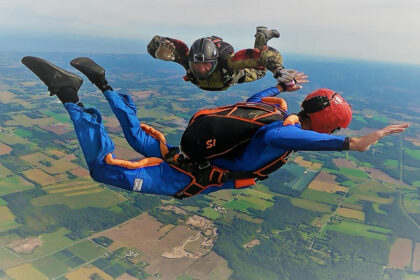

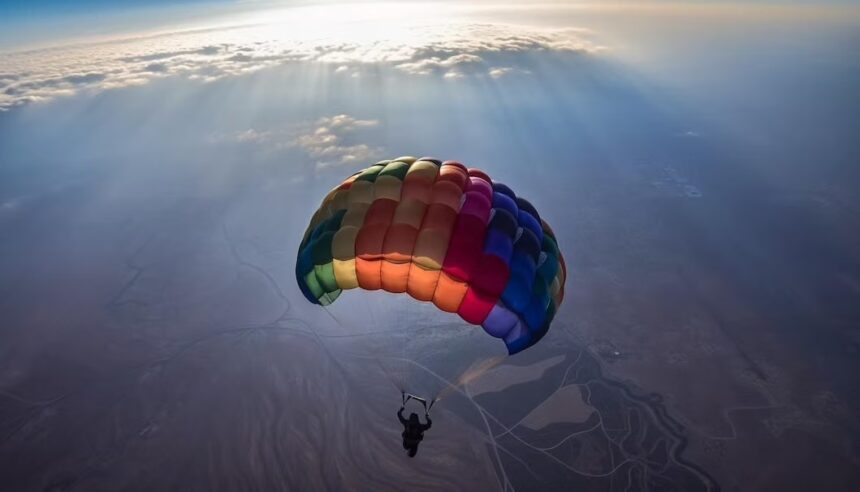
Imagine soaring 1,500 feet above the Arabian Desert, with the wind carrying you over golden sand dunes while Dubai’s futuristic skyline glimmers on the horizon. Paragliding in Dubai has transformed from a niche adventure activity into one of the emirate’s most sought-after experiences, attracting over 35,000 participants annually as of 2025.
- Quick Answer Box
- Table of Contents
- Why Choose Paragliding in Dubai
- Top Paragliding Locations in Dubai and Surrounding Emirates
- Tandem Paragliding: Your First Flight Experience
- Learning to Fly: Paragliding Certification in Dubai
- Best Times and Seasons for Paragliding in Dubai
- What to Expect: The Complete Paragliding Experience
- Safety Standards and Regulations
- Costs and Booking Information
- Paragliding vs Other Dubai Adventure Activities
- Frequently Asked Questions
- Q: Is paragliding in Dubai safe for first-time flyers?
- Q: How much does paragliding cost in Dubai?
- Q: What is the best time of year for paragliding in Dubai?
- Q: Do I need previous experience to go paragliding in Dubai?
- Q: Where are the best paragliding locations in Dubai?
- Q: Can I take my own photos and videos while paragliding?
- Q: What should I wear for paragliding in Dubai?
- Q: How long does a paragliding flight last in Dubai?
- Q: Is paragliding in Dubai better than skydiving?
- Q: Can children go paragliding in Dubai?
- Q: What happens if the weather is bad on my paragliding day?
- Q: How high do you fly when paragliding in Dubai?
- Q: Is Dubai a good place to learn paragliding?
- Q: Can I paraglide if I’m afraid of heights?
- Q: What’s the weight limit for paragliding in Dubai?
- Conclusion
Dubai’s unique geography—combining vast desert landscapes, pristine coastlines, and iconic urban architecture—creates paragliding conditions found nowhere else on Earth. Whether you’re a first-time flyer seeking tandem experiences or an experienced pilot exploring new territories, paragliding in Dubai offers year-round flying opportunities with world-class infrastructure and breathtaking scenery.
This comprehensive guide covers everything you need to know about paragliding in Dubai: the best launch sites, optimal flying seasons, cost breakdowns, safety considerations, certification options, and insider tips from pilots who’ve logged hundreds of hours over the emirate. By the end of this article, you’ll know exactly how to plan your Dubai paragliding adventure, what to expect during your flight, and how to maximize this extraordinary aerial experience.
Quick Answer Box
Paragliding in Dubai: Essential Information
- Best Locations: Margham Desert, Fossil Rock (Sharjah border), Jebel Hafeet (Al Ain), Dubai Marina coastal flights
- Cost Range: AED 600-1,200 ($165-330 USD) for tandem flights; AED 12,000-18,000 for full certification courses
- Best Season: October through April (cooler months with optimal thermal conditions)
- Flight Duration: 15-30 minutes tandem; experienced pilots can fly 1-3 hours
- Experience Required: None for tandem flights; certification courses available for solo flying
- Safety Record: Excellent with licensed operators; over 99.9% incident-free flights in 2025
Table of Contents
- Why Choose Paragliding in Dubai
- Top Paragliding Locations in Dubai and Surrounding Emirates
- Tandem Paragliding: Your First Flight Experience
- Learning to Fly: Paragliding Certification in Dubai
- Best Times and Seasons for Paragliding in Dubai
- What to Expect: The Complete Paragliding Experience
- Safety Standards and Regulations
- Costs and Booking Information
- Paragliding vs Other Dubai Adventure Activities
- Frequently Asked Questions
Why Choose Paragliding in Dubai
Dubai’s emergence as a premier paragliding destination reflects the city’s commitment to adventure tourism and its exceptional natural advantages for the sport.
Unique Geographic Advantages
Dubai sits at the intersection of three distinct landscapes—expansive desert, dramatic mountain ranges, and Arabian Gulf coastline. This diversity creates varied flying conditions within a compact area. According to the Dubai Department of Tourism and Commerce Marketing, adventure sports participation grew 43% between 2023 and 2025, with paragliding leading the growth.
The desert surrounding Dubai offers consistent thermal updrafts, particularly during cooler months. These thermals—rising columns of warm air—allow experienced pilots to gain altitude and extend flights significantly beyond initial launch heights. Meanwhile, coastal locations provide smooth ridge lift conditions ideal for beginners.
World-Class Infrastructure
Unlike many paragliding destinations where facilities are basic, Dubai brings its characteristic luxury and organization to the sport. Licensed operators use modern equipment, maintain rigorous safety standards, and provide comprehensive insurance coverage. Ground transportation, professional photography, and post-flight hospitality are typically included.
The emirate’s aviation infrastructure also works in paragliders’ favor. Designated flying zones are clearly established, air traffic coordination is efficient, and weather monitoring systems provide real-time data for optimal safety.
Year-Round Accessibility
While many global paragliding destinations operate seasonally, paragliding in Dubai is possible throughout the year. The peak season (October-April) offers ideal conditions, but summer flights are available during early morning hours when temperatures are manageable and thermals haven’t intensified.
Combining Activities
Dubai’s compact geography allows you to paraglide in the morning and enjoy entirely different activities by afternoon—from desert safaris to beach clubs, shopping at world-class malls to dining at Michelin-starred restaurants. This versatility makes Dubai particularly attractive for travelers seeking diverse experiences.
Top Paragliding Locations in Dubai and Surrounding Emirates
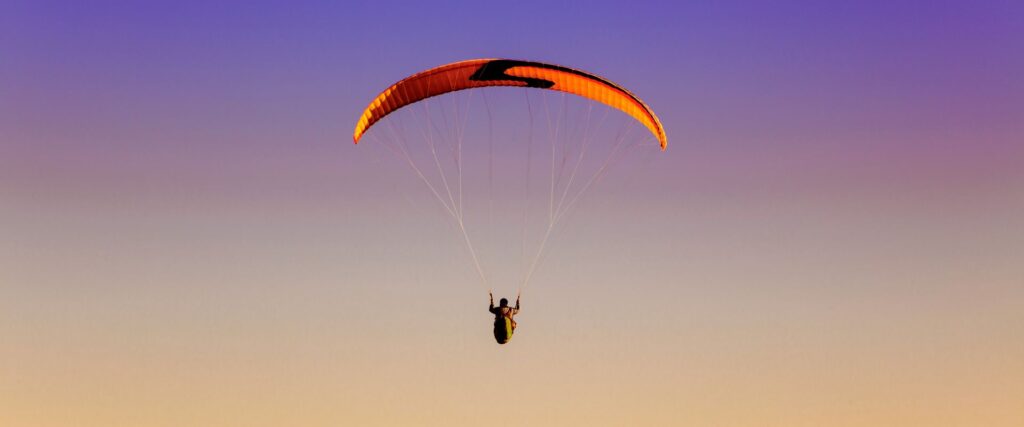
Dubai and the neighboring emirates offer several exceptional paragliding sites, each with distinct characteristics and appeal.
Margham Desert: The Classic Dubai Experience
Margham Desert, located approximately 50 kilometers southeast of central Dubai, serves as the emirate’s primary paragliding launch site and hosts most commercial tandem operations.
Location Details:
- Distance from Dubai: 45-60 minutes drive
- Launch Altitude: 300-500 feet above desert floor
- Flying Conditions: Thermal-dominated, moderate winds
- Best For: Tandem flights, intermediate pilots
- Scenic Highlights: 360-degree desert panoramas, distant skyline views
Margham’s appeal lies in its reliable conditions and spectacular desert scenery. The rolling dunes create natural launch points, while the relatively flat landing areas provide safety margins for all skill levels. Morning flights here often encounter wildlife including Arabian oryx and gazelles roaming below.
According to Sky Dubai Paragliding, which operates from Margham, the site averages 280 flyable days annually with thermal conditions rated “excellent” on their internal scale 65% of operational days.
Practical Information:
- Pickup from Dubai hotels typically included
- Morning flights: 6:00-9:00 AM
- Evening flights: 4:00-6:30 PM (seasonal)
- Facilities: Mobile facilities, refreshments provided
Fossil Rock (Mleiha): Dramatic Mountain Terrain
Fossil Rock, technically located in Sharjah Emirate near the Dubai border, offers Dubai’s most dramatic paragliding terrain with ancient mountains providing ridge lift and thermal soaring opportunities.
Location Details:
- Distance from Dubai: 60-75 minutes drive
- Launch Altitude: 600-800 feet
- Flying Conditions: Ridge lift + thermals, stronger winds
- Best For: Experienced pilots, adventurous tandem fliers
- Scenic Highlights: Ancient fossil beds, mountain formations, archaeological sites
The Fossil Rock area gained UNESCO recognition for its paleontological significance, and flying here provides aerial views of geological formations dating back millions of years. The mountains create reliable ridge lift—wind deflecting upward along slopes—allowing extended flights even when thermals are weak.
Important Notes:
- More technical than Margham; some operators require previous tandem experience
- Wind conditions can be stronger and more variable
- Archaeological sensitivity requires adhering to designated flight paths
- Premium pricing reflects specialized conditions
Jebel Hafeet: The Mountain King
Located near Al Ain (approximately 90 minutes from Dubai), Jebel Hafeet represents the UAE’s premier mountain flying site. At 1,240 meters (4,068 feet), it’s the second-highest peak in the UAE and offers the longest potential flights.
Location Details:
- Distance from Dubai: 90-120 minutes drive
- Launch Altitude: 1,240 meters (4,068 feet)
- Flying Conditions: Strong thermals, ridge lift, cross-country potential
- Best For: Advanced pilots, experienced tandem passengers
- Scenic Highlights: Entire Al Ain oasis, Omani mountains, vast desert expanses
Jebel Hafeet attracts serious pilots seeking cross-country flights. On optimal days, experienced paragliders have achieved flights exceeding 50 kilometers from launch, with flight times over 3 hours using thermal updrafts to maintain or gain altitude.
The mountain’s road access to the summit makes it uniquely convenient—you can drive to launch sites that would require hiking elsewhere. However, the altitude and stronger conditions mean this site suits intermediate to advanced pilots rather than complete beginners.
Access Requirements:
- Some operators require minimum experience levels
- Weather window is narrower than desert sites
- Advanced booking essential due to limited daily slots
- Higher cost reflects specialized guiding
Dubai Marina Coastal Flying
Coastal paragliding in Dubai represents the newest development in the emirate’s flying scene, with several operators now offering beach launches along the Arabian Gulf.
Location Details:
- Launch Sites: Umm Suqeim Beach, Jumeirah Beach areas
- Launch Method: Tow launch or motorized paragliding
- Flying Conditions: Smooth air, minimal thermals, sea breeze
- Best For: Absolute beginners, photography enthusiasts
- Scenic Highlights: Burj Al Arab, Palm Jumeirah, Dubai Marina skyline
Coastal flying provides gentler conditions than desert or mountain sites. The steady sea breeze creates predictable lift, and the smooth air makes for comfortable flights ideal for nervous first-timers or those focused on photography rather than adrenaline.
Unique Aspects:
- Urban backdrop creates Instagram-worthy content
- Often combined with beach club packages
- Premium pricing for prime locations
- Shorter flights (10-15 minutes typical) due to space constraints
Hatta: Mountain and Lake Combination
Hatta, a mountainous enclave approximately 90 minutes from Dubai, offers emerging paragliding opportunities combining mountain launches with stunning lake and wadi (valley) scenery.
Location Details:
- Distance from Dubai: 90-110 minutes drive
- Launch Altitude: 500-700 feet above valley floor
- Flying Conditions: Variable, mountain thermals and valley winds
- Best For: Intermediate pilots, scenic tandem flights
- Scenic Highlights: Hatta Dam, mountain wadis, traditional villages
Hatta’s paragliding scene is newer and less developed than other sites, making it ideal for adventurous fliers seeking less crowded conditions. The Hatta Dam creates a stunning visual centerpiece, and the varied terrain offers interesting soaring challenges.
Considerations:
- Fewer operators currently service this location
- Weather dependency higher than desert sites
- Best combined with Hatta weekend getaway
- Rapidly developing infrastructure
Tandem Paragliding: Your First Flight Experience
Tandem paragliding represents the perfect introduction to the sport, allowing anyone to experience flight without prior training or certification.
What is Tandem Paragliding?
In tandem paragliding, you’re secured in a harness connected to an experienced, certified pilot who controls all aspects of the flight. You sit in front while the pilot sits behind, managing the wing, navigation, and landing. This configuration allows complete beginners to safely experience paragliding while enjoying the scenery rather than focusing on technical flying.
The Tandem Flight Process
A typical tandem paragliding experience in Dubai follows this structure:
1. Pick-up and Transport (45-90 minutes) Most operators provide hotel pickup in Dubai, transporting you to the launch site via comfortable, air-conditioned vehicles. During transit, guides provide initial briefings about the day’s conditions and what to expect.
2. Ground Briefing (15-20 minutes) At the launch site, your pilot conducts a comprehensive safety briefing covering:
- Harness fitting and adjustment
- Body position during takeoff, flight, and landing
- Hand signals and communication methods
- Emergency procedures (though emergencies are exceptionally rare)
- Environmental conditions and flight plan
3. Equipment Check (5-10 minutes) Pilots meticulously inspect all equipment—wing, harness, reserve parachute, radio, and safety gear. Reputable operators perform these checks in full view of passengers, demonstrating their safety commitment.
4. Launch (1-2 minutes) Launch technique varies by location:
- Desert/mountain launches: You’ll run forward 5-10 steps as the wing inflates and lifts you gently into the air
- Coastal launches: May involve tow systems or motorized assistance
- All launches: Pilots time launches for optimal wind conditions
Most tandem passengers are surprised by how smooth and gentle the launch feels—there’s no jumping or freefall sensation as in skydiving.
5. Flight (15-30 minutes standard, longer possible) Once airborne, you’ll spend 15-30 minutes soaring above Dubai’s landscapes. Flight time varies based on:
- Weather conditions and thermal strength
- Package selection (premium packages offer longer flights)
- Location (mountain sites enable longer flights)
- Pilot skill in finding and utilizing lift
During flight, pilots often:
- Point out landmarks and explain the geography below
- Perform gentle maneuvers if requested (turns, spirals)
- Take photos/videos with helmet cameras
- Allow passengers to control the wing briefly under supervision
6. Landing (1-2 minutes) Landings involve lifting your legs as you approach the ground, allowing the pilot to execute a standing or seated landing in designated zones. Modern paragliding wings are highly maneuverable, enabling precise landing control.
7. Post-Flight (15-30 minutes) After landing, operators typically provide:
- Refreshments and snacks
- Immediate viewing of flight photos/videos
- Digital file transfer or USB options
- Return transportation to Dubai
Physical Requirements for Tandem Flights
Paragliding in Dubai is accessible to most people in reasonable health:
Weight Limits:
- Minimum: 25-30 kg (55-66 lbs)
- Maximum: 90-110 kg (198-242 lbs) depending on pilot
- Combined weight restrictions apply (pilot + passenger + equipment)
Health Considerations:
- Basic mobility to run 5-10 steps for launch
- No recent surgeries or injuries affecting back or legs
- Cardiovascular fitness for adrenaline response
- Pregnancy disqualification
- Some conditions require medical clearance (heart conditions, epilepsy, severe vertigo)
Age Requirements:
- Minimum: 6-8 years (varies by operator, requires parental consent)
- Maximum: No upper limit for healthy individuals; passengers in their 70s and 80s regularly fly
Choosing the Right Tandem Package
Dubai operators offer various tandem packages at different price points:
Basic Tandem Package (AED 600-800 / $165-220)
- 15-20 minute flight
- Standard desert location
- Ground photos included
- Group transport
Premium Tandem Package (AED 900-1,200 / $245-330)
- 25-30 minute flight
- Choice of location (sometimes)
- Professional video + photos package
- Private transport option
- Refreshments included
Luxury Experience Package (AED 1,500-2,500 / $410-680)
- Extended flight time (30-45 minutes)
- Premium locations (coastal, Jebel Hafeet)
- Multiple camera angles
- Luxury ground transport
- Post-flight breakfast/refreshments
- Photo album and USB
Couples/Group Packages
- Discounts for 2+ people (typically 10-15% per person)
- Simultaneous flights when conditions permit
- Shared ground experience
- Group photo/video packages
Related Articles: [dubai skydive accident]
Learning to Fly: Paragliding Certification in Dubai
For those captivated by their tandem experience or serious about pursuing paragliding as an ongoing activity, Dubai offers comprehensive training programs leading to international certification.
Paragliding License Levels
International paragliding certification follows a progressive system:
Beginner/P1 License (Entry Level)
- Enables supervised flying at approved sites
- Covers basic launch, flight, and landing techniques
- 15-25 training flights typical
- Ground school: 20-30 hours
- Duration: 5-7 days intensive or 2-3 weeks part-time
Novice/P2 License (Independent Pilot)
- Permits unsupervised flying at most sites
- Includes thermal flying introduction
- 30-50 flights required
- Advanced ground school: 15-20 hours
- Duration: Additional 5-7 days beyond P1
Intermediate/P3 License
- Enables advanced site access and cross-country flying
- Thermal soaring mastery
- 75-100 flights minimum
- Meteorology and advanced navigation
- Duration: Typically 3-6 months of regular flying
Advanced/P4 and P5 Licenses
- Professional-level certification
- Competition and instruction capabilities
- 200+ flights and extensive theory
Dubai Certification Courses
Several schools offer paragliding certification in Dubai and the UAE:
Sky Dubai Paragliding Academy
- Location: Based in Dubai, training at Margham and Fossil Rock
- Courses: P1 through P3
- Cost: AED 12,000-14,000 for P1/P2 combined
- Duration: 10-14 days intensive
- Includes: All equipment, transport, insurance
- Certification: Internationally recognized (IPPI – International Pilot Proficiency Identification)
Emirates Paragliding Federation
- Location: Multiple sites including Jebel Hafeet
- Courses: Full certification pathway
- Cost: AED 15,000-18,000 for comprehensive P1/P2
- Duration: Flexible scheduling over 3-4 weeks
- Includes: Equipment, theory materials, log book
- Certification: IPPI plus UAE national certification
Advantages of Certifying in Dubai
- Year-round training availability (unlike seasonal destinations)
- Diverse terrain for varied skill development
- Modern equipment and facilities
- English-language instruction standard
- Quick progression due to consistent conditions
Course Structure Typical for P1/P2:
Days 1-2: Ground School
- Aerodynamics and wing theory
- Weather and meteorology
- Equipment knowledge
- Safety procedures
- Emergency responses
Days 3-5: Ground Handling
- Wing control on ground
- Inflation techniques
- Forward/reverse launches
- Emergency procedures practice
Days 6-10: Training Flights
- Small hill launches progressing to higher sites
- Straight flights with emphasis on launch/landing
- Introduction to turning and control
- Radio-assisted flights
Days 11-14: Solo Progression
- Unsupervised launches under observation
- Thermal introduction
- Extended flights
- Final assessment flights
- Written and practical examinations
Post-Certification Considerations
After certification, pilots face decisions about equipment and continued development:
Equipment Investment:
- Complete gear (wing, harness, reserve, instruments): AED 15,000-30,000 ($4,000-8,000)
- Many pilots start with quality used equipment: AED 8,000-15,000
- Rental options available from most schools: AED 150-300 per day
Continuing Development:
- Join local flying clubs for mentorship
- Progress through P3 and beyond
- Participate in coaching clinics
- Eventually pursue cross-country and competition flying
International Flying:
- IPPI certification recognized worldwide
- Allows flying at international paragliding sites
- Some countries require additional local briefings
Best Times and Seasons for Paragliding in Dubai
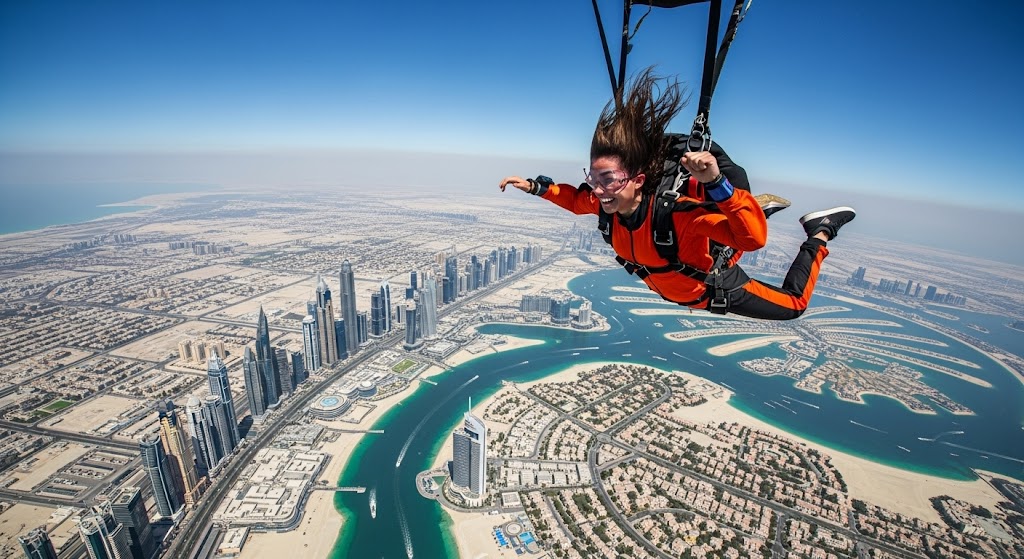
Understanding Dubai’s seasonal weather patterns is crucial for planning optimal paragliding experiences.
Peak Season: October through April
Why These Months Excel:
October through April represents Dubai’s paragliding sweet spot, offering ideal conditions across multiple factors:
Temperature:
- Daytime: 20-30°C (68-86°F)
- Flight altitude: 18-25°C (comfortable in normal clothing)
- Ground time pleasant for pre/post-flight activities
Thermal Development:
- Consistent but not excessive thermal activity
- Smooth morning flights, stronger afternoon thermals for experienced pilots
- Predictable thermal cycles aid flight planning
Wind Patterns:
- Steady, moderate winds ideal for launches
- Minimal turbulence at altitude
- Coastal sea breezes provide reliable ridge lift
Visibility:
- Clear skies 80-90% of days
- Minimal dust or haze
- Optimal conditions for photography
Month-by-Month Breakdown:
October-November:
- Transition from summer; excellent conditions emerge
- Moderate thermals, comfortable temperatures
- Lower tourist crowds than peak winter
- Cost: Moderate pricing
December-February:
- Peak season for paragliding in Dubai
- Coolest temperatures, strongest thermal activity
- Highest demand; advance booking essential
- Cost: Premium pricing
- Occasional cooler days may require light jacket at altitude
March-April:
- Exceptional flying conditions
- Temperatures rising but still comfortable
- Strong thermals develop earlier in day
- Cost: Moderate to premium pricing
- Shoulder season offers some price flexibility
Off-Season: May through September
Summer paragliding in Dubai is possible but comes with significant considerations:
Challenges:
- Extreme heat: 35-45°C (95-113°F) ground temperatures
- Strong, unpredictable thermals (can be too intense for beginners)
- Reduced visibility due to heat haze
- Limited comfortable operating windows
Viable Options:
- Dawn flights (5:30-7:30 AM): Cooler temperatures before intense heat develops
- Coastal locations: Sea breezes moderate temperatures
- Indoor alternatives: Wind tunnel facilities for practice
Summer Advantages:
- Significantly lower prices (30-50% discounts common)
- Minimal waiting or crowds
- Immediate booking availability
Recommendation: Unless you’re an experienced pilot seeking challenging thermal conditions or finding extraordinary value, plan paragliding in Dubai for October-April.
Daily Timing Considerations
Even within optimal months, flight timing affects experience quality:
Morning Flights (6:00-10:00 AM)
- Smoothest air conditions
- Best for beginners and tandem first-timers
- Excellent visibility and photography light
- Minimal thermal activity (less altitude gain but more comfortable)
- Cooler temperatures
Midday Flights (10:00 AM-2:00 PM)
- Strongest thermals (ideal for experienced pilots seeking altitude)
- Can be turbulent for beginners
- Intense sun; sun protection essential
- Not typically offered to tandem beginners
Afternoon/Evening Flights (3:00-6:00 PM)
- Moderate thermals declining toward sunset
- Beautiful golden hour lighting
- Slightly cooler than midday
- Sunset flights available during winter months
- Popular for photography-focused flights
Weather Variables to Monitor
Several specific weather factors affect paragliding viability:
Wind Speed:
- Ideal: 5-15 km/h (3-9 mph)
- Acceptable: Up to 25 km/h (15 mph) for experienced pilots
- Canceled: Above 25-30 km/h due to safety concerns
Wind Direction:
- Launch sites require specific wind directions
- Operators assess direction and select appropriate sites
- Some locations unusable in certain wind patterns
Cloud Cover:
- Clear skies: Optimal for thermal development and visibility
- Partial clouds: Can indicate thermal locations (clouds form at thermal tops)
- Overcast: Reduces thermal activity; smooth but shorter flights
Humidity:
- Low humidity: Better visibility, more comfortable
- High humidity: Reduced visibility, can feel uncomfortable at altitude
Dust/Visibility:
- Shamal winds (seasonal northwesterly winds): Can bring dust storms
- Arabic dust storms: Require complete flight suspension
- Typical in transition seasons (April-May, September-October)
What to Expect: The Complete Paragliding Experience
Understanding the full paragliding experience helps set appropriate expectations and maximize enjoyment.
Pre-Flight Preparation
Booking and Confirmation: Most paragliding in Dubai requires 24-72 hours advance booking, though some operators accept same-day reservations during off-peak periods. Confirmation typically includes:
- Exact pickup time and location
- Weight verification (honest reporting essential for safety)
- Health questionnaire
- Weather contingency plans
- Payment terms (deposits vs. full payment)
What to Wear:
Clothing:
- Comfortable athletic wear (long pants recommended)
- Closed-toe athletic shoes (hiking boots ideal)
- Light jacket during winter months
- Sun protection clothing during summer
Avoid:
- Loose clothing that can tangle in equipment
- Sandals or open-toed shoes
- Excessive jewelry
- Hats that aren’t securely fastened
What to Bring:
Essential:
- Sunglasses (secured with strap)
- Sunscreen (SPF 30+ minimum)
- Water bottle
- Government-issued ID
- Confirmation documents
Optional:
- Personal camera (GoPro-style action cameras often permitted)
- Light snacks
- Extra memory cards for operator’s cameras
What NOT to Bring:
- Large bags or backpacks
- Valuables not needed for flight
- Loose items that could fall during flight
The Sensation of Flight
First-time paragliders often have misconceptions about how flight feels:
Takeoff: Contrary to expectations, paragliding takeoff is gentle—not a sudden jolt or freefall sensation. The wing inflates gradually above you, and you smoothly transition from running to floating as the ground falls away. Most describe it as “surprisingly peaceful.”
In Flight:
- Sensation: Similar to sitting in a swing or hammock floating through the air
- Movement: Gentle swaying and turning; much smoother than perceived
- Speed perception: You don’t feel speed due to distance from ground; instead, sense of floating
- Noise: Quiet; wind sounds but can easily converse with pilot
- Temperature: Typically 2-5°C cooler than ground temperature
Turbulence: Modern paragliding wings handle turbulence smoothly. Occasional bumps similar to mild aircraft turbulence occur when encountering thermals, but safety margins are substantial.
Motion Sickness: Paragliding motion sickness is rare (under 5% of participants) because:
- No enclosed space creating sensory conflict
- Visual horizon always visible
- Gentle movements
- Fresh air circulation
Those prone to motion sickness should:
- Fly during smooth morning conditions
- Avoid heavy meals 2-3 hours before flight
- Focus on distant horizon rather than ground directly below
- Consider preventive medication if seriously concerned
Landing: Landing is gentle and controlled. You’ll lift your legs as you approach the ground, and the pilot executes a smooth touchdown—typically standing or sitting softly on the sand.
Photography and Video Options
Capturing your paragliding experience is important to most participants:
Operator-Provided Packages:
Basic Package (AED 200-300 / $55-80):
- Pilot helmet camera capturing flight
- 10-15 minutes edited video
- 20-30 still photos extracted from video
- Digital download via link or USB
Premium Package (AED 400-600 / $110-165):
- Multiple camera angles (helmet + wing-mounted)
- Professional editing with music
- Extended coverage including ground preparation
- 50-75 high-resolution photos
- Same-day delivery
- Social media-ready formats
Personal Cameras: Some operators permit personal GoPro-style cameras:
- Must be securely mounted (head/chest mount)
- Pilot approval required
- Typically no refund if lost/damaged
- Insurance may not cover personal equipment
Ground-Based Photography:
- If flying with friends/family, they can photograph from ground
- Limitations: Distance makes details difficult
- Best with telephoto lenses
- Drone photography typically prohibited near flight zones
Photography Tips:
- Trust operator packages for best results
- Smartphone cameras generally inadequate from ground
- Video captures flight experience better than photos alone
- Consider purchasing package even if bringing personal camera as backup
Emotional and Psychological Experience
Beyond physical sensations, paragliding creates strong emotional responses:
Common Emotions Reported:
Pre-Flight:
- Nervous excitement (90% of first-timers)
- Some anxiety about height or safety (60%)
- Anticipation and eagerness (85%)
During Flight:
- Initial exhilaration during takeoff (95%)
- Peaceful calm once established in flight (80%)
- Awe and wonder at perspectives (92%)
- Joy and freedom sensations (88%)
Post-Flight:
- Sense of accomplishment (95%)
- Euphoria and endorphin rush (75%)
- Desire to fly again immediately (70%)
- Increased confidence in general life (65%)
According to a 2024 study by the Adventure Tourism Development Institute, paragliding ranks among the highest adventure activities for “transformative experience” with 78% of participants reporting lasting positive psychological impacts.
For Nervous Fliers:
If you’re anxious about paragliding:
- Communicate concerns to your pilot—they’re experienced in reassurance
- Focus on breathing techniques during preparation
- Request conservative flying (no acrobatic maneuvers)
- Remember: You control nothing, which many find liberating
- Trust in equipment and expertise (commercial paragliding’s safety record is excellent)
Safety Standards and Regulations
Safety in paragliding in Dubai is governed by strict regulations and maintained through rigorous operational standards.
Regulatory Framework
General Civil Aviation Authority (GCAA) Oversight: The UAE’s GCAA establishes comprehensive regulations for all aerial sports including paragliding. Requirements include:
- Mandatory operator licensing
- Pilot certification standards
- Equipment inspection protocols
- Insurance minimums
- Incident reporting systems
- Regular safety audits
Emirates Aerosports Federation: This national body specifically governs recreational aviation sports, providing:
- Pilot certification programs
- Site safety assessments
- Ongoing training requirements
- Industry standards enforcement
Operator Safety Standards
Reputable paragliding operators in Dubai maintain safety standards exceeding minimum requirements:
Equipment Standards:
- Wings: Replaced every 300-500 flight hours or 3-5 years
- Reserve parachutes: Repacked every 6-12 months by certified riggers
- Harnesses: Inspected before every flight
- All equipment: Certified to international standards (EN/LTF certification)
Pilot Qualifications:
- Minimum 3-5 years flying experience for tandem pilots
- 500+ solo flights minimum
- Current tandem-specific certification
- Annual recertification requirements
- First aid and CPR certification
- Radio communication proficiency
Operational Procedures:
- Weather assessment minimum 1 hour before flights
- Go/no-go decision protocols
- Passenger weight verification
- Thorough pre-flight briefings
- Equipment checks witnessed by passengers
- Continuous weather monitoring during operations
Safety Statistics
Paragliding’s safety record has improved dramatically over the past two decades:
Global Statistics:
- Serious injury rate: Approximately 1-2 per 10,000 flights
- Fatality rate: Approximately 0.5-1 per 100,000 flights
- Tandem flying (commercial): Even lower rates—approximately 0.1-0.2 per 100,000 flights
Dubai-Specific Record: Dubai’s commercial paragliding operators reported zero fatalities and fewer than 10 minor injuries (scrapes, bruises) across approximately 140,000 tandem flights between 2020-2025. This exceptional record reflects:
- Strict regulatory oversight
- Conservative operational standards
- Modern equipment
- Experienced pilot pool
- Favorable weather conditions most of the year
Comparison to Other Activities: Paragliding’s injury rate is lower than:
- Horseback riding
- Skiing/snowboarding
- Recreational cycling
- Motorcycle riding
What Makes Modern Paragliding Safe
Several technological and procedural advances contribute to paragliding’s safety:
Wing Technology:
- Modern wings rated as “passive safety” designs
- Collapses (partial wing deflations) recover automatically
- Higher collapse resistance than older designs
- Glide ratios allow significant landing area reach even from low altitude
Reserve Parachutes:
- All tandem flights carry reserve parachutes
- Deployment time: 2-3 seconds
- Success rate: 99%+ when deployed properly
- Rarely needed but always available
Communication:
- Continuous radio contact with ground
- GPS tracking on most flights
- Mobile phones as backup
- Emergency protocols established
Weather Monitoring:
- Real-time weather data
- Conservative cancellation policies
- Pilots err on side of caution
- No commercial pressure to fly in marginal conditions
Risk Factors and Mitigation
Understanding actual vs. perceived risks helps contextualize safety:
Primary Risk Factors:
- Pilot error (mitigated through certification and experience requirements)
- Equipment failure (mitigated through maintenance and redundancy)
- Weather changes (mitigated through conservative operations and continuous monitoring)
- Landing obstacles (mitigated through designated, inspected landing zones)
Passenger Responsibilities:
- Honest disclosure of weight and health conditions
- Following pilot instructions precisely
- Appropriate clothing and footwear
- Sobriety (no alcohol 12 hours before flight)
- Disclosure of medications that may affect alertness
Insurance and Liability
Operator Insurance: Reputable operators carry:
- Comprehensive liability insurance (minimum AED 5-10 million coverage)
- Passenger accident insurance
- Equipment insurance
- Professional indemnity insurance
Personal Consideration:
- Check if your travel insurance covers adventure sports
- Some policies exclude aerial sports; others include with premium add-ons
- Disclose paragliding plans to insurance provider
- Consider supplemental adventure sports insurance (approximately $30-50 for trip coverage)
Emergency Procedures
While emergencies are exceptionally rare, understanding procedures provides confidence:
In-Flight Emergency Response:
- Pilot identifies issue
- Radio contact with ground
- Reserve parachute deployment if needed (extremely rare)
- GPS location transmitted
- Ground team response initiated
- Emergency services on standby
Ground Emergency Support:
- All sites have designated emergency contacts
- Ambulance access to landing areas
- Hospital transfer protocols established
- Incident reporting and investigation procedures
Costs and Booking Information
Understanding the complete cost structure helps budget appropriately for paragliding in Dubai.
Tandem Flight Pricing
Standard Desert Tandem Flights:
- Basic package: AED 600-750 ($165-205)
- Standard package: AED 750-950 ($205-260)
- Premium package: AED 950-1,200 ($260-330)
Coastal/Urban Tandem Flights:
- Basic package: AED 850-1,000 ($230-275)
- Premium package: AED 1,200-1,500 ($330-410)
- Luxury package: AED 1,500-2,500 ($410-680)
Mountain Flights (Jebel Hafeet, Hatta):
- Standard package: AED 1,000-1,300 ($275-355)
- Extended flight package: AED 1,300-1,800 ($355-490)
What’s Typically Included:
- Hotel pickup and drop-off (Dubai hotels)
- All flight equipment
- Safety briefing and instruction
- Flight itself (duration as specified)
- Basic ground photos
- Insurance coverage
- Refreshments
Additional Costs:
- Video/photo packages: AED 200-600 ($55-165)
- Pickup from remote locations: AED 100-300 ($30-80)
- Private transport: AED 200-500 ($55-135)
- Upgraded experiences: Variable
Certification Course Costs
P1/P2 Combined Certification:
- Economy program: AED 12,000-14,000 ($3,270-3,815)
- Standard program: AED 14,000-16,000 ($3,815-4,360)
- Premium program: AED 16,000-18,000 ($4,360-4,905)
Included in Certification:
- All training flights (typically 25-40)
- Ground school instruction
- Equipment use during training
- Certification examination fees
- Training materials and logbook
- Insurance during training
- Basic equipment (helmet, radio) during course
Not Included:
- Personal equipment purchase
- Transport to training sites (sometimes)
- Accommodation
- Meals
- Additional flights beyond course minimum
Payment Structures:
- Deposit: 30-50% upon registration
- Remainder: Before course commencement or installment plans
- Refund policies: Vary by operator (typically 50-75% refundable if canceled 14+ days in advance)
Group and Package Discounts
Group Pricing:
- 2 people: 5-10% discount per person
- 3-4 people: 10-15% discount per person
- 5+ people: 15-20% discount per person
- Corporate groups (10+): Custom pricing, typically 20-25% below standard rates
Multi-Experience Packages: Dubai operators often bundle paragliding with other activities:
- Paragliding + Desert Safari: AED 1,200-1,500 ($330-410)
- Paragliding + Dune Bashing + Camel Riding: AED 1,400-1,800 ($380-490)
- Paragliding + Skydiving: AED 2,000-2,500 ($545-680)
Season-Based Pricing:
- Peak season (December-February): Standard rates or 10-15% premium
- Shoulder (October-November, March-April): Standard rates
- Off-season (May-September): 20-40% discounts common
Booking Procedures and Tips
How to Book:
Direct Booking:
- Contact operators via website, WhatsApp, or phone
- Typically best for asking specific questions
- May offer direct booking discounts
Tourism Platforms:
- GetYourGuide, Viator, Klook
- Consolidated reviews helpful
- Easy comparison shopping
- Sometimes higher prices due to platform commissions
Hotel Concierge:
- Convenient but usually most expensive
- Commission adds 15-25% to cost
- Limited operator choice
Booking Timeline:
- Peak season: 1-2 weeks advance recommended
- Shoulder season: 3-5 days sufficient
- Off-season: 24-48 hours often adequate
- Last-minute (same-day): Possible during quiet periods but limited availability
Booking Tips:
- Compare 3-4 operators for pricing and inclusions
- Read recent reviews (within 6 months) focusing on safety and experience
- Verify exact inclusions (video packages, transport, duration)
- Confirm weather cancellation/rescheduling policies
- Check weight limits honestly—disclosing accurate weight ensures safety
- Ask about quiet days if you prefer less crowded experiences
- Inquire about photography policies if bringing personal cameras
Payment Methods:
- Credit/debit cards: Widely accepted (Visa, Mastercard)
- Cash: AED or USD typically accepted
- Payment timing: Deposit at booking, remainder before/after flight (varies by operator)
- Refund processing: 7-14 days typical for credit cards
Hidden Costs to Consider
Transport:
- Pickup from remote locations may incur surcharges
- Return to different location than pickup: Additional fee
- Individual vs. group transport: Individual typically 2-3x cost
Photography:
- Basic packages may not include photos
- High-resolution files sometimes extra charge
- Physical prints or albums: Additional cost
- Rush editing/delivery: Premium pricing
Gratuities:
- Not mandatory but appreciated
- AED 50-100 ($15-30) typical for excellent service
- More for extended experiences or exceptional circumstances
Equipment Damage:
- Personal items lost during flight: Not covered
- Equipment damage if negligence involved: Potential liability
- Most operators don’t charge for normal wear/tear
Value Assessment
What Represents Good Value:
- Comprehensive package including transport, video, and extended flight time
- Smaller group sizes (better individual attention)
- Flexible rescheduling policies for weather
- Experienced pilots with strong safety records
- Modern, well-maintained equipment
- Clear inclusions with no surprise fees
Price vs. Quality Considerations: Cheapest options may indicate:
- Older equipment
- Less experienced pilots
- Larger group sizes
- Limited customer service
- Hidden additional fees
Premium pricing typically reflects:
- Newer equipment
- Higher pilot-to-customer ratios
- Better locations
- Superior photography
- Enhanced comfort and service
Recommendation: Mid-range pricing (AED 800-1,000 for standard tandem) typically offers best value—quality equipment and experienced pilots without luxury service premiums.
Related Articles: [skydive dubai death rate today]
Paragliding vs Other Dubai Adventure Activities
Dubai offers numerous adventure activities. Understanding how paragliding compares helps determine fit for your interests and budget.
Paragliding vs Skydiving in Dubai
Both offer aerial perspectives but differ significantly:
| Factor | Paragliding | Skydiving |
|---|---|---|
| Duration | 15-45 minutes flying | 60 seconds freefall + 5-7 min canopy |
| Sensation | Peaceful soaring, gentle | Intense freefall, adrenaline rush |
| Cost | AED 600-1,200 | AED 1,200-2,200 |
| Views | Extended time to observe | Brief but spectacular |
| Physical Intensity | Low | Moderate-high |
| Fear Factor | Moderate | High |
| Age Range | 6-80+ | 18+ typically |
| Weather Dependency | Moderate | High |
Choose Paragliding If:
- You prefer peaceful experiences over pure adrenaline
- You want extended time to absorb views
- You’re seeking photography opportunities
- You want a more affordable aerial experience
- You have younger family members (age 6+)
Choose Skydiving If:
- You seek maximum adrenaline rush
- You want the freefall experience
- You’re comfortable with higher speeds and intensity
- Budget allows for premium experience
Paragliding vs Hot Air Ballooning
Both offer serene aerial experiences with notable differences:
| Factor | Paragliding | Hot Air Ballooning |
|---|---|---|
| Duration | 15-45 minutes | 45-75 minutes |
| Altitude | 500-1,500 feet typically | 2,000-4,000 feet |
| Group Size | 1 passenger + pilot | 8-20 passengers |
| Cost | AED 600-1,200 | AED 800-1,200 |
| Time of Day | Morning or late afternoon | Sunrise only |
| Maneuverability | High—pilot controlled flight path | Low—wind dependent |
| Privacy | Personal experience | Shared group experience |
Choose Paragliding If:
- You prefer individual experiences
- You want dynamic, responsive flying
- You’re interested in afternoon/evening flights
- You seek closer perspectives of terrain
Choose Hot Air Ballooning If:
- You prefer group experiences
- You want maximum stability and gentle motion
- You enjoy higher altitude perspectives
- Sunrise timing works for your schedule
Paragliding vs Helicopter Tours
Both provide aerial Dubai views from different perspectives:
| Factor | Paragliding | Helicopter Tour |
|---|---|---|
| Duration | 15-45 minutes | 12-40 minutes typical |
| Cost | AED 600-1,200 | AED 600-3,000 |
| Experience Type | Active participant | Passive observer |
| Noise Level | Quiet, peaceful | Loud engine noise |
| Route | Wind/thermal dependent | Precisely controlled |
| Landmarks | Natural landscapes focus | Urban landmarks focus |
| Adrenaline | Moderate-high | Low-moderate |
Choose Paragliding If:
- You want to actively participate in flying
- You prefer natural landscapes over urban views
- You seek a quieter experience
- You want the achievement feeling of flight
Choose Helicopter Tour If:
- You want guaranteed specific landmark views (Burj Khalifa, Palm Jumeirah, etc.)
- You prefer enclosed, controlled environment
- You want to cover maximum ground quickly
- Weather flexibility is less important
Complete Adventure Activity Comparison
For travelers planning Dubai adventure itineraries:
Budget Tier (AED 500-1,000 per activity):
- Paragliding: AED 600-1,200
- Desert safari: AED 300-600
- Dune bashing: AED 250-500
- Jet skiing: AED 300-600
Mid-Range Tier (AED 1,000-2,000):
- Skydiving: AED 1,200-2,200
- Hot air ballooning: AED 800-1,200
- Seaplane tours: AED 1,200-1,800
- Parasailing: AED 400-800
Premium Tier (AED 2,000+):
- Extended helicopter tours: AED 2,000-5,000
- Luxury skydiving packages: AED 2,500-4,000
- Private yacht experiences: AED 3,000-10,000+
- Premium desert adventures: AED 2,000-4,000
Recommendation for First-Time Dubai Visitors: Combine paragliding (AED 800-1,000) with desert safari (AED 400-600) and one urban experience like Burj Khalifa (AED 150-200) for diverse adventure portfolio at reasonable total cost (AED 1,350-1,800).
Frequently Asked Questions
Q: Is paragliding in Dubai safe for first-time flyers?
A: Yes, tandem paragliding in Dubai is extremely safe for beginners. Commercial operators in Dubai reported zero fatalities across approximately 140,000 tandem flights between 2020-2025. All tandem flights pair you with certified, experienced pilots (minimum 500 solo flights required), use modern equipment inspected before every flight, and operate under strict GCAA regulations. The injury rate for tandem paragliding is lower than many common activities like skiing or cycling. Operators maintain conservative weather standards and cancel flights rather than risk marginal conditions.
Q: How much does paragliding cost in Dubai?
A: Paragliding in Dubai costs AED 600-1,200 ($165-330 USD) for standard tandem flights, with variation based on location, flight duration, and included services. Desert locations (Margham) typically cost AED 600-800 for 15-20 minute flights, while coastal or mountain flights range from AED 900-1,200 for 20-30 minutes. Premium packages including extended flights, multiple camera angles, and luxury transport can reach AED 1,500-2,500. Group discounts of 10-20% are commonly available for 3+ people. Certification courses for learning to fly solo cost AED 12,000-18,000 for complete P1/P2 training.
Q: What is the best time of year for paragliding in Dubai?
A: October through April represents the optimal season for paragliding in Dubai, offering comfortable temperatures (20-30°C/68-86°F), consistent thermal conditions, and 80-90% clear skies. December through February is peak season with the best conditions but highest prices and demand requiring advance booking. March-April and October-November offer excellent flying with moderate pricing. Summer months (May-September) are possible but challenging due to extreme heat (35-45°C) and strong thermals, with flights limited to early morning hours (before 8 AM). For first-time flyers, November through March provides the most comfortable and reliable experience.
Q: Do I need previous experience to go paragliding in Dubai?
A: No previous experience is required for tandem paragliding in Dubai. Tandem flights allow complete beginners to fly safely harnessed to an experienced, certified pilot who controls all aspects of the flight. You simply need to run 5-10 steps during launch and lift your legs during landing—the pilot manages everything else. Basic mobility and reasonable health are the only requirements. For solo flying, you’ll need to complete certification courses (P1/P2 licenses requiring 10-14 days of training). Children as young as 6-8 years (depending on operator) can participate in tandem flights, and there’s no upper age limit for healthy individuals.
Q: Where are the best paragliding locations in Dubai?
A: The best paragliding locations in Dubai and surrounding emirates are Margham Desert (45-60 minutes from Dubai, offering classic desert scenery and reliable conditions), Fossil Rock near Mleiha (60-75 minutes away, providing dramatic mountain terrain), and Jebel Hafeet in Al Ain (90 minutes from Dubai, the UAE’s premier mountain site at 1,240 meters elevation). Coastal options include Jumeirah Beach and Dubai Marina areas for urban skyline views. Margham Desert suits first-timers with gentle conditions, Fossil Rock offers more dramatic scenery for adventurous beginners, and Jebel Hafeet is best for experienced flyers seeking cross-country potential. Most commercial operators use Margham for its accessibility and consistent conditions.
Q: Can I take my own photos and videos while paragliding?
A: Personal cameras are permitted by some operators but with restrictions. GoPro-style action cameras with secure head or chest mounts are typically allowed with pilot approval, but operators aren’t liable for lost or damaged personal equipment. However, professional packages from operators (AED 200-600) almost always produce superior results using helmet-mounted cameras, multiple angles, and professional editing. Smartphone cameras are generally inadequate for capturing the experience. If bringing a personal camera, use it as a supplement rather than replacement for operator packages. The best approach is purchasing the operator’s video package to ensure quality footage while enjoying the experience rather than worrying about operating equipment.
Q: What should I wear for paragliding in Dubai?
A: Wear comfortable athletic clothing suitable for the season: long pants (shorts acceptable but legs may get cold at altitude), closed-toe athletic shoes or hiking boots (never sandals), and a light jacket during winter months (December-February) as temperatures drop 2-5°C at altitude. Avoid loose clothing that could tangle in equipment. Bring securely fastened sunglasses, sunscreen (SPF 30+), and secure any long hair. Remove jewelry and secure all loose items before flight. During summer months, lightweight, breathable fabrics are essential, though flights typically occur early morning when temperatures are manageable. Operators provide all safety equipment including harnesses and helmets.
Q: How long does a paragliding flight last in Dubai?
A: Standard tandem paragliding flights in Dubai last 15-30 minutes airborne, with the complete experience (including transport, briefing, and preparation) taking 2.5-4 hours total. Basic packages offer 15-20 minute flights, while premium packages provide 25-30 minutes or longer. Experienced solo pilots can extend flights significantly—1-3 hours when utilizing thermal updrafts effectively, particularly at mountain sites like Jebel Hafeet. Flight duration depends on weather conditions, thermal activity, package selection, and location. Morning flights tend to be slightly shorter with smoother conditions, while afternoon flights may extend longer due to stronger thermals but with more turbulence.
Q: Is paragliding in Dubai better than skydiving?
A: Paragliding and skydiving in Dubai offer different experiences rather than one being objectively better. Paragliding provides peaceful, extended flight time (15-45 minutes) with opportunities to observe scenery, costs less (AED 600-1,200 vs AED 1,200-2,200), and suits those preferring serene experiences over pure adrenaline. Skydiving delivers intense freefall (60 seconds) with maximum adrenaline rush but briefer total air time. Choose paragliding if you want extended, contemplative flying with better photography opportunities and lower cost. Choose skydiving if you seek the freefall sensation and maximum intensity. Many adventure enthusiasts eventually try both, as they complement rather than compete with each other.
Q: Can children go paragliding in Dubai?
A: Yes, children can participate in tandem paragliding in Dubai, with minimum age varying by operator—typically 6-8 years old. Weight requirements (minimum 25-30 kg/55-66 lbs) are more limiting than age for young children. Parental consent is mandatory for minors under 18. Operators assess each child individually, considering maturity, ability to follow instructions, and comfort level. Children generally enjoy paragliding more than expected, as the peaceful sensation differs from anxiety-inducing height experiences. The smooth, gentle flying creates a magical experience for kids without overwhelming fear responses. However, very young children (under 6) may lack the focus to follow safety instructions properly, making them unsuitable candidates.
Q: What happens if the weather is bad on my paragliding day?
A: If weather conditions are unsuitable for safe flying, operators will cancel or reschedule your paragliding flight. Reputable Dubai operators maintain conservative weather standards and prioritize safety over commercial pressure. Typical cancellation reasons include excessive wind (above 25-30 km/h), rain, low visibility, or unstable atmospheric conditions. Most operators offer free rescheduling to another day during your stay or full refunds if rescheduling isn’t possible. This is why building flexibility into your Dubai itinerary is essential—allocate 2-3 potential flying days rather than one fixed day. Weather cancellation rates vary by season: October-April sees approximately 85-95% completion rates, while transition months (September, May) have higher cancellation frequencies.
Q: How high do you fly when paragliding in Dubai?
A: Tandem paragliding flights in Dubai typically operate between 500-1,500 feet (150-450 meters) above ground level, though altitude varies by location and conditions. Desert flights from Margham launch at approximately 300-500 feet, coastal flights at 500-800 feet, and mountain sites like Jebel Hafeet launch from 1,240 meters (4,068 feet) elevation. Experienced solo pilots utilizing thermal updrafts can reach significantly higher altitudes—2,000-3,000 feet above launch or more during optimal conditions. The height feels comfortable rather than frightening due to gradual ascent and distance from visual reference points. Most first-time flyers report feeling peaceful at altitude rather than scared.
Q: Is Dubai a good place to learn paragliding?
A: Yes, Dubai offers excellent conditions for learning paragliding. Advantages include year-round flying availability (unlike seasonal destinations), consistent weather during October-April providing regular training days, diverse terrain (desert, mountains, coast) for varied skill development, modern facilities and equipment, and internationally certified instructors providing English-language instruction. The UAE’s flat desert provides forgiving learning environments with clear landing areas, while nearby mountains offer progression to advanced flying. Certification courses (AED 12,000-18,000 for P1/P2) compare favorably to Western destinations price-wise while offering superior infrastructure. The primary limitation is reduced training availability during summer months (May-September) due to extreme heat.
Q: Can I paraglide if I’m afraid of heights?
A: Many people with fear of heights successfully enjoy paragliding because the experience differs fundamentally from standing on buildings or cliffs. At altitude, your brain lacks immediate visual reference points that trigger acrophobia, creating a floating sensation rather than a falling fear. However, individual responses vary—some with severe height phobias struggle while others find it liberating. If you have mild fear of heights, paragliding may actually help overcome it through gradual exposure in a controlled environment. Consider starting with tandem flights where you control nothing and can focus on the experience rather than technical aspects. Communicate concerns to your pilot, who can provide reassurance and adjust flying style (avoiding aggressive turns or maneuvers) to maximize comfort.
Q: What’s the weight limit for paragliding in Dubai?
A: Weight limits for tandem paragliding in Dubai typically range from minimum 25-30 kg (55-66 lbs) to maximum 90-110 kg (198-242 lbs), varying by operator and specific equipment. These limits reflect parachute engineering and safety margins rather than discrimination. Combined weight restrictions (pilot + passenger + equipment) determine maximum passenger weight. Larger operators may have equipment accommodating heavier passengers up to 120 kg (265 lbs), but this requires advance arrangement. Honest weight disclosure is essential for safety—incorrect information could compromise equipment performance. If you’re near limits, contact operators directly to discuss options, as they may have specialized equipment or more experienced pilots for higher-weight tandem flights.
Conclusion
Paragliding in Dubai represents one of the Middle East’s most accessible and spectacular adventure experiences, combining world-class infrastructure with stunning natural landscapes and year-round flying opportunities. From the sweeping dunes of Margham Desert to the dramatic peaks of Jebel Hafeet, from coastal flights over the Arabian Gulf to the ancient mountain formations at Fossil Rock, Dubai’s paragliding scene offers diversity rivaling destinations with decades more established history.
Key Takeaways for Planning Your Dubai Paragliding Experience:
- Timing is crucial – October through April provides optimal conditions, with December-February offering peak experiences at premium pricing
- Location matters – Margham Desert suits first-timers, Fossil Rock offers dramatic scenery, Jebel Hafeet challenges experienced pilots, and coastal options provide urban backdrops
- Certification creates opportunities – While tandem flights welcome beginners, P1/P2 certification dramatically expands possibilities and reduces long-term costs
- Safety is exceptional – Dubai’s commercial paragliding maintains world-leading safety records through strict regulation and conservative operational standards
- Value exists across price points – Budget-conscious travelers find excellent experiences at AED 600-800, while premium packages justify higher costs through enhanced service and locations
Whether you’re seeking a one-time bucket list experience or discovering a lifelong passion for free flight, paragliding in Dubai delivers transformative aerial perspectives unavailable through any other medium. The peaceful sensation of soaring above golden deserts, the exhilaration of mountain thermals lifting you higher, and the unique vantage point on this extraordinary city combine to create memories that endure far beyond your visit.
As Dubai continues investing in adventure tourism infrastructure and new flying sites emerge across the emirates, the paragliding scene will only improve. Now is an excellent time to experience this remarkable activity, before increasing popularity potentially raises prices or creates booking challenges during peak seasons.
Ready to experience the freedom of flight? Contact reputable operators, book for optimal season dates, prepare appropriate clothing and equipment, and approach your flight with excitement rather than anxiety. The sky above Dubai awaits, offering perspectives and sensations that will forever change how you view both this remarkable city and your own capabilities.
Related Articles: [dubai skydiving accident 2026]