
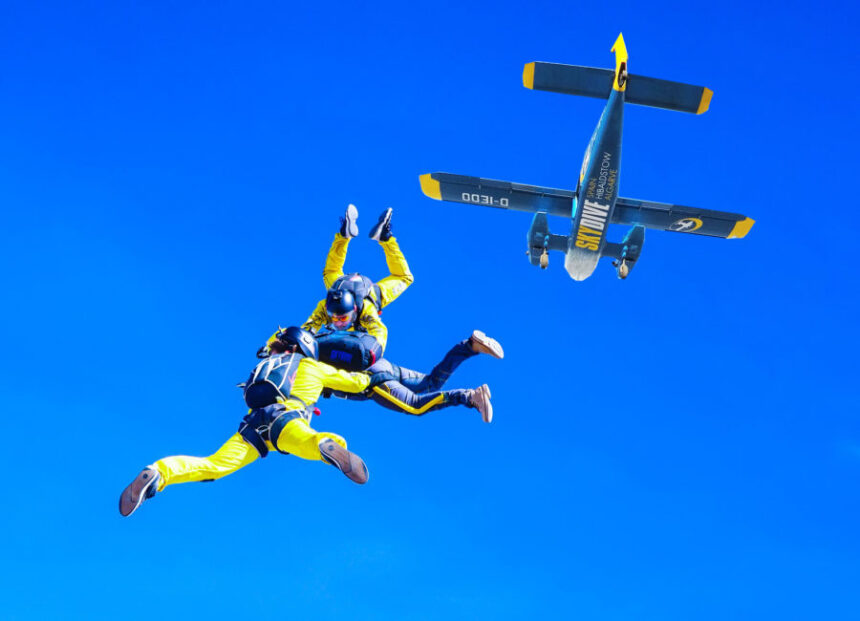
Skydiving is often perceived as an extremely risky activity because it involves jumping from an aircraft thousands of feet above the ground. However, modern statistics reveal that the probability of a skydiving accident is surprisingly low, especially when proper training and safety procedures are followed.
- Quick Answer: Probability of a Skydiving Accident
- How Often Do Skydiving Accidents Happen?
- Why Skydiving Accident Probability Is Low
- Most Common Causes of Skydiving Accidents
- Skydiving Accident Risk Compared With Other Activities
- The Role of Tandem Skydiving in Safety
- Technology That Improves Skydiving Safety
- Typical Steps in a Safe Skydive
- Conclusion
- FAQs
Millions of skydives take place worldwide every year, and the vast majority of jumps are completed safely. Advances in parachute technology, strict safety regulations, and professional instructor training have dramatically reduced accident risks over time.
In this guide, we will explore the real probability of skydiving accidents, what factors influence these risks, and why skydiving remains one of the safest extreme sports today.
Quick Answer: Probability of a Skydiving Accident
The estimated probability of a skydiving accident is roughly 1 accident per 10,000 jumps.
Serious accidents and fatal accidents are even rarer.
Approximate estimates:
| Statistic | Estimated Probability |
|---|---|
| Minor skydiving accident | ~1 in 10,000 jumps |
| Serious injury | ~1 in 100,000 jumps |
| Fatal accident | ~1 in 200,000 jumps |
This means that the chance of completing a skydive safely is extremely high.
For a broader overview of safety data, see our guide on skydiving accidents per million jumps.
How Often Do Skydiving Accidents Happen?
Skydiving accidents are rare compared with the number of jumps performed worldwide each year.
Estimated global statistics include:
| Statistic | Estimated Data |
|---|---|
| Annual skydives worldwide | 6–7 million |
| Total accidents | relatively few |
| Fatal accidents | extremely rare |
These numbers highlight the strong safety record of the skydiving industry.
You can explore more safety trends in our article on skydiving safety record over time.
Why Skydiving Accident Probability Is Low
Several factors contribute to the low accident probability in modern skydiving.
Advanced Safety Equipment
Modern skydivers use multiple safety systems designed to prevent accidents.
These include:
- dual parachute systems
- automatic activation devices
- digital altitude monitoring
Our guide on skydiving equipment explained explores how these systems work.
Professional Training Programs
Skydiving instructors undergo extensive certification and training before teaching new participants.
Most first-time skydivers perform tandem jumps, where instructors manage the parachute deployment and landing.
Our guide on skydiving instructor training explains the training process.
Strict Safety Regulations
Skydiving operations follow aviation safety rules established by regulatory organizations.
Drop zones must follow guidelines related to:
- equipment inspection
- instructor certification
- weather monitoring
These standards help maintain safety across the industry.
Most Common Causes of Skydiving Accidents
Although rare, accidents can occur for several reasons.
Human Error
Incorrect decision-making during freefall or landing can increase risk.
Low-Altitude Maneuvers
Some experienced skydivers perform aggressive turns near the ground, which can reduce reaction time.
Weather Conditions
Strong winds or turbulence can make landings more challenging.
Our article on skydiving accident causes explores these factors in detail.
Skydiving Accident Risk Compared With Other Activities
When compared with other activities, skydiving accident probability is relatively low.
| Activity | Accident Risk |
|---|---|
| Skydiving | ~1 in 10,000 jumps |
| Scuba diving | higher risk |
| Mountain climbing | higher injury rate |
| Driving | significantly higher accident rate |
Our guide on skydiving risk vs driving statistics provides a deeper comparison.
The Role of Tandem Skydiving in Safety
Tandem skydiving is designed specifically for beginners and significantly reduces accident probability.
During a tandem jump:
- the instructor controls the jump
- the instructor deploys the parachute
- the instructor manages landing procedures
Because of this structure, tandem skydiving is considered one of the safest ways to experience skydiving.
Technology That Improves Skydiving Safety
Modern innovations continue to improve safety in skydiving.
These include:
- advanced parachute materials
- digital altimeters
- improved training simulators
- better weather forecasting technology
Our guide on skydiving gear technology explains these innovations.
Typical Steps in a Safe Skydive
A typical skydiving experience follows a structured process designed to minimize risk.
- safety briefing
- equipment inspection
- aircraft ascent
- freefall
- parachute deployment
- controlled landing
Our guide on skydiving experience timeline explains each stage in detail.
Conclusion
The real probability of a skydiving accident is extremely low compared with what many people assume. With millions of jumps performed every year and strict safety standards in place, modern skydiving has become one of the safest extreme sports available.
Advances in parachute technology, improved instructor training, and regulated skydiving operations continue to reduce accident risks worldwide. Understanding these statistics helps show why skydiving remains both an exciting and well-managed adventure sport.
FAQs
What is the probability of a skydiving accident?
The estimated probability is about 1 accident per 10,000 jumps.
How often do fatal skydiving accidents happen?
Fatal accidents occur roughly 1 in 200,000 jumps.
Is skydiving safe for beginners?
Yes. Tandem skydiving with a certified instructor is considered very safe.
What causes most skydiving accidents?
Most accidents are related to human error, risky maneuvers, or weather conditions.
Is skydiving becoming safer?
Yes. Improvements in equipment technology and training programs continue to reduce accident rates.