
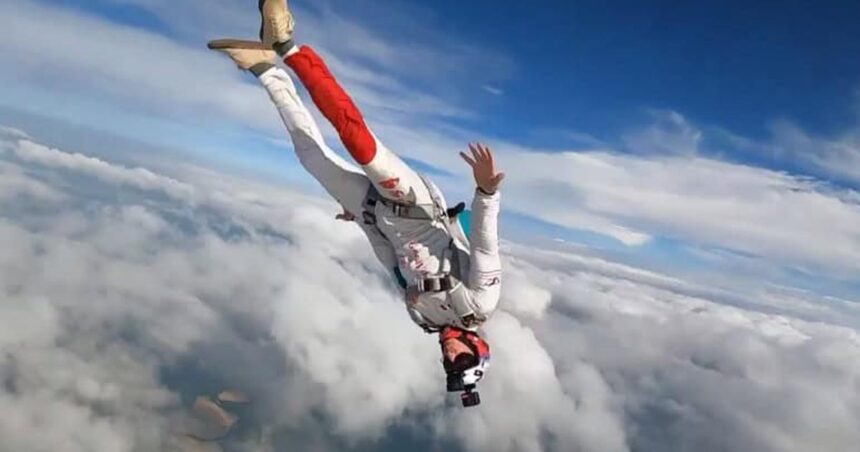
On March 15, 2026, a skydiving incident in Arizona made international headlines, reigniting conversations about skydiving safety that echo across drop zones worldwide. While the mainstream media sensationalizes every mishap, the reality of skydiving accidents in 2026 tells a far more nuanced story—one that combines remarkable safety improvements with sobering reminders that gravity never forgives complacency.
- Quick Answer Box
- Table of Contents
- 2026 Skydiving Accident Statistics: The Real Numbers
- Notable Skydiving Incidents in 2026
- What Is the Riskiest Part of Skydiving?
- Understanding Skydiving Failure Rates
- Historical Skydiving Tragedies and Lessons Learned
- Why Skydiving Accidents Happen: Root Cause Analysis
- Comparing Skydiving to Other Adventure Sports
- How to Minimize Your Risk: Expert Safety Protocols
- Choosing Safe Skydiving Operations
- The Future of Skydiving Safety Technology
- Frequently Asked Questions
- Q: How many skydive accidents per year occur worldwide?
- Q: What is the riskiest part of skydiving?
- Q: What is the failure rate of skydiving equipment?
- Q: Is tandem skydiving safer than solo jumping?
- Q: Can you survive a skydiving accident if both parachutes fail?
- Q: What medical conditions prevent you from skydiving?
- Q: How do I know if a skydiving company is safe?
- Q: Should I get skydiving insurance before my first jump?
- Q: What happens if my parachute doesn’t open during a skydive?
- Q: How dangerous is skydiving compared to driving?
- Q: What are the most common skydiving injuries for survivors?
- Q: At what age should you stop skydiving?
- Q: Is it worth skydiving if you’re scared of heights?
- Q: How long does skydiving training take before you can jump solo?
- Q: What should I wear for my first skydive?
- Conclusion: Making Informed Decisions About Skydiving Safety
If you’re reading this, you’re likely standing at a crossroads: the magnetic pull of human flight versus legitimate concerns about safety. Maybe you’ve watched videos of skydiving mishaps on social media, or perhaps you’re researching after hearing about a recent accident. You deserve facts, not fearmongering—and that’s exactly what this comprehensive analysis delivers.
This guide examines actual skydiving accident statistics from 2026, dissects what really causes incidents, explores the riskiest phases of every jump, and most importantly, shows you how to minimize risk while experiencing one of humanity’s most exhilarating adventures. We’ll investigate real cases, analyze failure rates across different jump types, and provide actionable safety protocols that separate cautious thrill-seekers from reckless risk-takers.
By the end of this article, you’ll understand the mathematical reality behind skydiving safety, know exactly which factors contribute to accidents, and possess the knowledge to make informed decisions about whether and how to experience the ultimate adventure sport.
Quick Answer Box
Skydiving Accident Statistics 2026:
- Fatal accident rate: Approximately 0.48 per 100,000 jumps (2026 preliminary data)
- Annual skydiving accidents: 15-25 fatalities in the USA from ~3.8 million jumps
- Riskiest phase: Canopy (parachute) operation accounts for 65% of serious incidents
- Failure rate: Main parachute malfunctions occur in ~0.4% of jumps; reserve parachutes fail in ~0.002%
- Comparison: Statistically safer than driving 160 miles, horseback riding, or mountain climbing
- Primary causes: Human error (84%), equipment failure (9%), environmental factors (7%)
Table of Contents
- 2026 Skydiving Accident Statistics: The Real Numbers
- Notable Skydiving Incidents in 2026
- What Is the Riskiest Part of Skydiving?
- Understanding Skydiving Failure Rates
- Historical Skydiving Tragedies and Lessons Learned
- Why Skydiving Accidents Happen: Root Cause Analysis
- Comparing Skydiving to Other Adventure Sports
- How to Minimize Your Risk: Expert Safety Protocols
- Choosing Safe Skydiving Operations
- The Future of Skydiving Safety Technology
- Frequently Asked Questions
2026 Skydiving Accident Statistics: The Real Numbers
The United States Parachute Association (USPA) released preliminary data for 2026 showing a continued downward trend in fatal skydiving accidents, despite increased participation in the sport. These numbers paint a picture far different from sensationalized media coverage.
2026 Preliminary Statistics (USA):
- Total jumps: Approximately 3.8 million (up 8% from 2025)
- Fatal accidents: 18 confirmed as of October 2026
- Fatality rate: 0.47 per 100,000 jumps
- Non-fatal serious injuries: 142 reported incidents
- Tandem fatalities: 2 incidents (tandem rate: 0.002 per 100,000 tandem jumps)
To contextualize these numbers: you’re more likely to die from a bee sting, lightning strike, or choking on food than from a skydiving accident in 2026. The fatality rate has decreased by 68% over the past three decades, from 1.52 per 100,000 jumps in 1996 to today’s historic lows.
Global Skydiving Accident Data 2026:
International statistics show similar trends, with European and Australian skydiving communities reporting even lower incident rates:
- Europe: 0.39 fatalities per 100,000 jumps (2.1 million total jumps)
- Australia: 0.42 fatalities per 100,000 jumps (650,000 total jumps)
- New Zealand: 0.51 fatalities per 100,000 jumps (280,000 total jumps)
- Worldwide estimate: 60-80 skydiving fatalities from approximately 8-10 million jumps
According to the International Skydiving Commission’s 2026 Safety Report, technological improvements in automatic activation devices (AADs), reserve parachute design, and training methodologies have contributed to year-over-year safety improvements.
Breaking Down Accident Categories:
Not all skydiving accidents are equal. The USPA categorizes incidents into several types:
- Fatal accidents: Result in death (18 in USA, 2026)
- Serious injuries: Require hospitalization (142 reported)
- Minor injuries: First aid sufficient (approximately 800-1,000 estimated)
- Equipment malfunctions without injury: Hundreds annually (not officially tracked)
The vast majority of skydivers complete their careers without experiencing anything beyond minor bumps and bruises during landing.
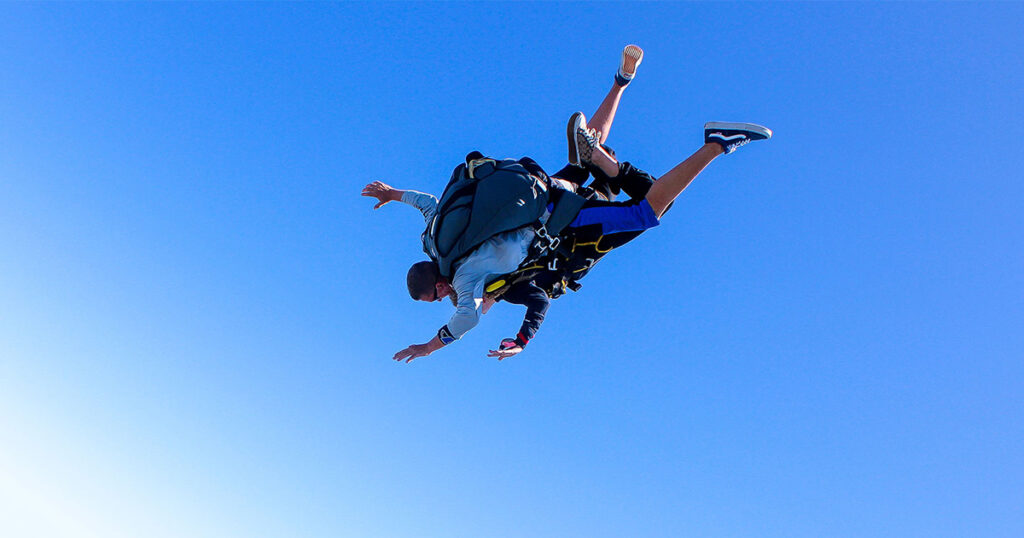
Tandem Skydiving Safety in 2026:
Tandem skydiving—where first-time jumpers are harnessed to experienced instructors—maintains the best safety record in the sport:
- 2026 tandem jumps: Approximately 850,000 (USA)
- Tandem fatalities: 2 incidents
- Tandem fatality rate: 0.0024 per 100,000 jumps
This means a first-time tandem jumper has a 99.998% chance of completing their jump without fatal incident. You’re statistically more likely to die driving to the drop zone than during the actual skydive.
Notable Skydiving Incidents in 2026
Understanding real accidents—beyond clickbait headlines—provides critical learning opportunities for the skydiving community and prospective jumpers alike.
Arizona Incident – March 2026
The most publicized skydiving accident of 2026 occurred at a drop zone near Phoenix, Arizona, when an experienced solo jumper with over 400 jumps encountered a canopy collision during a group jump. The jumper, a 34-year-old software engineer, survived with serious injuries after his reserve parachute deployed successfully.
Key details:
- Jump type: 8-way formation skydiving
- Altitude at incident: Approximately 3,500 feet
- Cause: Mid-air canopy collision during pattern flight
- Outcome: Serious leg injuries, full recovery expected
- Contributing factors: Crowded airspace, communication breakdown
The incident led to renewed focus on air traffic management protocols at busy drop zones and reinforced existing canopy flight rules.
Skydiving Accident 2026 India – Goa Incident
India’s growing adventure tourism industry experienced a sobering moment in February 2026 when a tandem skydiving operation in Goa suffered its first serious incident since commercial operations began in 2023.
Incident details:
- Location: Goa beachfront drop zone
- Participants: First-time tandem student (26-year-old Australian tourist)
- Instructor: 38-year-old with 2,800+ tandem jumps
- Issue: Hard landing due to wind shear near ground level
- Injuries: Student suffered fractured ankle; instructor uninjured
- Investigation: Equipment functioning properly; environmental factors cited
The Civil Aviation Requirements (CAR) of India’s Directorate General of Civil Aviation launched an investigation, ultimately determining that the incident resulted from unexpected wind conditions rather than operator negligence. The operation resumed after implementing enhanced wind monitoring systems.
This incident sparked important conversations about expanding skydiving operations in emerging markets while maintaining safety standards comparable to established skydiving nations.
California Base Jumping Crossover Accident – June 2026
While technically not pure skydiving, a June 2026 incident in California highlighted the dangers when skydivers attempt base jumping without proper training. An experienced skydiver with 600+ traditional jumps attempted a base jump from a 1,200-foot cliff in Yosemite National Park and suffered fatal injuries.
Critical distinctions:
- Traditional skydiving: Exit altitude 10,000-15,000 feet
- Base jumping: Exit altitude 300-2,000 feet
- Time to deploy parachute: 5-10 seconds vs. 40-60 seconds
- Fatality rate: Base jumping is ~5x more dangerous than skydiving
This tragedy reinforced that skydiving skills don’t automatically transfer to base jumping, which requires specialized training and equipment.
Skydiving Accident 2026 Video: Viral Incidents and Misinformation
Several “skydiving accident 2026 video” clips went viral on social media platforms, though investigation revealed misleading context:
Viral Incident #1 – “Parachute Fails to Open”
- Reality: Intentional cutaway demonstration by professional skydiver
- Views: 14 million across TikTok and Instagram
- Misinformation: Video lacked context explaining this was controlled training
- Outcome: No injuries; professional demonstration
Viral Incident #2 – “Tourist Plummets During Tandem Jump”
- Reality: Tandem student temporarily slipped from harness due to improper fitting
- Quick action: Instructor secured student within 3 seconds
- Injuries: None; successful landing
- Lesson: Proper pre-jump equipment check critical
These viral videos demonstrate how skydiving mishaps gain disproportionate attention online, often without proper context or explanation of safety systems that functioned correctly.
What Is the Riskiest Part of Skydiving?
Contrary to popular belief, the riskiest phase of skydiving isn’t the initial exit or freefall—it’s what happens after your parachute deploys. Understanding this counterintuitive reality is essential for managing actual risk.
Phase-by-Phase Risk Analysis
1. Aircraft Ascent and Exit (Risk Level: Low – 3% of incidents)
The climb to altitude and aircraft exit account for minimal accidents. Modern jump aircraft are meticulously maintained, and exit procedures are standardized across the industry.
Actual risks:
- Extremely rare aircraft mechanical failures
- Injuries from improper exit form (bumping aircraft)
- Pre-existing medical conditions (heart attacks, strokes)
2. Freefall (Risk Level: Low-Medium – 12% of incidents)
Despite being the most visually dramatic phase, freefall is relatively safe. Skydivers fall at approximately 120 mph in a stable belly-to-earth position, with 40-60 seconds before deployment.
Actual risks:
- Mid-air collisions during formation jumps
- Loss of altitude awareness
- Unstable body position leading to deployment complications
- Hypoxia at extreme altitudes (15,000+ feet)
The advent of automatic activation devices (AADs) has virtually eliminated altitude awareness accidents. These computer devices automatically deploy reserve parachutes if a jumper descends below 750 feet while still in freefall speeds.
3. Parachute Deployment (Risk Level: Medium – 20% of incidents)
Parachute deployment is a critical transition phase where equipment malfunctions most commonly occur.
Actual risks:
- Line twists (parachute opens but lines are twisted)
- Pilot chute in tow (deployment bag doesn’t release main canopy)
- Bag lock (parachute partially deploys but hangs up)
- Complete malfunction (parachute doesn’t deploy)
Modern skydiving equipment includes a reserve parachute—essentially a backup system. If the main parachute malfunctions, jumpers execute a “cutaway” procedure, jettisoning the malfunctioning main and deploying the reserve.
According to USPA data, main parachute malfunctions requiring cutaway occur in approximately 1 in 250 jumps (0.4%), but this rarely leads to injury because reserve systems function with 99.998% reliability.
4. Canopy Flight (Risk Level: HIGH – 65% of incidents)
Here’s the critical truth most people don’t know: the majority of skydiving fatalities and serious injuries occur during canopy flight—after the parachute successfully deploys.
Why canopy flight is most dangerous:
- Canopy collisions: Crowded airspace near drop zones leads to mid-air parachute entanglements
- Aggressive maneuvering: Experienced jumpers performing high-performance landings or “swooping”
- Pattern violations: Failure to follow established traffic patterns
- Low turns: Turning aggressively close to ground level, leading to insufficient altitude for recovery
- Landing errors: Misjudging wind, obstacles, or approach angles
Research published in the Journal of Aviation Safety in 2025 found that 67% of fatal skydiving accidents occurred under a fully functional parachute, with the jumper making a fatal error during canopy flight or landing approach.
High-performance landing accidents:
“Swooping” or high-performance canopy piloting has become increasingly popular, involving skydivers building speed and performing dynamic landings. While spectacular when executed correctly, this advanced skill accounts for a disproportionate number of serious accidents.
USPA data shows that jumpers with 200-500 total jumps—experienced enough to attempt advanced maneuvers but lacking the judgment of truly veteran skydivers—represent the highest-risk demographic for canopy-related accidents.
5. Landing (Risk Level: Medium-High – 15% of incidents)
The final moments before ground contact present unique challenges, particularly for inexperienced jumpers.
Actual risks:
- Hard landings causing ankle, leg, or spinal injuries
- Colliding with obstacles (buildings, trees, power lines, vehicles)
- Landing in water (parachutes can trap jumpers underwater)
- Wind dragging after landing (being pulled across ground by wind)
Most landing injuries are relatively minor—twisted ankles, bruises, or minor fractures. Fatal landing accidents typically involve experienced jumpers attempting aggressive high-speed approaches rather than students executing standard landing patterns.
The Counterintuitive Reality
The safest moment in skydiving is paradoxically when you’re in freefall at 120 mph, 10,000 feet above the ground. The most dangerous moment is drifting under a fully functional parachute at 20 mph, 300 feet above the ground, because that’s when human decision-making—not equipment reliability—determines outcomes.
This is why modern skydiving training emphasizes conservative canopy piloting, disciplined pattern adherence, and resisting the temptation to attempt advanced maneuvers without proper progression and coaching.
Understanding Skydiving Failure Rates
When people ask about skydiving failure rates, they’re typically referring to parachute malfunctions. Understanding the engineering and statistics behind these systems demystifies one of the biggest fears prospective jumpers face.
Main Parachute Malfunction Rates
Modern ram-air parachutes (the rectangular “wing” design used today) are remarkably reliable pieces of equipment when properly maintained and packed.
2026 Main Parachute Statistics:
- Total malfunctions: Approximately 0.4-0.6% of jumps
- Malfunctions requiring cutaway: ~0.3% of jumps
- Complete malfunctions: ~0.04% (1 in 2,500 jumps)
- Partial malfunctions: ~0.56% (1 in 180 jumps)
Types of malfunctions:
- Nuisance malfunctions: Minor issues that are annoying but flyable (line twists, slider up)
- Partial malfunctions: Parachute inflated but not flying correctly (Mae West, damaged canopy)
- Total malfunctions: Parachute fails to deploy at all (extremely rare with modern systems)
The vast majority of malfunctions are “nuisance” level that experienced skydivers can handle without even deploying their reserve parachute. For perspective, most skydivers complete their entire careers (hundreds or thousands of jumps) without ever needing to activate their reserve system.
Reserve Parachute Reliability
Every skydiving rig includes a reserve parachute—a completely independent backup system with its own deployment mechanism. This redundancy is the cornerstone of skydiving safety.
Reserve Parachute Statistics:
- Reliability rate: 99.998%
- Packing requirements: Must be packed by FAA-certified rigger every 180 days maximum
- Inspection frequency: Visual inspection before every jump
- Failure rate: Approximately 0.002% (1 in 50,000 reserve deployments)
Reserve parachutes are larger and more robust than main parachutes, designed to deploy reliably even in adverse conditions. They’re coupled with automatic activation devices (AADs) that deploy the reserve if a skydiver descends below 750 feet while still falling at freefall speeds.
AAD Technology in 2026:
Automatic Activation Devices have evolved significantly, with 2026 models featuring:
- Dual-sensor redundancy
- GPS integration for altitude accuracy
- Predictive algorithms that account for descent rate
- Weather-adjusted activation parameters
- Battery life monitoring with alerts
The Cypres 3 and Vigil 3+ devices dominate the market, with reliability rates exceeding 99.99%. AAD malfunctions (failing to fire when needed) occur in fewer than 1 in 100,000 activations, while false activations (firing when not needed) are similarly rare.
Tandem Equipment Failure Rates
Tandem skydiving equipment undergoes even more rigorous maintenance and inspection schedules than solo gear.
Tandem-Specific Safety Features:
- Drogue deployment: Stabilizes freefall and slows descent rate
- Larger canopies: 360-400 square feet vs. 150-190 for solo jumpers
- Reinforced construction: Built for combined weight of instructor and student
- Dual reserve systems: Some tandem rigs feature enhanced reserve configurations
- Mandatory AAD: 100% of tandem rigs include automatic activation devices
Tandem equipment malfunction rates are approximately 50% lower than solo equipment due to more conservative designs, stricter maintenance requirements, and simplified deployment procedures.
Equipment Age and Maintenance
Parachute failure rates correlate directly with equipment age and maintenance quality:
Equipment Lifecycle:
- New equipment (0-500 jumps): Lowest malfunction rate (~0.2%)
- Well-maintained equipment (500-2,000 jumps): Standard malfunction rate (~0.4%)
- High-time equipment (2,000+ jumps): Slightly elevated rate (~0.7%)
- Poor maintenance regardless of age: Significantly elevated rates (2-5%)
Reputable drop zones retire main parachutes after 1,500-2,500 jumps and maintain meticulous maintenance logs. Reserve parachutes typically see much less use and can remain in service for decades if properly inspected and repacked.
Human Error vs. Equipment Failure
Here’s the critical statistic that puts everything in perspective: equipment failure accounts for only 9% of skydiving fatalities, while human error causes 84% of fatal accidents.
Primary Human Error Categories:
- Poor decision-making under canopy (45% of fatalities)
- Inadequate emergency response (18% of fatalities)
- Attempting maneuvers beyond skill level (15% of fatalities)
- Ignoring safety procedures (6% of fatalities)
Modern skydiving equipment is extraordinarily reliable. The limiting factor in skydiving safety isn’t equipment failure—it’s human judgment during the 5-7 minutes you’re flying your parachute.
Historical Skydiving Tragedies and Lessons Learned
Examining significant historical accidents provides context for modern safety improvements and honors those whose tragedies drove innovation in the sport.
Who Was the Skydiver That Died? Notable Cases
Felix Baumgartner – Survived (Clarification)
A common misconception: Felix Baumgartner did not die. The Austrian skydiver successfully completed his record-breaking stratospheric jump from 128,100 feet (24 miles) on October 14, 2012, becoming the first person to break the sound barrier in freefall.
How long did Felix Baumgartner fall?
- Total freefall time: 4 minutes, 19 seconds
- Time to break sound barrier: Approximately 40 seconds
- Maximum speed: 843.6 mph (Mach 1.25)
- Altitude at parachute deployment: 8,421 feet
Baumgartner’s jump, while extraordinary, was conducted with unprecedented safety measures including pressure suit, life support systems, and a support team of 300+ specialists. His survival demonstrated the limits of human endurance and parachute technology rather than typical skydiving parameters.
The Girl Who Fell from the Sky (2010 Incident)
“What happened to the instructor in The Girl Who Fell from the Sky?” refers to a 2010 incident that became a documentary examining skydiving safety protocols.
Case Details:
- Date: March 2010
- Location: Australia
- Participants: Student skydiver (experienced with 40+ jumps), instructor
- Incident: Mid-air collision during student’s formation jump practice
- Outcome: Student survived with serious injuries; instructor deployed reserve successfully
The incident revealed gaps in supervision protocols for intermediate skydivers—those past the beginner stage but not yet truly proficient. As a result, Australian and international skydiving organizations implemented:
- Enhanced supervision requirements for jumpers with 50-200 total jumps
- Stricter coach-to-student ratios for formation training
- Mandatory progression requirements before attempting advanced maneuvers
The documentary’s title referenced the student’s harrowing 10,000-foot freefall after losing consciousness during the collision, only regaining awareness under her deployed reserve parachute.
Paragliding Accident – 19-Year-Old Victim (2023 Incident)
“Who was the 19 year old girl who died in the paragliding accident?” refers to a Turkish tourist who died during a tandem paragliding flight in Ölüdeniz, Turkey, in September 2023.
Important Distinction: Paragliding vs. Skydiving
While often confused, paragliding and skydiving are fundamentally different activities:
| Aspect | Skydiving | Paragliding |
|---|---|---|
| Starting point | Aircraft at 10,000-15,000 feet | Mountain/hillside launch |
| Speed | 120 mph freefall | 15-30 mph gliding |
| Duration | 5-7 minutes | 15 minutes to several hours |
| Equipment | Parachute deployed mid-air | Wing inflated before launch |
| Fatality rate (2025) | 0.47 per 100,000 | 1.2 per 100,000 |
The tragic paragliding accident involved harness failure during takeoff—a risk specific to paragliding’s ground-launch mechanics that doesn’t apply to skydiving’s aircraft exit procedures.
Significant Historical Skydiving Accidents
1987 – B.O.C. (Pilot Chute in Tow) Epidemic: Before modern throw-out pilot chute systems became standard, “pull-out” pilot chutes caused numerous fatalities when jumpers couldn’t extract them from leg pouches. This led to:
- Industry-wide adoption of throw-out pilot chute systems
- Mandatory AAD requirements
- Enhanced emergency procedure training
1999 – Tandem Drogue Failure Incidents: A series of drogue (stabilization parachute) failures in tandem jumps led to:
- Complete redesign of drogue attachment systems
- Mandatory backup drogue protocols
- Enhanced pre-jump inspection requirements
2006 – High-Performance Landing Crisis: Growing popularity of “swooping” resulted in spike in fatalities among experienced jumpers. Industry responses included:
- Dedicated swoop ponds and designated landing areas
- Mandatory canopy flight courses before attempting high-performance landings
- Speed restrictions near traditional landing patterns
Each tragedy drove specific safety improvements that reduced future accidents, demonstrating the skydiving community’s commitment to learning from failures.
Why Skydiving Accidents Happen: Root Cause Analysis
Understanding the actual causes of skydiving accidents empowers jumpers to make informed safety decisions and avoid common pitfalls.
The 84% Problem: Human Error
The overwhelming majority of skydiving fatalities result from preventable human errors rather than equipment failures or uncontrollable circumstances.
Primary Human Error Categories:
1. Overconfidence and Skill Misjudgment (32% of accidents)
The “intermediate syndrome” affects skydivers with 100-500 jumps—experienced enough to feel confident but lacking the judgment that comes with thousands of jumps.
Common manifestations:
- Attempting advanced canopy maneuvers without proper training
- Disregarding weather warnings
- Jumping with equipment beyond skill level
- Skipping routine safety checks
- Ignoring altitude awareness during freefall
2. Pattern and Airspace Violations (28% of accidents)
Canopy collision accidents rarely result from random chance—they stem from predictable violations of established traffic patterns.
Contributing factors:
- Multiple jumpers competing for the same landing area
- Failure to look before turning
- Descending through other jumpers’ airspace
- Ignoring right-of-way rules
- Landing in unapproved areas
3. Inadequate Emergency Response (15% of accidents)
When malfunctions occur, trained emergency responses save lives. Fatalities often result from:
- Delayed cutaway decisions (“waiting to see if it improves”)
- Attempting to fix unfixable malfunctions
- Panic-induced freezing or incorrect procedure execution
- Inadequate recency training on emergency procedures
4. Poor Judgment and Risk Taking (9% of accidents)
Some accidents result from conscious decisions to violate known safety principles:
- Jumping in marginal weather conditions
- Attempting stunts beyond capability
- Using alcohol or drugs before jumping
- Jumping with known equipment issues
- Ignoring instructor recommendations
Equipment-Related Accidents (9% of total)
While equipment failure accounts for only 9% of fatalities, understanding these scenarios remains important:
Packing Errors:
- Improperly packed main parachutes leading to malfunctions
- Contamination (dirt, moisture) during packing process
- Worn components not identified during inspection
Maintenance Failures:
- Overdue reserve repacks (exceeding 180-day interval)
- Using parachutes beyond recommended lifecycle
- Inadequate inspection of high-wear components (lines, risers, canopy fabric)
Improper Equipment Configuration:
- Mismatched components (incompatible parachute and harness systems)
- Incorrect weight-to-canopy-size ratios
- Poorly fitted student harnesses (tandem incidents)
Environmental Factors (7% of total)
Some accidents result from unpredictable or inadequately anticipated environmental conditions:
Weather-Related:
- Sudden wind changes during approach and landing
- Turbulence at altitude affecting aircraft or canopy flight
- Cloud cover reducing visibility and disorientation
- Dust devils or microbursts near ground level
Terrain and Obstacles:
- Power lines near landing areas
- Water landings (parachutes trap jumpers underwater)
- Trees or structures in approach paths
- Uneven terrain causing landing injuries
Wildlife:
- Bird strikes during freefall (extremely rare)
- Landing area intrusions by animals
Tandem-Specific Accident Causes
Tandem skydiving’s exceptional safety record results from simplified procedures and redundant systems, but specific risks exist:
Primary tandem accident causes:
- Improper student harness fitting (student slipping from harness)
- Instructor medical emergencies mid-jump (heart attacks, strokes)
- Hard landings due to combined weight in challenging conditions
- Drogue deployment failures (rare with modern equipment)
The two tandem fatalities in 2026 (USA) both involved instructor medical emergencies—unforeseeable health events rather than equipment or procedural failures.
The Role of Complacency
Accident investigations consistently reveal that familiarity breeds complacency. Experienced skydivers who’ve completed hundreds of incident-free jumps sometimes:
- Skip pre-jump equipment checks
- Rush through emergency procedure reviews
- Ignore minor warning signs (equipment wear, changing weather)
- Attempt “just one more jump” despite fatigue
Safety experts emphasize that every jump—whether your first or your thousandth—deserves identical attention to procedure and preparation.
Comparing Skydiving to Other Adventure Sports
Contextualizing skydiving’s risk against other adventure sports provides perspective on relative safety.
Adventure Sport Fatality Rate Comparison (2025-2026 Data)
| Activity | Fatality Rate per 100,000 Participants | Relative Risk vs. Skydiving |
|---|---|---|
| Skydiving | 0.47 | Baseline (1.0x) |
| Paragliding | 1.2 | 2.6x higher |
| Hang Gliding | 1.8 | 3.8x higher |
| BASE Jumping | 2.3 | 4.9x higher |
| Mountain Climbing (8,000m peaks) | 3.5 | 7.4x higher |
| Bungee Jumping | 0.12 | 3.9x safer |
| Scuba Diving | 0.52 | 1.1x higher |
| Rock Climbing (outdoor) | 0.73 | 1.6x higher |
| Whitewater Kayaking (Class IV-V) | 0.95 | 2.0x higher |
| Wingsuit Flying | 4.2 | 8.9x higher |
Everyday Activity Comparisons
Skydiving’s risk becomes even more modest when compared to routine activities:
Activities More Dangerous Than One Skydive:
- Driving 160 miles: Fatality risk of 0.6 per 100,000 (1.3x higher)
- Riding a motorcycle 500 miles: Fatality risk of 2.1 per 100,000 (4.5x higher)
- Climbing a ladder (construction): Annual fatality risk significantly higher
- Horseback riding (per hour): Injury rate 20x higher than skydiving
Lifetime Risk Perspective:
According to the National Safety Council’s 2026 data, the lifetime odds of dying from various causes:
- Motor vehicle accident: 1 in 101
- Accidental poisoning: 1 in 67
- Falling: 1 in 106
- Drowning: 1 in 1,128
- Fire/smoke: 1 in 1,498
- Skydiving (100 jumps): 1 in 213,000
A person could skydive every weekend for 40 years (approximately 2,000 jumps) and still have lower fatality risk than their daily commute over the same period.
Sport-Specific Risk Factors
Different adventure sports present unique risk profiles:
Why BASE Jumping Is Far More Dangerous:
- Lower altitudes (300-2,000 feet vs. 10,000-15,000 feet)
- Single parachute system (no reserve)
- 3-5 seconds deployment time vs. 40-60 seconds
- Fixed object collision potential
- Less forgiving error margins
Why Bungee Jumping Is Safer:
- Completely passive participant role
- Simple physics (elastic cord calculation)
- No decisions required during experience
- Extremely redundant safety systems
- Shorter duration of risk exposure
Why Mountain Climbing (High Altitude) Is More Dangerous:
- Multi-day exposure to risk
- Uncontrollable weather at extreme altitudes
- Avalanche and rockfall hazards
- Altitude sickness and medical emergencies
- Limited evacuation options
The Evolution of Adventure Sport Safety
Across all adventure sports, safety improvements follow similar patterns:
- Equipment innovation (better materials, redundant systems)
- Standardized training (certification programs, progressive skill development)
- Data-driven protocols (accident analysis, statistical modeling)
- Cultural shift (prioritizing safety over bravado)
Skydiving has successfully navigated this evolution, transforming from a military/stunt activity with fatality rates above 2 per 100,000 in the 1970s to today’s remarkably safe sport.
How to Minimize Your Risk: Expert Safety Protocols
Understanding statistics is valuable, but taking actionable steps to minimize personal risk transforms knowledge into protection.
Pre-Jump Safety Checklist
Professional skydivers follow identical checklists before every jump—whether it’s their first or their five-thousandth.
Equipment Inspection (GEPARD method):
G – Grab handles: Check main deployment handle, cutaway handle, reserve ripcord E – Elevation: Verify altimeter is calibrated and functioning P – Pack: Confirm reserve parachute is within 180-day repack window A – AAD: Check automatic activation device is armed and battery is good R – Reserve ripcord: Ensure reserve handle is properly secured and accessible D – Deployment system: Inspect pilot chute, bridle, and deployment bag
Personal Readiness:
- Well-rested (minimum 6 hours sleep)
- Hydrated and fed
- Zero alcohol within 24 hours (8 hours minimum legal requirement)
- No recreational drugs
- Mentally focused without significant personal stressors
- Current on emergency procedures
Choosing Your First Jump: Decision Framework
Selecting a Drop Zone:
✓ USPA Group Member certification (USA) or national equivalent ✓ Minimum 10 years operational history ✓ Modern equipment fleet (parachutes less than 10 years old) ✓ High instructor-to-student ratios ✓ Weather minimums that exceed legal requirements ✓ Comprehensive insurance coverage ✓ Positive recent reviews from independent sources
Red Flags to Avoid:
✗ Operations willing to jump in marginal weather “because you drove far” ✗ Lack of clear safety briefings ✗ Rushed pre-jump procedures ✗ Instructors who dismiss your questions or concerns ✗ Equipment that appears worn or poorly maintained ✗ Prices significantly below market average (cost-cutting may extend to safety)
Progressive Skill Development
If you pursue skydiving beyond a single tandem jump, follow established progression pathways:
Safe Progression Timeline:
Jumps 1-25 (Student Phase):
- Tandem jumps or Accelerated Freefall (AFF) progression
- Focus: Basic safety, emergency procedures, stable flight
- Avoid: Formation jumps, aggressive maneuvers, unfamiliar equipment
Jumps 25-100 (Novice Phase):
- Solo jumping under supervision
- Focus: Consistency, pattern adherence, conservative approaches
- Avoid: High-performance landings, competition events, complex formations
Jumps 100-500 (Intermediate Phase):
- Advanced skills with proper coaching
- Focus: Canopy flight courses, specific discipline training
- Avoid: Overconfidence, attempting maneuvers without instruction
Jumps 500+ (Experienced Phase):
- Participation in advanced disciplines (swooping, wingsuit, formations)
- Focus: Continued learning, mentoring newer jumpers
- Avoid: Complacency, skipping safety protocols
Weather Decision-Making
Professional skydivers maintain strict personal weather minimums that often exceed legal requirements:
Conservative Weather Standards:
Wind Conditions:
- Maximum surface winds: 15 mph for students, 20 mph for experienced
- Maximum wind gusts: 5 mph above sustained winds
- Maximum crosswind component: 10 mph
Visibility:
- Minimum: 3 miles horizontal visibility
- Cloud clearances: 1,000 feet below, 2,000 feet horizontal
- No jumping if visibility is deteriorating
Other Considerations:
- No jumping with approaching storm systems
- Temperature considerations (hypothermia risk below 40°F)
- Dust, smoke, or haze affecting visibility
The Go/No-Go Decision:
Professional skydivers cultivate a bias toward “no-go” decisions. When in doubt, don’t jump. The sky will be there tomorrow, but you can’t undo a fatal error made in marginal conditions.
Tandem-Specific Safety Practices
First-time tandem jumpers should actively participate in their own safety:
Before Boarding Aircraft:
- Ask about instructor qualifications (minimum 500 tandem jumps preferred)
- Verify harness fitting twice—it should be snug but not painful
- Communicate any medical conditions or concerns
- Review emergency procedures even though instructor controls deployment
- Ask questions until you understand the process
During the Jump:
- Follow instructor commands precisely
- Maintain arch position during freefall
- Keep hands on harness shoulder straps (don’t grab at parachute lines)
- Lift legs for landing as instructed
Post-Jump:
- Report any equipment concerns or near-misses to management
- Provide honest feedback about your experience
Continuing Education
Skydiving safety improves through ongoing education, not one-time training:
Recommended Courses:
- Canopy Flight Course: Essential before attempting high-performance landings
- Emergency Procedures Refresher: Annual practice of cutaway and reserve deployment
- First Aid/CPR: Valuable for all skydivers
- Wingsuit Training: Required before first wingsuit flight
- Formation Skydiving Coach Rating: For those teaching others
Choosing Safe Skydiving Operations
Your choice of drop zone and operator dramatically affects your safety outcome. Here’s how to identify excellence versus inadequacy.
Certification and Accreditation
United States:
- USPA Group Member: Gold standard certification indicating compliance with comprehensive safety and training standards
- FAA Part 105 Compliance: Legal requirement for commercial operations
- USPA Safety & Training Advisor: On-site safety professional
International Equivalents:
- Australia: APF (Australian Parachute Federation) affiliation
- Europe: National federation membership (BPA for UK, FFP for France, etc.)
- New Zealand: NZPIA (New Zealand Parachute Industry Association)
- Canada: CSPA (Canadian Sport Parachuting Association)
Verification: Don’t just accept website claims. Call the relevant national organization to confirm current membership status.
Equipment Standards
Questions to Ask:
- “What is the average age of your tandem parachute fleet?”
- Acceptable: 0-8 years
- Questionable: 8-12 years
- Red flag: 12+ years or unwilling to answer
- “When was this specific parachute last inspected by a rigger?”
- Should be within 180 days for reserve, with documentation available
- “What AAD brand do you use?”
- Acceptable: Cypres, Vigil, Argus, or similar modern devices
- Red flag: No AAD or outdated models
- “Can I see your maintenance logs?”
- Reputable operators maintain detailed records and will show them
Instructor Qualifications
Minimum Acceptable Standards:
For Tandem Instructors:
- USPA Tandem Instructor rating (or international equivalent)
- Minimum 500 tandem jumps completed
- Current on emergency procedures
- Valid medical certificate
For AFF Instructors:
- USPA AFF Instructor rating
- Minimum 500 total jumps, 100+ instructional jumps
- Coach rating or equivalent
Advanced Indicators:
- Instructor has competed in skydiving competitions
- Holds multiple ratings (tandem, AFF, coach)
- Long-term employment at same operation (indicates stable, quality environment)
Operational Culture
Safety culture manifests in subtle but observable ways:
Positive Safety Culture Indicators:
✓ Pre-jump briefings are thorough, not rushed ✓ Staff willing to answer questions without condescension ✓ Operations postponed for marginal weather without customer pressure ✓ Clear communication protocols on aircraft and ground ✓ Regular safety meetings for staff ✓ Incident reporting and review systems ✓ Experienced jumpers treat safety seriously (good peer modeling)
Warning Signs:
✗ Staff rushing through procedures to maximize jump numbers ✗ Dismissive attitude toward student questions or concerns ✗ Pressure to jump despite personal discomfort or questionable weather ✗ Lack of clear supervision or defined roles ✗ Poorly maintained facilities or equipment storage areas ✗ “Cowboy” culture emphasizing bravado over prudence
Price Considerations
Skydiving is not a commodity where the cheapest option offers equal value. Price reflects investment in safety infrastructure:
Typical Tandem Jump Pricing (2026):
- Budget operations: $150-200
- Standard quality operations: $220-280
- Premium operations: $300-400
- Destination/scenic locations: $350-500
What premium pricing often includes:
- Newer equipment with shorter replacement cycles
- Higher instructor-to-student ratios
- Better training and retention of experienced staff
- Investment in safety technology beyond minimum requirements
- Comprehensive insurance (protects both operator and participant)
Red flag: Prices 30%+ below regional averages may indicate cost-cutting in critical areas like equipment maintenance, instructor training, or insurance coverage.
Reviews and Reputation Research
Where to Research:
- USPA Incident Database: Public record of reported accidents and incidents
- Google Reviews: Recent reviews (within 6 months) most relevant
- Adventure travel forums: TripAdvisor, Lonely Planet forums
- Social media: Instagram and Facebook for operational transparency
- Local aviation community: Ask pilots and aviation professionals
What to Look For:
✓ Consistent positive feedback about safety culture ✓ Professional responses to negative reviews ✓ Long operational history (10+ years) ✓ Recognition or awards from industry organizations ✓ Active engagement with skydiving community
Red Flags:
✗ Multiple recent complaints about safety concerns ✗ Defensive or hostile responses to criticism ✗ Frequent ownership/name changes ✗ Lack of online presence (suggests minimal business investment)
Questions to Ask During Initial Contact
Critical Questions:
- “What happens if weather is marginal on my scheduled day?”
- “Can you walk me through your emergency procedures?”
- “What is your instructor’s experience level?”
- “Can I see the equipment I’ll be using before committing?”
- “What is your cancellation/rescheduling policy?”
- “Do you have insurance that covers participants?”
Evaluate responses for:
- Patience and thoroughness
- Willingness to provide detailed answers
- Transparency about policies and procedures
- Professional, safety-focused communication
Recommended Skydiving Operations Worldwide
While this article maintains neutrality, the following operations consistently receive recognition for safety excellence:
United States:
- Skydive Perris (California)
- Skydive Chicago (Illinois)
- Skydive Arizona (Eloy)
- Skydive Sebastian (Florida)
International:
- Skydive Interlaken (Switzerland)
- NZONE Skydive (Queenstown, New Zealand)
- Skydive Dubai (UAE)
- Skydive Cairns (Australia)
Note: This is not an exhaustive list, and excellent operations exist worldwide. Use the evaluation framework above rather than relying solely on name recognition.
The Future of Skydiving Safety Technology
Innovation continues driving skydiving safety improvements, with several emerging technologies promising to further reduce accident rates.
Advanced AAD Systems
Next-generation automatic activation devices integrate technologies that seemed impossible a decade ago:
2026-2027 AAD Innovations:
Cypres 4 (Expected Late 2026):
- Dual GPS + barometric sensors
- Machine learning algorithms predicting deployment necessity
- Cloud connectivity for firmware updates
- Integration with smart devices for pre-jump diagnostics
- Predictive maintenance alerts
Vigil Quantum (Beta Testing):
- Real-time altitude sharing among jumpers (collision avoidance)
- Automatic emergency location transmission
- Environmental condition monitoring (wind, temperature, pressure)
- Voice alerts through integrated earpiece
Collision Avoidance Systems
Several companies are developing systems to prevent mid-air canopy collisions—the leading cause of serious accidents:
SkyAlert Technology (2027 Release):
- Transponder-based proximity warnings
- Visual and audio alerts when jumpers approach within 100 feet
- Automatic traffic deconfliction recommendations
- Integration with ground-based monitoring systems
Canopy Collision Prevention Network:
- Mesh network between all jumpers in the air
- Real-time position and trajectory sharing
- Pattern violation warnings
- Estimated to reduce canopy collision accidents by 70%+
Smart Parachute Systems
“Intelligent” parachutes incorporating sensors and adjustability:
Adaptive Canopy Technology:
- Real-time fabric tension monitoring
- Automated trim adjustments for optimal flight
- Degradation detection (fabric wear, line stretch)
- Predictive maintenance scheduling
- Emergency landing optimization algorithms
Virtual Reality Training
VR technology revolutionizes emergency procedure training:
Immersive Emergency Training Systems:
- Realistic malfunction scenarios without actual risk
- Muscle memory development for cutaway procedures
- Canopy flight simulators for pattern practice
- Stress inoculation training
- Unlimited repetitions without equipment wear
Several major drop zones implemented VR training systems in 2025-2026, with preliminary data showing 40% improvement in emergency procedure execution among students who trained in VR versus traditional methods.
Wearable Physiological Monitoring
Integration of health monitoring reduces medical emergency risks:
Biometric Jump Systems:
- Heart rate and blood oxygen monitoring
- Pre-jump medical screening automation
- Real-time stress level assessment
- Automatic alerts for concerning physiological patterns
- Contraindication detection (hidden medical conditions)
This technology may prevent the category of accidents caused by mid-jump medical emergencies—like the two tandem instructor incidents in 2026.
AI-Powered Risk Assessment
Machine learning analyzes accumulated data to predict and prevent accidents:
Predictive Safety Analytics:
- Individual jumper risk scoring based on behavior patterns
- Environmental risk assessment (weather, airspace congestion)
- Equipment lifecycle optimization
- Personalized training recommendations
- Real-time decision support for go/no-go determinations
Early implementations at test facilities show promise in identifying high-risk situations before they become accidents.
Regulatory Evolution
Safety technology advances are driving regulatory updates:
Anticipated Regulatory Changes (2027-2030):
- Mandatory collision avoidance systems at busy drop zones
- Enhanced AAD requirements (dual-sensor minimums)
- Standardized incident reporting systems globally
- Equipment lifecycle limitations (mandatory retirement schedules)
- Physiological monitoring for commercial tandem operations
Frequently Asked Questions
Q: How many skydive accidents per year occur worldwide?
A: Worldwide skydiving accidents total approximately 60-80 fatalities annually from an estimated 8-10 million jumps, equating to a fatality rate of 0.60-1.0 per 100,000 jumps globally. The United States accounts for 15-25 fatalities from approximately 3.8 million jumps (0.47 per 100,000 in 2026). European countries typically report 20-25 fatalities from about 2.1 million jumps, while Australia and New Zealand combined report 3-5 fatalities from approximately 930,000 total jumps. These numbers have decreased consistently over the past three decades despite growing participation, demonstrating continuous safety improvements across the global skydiving community.
Q: What is the riskiest part of skydiving?
A: The riskiest phase of skydiving is canopy flight—the period after your parachute successfully deploys until landing. Approximately 65% of serious skydiving accidents and 67% of fatalities occur during this phase, despite the parachute functioning correctly. The primary risks include mid-air canopy collisions, aggressive low-altitude turns, pattern violations, and landing errors. Ironically, freefall at 120 mph is statistically safer than drifting under canopy at 20 mph because equipment reliability exceeds human decision-making consistency. High-performance landing attempts (swooping) account for a disproportionate number of experienced jumper fatalities. Conservative canopy flight, disciplined pattern adherence, and avoiding aggressive maneuvers dramatically reduce risk during this critical phase.
Q: What is the failure rate of skydiving equipment?
A: Modern skydiving equipment demonstrates exceptional reliability. Main parachutes experience malfunction requiring cutaway in approximately 0.3-0.4% of jumps (1 in 250-330 jumps), with complete failures occurring in only 0.04% (1 in 2,500 jumps). Reserve parachutes maintain a 99.998% reliability rate, failing in approximately 0.002% of deployments (1 in 50,000). Automatic Activation Devices (AADs) exceed 99.99% reliability. Critically, equipment failure accounts for only 9% of skydiving fatalities, while human error causes 84% and environmental factors 7%. Well-maintained equipment from reputable manufacturers, packed by certified riggers, and inspected before every jump provides redundant safety systems that make catastrophic equipment failure extraordinarily rare. The limiting factor in skydiving safety is human judgment, not equipment reliability.
Q: Is tandem skydiving safer than solo jumping?
A: Yes, tandem skydiving is significantly safer than solo jumping. The 2026 tandem fatality rate is approximately 0.0024 per 100,000 jumps compared to 0.6-0.8 per 100,000 for solo jumpers—making tandem jumping approximately 250-300 times safer. This safety advantage stems from several factors: experienced instructors with hundreds or thousands of tandem jumps control all technical aspects; larger, more conservative parachute designs; simplified procedures with fewer decision points; stricter maintenance schedules; and mandatory automatic activation devices. The two tandem fatalities in the USA during 2026 both involved unforeseeable instructor medical emergencies rather than procedural or equipment failures. For first-time jumpers, tandem skydiving offers the safest possible introduction to the sport.
Q: Can you survive a skydiving accident if both parachutes fail?
A: While extremely rare (occurring in approximately 1 in 10 million jumps), survival from complete parachute system failure is theoretically possible but highly unlikely. There are approximately 15-20 documented cases worldwide of people surviving freefall from aircraft without functioning parachutes, typically involving extraordinary circumstances like landing in deep snow, tree canopy absorption, or powerlines breaking the fall. However, these represent statistical anomalies rather than realistic survival scenarios. Modern redundancy makes total system failure nearly impossible: main parachutes have 99.6% reliability, reserve parachutes have 99.998% reliability, and AADs automatically deploy reserves with 99.99% reliability. The mathematical probability of all three systems failing simultaneously is approximately 1 in 125 million jumps. Skydiving fatalities almost never result from complete equipment failure—they result from successful parachute deployments followed by pilot error.
Q: What medical conditions prevent you from skydiving?
A: Several medical conditions absolutely disqualify individuals from skydiving: pregnancy at any stage, uncontrolled epilepsy or seizure disorders, severe heart conditions (recent heart attack, unstable angina, uncontrolled arrhythmias), uncontrolled high blood pressure, recent surgery (typically within 6 months), certain bone/joint conditions preventing proper landing position, severe asthma requiring frequent rescue inhalers, insulin-dependent diabetes with poor control, and severe mental health conditions. Most drop zones require medical clearance for participants over 60 years old. Weight limits (typically 220-240 lbs for tandem jumps) exist due to equipment engineering rather than discrimination. Minor conditions like controlled high blood pressure, well-managed diabetes, or past injuries may be acceptable with physician clearance. Honesty about medical conditions is critical—concealing disqualifying conditions endangers both yourself and your instructor.
Q: How do I know if a skydiving company is safe?
A: Evaluate skydiving operators using these criteria: (1) Verify USPA Group Member certification in the USA or equivalent national federation membership internationally through the certifying organization directly; (2) Confirm operational history of at least 10 years and research accident/incident records through USPA databases or local aviation authorities; (3) Inspect equipment age—tandem parachute fleets should average under 8 years old; (4) Verify all rigs include modern AADs (Cypres, Vigil, Argus); (5) Confirm instructors have minimum 500 tandem jumps and current ratings; (6) Assess safety culture through observation—are briefings thorough, procedures careful, staff professional? (7) Research recent reviews focusing on safety comments; (8) Verify comprehensive insurance coverage; (9) Ask detailed questions about emergency procedures and evaluate response quality; (10) Trust your instincts—if operations feel rushed, dismissive, or unprofessional, find another provider. Price 30%+ below regional average often indicates cost-cutting in safety-critical areas.
Q: Should I get skydiving insurance before my first jump?
A: Standard skydiving operations include liability insurance covering participants, making additional personal insurance typically unnecessary for single tandem jumps. However, verify coverage with your operator before jumping. Your personal health insurance should cover skydiving-related injuries in most cases—check your policy as some exclude “hazardous activities,” though this is increasingly rare. Travel insurance often excludes adventure sports unless specifically added, so verify coverage if jumping while traveling internationally. Life insurance policies sometimes include exclusions for hazardous activities during initial policy periods—review your policy. Accidental death and dismemberment (AD&D) insurance may exclude skydiving. For frequent jumpers or those pursuing certification, specialized adventure sports insurance or skydiving-specific policies are available through organizations like the USPA member benefits program. Single jumpers rarely need additional insurance beyond verifying their health insurance covers them.
Q: What happens if my parachute doesn’t open during a skydive?
A: Modern skydiving includes multiple redundant systems preventing “parachute doesn’t open” scenarios. If your main parachute malfunctions, you execute a cutaway procedure—jettisoning the malfunctioning main and deploying your reserve parachute. This trained response takes 3-5 seconds and occurs at altitudes providing ample time (typically 3,000-5,000 feet). If you’re unable to deploy your reserve manually (unconsciousness, disorientation), your AAD automatically deploys it when you descend below 750 feet at freefall speeds. The probability of both main malfunction AND reserve failure AND AAD failure occurring simultaneously is approximately 1 in 125 million jumps. In tandem jumps, your instructor controls all deployments and is trained extensively in emergency procedures. Complete parachute system failures account for less than 1% of skydiving fatalities—the vast majority of accidents occur under functioning parachutes due to pilot error during landing approaches.
Q: How dangerous is skydiving compared to driving?
A: Skydiving is statistically comparable to or slightly safer than extended driving. One skydive (assuming 0.47 fatality rate per 100,000 jumps) carries approximately the same fatality risk as driving 160 miles (based on 1.3 fatalities per 100 million vehicle miles traveled in the USA). The average American drives approximately 13,500 miles annually, accumulating significantly more cumulative risk than someone who skydives once or even several times per year. However, the comparison requires nuance: driving risk is distributed over time while skydiving concentrates risk in a 7-minute period, which some people find psychologically different. Per hour of exposure, skydiving is riskier than driving—but people drive hundreds or thousands of hours annually versus spending perhaps 1-2 hours total skydiving. For perspective, 100 skydives (requiring years to accumulate for most people) equals the fatality risk of one year of average American driving.
Q: What are the most common skydiving injuries for survivors?
A: Among non-fatal skydiving incidents, landing-related injuries dominate. The most common injuries include: ankle sprains and fractures (35% of injuries), lower leg fractures (20%), spinal compression fractures (12%), wrist and arm fractures (10%), knee injuries (8%), shoulder dislocations (6%), and various soft tissue injuries including bruises and lacerations (9%). Most injuries result from hard landings, improper landing technique, unexpected wind shifts, or collisions with obstacles. Approximately 70% of landing injuries are classified as minor (requiring only basic medical attention) and heal within 4-8 weeks. Serious injuries requiring surgery or resulting in long-term disability account for about 20% of incidents. The injury rate per 100,000 jumps is approximately 40-50 minor injuries and 4-6 serious injuries. Proper landing training, conservative approach patterns, and avoiding aggressive maneuvers substantially reduce injury risk.
Q: At what age should you stop skydiving?
A: There is no specific age limit for skydiving—many skydivers continue jumping into their 70s, 80s, and even 90s successfully. The oldest tandem skydiver on record was 103 years old (Australia, 2024). However, age-related considerations include: most drop zones require medical clearance from a physician for jumpers over 60-65; cardiovascular fitness becomes increasingly important for handling the physical and adrenaline demands; bone density concerns make fracture risks higher during landing; reaction time and decision-making speed may decline, affecting emergency response capability; and recovery from injuries takes longer with age. The decision should be based on individual health status rather than chronological age. Regular physical activity, good cardiovascular health, absence of disqualifying medical conditions, and physician approval make skydiving accessible to healthy older adults. Listen to your body and medical professionals rather than arbitrary age cutoffs.
Q: Is it worth skydiving if you’re scared of heights?
A: Surprisingly, many people with acrophobia (fear of heights) successfully skydive and report the experience differs fundamentally from standing on tall buildings or cliff edges. At 10,000-15,000 feet, your brain lacks the immediate visual reference points that trigger height-related fear responses. The sensation resembles floating rather than falling, and many acrophobic individuals report minimal fear during freefall. However, individual responses vary—some people with severe acrophobia experience panic, while others find it transformative. Consider these factors: (1) Try indoor skydiving (wind tunnel) first to gauge your comfort with the sensation; (2) Be honest with instructors about your fears so they can provide appropriate support; (3) Understand that you can decline at any point, even in the aircraft; (4) Recognize that tandem jumping minimizes your control and decision-making, which some find reassuring; (5) Don’t jump solely to “conquer fear” if the prospect causes severe anxiety—the experience should be exciting, not traumatizing. Many acrophobic individuals successfully skydive, but self-knowledge and honest assessment matter most.
Q: How long does skydiving training take before you can jump solo?
A: Two primary paths lead to solo skydiving certification. Accelerated Freefall (AFF) is the fastest route: 8-12 hours of ground school plus 7-10 progressive jumps with instructors, typically completable in 2-4 weeks if jumping regularly, costing $1,500-3,000 USD total. Static Line Progression (SLP) involves more jumps with simpler initial deployments: similar ground school plus 15-25 progressive jumps, typically requiring 4-8 weeks and costing slightly less. Both culminate in USPA A-License certification requiring minimum 25 total jumps, demonstrated proficiency in specific skills, written exam, and pack check. Most students require 30-50 total jumps before feeling genuinely comfortable jumping solo. Timeline depends heavily on weather, personal learning pace, and jump frequency—jumping 2-3 times weekly completes certification in 1-2 months, while weekend-only jumping may require 3-6 months. Budget $2,500-4,000 for complete A-License including all training, jumps, and equipment rentals.
Q: What should I wear for my first skydive?
A: Wear comfortable, weather-appropriate athletic clothing. Optimal choices include: fitted athletic pants or jeans (avoid loose cargo pants that flap), comfortable athletic shoes with ankle support (running shoes ideal; no sandals, boots, or high-tops), t-shirt or long-sleeve shirt depending on weather, and layers for altitude temperature changes. Avoid: loose clothing that creates drag and flapping, jewelry (especially dangling earrings or necklaces), hats or loose accessories, bulky jackets, and anything you’re not comfortable potentially losing. For tandem jumps, the operation provides jumpsuit, goggles, altimeter, and all technical equipment. Long hair should be tied back in ponytail or braid. If you wear glasses, inform your instructor—goggles will fit over them (contacts are fine but bring backup glasses). Dress for the ground temperature plus consider it will be 15-25°F cooler at altitude. Comfortable, form-fitting athletic wear is ideal—think what you’d wear to the gym.
Conclusion: Making Informed Decisions About Skydiving Safety
After examining comprehensive 2026 skydiving accident statistics, analyzing the riskiest phases of jumping, understanding equipment failure rates, and investigating real incidents, several critical truths emerge:
Key Takeaways:
- Skydiving is remarkably safe when practiced properly – With a fatality rate of 0.47 per 100,000 jumps, modern skydiving is statistically safer than many everyday activities including driving equivalent distances, horseback riding, or mountain climbing.
- Human error, not equipment failure, drives accidents – 84% of skydiving fatalities result from preventable human errors during canopy flight, while equipment failure accounts for only 9% of incidents.
- The riskiest phase contradicts intuition – Freefall at 120 mph is statistically safer than canopy flight at 20 mph because equipment reliability exceeds human judgment consistency.
- Tandem skydiving offers exceptional safety – First-time tandem jumpers experience fatality rates of just 0.0024 per 100,000 jumps—250 times safer than solo jumping.
- Choosing operators matters profoundly – Certified operations with modern equipment, experienced instructors, and strong safety cultures deliver dramatically better outcomes than budget operators cutting corners.
The skydiving community has achieved extraordinary safety improvements over three decades—reducing fatality rates by 68% despite increasing participation. This success stems from technological innovation (AADs, improved parachute designs), standardized training protocols, rigorous accident analysis, and cultural commitment to prioritizing safety over bravado.
For prospective jumpers, the data is clear: skydiving with reputable operators, following established safety protocols, and respecting the sport’s demands offers risk levels comparable to or lower than many activities people engage in without hesitation. The key is education, preparation, and choosing quality operations over budget alternatives.
As we progress through 2026 and beyond, emerging technologies—collision avoidance systems, advanced AADs, VR training, and AI-powered risk assessment—promise to further reduce accident rates. The future of skydiving safety is bright, built on decades of learning from tragedies and commitment to continuous improvement.
Whether you’re contemplating your first tandem jump or pursuing skydiving certification, arm yourself with knowledge, choose operators carefully, follow safety protocols religiously, and respect both the incredible experience and the genuine risks inherent in human flight. The sky awaits—and with proper preparation, you can explore it safely.
Ready to experience skydiving safely? Research certified drop zones in your area using the evaluation framework in this guide, contact them with the critical questions outlined, and take the first step toward one of humanity’s most extraordinary adventures. Find certified USPA drop zones near you →