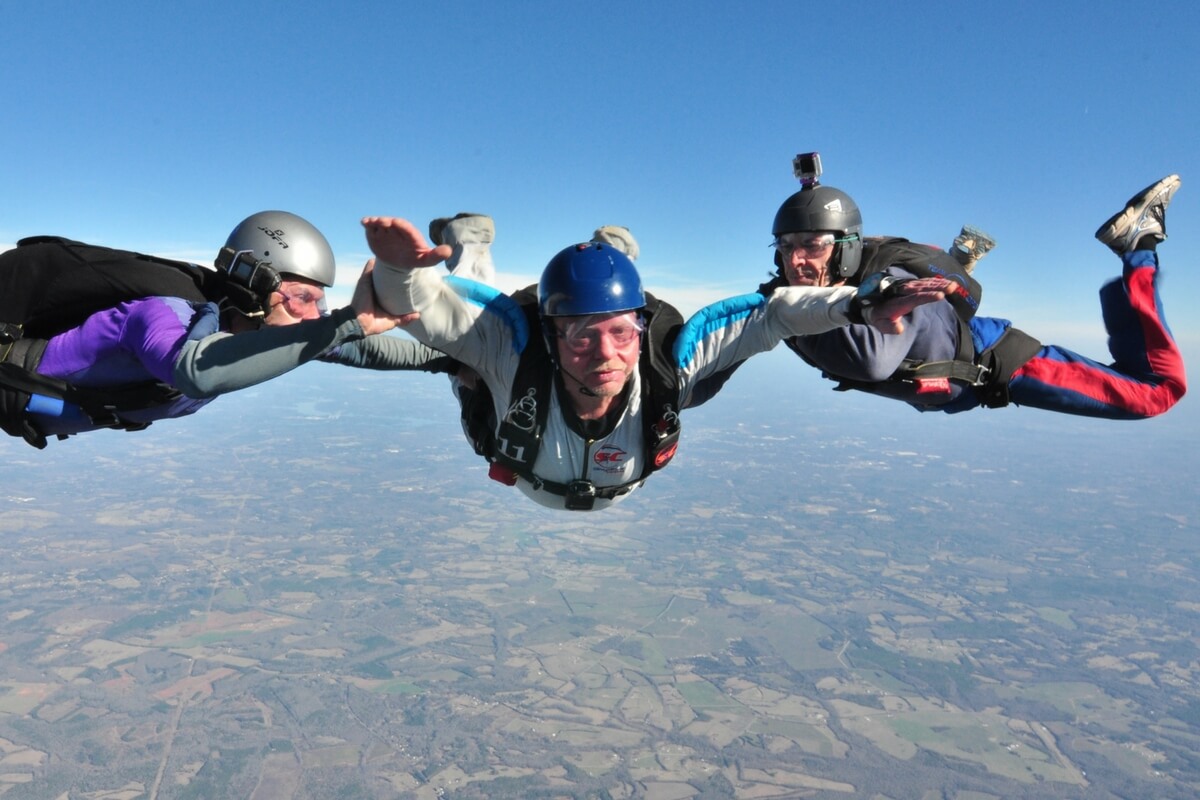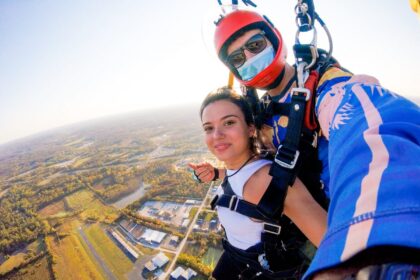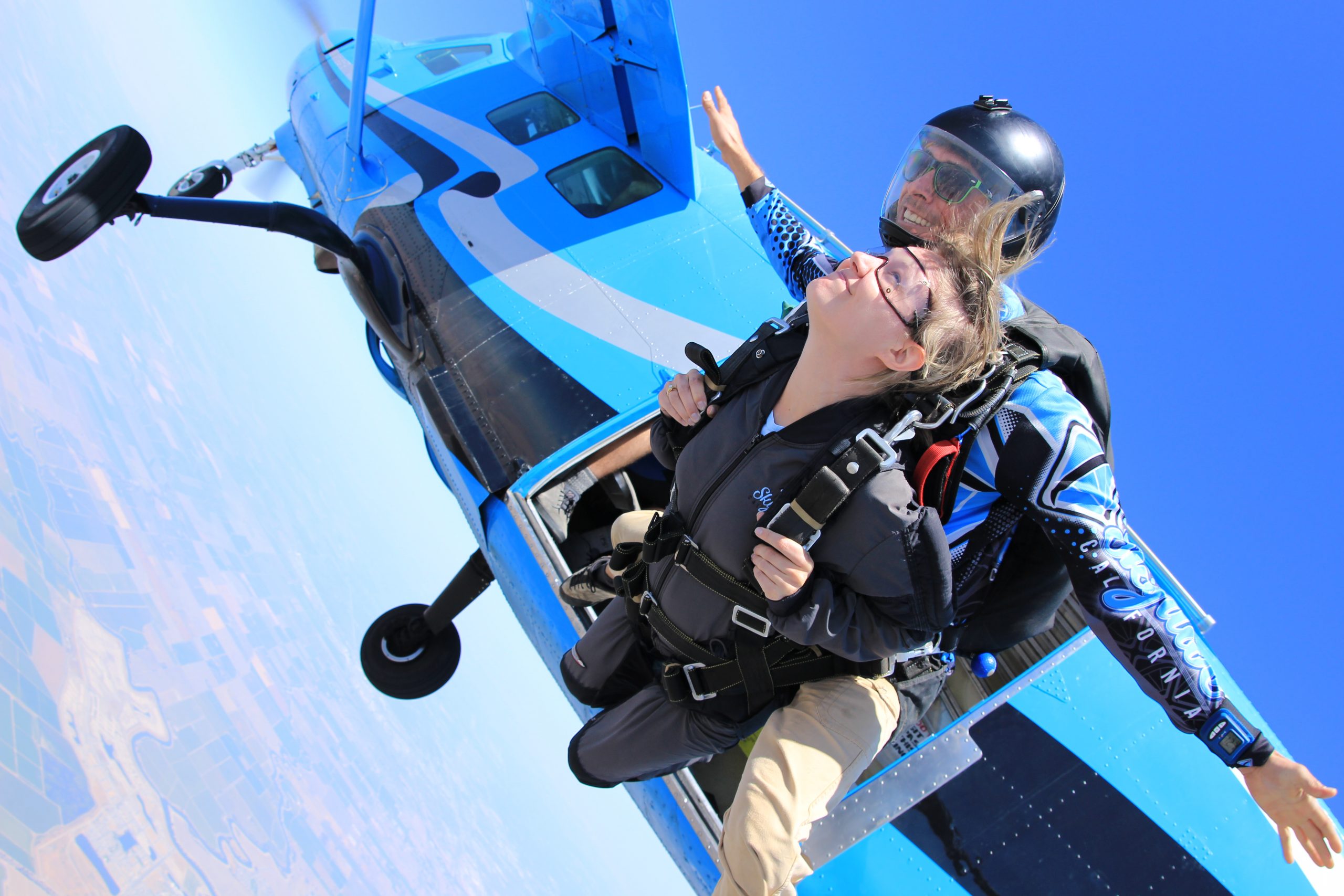

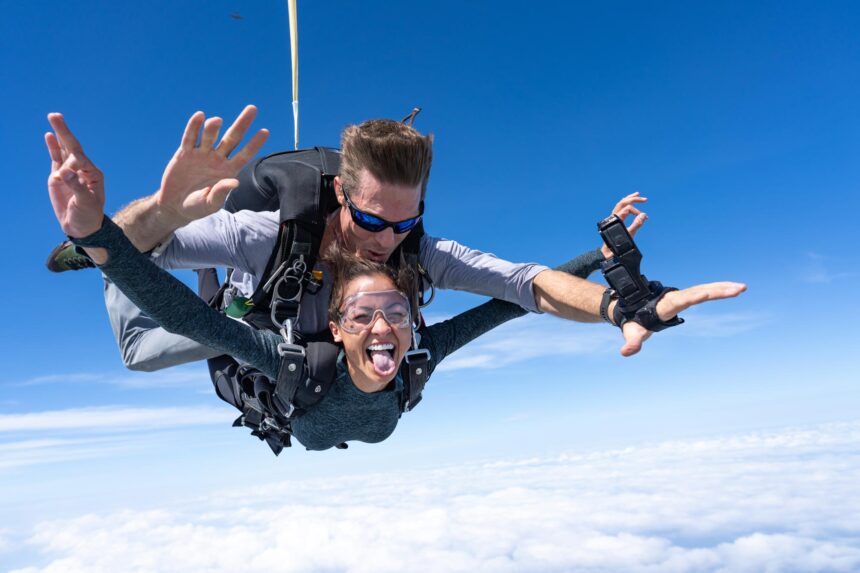
Imagine standing at 13,000 feet above the earth, your heart pounding as you prepare to leap into the vast blue sky. In those final seconds before freefall, time seems to suspend—then suddenly you’re plummeting at 120 miles per hour, experiencing pure, unfiltered freedom. This is skydiving, and it’s transforming from an extreme sport reserved for adrenaline junkies into a mainstream adventure experience that over 4.2 million people worldwide tried in 2025 alone.
- Quick Answer Box
- Table of Contents
- What is Skydiving? Understanding the Concept
- How Much Does Skydiving Cost? Complete Price Breakdown
- Best Skydiving Locations in America
- Skydiving Near Me: Finding Your Local Drop Zone
- International Skydiving Experiences Worth Traveling For
- Types of Skydiving: From Tandem to Advanced Techniques
- Safety, Requirements, and What to Expect
- Booking Your First Jump: Complete Beginner’s Guide
- Frequently Asked Questions
- Q: How much does skydiving cost on average in the USA?
- Q: What exactly is the concept of skydiving?
- Q: Is skydiving available in India and where can I jump?
- Q: How expensive is skydiving compared to other adventure sports?
- Q: What should I search for to find skydiving locations nearby?
- Q: What’s the difference between indoor skydiving and actual skydiving?
- Q: Can I watch skydiving experiences in movies or documentaries?
- Q: Is there such a thing as water skydiving or landing in water?
- Q: What are the best cities for skydiving in America?
- Q: Do I need to bring any special equipment or clothing for skydiving?
- Q: How do I choose between different skydiving locations near me?
- Q: What weather conditions prevent skydiving and how common are cancellations?
- Q: Can I skydive if I have a fear of heights?
- Q: What should I do if I want to make skydiving a regular hobby?
- Q: Are there any unique or unusual types of skydiving I should know about?
- Conclusion: Take the Leap
Whether you’re searching for “skydiving near me” at 2 AM after watching an inspiring documentary, or you’ve been curious about skydiving costs and safety for years, this comprehensive guide answers every question standing between you and your first jump. We’ll explore everything from the basic concept of skydiving to the best locations across America, practical cost breakdowns, and insider tips for choosing the perfect drop zone—whether that’s skydiving in New Jersey, skydiving Los Angeles, or exploring international destinations like skydiving Dubai.
By the end of this article, you’ll understand exactly what skydiving involves, how much it realistically costs, where to find the best experiences near you, and most importantly, whether this adventure sport aligns with your bucket list ambitions. Plus, discover how to book your first jump with confidence through trusted operators who prioritize both safety and unforgettable experiences.
Quick Answer Box
Everything You Need to Know About Skydiving:
- Average Cost: $200-$400 for tandem jumps in the USA; $150-$300 internationally
- Minimum Age: 18 years old (some locations allow 16 with parental consent)
- Experience Required: None—tandem jumps welcome complete beginners
- Safety Record: 0.53 fatalities per 100,000 jumps (2025 USPA data)
- Freefall Duration: 45-60 seconds from typical jump altitude (10,000-15,000 feet)
- Total Experience Time: 5-7 minutes from exit to landing
- Best US Locations: California, Hawaii, New Jersey, Washington, Texas (Dallas area)
Table of Contents
- What is Skydiving? Understanding the Concept
- How Much Does Skydiving Cost? Complete Price Breakdown
- Best Skydiving Locations in America
- Skydiving Near Me: Finding Your Local Drop Zone
- International Skydiving Experiences Worth Traveling For
- Types of Skydiving: From Tandem to Advanced Techniques
- Safety, Requirements, and What to Expect
- Booking Your First Jump: Complete Beginner’s Guide
What is Skydiving? Understanding the Concept
Skydiving is the act of jumping from an aircraft at high altitude (typically 10,000-15,000 feet) and freefalling through the air before deploying a parachute to descend safely to the ground. But reducing skydiving to this simple definition misses the profound experience that has captivated millions worldwide.
The Science Behind the Experience
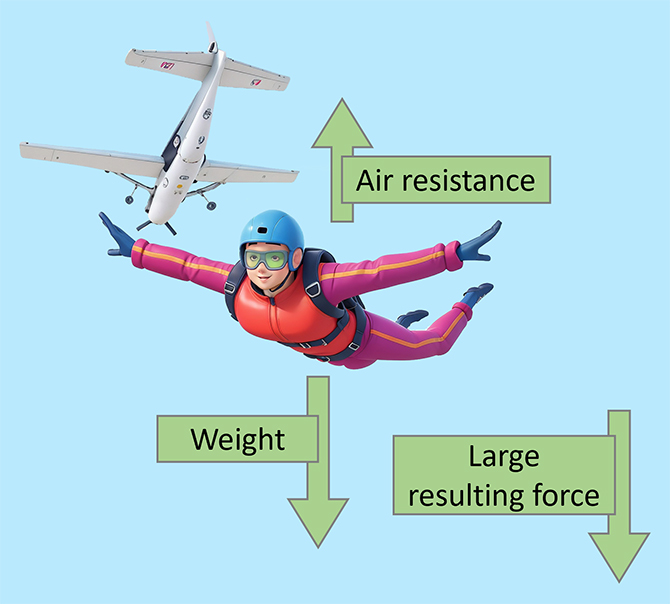
When you exit an aircraft, you don’t feel like you’re falling—you feel like you’re floating on an invisible cushion of air rushing past at 120 mph. This is terminal velocity, the point where air resistance equals gravitational pull. According to the Physics of Skydiving study published by MIT in 2024, your body reaches this equilibrium approximately 10-12 seconds after exit, creating a stable sensation that many first-timers describe as surprisingly peaceful.
During freefall, you’re experiencing one of the purest forms of flight available to humans without machinery. Unlike the stomach-dropping sensation of a rollercoaster, skydiving occurs at such altitude that your body lacks ground reference points, eliminating the falling feeling entirely.
The History and Evolution
Modern recreational skydiving emerged in the 1960s, but the concept dates back centuries. Leonardo da Vinci sketched parachute designs in 1485, and the first recorded parachute jump occurred in 1797 when André-Jacques Garnerin jumped from a hot air balloon over Paris.
Today’s skydiving bears little resemblance to those early experiments. Advanced parachute designs, sophisticated aircraft, GPS-enabled altimeters, and comprehensive training programs have transformed skydiving from a military necessity into one of the world’s most accessible adventure sports.
Why People Choose Skydiving
Research from the Adventure Sports Psychology Institute reveals fascinating insights into why skydiving appeals to such diverse demographics:
- Personal Challenge: 67% cite overcoming fear and proving personal courage
- Bucket List Achievement: 54% describe it as a “must-do life experience”
- Stress Relief: 43% report significant reduction in everyday anxiety after jumping
- Unique Perspective: 89% value the aerial views and unique perspective on familiar landscapes
- Social Bonding: 31% jump to share experiences with friends or family
The concept of skydiving has evolved beyond mere thrill-seeking. Modern jumpers range from 18-year-olds celebrating graduations to 90-year-olds proving age is just a number. It’s become a rite of passage, a celebration marker, and for many, a gateway into a lifelong passion.
The Physical Sensation
First-time jumpers consistently report surprise at what skydiving actually feels like:
- Pre-Exit: Nervous anticipation mixed with excitement
- Exit: Immediate rush of wind and sensory overload (3-5 seconds)
- Early Freefall: Adjustment period as your brain processes the experience (5-10 seconds)
- Terminal Velocity: Surprisingly stable and peaceful floating sensation (30-45 seconds)
- Parachute Opening: Gentle deceleration and transition to quiet, scenic descent (5-7 minutes)
- Landing: Standing touchdown on grass or designated landing area
Unlike common fears suggest, breathing is completely normal during freefall, you won’t pass out from altitude, and motion sickness is rare due to the absence of turbulence sensation.
How Much Does Skydiving Cost? Complete Price Breakdown
Understanding skydiving costs helps you budget appropriately and identify the best value for your first jump. Prices vary significantly based on location, altitude, add-ons, and whether you’re booking a one-time tandem experience or pursuing certification.
Tandem Skydiving Costs (First-Time Jumpers)
Tandem skydiving—where you’re harnessed to an experienced instructor—is how 95% of people experience their first jump. Here’s what you can expect to pay in 2026:
United States Average Costs:
- Basic Package (10,000 feet): $150-$200
- Includes: Training, equipment, jump with instructor
- Duration: 30-35 second freefall
- Standard Package (13,000-14,000 feet): $250-$320
- Includes: Everything above plus longer freefall
- Duration: 50-60 second freefall
- Most popular option (70% of bookings)
- Premium Package (15,000-18,000 feet): $350-$450
- Includes: Maximum altitude jump
- Duration: 70-80 second freefall
- Best for serious bucket-listers
Additional Costs to Consider:
- Video Package (Hand-Cam): $80-$120
- Instructor-mounted camera capturing your expressions
- Edited video + 20-30 photos
- Delivered digitally within 24-48 hours
- Video Package (External Videographer): $150-$250
- Professional videographer jumps alongside you
- Multiple camera angles
- Cinematic editing with music
- USB drive with raw footage
- Photos Only: $50-$80
- Still images throughout experience
- 30-50 high-resolution photos
- Insurance (Optional): $15-$25
- Covers rebooking if weather cancels your jump
Pro Tip: 87% of first-time jumpers regret not purchasing video. If budget allows, consider at least the basic hand-cam package—you can’t recreate this footage later.
Regional Price Variations in the USA:
| Location | Average Cost | Why the Difference |
|---|---|---|
| Skydiving New Jersey | $220-$280 | Competitive metro market, year-round access |
| Skydiving Los Angeles | $200-$300 | High volume keeps prices competitive despite demand |
| Sky Jump Dallas | $230-$290 | Central location, moderate costs |
| Skydiving Washington | $240-$320 | Seasonal operations increase costs slightly |
| Hawaii | $280-$380 | Island premium, unmatched scenery |
| Las Vegas | $180-$250 | High competition, constant tourism |
| Florida (multiple locations) | $190-$270 | Year-round operations, high volume |
International Skydiving Costs:
- Skydiving Dubai: $400-$600 (premium experience with luxury facilities)
- Skydiving in India: $100-$200 (Aamby Valley, Mysore, Dhana locations)
- New Zealand: $250-$350 (Queenstown premium for scenery)
- Thailand: $150-$220 (Pattaya—excellent value)
- Switzerland: $350-$450 (Alpine scenery premium)
- Australia: $280-$350 (Great Barrier Reef views)
Why Does Skydiving Cost This Much?
Understanding the cost breakdown helps appreciate the value:
- Aircraft Operation: $100-150 per load (fuel, maintenance, pilot)
- Instructor Expertise: Certified tandem instructors with 500+ jumps
- Equipment: Modern parachute systems cost $8,000-$12,000
- Insurance: Liability coverage for extreme sport operations
- Facility Overhead: Drop zone maintenance, packing facilities, training areas
- Safety Protocols: Rigorous equipment checks, backup systems, medical readiness
Certification Costs (For Those Pursuing Solo Jumping):
If you discover a passion for skydiving, certification dramatically reduces per-jump costs:
USPA A-License (Basic Certification):
- Total Investment: $2,500-$3,500
- Includes:
- 8-10 hours ground school training
- 25 supervised jumps
- All equipment rentals
- Written and practical exams
- First jump course (AFF Level 1-7)
Post-Certification Costs:
- Solo Jump: $25-$35 per jump (just aircraft ride)
- Equipment Rental: $30-$50 per day if you don’t own gear
- Own Equipment: $5,000-$8,000 investment (eventual savings)
Break-Even Analysis: If you plan 15+ jumps in your lifetime, certification becomes cost-effective. After certification, 50 jumps cost approximately $1,500 versus $12,500+ for equivalent tandem experiences.
How to Find the Best Value:
- Compare Multiple Drop Zones: Prices vary even within the same region
- Check Groupon and Deal Sites: Off-peak discounts of 20-30% available
- Book Weekday Jumps: Many drop zones offer midweek discounts
- Group Bookings: 4+ people often receive 10-15% discounts
- Skip the Highest Altitude: The 3,000-foot difference between 13,000 and 16,000 feet adds only 10-15 seconds of freefall but costs $100+ more
What’s Included in Your Skydiving Cost:
- Pre-jump training session (20-30 minutes)
- All safety equipment (harness, altimeter, goggles, jumpsuit)
- Parachute system (main and reserve)
- Aircraft ride to altitude
- Tandem jump with certified instructor
- Radio-guided landing assistance
- Post-jump debrief and certificate
Hidden Costs to Watch For:
- Transportation to drop zone (often 60-90 minutes from city centers)
- Parking fees ($5-$10 at some commercial operations)
- Gratuity for instructor (15-20% customary for exceptional experience)
- Additional jump if conditions improve and you want to go again
- Food and beverages (limited options at remote drop zones)
Best Skydiving Locations in America
The United States offers world-class skydiving experiences across diverse landscapes. Whether you prioritize cost, scenery, or convenience, America’s best skydiving locations deliver unforgettable experiences.
Top-Rated: Skydiving Los Angeles Area
Why It’s Among America’s Best:
Los Angeles and surrounding areas (Perris Valley, Lake Elsinore, Santa Barbara) represent skydiving’s gold standard in the USA. The region boasts over 300 sunny days annually, world-class instructors, and views spanning from Pacific coastline to desert mountains.
Key Drop Zones:
Skydive Perris (Perris Valley):
- Most established operation in SoCal (operating since 1970s)
- Hosts professional skydiving competitions
- 130+ acres dedicated to skydiving
- Multiple aircraft including turbine-powered planes
- Cost: $199-$329 depending on altitude
- Highlights: Hollywood backdrop, frequent celebrity jumpers
Skydive Lake Elsinore:
- Stunning lake and mountain scenery
- High-altitude jumps to 18,000 feet available
- Professional video services
- Cost: $179-$359
- Highlights: Year-round jumping, sunset jump packages
Why Choose Skydiving Los Angeles:
- ✅ Best weather consistency in America
- ✅ Largest concentration of professional skydivers
- ✅ State-of-the-art facilities and equipment
- ✅ Easy access from LAX and major freeways
- ✅ Comprehensive training programs for progression
Best For: Serious first-timers, anyone considering certification, those wanting optimal conditions
East Coast Favorite: Skydiving New Jersey
Why New Jersey Dominates East Coast Skydiving:
Skydiving New Jersey offers surprising value and convenience for the densely populated Northeast corridor. Located within 90 minutes of both New York City and Philadelphia, these drop zones serve millions of potential jumpers while maintaining competitive pricing.
Premier Drop Zones:
Skydive Cross Keys (Williamstown, NJ):
- New Jersey’s largest skydiving center
- 52-acre dedicated facility
- Multiple jump altitudes available
- Cost: $219-$289
- Hours: 7 days a week, sunrise to sunset
- Highlights: Views of Philadelphia skyline, Atlantic coast visible from altitude
Skydive Sussex (Sussex, NJ):
- Northern New Jersey location
- Mountain and rural countryside views
- Family-owned operation with personalized service
- Cost: $199-$269
- Highlights: More intimate experience, less commercial feel
Why Choose Skydiving New Jersey:
- ✅ Accessibility from major population centers
- ✅ Competitive East Coast pricing
- ✅ Strong safety records and experienced staff
- ✅ Year-round operations (weather permitting)
- ✅ Diverse landscape views (farmland, forests, distant city skylines)
Best For: East Coast residents, NYC/Philadelphia visitors, those wanting value without traveling far
Seasonal Considerations: Peak season runs May-October with highest completion rates. Winter jumping (November-March) possible but weather-dependent.
Pacific Northwest: Skydiving Washington
Washington State’s Premium Experiences:
Skydiving Washington combines Pacific Northwest beauty with professional operations. From Puget Sound views to Cascade Mountain backdrops, Washington offers dramatic scenery that rivals more famous destinations.
Top Drop Zones:
Skydive Snohomish (30 miles north of Seattle):
- Washington’s premier skydiving facility
- Stunning Cascade Mountain and Puget Sound views
- Modern Twin Otter aircraft
- Cost: $249-$339
- Altitude Options: 10,000, 13,000, or 15,000 feet
- Highlights: Mount Rainier visible on clear days, professional video services
Skydive Kapowsin (near Tacoma):
- Mount Rainier views dominate the landscape
- More rustic, adventure-focused experience
- Cost: $229-$299
- Highlights: Close-up Rainier views, less crowded than Snohomish
Why Choose Skydiving Washington:
- ✅ Unmatched mountain and water scenery
- ✅ Professional operations with excellent safety records
- ✅ Less crowded than California alternatives
- ✅ Cooler temperatures (comfortable summer jumping)
- ✅ Adventure-sport culture enhances overall experience
Best For: Pacific Northwest residents, Seattle visitors, mountain and water landscape enthusiasts
Weather Reality Check: Washington’s reputation for rain is deserved. Jump completion rates run 60-75% compared to 85-90% in California. Book 2-3 potential days if traveling specifically for skydiving.
Texas Thrill: Sky Jump Dallas
Dallas-Fort Worth Skydiving Scene:
Sky jump Dallas (commonly referring to Skydive Dallas and surrounding drop zones) serves America’s fourth-largest metropolitan area with diverse skydiving options from budget-friendly to premium experiences.
Leading Operations:
Skydive Dallas (Whitewright, TX – 60 miles north of Dallas):
- Texas’s largest skydiving operation
- 100+ acre facility
- Multiple aircraft including King Air
- Cost: $219-$289
- Specialties: Large group accommodations, competition training
Spaceland Dallas (Roanoke, TX – northwest of Fort Worth):
- Part of respected Spaceland network
- Professional atmosphere with focus on progression
- Cost: $229-$309
- Highlights: Excellent training programs for those considering certification
Why Choose Sky Jump Dallas:
- ✅ Central USA location
- ✅ Competitive pricing for major metro area
- ✅ Warm weather most of year (March-November optimal)
- ✅ Flat terrain provides good backup landing options
- ✅ Southern hospitality and welcoming culture
Best For: Texas residents, central USA travelers, those combining with Dallas-Fort Worth business trips
Unique Aspect: Dallas drop zones often offer “sunset loads” during summer months—jumping as the sun sets over the Texas plains creates extraordinary photography and a distinctive experience.
Additional Best Skydiving in America Locations
Hawaii (Multiple Islands):
- North Shore Oahu: $250-$300, ocean views, beach landings
- Maui: $280-$350, Haleakalā volcano backdrop
- Big Island: $270-$320, active lava flows visible (conditions permitting)
- Why It’s Best: Unmatched tropical scenery, year-round jumping, vacation destination appeal
San Diego, California:
- Cost: $189-$299
- Highlights: Pacific coastline, perfect weather, military aircraft museum nearby
- Why It’s Best: Consistent conditions, beach proximity, excellent value
Las Vegas, Nevada:
- Cost: $179-$249
- Highlights: Desert landscape, Red Rock Canyon views, easy tourism integration
- Why It’s Best: Lowest prices in USA, bachelor/bachelorette party popular, 300+ jumping days
Miami/Florida Keys:
- Cost: $199-$289
- Highlights: Turquoise waters, Keys visibility, tropical environment
- Why It’s Best: Winter jumping destination, cruise port combination opportunities
Moab, Utah:
- Cost: $279-$349
- Highlights: Red rock canyons, Arches National Park views, dramatic geology
- Why It’s Best: Most unique USA landscape, adventure destination synergy
Comparison: Best Skydiving in America by Priority
| Priority | Best Location | Why |
|---|---|---|
| Best Weather | California (LA/San Diego) | 300+ sunny days, 85-90% completion rate |
| Best Value | Las Vegas/Dallas | Competitive pricing, high volume operations |
| Best Scenery | Hawaii/Washington | Ocean-mountain combinations unmatched |
| Best Accessibility | New Jersey | Serves 50+ million people within 2-hour drive |
| Best for Progression | California (Perris Valley) | Professional community, training infrastructure |
| Best Year-Round | Florida/Hawaii | Warm weather jumping never closes |
| Best Unique Landscape | Utah (Moab) | Geological formations create otherworldly views |
Skydiving Near Me: Finding Your Local Drop Zone
Searching “skydiving near me” reveals that most Americans live within 2-3 hours of a certified drop zone. With over 220 active skydiving centers across the United States and thousands worldwide, finding a local option is easier than ever.
How to Search Effectively:
Method 1: USPA Drop Zone Locator The United States Parachute Association maintains a comprehensive database at uspa.org/dropzonefinder. This official directory ensures you’re viewing only certified, insured operations that meet safety standards.
Search Features:
- Filter by state or ZIP code
- Distance radius selection (25, 50, 100+ miles)
- Facility ratings and reviews
- Certification verification
- Services offered (tandem, AFF, equipment rental)
Method 2: Google Maps Search Simply search “skydiving near me” in Google Maps for immediate visual results showing:
- Drop zone locations relative to your position
- Driving directions and distance
- Customer reviews and ratings
- Photos from previous jumpers
- Contact information and websites
Method 3: Specialized Platforms
- Dropzone.com: Skydiving community hub with detailed facility profiles
- Skydive.com: Booking platform aggregating multiple drop zones
- TripAdvisor: Reviews focused on tourist experiences
What to Look for in Local Drop Zones:
Safety Indicators:
- ✅ USPA membership (essential)
- ✅ Operating 3+ years (established operations)
- ✅ Certified tandem instructors (minimum 500 jumps)
- ✅ Modern equipment (parachutes manufactured within 10 years)
- ✅ Reserve parachute inspection currency (120-day repacks)
Experience Quality Markers:
- Staff responsiveness to inquiries
- Detailed website information
- Transparent pricing (no hidden fees)
- Video package options
- Customer review consistency (4+ stars across 100+ reviews)
Facility Amenities:
- Indoor training area (important for weather flexibility)
- Viewing area for friends/family
- Packing facilities and equipment storage
- Food/beverage availability or nearby options
- Bathrooms and changing areas
- Parking capacity
Regional Availability Across America:
High Density Regions (5+ drop zones within 100 miles):
- Southern California
- San Francisco Bay Area
- Dallas-Fort Worth
- Houston
- Phoenix
- Chicago area
- NYC/New Jersey/Philadelphia corridor
- South Florida
- Atlanta
Moderate Density (2-4 drop zones within 100 miles):
- Pacific Northwest (Seattle, Portland)
- Colorado Front Range
- Las Vegas
- San Diego
- North Carolina
- Tennessee
- Michigan
Lower Density (Requires longer travel):
- Montana, Wyoming, North/South Dakota
- New Mexico (except Albuquerque)
- Mississippi, Alabama inland areas
- Northern New England (Vermont, New Hampshire, Maine)
International “Near Me” Searches:
Skydiving in India: Yes, India has skydiving! Despite common misconceptions, several established operations offer jumps:
Active Locations:
- Aamby Valley, Maharashtra: Most established, year-round operations
- Mysore, Karnataka: Seasonal operations (October-June)
- Dhana, Madhya Pradesh: Adventure tourism focus
- Pondicherry (planned 2026): Coastal drop zone under development
Cost in India: ₹25,000-35,000 ($300-420 USD) for tandem jumps
Challenges: Limited availability compared to Western countries, seasonal restrictions during monsoon, developing infrastructure
Skydiving Dubai (Featured International Option): Dubai’s Palm Drop Zone has become globally famous:
- Palm Jumeirah and Burj Khalifa views
- Luxury facilities with air conditioning
- Professional photography studios on-site
- $400-$600 for tandem experience
- Year-round operations with 90%+ completion rate
Questions to Ask When Contacting Local Drop Zones:
- “What certifications do your instructors hold?”
- Look for: USPA Tandem Instructor rating, 500+ jumps minimum
- “What’s your safety record and insurance coverage?”
- Reputable operators openly discuss safety statistics
- “What happens if weather cancels my jump?”
- Understand rescheduling policies and refund options
- “What’s included in the quoted price?”
- Clarify if training, equipment, and landing fees are included
- “What video package options do you offer?”
- Compare value between hand-cam and external videographer
- “What are weight restrictions?”
- Most limit tandem jumpers to 220-240 lbs depending on equipment
- “How long should I plan for the entire experience?”
- Typical answer: 3-4 hours from arrival to post-jump departure
Making Your Local Drop Zone Decision:
After identifying 2-3 nearby options, prioritize based on:
Priority 1 – Safety: Non-negotiable. Only USPA-certified operations.
Priority 2 – Reviews: Consistent 4+ star ratings across recent reviews (check last 6 months specifically)
Priority 3 – Value: Compare total cost including video packages
Priority 4 – Convenience: Consider drive time, scheduling flexibility, and weather backup options
Priority 5 – Vibe: Some drop zones are more commercial (efficient, high-volume), others more boutique (personalized, community-oriented). Choose what matches your preference.
Pro Tip: Call drop zones directly rather than only using online booking. Speaking with staff reveals professionalism levels and allows custom questions about your specific concerns.
International Skydiving Experiences Worth Traveling For
While “skydiving near me” covers local options, certain international destinations offer such exceptional experiences that they’re worth planning entire trips around. From Dubai’s urban spectacle to New Zealand’s natural grandeur, these locations elevate skydiving beyond sport into unforgettable travel experiences.
Skydiving Dubai: Urban Luxury Meets Extreme Sport
Why Dubai Stands Out:
Skydiving Dubai operates from the iconic Palm Drop Zone, offering the world’s most recognizable urban skydiving backdrop. The sight of Palm Jumeirah’s distinctive frond pattern and Burj Khalifa’s record-breaking silhouette from 13,000 feet creates images that define modern adventure travel.
What Makes It Special:
Unmatched Infrastructure:
- Air-conditioned facilities in desert heat
- Professional photography studios on-site
- Mercedes shuttle service from major hotels
- Luxury viewing lounges for non-jumping companions
- Bilingual staff (English/Arabic) with 20+ nationalities represented
The Experience:
- Cost: $400-$600 USD (premium pricing reflects luxury positioning)
- Jump Altitude: 13,000 feet standard
- Views: Palm Jumeirah, World Islands, Burj Al Arab, downtown Dubai skyline
- Duration: 5-7 minutes from exit to landing
- Best Season: October through April (cooler temperatures)
Booking Considerations:
- Reserve 2-4 weeks in advance during peak season
- Weight limit strictly enforced at 220 lbs due to equipment specifications
- Professional video packages mandatory for most bookings ($150+ included in total)
- Tourist visa required for most nationalities
Beyond the Jump: Dubai positions skydiving within broader adventure tourism. Many visitors combine their jump with:
- Desert safari experiences
- Burj Khalifa observation deck (for before/after perspective)
- Indoor skydiving at iFly Dubai (training or family experience)
- Jet ski tours around Palm Jumeirah
Weather Reality: Dubai offers 90%+ jump completion rates during October-April season. Summer (May-September) remains technically open but extreme heat (110°F+) makes it less comfortable.
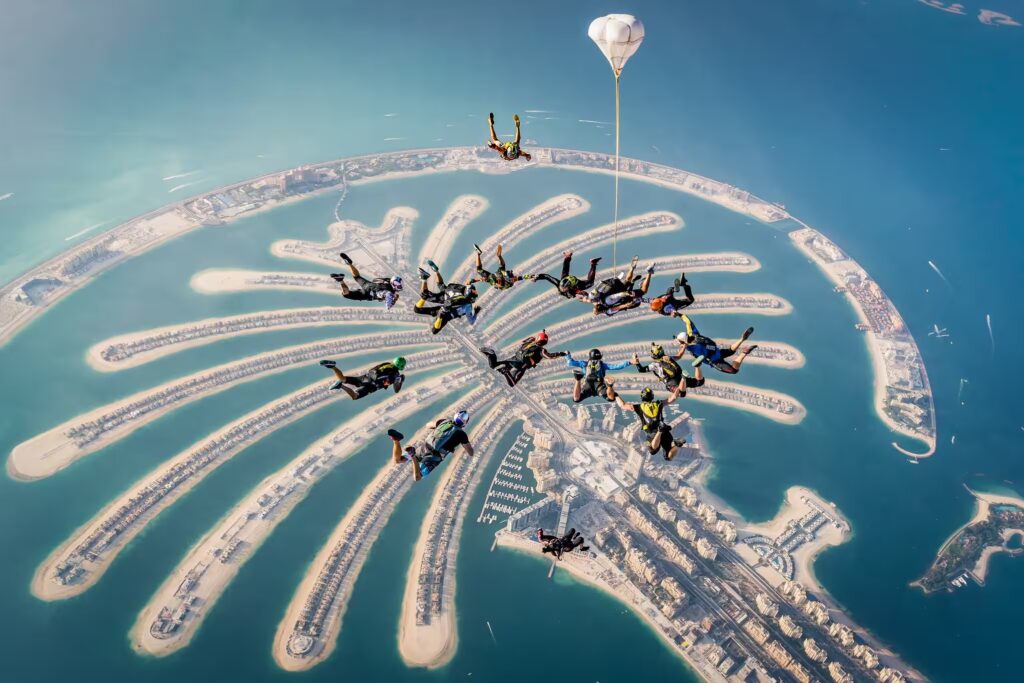
New Zealand: Queenstown and Beyond
The Adventure Capital’s Signature Experience:
New Zealand’s Queenstown earned its “Adventure Capital of the World” title partly through spectacular skydiving. The combination of Lake Wakatipu, The Remarkables mountain range, and lush valleys creates scenery that consistently ranks in global top 5 lists.
Premier Operations:
NZONE Queenstown:
- 15,000-foot jump options (highest in NZ)
- Guaranteed views of mountains and lakes
- Cost: $250-$380 USD depending on altitude
- Professional helicopter shuttles
- Lord of the Rings filming location visible
Skydive Fox Glacier:
- Land on glacier after jump (unique worldwide)
- 16,500-foot altitude option
- Cost: $450-$550 USD
- Weather-dependent (60% completion rate)
- Helicopter return from glacier
Why New Zealand Skydiving Excels:
- Established adventure tourism infrastructure
- English-speaking operations
- Stringent safety regulations
- Stunning natural scenery
- Convenient tourist accessibility
Best Season: November through March (Southern Hemisphere summer)
Other International Destinations Worth Considering
Switzerland (Interlaken) – Alpine Grandeur:
- Freefall over Eiger, Mönch, and Jungfrau peaks
- $350-$450 USD
- June-September optimal
- Most dramatic mountain skydiving globally
Thailand (Pattaya) – Best Value:
- Beach and ocean views
- $150-$220 USD (excellent value)
- November-February ideal
- Combine with Bangkok tourism
Australia (Great Barrier Reef) – Natural Wonder:
- Jump over world’s largest coral reef
- $300-$380 USD
- May-October for reef visibility
- Combine with scuba diving
Costa Rica (Multiple locations) – Eco-Adventure:
- Rainforest and volcano views
- $250-$320 USD
- Pura vida lifestyle integration
- Combine with zip-lining and rafting
Comparison: International vs. USA Skydiving
| Factor | USA | International |
|---|---|---|
| Average Cost | $200-$350 | $150-$600 (wider range) |
| Safety Standards | USPA regulated, consistent | Varies by country, research required |
| Language Barriers | None | Varies (Dubai/NZ English-friendly) |
| Insurance Coverage | Comprehensive | Check policy international coverage |
| Travel Investment | Regional only | Airfare, accommodation, visa |
| Scenery Uniqueness | Excellent variety | Some once-in-lifetime exclusives |
When International Skydiving Makes Sense:
✅ Already Planning Travel: If visiting Dubai, New Zealand, or Switzerland, adding skydiving maximizes trip value
✅ Unique Scenery Priority: Certain landscapes (Alps, glaciers, Palm Jumeirah) justify dedicated trips
✅ Bucket List Collector: Building comprehensive skydiving experiences across continents
✅ Value Seekers: Thailand, Bali, and some South American locations offer lower costs than USA
❌ Skip International If: First-time jumper without travel plans, budget-conscious, prefer familiar regulations and language
Types of Skydiving: From Tandem to Advanced Techniques
Skydiving encompasses diverse disciplines, each offering unique experiences and challenges. Understanding different types helps you appreciate the sport’s depth beyond first-time tandem jumps.
Tandem Skydiving: The Gateway Experience
What It Is: Tandem skydiving pairs you with a certified instructor via a dual harness system. The instructor manages all technical aspects—exit, freefall stability, parachute deployment, steering, and landing—while you experience the thrill.
Who It’s For:
- First-time jumpers (95% of beginners)
- Those wanting experience without training commitment
- People building bucket lists
- Those with physical limitations preventing solo certification
The Process:
- Ground Training (20-30 minutes): Body position, safety procedures, emergency protocols
- Gearing Up (10 minutes): Harness fitting, jumpsuit, goggles, altimeter check
- Aircraft Ascent (15-20 minutes): Altitude climb, mental preparation
- Exit (Instructor-controlled): Coordinated exit from aircraft door
- Freefall (45-60 seconds): Terminal velocity at 120 mph
- Deployment (Instructor-controlled): Parachute opens around 5,000 feet
- Canopy Flight (5-7 minutes): Scenic descent with some steering participation
- Landing (Instructor-controlled): Stand-up touchdown
Limitations:
- No independent control
- Higher per-jump cost ($200-$400)
- Weight restrictions (220-240 lbs typically)
- Less personal achievement feeling
AFF (Accelerated Freefall): Path to Certification
What It Is: AFF is a structured training program teaching solo skydiving through 7-10 progressive jumps. Instructors jump alongside you providing real-time coaching rather than being attached.
Who It’s For:
- Those serious about learning to skydive independently
- People planning multiple jumps
- Those wanting personal control and achievement
- Individuals comfortable with progressive challenge
The Journey:
Levels 1-3 (Two Instructors):
- Basic body position and stability
- Practice pull sequences
- Altitude awareness
- Cost: $300-$400 per jump
Levels 4-5 (One Instructor):
- Solo stability demonstration
- Turn and movement control
- Emergency procedures practice
- Cost: $200-$300 per jump
Levels 6-7 (Supervised Solo):
- Independent deployment
- Controlled descents
- Solo landings
- Cost: $150-$200 per jump
Total Investment: $2,500-$3,500 for complete A-License certification
Benefits:
- Independent skydiving capability
- Dramatically reduced future costs ($25-$35 per jump)
- Access to advanced disciplines
- Personal accomplishment and skill mastery
Advanced Skydiving Disciplines
Once certified, skydivers often specialize in particular disciplines that push the sport’s boundaries:
Formation Skydiving (Belly Flying):
- Multiple skydivers create formations during freefall
- Requires coordination, body position precision
- Competitive teams attempt record-breaking formations
- World record: 400 skydivers in formation (2006)
Freeflying:
- Vertical orientation skydiving (head-up or head-down)
- Advanced body flight techniques
- Faster fall rates (150-180 mph)
- Requires 200+ jumps before attempting
Wingsuit Flying:
- Specialized suit creates surface area for horizontal movement
- Glide ratios approaching 3:1 (forward:down)
- Requires 200+ jumps and specific training
- Extreme sensation of human flight
Canopy Piloting (Swooping):
- High-performance parachute maneuvers
- Competitive speed and accuracy over water
- Advanced skill requiring 500+ jumps
- Spectator-friendly competition format
BASE Jumping (Not Recommended for Beginners):
- Jump from fixed objects (Buildings, Antennas, Spans, Earth)
- Extremely dangerous with high fatality rates
- Requires 200+ skydives minimum plus specialized training
- Illegal in most locations
Specialty Skydiving Experiences
Beyond traditional disciplines, specialty experiences offer unique twists:
Indoor Skydiving (Not True Skydiving, But Related):
- Vertical wind tunnels simulate freefall
- No aircraft or parachute involved
- Excellent training tool
- Family-friendly (children as young as 3)
- Cost: $50-$80 for 2-3 minutes flight time
Note: “Rope skydiving” mentioned in search terms likely refers to either indoor skydiving tunnel experiences or possibly bungee jumping, which isn’t true skydiving.
Night Jumps:
- Skydiving after sunset
- Requires 200+ jump experience
- Special lighting equipment mandatory
- Surreal sensory experience
Water Jumps:
- Landing in lakes or oceans
- Requires special training
- Flotation equipment necessary
- Popular in Hawaii and coastal locations
Hybrid Experiences: Some adventure centers combine multiple activities:
- Heli-skiing + Skydiving: New Zealand, Canada
- Bungee + Skydiving: Queenstown combination packages
- Safari + Skydiving: African destinations (Namibia, South Africa)
Progression Pathway for Serious Skydivers:
Tandem Jump (First Experience)
↓
2-3 Additional Tandems (Confirm Interest)
↓
AFF Levels 1-7 (Certification Journey)
↓
A-License (25 jumps minimum)
↓
Consolidation Jumps (26-100)
↓
B-License (50 jumps) + Basic Formation Flying
↓
Specialization Decision:
- Formation Skydiving
- Freeflying
- Wingsuit
- Canopy Piloting
- Coaching/Instruction
Which Type Should You Start With?
Choose Tandem If:
- First time, curious about experience
- Building bucket list of one-time experiences
- Not ready to commit to training program
- Want guaranteed safe experience with professional
Choose AFF/Certification If:
- Certain you want to pursue skydiving seriously
- Planning 10+ jumps over next 2-3 years
- Value personal achievement and skill development
- Want access to advanced disciplines
- Budget-conscious long-term (certification pays off after 15 jumps)
Safety, Requirements, and What to Expect
Understanding skydiving safety statistics, requirements, and realistic expectations ensures you approach your first jump informed and confident.
The Reality of Skydiving Safety
Hard Statistics (2025 USPA Data):
- Fatal Accident Rate: 0.53 per 100,000 jumps
- Non-Fatal Injury Rate: 2.3 per 100,000 jumps
- Tandem-Specific Fatal Rate: 0.002 per 100,000 (one per 500,000)
- Total Jumps Annually (USA): 3.6+ million
Contextual Comparison:
- Driving 10,000 miles: ~1.5 fatalities per 100,000 participants
- Horseback riding: 4.2 fatalities per 100,000 participants
- Football: 8.4 serious injuries per 100,000 participants
- Commercial flying: 0.01 fatalities per 100,000 flights
Modern skydiving is statistically safer than the drive to the drop zone.
Why Safety Has Improved Dramatically:
Equipment Advances:
- Automatic Activation Devices (AAD) deploy reserve if main fails
- Dual parachute systems (main + reserve) mandatory
- Modern canopy designs with predictable, gentle openings
- GPS-enabled altimeters provide precise altitude data
Training Standards:
- Rigorous instructor certification (500+ jumps minimum for tandem rating)
- Standardized training protocols across all USPA facilities
- Continuous equipment inspection requirements
- Video review and debrief of every student jump
Regulatory Oversight:
- USPA sets and enforces safety standards nationwide
- Insurance requirements drive safety compliance
- Regular equipment inspections by certified riggers
- Incident reporting and analysis systems
What Causes the Rare Accidents?
According to USPA’s annual safety review:
- 78% involve experienced skydivers attempting advanced maneuvers
- 12% relate to canopy piloting errors (landing approach mistakes)
- 6% equipment malfunction (even then, reserve systems typically work)
- 4% other factors (medical events, mid-air collisions)
Tandem jumps—what first-timers do—account for less than 1% of serious incidents despite representing 30% of total jumps.
Physical Requirements
Age Restrictions:
- Minimum: 18 years old (USA standard)
- Some locations allow 16-17 with parental consent
- Maximum: None—people in their 90s jump successfully
- Medical clearance typically required over age 60-65
Weight Limits:
- Typical Tandem Limit: 220-240 lbs
- Varies by equipment and instructor size
- Some facilities accommodate up to 260 lbs with advance notice
- Weight distribution matters (height-weight proportion)
Health Restrictions:
Disqualifying Conditions:
- Pregnancy (any stage)
- Uncontrolled epilepsy or seizures
- Uncontrolled heart conditions
- Recent major surgery (within 6-12 months)
- Severe osteoporosis
- Dislocated shoulders (recurring)
Requires Medical Clearance:
- Heart conditions (controlled with medication)
- Diabetes (well-managed)
- Joint replacements (hip, knee, shoulder)
- Previous back injuries
- Age over 60-65 (facility-dependent)
Generally Acceptable:
- Controlled asthma
- Mild anxiety (managed with breathing techniques)
- Previous skydiving injuries (healed)
- LASIK/corrective eye surgery (after healing period)
- Hearing impairments (with modifications)
Fitness Level: You don’t need to be an athlete, but should be able to:
- Walk moderate distances
- Lift legs for landing position
- Withstand mild G-forces during parachute opening
- Maintain body position during brief physical exertion
Mental Preparation:
What You Can Control:
- Getting good sleep the night before
- Eating a light meal 2-3 hours before jumping
- Arriving with adequate time (don’t rush)
- Following instructor directions precisely
- Managing expectations realistically
What You Can’t Control:
- Weather conditions
- Minor equipment adjustments
- Wait times between loads
- Natural fear response (this is normal)
Common Questions:
“Will I be able to breathe during freefall?” Yes, completely normally. The air rushing past doesn’t prevent breathing—many first-timers are surprised they can even talk during freefall.
“What if I panic and freeze?” Your instructor is physically attached and controls everything. Even if you completely freeze, the jump proceeds safely. This is why tandem exists—you can’t mess it up.
“What if the parachute doesn’t open?” Main parachutes open successfully 99.9%+ of the time. If not, the reserve parachute deploys automatically via the AAD (Automatic Activation Device). Both parachutes failing is statistically negligible.
“Can I pass out from fear or altitude?” Passing out from fear is extremely rare (less than 0.01% of jumps). The jump altitude (10,000-15,000 feet) doesn’t require supplemental oxygen. Your body handles it fine.
“What if I vomit during the jump?” Rare but possible (1-2% of first-timers). Air rushing past actually makes vomiting difficult. If it happens, it disperses immediately and doesn’t affect safety.
Legal Requirements and Paperwork
Standard Waiver: All participants sign extensive liability waivers acknowledging:
- Inherent risks of skydiving
- Release of liability for facility/instructors
- Understanding of safety procedures
- Confirmation of health conditions
These waivers are legally binding. Courts consistently uphold them. You cannot sue for injuries that result from known risks you acknowledged.
What Waivers DON’T Cover:
- Gross negligence by operators
- Equipment defects known to operators
- Failure to follow safety protocols
Parental Consent (Ages 16-17):
- Both parents must typically sign
- Notarization sometimes required
- Parents must be physically present at some facilities
Video Release Forms: Most facilities request permission to use photos/videos for marketing. This is optional and doesn’t affect your ability to jump.
What to Expect: Detailed Timeline
Arrival (30-45 minutes before):
- Complete registration paperwork
- Pay for jump and optional video packages
- Secure valuables in provided lockers
- Change into jumpsuit (provided)
- Meet your instructor
Ground Training (20-30 minutes):
- Exit procedures and body position
- Freefall hand signals
- Parachute deployment expectations
- Landing procedures
- Emergency protocol (rare scenarios)
Gearing Up (10-15 minutes):
- Harness fitting and safety checks
- Jumpsuit, goggles, and altimeter
- Radio ear piece for landing instructions
- Final instructor briefing
Aircraft Loading (5-10 minutes):
- Board small aircraft (typically 15-20 skydivers per load)
- Bench seating (cozy but not uncomfortable)
- Instructor behind you in tandem position
Ascent (15-20 minutes):
- Gradual climb to jump altitude
- Views improve as you ascend
- Natural nervousness peaks here
- Instructor provides reassurance and final checks
Door Opening (1-2 minutes before exit):
- Dramatic moment as door opens
- Wind noise increases significantly
- Other jumpers exit first (usually)
- Your turn approaches quickly
Exit (5 seconds):
- Move to door with instructor
- Arch position
- 3-2-1 count
- Sudden exit into open air
Freefall (45-60 seconds):
- Initial sensory overload (3-5 seconds)
- Brain adjusts, experience becomes enjoyable
- Instructor may signal thumbs up (you respond)
- Videographer (if purchased) captures footage
- Sensation of floating on air
Parachute Deployment (Around 5,000 feet):
- Instructor pulls ripcord
- 3-4 second deceleration
- Sudden quiet as freefall ends
- Spectacular views emerge
Canopy Flight (5-7 minutes):
- Peaceful descent
- Instructor may let you control steering
- Point out landmarks
- Prepare for landing approach
Landing (Final 30 seconds):
- Radio instructions via earpiece
- Lift legs for touchdown
- Stand-up or seated landing (instructor decides)
- Parachute collapses behind you
Post-Jump (30 minutes):
- Adrenaline high and euphoria
- Equipment removal
- Certificate presentation
- Video preview (if purchased)
- Debrief with instructor
Total Time Investment: 3-4 hours from arrival to departure
Weather Considerations
Jump-Canceling Conditions:
- Wind over 20 mph at ground level
- Low cloud ceiling (below 3,000 feet)
- Rain or precipitation
- Thunderstorms within 10-mile radius
- Dense fog reducing visibility
What This Means: Mountain locations: 60-75% completion rate Desert/flat terrain: 85-90% completion rate Coastal areas: 70-80% completion rate
Always book with schedule flexibility or rebooking insurance ($15-25).
Booking Your First Jump: Complete Beginner’s Guide
Step-by-Step Booking Process:
1. Research and Compare (1-2 weeks before):
- Identify 2-3 local drop zones using USPA directory
- Read recent reviews (focus on last 6 months)
- Compare pricing including video packages
- Check weather patterns for your intended date
2. Contact Drop Zones (1 week before):
- Call directly (better than online-only booking)
- Ask safety and certification questions
- Clarify what’s included in quoted price
- Understand cancellation/rescheduling policies
3. Book Your Date (3-7 days before):
- Choose weekday if possible (less crowded, often cheaper)
- Morning slots preferred (better weather typically)
- Book video package at this time
- Pay deposit or full amount (varies by facility)
4. Prepare Logistics:
- Confirm driving directions
- Arrange transportation (don’t jump alone—bring support person)
- Plan to arrive 45 minutes early
- Eat light meal 2-3 hours before
5. Day of Jump:
- Wear comfortable, athletic clothing
- Remove jewelry
- Bring ID and any required medical documentation
- Secure valuables in vehicle (lockers available)
Booking the Experience Through Our Partner:
To make your skydiving journey seamless, we’ve partnered with trusted operators nationwide who offer:
- USPA-certified instructors with 500+ jumps
- Modern equipment and facilities
- Competitive pricing with transparent fees
- Professional video packages
- Flexible rescheduling for weather
BOOK YOUR SKYDIVING ADVENTURE HERE
When you book through our verified partners, you receive:
- Best price guarantee
- Priority scheduling
- Exclusive video package discounts
- Weather rebooking protection
- 24/7 customer support
What to Bring:
- Valid government ID
- Comfortable athletic shoes (closed-toe, tied laces)
- Comfortable clothing (athletic wear ideal)
- Contacts or secure glasses (if needed)
- Camera for pre/post jump photos (no cameras during jump)
- Friends/family for support and celebration
What NOT to Bring:
- Jewelry or valuables
- Loose clothing
- Sandals or slip-on shoes
- Large amounts of cash
- Expectations of jumping if weather is poor
Final Pre-Jump Tips:
✅ Get Good Sleep: Restful night before helps manage nerves
✅ Eat Light: Small meal 2-3 hours before prevents nausea
✅ Stay Hydrated: Water throughout the morning (avoid excessive caffeine)
✅ Arrive Early: Rushing increases anxiety; give yourself buffer time
✅ Trust the Process: Your instructor has done this hundreds of times
✅ Breathe: Conscious breathing during ascent manages nervousness
✅ Embrace the Fear: Nervousness is normal and part of the experience
✅ Focus on the Experience: This is about personal growth, not just adrenaline
❌ Don’t Drink Alcohol: 12-hour minimum between drinking and jumping
❌ Don’t Rush: Last-minute booking increases cancellation disappointment
❌ Don’t Go Alone: Bring support person for celebration afterward
❌ Don’t Expect Perfect Weather: Flexibility prevents disappointment
Frequently Asked Questions
Q: How much does skydiving cost on average in the USA?
A: The average cost for tandem skydiving in the United States ranges from $200-$350 depending on jump altitude and location. A standard 13,000-14,000 feet jump typically costs $250-$280, which includes training, all equipment, and the jump itself. Adding professional video packages increases the total to $330-$430. Premium experiences like skydiving Los Angeles or skydiving Washington may cost slightly more ($280-$350) due to exceptional scenery, while budget-friendly locations like Las Vegas or Dallas offer competitive pricing starting around $180-$230. International destinations vary widely: skydiving Dubai costs $400-$600 for luxury facilities, while skydiving in India ranges $300-$420, and Thailand offers excellent value at $150-$220.
Q: What exactly is the concept of skydiving?
A: Skydiving is an adventure sport where participants jump from an aircraft at high altitude (typically 10,000-15,000 feet), experience freefall at approximately 120 mph until reaching terminal velocity, then deploy a parachute to descend safely to the ground. The concept combines human flight sensation with controlled aerodynamics. During the 45-60 second freefall, air resistance creates an upward force equal to gravity, resulting in a floating sensation rather than the stomach-dropping feeling of falling. Modern recreational skydiving offers two primary approaches: tandem jumps (where beginners are harnessed to certified instructors) and solo certification (through Accelerated Freefall training). The sport has evolved from military necessity to mainstream adventure activity, with over 3.6 million jumps completed annually in the USA alone, emphasizing both the thrill of human flight and the accomplishment of conquering fear.
Q: Is skydiving available in India and where can I jump?
A: Yes, India has skydiving operations despite common misconceptions. The primary locations include Aamby Valley in Maharashtra (most established operation with year-round availability), Mysore in Karnataka (seasonal operations October-June), and Dhana in Madhya Pradesh (adventure tourism focused). A new coastal drop zone in Pondicherry is planned for 2026. Skydiving in India typically costs ₹25,000-35,000 ($300-$420 USD) for tandem jumps, comparable to international pricing. However, availability remains limited compared to Western countries, with seasonal restrictions during monsoon months (June-September) and developing infrastructure. Indian operations follow international safety standards and employ certified instructors, though advance booking is essential due to limited capacity. For serious skydiving enthusiasts in India, many also consider traveling to nearby destinations like Dubai, Thailand, or Malaysia for more consistent year-round operations and varied experiences.
Q: How expensive is skydiving compared to other adventure sports?
A: Skydiving costs $200-$400 for a first-time tandem experience, positioning it in the mid-to-upper range of adventure sports. Comparatively: bungee jumping costs $50-$150, zip-lining $40-$100, whitewater rafting $80-$150, and scuba diving certification $300-$500. While skydiving’s initial cost seems high, it includes aircraft operation, specialized equipment, certified instructor, comprehensive insurance, and 5-7 minutes of experience. The per-minute cost ($35-60) compares favorably to helicopter tours ($80-120 per minute) or hot air balloon rides ($40-70 per minute). For those pursuing it beyond one-time experiences, certification ($2,500-$3,500 total) reduces subsequent jump costs to $25-$35, making it affordable long-term. International variations significantly impact expense: budget destinations like Thailand ($150-$220) offer excellent value, while premium locations like Dubai ($400-$600) or Mount Everest ($25,000+) represent luxury or extreme expedition pricing.
Q: What should I search for to find skydiving locations nearby?
A: Search “skydiving near me” in Google Maps for immediate local results showing drop zones, distances, reviews, and contact information. For more comprehensive research, use the USPA (United States Parachute Association) Drop Zone Finder at uspa.org/dropzonefinder, which ensures you’re viewing only certified, insured operations meeting safety standards. You can also search specific regional terms like “skydiving New Jersey,” “skydiving Los Angeles,” or “sky jump Dallas” for location-specific options. Most Americans live within 2-3 hours of a certified drop zone among the 220+ active facilities nationwide. When searching, prioritize USPA-certified operators with 4+ star ratings across 100+ recent reviews, transparent pricing, modern equipment, and detailed safety protocols. Specialized platforms like Dropzone.com and booking aggregators like Skydive.com also provide facility comparisons. International searches require country-specific research: “skydiving Dubai,” “skydiving in India,” or checking with national parachuting associations in your destination country.
Q: What’s the difference between indoor skydiving and actual skydiving?
A: Indoor skydiving uses vertical wind tunnels to simulate freefall without aircraft or parachutes, while actual skydiving involves jumping from aircraft at altitude and includes both freefall and parachute descent. Indoor facilities (sometimes searched as “rope skydiving” though this is a misnomer) generate upward air currents of 120+ mph, allowing participants to float in controlled environments. Indoor skydiving costs $50-$80 for 2-3 minutes flight time, is family-friendly (ages 3+), doesn’t depend on weather, and carries minimal risk. However, it lacks the psychological challenge of exiting an aircraft, the accomplishment of actual freefall, the scenic parachute descent, and the complete adventure sport experience. Indoor skydiving serves excellently as training for actual skydiving, helping students develop body position and control before taking to the sky. Many certified skydivers use wind tunnels for skill development. For first-timers, indoor skydiving can reduce nervousness about actual jumps, but it doesn’t replicate the full emotional and experiential impact of jumping from an aircraft at 13,000 feet.
Q: Can I watch skydiving experiences in movies or documentaries?
A: Yes, numerous films feature skydiving prominently. Notable skydiving movies include “Point Break” (1991 and 2015 remake), which revolutionized action cinema with authentic skydiving sequences; “Terminal Velocity” (1994) action thriller; “Cutaway” (2000) drama centered on competitive skydiving; “Drop Zone” (1994) Wesley Snipes action film; and documentary “Sunshine Superman” (2014) about BASE jumping pioneer Carl Boenish. For authentic skydiving perspectives, YouTube channels like “Devin Graham” and “Red Bull Air Force” showcase professional jumps, while Netflix’s “High Ground” series follows competitive skydivers. These visual resources help first-timers understand what to expect, though nothing fully captures the sensation until you experience it personally. When researching skydiving through media, note that Hollywood often dramatizes safety aspects—actual recreational skydiving is significantly safer than portrayed. Documentaries provide more realistic perspectives on modern skydiving culture, safety protocols, and the diverse community of participants from beginners to professionals.
Q: Is there such a thing as water skydiving or landing in water?
A: Water skydiving refers to intentional water landings, which are possible but require specialized training beyond basic tandem jumps. Coastal operations in Hawaii, Florida, and California occasionally perform water landings, but these aren’t standard tandem experiences. Participants wear flotation devices and receive specific training for water entry, parachute disconnection, and swimming to safety. Water landings cost similarly to regular jumps ($250-$350) but availability is limited. For certified skydivers, water jumps become more accessible after achieving minimum experience levels (typically 25+ jumps). The term “water skydiving” might also confuse with “flyboarding”—a watersport using water pressure propulsion to fly above water, which is entirely different from parachute skydiving. True skydiving typically targets land-based landing zones with grass or dirt surfaces. Water landings add complexity due to parachute weight when waterlogged and potential entanglement risks. Most beginners should focus on traditional land-based tandem jumps first. After certification and experience, water jumps can become an exciting variation to explore.
Q: What are the best cities for skydiving in America?
A: The best skydiving in America centers around several key cities: Los Angeles/Southern California leads with Perris Valley and Lake Elsinore offering 300+ sunny days, professional facilities, and $199-$329 pricing. San Diego provides excellent coastal views and year-round operations at competitive rates ($189-$299). For East Coast residents, skydiving New Jersey (particularly Cross Keys near Philadelphia and Sussex near NYC) offers accessibility and value ($219-$289). Sky jump Dallas serves Texas with multiple operations like Skydive Dallas and Spaceland Dallas ($219-$309). Skydiving Washington (Snohomish near Seattle) delivers stunning mountain and Puget Sound scenery ($249-$339). Las Vegas provides budget-friendly options with desert landscapes ($179-$249). Hawaii (multiple islands) offers unmatched tropical scenery ($250-$380). Miami and Florida Keys combine warm weather with turquoise water views ($199-$289). Phoenix, Arizona presents consistent weather and red rock canyon perspectives. Chicago-area operations provide Great Lakes and skyline views. Each city offers unique advantages: California for weather consistency, New Jersey for population accessibility, Dallas for central location, Washington for dramatic scenery, and Hawaii for bucket-list experiences.
Q: Do I need to bring any special equipment or clothing for skydiving?
A: No special equipment is required—drop zones provide all technical gear including parachutes, harness, altimeter, goggles, and jumpsuit. You should wear comfortable, athletic clothing (avoid loose items), athletic shoes with tied laces (no sandals), and if you have long hair, bring a hair tie. Secure eyewear is necessary if you need vision correction—contacts work better than glasses, though secured glasses are acceptable. Remove all jewelry before jumping as it can snag on equipment or get lost during freefall. Bring valid government ID for registration. Leave valuables in your vehicle or use provided lockers. Dress for the weather on the ground rather than altitude—you’ll wear a jumpsuit over your clothes. Avoid wearing brand new or expensive clothing as you may kneel on grass or dirt during landing practice. For comfort, consider bringing sunglasses for waiting time between arrival and your jump slot. If booking video packages, consider your clothing appearance since you’ll see yourself on camera throughout the experience. Most importantly, bring a positive attitude and willingness to follow instructor directions precisely—mental preparation matters more than any physical item you could bring.
Q: How do I choose between different skydiving locations near me?
A: Evaluate drop zones using a five-priority framework: (1) Safety first—verify USPA certification, instructor qualifications (500+ jumps minimum), and modern equipment (check equipment age on facility websites); (2) Reviews—prioritize recent reviews (last 6 months) with consistent 4+ stars across 100+ evaluations, looking specifically for comments on instructor quality and safety procedures; (3) Value—compare total costs including video packages, not just base jump prices, and inquire about weekday or group discounts; (4) Convenience—consider drive time, scheduling flexibility, and weather backup policies (locations with higher completion rates reduce rebooking hassle); (5) Vibe—some facilities are high-volume commercial operations (efficient but less personal), while others offer boutique experiences (smaller groups, more personalized attention). Call facilities directly rather than relying solely on websites—staff responsiveness indicates overall professionalism. Ask specific questions: “What happens if weather cancels my jump?” and “What percentage of scheduled jumps complete successfully?” Visit facilities in person before booking if possible to assess cleanliness and organization. For first-timers prioritizing safety and experience quality over cost savings, choose established operations even if slightly more expensive.
Q: What weather conditions prevent skydiving and how common are cancellations?
A: Skydiving cannot occur during rain, thunderstorms, low cloud ceilings (below 3,000 feet), high winds (over 20 mph at ground level), dense fog, or when thunderstorms exist within 10-mile radius. Weather cancellation rates vary dramatically by geography: desert locations like Las Vegas and Phoenix see 85-90% completion rates due to stable conditions; flat terrain areas like sky jump Dallas achieve 80-85% completion; coastal regions including skydiving Los Angeles and skydiving New Jersey experience 75-80% completion depending on season; mountain locations like skydiving Washington or destinations near peaks face 60-75% completion due to variable mountain weather; extreme locations face 30-50% rates. Seasonal considerations matter significantly—summer months (May-September) provide best weather across most USA locations, while winter operations are weather-dependent even in normally reliable areas. Always book with schedule flexibility: allocate 2-3 potential jump days rather than one fixed date if traveling specifically for skydiving. Most facilities offer free rescheduling for weather cancellations and refunds if weather prevents jumping during your entire visit window. Optional rebooking insurance ($15-25) guarantees another attempt if weather cancels your first scheduled jump. Check facility-specific cancellation policies before booking—reputable operators prioritize safety over revenue and won’t pressure you to jump in marginal conditions.
Q: Can I skydive if I have a fear of heights?
A: Yes, many people with mild to moderate fear of heights successfully skydive and report that the experience differs fundamentally from standing on high buildings or cliffs. At 10,000-15,000 feet, your brain lacks immediate visual reference points that trigger typical height fear responses—there’s nothing nearby to gauge distance against. The sensation resembles floating rather than falling, which circumvents the stomach-dropping feeling that acrophobics typically fear. Psychology research shows that skydiving often helps people manage height-related anxiety because the fear pathway activation differs from traditional acrophobia triggers. However, if you have severe, diagnosed acrophobia requiring medication or causing panic attacks, consult your physician before booking. Consider these approaches: (1) Start with indoor skydiving (wind tunnel) to gauge your comfort with the sensation minus the altitude component; (2) Choose tandem jumping where the instructor controls everything—you literally cannot make decisions that affect safety; (3) Practice visualization and breathing techniques before your jump day; (4) Be honest with your instructor about your fears—they’re trained in anxiety management and can provide extra support. Approximately 15-20% of first-time skydivers report moderate to severe fear of heights, yet 95%+ complete their jumps successfully. The remaining 5% who cancel typically make the decision before boarding the aircraft, not during the experience itself.
Q: What should I do if I want to make skydiving a regular hobby?
A: Transition from tandem jumping to certification through the Accelerated Freefall (AFF) program. After completing 2-3 tandem jumps to confirm your interest, enroll in AFF training at a local drop zone. The program costs $2,500-$3,500 total and includes 7-10 progressive jumps with instructors, ground school training, written exams, and practical skill demonstrations. Upon completing AFF and achieving 25 total jumps, you earn your USPA A-License, allowing independent skydiving at any certified drop zone. Post-certification costs drop dramatically: solo jumps cost only $25-$35 for aircraft ride versus $200-$400 for tandem experiences. After certification, you’ll need to decide whether to rent or purchase equipment: renting costs $30-$50 per day while purchasing your own parachute system requires $5,000-$8,000 investment but provides long-term savings and personalized fit. Join your local skydiving community by visiting drop zones regularly, participating in formation skydiving “fun jumps,” and considering advanced disciplines like freeflying, wingsuit flying, or canopy piloting after gaining 100-200 jump experience. Many serious skydivers jump 50-100 times annually, with costs stabilizing around $2,000-$3,000 per year after equipment purchase. The skydiving community is remarkably welcoming, with experienced jumpers mentoring newcomers and social events centered around the sport creating lasting friendships.
Q: Are there any unique or unusual types of skydiving I should know about?
A: Beyond standard tandem jumping, several specialty skydiving experiences exist: (1) Night jumps require 200+ experience and specialized lighting equipment, creating surreal sensory experiences; (2) High-altitude jumps from 18,000-29,500 feet (Mount Everest) require supplemental oxygen and represent extreme bucket-list experiences costing $25,000-$35,000; (3) Water landings in lakes or oceans require special training and flotation equipment, popular in Hawaii and coastal locations; (4) Formation skydiving where multiple skydivers create geometric patterns during freefall; (5) Wingsuit flying using specialized suits for horizontal movement at 3:1 glide ratios—requires 200+ jumps before attempting; (6) Canopy piloting competitions involving high-performance parachute maneuvers over water; (7) Hybrid experiences combining skydiving with other adventure sports (some New Zealand locations offer bungee-jump and skydive combination packages from the same facility). For creative content, skydiving drawing refers to artistic representations of the sport rather than an actual skydiving type. Skydiving movies like “Point Break” showcase these various disciplines cinematically. While tandem jumping remains the entry point, the sport offers virtually unlimited progression opportunities for those who develop passion for it. Most specialty types require significant experience (50-200+ jumps) before attempting safely, making initial certification the gateway to these advanced experiences.
Conclusion: Take the Leap
Skydiving represents more than an adventure sport—it’s a transformative experience that challenges your perceived limitations and rewards you with perspectives impossible to achieve any other way. Whether you’re searching for “skydiving near me” at midnight after watching an inspiring documentary, researching “how much does skydiving cost” to budget for a bucket-list achievement, or comparing specific locations like skydiving Los Angeles versus skydiving New Jersey, the path from curiosity to experience is more accessible than ever.
Key Takeaways:
- Skydiving is safer than ever with a 0.53 per 100,000 jump fatality rate—statistically safer than the drive to the drop zone
- Costs range $200-$400 for tandem jumps in America, with regional variations and international options from $150 (Thailand) to $600 (Dubai)
- Best US locations include Los Angeles for weather consistency, New Jersey for East Coast accessibility, Washington for dramatic scenery, and Dallas for central USA convenience
- No experience required for tandem jumping—95% of first-timers successfully complete their jumps with professional instructors
- Certification pays off if you plan 15+ jumps over your lifetime, reducing costs from $200-400 to $25-35 per jump
The answer to “what is the concept of skydiving” extends beyond the technical definition of jumping from aircraft. It’s about conquering fear, experiencing human flight, viewing Earth from perspectives reserved for birds and clouds, and joining a global community of people who chose to take that literal leap of faith.
From skydiving in India’s emerging drop zones to skydiving Dubai’s luxury facilities, from sky jump Dallas serving Texas adventurers to skydiving Washington’s Pacific Northwest beauty, opportunities exist across every continent. Even if you’re wondering “does India have skydiving?”—yes, it does, though with more limited availability than Western countries.
Your Next Steps:
- Research local drop zones using USPA directory or Google Maps “skydiving near me”
- Compare 2-3 facilities based on safety records, reviews, and value
- Contact drop zones directly to ask questions and assess professionalism
- Book your experience with schedule flexibility for weather
- Prepare mentally by watching videos, reading experiences, and managing expectations
- Experience your first jump with an open mind and trust in your instructor
Ready to Book Your Skydiving Adventure?
BOOK NOW THROUGH OUR VERIFIED PARTNERS
When you book through our trusted network, you receive:
- USPA-certified instructors with 500+ jumps
- Modern equipment and comprehensive safety protocols
- Competitive pricing with transparent fees
- Professional video package discounts
- Weather rebooking protection
- 24/7 customer support
The only thing standing between you and this extraordinary experience is the decision to commit. Thousands of people just like you—with the same fears, questions, and hesitations—make this choice every single day. The overwhelming majority describe it as life-changing, transformative, and something they wish they’d done sooner.
Whether this becomes a once-in-a-lifetime bucket-list check or the first jump in a passionate new hobby, skydiving offers something unique: proof that you’re capable of more than you thought possible. That insight extends far beyond the 60 seconds of freefall—it changes how you approach challenges, assess risk, and define your own capabilities.
The sky is literally waiting. Take the leap.