
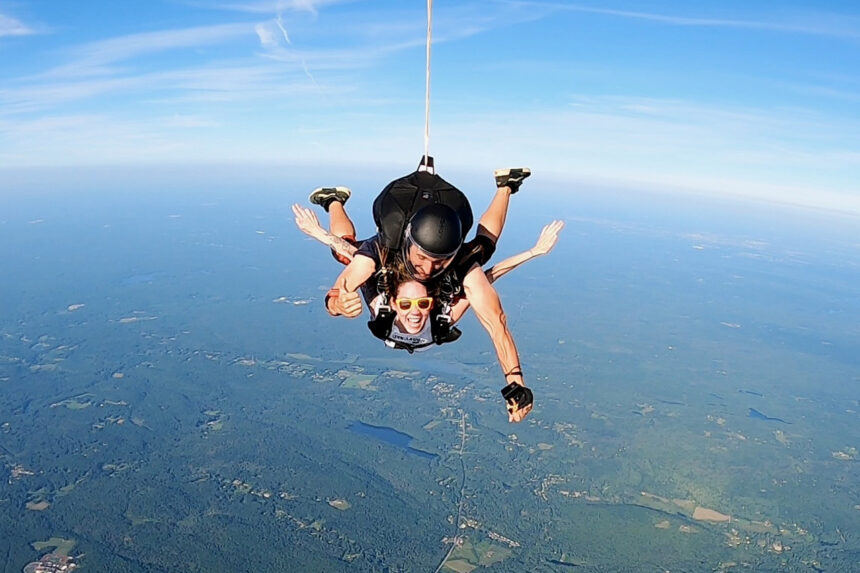
For many first-time skydivers, the biggest question is: what actually happens during a skydive? While the jump itself lasts only a few minutes, the full skydiving experience involves several stages, from preparation on the ground to the final landing.
- Step 1: Arrival at the Drop Zone
- Step 2: Safety Training and Preparation
- Step 3: Gear Up With Skydiving Equipment
- Step 4: Boarding the Aircraft
- Step 5: The Aircraft Exit
- Step 6: Freefall
- Step 7: Parachute Deployment
- Step 8: Parachute Flight and Scenic Views
- Step 9: Landing
- Total Time of the Skydiving Experience
- Why Understanding the Timeline Helps Beginners
- Conclusion
- FAQs About the Skydiving Experience
Understanding the skydiving experience timeline can help beginners feel more confident and prepared for their first jump. Each stage of the process is carefully designed to ensure safety and provide an unforgettable adventure.
In this guide, we’ll walk through the entire skydiving experience step by step so you know exactly what to expect from takeoff to landing.
Step 1: Arrival at the Drop Zone
Your skydiving experience begins at the drop zone, which is the skydiving center where jumps are organized.
At the drop zone, you will typically:
- Complete registration paperwork
- Sign a liability waiver
- Meet your instructor
- Receive an initial safety briefing
Most skydiving centers provide a comfortable waiting area where participants prepare for their jump.
Step 2: Safety Training and Preparation
Before boarding the aircraft, first-time skydivers receive a short training session.
This briefing usually covers:
- Proper body position during freefall
- Parachute deployment procedures
- Landing techniques
- Emergency safety instructions
Tandem skydiving beginners typically receive 15–30 minutes of training before their jump.
Understanding safety procedures is important for beginners. This guide explains why modern skydiving is considered safe:
is skydiving safe for beginners
Step 3: Gear Up With Skydiving Equipment
After training, participants are fitted with skydiving gear.
This usually includes:
- Tandem harness system
- Jumpsuit
- Goggles
- Helmet
The instructor performs safety checks to ensure the equipment is properly secured.
Modern skydiving equipment includes advanced safety technology designed to minimize risks.
Step 4: Boarding the Aircraft
Once everyone is ready, skydivers board the aircraft.
Skydiving planes typically climb to altitudes between 10,000 and 14,000 feet.
The climb to altitude usually takes about 15–20 minutes, depending on the aircraft.
Several aircraft types are commonly used for skydiving operations, including turboprop planes designed specifically for skydiving flights.
Step 5: The Aircraft Exit
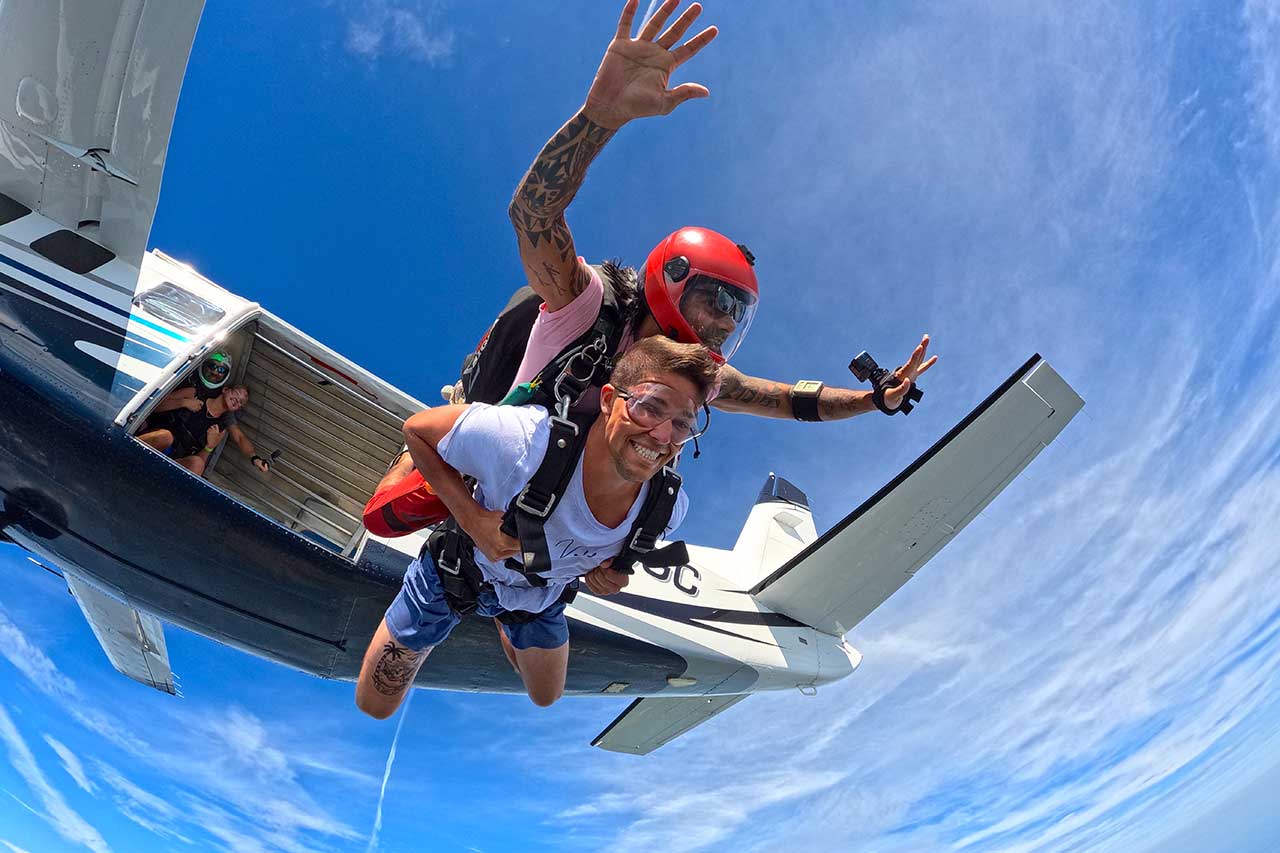
When the aircraft reaches the correct altitude, the door opens and skydivers prepare to jump.
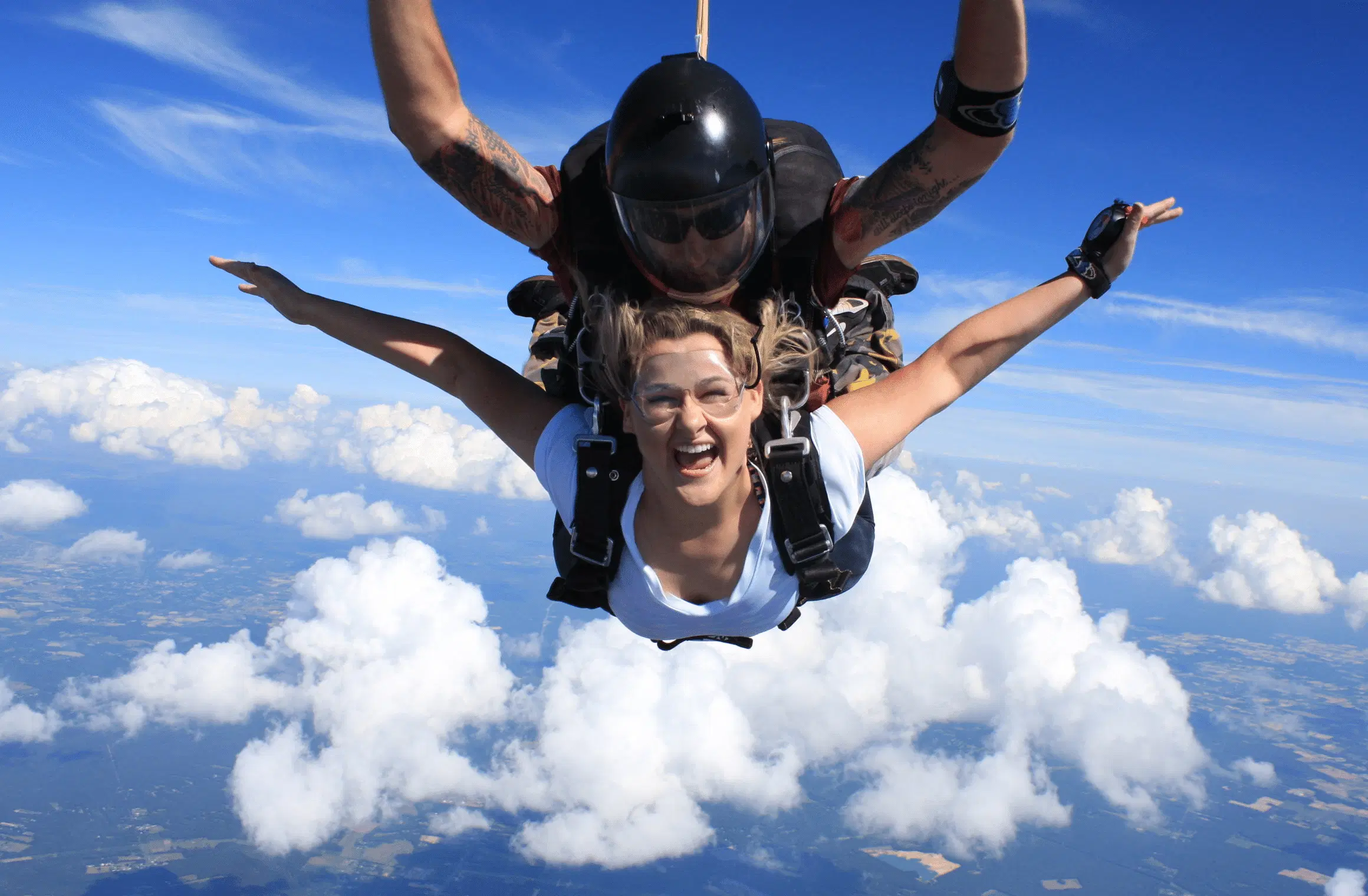
Tandem skydivers are attached to their instructors using a secure harness system.
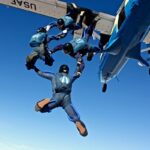
One by one, skydivers exit the aircraft.
For first-time jumpers, this moment is often the most exciting part of the entire experience.
Step 6: Freefall
Freefall is the most thrilling part of skydiving.
During freefall:
- Skydivers fall at approximately 120 mph (193 km/h)
- Freefall typically lasts 30–60 seconds
- Skydivers experience an intense adrenaline rush
Many people describe freefall as an incredibly smooth and floating sensation rather than a feeling of falling.
Step 7: Parachute Deployment
At around 5,000 feet, the instructor deploys the parachute.
Once the parachute opens:
- The descent slows dramatically
- The parachute becomes fully controllable
- The skydiver can enjoy scenic views from above
This stage usually lasts 4–6 minutes.
Understanding weight limits and safety requirements is also important before participating in skydiving:
skydiving weight limit
Step 8: Parachute Flight and Scenic Views
During the parachute descent, the experience becomes peaceful and scenic.
Skydivers can enjoy panoramic views of the landscape while the instructor controls the parachute.
In some cases, instructors allow participants to briefly steer the parachute for a hands-on experience.
Step 9: Landing
The final stage of the skydiving experience is the landing.
The instructor guides the parachute toward the drop zone landing area.
A safe landing usually involves:
- Slowing the parachute descent
- Lifting the legs for a smooth landing
- Touching down gently on the ground
Professional instructors are trained to manage safe landings in different weather conditions.
Organizations such as the United States Parachute Association (USPA) establish safety standards for skydiving operations.
Total Time of the Skydiving Experience
Although freefall lasts less than a minute, the complete experience takes longer.
| Stage | Estimated Time |
|---|---|
| Training | 20–30 minutes |
| Aircraft ascent | 15–20 minutes |
| Freefall | 30–60 seconds |
| Parachute descent | 4–6 minutes |
Total experience time: 1–2 hours.
Why Understanding the Timeline Helps Beginners
Many beginners feel nervous before skydiving simply because they don’t know what to expect.
Understanding the full skydiving experience timeline helps remove uncertainty and build confidence.
Once people understand how structured and controlled the process is, the experience becomes much less intimidating.
Conclusion
The complete skydiving experience timeline shows that skydiving is a carefully organized activity designed to maximize safety while delivering an unforgettable adrenaline rush.
From the initial safety briefing to the final parachute landing, every step of the process is guided by trained professionals and supported by advanced skydiving equipment.
For many people, skydiving becomes one of the most memorable adventures of their lives.
The skydiving experience relies on advanced safety equipment and professional aircraft. Our guide on skydiving equipment explained explores the gear that protects skydivers during every jump.
You can also learn about the planes used for skydiving operations in our guide on skydiving aircraft types.
Many beginners feel nervous before their first jump, which is why understanding skydiving fear psychology can help explain why people experience anxiety before skydiving.
For a broader understanding of the sport, you can also explore global skydiving statistics worldwide.
FAQs About the Skydiving Experience
How long does a skydiving experience last?
The full experience usually lasts 1–2 hours, including training, aircraft ascent, and the jump itself.
How long is freefall during skydiving?
Freefall typically lasts 30–60 seconds depending on jump altitude.
What altitude do skydivers jump from?
Most skydives occur between 10,000 and 14,000 feet above ground level.
Is skydiving safe for beginners?
Yes. Tandem skydiving allows beginners to jump safely with experienced instructors.
Do you feel like you are falling during skydiving?
Most people describe the sensation as floating rather than falling due to air resistance during freefall.