
When people imagine skydiving, the biggest question that pops up is:
- Understanding the Skydiving Parachute System
- Main Parachute – The Primary Canopy
- Reserve Parachute – The Backup System
- AAD (Automatic Activation Device) – Digital Safety Layer
- Instructor vs. Solo Equipment Differences
- How Parachutes Deploy (Simplified)
- Landing Safety and Control
- Backup Procedures: What If…?
- Why Beginners Shouldn’t Worry About Deployment
- Parachute Safety Maintenance & Inspection
- What About Skydiving Accidents?
- Final Thoughts: Is the Parachute System Safe for First-Timers?
“How safe is the parachute?”
It’s a fair concern — movies often show parachute failures, but the reality of modern skydiving equipment is far more advanced, regulated, and safety-focused than most people realize.
This guide breaks down parachute safety in a simple, beginner-friendly way — from how parachutes work to what backups are involved during a tandem jump.
Understanding the Skydiving Parachute System
A standard modern skydiving rig includes:
✔ Main Parachute
✔ Reserve Parachute
✔ AAD (Automatic Activation Device)
✔ Container System (Harness + Deployment Bag + Handles)
These components together create multiple redundancy layers, not just one-shot equipment.
This is why trained skydivers and instructors trust the system.
Main Parachute – The Primary Canopy
The main parachute is the canopy that deploys during a standard jump.
Typical features include:
- rectangular (ram-air) canopy
- toggles for steering
- flare capability for landing
- strong fabric designed for consistent inflation
Unlike old round parachutes, modern ram-air canopies act like mini airfoils, allowing:
✔ controlled flight
✔ soft landings
✔ real steering capability
This design gives skydivers the ability to fly, not just float.
Reserve Parachute – The Backup System
Every legal sport parachute system must include a reserve parachute.
Important details:
✔ Packed by a certified rigger (not by regular jumpers)
✔ Inspected before sealing
✔ Stored separately from the main canopy
✔ Deployed via dedicated “reserve handle”
Reserve canopies are intentionally designed to:
✔ deploy fast
✔ open reliably
✔ tolerate emergency conditions
This creates a fail-safe layer that beginners rarely know about.
AAD (Automatic Activation Device) – Digital Safety Layer
The Automatic Activation Device (AAD) is a small computer installed inside the rig.
Its job is to:
➡ monitor descent speed and altitude
➡ automatically deploy the reserve parachute if needed
For example:
If the jumper is still falling above a certain speed at a low altitude, the AAD triggers the reserve deployment automatically.
This system adds a non-human safety layer — extremely reassuring for first-timers.
Instructor vs. Solo Equipment Differences
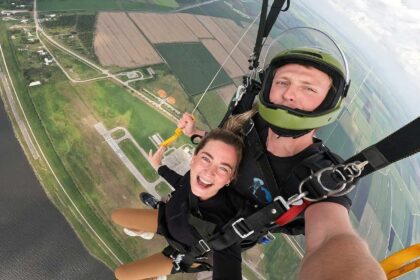
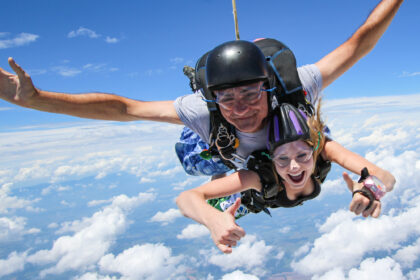
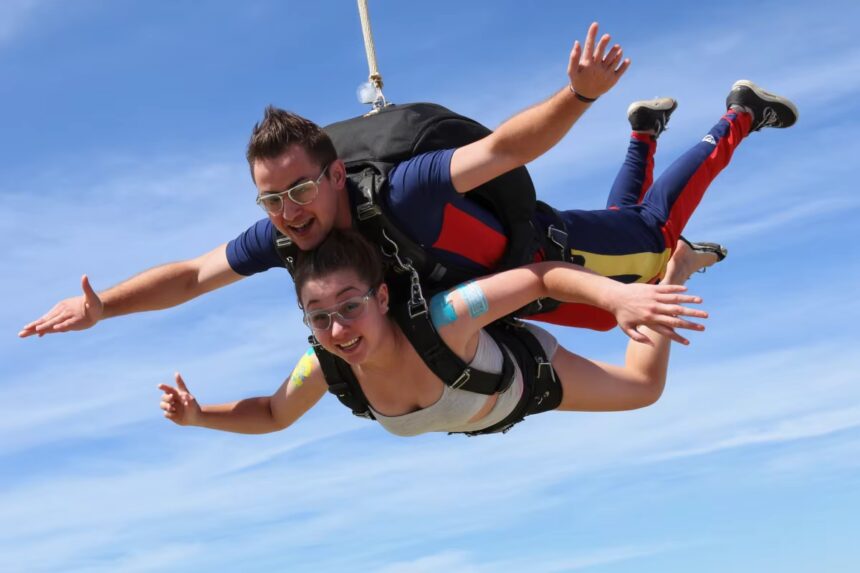
Tandem equipment (for first-timers):
✔ larger canopies for more stability
✔ heavier-duty harness systems
✔ instructor steering control
✔ passenger harness connection points
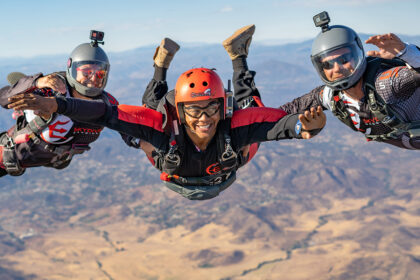
Solo equipment (experienced jumpers):
✔ smaller canopies (faster flight)
✔ self-steering & landing
✔ personal pack jobs
✔ more performance control
For beginners, tandem rigs are intentionally safer, slower, and more forgiving.
How Parachutes Deploy (Simplified)
During a typical tandem jump:
- Freefall reaches terminal speed (~120 mph)
- Instructor deploys main canopy at around 5,000–6,000 ft
- Deployment bag extracts canopy
- Canopy inflates into ram-air wing
- Instructor takes control and guides descent
The canopy stage is silent, controlled, and scenic — not chaotic or violent.
Landing Safety and Control
Under canopy, instructors can:
✔ steer left & right
✔ adjust glide path
✔ perform flares to slow down before touchdown
✔ communicate through simple hand signals if needed
Tandem landings are usually:
- slide-in landings (common on grass)
- stand-up landings (in calm conditions)
This final phase feels more like paragliding than “falling.”
Backup Procedures: What If…?
In rare cases when a main parachute doesn’t function perfectly, instructors follow simple, trained procedures.
Typical safety sequence:
➡ assess canopy
➡ cut away main (if necessary)
➡ deploy reserve canopy
This training happens thousands of times for instructors before they ever take students.
Again, this is professional procedure, not guesswork.
Why Beginners Shouldn’t Worry About Deployment
First-timers jump tandem, which means:
✔ instructors handle deployment
✔ instructors decide altitude
✔ instructors handle emergencies
✔ instructors land the canopy
Your role is mainly:
✔ listening to brief instructions
✔ maintaining basic body position
✔ enjoying the experience
For beginners, the safest possible system is already in place.
Parachute Safety Maintenance & Inspection
Skydiving safety isn’t only about deployment — it’s about:
✔ packing discipline
✔ equipment lifecycle
✔ seal inspections
✔ rigger certifications
✔ storage environment
Well-regulated dropzones follow standard maintenance protocols including:
- reserve repack cycles
- logbook entries
- harness inspections
- AAD service records
These procedures reinforce reliability over luck.
What About Skydiving Accidents?
Movies exaggerate danger. Real safety is based on numbers, training & equipment, not drama.
If you want to learn about actual safety data, see:
👉 skydiving deaths per year worldwide
That article breaks down global statistics, helping you understand reality without speculation.
Final Thoughts: Is the Parachute System Safe for First-Timers?
Short version:
✔ Modern skydiving gear = remarkably engineered
✔ Tandem rigs = designed for slow, stable flight
✔ Reserve systems = backup safety layer
✔ AAD = digital fail-safe
✔ Training = standardized & tested
No adventure activity is risk-free, but skydiving parachute systems are built around redundancy, control, and professional supervision — especially for first-timers.
If you’re considering a jump soon, understanding the equipment makes the entire experience feel more exciting and less mysterious.