
If you’re planning your first tandem skydive, you’ll hear the phrase:
- What Is a Skydiving Safety Briefing?
- Why the Safety Briefing Matters
- Where and When the Briefing Happens
- Topics Covered in the Briefing (Beginner-Friendly Breakdown)
- What the Briefing Does NOT Include
- Does the Safety Briefing Make Skydiving Safer?
- How Much Time Does the Briefing Take?
- What First-Timers Say After the Briefing
- Frequently Asked Questions (Student-Friendly)
- Final Thoughts: Why the Safety Briefing Matters
“You’ll get a safety briefing before the jump.”
But what does that actually mean?
For beginners, the safety briefing is one of the most important parts of the skydiving experience. It ensures you understand what will happen before, during, and after the jump — without overwhelming you with technical details.
This guide explains exactly what a skydiving safety briefing includes, why it matters, and what first-timers should expect.
What Is a Skydiving Safety Briefing?
A skydiving safety briefing is a short training session provided by your instructor before the jump. It covers:
✔ basic body positions
✔ hand signals
✔ exit procedures
✔ freefall posture
✔ canopy awareness
✔ landing instructions
✔ communication methods
The goal isn’t to turn you into an expert — it’s to make sure you’re comfortable, informed, and mentally ready.
Why the Safety Briefing Matters
Skydiving involves:
- a plane exit
- a freefall stage
- a parachute canopy stage
- a landing phase
During these phases, clear roles and simple instructions help everything flow smoothly.
For first-time tandem jumpers, the briefing:
✔ reduces anxiety
✔ sets clear expectations
✔ improves communication
✔ makes the experience safer
✔ increases confidence
Most first-timers say the briefing calmed them down, not scared them.
Where and When the Briefing Happens
You can expect the safety briefing at one or more of these places:
- training room
- hangar area
- gearing zone
- aircraft loading area
It usually happens 15–30 minutes before gearing up.
Dropzones do this intentionally so the instructions feel fresh and easy to recall during the jump.
Topics Covered in the Briefing (Beginner-Friendly Breakdown)
Here’s what instructors typically cover:
1. Body Position During Exit
You’ll learn how to position your body when leaving the aircraft, such as:
- keeping head back (looking at horizon or sky)
- maintaining stable leg and arm positions
- gentle chin-up posture for airflow
This helps create stable exit momentum.
2. Freefall Body Position
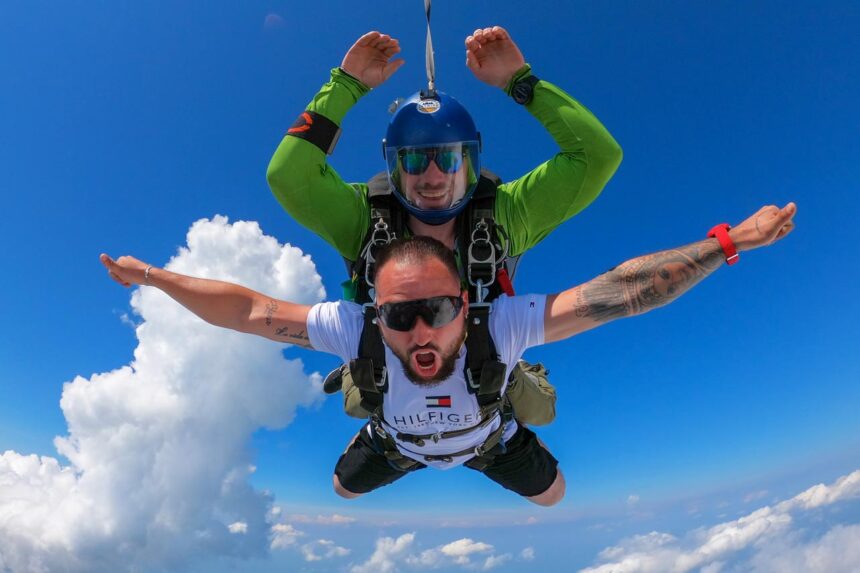
The instructor explains how freefall feels and how to position your body:
✔ neutral arch (gentle bend)
✔ legs slightly back
✔ hands on harness or open depending on phase
✔ breathing normally through the mouth or nose
The briefing helps you avoid stiffening or curling, which are common beginner reactions.
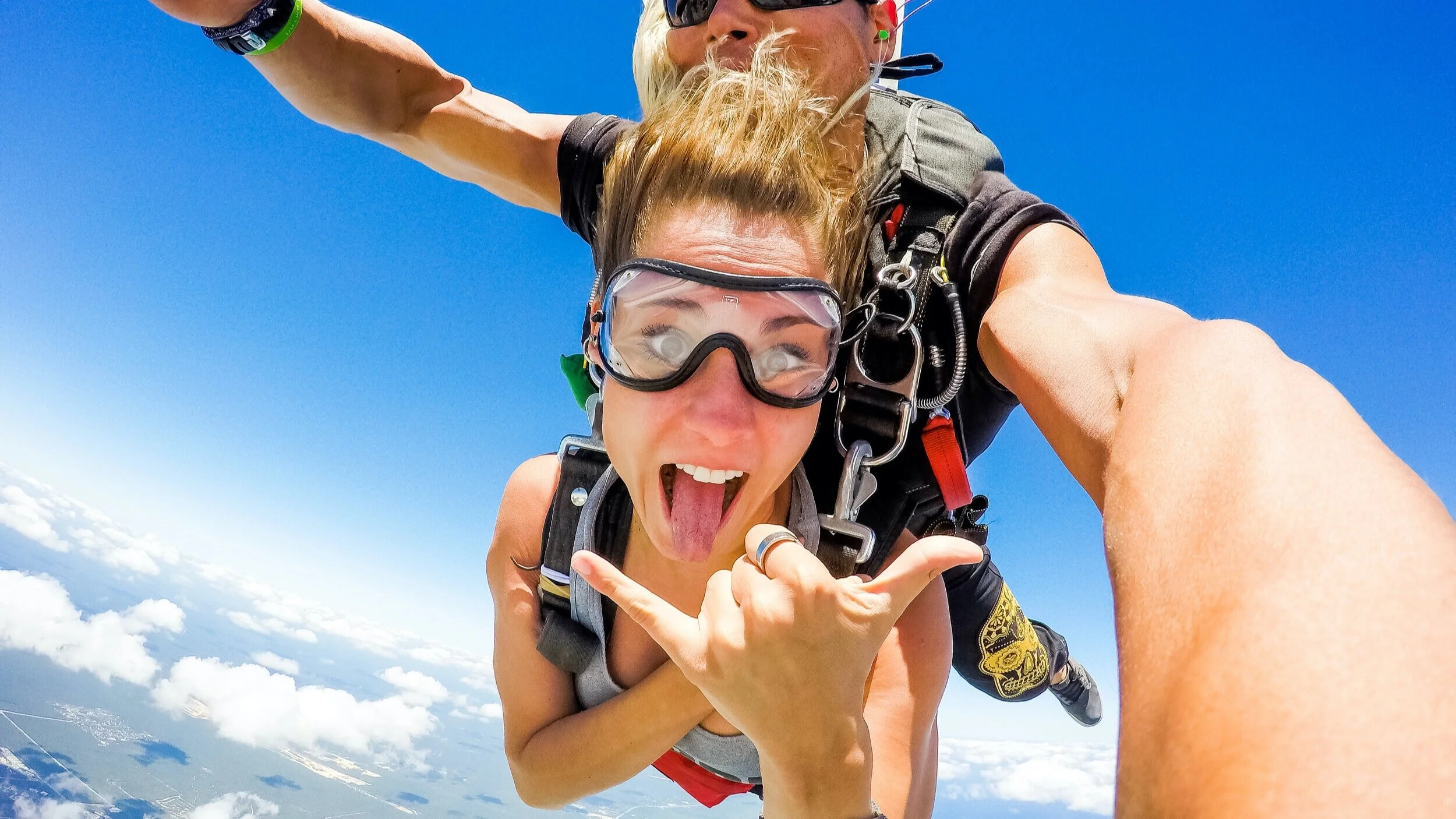
3. Hand Signals (Communication in Freefall)
Because freefall is loud from wind speed, audio communication doesn’t work.
Instead, instructors use simple hand signals, such as:
- straighten legs
- bend knees
- arch more
- relax shoulders
- chin up
- smile (yes, really)
These signals are easy to understand mid-air.
4. Canopy Phase Overview
Once the parachute opens, everything becomes calm and quiet.
During the briefing, instructors explain what happens next:
✔ how canopy slows descent
✔ steering demonstration (instructor does this)
✔ how to look around safely
✔ how long the glide lasts
No technical piloting is required from first-timers.
5. Landing Instructions
Landing is one of the most important parts of the briefing.
Instructors demonstrate:
✔ how to lift legs for slide-in landings
✔ when to lift legs on instructor command
✔ how to brace gently if needed
✔ what to expect right before touchdown
For smooth weather days, many tandem landings are soft slide-in landings on grass.
6. How Deployment Works (Very Simple)
Skydiving safety briefings for first-timers do not overwhelm you with parachute mechanics.
They simply explain:
- instructor deploys the canopy
- you just enjoy the view
- canopy glide lasts several minutes
Simple, clear, reassuring.
7. What NOT to Do as a First Timer
Instructors also explain what to avoid, such as:
❌ grabbing instructor handles
❌ flailing arms wildly
❌ crossing legs around instructor
❌ stiffening up due to fear
These habits are common for nervous jumpers, so the briefing helps prevent them.
What the Briefing Does NOT Include
Beginners never get:
❌ emergency procedure training
❌ solo deployment lessons
❌ technical parachute packing
❌ licensing requirements
❌ complex skydiving physics
Those topics are only for licensed students or solo jumpers.
Tandem skydiving is designed for simplicity and safety.
Does the Safety Briefing Make Skydiving Safer?
Yes — for first-time tandem jumpers, the briefing helps:
✔ reduce panic reflexes
✔ improve body positioning
✔ improve landing safety
✔ improve communication
✔ increase comfort before exit
Most students feel more confident after the briefing than before.
How Much Time Does the Briefing Take?
It varies by dropzone, but typical times are:
- 5–7 minutes for first-timers
- 10–12 minutes with group sessions
- 20+ minutes if weather delays allow more prep
Briefings are short on purpose — simple instructions are easier to remember.
What First-Timers Say After the Briefing
Common reactions include:
- “Oh, that wasn’t complicated at all.”
- “This actually makes me feel calmer.”
- “Good to know what freefall will feel like.”
- “I’m glad they explained landing clearly.”
Understanding the plan reduces fear of the unknown.
Frequently Asked Questions (Student-Friendly)
Do I need to memorize everything in the briefing?
No — the instructions are simple and instructors guide you the entire time.
Is the briefing scary?
Not at all. It’s helpful, calm, and beginner-friendly.
Do I need to practice before jumping?
Some dropzones do short practice exits, but not all.
What if I forget instructions mid-air?
Instructors physically control the jump, and hand signals help during freefall.
Final Thoughts: Why the Safety Briefing Matters
The safety briefing isn’t about making you an expert — it’s about making you comfortable, informed, and ready for an unforgettable experience.
It removes fear, clears expectations, and creates a safer, smoother, more enjoyable jump for first-timers.
For a complete safety picture, you may also want to explore our detailed guide on parachute systems, tandem equipment, and safety statistics, Skydiving Parachute Safety Explained for Beginners to understand how modern skydiving manages risk responsibly.