
Skydiving looks extreme from the outside, but its safety profile has changed dramatically over the past 20 years. Modern equipment, training standards, automated reserve systems, improved weather forecasting, and better dropzone regulation have made skydiving far safer for both beginners and licensed jumpers.
- Is Skydiving Safe in 2026?
- Tandem Skydiving Safety vs Solo Student Programs
- Equipment Safety Systems in 2026
- Weather and Safety in 2026
- Who Regulates Skydiving Safety
- The Real Risks: What Causes Most Incidents
- Skydiving vs Other Activities (Risk Perspective)
- Health and Medical Considerations
- Skydiving Safety for First-Timers: What to Expect
- Skydiving Safety for AFF Students
- Technology Trends Improving Safety in 2026
- Final Takeaway
This guide explains exactly how safe skydiving is in 2026, what risks actually exist, what technology reduces those risks, and what first-time jumpers should realistically expect.
Is Skydiving Safe in 2026?
Short answer: Statistically, yes. Skydiving in 2026 is far safer than most adventure sports people try without hesitation, such as mountain biking, skiing, or even scuba diving.
According to USPA annual safety reports, the fatality rate in the United States has continued to trend downward over the past decade due to better gear and training. Most student fatalities are now extremely rare, and tandem fatalities are even rarer.
Some key points beginners should understand:
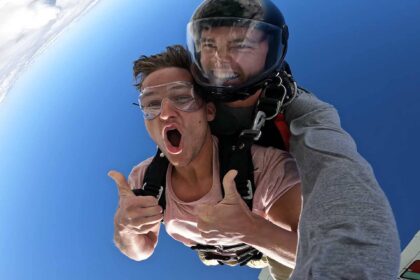
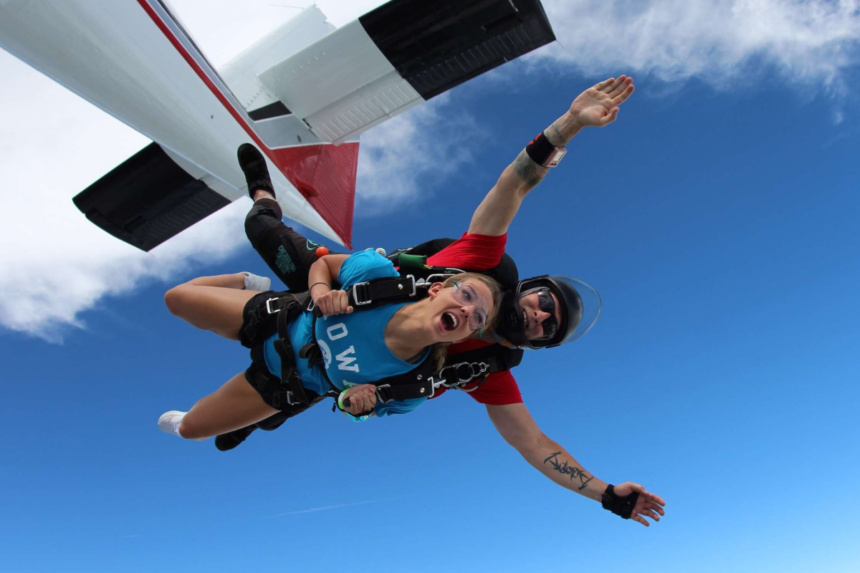
• Tandem skydiving (student strapped to instructor) has the lowest risk profile.
• Most serious incidents involve licensed jumpers performing high-performance maneuvers under canopy, not first-timers.
• Equipment failures are now extremely uncommon due to redundant systems and strict gear maintenance.
Tandem Skydiving Safety vs Solo Student Programs
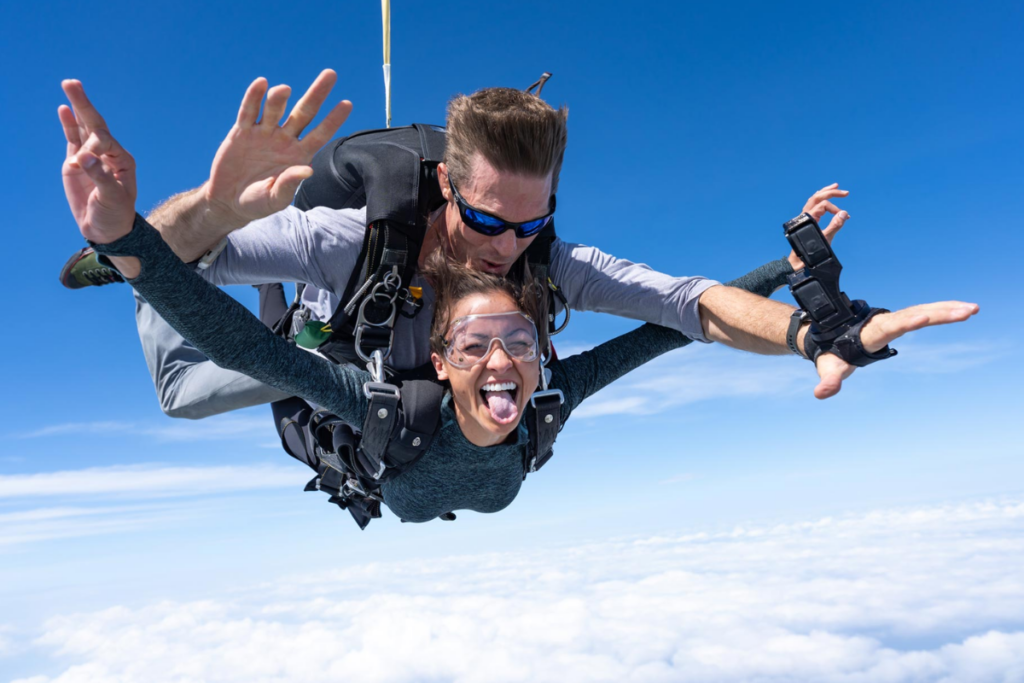
There are two main pathways for new jumpers:
- Tandem Jump
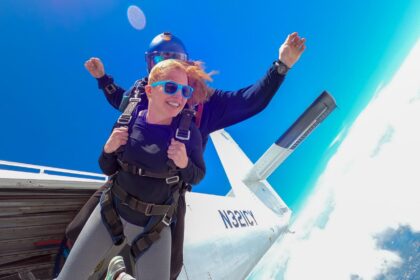
You are attached to a certified instructor who handles exit, deployment, canopy flight and landing. This is the method for most first-timers. - AFF (Accelerated Freefall)
You jump solo with instructors flying alongside. This requires ground school and multiple training jumps.
For people concerned about safety, tandem skydiving is the safest entry route because:
• The instructor handles all procedures
• Tandem rigs are heavily inspected and maintained
• Reserve systems and AADs are mandatory
• Instructors have high minimum jump counts and certifications
• Student harnesses are secure and purpose-built
Equipment Safety Systems in 2026
Skydiving equipment in 2026 is designed around redundancy and automation. The major safety systems include:
- Dual Parachute Systems
All rigs contain a main canopy and a reserve canopy. If the main malfunctions, the reserve is deployed. - AAD (Automatic Activation Device)
AADs automatically deploy the reserve parachute if a jumper passes a preset altitude at freefall speed. These devices have prevented many fatal incidents and are standard for students, tandems, and most licensed jumpers. - RSL and MARD Systems
RSL (Reserve Static Line) and MARD (Main Assisted Reserve Deployment) speed up reserve deployment if the main canopy is cut away, reducing time in emergency situations. - Modern Harness and Containers
2026 harnesses distribute load better, reduce snag hazards, and are engineered for higher durability and comfort. - Altimeters (Visual and Audible)
Digital altimeters, audible alarms, and wrist devices ensure jumpers are aware of deployment altitudes at all times.
Together, these systems form layered protection rather than relying on a single point of failure.
Weather and Safety in 2026
Weather is one of the biggest variables in skydiving.
Dropzones typically pause operations due to:
• High winds
• Low clouds
• Rain or storms
• Thunderstorms in the area
• Poor visibility
• High thermal turbulence (warm afternoons in summer)
Contrary to popular belief, weather delays are a strong safety signal, not a sign of operational issues. Responsible dropzones will refuse to fly even if skies look fine from the ground.
Who Regulates Skydiving Safety
Skydiving safety standards depend on the country. In 2026, most reputable dropzones follow guidelines from national parachuting organizations such as:
• USPA (United States Parachute Association)
• British Skydiving (UK)
• APF (Australian Parachute Federation)
• BPA (French Parachuting Federation)
• NZPIA (New Zealand)
These organizations set standards for:
• Instructor certifications
• Equipment requirements
• Student training
• Medical considerations
• Operating procedures
• Emergency protocols
Many countries also require tandem instructors to have minimum jump numbers (often 500 to 1,000 jumps) and specific certification courses.
The Real Risks: What Causes Most Incidents
Understanding risk helps reduce fear because most first-timers imagine the wrong scenario.
Actual risk breakdown:
• Tandem skydiving incidents are extremely rare.
• Most serious incidents involve licensed solo jumpers performing advanced canopy turns close to the ground.
• A small number involve landing misjudgment in variable winds.
• Equipment total failures (main and reserve) are statistically near-zero due to redundancy systems and AADs.
In other words, the dramatic Hollywood-style no-parachute scenario is not representative of real-world skydiving today.
Skydiving vs Other Activities (Risk Perspective)
Many people compare skydiving to driving or climbing. It is difficult to make direct comparisons, but statistically:
• Driving exposes you to risk every day over thousands of hours.
• Skydiving exposes you to brief, controlled windows of risk with heavy regulation.
For context, activities with comparable or higher injury rates include:
• Skiing and snowboarding
• Mountain biking
• Motocross
• Scuba diving
• Equestrian sports
Skydiving’s safety improvements mean it no longer belongs in the “unstable or reckless” category many outsiders assume.
Health and Medical Considerations
Beginners are typically screened for basic conditions. You should inform instructors if you have:
• Heart or vascular conditions
• Severe asthma
• Seizure disorders
• Recent surgeries
• Mobility limitations
Most healthy adults can skydive. Weight limits exist (often around 90–100 kg for tandems) because of harness and instructor workload, not because of prejudice.
Age minimum is usually 18 for tandems and training programs. There is no strict upper age maximum; many jumpers in their 60s and 70s make tandem jumps annually.
Skydiving Safety for First-Timers: What to Expect
If you are doing your first tandem in 2026, expect:
• Gear briefing
• Safety instructions
• Harness fitting
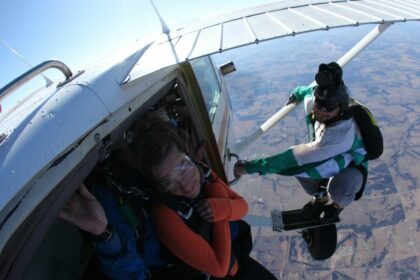
• Aircraft ride to altitude
• Instructor-controlled exit
• Instructor-controlled deployment
• Controlled canopy descent and landing
You do not need to:
• Deploy your own parachute
• Steer during canopy flight (unless instructor allows)
• Perform emergency procedures
Your job is to listen, follow simple instructions, and enjoy the experience.
Skydiving Safety for AFF Students
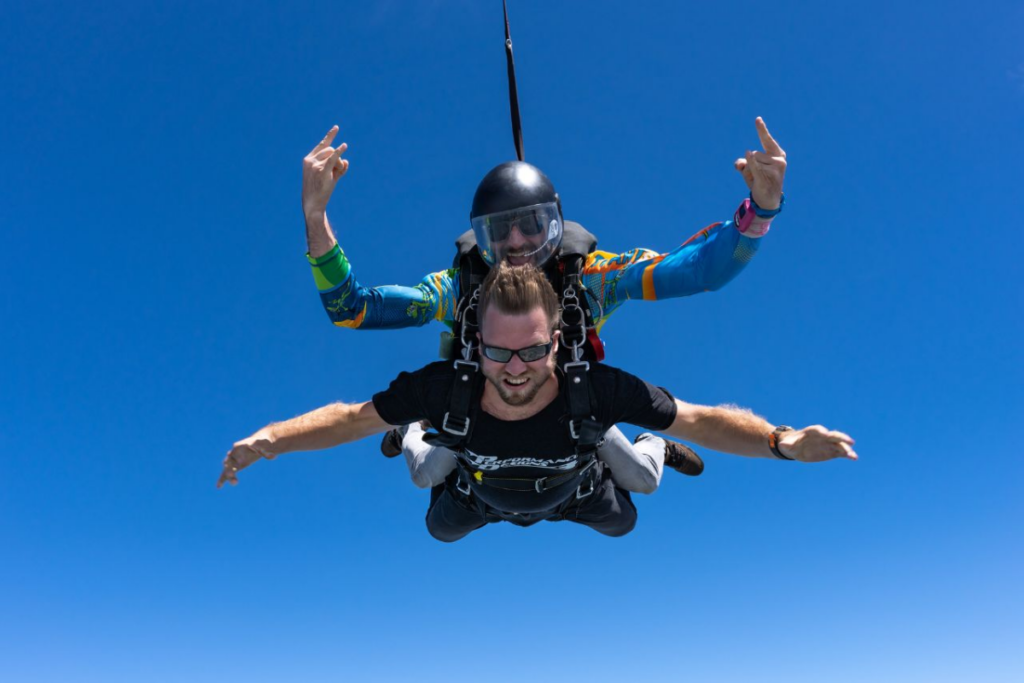
AFF students manage more procedures, including:
• Stable body position
• Altimeter checks
• Deployment at correct altitude
• Canopy control
• Pattern and landing setup
This is why AFF requires training, instructor supervision, and radio assistance during landings.
AFF is safe when students follow protocols, but it carries more responsibility than tandem jumps.
Technology Trends Improving Safety in 2026
Several advancements continue to reduce risk:
- Digital Training and VR Simulators
Improved body-flight training before exiting real aircraft. - Wind Tunnel Progression
Indoor tunnels allow students to master freefall stability safely. - Automated Weather Assessment
Dropzones now use better forecasting tools and wind profiles. - Lighter, Stronger Materials
Better harness comfort and less fatigue. - Better Camera Mounting Standards
Reduced snag hazards for licensed jumpers using GoPros and Insta360.
• What Skydiving Feels Like (First-Time Jumpers Explain)
Final Takeaway
Skydiving in 2026 is a highly regulated, equipment-driven, safety-managed activity. For first-time tandem jumpers, it is one of the safest ways to experience freefall. The risks are real but heavily mitigated by training, procedures, automation, and instructor experience.
The fear people carry about skydiving generally comes from misunderstanding what actually causes incidents. Once you know how equipment works, how instructors operate, and how safety systems stack together, the activity becomes less mysterious and far less frightening.
Skydiving may always look extreme, but it no longer behaves like the dangerous sport most people imagine from movies. In 2026, it is an adventure grounded in engineering, training, and data, not luck.