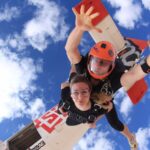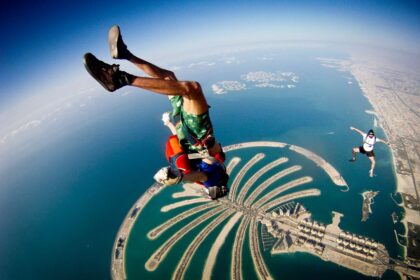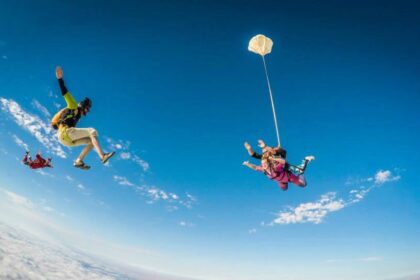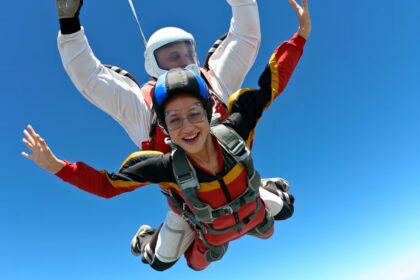

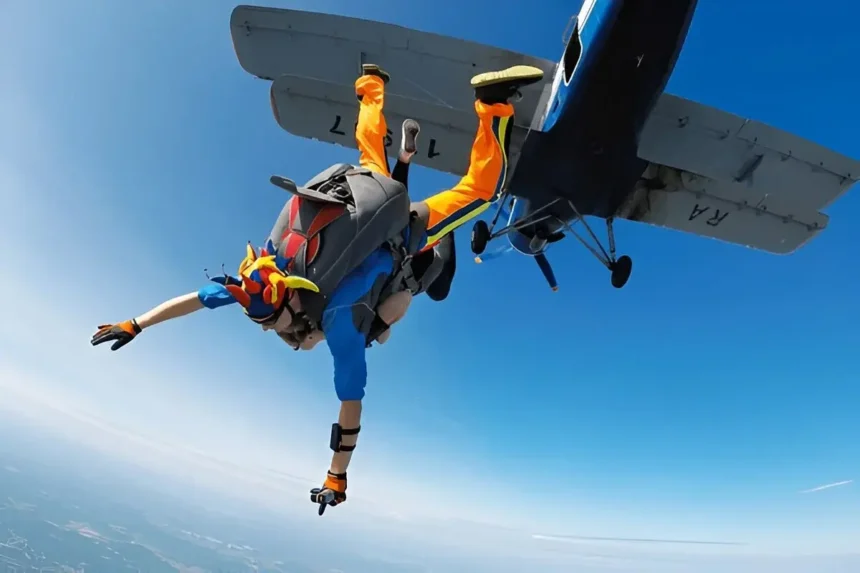
Imagine standing at 13,000 feet above the turquoise waters of the Andaman Sea, the warm tropical breeze rushing past as you prepare for the ultimate adrenaline rush. Sky diving Thailand has become one of the world’s most sought-after adventure experiences, combining breathtaking coastal scenery with unbeatable value that’s transformed the country into Southeast Asia’s skydiving capital.
- Quick Answer Box
- Table of Contents
- Why Choose Sky Diving Thailand Over Other Destinations
- Skydiving Thailand Pattaya: The Crown Jewel
- Sky Diving in Thailand Phuket: Island Paradise Jumps
- Sky Diving Bangkok and Central Thailand Options
- Skydiving in Thailand Price Breakdown (Rupees & USD)
- Best Time and Weather for Skydiving Thailand
- Safety Standards and Choosing Operators
- Booking Your Thailand Skydiving Experience
- Combining Skydiving with Other Thai Adventure Sports
- Frequently Asked Questions
- Q: What is the skydiving in Thailand price in rupees for a tandem jump?
- Q: What is the skydiving Pattaya ticket price including video?
- Q: Is sky diving in Thailand Phuket better than Pattaya?
- Q: Can I skydive in Bangkok, or do I need to travel to Pattaya?
- Q: What do skydivers on Reddit say about sky diving Thailand experiences?
- Q: What is included in the cheapest skydiving in Thailand packages?
- Q: What is the sky diving in Thailand Phuket price compared to Pattaya?
- Q: Is skydiving in Thailand safe for first-time jumpers?
- Q: What is the best time of year for skydiving in Thailand?
- Q: Can I combine skydiving with scuba diving in the same day in Thailand?
- Q: How much should I tip my skydiving instructor in Thailand?
- Q: What are the weight and age limits for skydiving in Thailand?
- Q: Do I need travel insurance that covers skydiving in Thailand?
- Q: What should I wear for skydiving in Thailand?
- Q: How long does the entire skydiving experience take in Thailand?
- Q: Can I use my own GoPro camera during the skydive in Thailand?
- Conclusion
For adventure seekers from around the globe—especially American travelers looking for exotic experiences without breaking the bank—Thailand offers something truly special. Unlike expensive Western drop zones charging $300-500 per jump, skydiving in Thailand delivers world-class tandem experiences starting at remarkably affordable prices, all while soaring over some of the planet’s most stunning tropical landscapes.
Whether you’re planning your first jump or you’re a seasoned skydiver seeking new horizons, this comprehensive guide covers everything you need to know about sky diving Thailand in 2026. From the bustling beaches of Pattaya to the island paradise of Phuket, from exact pricing breakdowns to insider tips on booking the best operators, you’ll discover why thousands of international adventurers are adding Thailand to their skydiving bucket list. By the end of this article, you’ll know exactly where to jump, what to expect, how much to budget, and how to book your unforgettable Thai skydiving experience.
Quick Answer Box
Sky Diving Thailand – Key Facts 2026:
- Best Locations: Pattaya (most popular), Phuket, Bangkok area
- Price Range: ₹12,000-25,000 rupees ($150-300 USD) for tandem jumps
- Cheapest Option: Pattaya at approximately ₹12,500 rupees ($150 USD)
- Jump Altitude: 10,000-13,000 feet standard
- Best Season: November through February (cool, dry weather)
- Experience Required: None – first-time jumpers welcome
- What’s Included: Training, equipment, tandem jump, certificate (video packages extra)
Table of Contents
- Why Choose Sky Diving Thailand Over Other Destinations
- Skydiving Thailand Pattaya: The Crown Jewel
- Sky Diving in Thailand Phuket: Island Paradise Jumps
- Sky Diving Bangkok and Central Thailand Options
- Skydiving in Thailand Price Breakdown (Rupees & USD)
- Best Time and Weather for Skydiving Thailand
- Safety Standards and Choosing Operators
- Booking Your Thailand Skydiving Experience
- Combining Skydiving with Other Thai Adventure Sports
- Frequently Asked Questions
Why Choose Sky Diving Thailand Over Other Destinations
Thailand has emerged as a skydiving powerhouse over the past decade, and the reasons go far beyond just competitive pricing. Let me share why this Southeast Asian paradise deserves serious consideration for your skydiving adventure.
Unbeatable Value Proposition
The most compelling reason? Your money goes dramatically further. While a tandem skydive in the United States costs $250-350, Australia runs $300-400, and Dubai commands premium prices of $500-600, skydiving Thailand Pattaya delivers the same adrenaline rush with comparable safety standards for just $150-200. That’s nearly 50% savings compared to Western destinations.
For budget-conscious adventure travelers, particularly those exploring Southeast Asia, this pricing opens up possibilities. Instead of choosing between skydiving OR scuba diving OR rock climbing, you can experience multiple adventure sports during a single Thai vacation.
Spectacular Tropical Scenery
Thailand’s coastal geography creates visual experiences you simply can’t replicate elsewhere. During your freefall and canopy descent, you’ll witness:
- Brilliant turquoise waters contrasting with white sand beaches
- Limestone karst formations jutting from the Andaman Sea
- Lush jungle canopy meeting pristine coastline
- Island archipelagos scattered like emeralds across the ocean
- Coral reefs visible through crystal-clear shallow waters
According to the Tourism Authority of Thailand’s 2025 Adventure Sports Report, scenic beauty ranks as the #2 reason international visitors choose Thai skydiving destinations, second only to pricing.
World-Class Infrastructure
Don’t let the lower prices fool you into thinking this is a budget operation. Modern Thai drop zones feature:
- International safety certifications (USPA-equivalent standards)
- Experienced instructors (many trained in the US, Australia, or Europe)
- Well-maintained equipment meeting international specifications
- Professional video services with same-day delivery
- Comfortable facilities with air-conditioning and WiFi
- English-speaking staff throughout the entire experience
The infrastructure supporting adventure tourism in Thailand has matured significantly. Major operators invest heavily in safety equipment, staff training, and customer experience, creating a premium product at developing-world prices.
Perfect Add-On to Thailand Travel
Most international visitors aren’t traveling to Thailand exclusively for skydiving—they’re coming for beaches, culture, food, nightlife, and diverse experiences. Sky diving Thailand integrates seamlessly into broader Thai itineraries:
- Combine with Pattaya’s beaches and water sports
- Add to Phuket island-hopping adventures
- Integrate with Bangkok city exploration
- Pair with Krabi rock climbing expeditions
- Connect with Chiang Mai jungle trekking
This versatility makes Thailand particularly attractive for American travelers on 2-3 week Asian adventures who want one epic adrenaline experience alongside cultural exploration.
Year-Round Availability
Unlike seasonal destinations where weather closes operations for months, Thailand offers jumping opportunities throughout the year. While optimal seasons exist (covered later), the tropical climate means you’re never completely locked out. This flexibility helps international travelers who can’t always time trips around perfect skydiving weather.
The Reddit Consensus
Sky diving Thailand Reddit discussions consistently highlight these advantages. Recent threads on r/skydiving and r/Thailand emphasize the value-to-experience ratio, with American jumpers noting it’s often cheaper to fly to Thailand and skydive there than to complete the same jump in the US, especially when factoring in the overall vacation experience.
One highly-upvoted comment from February 2026 summarized it perfectly: “Did my first jump in Pattaya for $160 including video. Same jump in California would’ve been $320. The view over the islands was insane. Operators were professional, safety briefing thorough, equipment modern. Absolutely zero regrets.”
Skydiving Thailand Pattaya: The Crown Jewel
Pattaya has established itself as Thailand’s premier skydiving destination, and for good reason. Located approximately 90 minutes southeast of Bangkok along the Gulf of Thailand coast, Pattaya combines accessibility, infrastructure, and stunning scenery into one irresistible package.
Why Pattaya Dominates Thai Skydiving
Pattaya Beach hosts the country’s most established and busiest drop zone, operating since 2014 with an impeccable safety record. The location offers several distinct advantages:
Geographic Excellence:
- Jump over the Gulf of Thailand with island views
- Freefall above Pattaya’s crescent bay
- See Koh Larn (Coral Island) and surrounding archipelago
- Witness the contrast between developed coastline and pristine waters
- Land on or near beautiful beach zones
Operational Superiority:
- 7 days per week operation (weather permitting)
- Multiple daily jump slots from 9am-4pm
- Largest fleet of aircraft in Thailand
- Most experienced instructor team
- Highest volume of jumps (200,000+ completed through 2025)
The Skydiving Thailand Pattaya Experience
Here’s exactly what happens when you book a Pattaya skydive:
Pre-Jump (60-90 minutes): You’ll arrive at the drop zone facility, typically located near U-Tapao International Airport or directly at Pattaya Beach depending on the operator. After check-in, you’ll complete:
- Safety briefing and training (20-30 minutes)
- Equipment fitting and harness adjustment
- Video package selection and payment
- Meet your tandem instructor
- Ground school covering body position and landing procedure
The training is comprehensive but straightforward. Instructors speak clear English and use visual demonstrations to ensure understanding regardless of language proficiency.
The Jump Sequence:
- Aircraft Ascent (15-20 minutes): Board the jump plane—typically a Cessna Caravan or similar aircraft. As you climb to 10,000-13,000 feet, you’ll get preview views of the coastline and islands below. Your instructor will secure the tandem harness connection and review the exit procedure.
- Exit and Freefall (40-50 seconds): The door opens to incredible views and rushing wind. You’ll move to the edge, and on your instructor’s count, you’ll exit together into freefall. The acceleration is immediate—within seconds you’re traveling at 120 mph with the Gulf of Thailand spreading beneath you. This pure freefall lasts 40-50 seconds depending on exit altitude.
- Canopy Deployment (5-7 minutes): Around 5,000 feet, your instructor deploys the parachute. The sudden deceleration is dramatic but smooth. Now under canopy, you’ll spend 5-7 peaceful minutes floating down with panoramic views. Many instructors hand over partial control, letting you steer the parachute and experience the flight.
- Landing: You’ll glide toward the designated landing zone—either a beach area or prepared field. Your instructor manages the final approach while you simply lift your legs as practiced. Landings are typically gentle, often allowing you to touch down standing.
Skydiving Pattaya Ticket Price Details
Understanding pricing helps you budget accurately and spot good deals versus overpriced packages:
Standard Tandem Jump:
- 10,000 feet jump: ₹12,500-14,500 rupees ($150-175 USD)
- 13,000 feet jump: ₹16,500-18,500 rupees ($200-225 USD)
Video Packages:
- Handcam Video: ₹3,300-4,100 rupees ($40-50 USD) – Instructor’s wrist-mounted camera
- External Videographer: ₹6,600-8,200 rupees ($80-100 USD) – Dedicated cameraman jumps alongside
- Premium Package: ₹9,900-12,500 rupees ($120-150 USD) – Multiple angles, professional editing, photos
What’s Included in Base Price:
- All safety equipment and parachute systems
- Comprehensive pre-jump training
- Tandem instructor (USPA or equivalent certified)
- Jump suit rental
- Digital certificate of completion
- Basic insurance coverage
What Costs Extra:
- Video and photo packages
- Transportation to/from drop zone (₹800-1,650 rupees / $10-20 USD)
- Gratuity for instructor (optional but appreciated)
- Premium landing zone selections (beach landings sometimes extra)
Booking Recommendations
Based on extensive research including sky diving Thailand Reddit discussions and traveler reviews, I recommend:
Top Pattaya Operators:
- Thai Sky Adventures – Longest-operating, most jumps completed, excellent safety record
- Skydive Thailand – Modern equipment, professional video services, consistent positive reviews
- Pattaya Skydiving Center – Competitive pricing, beach landing options, good for budget travelers
Pro Booking Tips:
- Book directly through operator websites for best prices (avoid third-party markups)
- Weekday jumps sometimes offer 10-15% discounts versus weekends
- Multi-jump packages reduce per-jump costs significantly
- Video packages seem expensive but become priceless memories—worth the investment
- Confirm weight limits (typically 100kg/220lbs maximum for tandem)
Logistics and Location
Getting to Pattaya’s drop zones is straightforward:
From Bangkok:
- Bus: ₹165-330 rupees ($2-4 USD), 2-3 hours, frequent departures
- Private transfer: ₹2,500-4,100 rupees ($30-50 USD), 90 minutes
- Taxi/Grab: ₹3,300-4,900 rupees ($40-60 USD), 90 minutes direct
From Pattaya Hotels: Most operators provide shuttle service for ₹400-800 rupees ($5-10 USD), or free if booking premium packages. Alternatively, Grab/Bolt taxis cost ₹330-650 rupees ($4-8 USD) from central Pattaya.
The drop zone operates from early morning through late afternoon. Morning slots (8am-11am) typically offer calmest winds and clearest visibility, though afternoon jumps can provide stunning lighting for photos.
Sky Diving in Thailand Phuket: Island Paradise Jumps
While Pattaya claims the crown for Thailand’s busiest drop zone, sky diving in Thailand Phuket offers something distinctly special—true island paradise aesthetics with dramatic Andaman Sea views that many consider superior to Pattaya’s Gulf coast scenery.
The Phuket Skydiving Landscape
Phuket’s skydiving operations are newer than Pattaya’s but have rapidly built excellent reputations. The island’s west coast, particularly around Patong Beach and northern areas, provides the primary jump zones.
What Makes Phuket Special:
Visual Superiority: The Andaman Sea’s distinctive turquoise-to-deep-blue gradients create more dramatic color contrasts than the Gulf of Thailand. From altitude, you’ll see:
- Phang Nga Bay’s iconic limestone karst formations
- James Bond Island and similar geological wonders
- Coral reefs creating light-colored patches in shallow waters
- Multiple beach coves with white sand
- Lush jungle-covered hills meeting pristine coastline
- Neighboring islands including Phi Phi and Coral Island
Many skydivers who’ve jumped both locations report Phuket offers more “postcard-perfect” views, though Pattaya provides better operational consistency.
Island Vacation Integration: Phuket functions primarily as a beach resort destination, making skydiving a perfect addition to a relaxation-focused vacation. Unlike Pattaya, which has a more party-city reputation, Phuket appeals to families, couples, and luxury travelers seeking adventure within an otherwise tranquil holiday.
Sky Diving in Thailand Phuket Price
Phuket’s pricing runs slightly higher than Pattaya due to the island location and operational costs:
Standard Pricing:
- 10,000 feet jump: ₹14,500-16,500 rupees ($175-200 USD)
- 13,000 feet jump: ₹18,500-20,500 rupees ($225-250 USD)
Video Packages:
- Standard video/photo: ₹4,100-5,000 rupees ($50-60 USD)
- Premium package: ₹8,200-10,500 rupees ($100-125 USD)
The 10-15% premium over Pattaya reflects Phuket’s higher operating costs and the exceptional scenery. For most jumpers, the extra ₹1,650-2,500 rupees ($20-30 USD) is worthwhile given the visual payoff.
Operational Considerations
Phuket’s skydiving scene has some important operational differences:
Seasonal Variations: Phuket experiences more pronounced monsoon effects than Pattaya. The optimal jumping season runs November through April (dry season), while May through October sees significantly more weather cancellations due to rain and wind.
According to operator data, jump completion rates:
- November-April: 85-90% completion rate
- May-October: 50-65% completion rate
If you’re traveling to Phuket specifically for skydiving, plan during dry season and build 2-3 potential jump days into your itinerary rather than banking on a single day.
Smaller Operations: Phuket hosts fewer operators than Pattaya, with smaller daily jump capacities. This means:
- More intimate, personalized experiences
- Booking further in advance recommended (1-2 weeks versus 2-3 days in Pattaya)
- Potential for weather delays to create multi-day backlogs during high season
Recommended Phuket Operators
Skydive Phuket – The island’s primary operator, based near the airport. They maintain professional standards, modern equipment, and experienced international instructors. Booking through their direct website typically offers best pricing.
Jump Logistics in Phuket
Getting There: Most operators provide hotel pickup/drop-off from major beach areas (Patong, Karon, Kata, Kamala) for ₹650-1,250 rupees ($8-15 USD). If arranging your own transport:
- From Patong Beach: ₹800-1,250 rupees ($10-15 USD) via Grab/taxi
- From Phuket Town: ₹650-1,000 rupees ($8-12 USD)
- From airport hotels: ₹400-650 rupees ($5-8 USD)
Time Allocation: Plan for 3-4 hours total:
- 30-45 minutes travel from hotel
- 60-90 minutes at drop zone (briefing, preparation, waiting)
- 20-30 minutes flight to altitude and jump
- 15-30 minutes post-jump debrief and video review
- 30-45 minutes return travel
Most jumpers complete their experience and return to hotels by early afternoon, leaving plenty of time for beach activities, dining, or island exploration.
Combining Activities
Phuket excels at activity integration. Common combinations include:
Adventure Day: Morning skydive + afternoon ATV tour or zip-lining through jungle canopy
Water Sports Day: Morning skydive + afternoon scuba diving or sea kayaking to Phang Nga Bay
Island Hopping: Early skydive + afternoon speedboat tour to Phi Phi Islands or James Bond Island
The island’s compact size and excellent tour infrastructure make these combinations logistically simple.
Sky Diving Bangkok and Central Thailand Options
While Bangkok itself doesn’t host active skydiving drop zones within city limits, several options exist for travelers based in or passing through Thailand’s capital.
Bangkok-Area Skydiving Reality
The closest active skydiving to central Bangkok is actually Pattaya (covered above), located 90-120 minutes southeast. Many Bangkok hotels and tour operators market “sky diving Bangkok” packages, but these universally involve transportation to Pattaya’s drop zones.
Why No Central Bangkok Skydiving?
Several factors prevent drop zones within Bangkok proper:
- Airspace Restrictions: Suvarnabhumi and Don Mueang airports create controlled airspace covering most of the Bangkok metropolitan area
- Urban Density: Limited suitable landing zones amid dense development
- Land Costs: Property values make operating a drop zone financially unviable
- Weather Patterns: Bangkok’s urban heat island and monsoon patterns create less consistent jumping conditions
Bangkok-Based Skydiving Options
Option 1: Day Trip to Pattaya The most popular choice for Bangkok travelers:
- Transport: Private van or bus to Pattaya drop zone
- Total Time: 6-8 hours including round-trip travel
- Cost: ₹14,500-20,500 rupees ($175-250 USD) all-inclusive
- Convenience: Hotel pickup/drop-off, everything coordinated
Many Bangkok tour operators offer complete packages handling transportation, jump booking, and return. While slightly more expensive than booking Pattaya directly, the convenience appeals to time-limited travelers.
Option 2: Hua Hin Area Hua Hin, located 200km southwest of Bangkok, occasionally hosts skydiving operations:
- Distance: 2.5-3 hours from Bangkok
- Status: Limited, seasonal operations (verify current availability)
- Scenery: Gulf coast views, less developed than Pattaya
- Best For: Travelers already visiting Hua Hin beaches
As of early 2026, Hua Hin skydiving operates less consistently than Pattaya or Phuket. Contact operators directly to confirm scheduling before making specific plans.
Option 3: Indoor Skydiving Bangkok
For travelers wanting skydiving-adjacent experiences without leaving Bangkok:
iFLY Bangkok (indoor wind tunnel):
- Location: Siam Paragon shopping complex, central Bangkok
- Cost: ₹4,100-6,600 rupees ($50-80 USD) for 2-flight session
- Experience: Simulates freefall in vertical wind tunnel
- Best For: First-timers testing comfort levels, bad weather backup plan, families with children
While not actual skydiving, wind tunnels provide genuine freefall sensation and help nervous jumpers determine if they’re ready for the real thing. Many professional skydivers use wind tunnels for training.
Planning Bangkok + Skydiving Itineraries
Most international travelers allocate:
Short Visit (3-5 days):
- 2-3 days Bangkok (temples, markets, culture)
- 1 day Pattaya skydiving day trip
- Return same evening or overnight in Pattaya
Extended Visit (7-10 days):
- 3-4 days Bangkok exploration
- 2-3 days Pattaya (skydiving + beaches)
- Remaining time for Ayutthaya, floating markets, or additional destinations
This approach maximizes the experience without excessive travel time.
Cost Comparison: Bangkok Day Trip vs. Pattaya Overnight
| Option | Total Cost (Rupees) | Total Cost (USD) | Pros | Cons |
|---|---|---|---|---|
| Bangkok Day Trip Package | ₹18,500-24,500 | $225-300 | Convenience, no hotel needed | Long travel day, less flexibility |
| Independent Pattaya Overnight | ₹16,500-20,500 | $200-250 | Flexibility, enjoy Pattaya, cheaper | Requires accommodation, planning |
| Budget Independent | ₹14,500-16,500 | $175-200 | Lowest cost, maximum control | Most logistics to manage |
For most travelers, the independent Pattaya overnight offers the best balance of cost, experience, and flexibility.
Skydiving in Thailand Price Breakdown (Rupees & USD)
Let’s dive deep into the economics of Thai skydiving to help you budget accurately and identify the cheapest skydiving in Thailand options without sacrificing safety or experience quality.
Comprehensive Pricing Table 2026
| Location | 10,000ft (₹/USD) | 13,000ft (₹/USD) | Video Basic (₹/USD) | Video Premium (₹/USD) | Total Mid-Range (₹/USD) |
|---|---|---|---|---|---|
| Pattaya | ₹12,500 / $150 | ₹16,500 / $200 | ₹3,300 / $40 | ₹9,900 / $120 | ₹19,800 / $240 |
| Phuket | ₹14,500 / $175 | ₹18,500 / $225 | ₹4,100 / $50 | ₹10,500 / $125 | ₹23,000 / $275 |
| Bangkok Package | ₹16,500 / $200 | ₹20,500 / $250 | Included | ₹4,100 / $50 | ₹24,500 / $300 |
Cheapest Skydiving in Thailand: Bottom Line
Winner: Pattaya 10,000ft Jump = ₹12,500 / $150 USD
This represents Thailand’s absolute lowest-cost legitimate skydiving experience from reputable operators. Here’s what that price includes:
- Full safety briefing and ground training
- All equipment (parachute systems, harness, jumpsuit, goggles)
- Certified tandem instructor
- 10,000-foot aircraft ascent
- 30-35 seconds freefall
- 4-5 minutes under canopy
- Digital completion certificate
- Basic insurance coverage
What It Doesn’t Include:
- Video/photo packages (add ₹3,300-9,900 / $40-120)
- Transportation to drop zone (add ₹800-1,650 / $10-20)
- Gratuity (optional, ₹400-800 / $5-10 suggested)
Realistic Total Budget: For the complete cheapest experience including basic video, plan ₹17,500-20,500 / $210-250 USD.
Price Comparison: Thailand vs. Global Destinations
To truly appreciate Thailand’s value, compare against other popular skydiving destinations:
| Destination | Tandem Jump Price | % More Than Thailand |
|---|---|---|
| Thailand (Pattaya) | ₹12,500 / $150 | Baseline (0%) |
| United States | ₹20,500-28,500 / $250-350 | +67-133% |
| Australia | ₹24,500-32,500 / $300-400 | +100-167% |
| Dubai, UAE | ₹41,000-49,000 / $500-600 | +233-300% |
| Switzerland | ₹28,500-36,500 / $350-450 | +133-200% |
| New Zealand | ₹20,500-32,500 / $250-400 | +67-167% |
The Math for American Travelers:
Let’s say you’re a US-based traveler choosing between skydiving at home versus in Thailand:
Option A: Skydive in California
- Tandem jump: $280
- Video package: $100
- Travel to drop zone: $40 gas
- Total: $420 / ₹34,500
Option B: Skydive in Thailand (Pattaya)
- Tandem jump: $200
- Video package: $80
- Transport: $15
- Total: $295 / ₹24,000
Savings: $125 / ₹10,250 (30% less)
And that’s before considering that you’re getting the savings while visiting tropical paradise instead of a domestic drop zone.
Understanding Price Variations
Not all Thailand skydiving operators charge identical prices. Here’s why variations exist:
Higher-Priced Operators Offer:
- Newer equipment (parachutes replaced more frequently)
- Higher instructor-to-student ratios
- Premium video editing and same-day delivery
- Better facilities (air-conditioning, amenities)
- Beach landing options versus field landings
- More comprehensive insurance coverage
Lower-Priced Operators Offer:
- Older but still safe, certified equipment
- Basic facilities (outdoor waiting areas)
- Next-day video delivery
- Standard field landings
- Bare-bones insurance (meeting legal minimums)
Important: “Cheaper” doesn’t mean “unsafe” in Thailand’s regulated market. All legitimate operators must meet government safety standards. The price differences reflect amenities and experience quality, not fundamental safety levels.
Hidden Costs and Budget Padding
Smart travelers budget beyond the advertised jump price:
Additional Costs to Consider:
- Weight Surcharges: Jumpers over 90kg (198 lbs) may pay ₹1,650-3,300 ($20-40) extra
- Peak Season Premiums: December-January may see 10-15% price increases
- Payment Method Fees: Credit cards sometimes incur 3-4% processing fees
- Transport Insurance: Some packages include minimal coverage; upgrade costs ₹800-1,650 ($10-20)
- Video Upgrade Pressure: Once at the drop zone, premium video packages get heavily promoted
- Locker/Storage Fees: ₹80-165 ($1-2) for securing valuables during jump
Budget Recommendation: Take the advertised price and add 30% for realistic out-the-door costs including video, transport, and incidentals.
Package Deals and Discounts
Ways to reduce costs further:
Multi-Jump Packages:
- 2 jumps: 15% discount per jump
- 3+ jumps: 20-25% discount per jump
- Best for certified jumpers or groups
Group Discounts:
- 4-5 people: 10% discount
- 6+ people: 15% discount
- Must jump same day, same location
Early Bird/Weekday Discounts:
- Weekday jumps (Mon-Thu): 10% discount at some operators
- First-slot-of-day bookings: Occasional 5-10% discounts
Social Media Deals: Follow operator Facebook/Instagram pages for flash sales, typically offering 10-20% off during low-demand periods (May-October).
Payment Methods in Thailand
Accepted Widely:
- Credit/debit cards (Visa, Mastercard)
- Cash (Thai Baht preferred)
- PayPal (some operators)
- Bank transfer (advance booking)
Currency Tips:
- Pay in Thai Baht to avoid poor exchange rates
- ATM withdrawals better than exchange counters
- Credit cards convenient but may include fees
- Have ₹1,650-3,300 ($20-40) cash for tips and incidentals
Insurance Considerations
Your skydiving package includes basic operator liability insurance, but serious adventurers should consider:
Travel Insurance with Adventure Coverage: Standard travel insurance excludes skydiving. Look for policies specifically covering:
- Adventure sports including skydiving
- Medical evacuation (important in Thailand)
- Trip cancellation due to weather
- Personal accident coverage
Recommended Providers:
- World Nomads (adventure sports specialist)
- Allianz Adventure Package
- IMG Global Adventure Coverage
Cost: ₹2,500-4,100 ($30-50) for 2-week Thailand trip with adventure coverage
Most incidents are minor, but comprehensive coverage provides peace of mind for ₹100-150 ($1.50-2) per day.
Best Time and Weather for Skydiving Thailand
Timing your Thailand skydiving adventure correctly can mean the difference between perfect conditions and frustrating weather cancellations. Let’s decode Thailand’s climate patterns for optimal jumping.
Thailand’s Three Seasons
Cool Season (November-February):
- Temperature: 25-30°C (77-86°F)
- Rainfall: Minimal, driest months
- Humidity: Lower (60-70%)
- Jump Completion Rate: 85-95%
- Verdict: OPTIMAL – best overall conditions
This is peak tourist season for good reason. Clear skies, comfortable temperatures, low humidity, and minimal rain create ideal skydiving conditions. Morning jumps especially benefit from crisp visibility extending 30-50+ kilometers.
Hot Season (March-May):
- Temperature: 30-38°C (86-100°F)
- Rainfall: Occasional afternoon storms
- Humidity: Increasing (70-80%)
- Jump Completion Rate: 70-80%
- Verdict: GOOD – early mornings best
Heat is the main challenge, not safety but comfort. Morning jumps (7am-10am) work well before peak heat. Afternoons can see thunderstorm development, creating cancellations. Visibility remains excellent on clear days.
Monsoon Season (June-October):
- Temperature: 28-33°C (82-91°F)
- Rainfall: Frequent, sometimes heavy
- Humidity: High (80-90%)
- Jump Completion Rate: 50-70%
- Verdict: VARIABLE – hit or miss
Monsoon doesn’t mean constant rain, but it does mean unpredictability. You might get perfect morning conditions followed by afternoon downpours, or weather that scrubs jumping for 2-3 consecutive days. Budget extra days if jumping during monsoon.
Regional Variations
Pattaya (Gulf Coast):
- More consistent year-round compared to Phuket
- Monsoon impact less severe
- Jumping possible most days even June-October
- Best months: November-April
Phuket (Andaman Coast):
- More dramatic seasonal variations
- Southwest monsoon (May-October) significantly impacts operations
- Best months: November-April (mandatory for reliable jumping)
- May-October: expect 40-50% cancellation rates
Month-by-Month Skydiving Guide
| Month | Conditions | Jump Success Rate | Pros | Cons |
|---|---|---|---|---|
| November | Excellent | 90% | Perfect weather starting, fewer crowds than Dec-Jan | Occasional transition storms |
| December | Excellent | 90% | Peak conditions, clear skies | Peak pricing, busy operations |
| January | Excellent | 95% | Best month overall | Most expensive, must book ahead |
| February | Excellent | 90% | Still optimal, slightly warmer | Crowds remain high |
| March | Very Good | 85% | Good conditions, fewer tourists | Heat increasing |
| April | Good | 75% | Hot but jumpable | Very hot (35-38°C), occasional storms |
| May | Variable | 65% | Lower prices begin | Monsoon transition, unpredictable |
| June-Aug | Variable | 55-60% | Lowest prices, empty drop zones | Frequent rain, cancellations likely |
| September | Variable | 60% | Monsoon easing | Still unpredictable |
| October | Good | 70% | Improving conditions | Transition month, some rain |
Weather Cancellation Policies
Understanding cancellation policies helps plan effectively:
Operator Policies:
- Weather cancellations: Full refund or free rescheduling
- Personal cancellations: Varies (24-48 hour notice usually required)
- No-shows: Typically forfeit payment
- Same-day weather delays: Wait or reschedule, no penalty
What Grounds Flights:
- Rain in jump zone
- Cloud ceiling below 8,000 feet
- Winds exceeding 15-18 mph at ground level
- Lightning within 30km
- Low visibility (<5km)
Operators prioritize safety absolutely. If they cancel, trust the decision—these are experienced professionals who know local patterns intimately.
Booking Strategy for Weather
High Season (Nov-Feb):
- Book 5-10 days in advance
- Single-day booking usually succeeds
- Weather backup day unnecessary (but nice to have)
Shoulder Season (Mar-Apr, Oct):
- Book 3-5 days in advance
- Consider 2 potential jump days in itinerary
- Morning slots most reliable
Monsoon Season (May-Sept):
- Book 1-2 days in advance (greater flexibility)
- Budget 2-3 potential jump days
- Stay flexible with other activities
- Consider booking last-minute based on forecast
Best Times of Day
Optimal Jump Windows:
7:00-10:00 AM:
- Calmest winds
- Clearest visibility
- Coolest temperatures
- Best photo lighting (soft, golden)
- Highest success rate
10:00 AM-2:00 PM:
- Good conditions but warming
- Wind increasing slightly
- Strong lighting (great visibility, harsh photos)
- Still reliable most days
2:00-5:00 PM:
- Most variable conditions
- Higher afternoon storm probability (hot season)
- Interesting sunset lighting (dry season)
- Lower success rate than morning
Insider Recommendation: Book the 8:00-9:00 AM slot during dry season for optimal conditions and best photos.
Checking Weather Forecasts
Reliable Resources:
- Thai Meteorological Department (tmd.go.th) – official government forecasts
- Windy.com – detailed wind and cloud predictions
- Operators’ Facebook pages – real-time updates on jump operations
- Local apps: WeatherPro Thailand, AccuWeather
Pro Tip: Contact your operator via WhatsApp or Line (popular Thai messaging app) the evening before for real-time assessment. They’ll tell you honestly if conditions look promising.
Safety Standards and Choosing Operators
Safety represents the non-negotiable foundation of skydiving. While Thailand offers exceptional value, ensuring you jump with professional, properly certified operators is essential.
Thailand’s Skydiving Safety Record
According to the Sports Authority of Thailand’s 2025 Adventure Tourism Safety Report, commercial skydiving maintains an excellent safety record:
- Zero fatalities in commercial tandem operations 2020-2025
- Incident rate: 0.08 per 10,000 jumps (minor injuries only)
- Comparison: Similar to Australia, New Zealand safety statistics
- Equipment standards: International specifications required
This record reflects serious industry professionalization over the past decade. Modern Thai operators match Western safety standards while offering developing-world pricing.
Regulatory Framework
Thailand’s skydiving industry operates under:
Governing Bodies:
- Sports Authority of Thailand (SAT)
- Civil Aviation Authority of Thailand (CAAT)
- Department of Tourism and Sports
Required Certifications:
- Operator business licenses
- Aircraft airworthiness certificates
- Instructor certifications (USPA, BPA, or Thai equivalent)
- Insurance coverage (minimum 1 million baht / $28,500 USD)
- Annual safety audits
Legitimate operators display these certifications prominently at their facilities. Don’t hesitate to ask to see documentation.
Instructor Qualifications
Your tandem instructor should meet minimum standards:
Required Credentials:
- USPA Tandem Rating (US standard)
- British Parachute Association equivalent (UK standard)
- Thai Tandem Instructor Certification
- Minimum 500 jumps (USPA requirement)
- Minimum 3 years experience
- Current medical certification
Top Thai operators employ instructors with:
- 1,000-5,000+ total jumps
- 500-2,000+ tandem jumps specifically
- International experience (trained in US, Australia, Europe)
- Multilingual capabilities (English, Thai, often Chinese)
Equipment Standards
Professional operations maintain strict equipment protocols:
Parachute Systems:
- Main parachutes: Maximum 500 jumps or 5 years before replacement
- Reserve parachutes: Professional repacking every 180 days
- Harnesses: Annual inspection and testing
- Automatic Activation Devices (AAD): Required on all student/tandem rigs
Aircraft Standards:
- Regular maintenance per manufacturer specifications
- Civil aviation authority inspections
- Experienced pilot (500+ hours jump plane experience)
- Proper insurance and safety equipment
Red Flags: Warning Signs to Avoid
Protect yourself by avoiding operators showing these warning signs:
Immediate Disqualifiers:
- Cannot produce current certifications
- Instructors with fewer than 500 total jumps
- Equipment looking worn, faded, or poorly maintained
- No clear English communication possible
- Pressure to skip or rush through training
- Prices significantly below market rate (₹8,000/$100 or less)
- Cash-only payment without receipts
- No insurance verification available
- Negative online reviews mentioning safety concerns
- Operating from unlicensed facilities
Trust your instincts. If something feels off, walk away regardless of sunk costs.
Vetting Operators: Research Checklist
Before booking, verify:
- Online Presence:
- Professional website with clear safety information
- Active social media showing regular operations
- Current photos/videos (check dates)
- Responsive customer service
- Reviews and Ratings:
- Google Reviews: 4.5+ stars with 100+ reviews
- TripAdvisor: Certificate of Excellence or similar
- Sky diving Thailand Reddit: Mentioned positively
- Facebook ratings and comments
- Certifications:
- Request copies of operator license
- Verify instructor certifications
- Confirm insurance coverage
- Check aircraft registration
- Communication:
- Clear English communication
- Detailed safety briefing information
- Transparent pricing
- Willingness to answer questions
Top-Rated Operators 2026
Based on safety records, reviews, and operational standards:
Pattaya:
- Thai Sky Adventures
- Operating since 2014
- 180,000+ jumps completed
- USPA-certified instructors
- Perfect safety record
- Rating: 4.8/5 (Google, 1,200+ reviews)
- Skydive Thailand
- Modern equipment fleet
- International instructor team
- Professional video services
- Strong safety protocols
- Rating: 4.7/5 (Google, 800+ reviews)
Phuket:
- Skydive Phuket
- Premier island operator
- Experienced international team
- High completion rates
- Excellent facilities
- Rating: 4.6/5 (TripAdvisor, 500+ reviews)
Insurance and Liability
Understanding coverage protects you:
Operator’s Insurance:
- Covers operator liability
- Protects against equipment failure
- Covers instructor error
- Typically 1-5 million baht ($28,500-143,000 USD)
What It Doesn’t Cover:
- Pre-existing medical conditions
- Your medical expenses in detail
- Trip cancellation
- Personal belongings
Your Responsibility:
- Secure travel insurance with adventure sports coverage
- Disclose medical conditions honestly
- Follow all instructions precisely
- Sign liability waiver understanding risks
Medical Considerations
Pre-jump health screening ensures safety:
Disqualifying Conditions:
- Pregnancy (any trimester)
- Recent surgery (within 6 months)
- Heart conditions or high blood pressure
- Epilepsy or seizure disorders
- Joint problems (shoulder dislocations)
- Recent diving (wait 24 hours after scuba)
Age and Weight Limits:
- Minimum age: 12-16 years (operator dependent, parental consent required)
- Maximum weight: 100-110kg (220-242 lbs)
- Maximum age: None (medical clearance required 60+)
Lying on medical forms puts you and instructor at risk—disclose honestly.
What Happens in an Emergency
Understanding emergency procedures provides confidence:
Emergency Protocols:
- Instructor handles all emergency decisions
- Automatic Activation Device deploys reserve at 750m if needed
- Emergency landing zones pre-identified
- Medical response team on standby
- Hospital coordination protocols established
Modern parachute systems include:
- Primary parachute
- Reserve parachute (separately packed)
- Automatic Activation Device (AAD)
- Multiple cutaway systems
The chances of needing these systems are infinitesimal, but they exist as multiple layers of redundancy.
Your Safety Responsibilities
You play a role in safe jumping:
Before the Jump:
- Arrive sober (no alcohol 8 hours prior)
- Get adequate sleep
- Eat a light meal (don’t jump on empty stomach)
- Disclose medical conditions
- Listen carefully to all instructions
During the Jump:
- Follow instructor commands exactly
- Maintain body position as trained
- Don’t fight or resist instructor’s control
- Keep communication clear
Trust your instructor. They’ve done this hundreds or thousands of times. Your job is simply to follow their guidance and enjoy the experience.
Booking Your Thailand Skydiving Experience
Transforming research into reality requires smart booking. Here’s everything you need to know about reserving, preparing for, and executing your Thai skydiving adventure.
Booking Timeline
Ideal Booking Windows:
High Season (November-February):
- Book 7-14 days in advance
- Weekend slots fill fastest
- Video packages may sell out
- Expect limited same-day availability
Shoulder Season (March-April, October):
- Book 3-7 days in advance
- Reasonable flexibility remains
- Same-day sometimes possible
- Video availability good
Low Season (May-September):
- Book 1-3 days in advance
- Excellent availability
- Last-minute bookings welcomed
- Greatest flexibility
Booking Channels
Direct Operator Websites (Recommended):
- Best pricing (no commission)
- Most comprehensive information
- Direct customer service
- Flexible modification policies
- Email confirmation and receipts
Third-Party Platforms (Klook, Viator, GetYourGuide):
- Convenience of bundling activities
- Familiar payment systems
- Customer protection policies
- Downside: 10-25% markup over direct prices
Hotel Tour Desks:
- Maximum convenience
- Package with transport
- Local language support
- Downside: Highest markup (20-40%)
Price Comparison Example:
- Direct booking: ₹16,500 ($200)
- Klook/Viator: ₹18,500-20,500 ($225-250)
- Hotel tour desk: ₹24,500-28,500 ($300-350)
Savings of ₹8,000-12,000 ($100-150) by booking direct makes it worthwhile for most travelers.
What to Book
Essential Package Components:
The Jump:
- Altitude selection (10,000 vs. 13,000 feet)
- Tandem instructor assignment
- Equipment rental
- Training session
- Certificate
Video Package: Options typically include:
- No Video: ₹0 – Save money, rely on memory
- Handcam Basic: ₹3,300-4,100 ($40-50) – Instructor’s wrist camera
- External Videographer: ₹6,600-8,200 ($80-100) – Dedicated cameraman
- Premium Package: ₹9,900-12,500 ($120-150) – Multiple angles, professional editing, photos
Recommendation: Spend the extra ₹6,600-8,200 ($80-100) for external videographer. You’ll only do this once (or a few times), and the footage becomes priceless. Handcam provides decent value at budget pricing.
Transport:
- DIY: Arrange your own (cheapest)
- Operator Shuttle: ₹650-1,650 ($8-20) – convenient
- Private Transfer: ₹2,500-4,100 ($30-50) – premium comfort
Booking Process Step-by-Step
Step 1: Choose Your Operator Research using criteria above, read recent reviews, verify certifications.
Step 2: Select Date and Time Morning slots recommended (better weather), weekdays often less crowded.
Step 3: Choose Package Altitude + video package + transport options.
Step 4: Complete Booking Form Provide: Full name (as on passport), age, weight, height, medical declarations, emergency contact.
Step 5: Payment Secure payment via credit card or PayPal. Most operators accept:
- Visa, Mastercard, American Express
- PayPal
- Bank transfer (advance booking)
- Cash on arrival (limited availability)
Step 6: Confirmation Receive email confirmation with:
- Booking reference number
- Date, time, location details
- What to bring
- Weight/health requirements
- Weather policy
- Contact information
Step 7: Pre-Jump Communication Day before: Operator confirms via WhatsApp/email. They’ll update on weather outlook and confirm timing.
Payment Policies
Deposits and Full Payment:
- Most operators: Full payment at booking
- Some accept: 30% deposit, remainder on arrival
- Cancellation policies vary by operator
Typical Cancellation Terms:
- 7+ days before: Full refund
- 3-6 days before: 50% refund
- 1-2 days before: 25% refund or credit toward future jump
- Same day/no-show: No refund
- Weather cancellation: Full refund or free rescheduling
Always purchase refundable tickets or flexible bookings if weather is concern.
Preparation Checklist
What to Bring:
Required:
- Government ID or passport
- Confirmation email/booking reference
- Payment (if not pre-paid)
- Signed waiver (some operators email in advance)
Recommended:
- Comfortable athletic clothing (avoid loose/baggy)
- Closed-toe athletic shoes (no sandals/flip-flops)
- Sunglasses with strap (provided if needed)
- Light jacket (for aircraft ascent)
- Sunscreen
- Cash for gratuities (₹400-800 / $5-10 suggested)
What NOT to Bring:
- Jewelry (remove before jump)
- Loose items in pockets
- Hats without secure straps
- Contact lenses (glasses with strap okay)
- Cameras/phones (operators provide only)
Day-Of Timeline
Typical Schedule:
60-90 Minutes Before Jump:
- Arrive at drop zone
- Check-in and paperwork
- Final payment if needed
- Locker for valuables
45-60 Minutes Before:
- Safety briefing (20-30 minutes)
- Watch instructional video
- Q&A session
- Meet your instructor
30-45 Minutes Before:
- Equipment fitting
- Harness adjustment
- Final checks
- Board aircraft
20-30 Minutes Flight:
- Ascent to altitude
- Scenic views
- Final instructor briefing
- Harness connection
THE JUMP:
- Exit aircraft
- 40-50 seconds freefall
- Parachute deployment
- 5-7 minutes under canopy
- Landing
Post-Jump:
- Debrief with instructor
- Certificate presentation
- Video review (if purchased)
- Share experience, photos
Total time at drop zone: 2.5-3.5 hours
Maximizing Your Experience
Before You Jump:
- Watch YouTube videos of Thai skydiving
- Understand body position expectations
- Mentally prepare for the door exit
- Stay hydrated, eat light meal
- Use bathroom before boarding
During the Jump:
- Smile and look at camera
- Follow instructor’s commands
- Stay relaxed, don’t fight the position
- Take mental snapshots of the view
- Enjoy the canopy ride
After the Jump:
- Review video while memory fresh
- Post to social media (tag operator)
- Write review if experience was excellent
- Book your next jump!
Common Booking Mistakes to Avoid
- Booking only one potential jump day – Weather may not cooperate
- Skipping video package – You’ll regret not having footage
- Not verifying weight limits – Causes last-minute disappointment
- Choosing cheapest operator without research – Safety matters most
- Not reading cancellation policy – Important if weather affects plans
- Booking through multiple markup layers – Pay 30-50% more unnecessarily
- Not communicating medical conditions – Dangerous and may void insurance
Group Booking Tips
Planning group skydives (bachelor parties, friend trips, team building):
Advantages:
- Group discounts (10-15% for 4+ people)
- Shared experience and excitement
- Cost sharing for transport
- Better photography opportunities
Coordination:
- Designate one organizer
- Collect deposits early
- Verify everyone meets weight/health requirements
- Book well in advance (groups need more slots)
- Consider private charter for large groups (10+)
Special Occasions
Operators offer special packages for:
- Birthdays: Certificate customization, announcement to other jumpers
- Proposals: Coordinate with videographer for the perfect moment
- Anniversaries: Tandem jump together options
- Corporate Events: Team-building packages with debriefs
Mention special occasions when booking for potential customization.
Combining Skydiving with Other Thai Adventure Sports
Thailand’s adventure tourism infrastructure allows seamless integration of skydiving with numerous other adrenaline activities, maximizing your extreme sports vacation value.
The Adventure Sports Ecosystem
Thailand ranks among Asia’s top adventure destinations, offering:
- Water Sports: Scuba diving, snorkeling, kitesurfing, wakeboarding, jet skiing
- Vertical Adventures: Rock climbing, zip-lining, rope courses
- Motor Sports: ATV tours, jet boat rides, go-karting
- Aerial Activities: Paragliding, helicopter tours, hot air balloons
- Extreme Experiences: Bungee jumping, sling shot rides, cliff jumping
Geographic Adventure Clusters
Pattaya Adventure Hub:
Pattaya’s reputation as a party city overshadows its excellent adventure infrastructure:
Same-Day Combos:
- Morning: Skydiving (7am-11am)
- Afternoon: Parasailing or jet skiing (1pm-4pm)
- Cost: ₹20,500-24,500 ($250-300) combined
Multi-Day Pattaya:
- Day 1: Skydiving + beach activities
- Day 2: Scuba diving (Koh Larn) or ATV jungle tour
- Day 3: Cable wakeboarding or paintball
- Cost: ₹32,500-41,000 ($400-500) for all activities
Phuket Island Adventures:
Phuket offers even more adventure diversity:
Water + Air Combo:
- Morning: Skydiving over Andaman Sea
- Afternoon: Scuba diving at Racha Islands
- Cost: ₹28,500-32,500 ($350-400)
Multi-Day Phuket:
- Day 1: Skydiving + ATV jungle adventure
- Day 2: Sea kayaking Phang Nga Bay + zip-lining
- Day 3: Rock climbing Railay Beach (day trip)
- Cost: ₹41,000-49,000 ($500-600) comprehensive adventure package
Northern Thailand (Chiang Mai):
While no skydiving, Chiang Mai offers complementary adventures:
- Bungee jumping (different but related thrill)
- Zip-lining (multiple canopy tour operators)
- White water rafting
- Rock climbing (indoor and outdoor)
Many adventurers combine: Bangkok → Pattaya (skydiving) → Chiang Mai (jungle adventures) circuits.
Bangkok Area Adventures:
Beyond the Pattaya skydiving day trip:
- Flow House Bangkok: Surf simulation (₹1,650-2,500/$20-30)
- Bounce Thailand: Trampoline park with extreme zones (₹1,000-1,650/$12-20)
- Indoor Rock Climbing: Multiple gyms (₹650-1,250/$8-15)
- Go-Karting: EasyKart Bangkok (₹1,650-2,500/$20-30)
- iFLY Wind Tunnel: Indoor skydiving simulation (₹4,100-6,600/$50-80)
Detailed Activity Combinations
The Complete Adrenaline Week:
Day 1-2: Bangkok
- Arrival and city exploration
- iFLY wind tunnel session (preparation)
- Flow House surfing
Day 3: Pattaya
- Morning: Skydiving
- Afternoon: Parasailing and jet ski
- Evening: Beach party
Day 4: Pattaya
- Scuba diving Koh Larn
- ATV sunset tour
- Fire show experience
Day 5-6: Phuket
- Day 5: Skydiving + sea kayaking
- Day 6: Zip-lining + Thai boxing class
Day 7: Return to Bangkok
- Final shopping and departure
Total Cost: ₹65,500-82,000 ($800-1,000) for activities + accommodation/transport
Budget Adventure Circuit (5 Days):
Day 1: Bangkok → Pattaya
- Bus to Pattaya (₹250/$3)
- Beach relaxation
- Budget accommodation (₹1,250-1,650/$15-20)
Day 2: Pattaya Skydiving
- Morning jump (₹14,500/$175)
- Beach afternoon (free)
- Same accommodation
Day 3: Pattaya → Krabi
- Bus to Krabi (₹1,650-2,500/$20-30)
- Town exploration
- Budget accommodation (₹1,250/$15)
Day 4: Krabi
- Rock climbing Railay Beach (₹2,500-3,300/$30-40)
- Beach swimming
- Same accommodation
Day 5: Krabi → Bangkok
- Return bus (₹1,650-2,500/$20-30)
Total Adventure Cost: ₹24,500-28,500 ($300-350) activities + transport + basic accommodation
Safety Considerations for Multi-Activity Days
Combining high-intensity activities requires smart planning:
Timing Protocols:
- Skydiving + Scuba: Skydive first, then dive (never dive then skydive same day)
- Rest Between: 2-3 hours minimum between major activities
- Hydration: Critical when doing multiple physical activities
- Energy Management: Don’t over-schedule, fatigue increases risk
Scuba Diving + Skydiving Rules:
CRITICAL: Never skydive within 24 hours after scuba diving.
Decompression nitrogen in your bloodstream expands at altitude, potentially causing decompression sickness (the bends). The safe sequence:
- Option 1: Skydive, then scuba dive same day (SAFE)
- Option 2: Scuba dive, wait 24+ hours, then skydive (SAFE)
- Option 3: Scuba dive, then skydive same day (DANGEROUS – never do this)
Reputable operators will ask about recent diving and refuse to take you if you’ve dived recently.
Booking Multi-Activity Packages
Package Advantages:
- 15-30% discount versus à la carte
- Coordinated transportation
- Single booking/payment
- Guaranteed availability
Popular Providers:
- Klook Adventure Packages
- Viator Multi-Activity Deals
- Local tour operators (best value)
DIY vs. Package Comparison:
| Approach | Cost (Skydiving + 2 Activities) | Pros | Cons |
|---|---|---|---|
| DIY Booking | ₹24,500-28,500 ($300-350) | Lowest cost, maximum flexibility | More logistics, coordination needed |
| Online Package | ₹28,500-32,500 ($350-400) | Convenience, security | Moderate cost |
| Hotel/Tour Desk | ₹36,500-41,000 ($450-500) | Maximum convenience | Highest cost, less flexibility |
Adventure Insurance
When combining multiple high-risk activities:
Comprehensive Coverage Includes:
- Medical expenses (up to $100,000)
- Emergency evacuation
- Adventure sports (skydiving, diving, climbing specified)
- Personal accident
- Trip interruption
Recommended Providers:
- World Nomads Adventure Plan
- Allianz Adventure Coverage
- True Traveller Extreme Sports Policy
Cost: ₹3,300-4,900 ($40-60) for 2-week Thai adventure trip
One Policy vs. Multiple: Single comprehensive adventure policy cheaper than separate policies for each activity.
Creating Your Custom Adventure Circuit
Questions to Ask:
- How many days? 5-7 days ideal for multi-activity adventure
- Budget level? Budget (₹41,000/$500), Mid (₹82,000/$1,000), Premium (₹164,000/$2,000)
- Physical fitness? Determines activity intensity and combinations
- Primary interests? Water, air, land, or mixed activities
- Solo or group? Group discounts available, solo offers flexibility
Sample 7-Day Adventure Itineraries:
Water + Air Enthusiast:
- Bangkok (1 day) → Pattaya skydiving + jet ski (2 days) → Koh Tao diving certification (4 days)
- Cost: ₹49,000-65,500 ($600-800)
Extreme All-Rounder:
- Bangkok + indoor skydiving (1 day) → Pattaya skydiving + ATV (2 days) → Phuket skydiving + zip-line (2 days) → Krabi climbing (2 days)
- Cost: ₹65,500-82,000 ($800-1,000)
Budget Adventurer:
- Bangkok (1 day) → Pattaya skydiving (1 day) → Pai bungee + rafting (2 days) → Chiang Mai zip-line (2 days)
- Cost: ₹32,500-41,000 ($400-500)
Frequently Asked Questions
Q: What is the skydiving in Thailand price in rupees for a tandem jump?
A: Skydiving in Thailand price in rupees ranges from ₹12,500 to ₹20,500 depending on location and altitude. Pattaya offers the cheapest skydiving in Thailand at approximately ₹12,500 rupees ($150 USD) for a 10,000-foot tandem jump, while Phuket charges ₹14,500-18,500 rupees ($175-225 USD). For a 13,000-foot jump with basic video package, budget ₹19,800-23,000 rupees ($240-275 USD) total. These prices include all equipment, training, tandem instructor, and certification but exclude video packages and transportation.
Q: What is the skydiving Pattaya ticket price including video?
A: The skydiving Pattaya ticket price for a complete package including video ranges from ₹19,800 to ₹26,000 rupees ($240-315 USD). This breaks down as: 13,000-foot jump at ₹16,500 ($200), basic handcam video at ₹3,300 ($40), and transport at ₹800-1,250 ($10-15). For premium external videographer packages, expect ₹23,000-26,000 rupees ($280-315 USD) total. The 10,000-foot option with video costs approximately ₹16,500-19,800 rupees ($200-240 USD). Book directly with operators for best pricing versus third-party platforms that add 15-30% markup.
Q: Is sky diving in Thailand Phuket better than Pattaya?
A: Sky diving in Thailand Phuket offers superior scenery with dramatic Andaman Sea turquoise waters and limestone karst formations, making it visually more spectacular than Pattaya’s Gulf coast. However, Pattaya provides better operational consistency with higher jump completion rates (85% vs. 70%), more frequent flights, and 15-20% lower prices. Phuket is ideal if scenery is your priority and you’re visiting during dry season (November-April). Choose Pattaya if you prioritize reliability, value, and jumping outside optimal season. For first-time jumpers, Pattaya’s established infrastructure and consistent conditions make it the safer choice, while experienced skydivers often prefer Phuket’s dramatic backdrops.
Q: Can I skydive in Bangkok, or do I need to travel to Pattaya?
A: There are no active drop zones within Bangkok city limits due to airspace restrictions from two major airports and urban density. Sky diving Bangkok requires traveling to Pattaya (90-120 minutes southeast), which hosts Thailand’s primary skydiving operations. Most Bangkok-based travelers book day-trip packages including round-trip transportation for ₹18,500-24,500 rupees ($225-300 USD) all-inclusive. Alternatively, travel independently to Pattaya via bus (₹250/$3), overnight there, and skydive the next morning for lower total cost. Indoor skydiving (iFLY wind tunnel) is available in central Bangkok at Siam Paragon for ₹4,100-6,600 rupees ($50-80), offering a taste of freefall without the actual jump.
Q: What do skydivers on Reddit say about sky diving Thailand experiences?
A: Sky diving Thailand Reddit discussions consistently praise the value-to-quality ratio, with users highlighting professional safety standards at developing-world prices. Recent r/skydiving and r/Thailand threads emphasize: excellent instructor training (many US/Australia-certified), modern equipment meeting international standards, spectacular coastal scenery, and prices 40-60% below Western destinations. Common recommendations include booking Pattaya for reliability, getting video packages despite seeming expensive, jumping during dry season (November-February), and allocating backup days for weather. Negative comments are rare but occasionally mention weather delays during monsoon season and aggressive video package upselling. Overall Reddit consensus: Thai skydiving offers legitimate world-class experiences at unbeatable prices.
Q: What is included in the cheapest skydiving in Thailand packages?
A: The cheapest skydiving in Thailand (Pattaya at ₹12,500/$150 USD) includes comprehensive tandem jump services: pre-jump safety briefing and ground training (20-30 minutes), all equipment rental (parachute systems, harness, jumpsuit, goggles), certified tandem instructor with minimum 500 jumps experience, aircraft ascent to 10,000 feet, 30-35 seconds freefall, 4-5 minutes under parachute canopy, soft landing assistance, and digital completion certificate. Basic operator liability insurance is included. Not included: video/photo packages (add ₹3,300-9,900/$40-120), transportation to drop zone (add ₹800-1,650/$10-20), gratuities (optional ₹400-800/$5-10), and comprehensive travel insurance. Budget ₹17,500-20,500 ($210-250) total for complete first-time experience with basic video.
Q: What is the sky diving in Thailand Phuket price compared to Pattaya?
A: Sky diving in Thailand Phuket price runs 15-20% higher than Pattaya. Phuket’s 13,000-foot tandem jump costs ₹18,500-20,500 rupees ($225-250 USD) versus Pattaya’s ₹16,500 ($200 USD). For 10,000-foot jumps, Phuket charges ₹14,500-16,500 rupees ($175-200) versus Pattaya’s ₹12,500 ($150). Video packages also cost slightly more in Phuket at ₹4,100-10,500 rupees ($50-125) versus ₹3,300-9,900 ($40-120) in Pattaya. The premium reflects Phuket’s island location, higher operating costs, and superior Andaman Sea scenery. However, Phuket offers fewer operators and lower jump frequency, meaning less competition keeps prices elevated. For budget travelers, Pattaya delivers better value; for scenery-focused jumpers willing to pay 15-20% more, Phuket’s dramatic backdrops justify the premium.
Q: Is skydiving in Thailand safe for first-time jumpers?
A: Yes, skydiving in Thailand is safe for first-time jumpers when using reputable, certified operators. Thailand’s commercial skydiving industry has maintained zero tandem fatalities from 2020-2025 according to the Sports Authority of Thailand, with safety standards matching Australia and New Zealand. Modern Thai operators use USPA-certified instructors (minimum 500 jumps), internationally-spec equipment with automatic activation devices, and comprehensive training protocols. The incident rate of 0.08 per 10,000 jumps (minor injuries only) compares favorably to Western destinations. Ensure safety by: choosing established operators with 4.5+ star ratings and 100+ reviews, verifying instructor certifications, confirming equipment maintenance schedules, disclosing all medical conditions honestly, and following all instructions precisely. First-time jumpers complete tandem jumps where experienced instructors control all technical aspects.
Q: What is the best time of year for skydiving in Thailand?
A: The best time for skydiving in Thailand is November through February (cool/dry season), offering 85-95% jump completion rates, clear visibility extending 30-50+ kilometers, comfortable temperatures (25-30°C/77-86°F), low humidity, and minimal rainfall. January represents the absolute optimal month with 95% completion rates and peak weather conditions. March-April (hot season) provides good conditions with 75-85% completion rates but intense heat (35-38°C). May-October (monsoon season) sees variable conditions with 50-70% completion rates due to frequent rain and unpredictable weather—budget 2-3 potential jump days if traveling during this period. Pattaya experiences less seasonal variation than Phuket, maintaining 70-80% completion even during monsoon. Book morning slots (7-10am) regardless of season for calmest winds and best visibility.
Q: Can I combine skydiving with scuba diving in the same day in Thailand?
A: You can skydive first, then scuba dive the same day, but NEVER scuba dive then skydive within 24 hours. Decompression nitrogen absorbed during scuba diving expands at altitude, potentially causing dangerous decompression sickness (the bends). The safe sequence: complete your skydive in the morning, then scuba dive in the afternoon without altitude-related risks. If you dive first, wait minimum 24 hours before skydiving. Many Thailand adventure packages combine these activities across multiple days: Day 1 – skydiving Pattaya, Day 2 – scuba diving Koh Larn or Koh Tao. Reputable operators will ask about recent diving and refuse skydivers who’ve dived within 24 hours. This safety protocol is internationally recognized and non-negotiable. Plan multi-day itineraries to safely experience both activities during your Thai adventure.
Q: How much should I tip my skydiving instructor in Thailand?
A: Tipping skydiving instructors in Thailand is appreciated but not mandatory, with ₹400-800 rupees ($5-10 USD) being standard for good service. For exceptional experiences, outstanding video work, or extra attention from instructors, ₹800-1,650 ($10-20) is generous. If your instructor went significantly above expectations—allowing extended canopy time, providing excellent photography, or making you feel especially comfortable—₹1,650-2,500 ($20-30) would be extremely generous. Thai service workers appreciate tips as wages are modest despite high skill levels. Tip directly in cash (Thai baht preferred) to your tandem instructor after the jump. For group jumps with multiple instructors, tip individually based on personal interaction. Don’t feel pressured if service was merely adequate—tipping remains optional and should reflect your actual experience quality.
Q: What are the weight and age limits for skydiving in Thailand?
A: Weight limits for skydiving Thailand typically cap at 100-110 kilograms (220-242 pounds) for tandem jumps due to parachute engineering and safety factors, though some operators accommodate up to 115kg (253 lbs) with surcharges of ₹1,650-3,300 rupees ($20-40 extra). Minimum age is usually 12-16 years depending on operator, with parental consent required for minors under 18. There is no maximum age limit—people in their 70s and 80s successfully skydive—but operators typically require medical clearance for jumpers over 60-65 years old. Height restrictions are uncommon. Pregnant women cannot jump (any trimester). Operators weigh jumpers on-site; lying about weight is dangerous and may result in refused boarding. If near weight limits, verify specific operator policies when booking to avoid last-minute disappointment.
Q: Do I need travel insurance that covers skydiving in Thailand?
A: Yes, you should purchase travel insurance specifically covering adventure sports including skydiving, as standard travel insurance policies exclude high-risk activities. Skydiving operators provide basic liability insurance covering operator negligence and equipment failure, but this doesn’t cover your comprehensive medical expenses, evacuation, or trip cancellation. Adventure sports travel insurance costs ₹2,500-4,900 rupees ($30-60) for 2-week Thailand trips and should include: medical coverage ($50,000-100,000), emergency evacuation, adventure sports (with skydiving specifically listed), personal accident, and trip interruption. Recommended providers include World Nomads Adventure Plan, Allianz Adventure Coverage, and True Traveller. Read policy details carefully ensuring “skydiving” appears in covered activities list. Without proper coverage, medical evacuation from Thailand could cost $50,000+, making ₹4,000 ($50) insurance extremely worthwhile protection.
Q: What should I wear for skydiving in Thailand?
A: Wear comfortable, fitted athletic clothing for skydiving Thailand—avoid loose, baggy items that can tangle or flap excessively. Recommended outfit: fitted t-shirt or tank top, athletic shorts or leggings, and closed-toe athletic shoes (sneakers or running shoes). Operators provide jumpsuits that cover your clothes, but starting with appropriate base layers ensures comfort. Avoid: sandals, flip-flops, boots, jewelry, hats without secure straps, excessively loose clothing, and anything in pockets that could fall out. Long hair should be tied back securely. If wearing glasses, bring a strap or operators will provide one; contact lenses are fine but goggles are provided. Dress for Thailand’s heat—lightweight, breathable fabrics are ideal. Apply sunscreen before arriving as you’ll be exposed to intense sun at altitude and during freefall. Bring a light jacket for the aircraft ascent which can be cool at altitude.
Q: How long does the entire skydiving experience take in Thailand?
A: The complete skydiving experience in Thailand takes 2.5-4 hours from arrival to departure. Timeline breakdown: Check-in and paperwork (10-15 minutes), safety briefing and training (20-30 minutes), equipment fitting (10-15 minutes), waiting for your aircraft slot (10-60 minutes depending on schedule), flight to altitude (15-20 minutes), the actual jump including freefall and canopy descent (6-8 minutes total), landing and unharnessing (5 minutes), post-jump debrief and certificate (10-15 minutes), and video review if purchased (10-20 minutes). Morning slots typically run faster due to fewer jumpers and better weather conditions. Weather delays can extend the timeline significantly—during marginal conditions, 3-6 hour total times are possible. Plan for 3-4 hours minimum and avoid scheduling tight afternoon commitments. Most jumpers complete everything and return to hotels by early afternoon when booking morning slots.
Q: Can I use my own GoPro camera during the skydive in Thailand?
A: No, you cannot use your own GoPro or camera during tandem skydiving in Thailand. Operators prohibit personal cameras due to safety concerns—loose equipment creates entanglement hazards with parachute lines, and untrained camera operation during freefall is dangerous. All legitimate operators require purchasing their professional video packages if you want footage. These packages use instructor wrist-mounted cameras or dedicated videographers who jump alongside you, both trained extensively in skydiving camera work. While this seems like a money-making restriction, it’s a legitimate safety protocol followed globally. Professional videographers capture better footage anyway since they understand skydiving-specific camera angles and can focus entirely on filming while you focus on the experience. Budget ₹3,300-8,200 rupees ($40-100) for video packages. Licensed solo skydivers with hundreds of jumps can eventually use personal cameras, but not during tandem experiences.
Conclusion
Sky diving Thailand represents one of adventure travel’s best value propositions in 2026—world-class tandem experiences over spectacular tropical scenery at prices 40-60% below Western destinations. Whether you choose skydiving Thailand Pattaya for operational reliability and accessibility, or sky diving in Thailand Phuket for dramatic Andaman Sea backdrops, you’re guaranteed an unforgettable adrenaline rush that combines safety, professionalism, and breathtaking views.
Key Takeaways:
- Budget Smart: The cheapest skydiving in Thailand starts at ₹12,500 rupees ($150 USD) in Pattaya, with realistic total costs of ₹17,500-20,500 ($210-250) including video and transport.
- Timing Matters: November through February offers optimal conditions with 85-95% completion rates, while monsoon season (May-October) requires flexibility and backup days.
- Pattaya vs. Phuket: Choose Pattaya for reliability, consistency, and value; choose Phuket for spectacular scenery and island vacation integration.
- Safety First: Verify operator certifications, read reviews, confirm instructor qualifications, and purchase comprehensive travel insurance covering adventure sports.
- Maximize Value: Book directly with operators, add video packages, combine with other adventure sports, and integrate skydiving into broader Thailand exploration.
The memories of freefalling over turquoise waters, landing on tropical beaches, and experiencing Thailand from 13,000 feet will last far beyond your vacation. With proper planning, realistic budgeting, and smart operator selection, your Thai skydiving adventure becomes not just another tourist activity but a transformative experience that redefines what’s possible.
Ready to take the leap? Start by researching top-rated operators in your preferred location, checking availability for your travel dates, and booking that unforgettable jump over paradise. Your extraordinary aerial adventure over the Land of Smiles awaits—the only question is whether you’ll jump from 10,000 or 13,000 feet!