

Extreme sports often attract thrill seekers who enjoy pushing the limits of human adventure. Two of the most famous aerial adrenaline sports are skydiving and BASE jumping. While both involve jumping from high altitudes and deploying parachutes, the level of risk between the two activities is very different.
When comparing the skydiving vs BASE jumping death rate, statistics show that BASE jumping is significantly more dangerous than skydiving. Modern skydiving has strict safety procedures, professional instructors, and advanced parachute systems, while BASE jumping typically occurs in less controlled environments.
This guide explores the real statistics behind these two extreme sports and explains why their risk levels differ so dramatically.
Quick Answer: Skydiving vs BASE Jumping Death Rate
BASE jumping has a much higher fatality rate than skydiving.
Approximate estimates:
| Activity | Estimated Fatality Rate |
|---|---|
| Skydiving | ~1 death per 200,000 jumps |
| BASE Jumping | ~1 death per 2,300 jumps |
This means BASE jumping is almost 80–90 times more dangerous than skydiving.
For a broader overview of global safety data, you can also explore our guide on skydiving statistics worldwide.
What Is Skydiving?
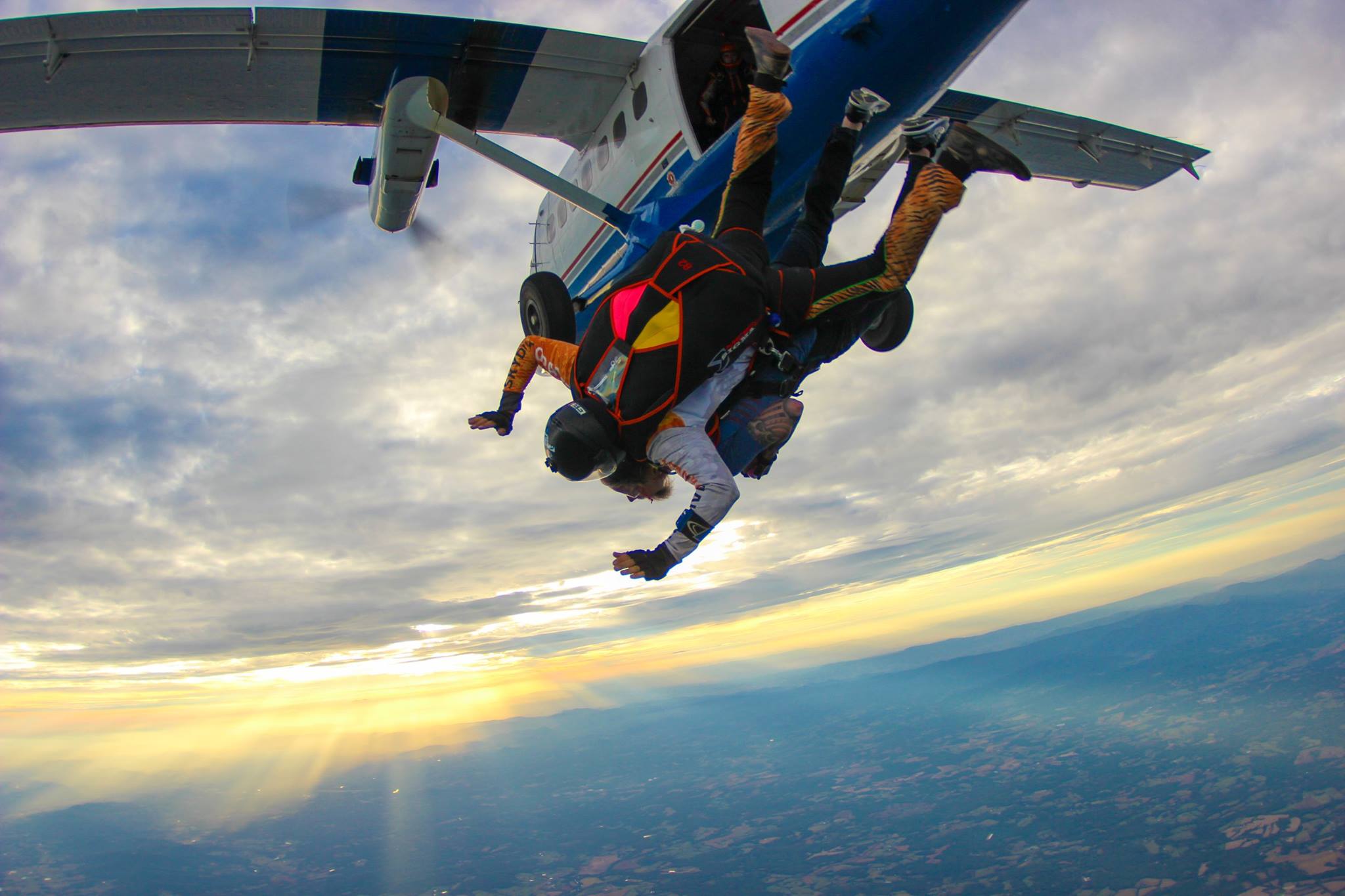
Skydiving involves jumping from an aircraft at altitudes typically between 10,000 and 14,000 feet.
The process usually includes:
- aircraft ascent
- freefall
- parachute deployment
- controlled landing
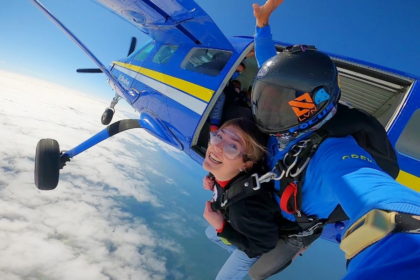
Most beginners participate in tandem skydiving, where a certified instructor manages the entire jump.
Because of strict safety regulations and advanced equipment, skydiving maintains one of the best safety records among adventure sports.
You can read more about the process in our guide on skydiving experience timeline.
What Is BASE Jumping?
BASE jumping is an extreme sport that involves jumping from fixed objects rather than aircraft.
The acronym BASE stands for:
- B – Buildings
- A – Antennas
- S – Spans (bridges)
- E – Earth (cliffs)
Unlike skydiving, BASE jumps are performed at much lower altitudes, leaving very little time to deploy a parachute.
Because of this limited reaction time, the risks are significantly higher.
Why BASE Jumping Is More Dangerous
Several factors explain why BASE jumping has a much higher death rate.
Low Jump Altitude
BASE jumps often occur from heights between 300 and 1,500 feet, which provides very little time for parachute deployment.
By comparison, skydivers jump from much higher altitudes, allowing more time to respond to potential issues.
Limited Backup Equipment
Skydivers carry two parachutes:
- main parachute
- reserve parachute
BASE jumpers usually carry only one parachute, which removes an important safety backup.
Our guide on skydiving equipment explained explores the safety systems used in modern skydiving.
Environmental Hazards
BASE jumps often occur near cliffs, buildings, or bridges, which increases the risk of collisions.
Skydiving typically occurs in controlled drop zones designed to reduce obstacles.
Lack of Regulation
Skydiving operations follow strict safety regulations and training programs.
BASE jumping is less regulated and often performed independently without professional supervision.
Skydiving Safety Statistics
Modern skydiving safety statistics highlight how safe the sport has become.
| Statistic | Estimated Data |
|---|---|
| Annual skydives worldwide | 6–7 million |
| Fatal accident rate | ~1 per 200,000 jumps |
| Survival rate per jump | 99.99%+ |
You can explore more detailed safety data in our guide on odds of dying while skydiving.
Common Causes of Accidents in Each Sport
Skydiving Accidents
Most skydiving accidents occur due to:
- human error
- risky low-altitude maneuvers
- poor weather conditions
Our article on skydiving accident causes explains these factors in detail.
BASE Jumping Accidents
BASE jumping accidents are often caused by:
- insufficient altitude
- collisions with nearby objects
- parachute deployment issues
Because of the environment and limited reaction time, mistakes in BASE jumping can be fatal.
Which Sport Should Beginners Choose?
For beginners interested in aerial adventure sports, skydiving is considered far safer.
Reasons include:
- professional instructor supervision
- strict safety regulations
- advanced parachute technology
- designated drop zones
Tandem skydiving is specifically designed to introduce new participants to the sport in a controlled environment.
The Future of Skydiving Safety
The skydiving industry continues to improve safety through new technology and training methods.
Recent innovations include:
- digital altitude monitoring
- improved parachute materials
- enhanced instructor certification programs
You can explore these innovations in our guide on skydiving gear technology.
Conclusion
The skydiving vs BASE jumping death rate comparison clearly shows that BASE jumping is significantly more dangerous. While both sports involve parachutes and aerial descent, the safety systems used in skydiving make it far less risky.
Modern skydiving benefits from strict regulations, advanced equipment, and professional training programs. These improvements have helped maintain survival rates exceeding 99.99% per jump, making skydiving one of the safest extreme sports available today.
FAQs
Is BASE jumping more dangerous than skydiving?
Yes. BASE jumping has a much higher fatality rate due to lower jump altitudes and fewer safety systems.
What is the fatality rate for skydiving?
The estimated fatality rate is about 1 death per 200,000 jumps.
Why is BASE jumping riskier?
BASE jumping occurs from lower heights and often near obstacles such as cliffs or buildings.
Is skydiving safe for beginners?
Yes. Tandem skydiving with a certified instructor is considered the safest way for beginners to experience the sport.
Do skydivers carry backup parachutes?
Yes. Skydivers carry both a main parachute and a reserve parachute for safety.