
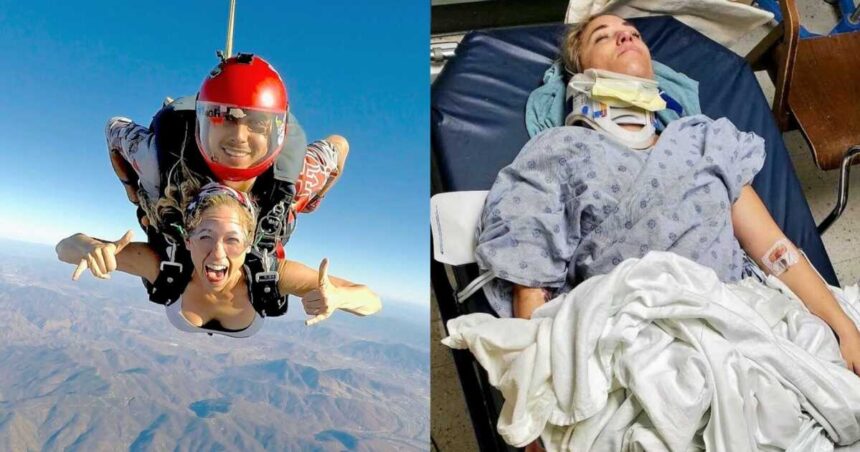
Skydiving is one of the most regulated adventure sports in the United States, yet accidents—though rare—do happen. When a skydiving accident leads to injuries, one of the most common and stressful questions is: who pays the medical bills after a skydiving accident?
- Who Is Financially Responsible After a Skydiving Accident?
- Jumper Responsibility Explained
- The Role of the Drop Zone in Medical Bills
- Insurance Scenarios After a Skydiving Accident
- How Health Insurance Is Involved
- Common Myths About Medical Bills After Skydiving Accidents
- How to Protect Yourself Financially Before Skydiving
- Authoritative External Sources (Trust & Accuracy)
- Final Thoughts
Medical treatment in the U.S. can cost thousands or even hundreds of thousands of dollars, especially when emergency care, surgery, or rehabilitation is involved. Understanding financial responsibility before an accident occurs is critical for anyone considering a jump.
This guide explains jumper responsibility, the role of the drop zone, insurance coverage, health insurance involvement, and common myths, using U.S.-specific legal and insurance frameworks.
Who Is Financially Responsible After a Skydiving Accident?
In most cases, the skydiver is financially responsible for their own medical bills following a skydiving accident. This applies whether the injury occurs during a tandem jump, solo skydive, or training jump.
Skydiving is classified as a high-risk recreational activity, and participants voluntarily accept that risk when they jump. This legal principle heavily influences who pays for medical treatment.
However, responsibility can vary depending on:
- The cause of the accident
- Insurance coverage
- Whether negligence was involved
- The terms of the liability waiver
To fully understand liability, it’s important to break down each party’s role.
Jumper Responsibility Explained
When you skydive in the U.S., you are required to sign a liability waiver before jumping. This document confirms that you understand the risks and agree to take responsibility for injuries that may occur.
What This Means Financially
- You are responsible for ambulance fees
- You are responsible for emergency room charges
- You are responsible for hospital stays, surgery, and rehabilitation
- You are responsible for follow-up medical care
Even in tandem skydiving, the jumper typically remains financially responsible for medical costs unless clear negligence is proven.
For a deeper legal explanation, you can read our detailed guide on how skydiving liability waivers work in the U.S. on
The Role of the Drop Zone in Medical Bills
A common misconception is that the drop zone automatically pays if someone gets injured. In reality, drop zones are rarely responsible for medical bills.
When a Drop Zone Is NOT Responsible
Most drop zones are protected because:
- Jumpers sign legally binding waivers
- Equipment meets regulatory standards
- Instructors are certified
- Safety protocols are followed
If an accident happens due to normal operational risk, the drop zone is usually not financially liable.
When a Drop Zone MAY Be Responsible
A drop zone could potentially be responsible if:
- Faulty or poorly maintained equipment caused the injury
- An unqualified instructor was involved
- Safety rules were ignored
- Gross negligence can be proven
Even in these cases, responsibility is usually decided through legal claims, not automatic payment.
Insurance Scenarios After a Skydiving Accident
Insurance plays the biggest role in determining who ultimately pays medical bills after a skydiving accident.
1. Skydiving or Adventure Sports Insurance
Specialized skydiving insurance is designed to cover:
- Emergency treatment
- Hospitalization
- Medical evacuation
- Rehabilitation costs
This type of insurance often provides the best protection for jumpers.
You can learn more about coverage types in our guide on.
2. Travel Insurance and Skydiving
Standard travel insurance often excludes skydiving unless an extreme sports add-on is included. Many jumpers incorrectly assume travel insurance will pay their medical bills—this is frequently not the case.
Always check:
- Whether skydiving is listed as a covered activity
- Depth, altitude, or certification restrictions
3. No Insurance at All
If no applicable insurance exists, the jumper must pay 100% of medical costs out of pocket. In the U.S., this can result in:
- Significant medical debt
- Payment plans
- Collection issues
This is why insurance planning is essential before jumping.
How Health Insurance Is Involved
Health insurance may cover skydiving injuries, but coverage is not guaranteed.
When Health Insurance May Cover Costs
- The policy does not exclude extreme sports
- The injury occurred during a legal, regulated jump
- The jumper followed safety guidelines
When Health Insurance May Deny Claims
- The policy excludes high-risk activities
- The insurer classifies skydiving as recreational risk
- Incomplete disclosure during enrollment
Because policies vary widely, it’s strongly recommended to review coverage before jumping.
For a breakdown of insurance exclusions
Common Myths About Medical Bills After Skydiving Accidents
Myth 1: The Drop Zone Pays Automatically
False. Drop zones are usually protected by waivers and insurance.
Myth 2: Tandem Skydiving Is Fully Covered
False. Tandem jumpers still assume personal medical responsibility.
Myth 3: Health Insurance Always Covers Skydiving
False. Many policies exclude extreme sports.
Myth 4: Waivers Remove All Legal Rights
False. Waivers limit liability but do not protect against proven negligence.
Myth 5: Skydiving Accidents Are Always Fatal
False. Most injuries are non-fatal, but treatment can still be very expensive.
How to Protect Yourself Financially Before Skydiving
To avoid unexpected medical bills:
- Review your health insurance policy
- Consider skydiving-specific insurance
- Understand the liability waiver
- Ask the drop zone about safety certifications
- Keep emergency contact and insurance details updated
These steps significantly reduce financial risk.
Authoritative External Sources (Trust & Accuracy)
For additional verification and safety standards, refer to:
- United States Parachute Association (USPA)
- Centers for Disease Control and Prevention (CDC)
- National Library of Medicine
These organizations provide neutral, research-based guidance.
Final Thoughts
So, who pays medical bills after a skydiving accident in the USA?
In most cases, the jumper does—either directly or through insurance.
Understanding responsibility, insurance coverage, and legal waivers before jumping can prevent financial shock later. Skydiving may last only minutes, but medical bills can last years if you’re unprepared.