

When you think about skydiving, your mind probably races with excitement mixed with a little fear. One of the biggest questions people ask is about the skydiving rate of death. If you are planning to jump from a plane thousands of feet above the ground, you deserve to know the real facts about safety and risk. This guide will walk you through everything you need to understand about skydiving mortality rates, helping you make an informed decision about this thrilling adventure.
- What Is the Actual Skydiving Rate of Death?
- How Many People Die from Skydiving Each Year?
- Is Skydiving Safe Compared to Other Activities?
- What Causes Skydiving Accidents?
- How Skydiving Safety Has Improved Over Time
- Tandem Skydiving Versus Solo Jumping
- Making Your Skydiving Experience as Safe as Possible
- The Psychological Benefits of Understanding Risk
- What to Expect on Your First Jump
- Frequently Asked Questions About Skydiving Death Rates
What Is the Actual Skydiving Rate of Death?
The skydiving rate of death refers to how many people lose their lives while participating in this extreme sport compared to the total number of jumps made. According to data from the United States Parachute Association, the mortality rate skydiving stands at approximately 0.39 fatalities per 100,000 jumps. This means that out of every 100,000 skydiving experiences, less than one person dies.
To put this into perspective, you have a higher chance of being struck by lightning or getting into a fatal car accident on your way to the dropzone than dying during a skydive. The numbers show that skydiving has become remarkably safer over the past few decades thanks to better equipment, improved training methods, and stricter safety regulations.
Modern parachute systems come with multiple backup mechanisms. Every skydiver wears two parachutes, a main canopy and a reserve. If the main parachute fails to open properly, the reserve parachute can be deployed manually. Most rigs also include an automatic activation device that will automatically open the reserve parachute if the skydiver falls below a certain altitude without deploying their canopy.
How Many People Die from Skydiving Each Year?
When people ask how many people die from skydiving, they want concrete numbers. In the United States alone, there are typically between 10 to 30 skydiving-related deaths each year. This number has remained relatively stable even as the total number of jumps has increased significantly over the years.
Globally, the numbers vary by country and region, but the overall trend shows that skydiving continues to become safer. The average death rate at skydiving places around the world follows similar patterns to those in the United States, with most developed countries maintaining strong safety records.
It is important to understand that how many people die a year from parachuting includes both experienced skydivers and first-time tandem jumpers. Statistically, tandem skydiving, where a beginner is attached to an experienced instructor, has an even lower fatality rate than solo jumps. The instructor handles all the technical aspects of the jump, which significantly reduces the risk for newcomers.
For more detailed statistics on this topic, you can explore information about skydiving deaths per year worldwide, which provides comprehensive data broken down by year and region.
Is Skydiving Safe Compared to Other Activities?
So, is skydiving safe? The answer depends on how you define safety and what you compare it to. Every activity in life carries some level of risk. The question is whether the risk is acceptable given the precautions taken and the rewards gained.
Skydiving is safer than many people assume. The risk of death from skydiving is lower than the risk of death from many everyday activities that people do without thinking twice. For example, you are more likely to die from a bee sting, a fall in your own home, or choking on food than from a skydiving accident.
The skydiving industry takes safety extremely seriously. Dropzones must follow strict guidelines set by national organizations and aviation authorities. Instructors undergo extensive training and must maintain their certifications through regular refresher courses. Equipment is inspected regularly and must meet specific safety standards.
Weather conditions are carefully monitored before every jump. If conditions are not ideal, jumps are postponed or cancelled. This commitment to safety has helped drive down accident rates over the years.
What Causes Skydiving Accidents?
Understanding what causes accidents can help you appreciate why the skydiving rate of death remains so low. Most skydiving fatalities result from human error rather than equipment failure. Common causes include improper emergency procedures, poor decision-making during the jump, and failure to follow established safety protocols.
Many accidents involve experienced skydivers who become overconfident and take unnecessary risks. They might attempt advanced maneuvers without proper training or ignore warning signs during the jump. This is why continuing education and maintaining respect for the sport are so important, even for veterans.
Equipment malfunctions do occur, but they are rare and usually manageable when skydivers follow their training. Parachute malfunctions happen in roughly one out of every 1,000 jumps, but because every skydiver carries a reserve parachute, these situations rarely become fatal. The key is recognizing the malfunction quickly and executing the proper emergency procedures.
Weather-related accidents happen when jumpers or dropzone operators make poor decisions about jumping in marginal conditions. Strong winds, turbulence, and poor visibility can create dangerous situations. Reputable dropzones will not allow jumps when weather conditions are not suitable.
How Skydiving Safety Has Improved Over Time
The mortality rate skydiving has dropped dramatically over the past several decades. In the 1970s, the fatality rate was approximately 40 deaths per 100,000 jumps. Today, that number has fallen to less than one death per 100,000 jumps. This improvement reflects ongoing advancements in technology, training, and safety culture.
Parachute design has evolved significantly. Modern canopies are more reliable and easier to control than older models. They open more consistently and provide better flight characteristics. Reserve parachutes are now square-shaped, making them easier to steer and land safely.
Automatic activation devices have become standard equipment. These devices monitor altitude and descent rate, automatically deploying the reserve parachute if the skydiver becomes incapacitated or fails to deploy their parachute at the appropriate altitude. This technology has saved countless lives.
Training methods have also improved. First-time skydivers receive thorough ground school instruction before their jump. They learn what to expect at every stage of the experience and how to respond in different situations. Instructors are better trained and more experienced than ever before.
Tandem Skydiving Versus Solo Jumping
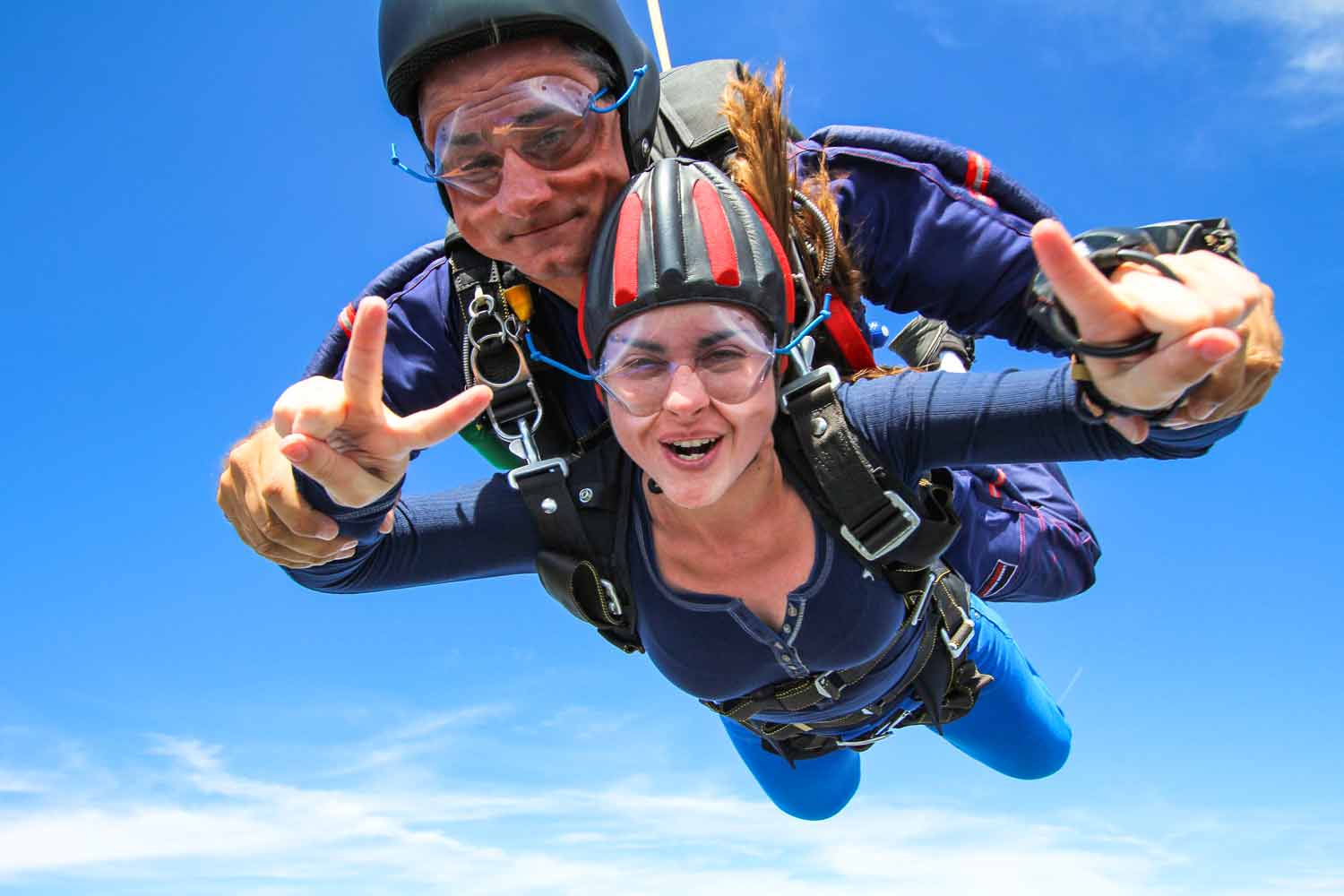
For first-time skydivers, tandem skydiving offers the safest introduction to the sport. In a tandem jump, you are securely attached to an experienced instructor who handles all the technical aspects of the jump. The instructor manages the exit from the aircraft, maintains stability during freefall, deploys the parachute, and controls the landing.
The average death rate at skydiving places for tandem jumps is even lower than the overall skydiving fatality rate. This is because the person most at risk, the first-time jumper, is not required to make any critical decisions during the jump. The instructor’s experience and training provide an extra layer of safety.
Solo skydiving requires completing a training program and demonstrating proficiency in various skills. Students learn how to exit the aircraft, maintain stability in freefall, deploy their parachute, handle malfunctions, and land safely. This training process takes time and commitment, but it prepares skydivers to handle the responsibilities of jumping alone.
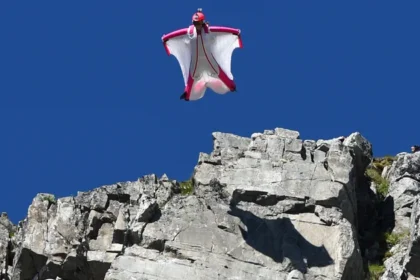
Experienced skydivers face different risks than tandem jumpers. They might attempt more challenging jumps, such as formation skydiving, wingsuit flying, or canopy piloting. These advanced disciplines require additional training and carry higher risk levels than basic solo skydiving.
Making Your Skydiving Experience as Safe as Possible
If you decide to try skydiving, there are several steps you can take to maximize your safety. Start by choosing a reputable dropzone with a strong safety record. Look for facilities that are members of national skydiving organizations and hold proper certifications.
Check that your instructor or tandem master has extensive experience and current certifications. Do not hesitate to ask about their qualifications and how many jumps they have completed. Experienced instructors take these questions as a sign that you are taking safety seriously.
Follow all instructions carefully during your ground school training. Pay attention to the briefing before your jump and ask questions if anything is unclear. Your instructor wants you to understand what will happen during every phase of the jump.
Be honest about your physical condition and any health concerns. Certain medical conditions may make skydiving unsafe. Dropzones typically require participants to meet basic health requirements and may ask you to provide medical clearance if you have specific conditions.
Trust your instincts. If weather conditions seem questionable or if something does not feel right about the operation, it is okay to postpone your jump. Reputable dropzones will respect your decision and work with you to reschedule.
The Psychological Benefits of Understanding Risk
Knowing the real statistics about the skydiving rate of death can actually help reduce anxiety. Many people fear skydiving because they overestimate the risk. When you learn that skydiving is statistically safer than many common activities, it can help you approach the experience with a more balanced perspective.
Fear is a natural response to the idea of jumping from an airplane. Your body is designed to protect you from danger, and falling from a great height certainly triggers that protective instinct. However, understanding that modern skydiving has multiple safety systems in place can help your logical mind override those primal fears.
The rush of adrenaline you experience during a skydive is part of what makes it so memorable. Your body releases endorphins and other chemicals that create feelings of euphoria and accomplishment. Many people describe their first skydive as a life-changing experience that helps them overcome fears and build confidence.
What to Expect on Your First Jump
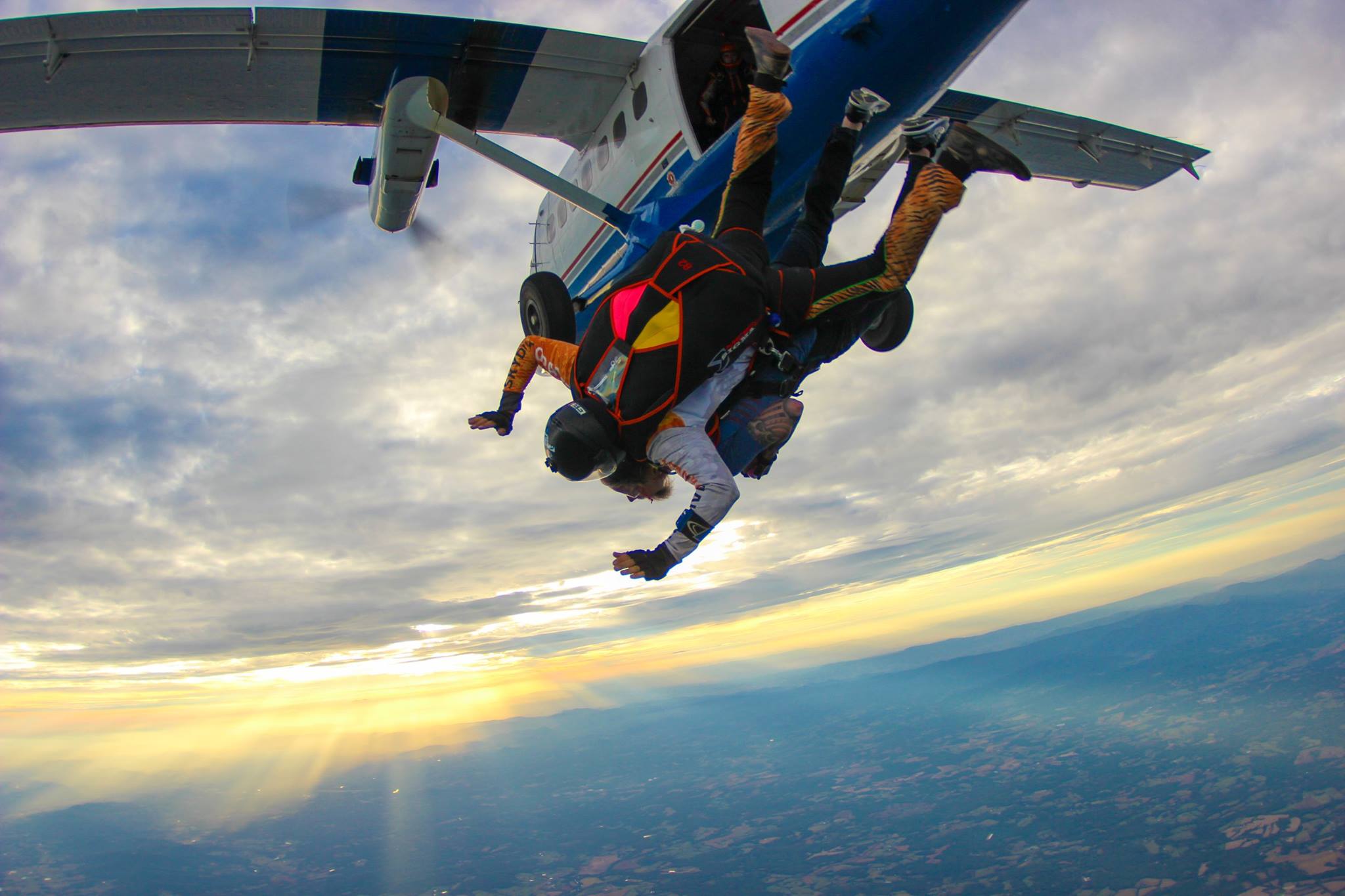
Your first skydiving experience will likely be a tandem jump. You will arrive at the dropzone and complete paperwork, including a liability waiver. You will then attend a ground school session where your instructor explains what will happen during the jump.
You will be fitted with a harness that attaches you to your tandem instructor. The instructor wears the parachute system that will support both of you. You will board a small aircraft that climbs to altitude, typically between 10,000 and 14,000 feet.
During the climb, your instructor will review hand signals and body position. When you reach the proper altitude, the door opens and you will move toward the exit. Your instructor controls the exit and you will tumble out of the aircraft together.
Freefall lasts approximately 45 to 60 seconds, depending on the altitude. You will experience the sensation of flying as air rushes past you at speeds around 120 miles per hour. Your instructor will deploy the parachute at approximately 5,000 feet.
Once the parachute opens, the experience becomes much calmer. You will have several minutes to enjoy the view as you descend toward the landing area. Your instructor will guide the parachute to a safe landing spot and help you land on your feet.
Frequently Asked Questions About Skydiving Death Rates
What is the current skydiving rate of death?
The current skydiving rate of death is approximately 0.39 fatalities per 100,000 jumps according to recent data from the United States Parachute Association. This means skydiving is statistically very safe when proper procedures are followed.
How does tandem skydiving safety compare to solo jumping?
Tandem skydiving is statistically safer than solo jumping because an experienced instructor handles all technical aspects of the jump. First-time jumpers attached to instructors benefit from professional expertise throughout the entire experience.
What are the main causes of skydiving accidents?
Most skydiving accidents result from human error rather than equipment failure. Common causes include improper emergency procedures, poor decision-making, failure to follow safety protocols, and attempting advanced maneuvers without adequate training or experience.
Has skydiving become safer over the years?
Yes, skydiving has become significantly safer over the decades. The fatality rate has dropped from approximately 40 deaths per 100,000 jumps in the 1970s to less than one death per 100,000 jumps today due to improved equipment, better training, and advanced safety technology.
What safety equipment do skydivers use?
Skydivers use multiple safety systems including a main parachute, a reserve parachute, and an automatic activation device that deploys the reserve if needed. All equipment undergoes regular inspection and must meet strict safety standards.
Is skydiving riskier than driving a car?
Statistically, you are more likely to die in a car accident than during a skydive. While skydiving carries inherent risks, the safety measures in place make it safer than many people assume when compared to everyday activities.