
If you are planning your first jump, you have probably already typed this into Google: how long does skydiving last? It is the most natural question in the world. You are about to step out of an aircraft thousands of feet above the earth, and you want to know exactly what you are getting into.
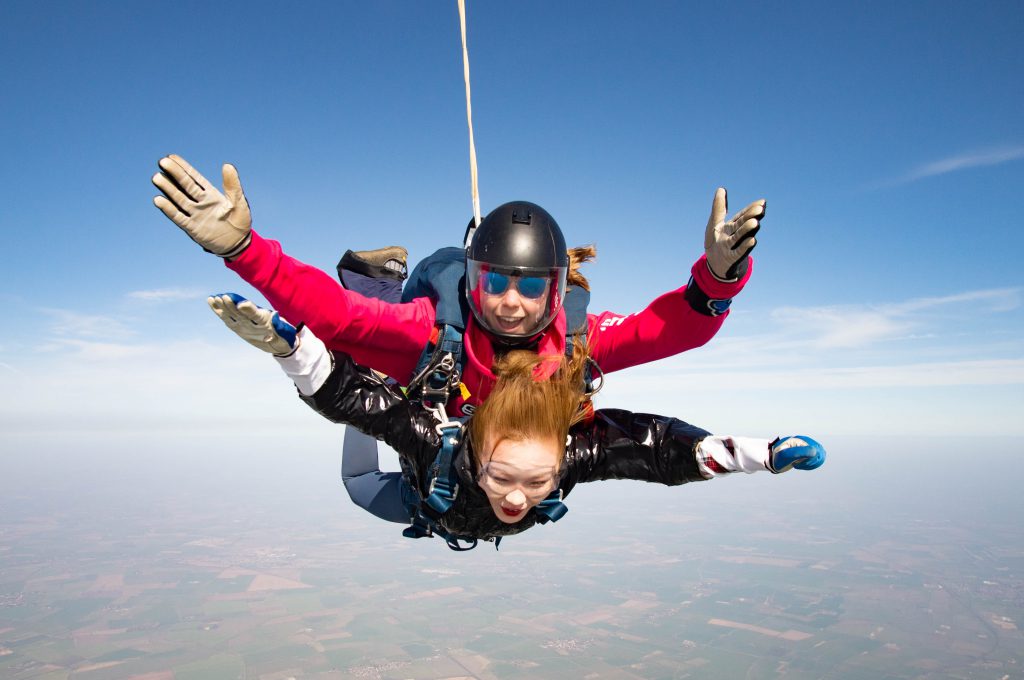
Here is your direct answer: the actual skydive — from the moment you exit the plane to the moment your feet touch the ground — lasts roughly 5 to 7 minutes. Of that, about 45 to 60 seconds is pure freefall, and the rest is a peaceful parachute glide back to earth.
But there is a lot more to it than that number. Altitude, body weight, jump type, and weather all change the calculation. This guide breaks down every phase with real numbers so you know exactly what to expect — and you leave feeling ready, not anxious.
Quick Answer: How Long Does Skydiving Last?
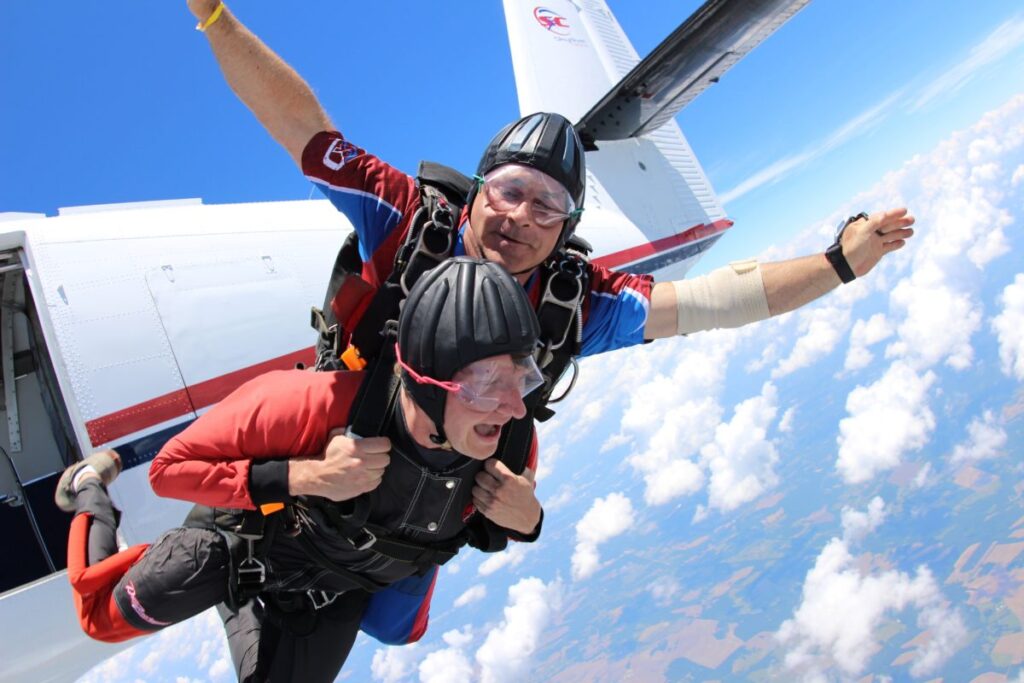
For most people doing a standard tandem skydive from around 13,500 feet:
- Freefall: 45 to 60 seconds
- Parachute ride: 4 to 6 minutes
- Total jump time (exit to landing): 5 to 7 minutes
- Full day at the dropzone: 2 to 4 hours
Those numbers seem small on paper. Every skydiver will tell you they feel enormous in the air.
What Actually Determines How Long Skydiving Lasts?
Not every skydive takes the same amount of time. Several factors combine to shape your total duration in the air.
Exit altitude is the biggest factor. The higher you jump from, the longer you fall before the parachute opens. Jump from 10,000 feet and you get around 30 to 40 seconds of freefall. Jump from 15,000 feet and that stretches to 60 seconds.
Body position matters too. In a belly-to-earth position — the standard tandem posture — you fall at around 120 mph. Point your head toward the ground in a freefly dive and that climbs to 150 or even 180 mph, which means a shorter freefall at the same altitude.
Body weight has a small but real effect. Heavier skydivers fall slightly faster than lighter ones, all else being equal.
Parachute deployment height changes how long the canopy phase lasts. Tandem instructors open at about 5,000 feet for safety. Licensed solo jumpers often open lower, around 3,000 to 3,500 feet, which means a shorter parachute ride.
Parachute size also plays a role. Tandem parachutes are enormous — over 300 square feet — and descend slowly. A solo jumper’s canopy is roughly half that size and descends faster.
Wind conditions affect canopy time. A headwind slows your forward speed and extends your glide. A tailwind does the opposite.
Freefall Time by Altitude — Full Comparison
This table shows you exactly how long freefall lasts depending on where you exit the aircraft.
| Exit Altitude | Freefall Time | Parachute Ride | Total Jump Time |
|---|---|---|---|
| 8,000 ft | 20 seconds | 4 – 5 min | ~5 min |
| 10,000 ft | 30 – 40 seconds | 4 – 5 min | 5 – 6 min |
| 13,500 ft | 45 – 55 seconds | 4 – 6 min | 5 – 7 min |
| 14,000 ft | ~50 seconds | 5 – 6 min | 6 – 7 min |
| 15,000 ft | ~60 seconds | 5 – 6 min | 6 – 8 min |
| 18,000 ft | ~75 seconds | 5 – 6 min | 7 – 8 min |
| 25,000 – 30,000 ft (HALO) | 90 – 120+ seconds | 5 – 7 min | 8 – 10 min |
Most first-time tandem skydivers jump from 13,500 to 14,000 feet — the industry standard that gives you the best balance of freefall time and safety.
Why Does Freefall Feel Longer Than It Is?
This is one of the most fascinating things about skydiving, and it catches nearly every first-timer off guard.
Your brain, under an adrenaline surge, encodes memories far more densely than it normally does. Every fraction of a second during freefall is flooded with new sensory data — the roar of wind, the rush of air on your face, the panoramic sweep of the earth far below you. Because your brain is processing so much so fast, those 45 to 60 seconds feel stretched. Some people describe it as the longest minute of their entire life. Others say time seemed to stop completely.
This is not a metaphor. It is a real neurological effect called time dilation under stress, and it is part of why skydivers become addicted to the sport after a single jump.
How Long Does a Tandem Skydive Last — Full Day Timeline
Most first-time jumpers do a tandem skydive. Here is the realistic timeline for your whole day, not just the jump itself.
Arrival and check-in — 15 to 20 minutes You will complete your paperwork, sign your waiver, get weighed, and meet your instructor. Bring a valid photo ID and arrive a few minutes early.
Ground training and briefing — 20 to 30 minutes Your instructor walks you through everything: how to exit the aircraft, the correct body position for freefall, how the parachute deploys, and how to land safely. Pay attention here — it makes the jump more enjoyable.
Gearing up — 10 to 15 minutes You will be fitted with a jumpsuit, harness, goggles, and in some cases an altimeter. The harness feels snug, which is intentional — it needs to be secure.
Waiting for your slot — 20 to 60 minutes This is the most variable part of the day. If the dropzone is busy or weather causes brief delays, your wait can stretch. Use this time to watch other jumpers come in to land and calm your nerves.
Airplane ride to altitude — 15 to 25 minutes The aircraft climbs to jump altitude, which takes 15 to 25 minutes depending on the plane and how high you are going. The view is already extraordinary before you even jump.
Freefall — 45 to 60 seconds The main event. You exit the aircraft, reach terminal velocity in about 10 seconds, and freefall at approximately 120 mph until your instructor deploys the parachute at around 5,000 feet.
Parachute ride — 4 to 6 minutes The world goes quiet. You decelerate from 120 mph to about 15 mph in a matter of seconds. From here, you glide peacefully toward the landing zone, steer the canopy, take in the view, and exhale.
Landing and debrief — 10 to 15 minutes Your instructor flares the parachute just before touchdown for a soft landing. Then you celebrate, collect your video if you ordered one, and let the adrenaline settle.
Total time at the dropzone: plan for 2 to 4 hours.
How Long Does Skydiving Last by Jump Type?
Different disciplines have dramatically different durations. Here is how they compare.
Tandem Skydive (Beginner)
Freefall lasts 45 to 60 seconds. The canopy ride lasts 4 to 6 minutes. Total jump time is 5 to 7 minutes. This is the right option for your first jump — no experience required, you are attached to a certified instructor throughout.
Solo Licensed Skydive (Belly-to-Earth)
Freefall lasts 50 to 60 seconds from 14,000 feet. The canopy ride is shorter at 3 to 4 minutes because solo jumpers typically open lower. Total jump time is around 5 to 6 minutes.
Freefly and Head-Down Skydive
Because the head-down position dramatically reduces air resistance, freefall speeds reach 150 to 180 mph. Freefall time drops to 30 to 45 seconds. Total jump time is 5 to 6 minutes. This discipline requires advanced training and hundreds of prior jumps.
Wingsuit Skydive
The wingsuit is a specially constructed suit with fabric panels between the arms and legs that creates lift. This slows the skydiver’s descent and allows them to glide horizontally for miles. Freefall in a wingsuit can last 90 seconds to over 2 minutes. This is one of the most extreme forms of the sport and typically requires at least 200 prior jumps before any instructor will train you in it.
HALO Jump (High Altitude, Low Opening)
HALO jumps — High Altitude, Low Opening — exit the aircraft at 25,000 to 30,000 feet, which requires supplemental oxygen both on the aircraft and during the early part of freefall. At those altitudes, freefall can last 90 to 120 seconds or more. Total jump time reaches 8 to 10 minutes. This is the longest conventional skydiving experience available to civilians.
Is Skydiving Painful or Uncomfortable?
This question comes up on almost every first-timer’s mind, and the honest answer is no — skydiving is not painful.
The wind during freefall is strong, but your goggles protect your eyes completely and the sensation is intense rather than painful. Your ears will feel pressure changes similar to what you experience during commercial air travel — swallowing or yawning clears it instantly. The harness feels tight and snug, but it is well-padded and properly fitted. The parachute opening is a firm deceleration, not a violent jolt — modern ram-air canopies open smoothly. Landing, when done correctly with an instructor flaring the parachute, feels like a gentle jog or a sit-down. There is no hard impact.
If you have a history of ear infections, recent surgery, or sinusitis, discuss this with your instructor before jumping. Skydiving within 24 hours of scuba diving is not recommended due to decompression risk.
How Much Does Skydiving Cost in 2026?
Pricing varies by location, altitude, and what is included. Here is a realistic overview.
| Jump Type | Altitude | Average Cost (USD) |
|---|---|---|
| Standard Tandem | 10,000 – 13,500 ft | $200 – $250 |
| Premium Tandem | 14,000 – 15,000 ft | $250 – $350 |
| Video and Photo Add-On | — | $80 – $150 |
| Licensed Solo Jump Slot | 10,000 – 15,000 ft | $20 – $30 per jump |
| AFF Certification Course | Progressive | $1,200 – $1,800 |
| HALO Jump | 25,000 – 30,000 ft | $400 – $700 |
Always ask what is included in the quoted price. Base rates often exclude gear rental, video packages, and taxes, which can add $100 to $200 to your total.
7 Powerful Facts About Skydiving Duration
- You reach terminal velocity in approximately 10 seconds after leaving the aircraft.
- A jump from 13,500 feet gives you close to one full minute of freefall — it goes fast and feels eternal at the same time.
- Freefall does not feel like a rollercoaster stomach-drop. Because you are already moving forward at aircraft speed when you exit, the sensation is more like floating on a mattress of wind.
- The parachute phase is longer than freefall — 4 to 6 minutes versus 45 to 60 seconds — and is the part many skydivers say they love most.
- Wingsuit pilots can stay in freefall for over 2 minutes and cover horizontal distances of several miles on a single jump.
- A HALO jump from 30,000 feet offers the longest civilian skydiving experience available at around 10 minutes total.
- Despite lasting only 5 to 7 minutes, virtually every skydiver describes their jump as one of the most memorable moments of their entire life.
How Weather Affects Your Skydiving Day
Weather is the most unpredictable part of any skydiving experience and the one factor entirely outside anyone’s control.
Cloud cover grounds jumps when it falls below FAA-required minimums, because skydivers must maintain visual separation from clouds at all times. Rain is simply not possible — falling through rain at 120 mph causes real pain. High surface or upper-level winds pause operations when they exceed safe limits, typically around 14 to 18 mph at the ground. Cold temperatures at altitude are also something to prepare for — at 15,000 feet the air can be 30 to 40 degrees Fahrenheit colder than it is on the ground, even on a warm summer day.
Most reputable dropzones offer free rescheduling when weather forces a cancellation. Always call ahead on the morning of your jump to confirm operations are running before you make the drive.
Frequently Asked Questions About Skydiving Duration
How long does skydiving last?
A standard tandem skydive from 13,500 feet lasts 5 to 7 minutes in the air, including 45 to 60 seconds of freefall and 4 to 6 minutes under the parachute. Plan to spend 2 to 4 hours at the dropzone overall once you include check-in, training, gearing up, the aircraft ride, and post-jump debrief.
How long does freefall last when skydiving?
Freefall lasts around 45 to 60 seconds from 13,500 to 15,000 feet at terminal velocity of approximately 120 mph. From HALO altitudes of 25,000 to 30,000 feet, freefall extends to 90 seconds or more.
How fast do you fall when skydiving?
In a standard belly-to-earth tandem position, skydivers reach terminal velocity of around 120 mph (190 km/h). In a head-down freefly position, that climbs to 150 to 180 mph. The world record speed for skydiving is 329.18 mph, set by Marco Hepp of Germany in October 2022 at the FAI World Speed Skydiving Championships in Arizona.
How long is the airplane ride before you jump?
The aircraft ride from the ground to jump altitude takes approximately 15 to 25 minutes, depending on the aircraft type and how high you are going. Modern turbine aircraft like the Twin Otter can reach 14,000 feet in about 15 to 20 minutes.
What is the best altitude for a first skydive?
Most experienced instructors and dropzone operators recommend 13,500 to 14,000 feet for a first jump. This gives you 50 to 60 seconds of freefall — enough time to fully experience and remember it without being so long that it becomes overwhelming.
Is skydiving painful?
No. The wind is intense but not painful, your goggles protect your eyes, the harness is snug and secure, the parachute opens smoothly, and the landing — with a proper flare from your instructor — is gentle. Most first-timers report that their fear before the jump is completely replaced by euphoria the instant they exit the aircraft.
What happens if weather cancels my skydive?
Most reputable dropzones offer free rescheduling if weather forces a cancellation. Always call the dropzone on the morning of your scheduled jump to confirm operations before you make the drive.
How much does a tandem skydive cost in 2026?
A standard tandem skydive costs between $200 and $350 USD depending on altitude and location. Video or photography packages add $80 to $150. HALO jumps range from $400 to $700. Prices vary significantly by country and region.
Final Thoughts
So, how long does skydiving last? In real clock time — just a few minutes. In lived experience — potentially the most vivid, unforgettable minutes of your entire life.
From the moment you leave the aircraft and the wind hits you at 120 mph, to the instant the parachute opens and the world goes silent, every second is packed with more sensation than most people experience in a week. The freefall will feel like forever. The canopy ride will feel like a gift. And the landing will leave you wondering when you can do it again.
If you have been thinking about your first jump, stop thinking and start planning. Check your local dropzone, book your slot, and get ready for a few minutes that will stay with you for the rest of your life.