
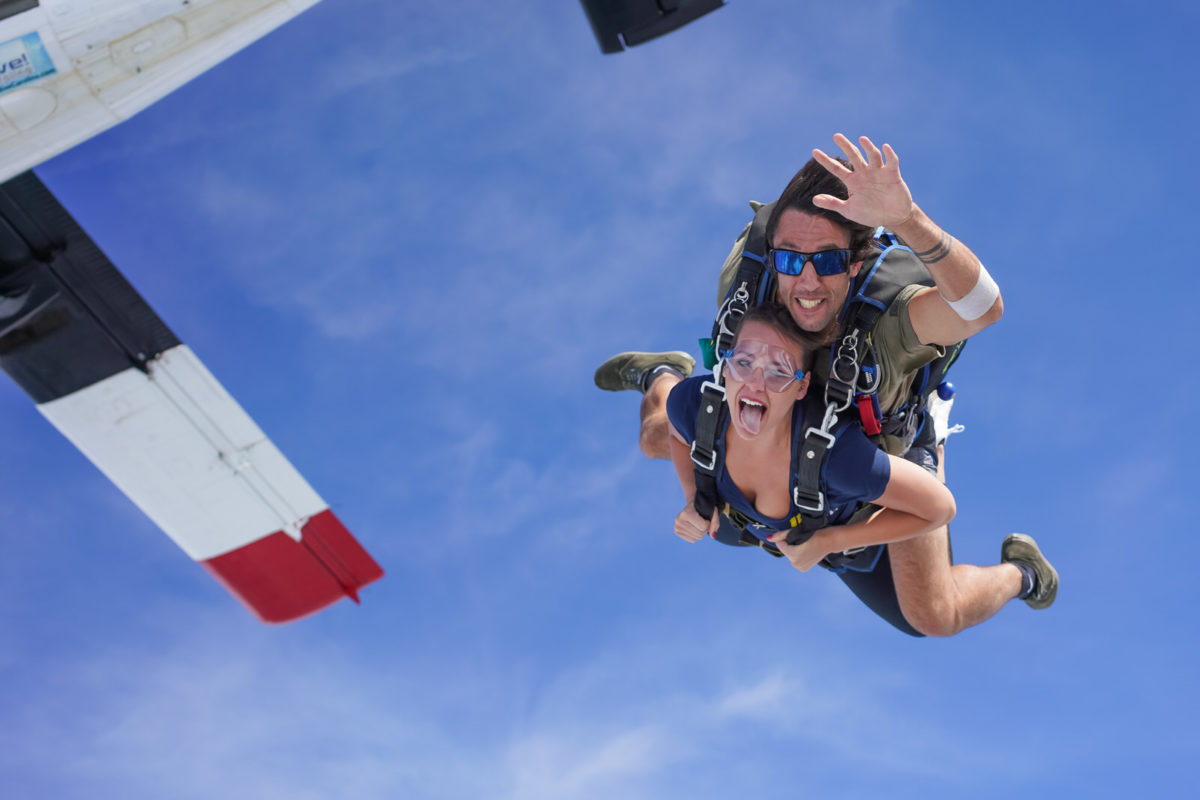
Almost everyone who thinks about skydiving asks the same question: is skydiving scary?
It is a fair question. Jumping out of an airplane goes against human instincts. Fear of heights, fear of falling, fear of losing control — all of these emotions show up before a first skydive.
This guide explains the truth about skydiving fear, pain, and mental preparation so you know exactly what to expect and how to handle it.
Why Skydiving Feels Scary Before You Jump
Fear before skydiving is completely normal. Your brain is designed to protect you from danger, and skydiving looks dangerous at first glance.
The fear usually comes from:
- Fear of heights
- Fear of falling
- Fear of the unknown
- Fear of losing control
Interestingly, people who are afraid of heights often do better than expected during skydiving.
Is Skydiving Actually Scary During the Jump?
For most people, the fear peaks before the jump, not during it.
Once you leave the plane:
- There is no time to overthink
- The sensation feels like flying, not falling
- Fear quickly turns into excitement
Many first-time jumpers say the scariest part is sitting in the plane before the door opens.
To understand the full beginner experience, read what to expect on your first skydive on SkydiveGuides.com.
What Does Freefall Really Feel Like?
Freefall does not feel like a roller coaster drop.
Instead, it feels like:
- Strong wind pressure
- Floating on air
- Pure adrenaline
There is no stomach-drop sensation because your body reaches terminal velocity almost immediately.
Is Skydiving Painful?
Skydiving is not painful.
There are no sharp sensations or physical pain during freefall. The wind pressure is strong but not uncomfortable.
Minor discomfort may come from:
- Tight harness straps
- Landing posture if legs are not lifted properly
Your instructor guides you through everything to avoid discomfort.
Fear of Heights vs Skydiving Fear
Fear of heights is different from fear of skydiving.
Why?
- You are not standing on an edge
- You are inside a plane
- The height is too great to process visually
Many people with a strong fear of heights complete skydives successfully.
What About Fear of Losing Control?
This is common for beginners.
Tandem skydiving solves this issue because:
- The instructor controls the jump
- You do not make technical decisions
- Safety systems are automated
If you want to compare options, read tandem skydiving vs solo skydiving on SkydiveGuides.com.
Mental Preparation for Skydiving (Very Important)
Mental preparation is more important than physical strength.
Accept Fear Instead of Fighting It
Fear is not a weakness. Accepting fear helps reduce panic.
Tell yourself:
- Fear is normal
- I am safe
- Professionals are in control
Focus on Breathing
Slow breathing calms the nervous system.
Before jumping:
- Inhale deeply through your nose
- Exhale slowly through your mouth
This simple technique reduces anxiety instantly.
Trust the Instructor and Equipment
Modern skydiving is extremely safe.
Instructors:
- Complete thousands of jumps
- Follow strict procedures
- Use backup systems
For safety reassurance, read how safe skydiving really is on SkydiveGuides.com.
Is Skydiving Scary for Everyone?
No.
People experience fear differently.
Some feel:
- Extreme fear before jumping
- Calmness during freefall
- Emotional high after landing
Others feel excitement from start to finish.
Both experiences are normal.
How Long Does Fear Last?
Fear usually lasts:
- Until the plane door opens
- Or a few seconds into freefall
After that, adrenaline takes over.
Can You Back Out If You’re Too Scared?
Yes.
No reputable drop zone forces anyone to jump.
However, most people who trust the process are glad they didn’t quit.
Is Skydiving Scarier Than Other Adventure Sports?
Compared to other activities:
- Skydiving looks scarier than it feels
- Bungee jumping often feels more intense
- Scuba diving requires longer exposure time
You can explore other adventure experiences for comparison.
Skydiving’s intensity is short and controlled.
Physical Preparation Helps Reduce Fear
Being well-rested, hydrated, and lightly fed helps your body handle adrenaline.
General fitness and stress management tips can be found , which is useful before high-adrenaline activities.
Common Myths About Skydiving Fear
Myth 1: You Will Panic in Freefall
Reality: Panic usually disappears instantly.
Myth 2: You Will Feel Pain
Reality: Skydiving is not painful.
Myth 3: Fear Means You Should Not Jump
Reality: Fear is part of the experience.
Why People Say Skydiving Changed Their Life
After the jump, many people report:
- Increased confidence
- Reduced fear in daily life
- Sense of achievement
Facing fear at 13,000 feet changes perspective.
When Skydiving Might Not Be Right for You
Skydiving may not be ideal if you:
- Have untreated severe anxiety disorders
- Ignore medical advice
- Are not willing to follow instructions
Honesty about your limits is important.
Frequently Asked Questions About Skydiving Fear
Is skydiving scary the first time?
Yes, for most people, but fear fades quickly.
Is skydiving scarier than bungee jumping?
Many people find bungee jumping scarier.
Does skydiving hurt your stomach?
No. There is no stomach-drop feeling.
Can introverts enjoy skydiving?
Yes. Skydiving is a personal experience.
Will I want to do it again?
Most first-time jumpers say yes.
Final Thoughts
Skydiving is scary before you jump, not during it.
Fear is part of what makes the experience meaningful. Once you face it, the reward is unforgettable.
If you are waiting for fear to disappear before skydiving, it never will. The courage comes from jumping anyway.