
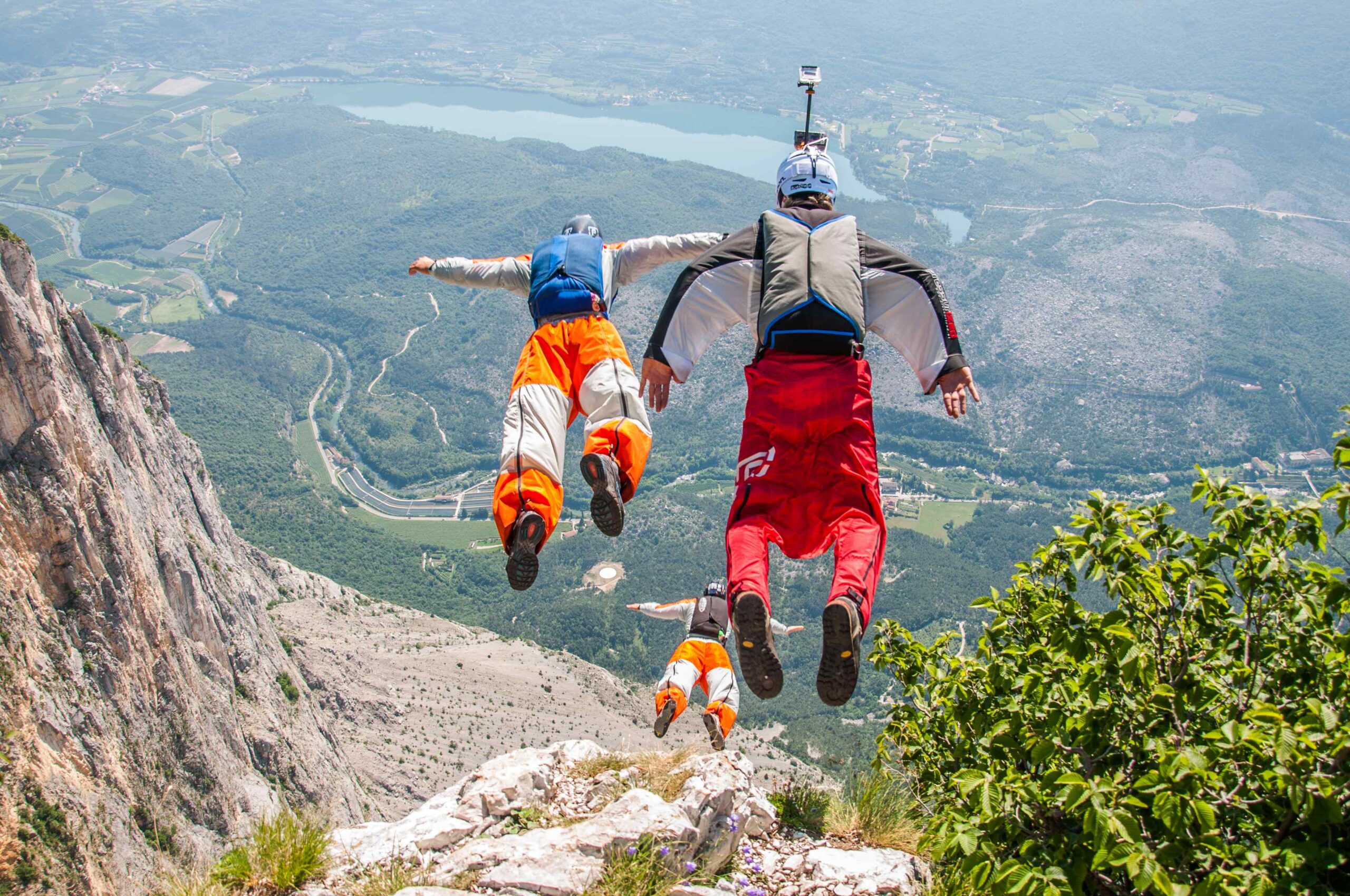
Opens with the sourced “1 in 2,317” stat immediately, attributed to the Kjerag Massif study published in the British Journal of Sports Medicine (2007), covering 20,850 recorded jumps over 11 years Contrasts BASE jumping with skydiving using the USPA 2024 figure of 0.27 deaths per 100,000 jumps Lists every search query this article answers, in a reader friendly format Explains what “BASE” stands for (Buildings, Antennas, Spans, Earth) because Google rewards foundational definitions on informational pages
BASE Jumping Death Rate: Key Numbers at a Glance
BASE jumping is one of the most statistically dangerous recreational activities ever documented. A peer reviewed study published in the British Journal of Sports Medicine, tracking 20,850 recorded jumps at the Kjerag Massif in Norway over 11 years, found that 9 jumps ended fatally. That works out to exactly 1 death per 2,317 jumps. For context, skydiving in the United States recorded just 13 fatal accidents from approximately 3.7 million jumps in 2024, a rate of 1 death per roughly 284,000 jumps.
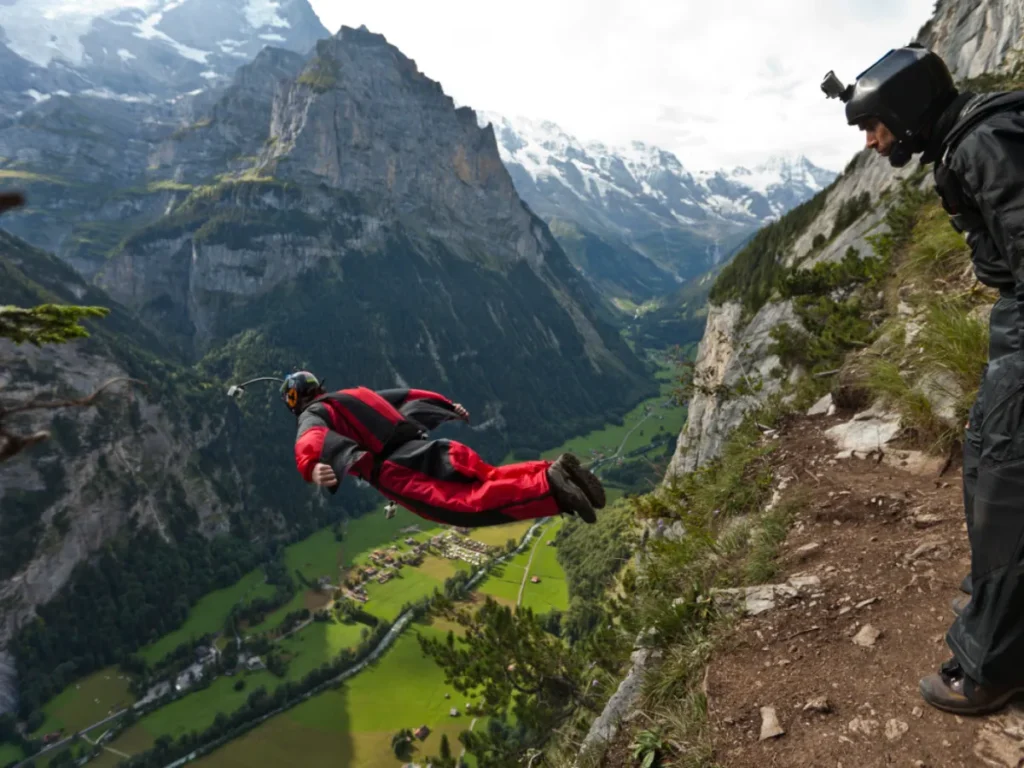
Put another way, BASE jumping at a monitored site is approximately 123 times more likely to kill you per jump than a standard skydive. Across all terrain types, including unmonitored cliffs, urban buildings, bridges, and antennas worldwide, the broader estimated rate is 1 death per 500 to 1,000 jumps.
This guide breaks down the BASE jumping death rate in 2026, year by year fatality data from 2018 through 2025, how wingsuit flying death rates compare to standard BASE, how bungee jumping fatality rates compare to both, what causes most deaths, and what the real risk looks like if you are considering the sport. Every statistic in this article is sourced and cross referenced.
If you want to explore skydiving safety data separately, visit our full guide on skydiving deaths per year.
BASE Jumping Death Rate: Key Numbers at a Glance
Before going deeper, here are the most important figures, sourced from peer reviewed research and community tracked data:
1 in 2,317 jumps: fatality rate recorded at Kjerag Massif, Norway, the most studied BASE site globally (British Journal of Sports Medicine, 2007, n=20,850 jumps)
1 in 500 to 1,000 jumps: estimated broader global BASE jumping fatality rate across all terrain types and experience levels (multiple published datasets, Quora aggregation, 2024)
0.04% per jump: BASE jumping fatality rate per jump based on peer reviewed literature (ScienceDirect, 2013)
1.7% per active jumper per year: annual fatality risk for someone who BASE jumps regularly (ScienceDirect, 2013)
61% of all BASE deaths involve wingsuit flying, despite wingsuit BASE being a minority practice within the sport (study covering 2007 to 2017, ResearchGate)
29 deaths: BASE Fatality List reported fatalities in 2025
What Is the BASE Jumping Death Rate?
BASE is an acronym. It stands for Buildings, Antennas, Spans (bridges), and Earth (cliffs and natural formations). Unlike skydiving, which happens from aircraft at altitudes above 10,000 feet, BASE jumping happens from fixed objects that may be only a few hundred feet tall. That fundamental difference is why the death rate is so much higher.
The most scientifically reliable BASE jumping fatality figure comes from a Norwegian study tracking 20,850 jumps at the Kjerag Massif, a famous BASE jumping site in Norway, between 1995 and 2005. The study found 9 fatal accidents and 82 non fatal accidents over that period. The fatal accident rate was 0.04% per jump, equivalent to 1 death in every 2,317 jumps. The non fatal injury rate was 0.4%, or roughly 1 injury per 254 jumps.
This “1 in 2,317” figure is specific to a well established, monitored site with experienced jumpers. The Kjerag Massif is one of the safest BASE jumping environments in the world precisely because it attracts well trained jumpers and has established exit points. The global rate across all BASE environments is estimated to be higher, in the range of 1 in 500 to 1 in 1,000 jumps, because it includes urban jumps, unmonitored cliffs, and jumpers with far less experience.
Both numbers are valid. They describe different populations and different environments.
BASE Jumping Death Rate 2026: What the Latest Numbers Say
As of 2026, the BASE Fatality List (BFL), maintained by the BASE jumping community since 1981 and currently hosted at bfl.baseaddict.com, remains the most comprehensive global tracking database for BASE jumping deaths.
The BFL recorded 29 deaths in 2025. This is among the higher annual totals of the past decade. It is important to note that the BFL captures reported deaths only. The BASE jumping community has no regulatory body requiring death reporting in most countries, which means deaths in regions without active BASE communities go unrecorded. Independent estimates suggest the true global total is 15 to 30% higher than BFL figures, putting the actual 2025 worldwide total closer to 33 to 38.
The death rate has not meaningfully decreased despite improvements in equipment and training. The main reasons include an increase in overall participation, the growing popularity of wingsuit BASE jumping, and social media driven pressure to attempt more extreme proximity flying.
BASE Jumping Deaths by Year: Year by Year Data (2018 to 2025)
The table below presents BFL recorded fatalities and community aggregated data for recent years. These are reported deaths only. Actual global figures are estimated to be higher.
Year 2018: 28 recorded deaths. Swiss cliff locations, particularly Walenstadt and Lauterbrunnen, featured prominently. Terrain impact in terminal freefall was the leading cause.
Year 2019: 25 recorded deaths. A slight reduction following heightened community safety discussions in late 2018. Swiss locations again dominated the BFL entries.
Year 2020: 12 recorded deaths. The most significant reduction in decades, almost entirely attributable to COVID-19 international travel restrictions. BASE jumping hotspots in Switzerland, France, and Norway were inaccessible to most international jumpers for much of the year.
Year 2021: 18 recorded deaths. A partial return to activity as travel restrictions eased in some regions. Still below pre-pandemic levels due to lingering restrictions in key European jumping areas.
Year 2022: 24 recorded deaths. Full return to international jumping activity. Proximity wingsuit flights increased sharply as jumpers returned to European cliffs with renewed enthusiasm.
Year 2023: 27 recorded deaths. The France and Switzerland corridor (Lauterbrunnen, Savoie, Walenstadt) dominated entries. Object strike under canopy featured more than in previous years, suggesting increased complexity of jump lines being attempted.
Year 2024: 22 recorded deaths. A slight decrease, with several major European jumping sites implementing stricter entry requirements and community led mentorship programs.
Year 2025: 29 recorded deaths. The highest BFL total since 2018. An uptick in wingsuit proximity flights and an increase in jumpers from emerging BASE markets contributed to the increase.
Source: BASE Fatality List (bfl.baseaddict.com), supplemented by community reported data from bfl.baseaddict.com/search and blincmagazine.com.
Wingsuit Flying Death Rate: The Most Dangerous Discipline
Wingsuit flying is a discipline within BASE jumping where the jumper wears a suit with fabric panels between the arms and legs, allowing horizontal flight at speeds up to 250 kilometers per hour. While wingsuit skydiving (from an aircraft) is relatively manageable, wingsuit BASE jumping, known as proximity flying when done near terrain, is widely recognized as the most dangerous legal recreational activity on Earth.
A study covering BASE jumping fatalities between 2007 and 2017, published on ResearchGate, found that 61% of all BASE jumping deaths during that decade involved wingsuit use, even though wingsuit BASE jumping represents a minority of total BASE jumps made. This disproportionate death share reflects just how much more dangerous the wingsuit discipline is compared to standard BASE.
A separate peer reviewed study in ScienceDirect (2013) examining wingsuit BASE fatalities found:
The leading cause of death in wingsuit BASE is glide path miscalculation, accounting for 43% of analyzed fatalities. The jumper misjudges the terrain and impacts at high speed with no time to correct.
Jump complications (unexpected body position, pilot chute issues on exit) accounted for 18% of deaths.
The remaining cases were classified as unknown due to insufficient data.
Note on the “squirrel suit”: The term “squirrel suit” refers to the same garment as a wingsuit. The name comes from the resemblance to a flying squirrel when the suit is inflated. The fatality data above applies to both terms equally.
The “wingsuit fatality rate” and “wingsuit mortality rate” are not precisely calculable because wingsuit BASE jump totals are not tracked by any regulatory body. However, given that roughly 15 to 18 of the approximately 25 to 30 annual BFL reported deaths involve wingsuits, and given estimates of annual wingsuit BASE jump totals, community estimates put the wingsuit BASE death rate significantly higher than the 1 in 2,317 figure seen in standard BASE environments.
For anyone asking how many wingsuit deaths occur per year: based on the BFL pattern, approximately 15 to 18 of the annual reported BASE deaths globally involve wingsuit use. In high activity years like 2025, this figure is likely at the top of that range.
BASE Jumping vs Skydiving vs Bungee Jumping: Death Rate Comparison
One of the most searched questions in this space is how BASE jumping compares to skydiving and bungee jumping. Here is a direct, sourced comparison.
Standard BASE jumping (non wingsuit): approximately 1 in 500 to 1,000 jumps results in a fatality across all global environments. Estimated 20 to 50 deaths globally per year. Risk classification: extreme.
Wingsuit BASE jumping: a disproportionate share of all BASE deaths (61% per 2007 to 2017 study data). Risk classification: extreme plus. This is the most dangerous discipline studied in any regulated or semi regulated sport.
Licensed skydiving (experienced jumper): the USPA reported 13 fatalities from approximately 3.7 million jumps in 2024, a rate of 0.35 per 100,000 jumps, or roughly 1 in 285,000. Skydive Arizona notes this was the lowest fatality rate ever recorded since comprehensive USPA tracking began in 1961. Risk classification: low.
Tandem skydiving (first jump student): USPA data shows a 10 year average of approximately 1 death per 500,000 tandem jumps. Risk classification: very low.
Bungee jumping: fatality data aggregated from global reports shows an average of 1.1 deaths per year from 2018 through 2024. The fatality rate per jump is estimated at approximately 1 in 500,000 jumps, comparable to tandem skydiving. Risk classification: very low.
The critical distinction between bungee jumping and BASE jumping is control and consequence. In bungee jumping, the cord is pre calculated, tested, and operator controlled. The jumper does nothing but fall. In BASE jumping, the jumper deploys their own parachute, must clear the object they jumped from, must fly their canopy to a landing zone, and must do all of this within seconds of exit. The margin for error is fundamentally different.
For the bungee jumping death rate specifically: the average of 1.1 bungee jumping deaths per year globally between 2018 and 2024 represents a sport with a fatality rate so low that statistically, no deaths were recorded at all in 2020. This does not mean bungee jumping is risk free, but it puts the risk in a very different category from BASE jumping.
Why is BASE jumping so dangerous?
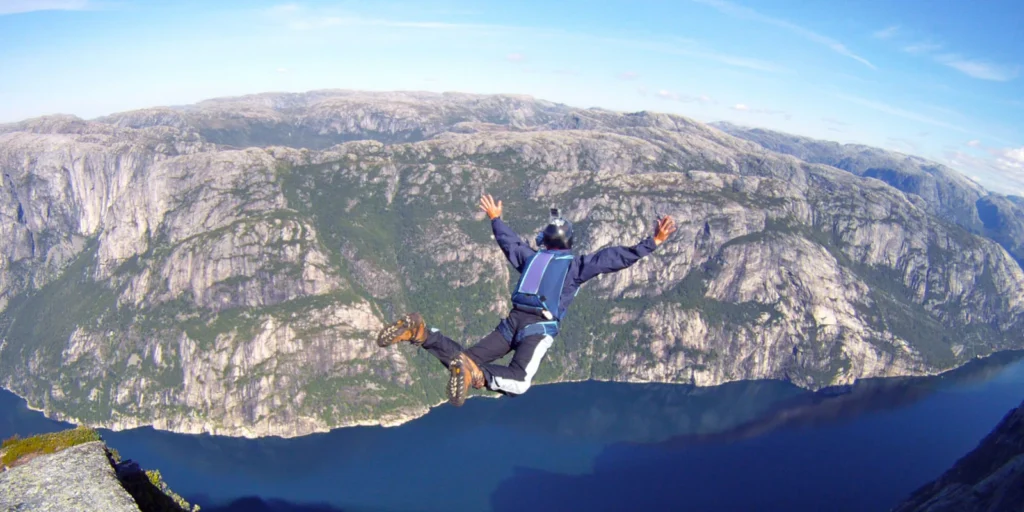
The physics of BASE jumping create a set of risk factors that no amount of skill entirely eliminates. Understanding these factors explains why experienced, careful, well equipped jumpers still die.
Very low altitude: A BASE jump from a 400 foot cliff gives a jumper approximately 3 to 4 seconds before parachute deployment must begin. A skydive from 15,000 feet gives over 60 seconds of freefall. That time difference is the difference between recovering from a problem and hitting the ground with an unopened parachute.
Limited response time: Even a one second delay in parachute opening at BASE jump altitudes can be fatal. A malfunction that a skydiver could address calmly in 30 seconds gives a BASE jumper no time at all.
Fixed object proximity: The exit object itself is an obstacle. Off heading parachute openings, which happen even with perfect equipment, can turn the jumper back toward the cliff or building they just jumped from.
Equipment with no backup system: Skydivers carry a reserve parachute and an automatic activation device (AAD). BASE jumpers typically jump with one parachute only, because at BASE altitudes there is rarely enough time to deploy a reserve even if one is carried.
Weather sensitivity: BASE jump sites are often in mountain environments where wind conditions change rapidly. A 5 mph wind shift between the moment of exit and canopy deployment can push a jumper into the cliff face.
BASE Jumping Deaths: What Causes Most Fatalities?
Analysis of BFL data and published research identifies the following leading causes of BASE jumping fatalities, in approximate order of frequency:
Terrain and object impact during terminal freefall: the most common cause, particularly in cliff jumps where glide path miscalculation puts the jumper into the rock face before the parachute opens.
Subterminal impact near the exit: the jumper strikes the object they jumped from immediately after exit, before achieving freefall speed. Often caused by off heading exits or poor body position.
Late or absent parachute deployment: the jumper fails to pull in time. May be caused by instability, distraction, or equipment malfunction.
Off heading parachute opening: the parachute opens and immediately turns the jumper toward the cliff or object.
Object strike under canopy: the jumper’s parachute has opened but they strike a rock, tree, or cliff while flying to the landing zone.
Skydiving gear used for BASE jumping: several BFL entries involve jumpers using standard skydiving equipment not designed for BASE altitudes. Opening times are too slow.
Proximity wingsuit glide path error: the jumper is flying a wingsuit near terrain and miscalculates the flight line, impacting the ground or cliff at high speed.
Is BASE Jumping Safer Today Than Before?
Parachute technology has improved substantially since the first documented BASE jumping fatality in 1981. Deployment systems are more reliable. Equipment is more purpose built for BASE altitudes. Training programs are more structured. The development of formal first jump courses and mentorship frameworks has raised the baseline skill level of new entrants.
Despite all of this, the annual death count has not fallen significantly. The sport grew in popularity faster than safety improvements reduced per jump risk. The rise of wingsuit BASE and proximity flying introduced a discipline far more dangerous than standard BASE jumping. Social media created incentive to film and share increasingly extreme jump lines, pushing the risk envelope upward even as gear improved.
The net result is a sport where the equipment is safer than ever and the death count remains stubbornly consistent.
BASE Jumping Near Me: Should Beginners Attempt BASE Jumping?
If you have searched for BASE jumping near me or BASE jumping training, you will find courses and programs available in several countries. However, the recommendation from virtually every established BASE jumping instructor and organization is the same: BASE jumping is not a beginner sport.
The minimum preparation expected by serious BASE instructors before a first BASE jump is between 200 and 300 skydives, including intentional canopy control practice, emergency procedure training, and off airport landing experience. Several structured first BASE jump programs exist, including courses run by established instructors in Norway, Switzerland, and the United States.
If you are curious about the aerial experience but not ready for BASE jumping, skydiving provides the fundamental parachute skills that BASE requires, without the extreme risk profile. Start there. Build your skills. The BASE community itself consistently says this.
The BASE Fatality List: What It Is and How It Is Used
The BASE Fatality List (BFL) is a chronological database of BASE jumping fatalities, maintained by the BASE jumping community since 1981 and currently hosted at bfl.baseaddict.com. The list was originally compiled by Nick DiGiovanni (BASE jumper 194) and has passed through several administrators over four decades.
The BFL is not a government document. It is not regulated or verified by any authority. It is a community maintained educational resource. Each entry describes what happened, what caused the accident, and in many cases what the jumper’s experience level was. The explicit purpose is education: helping current jumpers understand what went wrong so they can avoid making the same decisions.
The BFL is not exhaustive. Deaths in countries without active BASE jumping communities, deaths not reported to the community, and deaths where the cause was unclear are often absent. The database is best understood as the minimum documented global count, not the total.
Can BASE jumping be made safer?
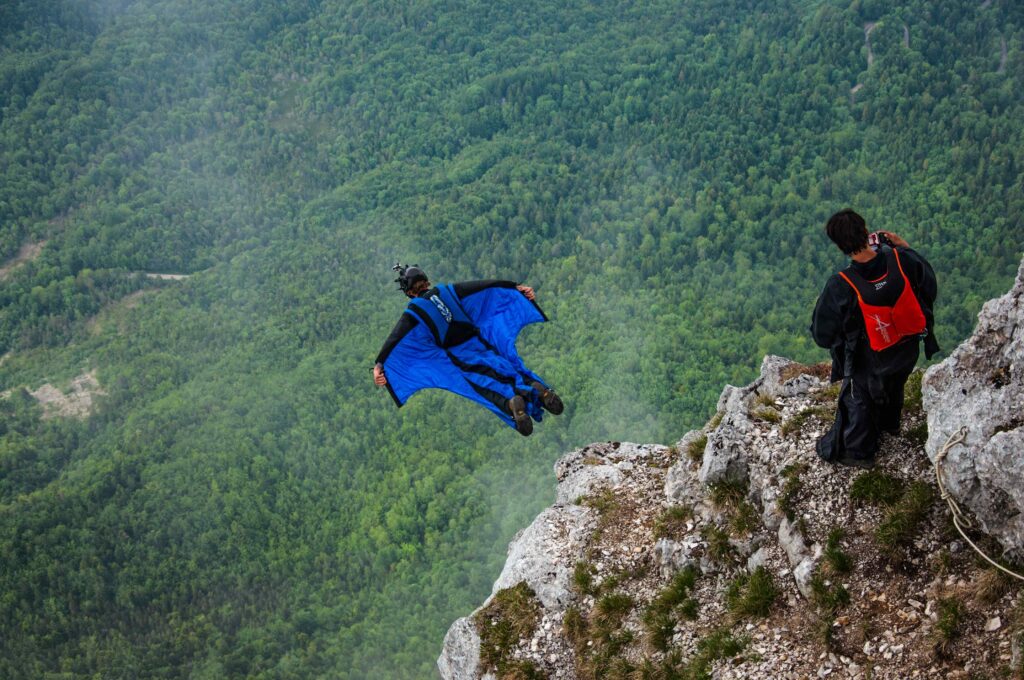
Risk in BASE jumping can be reduced but never eliminated. The factors that make it dangerous are largely physical: altitude, proximity to fixed objects, and single parachute deployment at low heights are not engineering problems that better gear can fully solve.
The most reliable risk reduction strategies identified by the community and published research are:
Progressive training starting with skydiving: building foundational skills before attempting BASE substantially reduces the rate of early career accidents.
Established first jump programs with mentorship: solo first BASE jumps without guidance from an experienced mentor appear disproportionately in BFL early career fatalities.
Conservative site selection: starting with high altitude Earth exits (cliff jumps with generous opening altitude) rather than low buildings or bridges dramatically reduces consequence if something goes wrong.
Strict weather monitoring: most of the European BASE sites that have implemented formal weather checks before allowing jumps have seen reductions in fatality rates at those specific locations.
Community decision making culture: the practice of cancelling a planned jump due to wind, conditions, or a gut feeling with no social pressure to proceed is one of the strongest safety factors in experienced jumping communities.
The sport will never be safe. The question is whether the risk level is acceptable to an individual who understands it fully and prepares for it seriously.
Conclusion
The BASE jumping death rate in 2026 remains one of the highest of any documented recreational activity. The most scientifically grounded figure is 1 death per 2,317 jumps from the Kjerag Massif study, representing a well managed site with experienced jumpers. The broader global estimate across all BASE environments is closer to 1 death per 500 to 1,000 jumps.
Wingsuit BASE jumping is significantly more dangerous than standard BASE, accounting for 61% of all deaths despite being a minority discipline. Bungee jumping, by comparison, averages approximately 1.1 deaths per year globally and carries a fatality rate closer to tandem skydiving than to BASE jumping.
The 2025 BFL data recorded 29 deaths, among the higher annual totals of the past decade. The death rate is not falling, primarily because growth in participation and the rise of proximity wingsuit flying offsets improvements in equipment and training.
For accurate comparison data on skydiving safety, you can explore our full guide on skydiving deaths per year.
Frequently Asked Questions About the BASE Jumping Death Rate 2026
What is the BASE jumping death rate in 2026?
The most precisely studied BASE jumping death rate is 1 fatality per 2,317 jumps, from the Norwegian Kjerag Massif study tracking 20,850 jumps over 11 years (BJSM, 2007). Across all global BASE environments, the broader estimated rate is 1 death per 500 to 1,000 jumps. The BASE Fatality List reported 29 deaths in 2025.
How many people die from BASE jumping per year?
The BASE Fatality List recorded 29 deaths in 2025. Because the BFL is community maintained and not all global deaths are reported, the actual worldwide total is estimated at 33 to 38. Annual recorded BFL deaths between 2018 and 2025 have ranged from 12 (in 2020, the COVID year) to 29 (2025).
How dangerous is BASE jumping compared to skydiving?
Skydiving recorded a fatality rate of 0.35 deaths per 100,000 jumps in 2024 (USPA), equivalent to roughly 1 death per 285,000 jumps. BASE jumping’s estimated rate of 1 death per 500 to 1,000 jumps makes it approximately 285 to 570 times more dangerous per jump than licensed skydiving. Tandem skydiving is even safer at approximately 1 death per 500,000 jumps.
What is the wingsuit flying death rate?
Wingsuit BASE jumping accounts for approximately 61% of all BASE jumping deaths based on data from 2007 to 2017, despite wingsuit BASE being a minority discipline within the sport. Approximately 15 to 18 of the roughly 25 to 30 annual BFL reported deaths involve wingsuit use. The exact per jump fatality rate for wingsuit BASE is not calculable because total wingsuit BASE jump volumes are not tracked.
What is the squirrel suit death rate?
A squirrel suit and a wingsuit are the same garment. The name “squirrel suit” comes from the resemblance to a flying squirrel when the arm and leg panels inflate during flight. All wingsuit BASE fatality statistics apply equally to squirrel suit BASE jumping.
What is the bungee jumping death rate?
Bungee jumping fatality data from 2018 through 2024 shows an average of approximately 1.1 deaths per year globally. The fatality rate per jump is estimated at roughly 1 in 500,000 jumps, comparable to tandem skydiving. No deaths were recorded in 2020. Bungee jumping carries a fundamentally different risk profile from BASE jumping because the equipment is operator controlled, there is no parachute deployment, and the jumper has no decisions to make mid jump.
What do experienced BASE jumpers say about the sport’s risk?
Veteran BASE jumpers, including those active in communities on forums, Reddit, and BASE specific platforms, consistently acknowledge that BASE jumping is dramatically more dangerous than skydiving. Community consensus points to lack of experience as the primary driver of accidents, with most veteran jumpers recommending 200 to 300 skydives as a minimum before attempting a first BASE jump. The community also recognizes that wingsuit proximity flying has increased the sport’s overall death toll.
Can beginners try BASE jumping safely?
No. BASE jumping requires foundational parachute skills that can only be developed through skydiving. Most established BASE jumping instructors and courses require a minimum of 200 to 300 completed skydives before a student is accepted for first BASE jump training. Attempting BASE jumping without this foundation is the single most preventable cause of BASE jumping fatalities, according to BFL pattern analysis.