
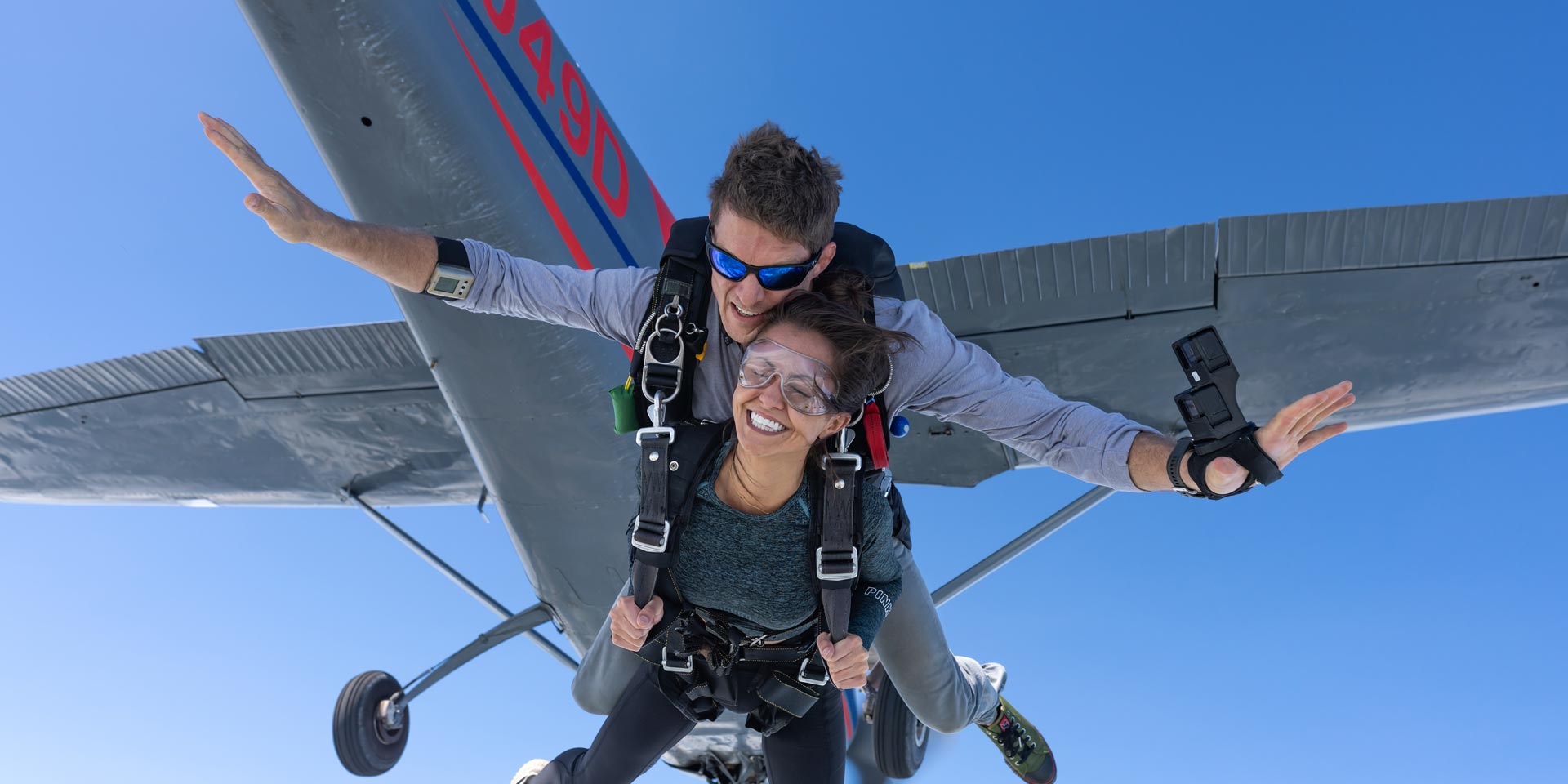
If you are planning to go skydiving, one of the first decisions you will face is whether to choose tandem skydiving or solo skydiving. Both options offer incredible experiences, but they are designed for very different types of people.
This detailed guide compares tandem skydiving vs solo skydiving in terms of safety, cost, training, experience level, and overall enjoyment, so you can choose the option that suits you best.
What Is Tandem Skydiving?
Tandem skydiving is the most popular choice for first-time skydivers.
In a tandem jump:
- You are securely attached to a licensed instructor
- The instructor controls the exit, freefall, parachute deployment, and landing
- You receive a short training briefing before the jump
Tandem skydiving is designed to let beginners enjoy the experience without technical responsibility.
If this is your first jump, read what to expect on your first skydive on SkydiveGuides.com.
What Is Solo Skydiving?
Solo skydiving means jumping independently after completing training and certification.
Solo skydivers:
- Control their own body position
- Deploy their own parachute
- Navigate and land independently
Solo skydiving requires training, licensing, and experience.
To understand the certification path, read how to become a certified skydiver on SkydiveGuides.com.
Key Differences Between Tandem and Solo Skydiving
Experience Level Required
Tandem skydiving requires no prior experience. Anyone who meets age and health requirements can do it.
Solo skydiving requires formal training, practice jumps, and skill evaluation.
Training Time
Tandem skydiving training lasts 20 to 30 minutes.
Solo skydiving training can take days or weeks, depending on progress and weather.
Control During the Jump
In tandem skydiving, the instructor controls everything.
In solo skydiving, you control:
- Body position
- Altitude awareness
- Parachute deployment
- Canopy navigation
Safety Comparison: Tandem vs Solo Skydiving
Is Tandem Skydiving Safer?
Yes, especially for beginners.
Tandem skydiving has:
- Instructor control
- Two parachutes
- Automatic activation devices
- Strict safety procedures
This makes tandem skydiving the safest option for first-time jumpers.
For more detail, read how safe skydiving really is on SkydiveGuides.com.
Is Solo Skydiving Safe?
Solo skydiving is safe when done by trained and certified jumpers.
However, it carries slightly higher risk because:
- The jumper makes decisions
- Human error is possible
- Skill level varies
Training minimizes these risks.
Cost Comparison: Tandem vs Solo Skydiving
Tandem Skydiving Cost
Average tandem skydiving cost worldwide:
- $150–$350 per jump
This usually includes:
- Instructor
- Equipment
- Training briefing
Photo and video packages cost extra.
For a detailed breakdown, read skydiving cost worldwide on SkydiveGuides.com.
Solo Skydiving Cost
Solo skydiving costs more initially.
Typical costs:
- Training and AFF course: $1,500–$3,500
- Additional jumps and gear rental: $500–$1,000
However, the cost per jump becomes cheaper over time once certified.
Which Option Is Better for Beginners?
For beginners, tandem skydiving is clearly the better option.
It allows you to:
- Experience skydiving safely
- Build confidence
- Decide if you want to continue
Most certified skydivers started with a tandem jump.
Which Option Is Better Long-Term?
If you want skydiving to become a regular hobby, solo skydiving is the better long-term choice.
Solo skydiving offers:
- Independence
- Skill development
- Access to advanced disciplines
Emotional Experience: Tandem vs Solo
Tandem Experience
Tandem skydiving focuses on:
- Sensation
- Scenery
- Enjoyment
You can relax and enjoy the moment.
Solo Experience
Solo skydiving focuses on:
- Skill execution
- Awareness
- Precision
The emotional reward comes from mastery and progression.
Fear and Mental Pressure Comparison
Tandem skydiving reduces fear because:
- You are not in control
- The instructor guides you
Solo skydiving requires confidence and calm decision-making.
If fear is a concern, read is skydiving scary on SkydiveGuides.com.
Gear Differences Between Tandem and Solo Skydiving
Tandem skydiving uses:
- Instructor-owned equipment
- Larger parachutes
- Specialized harness systems
Solo skydiving requires:
- Personal or rented gear
- Altimeters
- Helmets
Learn more in skydiving gear for beginners on SkydiveGuides.com.
Can You Switch from Tandem to Solo?
Yes.
Many people:
- Do one tandem jump
- Enroll in training
- Become certified skydivers
Tandem skydiving is often the gateway to solo skydiving.
Tandem vs Solo Skydiving for Travel
Tandem skydiving is easier for travelers because:
- No license required
- Short time commitment
- Available worldwide
Solo skydiving requires:
- License verification
- Logbooks
- Local regulations
If you enjoy combining adventure sports while traveling, you may also explore scuba diving destinations at scoobadiveguide.
Common Myths About Tandem and Solo Skydiving
Myth 1: Tandem Is Not Real Skydiving
Reality: Tandem skydiving is a legitimate skydiving experience.
Myth 2: Solo Skydiving Is Only for Professionals
Reality: Anyone can become certified with training.
Myth 3: Solo Is Always Better
Reality: It depends on your goals.
Frequently Asked Questions About Tandem vs Solo Skydiving
Is tandem skydiving safer than solo?
Yes, especially for first-time jumpers.
Can I do solo skydiving on my first jump?
No. Training is required.
Is solo skydiving cheaper?
Not initially, but it becomes cheaper per jump long-term.
Which is more fun?
Fun depends on whether you prefer thrill or skill.
Can I take photos during solo skydiving?
Yes, after meeting experience requirements.
Final Verdict: Tandem or Solo Skydiving?
If this is your first time, tandem skydiving is the best choice.
If you want skydiving to become a long-term passion, solo skydiving is the ultimate goal.
Both experiences are incredible — the right choice depends on your goals.