
Quick answer
For most tandem jumps, wear snug, comfortable clothes you can move in — closed-toe athletic shoes, no dangling jewelry, and layers you can add or shed depending on the weather. In summer, that might just be a T-shirt and leggings or shorts. In winter, it means a base layer and a light jacket, since it gets noticeably colder at altitude than it is on the ground. Your drop zone will hand you a jumpsuit that goes over whatever you’re wearing, so the goal is comfort and safety underneath, not looking a certain way. In this article, we will discuss in depth what to wear when skydiving.
Why what you wear matters here
Clothing and gear can malfunction and block one another during a skydive, so extra clothing is regulated for safety reasons. Harness straps, altimeter systems, and controls all need to be accessible. Your jump instructor also needs to be able to operate and move freely during a tandem skydive. Wind speed at approximately 100 mph is enough to pull on anything that is loose, flapping, or stringing. Jumpsuits are not about styles, they are about window and door controls. Skydiving is uncomfortable without a proper jumpsuit.
The saved money is not even worth the small amount of discomfort. It is actually quite simple to prepare for a skydive with the proper jumpsuit, because you only need to avoid a short list of materials and wear clothing appropriate for the cold temperature at higher elevations.
The non-negotiables: what not to wear skydiving
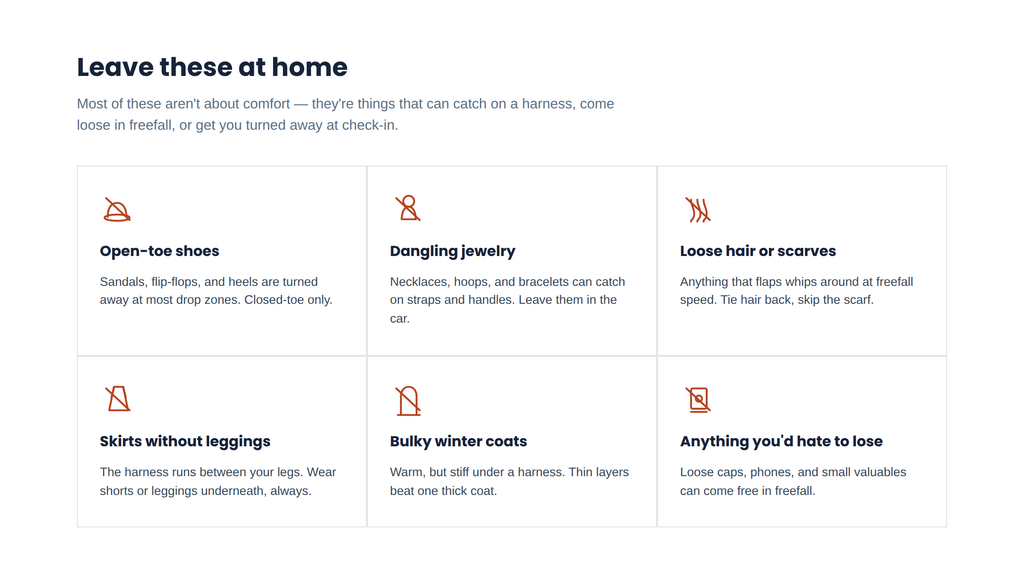
This list matters more than the “what to wear” list, because these are the things that can actually cause a problem or get you turned away at check-in.
- Open-toe shoes, sandals, flip-flops, or high heels. Most drop zones will not let you jump in these — closed-toe shoes are typically a hard requirement, not a suggestion.
- Loose or dangling jewelry. Necklaces, hoop earrings, and bracelets can catch on harness webbing or handles. Leave them in the car or take them off at check-in.
- Scarves, long loose hair worn down, or anything that flaps. At freefall speeds, loose fabric or hair whips around and can be startling or distracting — tie hair back, skip the scarf.
- Skirts or dresses without shorts or leggings underneath. You’ll be strapped into a harness that runs between your legs, and the jumpsuit goes over your clothes — a skirt on its own doesn’t work well with either.
- Bulky or stiff outerwear, like a heavy parka. It’s warm, but it restricts movement and doesn’t fit well under a jumpsuit. Layering is a better solution than one thick layer (more on that below).
- Anything you’d be upset to lose. Pockets get patted down before boarding, but hats, sunglasses without a strap, and small items can and do come loose in freefall.
What to wear skydiving in spring and summer
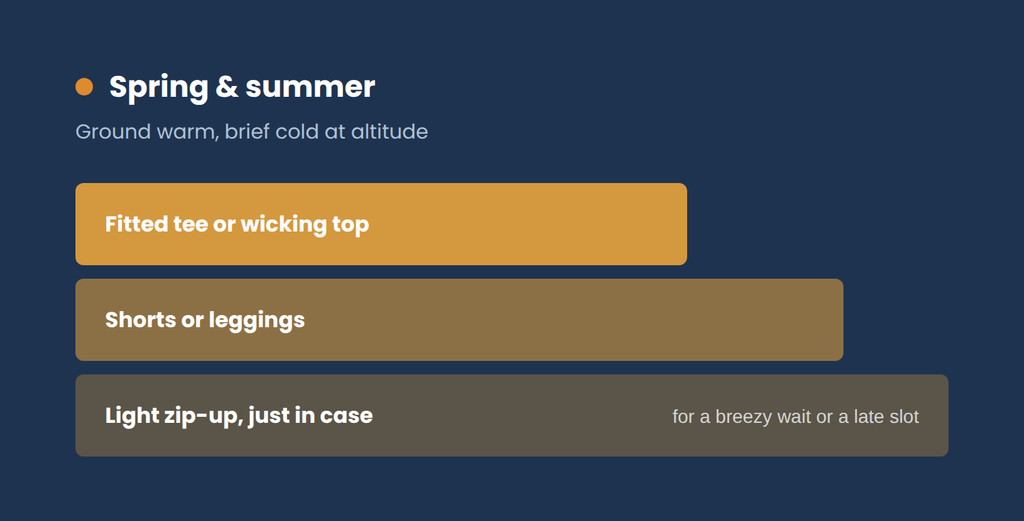
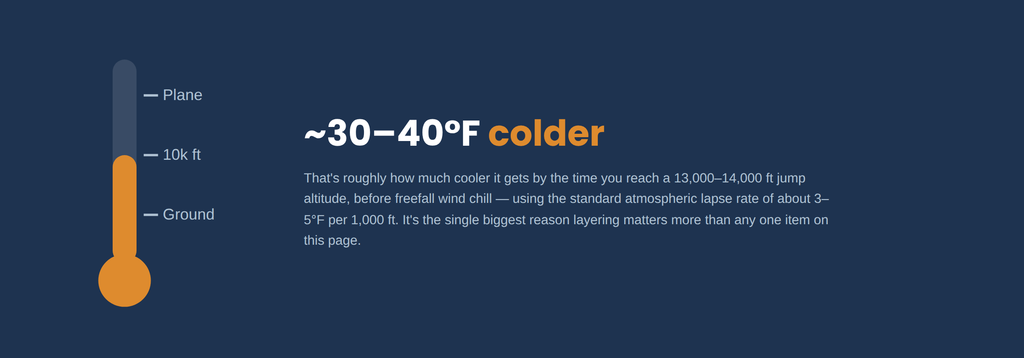
Warm weather skydiving is the easier of the two. You’re going to feel comfortable in shorts and a t-shirt on the ground, but as you climb you will feel the air getting colder, losing around 3 or 5 degrees for every 1000 feet, so a jump from 13,000 feet will put you around 40 degrees cooler than the ground temperature when you add in free fall wind chill. Even so, one layer and the jumpsuit is enough for a summer jump, as the exposure to the cold during the free-fall is short, about 45 to 60 seconds, and most of the wind during free-fall is blocked by the jumpsuit.
A few summer-specific notes:
- Athletic shorts or leggings work better than jeans, which are heavy, slow to dry, and less comfortable under a harness.
- A fitted t-shirt or moisture-wicking top beats a baggy one — less flapping, more comfort.
- Sunscreen, applied before you arrive, since you may be waiting outside for a while before your jump window and there’s no good time to reapply once you’re geared up.
- A light zip-up or pullover is worth bringing even on a hot day, in case there’s a wait at higher, breezier altitude on the ground, or your jump time shifts later into a cooler evening slot.
What to wear skydiving in fall and winter
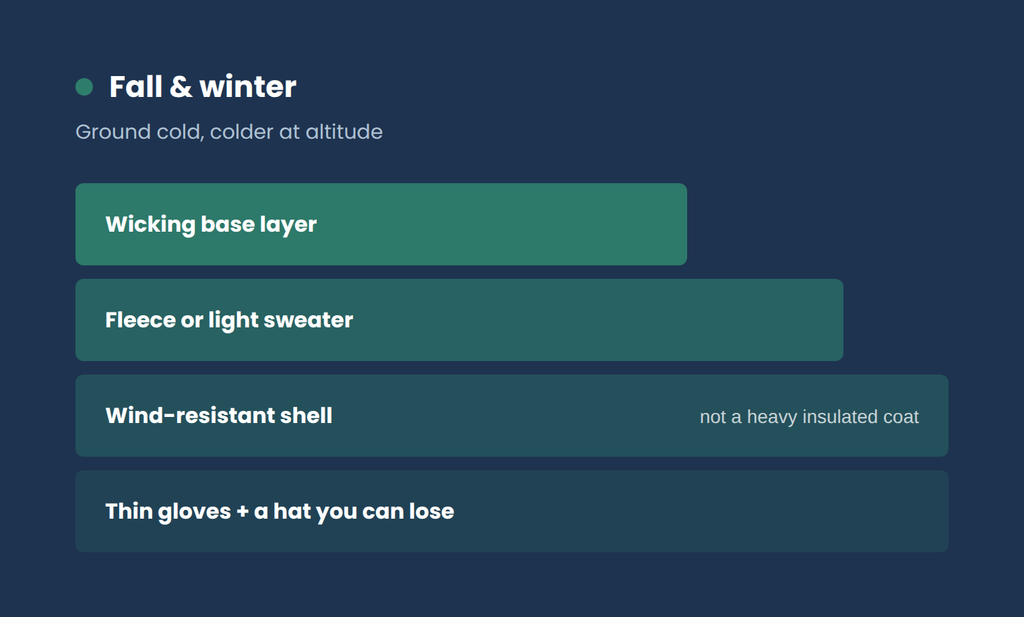
Dressing for cold-weather skydiving is where you learn the hard way that you either dress too much or too little to the dismay of most first-time participants. The solution to cold-weather outdoor activities also applies here, and that’s with layers and not bulk.
- Moisture-wicking base layers (top and bottom) are essential for warmth and comfort. Since cotton gets cold and absorbs sweat quickly, base layers made with either synthetic or merino fibers are a much better option.
- Add a fleece or a light, mid layer sweater on top of the base layers.
- A wind resistant, non bulky outer layer. A softshell jacket should work perfectly, while a heavy insulated outer layer will not properly fit under the jumpsuit and can interfere with your movement.
- Gloves that are not bulky. Bulky gloves will take away from your hand dexterity. Having thin gloves will allow you to move about and work with your straps and camera, if its being utilized.
- A warm hat to wear under your jumpsuit hood, or a hat that you don’t mind losing, since headwear tends to come loose.
These items will help you stay warm and comfortable while you take on your adventure!
One thing to know: because the jumpsuit provided by most drop zones is a single layer designed to fit over street clothes, dressing in efficient layers underneath does more for your comfort than any one heavy piece of clothing.
What goes on underneath the jumpsuit
The jumpsuit is a one-size-fits-all option and is the least important piece. Comfortable clothes are the most important part, and you don’t need any special gear for skydiving.
A moisture-wicking base layer set or socks are a good investment. Most people already have this gear that they can use long after the jump for hiking, skiing, and running. Moisture-wicking socks are a good idea since people get cold from having wet socks and often underdress in cold-weather jumps.
For people who want to support their joints, mild bending in your wrists or knees from being in the arch position or tightness from the harness can cause mild discomfort for some first-time jumpers. Compression sleeves for your wrists or knees are low-cost, low-commitment items that most jumpers never need, so it is a good idea to carry it if you tend to feel joint discomfort from activity the next day.
For people who have a chest harness that is squeezing or sitting too high on your torso, you should wear a sports bra to keep the harness from digging into your lower chest under the harness.
Shoes: the one thing worth getting right
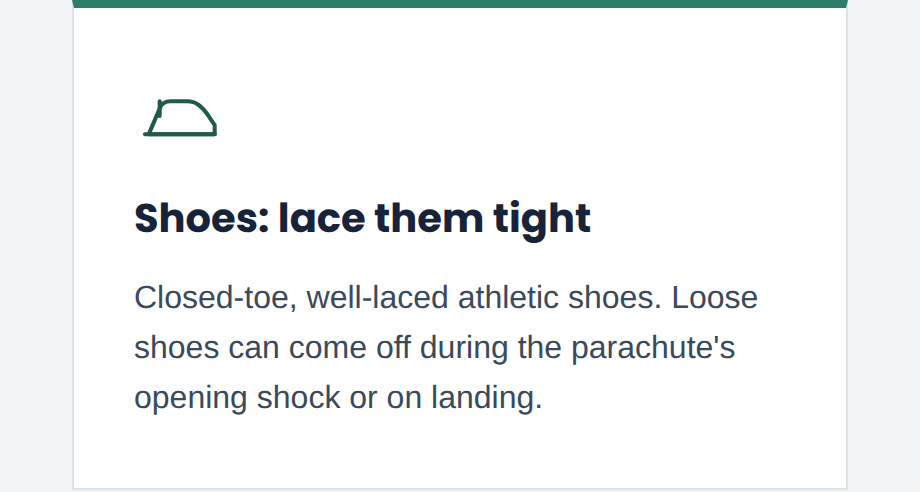
If there’s one clothing decision that can actually stop you from jumping, it’s footwear. Closed-toe, snugly laced athletic shoes are the standard expectation at almost every drop zone, and it’s worth double-checking your specific operator’s policy when you book, since exact rules vary. A few practical notes:
- Lace them well. Loose shoes can come off during the opening shock of the parachute deploying or during landing.
- Avoid tall boots or anything with a stiff sole. They can make it harder to run out a landing.
- Break them in beforehand if they’re new. You’ll be on your feet for a while before and after the jump.
Hair, glasses, and other small details
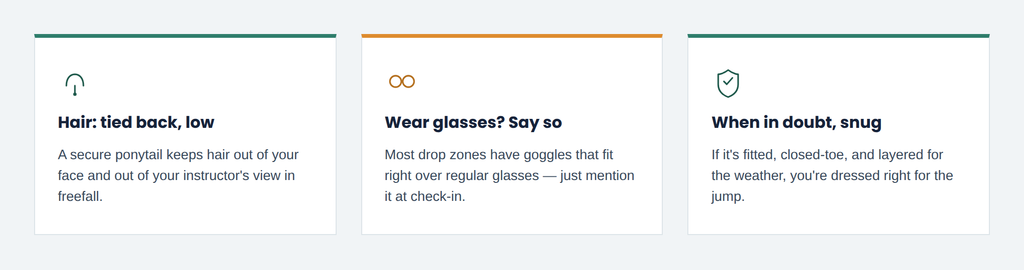
- Long hair: tie it back, low and secure. A ponytail is fine; loose hair whipping in freefall is uncomfortable and can obstruct your (or your instructor’s) view.
- Glasses: most drop zones provide goggles that fit over regular glasses. If you wear glasses, mention it at check-in so staff can fit you properly — this is a routine accommodation, not a special request.
- Contacts: generally fine, though the wind and altitude can dry eyes out; some jumpers prefer glasses with goggles for exactly that reason.
- Makeup: no restriction, but goggles and wind mean it won’t survive the jump looking the same way it did on the ground.
- Piercings: small, flat piercings are usually not an issue; anything that dangles is the same concern as jewelry above.
A few honest outfit tips from people who’ve done this a lot
Picture a person preparing for their first skydive. They are sure to bring along their hoodie and jeans. Even on a 90°F day. The poor soul regrets their decision 20 minutes later as they stand around waiting outside the jump area to get called up. They even lose the hoodie’s drawstrings! The better outfit choice would be shorts, a shirt, and leaving the hoodie in the car until after the jump.
Why does the matter of layering become such a common mistake? Quite frankly, it’s less about how it will keep you warm or cool and more about whether the outfit has things that become a hassle when you’re geared up. Things like drawstrings, big baggy pockets, and sandals that people “just drove” in. The simplest way is to dress as if you are going to an outdoor class that is going to take you over 13,000 feet in the air; clothes that are fitted and appropriate; no loose clothes.
FAQ
Do I need to buy special clothes to go skydiving? No. Regular athletic or outdoor clothing is enough for almost everyone. The drop zone provides the jumpsuit, harness, and any other required safety gear.
Can I wear jeans skydiving? You can, but most people find them less comfortable than leggings or athletic pants — they’re heavier, less flexible, and don’t layer as well in cold weather. They’re not against the rules at most drop zones, just not the most comfortable choice.
What shoes are not allowed for skydiving? Open-toe shoes, sandals, flip-flops, and high heels are turned away at most drop zones. Closed-toe, well-laced athletic shoes are the standard expectation — confirm your specific operator’s policy when you book.
Is it cold when you skydive? It’s colder at altitude than on the ground — often 30–40°F cooler by the time you reach jump altitude, even before freefall wind chill. Dressing in layers, especially in fall and winter, makes a real difference in comfort.
What should I wear skydiving in the winter? A moisture-wicking base layer, a mid layer like a fleece, and a wind-resistant (not bulky) outer layer, plus thin gloves and a hat you’re comfortable losing. Avoid heavy, stiff coats — they don’t fit well under the jumpsuit.
Before you book
Getting dressed for a jump is genuinely one of the smaller things to plan for — most of what matters is comfort, closed-toe shoes, and layering for the season. If you’re still working out the bigger logistics, our tandem skydiving cost guide breaks down what a jump typically runs and what affects the price, and our first-time jumper’s guide covers everything else to expect on the day.
Note on the altitude-temperature figure: The “3–5°F per 1,000 feet” lapse rate is a standard atmospheric science approximation (the environmental lapse rate), not a skydiving-specific statistic — described qualitatively in the article rather than presented as a precise drop-zone measurement.
For the fuller picture beyond what to wear, USPA’s first-time skydiver’s guide covers the safety and equipment basics every tandem student goes through.