
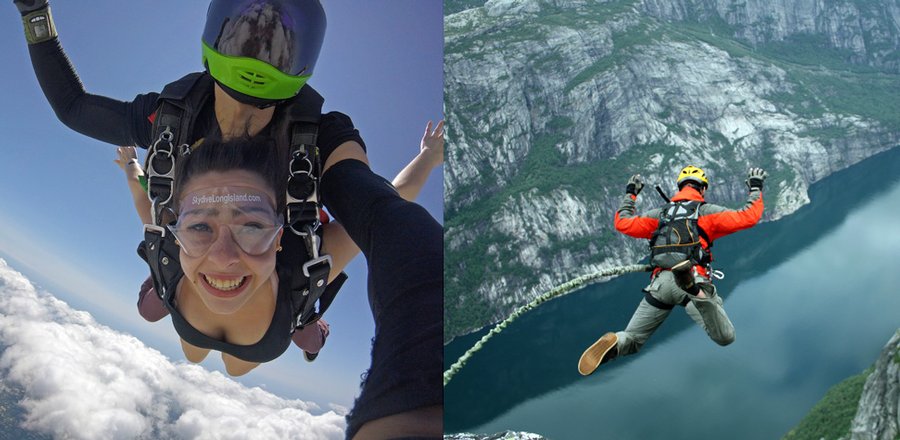
If you’re planning an adrenaline adventure, chances are you’re stuck between skydiving and bungee jumping. Both offer intense thrills, unforgettable views, and a serious rush of adrenaline — but when it comes to safety, many people ask:
👉 Is skydiving safer than bungee jumping?
👉 Which activity has fewer accidents?
👉 What are the real risks involved?
This detailed guide breaks down skydiving vs bungee jumping safety using real-world data, expert insights, and U.S.-based safety standards so you can make a confident decision.
Understanding the Basics: Skydiving vs Bungee Jumping
Before comparing safety, it’s important to understand how both activities work.
Skydiving
Skydiving involves jumping from an aircraft at around 10,000–15,000 feet, freefalling for 30–60 seconds, and landing safely using a parachute. Most first-timers do tandem skydives with a certified instructor.
Bungee Jumping
Bungee jumping involves jumping from a fixed structure (bridge, crane, or platform) while attached to a stretchable cord that slows and rebounds the fall.
Both are regulated adventure sports in the U.S., but their risk factors differ significantly.
Skydiving vs Bungee Jumping Safety: Quick Comparison
| Factor | Skydiving | Bungee Jumping |
|---|---|---|
| Equipment | Parachute + backup | Elastic cord |
| Safety systems | Multiple fail-safes | Limited backup |
| Instructor involvement | Constant (tandem) | Minimal |
| Fatality rate | Extremely low | Slightly higher |
| Training required | Yes | No |
| Medical screening | Required | Rare |
Which Is Safer: Skydiving or Bungee Jumping?
✅ Skydiving Is Statistically Safer
According to aviation and sports safety data, skydiving has a lower fatality rate than bungee jumping, especially in the U.S.
Why Skydiving Is Considered Safer:
✔ Multiple safety systems (main + reserve parachute)
✔ Automatic Activation Devices (AAD)
✔ FAA-regulated aircraft operations
✔ Certified instructors required
✔ Strict weather limitations
In contrast, bungee jumping often relies on:
- A single cord
- Human calculation of cord length
- Less standardized safety checks
Skydiving Safety: What Makes It Reliable?
Modern skydiving is highly regulated in the United States.
Safety Features in Skydiving:
- Dual parachute systems
- Automatic reserve deployment
- Regular gear inspections
- Mandatory instructor certification
- Weather and wind monitoring
According to the United States Parachute Association (USPA), the fatality rate is less than 1 in 200,000 jumps, making it safer than many people assume.
You can read more about overall skydiving safety standards here:
👉 Skydiving Safety Guide
Bungee Jumping Safety: Where Risks Increase
Bungee jumping appears simple, but several risks exist:
Common Bungee Jumping Risks:
- Incorrect cord length calculation
- Equipment wear or failure
- Platform setup errors
- Limited backup systems
- Inconsistent safety regulations
Unlike skydiving, bungee jumping does not always require national certification, especially in tourist locations.
This makes safety standards vary widely depending on the operator.
Injury Comparison: Skydiving vs Bungee Jumping
Skydiving Injuries
- Minor bruises
- Ankle sprains (rare)
- Hard landings (very rare with tandem)
Bungee Jumping Injuries
- Whiplash
- Back injuries
- Rope recoil injuries
- Harness-related trauma
In medical data comparisons, bungee jumping shows a slightly higher injury rate, especially for neck and spine-related issues.
Which Has Better Safety Regulations in the USA?
✅ Skydiving
Skydiving centers in the U.S. follow:
- FAA aircraft regulations
- USPA safety standards
- Instructor licensing
- Mandatory equipment inspections
Bungee jumping regulations vary by:
- State
- Operator
- Location
- Insurance provider
This inconsistency increases risk.
Cost vs Safety: Does Paying More Mean Safer?
Not always — but usually yes.
| Activity | Average Cost | Safety Level |
|---|---|---|
| Skydiving | $200–$350 | Very High |
| Bungee Jumping | $100–$200 | Medium |
Higher skydiving prices usually mean:
- Better equipment
- Certified instructors
- Higher safety standards
Which Is Better for Beginners?
✅ Skydiving Is Safer for First-Timers Because:
- You jump with an instructor
- No technical skill needed
- Equipment is double-checked
- Emergency systems are automatic
Bungee jumping gives you less control and less backup, which increases risk for first-time participants.
Final Verdict: Skydiving vs Bungee Jumping Safety
✔ Skydiving is safer than bungee jumping
✔ Better regulations
✔ Multiple safety systems
✔ Lower fatality rate
✔ Professional supervision
If safety is your priority, skydiving is the better and more reliable choice, especially in the United States.