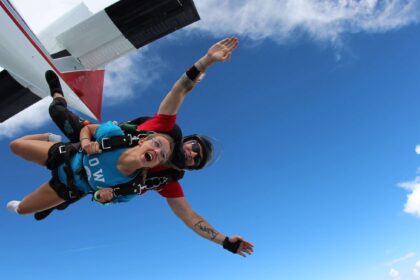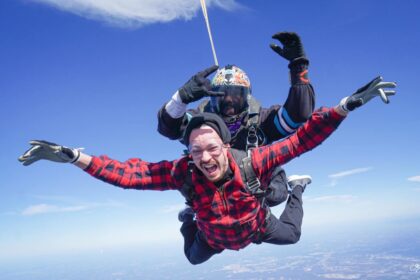

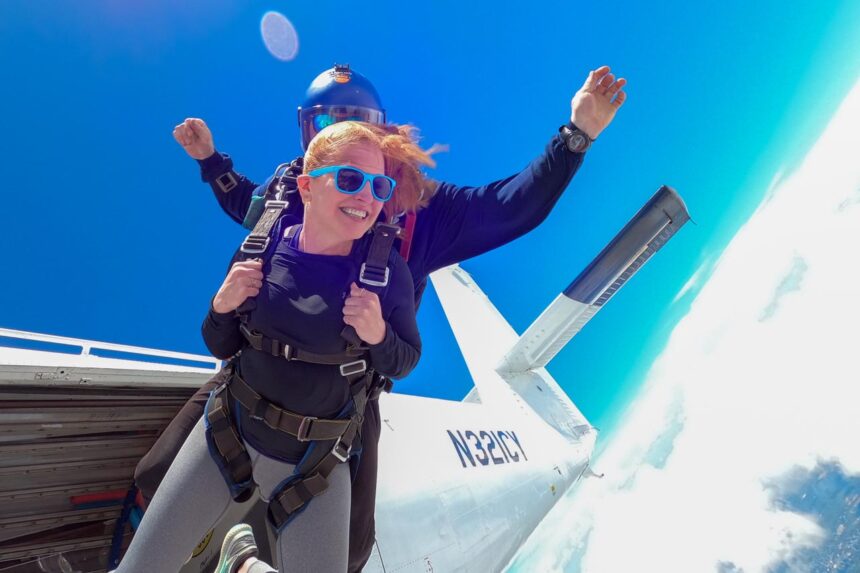
Skydiving is often described as one of the most thrilling experiences in the world — but it also raises an important question in the minds of beginners and travelers:
- Skydiving Death Statistics (USA Overview)
- Skydiving Deaths by Year (Recent Trends)
- Who Is Most at Risk in Skydiving?
- Main Causes of Skydiving Deaths
- Skydiving vs Other Activities (Risk Comparison)
- Is Skydiving Safer Today Than Before?
- What Happens If a Skydiving Accident Occurs?
- Official Skydiving Safety Data Source
- Final Verdict: Should You Be Afraid of Skydiving?
- ✅ Frequently Asked Questions (FAQs)
- 1. How many people die from skydiving each year?
- 2. What are the chances of dying while skydiving?
- 3. Is skydiving safer than driving a car?
- 4. Do most skydiving deaths happen to beginners?
- 5. What causes most skydiving accidents?
- 6. Is tandem skydiving safe for beginners?
- 7. Has skydiving become safer over the years?
- 8. What happens if a skydiving accident occurs?
- 9. Is skydiving safe for people with health conditions?
- 10. Should I be scared of skydiving?
How many people actually die from skydiving each year?
This article breaks down skydiving death statistics in the United States, explains the real risks, compares fatality rates with everyday activities, and answers the most searched questions using verified data and expert insights.
If you’re planning your first jump or just researching safety, this guide gives you the full picture — without fear-mongering or exaggeration.
Skydiving Death Statistics (USA Overview)
According to long-term aviation and parachuting safety data, skydiving fatalities are extremely rare, especially when compared to the number of jumps made each year.
Key Skydiving Death Statistics:
- Average 10–20 fatalities per year in the United States
- Over 3.5 million skydives annually
- Fatality rate: 0.28–0.39 deaths per 100,000 jumps
- Most accidents involve experienced solo jumpers, not beginners
This means your chance of dying while skydiving is less than 1 in 250,000 jumps.
For context, you are statistically more likely to die in a car accident than during a tandem skydive.
Skydiving Deaths by Year (Recent Trends)
While exact yearly numbers change slightly, the overall trend shows:
| Year | Estimated Fatalities | Total Jumps |
|---|---|---|
| 2020 | ~11 | 2.8 million |
| 2021 | ~14 | 3.1 million |
| 2022 | ~20 | 3.5 million |
| 2023 | ~17 | 3.6 million |
| 2024 | ~18 | 3.7 million |
👉 Even as participation increases, fatalities remain low, showing strong improvements in equipment and training.
Who Is Most at Risk in Skydiving?
Contrary to popular belief, first-time tandem jumpers are not the highest risk group.
Highest risk categories:
- Experienced solo jumpers
- High-performance canopy users
- BASE jumpers (not recreational skydivers)
- Improper landing techniques
- Low-altitude turns
Lowest risk group:
✔ First-time tandem skydivers
✔ Jumps with certified instructors
✔ Licensed drop zones
This is why beginner skydiving is considered statistically very safe.
Main Causes of Skydiving Deaths
Most fatalities are not caused by parachute failure.
Common causes include:
- High-speed landing errors
- Improper canopy control
- Low-altitude turns
- Equipment misuse
- Human decision errors
Modern skydiving equipment includes:
- Automatic Activation Devices (AAD)
- Backup parachutes
- Rigorous inspection protocols
Equipment failure alone accounts for less than 5% of fatalities.
Skydiving vs Other Activities (Risk Comparison)
| Activity | Fatality Risk |
|---|---|
| Driving a car | 1 in 8,000 per year |
| Motorcycle riding | 1 in 1,000 |
| Scuba diving | 1 in 200,000 |
| Skydiving | 1 in 250,000 |
| Commercial flying | 1 in millions |
👉 Skydiving is safer than most people assume, especially compared to everyday transportation.
Is Skydiving Safer Today Than Before?
Yes — significantly.
Safety improvements include:
- Advanced parachute systems
- Automatic deployment devices
- Improved instructor certification
- Strict FAA and USPA regulations
- Digital weather monitoring
According to aviation safety data, skydiving today is safer than it was 10 or even 20 years ago.
What Happens If a Skydiving Accident Occurs?
In rare cases of accidents, medical costs can be significant.
To understand who pays medical bills and how insurance works, read this detailed guide:
👉 Who Pays the Hospital Bill After a Skydiving Accident
Official Skydiving Safety Data Source
For verified national statistics, the U.S. Parachute Association publishes annual safety reports:
Final Verdict: Should You Be Afraid of Skydiving?
No — if done correctly.
✔ Skydiving has one of the lowest fatality rates among adventure sports
✔ Tandem jumps are extremely safe
✔ Equipment and training standards are high
✔ Most accidents involve advanced jumpers, not beginners
If you follow professional guidance and jump with a licensed operator, skydiving is statistically very safe.
✅ Frequently Asked Questions (FAQs)
1. How many people die from skydiving each year?
On average, 10–20 people die from skydiving each year in the United States, out of more than 3.5 million jumps annually. This makes skydiving statistically very safe compared to many everyday activities.
2. What are the chances of dying while skydiving?
The chance of dying while skydiving is approximately 1 in 250,000 jumps. For first-time tandem skydivers, the risk is even lower because jumps are supervised by certified instructors.
3. Is skydiving safer than driving a car?
Yes. Statistically, driving a car is far more dangerous than skydiving. Car accidents cause thousands of deaths every year, while skydiving fatalities remain very low in comparison.
4. Do most skydiving deaths happen to beginners?
No. Most skydiving fatalities involve experienced solo jumpers, not first-time tandem jumpers. Beginners are closely supervised and use modern safety equipment.
5. What causes most skydiving accidents?
The most common causes include:
- Improper landing technique
- High-speed turns near the ground
- Human error
- Poor judgment during descent
Parachute failure is extremely rare.
6. Is tandem skydiving safe for beginners?
Yes. Tandem skydiving is considered one of the safest forms of skydiving. The instructor controls the jump, parachute deployment, and landing, greatly reducing risk.
7. Has skydiving become safer over the years?
Yes. Skydiving is much safer today due to:
- Automatic activation devices (AADs)
- Improved parachute technology
- Better training standards
- Stricter safety regulations
Fatality rates have steadily declined over the past two decades.
8. What happens if a skydiving accident occurs?
If an accident occurs, medical treatment is required immediately. In most cases, the diver is responsible for medical expenses, unless covered by special dive insurance or proven negligence by the operator.
9. Is skydiving safe for people with health conditions?
People with heart problems, severe asthma, or blood pressure issues should consult a doctor before skydiving. Some medical conditions may disqualify a person from jumping.
10. Should I be scared of skydiving?
While fear is natural, skydiving is statistically very safe when done with licensed operators. Millions of people skydive every year without incident.