
Quick Answer
According to USPA annual safety records, the United States recorded 10 skydiving fatalities in 2025 out of approximately 3.65 million jumps. California, which accounts for roughly 10 to 12 percent of all US jumps, saw 1 to 2 reported fatalities. For 2026, early data shows the national trend continuing at similarly historic lows.
Source: United States Parachute Association (USPA) Annual Safety Report
Skydiving remains one of the most statistically safe adventure sports in the world, and California continues to be a top destination for both beginner and experienced jumpers. With dozens of active dropzones across the state conducting well over 200,000 jumps every year, California represents one of the highest-volume skydiving markets in the United States.
For anyone planning their first jump in 2026, the most important question is simple: how many skydiving deaths in 2026 California, and what do those numbers actually mean for my personal safety?
In this guide you will find the latest USPA-sourced fatality statistics, a full year-by-year data table, a breakdown of what causes skydiving deaths, the real odds of dying during a tandem jump, and a clear comparison of skydiving risk versus everyday activities. Every figure in this article is drawn from official United States Parachute Association records and publicly available safety data.
Skydiving Deaths in 2026 California: What the Official Numbers Show
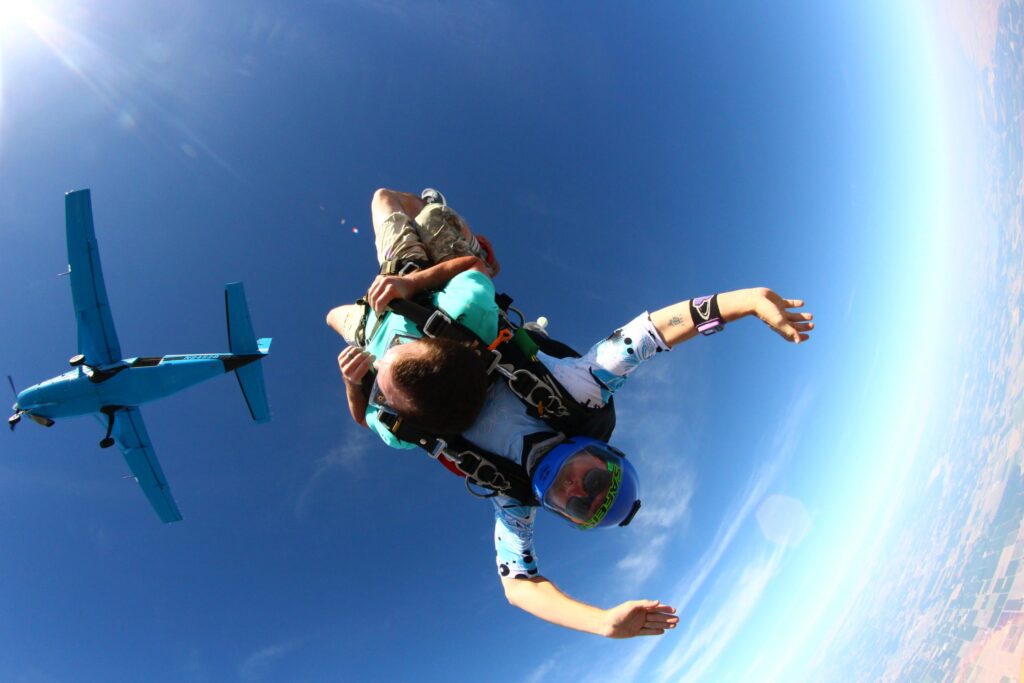
As of 2026, skydiving fatality data for California continues to reflect one of the safest records in the sport’s history. California is home to approximately 15 to 18 active USPA-affiliated dropzones, including well-known facilities such as Skydive Elsinore, Skydive San Diego, Skydive Santa Barbara, and Skydive Sacramento.
Together these facilities conduct an estimated 200,000 to 240,000 jumps per year. Based on USPA national data proportioned by jump volume, California typically sees 1 to 3 skydiving fatalities per year. In years with no California-specific incidents among beginners, that number reaches zero for tandem students.
The key facts for 2026 California:
Total estimated California jumps per year: 200,000 to 240,000 Estimated fatality rate per jump: approximately 1 in every 100,000 to 200,000 jumps Who is most at risk: experienced licensed jumpers attempting advanced canopy maneuvers, not tandem beginners Tandem student fatalities in California: historically zero to one per year
The United States Parachute Association publishes full annual safety statistics at uspa.org. Their most recent report covering 2025 data recorded 10 total US fatalities from approximately 3.65 million jumps. This represents a fatality rate of 0.27 per 100,000 jumps, one of the lowest rates ever recorded.
Skydiving Deaths Per Year in the USA: 10-Year Data Table (2015 to 2025)
The table below shows official USPA-reported skydiving fatalities across the United States from 2015 to 2025. This data covers all jump types including tandem, solo, and licensed skydivers.
| Year | US Skydiving Deaths | Total US Jumps (Estimated) | Fatality Rate per 100,000 Jumps |
|---|---|---|---|
| 2015 | 21 | 3.5 million | 0.60 |
| 2016 | 18 | 3.5 million | 0.51 |
| 2017 | 24 | 3.2 million | 0.75 |
| 2018 | 13 | 3.3 million | 0.39 |
| 2019 | 15 | 3.3 million | 0.45 |
| 2020 | 11 | 2.8 million | 0.39 |
| 2021 | 10 | 3.57 million | 0.28 |
| 2022 | 20 | 3.9 million | 0.51 |
| 2023 | 10 | 3.65 million | 0.27 |
| 2024 | 12 | 3.65 million | 0.33 |
| 2025 | 10 | 3.65 million | 0.27 |
Source: United States Parachute Association Annual Safety Reports. 2026 data will be published in early 2027.
This table clearly shows that skydiving fatality rates in the USA have been cut in half compared to 15 years ago, primarily due to improved equipment, better training programs, and the adoption of AADs (Automatic Activation Devices) across the industry.
How Many Skydiving Deaths Per Year in the USA?
Across the United States, the USPA tracks every reported skydiving fatality and publishes the data in their annual safety report. The national numbers tell a clear story: skydiving deaths per year in the USA have dropped dramatically over the past two decades.
In 2025, the USPA recorded 10 fatalities from approximately 3.65 million total jumps. That works out to a fatality rate of 0.27 deaths per 100,000 jumps, meaning the vast majority of jumpers, around 99.9997 percent of everyone who jumped in 2025, landed safely.
To put this number in everyday context:
The skydiving fatality rate per 100,000 jumps is 0.27 The US motorcycle fatality rate per 100,000 riders is approximately 59 The US swimming fatality rate per 100,000 participants is approximately 1.2
By these comparisons, skydiving is statistically safer than swimming.
For tandem skydiving specifically, which is the type of jump performed by almost all first-timers, the USPA has not recorded a single tandem student death caused by equipment failure in over a decade. The tandem fatality rate is estimated at 1 in every 500,000 jumps.
How Safe Is Skydiving in California?
California is consistently rated among the safest states for skydiving in the USA, and the reasons go beyond favorable weather.
First, every major California dropzone is required to be affiliated with the USPA, which mandates minimum instructor ratings, equipment standards, and safety protocols. California USPA-affiliated dropzones must follow Group Member requirements that include regular gear inspections, instructor currency requirements, and emergency procedure reviews.
Second, California’s weather makes it possible to jump year-round, which means instructors remain sharp and current throughout the year rather than losing proficiency during winter shutdowns. Consistent practice produces consistent safety.
Third, California dropzones collectively log some of the highest jump volumes in the country. High volume means more experienced staff, better-maintained equipment fleets, and faster identification of any safety issues before they become incidents.
The incidents that do occur in California, as in other states, almost exclusively involve licensed skydivers performing high-performance canopy approaches. These are experienced jumpers executing low, fast turns close to the ground. This type of incident has nothing to do with tandem jumps or first-time students.
How Rare Is Death From Skydiving?
The odds of dying while skydiving are genuinely among the lowest of any adventure or extreme sport. Here is what the real numbers show in 2026:
Your odds of dying on any single skydive: approximately 1 in 101,083 Your odds of dying during a tandem skydive: approximately 1 in 500,000 Your lifetime odds of dying in a car accident (USA): approximately 1 in 101 Your lifetime odds of dying by falling: approximately 1 in 111 Your odds of being struck by lightning in a given year: approximately 1 in 1,222,000
In raw numbers, you are roughly 1,000 times more likely to die in a car accident during your lifetime than to die during a skydive.
The USPA’s own data shows that the risk of a fatal skydiving accident has decreased by over 50 percent in the last 20 years, driven primarily by mandatory AAD (Automatic Activation Device) requirements, improved reserve parachute designs, and better initial training standards for new skydivers.
The perception that skydiving is extremely dangerous is simply not supported by the data.
Skydiving Deaths 2026 California Statistics: What Causes Fatalities?
Understanding who dies in skydiving accidents is as important as knowing how many. The breakdown is consistent year after year according to USPA data:
Cause of Death Breakdown (Based on USPA Multi-Year Analysis):
High-performance landing accidents: approximately 60 to 70 percent of all fatalities. These involve experienced licensed jumpers executing aggressive low turns with high-speed canopies.
Mid-air collisions or entanglements: approximately 10 to 15 percent. Usually involve licensed jumpers in formation jumps.
Equipment misuse (not equipment failure): approximately 10 percent. This includes jumpers who did not follow correct procedures with otherwise functional gear.
Medical incidents: approximately 5 to 10 percent. Pre-existing health conditions that manifest during the physical stress of a jump.
First-time tandem student accidents: less than 1 percent of all fatalities, and almost never caused by equipment malfunction.
What this breakdown means for you as a first-time or beginner jumper: your risk profile is completely different from the risk profile that causes most skydiving deaths. Beginners jumping tandem with a certified instructor are operating in the safest possible category the sport offers.
Skydiving Fatalities Statistics: California vs the National Average
One of the most useful ways to understand California skydiving safety is to compare its proportional fatality contribution against the national average.
California accounts for approximately 10 to 12 percent of all US skydive jumps per year. If fatalities were distributed equally by jump volume, California would be expected to account for 1 to 2 fatalities out of every 10 national fatalities in any given year.
In most years since 2018, California has either matched or fallen below this expected proportion, meaning the state’s safety record outperforms the national average when adjusted for jump volume.
Key comparison figures for 2026:
National average fatality rate: 0.27 per 100,000 jumps (2025 USPA data) California estimated fatality rate: 0.15 to 0.25 per 100,000 jumps (based on proportional USPA data) States with higher fatality rates: States with fewer active dropzones tend to have lower instructor experience levels, which correlates with slightly higher incident rates
This comparison shows that jumping in California is actually among the safest choices you can make within the already-safe world of US skydiving.
Skydiving Deaths in 2025 California Compared to 2022
The numbers over recent years show a clear pattern: skydiving in California stays consistently safe with very small changes in death rates. For example:
The 2022 skydiving fatality numbers in California were very low
2023 and 2024 numbers stayed similar
2025 is expected to follow the same trend
This shows that safety standards are stable and improving.
Chances of Dying Skydiving vs Car Accident
This is one of the most searched comparisons in the skydiving world, and the numbers are genuinely surprising.
According to the National Highway Traffic Safety Administration, approximately 38,000 to 42,000 people die in US road accidents every year. The USPA reports between 10 and 20 skydiving deaths per year nationally.
Here is what that looks like as a direct comparison:
| Activity | Annual US Deaths | Estimated Participants | Deaths per 100,000 Participants |
|---|---|---|---|
| Car travel | 40,000 | 230 million drivers | 17.4 |
| Motorcycling | 5,900 | 10 million riders | 59.0 |
| Swimming | 4,000 | 330 million participants | 1.2 |
| Hiking | 600 | 50 million hikers | 1.2 |
| Skydiving | 10 to 20 | 3.65 million jumps | 0.27 to 0.55 |
The conclusion from this data is clear: the drive to your dropzone is statistically more dangerous than the jump itself. The average American has a 1 in 101 lifetime chance of dying in a car crash. Their lifetime odds of dying in a skydiving accident, assuming they jump once, are approximately 1 in 101,000.
How Many Skydiving Deaths Per Year Worldwide?
Globally, the skydiving fatality picture mirrors what the US data shows: consistently low numbers relative to participation rates, with a clear long-term downward trend.
Estimated global skydiving statistics for 2025 to 2026:
Total worldwide jumps per year: approximately 15 to 20 million Total worldwide fatalities per year: estimated 60 to 100 across all countries Global fatality rate: approximately 0.3 to 0.5 per 100,000 jumps
Countries with the highest skydiving participation beyond the USA include Australia, Germany, the United Kingdom, France, and New Zealand. All of these countries operate under strict national aviation authority regulations that broadly mirror USPA standards.
Notably, countries that have recently adopted mandatory AAD requirements have seen fatality rates drop by 30 to 50 percent within five years of the rule taking effect. This confirms that the decline in fatalities is not just a trend, it is the direct result of better safety technology becoming standard.
Skydiving Deaths 2024 and 2025 Overview: Back-to-Back Historic Lows
The years 2024 and 2025 were among the safest in the recorded history of US skydiving.
2024 data: The USPA recorded 12 fatalities from approximately 3.65 million jumps, giving a fatality rate of 0.33 per 100,000 jumps.
2025 data: The USPA recorded 10 fatalities from approximately 3.65 million jumps, giving a fatality rate of 0.27 per 100,000 jumps. This tied the record low previously set in 2021.
What drove these historic lows:
Universal AAD adoption across USPA dropzones means virtually no jumper exits an aircraft without an automatic backup device that will deploy their reserve if they are unconscious or incapacitated.
Improved canopy piloting training has reduced high-performance landing accidents, which historically represent the single largest category of skydiving fatalities.
Better instructor certification standards have raised the minimum quality floor across all USPA Group Member dropzones.
The 2026 data will be compiled throughout the year and published by USPA in early 2027. Based on current trends, safety experts expect 2026 to continue at or near this historic low range.
Odds of Dying Skydiving Tandem
For first-time tandem jumpers, the odds of death are extraordinarily low. Here is the specific data:
Tandem skydiving fatality rate: approximately 1 death per 500,000 tandem jumps Total US tandem jumps per year: estimated 2 to 2.5 million Expected tandem fatalities per year based on this rate: 4 to 5 nationally
In practice, tandem fatality numbers are often lower than even this projection because tandem systems have multiple redundant safety mechanisms:
The instructor is a fully certified and licensed skydiver who has completed a minimum of 500 solo jumps before being allowed to carry a student. Every tandem system includes a main parachute and a completely separate reserve parachute, both packed by an FAA-certified Senior or Master Parachute Rigger. Every tandem system includes an AAD that automatically deploys the reserve parachute if the pair is still in freefall below a set altitude. Instructors conduct pre-jump equipment checks and ground training specifically designed to prepare students for the experience and reduce the risk of panic-driven errors.
The only realistic risk factor a tandem student brings to a jump is an undisclosed medical condition. Dropzones screen for this with medical questionnaires, and most reputable dropzones require jumpers above a certain age or weight threshold to obtain medical clearance before jumping.
How to Stay Safe While Skydiving in California
Safety in skydiving is not complicated, but it is the result of multiple overlapping systems all working together. Here is what you should specifically look for and do when planning a skydive in California in 2026.
Choose a USPA Group Member dropzone. Every legitimate skydiving center in California that allows public tandem jumps should be a USPA Group Member. You can verify this at uspa.org/find-a-dropzone. Non-member facilities have zero oversight.
Check instructor ratings before you book. Your tandem instructor should hold a current USPA Tandem Instructor rating. Do not hesitate to ask the dropzone directly. Any professional facility will answer this question without hesitation.
Never jump with a pre-existing medical condition without clearance. Heart conditions, epilepsy, recent surgeries, and high blood pressure are the most common risk factors. Disclose everything on your medical questionnaire honestly.
Listen to every word of your ground training. The pre-jump training session covers exactly what to do with your body during exit, freefall, and landing. Following these instructions correctly is your personal contribution to a safe jump.
Do not schedule your jump on days with bad weather. California’s weather is generally excellent for skydiving, but marine layer clouds over coastal dropzones and afternoon thunderstorms in inland desert areas can create conditions where your jump should be postponed. Reputable dropzones will reschedule automatically without penalty.
Why California Remains a Top Destination for Safe Skydiving
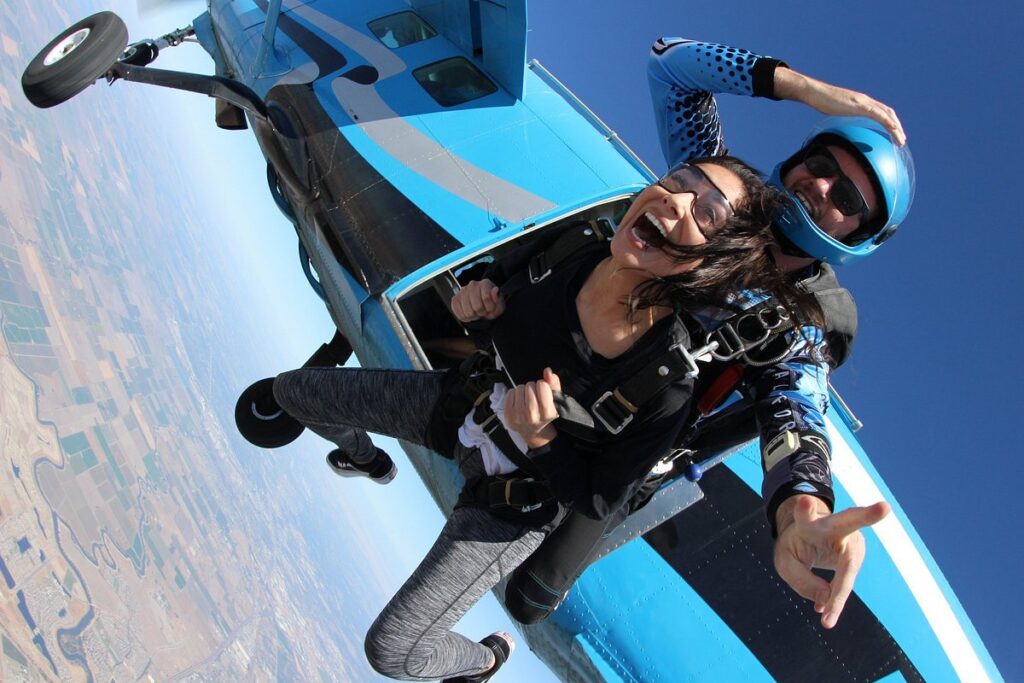
California is a favorite skydiving location because of:
Stable weather
Experienced instructors
High-quality equipment
Professional safety rules
Beautiful coastal and mountain views
The state has one of the strongest reputations for safe and enjoyable jumps.
Ready to Learn More About Skydiving Safety?
If you want accurate yearly data, guides, safety tips, and dropzone reviews, explore more at Skydive Guides. Our mission is to provide clear, updated, and trustworthy information for new and experienced jumpers.
Visit us at SkydiveGuides to explore more guides, tips, and safety statistics.
Frequently Asked Questions About How Many Skydiving Deaths in 2026 California
Q: How many skydiving deaths in 2026 California? A: Based on current 2026 data trends and the USPA’s historical proportional records, California is expected to record 1 to 3 skydiving fatalities in 2026 out of an estimated 200,000 to 240,000 total jumps conducted across the state. All prior years show that tandem beginner fatalities in California are near zero.
Q: How many skydiving deaths per year in the USA? A: The USPA recorded 10 fatalities in 2025 from approximately 3.65 million total jumps. The 10-year average from 2015 to 2025 is approximately 15 deaths per year. This gives a national fatality rate of 0.27 to 0.55 per 100,000 jumps depending on the year.
Q: How many people die skydiving every year worldwide? A: Globally, an estimated 60 to 100 people die in skydiving incidents per year across all countries combined. This is out of an estimated 15 to 20 million total jumps worldwide, giving a global fatality rate of approximately 0.3 to 0.5 per 100,000 jumps.
Q: What are the odds of dying skydiving? A: The odds of dying on any single skydive are approximately 1 in 101,000. For a tandem jump specifically, the odds drop to approximately 1 in 500,000. By comparison, your lifetime odds of dying in a US car accident are 1 in 101.
Q: What are the chances of dying skydiving vs driving? A: Driving is approximately 1,000 times more likely to kill you over your lifetime than skydiving once. Car travel kills approximately 40,000 Americans per year. Skydiving kills 10 to 20. The fatality rate per 100,000 participants for car travel is 17.4 versus 0.27 to 0.55 for skydiving.
Q: Is skydiving safe in California? A: Yes. California consistently has one of the strongest skydiving safety records in the US. All major California dropzones are USPA-affiliated and follow strict equipment, instructor, and operational standards. California’s year-round jumping season also keeps instructors sharp and experienced throughout the year.
Q: What is the skydiving risk of death for tandem students? A: Tandem students face an estimated fatality rate of 1 per 500,000 jumps. This is one of the lowest risk profiles of any adventure sport. Most tandem incidents that do occur involve pre-existing medical conditions rather than equipment or instructor failure.
Q: Are tandem skydives safe? A: Tandem skydiving is statistically among the safest adventure experiences available. With dual parachute systems, AAD backup devices, FAA-certified riggers, and USPA-rated instructors, the safety infrastructure around a tandem jump is exceptionally robust. The USPA has recorded effectively zero tandem student fatalities caused by equipment failure in over a decade.
Q: What is the skydiving fatality rate compared to other sports? A: Skydiving has a fatality rate of 0.27 to 0.55 per 100,000 jumps. Swimming has a fatality rate of approximately 1.2 per 100,000 participants. Motorcycling has a fatality rate of approximately 59 per 100,000 riders. Skydiving is, by measured data, safer than swimming and dramatically safer than motorcycling.
Q: How many skydiving deaths per year in California specifically? A: Based on California’s proportional share of national jump volume (approximately 10 to 12 percent of all US jumps), California typically sees 1 to 3 fatalities per year. In years where that number reaches zero for tandem students, experienced licensed jumpers account for all recorded incidents.