
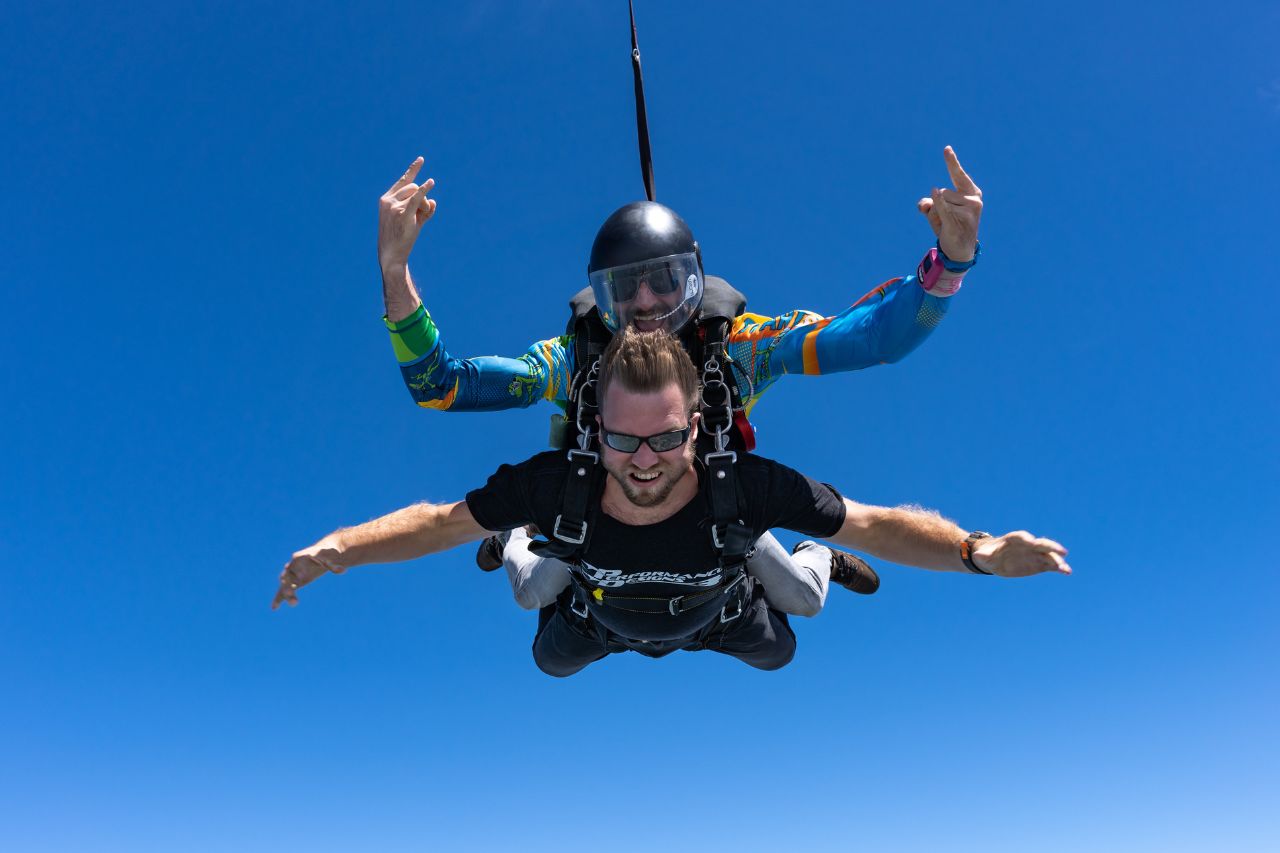
Skydiving has long been considered one of the most thrilling adventure sports in the world. The idea of jumping from an aircraft thousands of feet above the ground naturally sounds dangerous. However, when you look at the skydiving safety record over time, the data shows a very different picture.
Over the past several decades, skydiving has become dramatically safer due to improvements in parachute technology, professional training standards, and aviation safety regulations. Today, millions of skydives take place every year with extremely low accident rates.
This article explores how skydiving safety has evolved over time and why modern skydiving is considered far safer than in the past.
Quick Answer: Has Skydiving Become Safer Over Time?
Yes. The skydiving safety record has improved significantly over the last 50 years.
Modern statistics show:
| Year | Estimated Fatalities | Safety Trend |
|---|---|---|
| 1970s | Much higher accident rates | Limited technology |
| 1990s | Improved safety standards | Better training |
| 2010s | Very low fatality rates | Modern equipment |
| 2020s | Extremely safe | Advanced safety systems |
Today the fatality rate is estimated at roughly 1 death per 200,000 jumps, making skydiving one of the safest extreme sports.
For a deeper breakdown of these numbers, see our article on skydiving accidents per million jumps.
Early Years of Skydiving Safety
In the early days of skydiving, safety systems were far less advanced than they are today.
Limited Equipment Technology
Early parachutes were less reliable and lacked many of the safety systems used today. Skydivers typically carried only a single parachute, and equipment inspections were less standardized.
Minimal Training Programs
Training standards were not as structured as they are now. Many skydivers learned through informal instruction, which increased the risk of mistakes.
Because of these limitations, accident rates were significantly higher during the early decades of skydiving.
Major Safety Improvements in Modern Skydiving
Over time, several major innovations transformed the safety of skydiving.
Dual Parachute Systems
Modern skydivers carry two parachutes:
- main parachute
- reserve parachute
If the main canopy fails, the reserve parachute provides a critical backup.
Our guide on skydiving equipment explained explores these systems in detail.
Automatic Activation Devices
Automatic Activation Devices (AADs) automatically deploy the reserve parachute if the skydiver fails to deploy one at a safe altitude.
This technology has saved many lives and greatly improved the sport’s safety record.
Professional Instructor Certification
Today, skydiving instructors must complete extensive training programs before teaching students.
Most beginners experience skydiving through tandem jumps, where an instructor controls the jump and landing.
Our article on skydiving instructor training explains how instructors become certified.
Modern Skydiving Safety Statistics
Modern safety data shows that skydiving has become much safer compared with previous decades.
| Statistic | Estimated Data |
|---|---|
| Annual skydives worldwide | 6–7 million |
| Fatal accident rate | ~1 per 200,000 jumps |
| Survival rate | 99.99%+ |
| Serious injuries | extremely rare |
You can explore these statistics further in our guide on odds of dying while skydiving.
Why Skydiving Appears More Dangerous Than It Is
Even though statistics show skydiving is relatively safe, many people still perceive it as extremely risky.
Psychological Perception of Risk
Humans naturally fear falling from great heights, which makes skydiving appear more dangerous than activities like driving.
Our guide on skydiving fear psychology explains this phenomenon.
Media Coverage
Skydiving accidents often receive significant media attention, which can make them appear more common than they actually are.
In reality, accidents represent only a tiny fraction of total jumps performed.
Skydiving Safety Compared With Other Activities
When compared with other activities, skydiving often has a surprisingly strong safety record.
| Activity | Relative Risk |
|---|---|
| Skydiving | very low per jump |
| Driving | higher risk |
| Motorcycling | much higher risk |
| Mountain climbing | higher risk |
Our article on skydiving risk vs driving statistics provides a deeper comparison.
How Technology Continues to Improve Safety
The skydiving industry continues to adopt new technology that further reduces risk.
Recent innovations include:
- advanced parachute materials
- digital altimeters
- improved harness systems
- enhanced training simulations
You can learn more about these innovations in our guide on skydiving gear technology.
The Typical Skydiving Process Today
Modern skydiving operations follow strict procedures designed to maximize safety.
A standard skydive includes:
- safety briefing
- equipment inspection
- aircraft ascent
- freefall
- parachute deployment
- controlled landing
Our guide on skydiving experience timeline explains each stage in detail.
Conclusion
The skydiving safety record over time clearly shows how far the sport has progressed. Advances in technology, improved training programs, and strict safety regulations have dramatically reduced accident rates over the past several decades.
Today, with survival rates exceeding 99.99% per jump, skydiving is considered one of the safest extreme sports available. Understanding the historical safety improvements helps highlight how modern skydiving continues to protect participants while delivering one of the most exciting experiences in adventure sports.
FAQs
Has skydiving become safer over time?
Yes. Advances in technology and training have significantly improved skydiving safety over the past several decades.
What is the current fatality rate in skydiving?
The estimated fatality rate is roughly 1 death per 200,000 jumps.
What safety systems do skydivers use today?
Modern skydivers use dual parachutes, automatic activation devices, digital altimeters, and advanced harness systems.
Is skydiving safe for beginners?
Yes. Tandem skydiving with certified instructors is considered the safest way for beginners to experience the sport.
Why do people think skydiving is dangerous?
The extreme nature of the activity and media coverage of accidents can make the sport appear riskier than it actually is.