

It is the question almost every first-time skydiver thinks about but feels a little embarrassed to ask out loud. What actually happens if the parachute does not open? Is it as catastrophic as it sounds? And does it happen as often as nervous first-timers imagine?
The honest answer is that parachute failures are far rarer than most people think, and modern skydiving in 2026 has multiple safety systems in place specifically to handle the rare cases when something does go wrong. This guide breaks it all down — how parachutes work, what a malfunction actually looks like, what happens next, and what the real statistics say about parachute safety today.
How a Modern Skydiving Parachute System Works
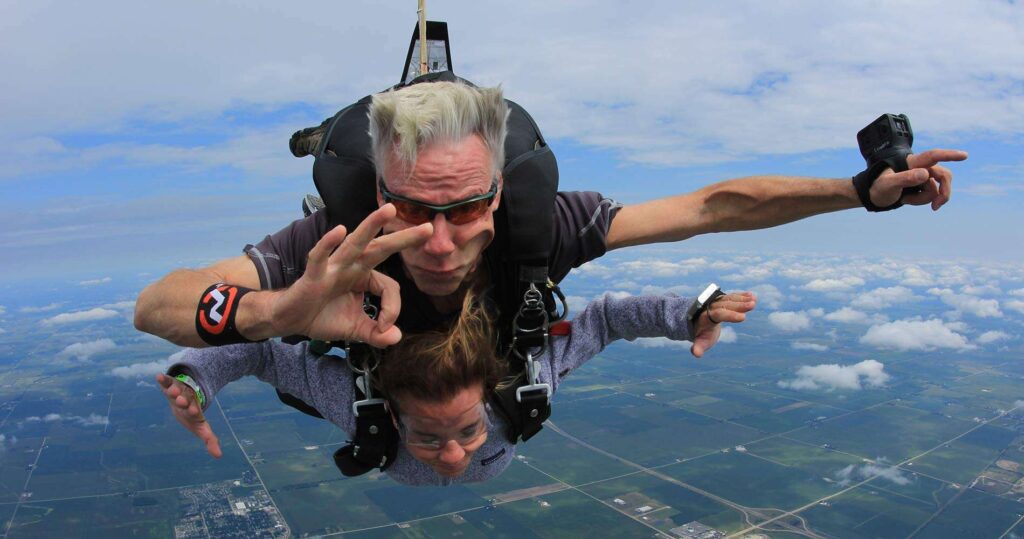
Before we talk about failures, it helps to understand what is actually on a skydiver’s back. Most people imagine one parachute. In reality, every skydiving rig carries two.
The main parachute is the primary canopy that deploys first. It is the large, steerable rectangular canopy that you see gliding smoothly down to the landing area. Packed separately above the main is the reserve parachute — a completely independent canopy that is only used if the main has a problem.
Alongside these two canopies, every modern rig also contains an Automatic Activation Device, or AAD. This is a small electronic computer that monitors altitude and speed throughout the jump. If it detects that a skydiver is still falling at freefall speed below a certain altitude — usually around 750 feet above the ground — it automatically fires the reserve parachute without the skydiver needing to do anything at all. Devices like the Cypres and Vigil AADs are standard equipment at virtually every USPA-affiliated drop zone in the world today.
This three-layer system — main parachute, reserve parachute, and automatic activation device — is exactly why skydiving is far safer than most people assume when they first think about it.
What Is a Parachute Malfunction?
A parachute malfunction does not always mean the parachute simply does not open at all. In fact, a complete non-deployment — called a total malfunction in skydiving terminology — is one of the rarest outcomes. More commonly, a malfunction means the main parachute opens but does not open correctly.
There are several types of parachute malfunctions that skydivers train extensively to recognise and respond to. A line twist happens when the suspension lines get wrapped around each other after deployment, preventing the canopy from flying properly. A partial deployment, sometimes called a bag lock, occurs when the parachute starts to come out of its container but does not fully inflate. A streamer or cigarette roll is when the parachute deploys but inflates in a long, thin shape instead of a proper canopy, providing very little drag.
Each of these malfunctions has a specific trained response. Licensed skydivers spend significant time during their AFF skydiving training learning emergency procedures — specifically, how to identify a malfunction, cut away the main parachute using a dedicated handle, and immediately deploy the reserve parachute. The entire cutaway and reserve deployment sequence takes about three to five seconds when practiced correctly and regularly.
How Common Are Parachute Failures in 2026?
This is where the real numbers are reassuring. According to the United States Parachute Association, approximately one in every 750 to 1,000 skydives involves some kind of malfunction requiring the reserve to be deployed. That might sound frequent at first — but the vast majority of these are partial malfunctions that are resolved safely with a cutaway and clean reserve deployment.
Fatal accidents directly caused by parachute equipment failure are extremely rare. The USPA consistently reports that the overall skydiving fatality rate in the US is roughly 1 per 100,000 jumps for all skydiving combined. For tandem skydiving specifically — which is what all first-time jumpers do — the rate is significantly lower still, because a professional instructor with years of emergency training is fully in control of all equipment at every moment.
Most skydiving fatalities, when they do occur, are related to human error during canopy flight by experienced licensed jumpers — not equipment failures during tandem student jumps.
What Happens During a Tandem Malfunction Specifically?
For first-time tandem jumpers, this question is especially relevant since you are not in control of any of the equipment — your instructor is, completely.
Tandem instructors train for emergency procedures extensively and recurrently throughout their career. They drill cutaway and reserve deployment until the muscle memory is completely automatic, and they go through recurrency checks on a regular schedule. In the event of a main parachute malfunction during a tandem jump, the instructor identifies the malfunction visually and by feel, pulls the cutaway handle to release the malfunctioning main canopy, and immediately pulls the reserve deployment handle. The reserve opens, and both instructor and student descend safely to the ground.
Tandem rigs are specifically designed and certified to support the combined weight of both an instructor and a student under the reserve canopy, so there is no additional risk from the extra person. The AAD also provides a further automatic safety net if, in the most extreme and unlikely scenario, the instructor were somehow unable to deploy the reserve manually.
What Role Does Equipment Maintenance Play?
Parachute gear is among the most rigorously maintained equipment in any sport anywhere. In the US, all parachute systems used in tandem skydiving must be packed, inspected, and maintained by FAA-certified Parachute Riggers. Reserve parachutes must be repacked by a certified rigger every 180 days, regardless of whether they have been used or not.
Main parachutes are packed by licensed skydivers or riggers and are inspected before every single use. Drop zones that are USPA-affiliated also undergo regular safety audits from the association. This level of regulatory oversight is a major reason why equipment-related accidents are so genuinely rare in the US skydiving industry.
When you jump at a reputable USPA-affiliated drop zone, you can be confident that everything on your back has been inspected, maintained, and certified by trained professionals whose job is making sure it works perfectly.
Real Stories — Has Anyone Survived a Full Parachute Failure?
Yes, though these cases are extraordinary and rare. One of the most famous is the story of skydiver Joan Murray, who in 1999 suffered a complete parachute malfunction at around 14,500 feet. Her reserve also only partially deployed, and she struck the ground at high speed — yet survived, reportedly due in part to landing on a mound of fire ants whose venom triggered a massive adrenaline response that kept her heart beating. Her full story is covered in detail in our Joan Murray skydiver story article — it is one of the most remarkable survival accounts in the sport’s history.
There have also been documented cases of skydivers surviving reserve malfunctions by landing in soft terrain or water surfaces. These stories, while gripping, represent an extraordinarily small fraction of the many millions of successful, uneventful skydives that happen every year worldwide.
The Gear That Makes Modern Skydiving Safe in 2026
If you are planning to eventually get your skydiving license and jump solo, understanding the safety equipment available to you is important before you invest.
The Cypres AAD is the most widely trusted automatic activation device in the world and is considered the absolute industry gold standard. It has a documented record of over 3,000 successful reserve deployments across its production history. Most drop zones that provide student gear already have AADs installed, but when you buy your own rig, this is the one component you should never compromise on.
The Vigil 2+ AAD is the other leading automatic activation device and is particularly popular among military and competitive skydiving communities. It uses a slightly different algorithm that many experienced jumpers prefer.
For student jumpers working through AFF training, the Javelin Odyssey student rig remains one of the most widely recommended complete parachute systems for new solo jumpers in 2026. It is reliable, well-supported by the manufacturer, and comes configured for student-appropriate canopy sizes. Full details and buying advice are in our gear guide.
How to Make Sure Your Jump Is as Safe as Possible
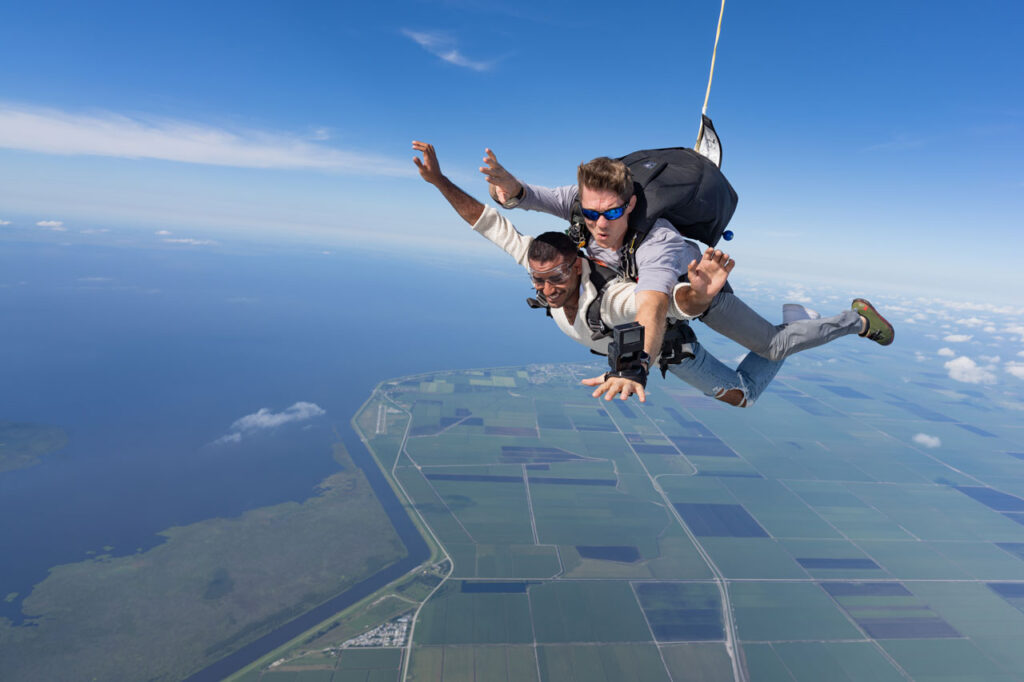
Whether you are jumping for the first time or you are a licensed jumper getting back into regular jumping, the single best thing you can do for your safety is choose the right operator and take the pre-jump briefing seriously.
For first-timers, always book with a USPA-affiliated drop zone. Ask about their gear maintenance schedule and how frequently their instructors go through emergency procedure recurrency training. A good drop zone will answer these questions without hesitation because they are proud of their standards. If a drop zone gets defensive or evasive about safety questions, walk away.
For licensed jumpers, gear checks before every jump are non-negotiable in 2026 just as they always have been. Pin checks, handle visibility checks, and AAD arming should be habitual before you even step toward the aircraft. If something feels wrong with your gear, pull out and get it checked. No jump is worth rushing.
For a full look at what makes a safe skydiving experience from first phone call to landing, read our complete skydiving safety guide at SkydiveGuides.com.
Frequently Asked Questions About What Happens If a Parachute Fails During Skydiving
What percentage of parachutes fail during skydiving?
Approximately one in every 750 to 1,000 skydives involves some kind of parachute malfunction requiring use of the reserve. The vast majority of these are resolved safely. Complete non-deployment of both main and reserve is extremely rare.
What happens if both parachutes fail at the same time?
Modern rigs have an AAD that automatically deploys the reserve at a set altitude if the skydiver is still in freefall. A simultaneous failure of the main, reserve, and AAD is considered a near-impossible scenario when all equipment is properly maintained and regularly inspected.
Has anyone ever died because a parachute did not open?
Yes, but it is very rare and usually involves a combination of factors including human error in emergency response or gear that was not properly maintained. Equipment failures alone — without any contributing human error — are extraordinarily uncommon in a well-maintained modern rig.
Can you skydive without a reserve parachute?
No. USPA regulations and FAA rules require a reserve parachute for all skydiving in the US. Any drop zone operating without reserve parachutes is breaking the law and should be avoided entirely.
Is tandem skydiving safer than solo skydiving for a beginner?
Yes, generally. Tandem skydiving has a lower accident rate because a professional, experienced instructor is fully in control of all equipment and emergency procedures throughout the entire jump. First-time solo student jumpers are supervised but have to manage their own emergency procedures if needed.
Do all skydivers use AADs in 2026?
All reputable student programs and tandem operations use AADs. Among experienced licensed jumpers, AAD use is extremely widespread and strongly encouraged by USPA, though it is technically not mandatory for licensed jumpers jumping their own gear.
The Bottom Line on Parachute Safety
Parachutes fail far less often than most people imagine. And when something does go wrong, the multi-layer safety systems built into every properly maintained skydiving rig — reserve parachutes, AADs, rigger certification requirements — are designed specifically to handle it. Equipment-related fatalities in properly maintained gear used by trained operators are genuinely, verifiably very rare.
The best thing you can do is jump with a reputable, USPA-affiliated drop zone, take your briefing seriously, and trust the professionals and the equipment they carefully maintain. If you are ready to take that step, SkydiveGuides.com is the easiest place to find a trusted drop zone near you and get your adventure started.