

San Diego’s perfect climate, proximity to the Pacific Ocean, and diverse landscape make it one of the best places to skydive in California. From 14,000 feet, you get views that combine coastal cliffs, the Pacific Ocean, desert terrain, and urban skyline — a combination you simply cannot find anywhere else in the country. Here is your complete guide to skydiving near San Diego in 2026.
San Diego Skydiving Quick Stats
- Closest dropzone: 20–30 minutes from downtown San Diego
- Average tandem price: $159–$249
- Ocean views: Yes — coastline visible on clear days
- Jump altitude: 10,000–14,000 ft
- Year-round jumping: Yes — 266+ sunny days
- Minimum age: 18 years
Best Dropzones Near San Diego in 2026
| Dropzone | Tandem Price | Altitude | Highlights |
| Skydive San Diego (Jamul) | $189–$229 | 12,500 ft | Closest to SD, ocean + city views |
| Elsinore Parachute Ctr. | $159–$199 | 10,000 ft | Budget-friendly, large dropzone |
| Skydive Perris | $189–$249 | 13,000 ft | World-class facility, 90 min north |
| Skydive Taft | $149–$189 | 10,000 ft | Desert views, low crowds |
How Much Does Skydiving Near San Diego Cost?
- Budget tandem (10,000 ft): $149–$179
- Standard tandem (12,000–13,000 ft): $179–$219
- Premium tandem (14,000 ft+): $219–$249
- GoPro video package: $80–$130
- Professional photos: $60–$100
- Video + photos combo: $120–$175
The San Diego Skydiving View — What You Actually See
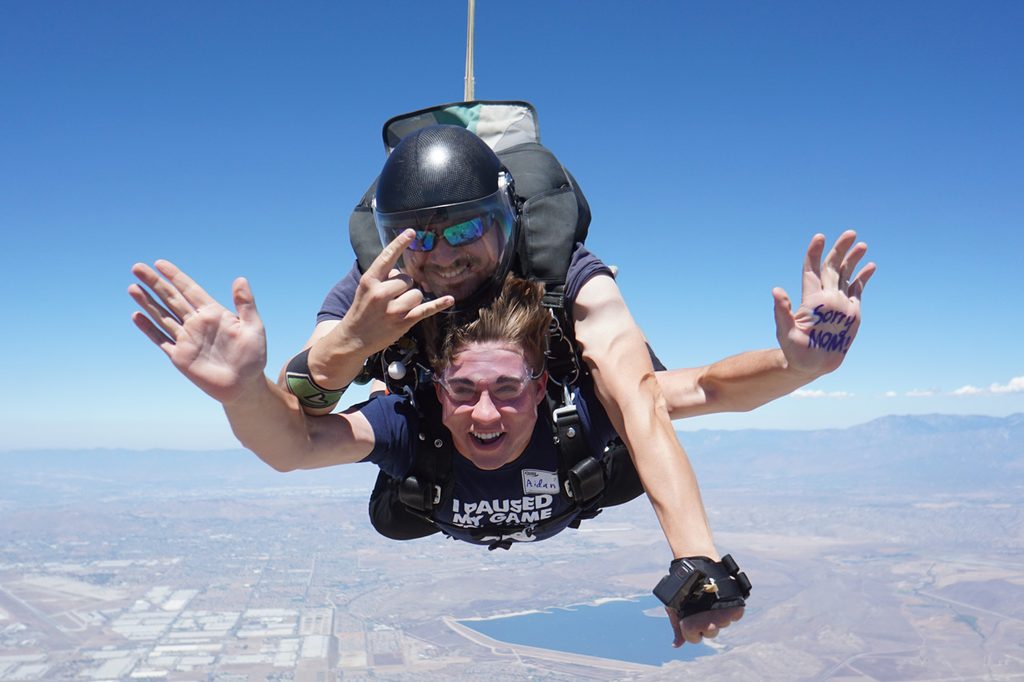
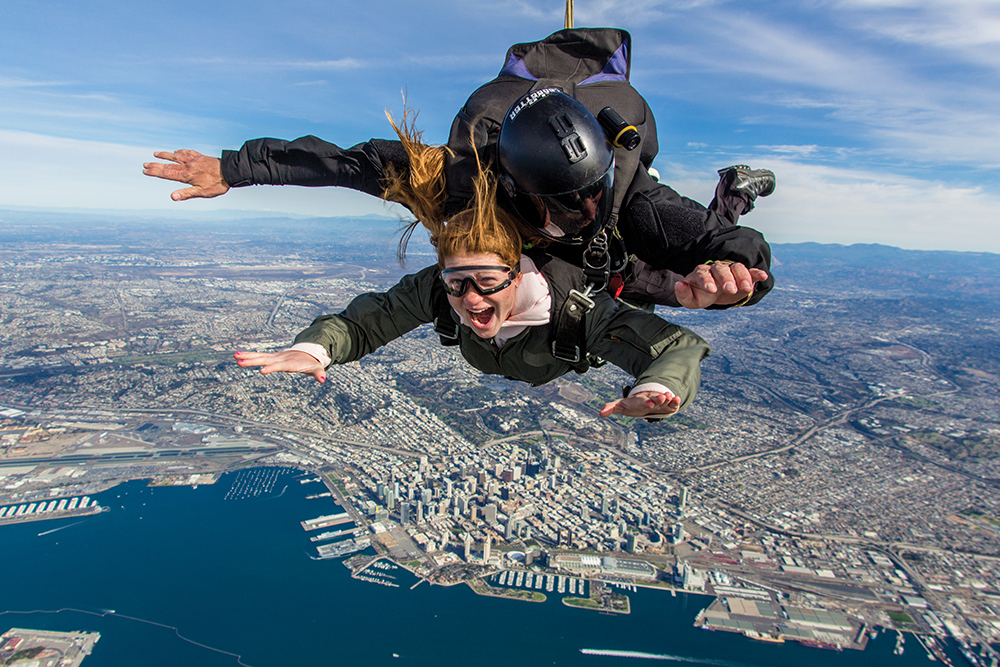
From altitude above the San Diego region, the visual feast is remarkable. To the west, the Pacific Ocean stretches to the horizon, with the Coronado Islands and, on clear days, the outline of Mexico’s Baja California visible. Below you, the patchwork of San Diego’s neighborhoods and the silver arc of the bay. To the east, the terrain rapidly rises into the Laguna Mountains. It is arguably California’s most varied aerial view — ocean, city, desert, and mountains all at once.
San Diego’s Year-Round Jump Weather
- January–April: Clear, cool. Excellent visibility. Fewer crowds.
- May–June: June Gloom. Morning fog can delay early jumps. Book afternoon slots.
- July–September: Peak season. Hot, clear, busy. Book well in advance.
- October–December: Excellent. Clear skies, mild temps, reduced wait times.
What to Wear for Your San Diego Skydive
- Comfortable athletic clothing — jeans and a t-shirt work fine
- Closed-toe shoes (sneakers or trainers) — no flip-flops, no boots with hooks
- No loose jewelry or accessories that could fly off at 120 mph
- Bring sunglasses — the dropzone will provide goggles over them
San Diego Skydiving FAQs
Q: How much does skydiving near San Diego cost?
A: Tandem skydiving near San Diego costs $159–$249. Skydive San Diego in Jamul runs $189–$229 for a standard jump, while Elsinore Parachute Center in Lake Elsinore offers rates starting at $159.
Q: Can you skydive over the ocean in San Diego?
A: Some San Diego-area dropzones offer ocean view jumps where you can see the Pacific coastline, Coronado Island, and on clear days, Catalina Island from altitude. You land at the dropzone, not on the beach.
Q: What is the best dropzone near San Diego?
A: Skydive San Diego in Jamul is the closest and most highly rated option. For a wider selection, Lake Elsinore is 60 miles north and has multiple dropzones.
Q: What is the weight limit for skydiving in San Diego?
A: Tandem weight limits at San Diego dropzones are typically 220–240 lbs. Surcharges apply for jumpers over 200 lbs. Contact your chosen dropzone to confirm current policies.
Q: What is the best time of year to skydive in San Diego?
A: San Diego’s weather is exceptional year-round with over 266 sunny days annually. June Gloom (coastal fog in May–June) can occasionally cause morning delays, but afternoon jumps are nearly always clear.
Q: How far in advance should I book skydiving in San Diego?
A: Book at least 1–2 weeks in advance for weekday slots. Weekend and holiday slots fill up 3–4 weeks out, especially in summer. Last-minute bookings are possible but availability is limited.