
Quick answer
The minimum skydiving age limit is usually 16 or 18, depending on the country and the drop zone. In the US, USPA-affiliated drop zones require tandem students to be 18, while the UK and Australia generally allow tandem jumps from 16 with parental consent. Most tandem centres have no upper age limit, but older jumpers may need a health check or instructor assessment first. Always confirm the rules with the specific centre before you book.
Standing at the door of a plane, the wind rushing past and your heart pounding as you get ready to take the plunge, you’re in for an unforgettable experience. But the first thing you’ll want to know before jumping out of a plane for the first time is simple: are you old enough?
The skydiving age limit varies by country, jump type, and skydiving centre. Some centres let teens skydive with parental permission, while others won’t accept anyone under 18. And what about the other end of the range? Can you go skydiving in your 60s, your 80s, or even after 100?
The good news is that age isn’t always the deciding factor. Let’s look at the minimum and maximum ages, country-specific rules, and what to consider before booking your skydive.
What is the skydiving age limit for a first jump?
The required age for a standard tandem skydive is typically 16 or 18, depending on where you jump. Tandem skydives are the most popular choice for first-timers because you’re securely attached to a qualified instructor, who handles the main parts of the skydive, including the parachute.
In the US, you need to be 18 or older to jump at a USPA-affiliated drop zone. According to the United States Parachute Association, tandem jumps must meet the minimum age set by the tandem equipment manufacturer, and for US tandem manufacturers that age is 18. In places like the UK and Australia, tandem skydiving is typically available from age 16, and if you’re under 18, you’ll need permission from a parent or guardian.
The answer to how old you have to be to skydive can also change with the type of jump. If you want to learn to skydive on your own, you’ll need extra training, and the centre will expect more of you in terms of equipment checks and responsibilities.
Whether you’re booking a jump for yourself or a family member, check both the official regulations and what the specific drop zone requires.
Skydiving age requirements by country
If you’re planning to skydive overseas, don’t assume the rules will be the same everywhere. The minimum age can vary widely from country to country, and individual operators may set their own requirements on top of national guidance.
The table below is a general guide based on published guidance from skydiving associations and operators.
| Country | Minimum age and requirements |
|---|---|
| United States | Generally 18 at USPA-affiliated drop zones. |
| United Kingdom | Minimum age is 16, with parental or guardian permission for participants under 18. |
| Australia | Minimum age is 16 for tandem skydiving, with parental or guardian consent for minors. |
| India | Published adventure tourism guidance states 18; participants over 16 may be permitted with parental or guardian consent and presence. Confirm current rules with the operator. |
| New Zealand | Rules vary by operator. Some centres accept children from around 6 years old, subject to consent, size, and harness fit. |
| Canada | Requirements vary by operator and jump type. Some centres allow younger tandem passengers with parental consent, while training programmes may require participants to be 18. |
This is just an example of how much the rules can differ. Before you travel, check the eligible age, whether parental consent is required, and what documents you’ll need to bring.
Is there an upper age limit for skydiving?
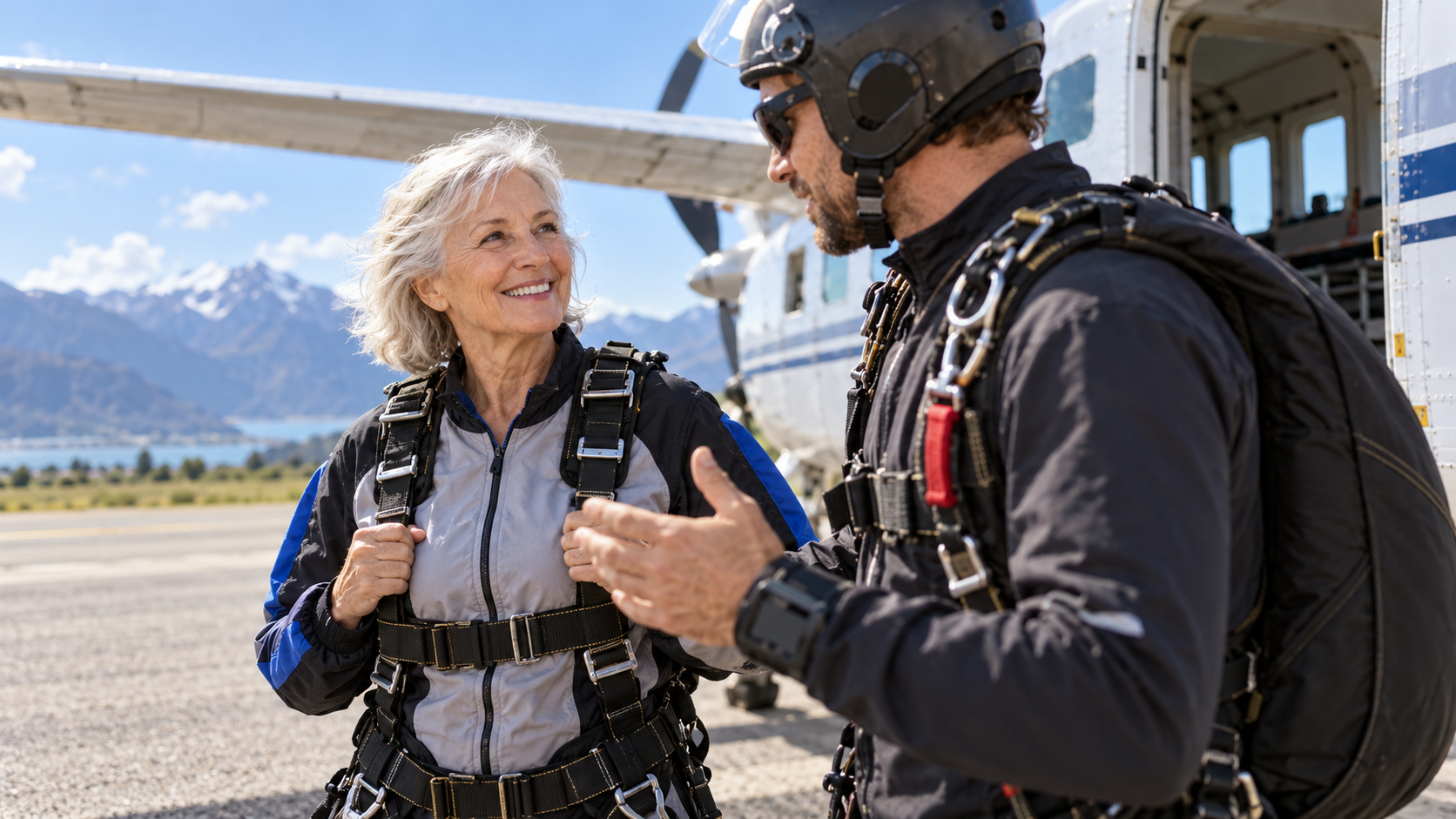
Many tandem skydiving centres have no upper age limit, so you can jump at 50, 65, or even 80. British Skydiving, for example, states there is no upper age limit, though older participants may need extra medical paperwork depending on their health.
No set limit doesn’t mean no checks, though. Skydiving can be physically demanding, especially during parachute deployment and landing. You may be asked about your general health, your mobility, and how well you fit the harness, along with any medical conditions that could affect your safety.
Some centres ask older jumpers for a medical form signed by a doctor, and some have their own age policies. One UK centre, for instance, asks anyone aged 70 or over to attend an assessment with an instructor before a tandem. It’s always best to speak with a qualified doctor about any health concerns and to confirm the operator’s specific requirements.
Tandem skydiving also isn’t the same as learning to jump solo. Some centres set an upper age for solo courses even where tandems have no limit. In the UK, Skydive North West states a maximum age of 54 for its solo jump courses, while still offering tandems with no upper age limit.
So if your goal is simply to experience freefall with an instructor, your options may be wider than those for someone who wants to train as an independent skydiver.
Who is the oldest person to skydive?
If you think skydiving is only for the young, the record books say otherwise.
According to Guinness World Records, Alfred “Al” Blaschke of the US holds the record for the oldest man to tandem skydive. He made the jump on 27 November 2023 in Texas, aged 106 years and 327 days.
Blaschke first skydived on his 100th birthday and set the record in 2020, at 103. After another jumper broke it, he went up again at 106 to reclaim the title.
The women’s record is just as impressive. In May 2022, Sweden’s Rut Linnéa Ingegärd Larsson completed a tandem skydive at 103 years and 259 days, earning recognition from Guinness World Records.
These achievements show what’s possible later in life. But every case is individual, and a record doesn’t mean everyone of the same age can or should jump.
What factors matter besides age?
Meeting the age requirement is only one part of eligibility. You also need to be able to wear the equipment properly and follow your instructor’s directions. These factors can affect whether you can jump:
- Physical health: Medical issues such as heart conditions, back problems, and recent surgery could affect your suitability for skydiving. If you have an underlying condition, or you’re unsure whether skydiving is safe for you, talk to a medical professional first.
- Weight and harness fit: Most centres set a maximum weight that depends on the equipment, the instructor, and the jump type. You’ll also need to fit the harness securely. Our guide to the skydiving weight limit covers this in more detail.
- Mobility and landing requirements: During a tandem jump, you’ll need to lift your legs into position for landing and follow your instructor’s directions. Limited mobility can affect whether a particular jump is right for you.
- Parental or guardian consent: If you’re under 18 and the operator accepts younger jumpers, you may need written consent, and a parent or guardian may need to be present. This depends on the location.
- Weather and operating conditions: Jumps are sometimes delayed or cancelled because of high winds, low visibility, or other unsafe conditions. The operator decides whether conditions are suitable.
Thinking through these ahead of time helps you prepare and avoid surprises on the day.
How to check whether you’re eligible to skydive
Before paying anything, spend a few minutes confirming the requirements. This matters most if you’re booking for a teenager, an older adult, or someone with a medical condition.
- Check the operator’s official website for age requirements, parental consent, weight limits, and medical requirements.
- If anything is unclear, ask the skydiving centre directly. Don’t rely on travel blogs or old booking pages.
- Tell the operator about any relevant medical conditions, and ask whether you need medical approval.
- If you’re travelling abroad, check the rules for your specific drop zone, as they can vary even within one country.
- Find out what ID and consent forms you need to bring, so everything is ready on the day.
What should you wear for your first skydive?
The right clothing makes your first skydive more comfortable. Wear loose, comfortable clothes such as a T-shirt and sportswear, with trousers that let you move freely. Avoid very baggy clothing that can flap around in freefall. Lace-up trainers are usually the best choice; avoid sandals, heels, or any footwear that could come off.
It’s cooler at altitude, so on chilly days wear thin layers that fit easily under your skydiving kit. Most centres also lend you a jumpsuit to wear over your clothes. Remove loose jewellery and secure your belongings before the jump, and check the centre’s clothing guidance in advance. For more on the day itself, see our first tandem skydive guide.
Frequently asked questions
How old do you have to be to skydive in the US?
You need to be at least 18 to skydive at a USPA-affiliated drop zone, including for a tandem jump. USPA ties the tandem minimum to the equipment manufacturer’s age limit, which is 18 for US tandem manufacturers.
Can a 16-year-old go skydiving?
In some countries, yes. The UK and Australia generally allow tandem skydives from 16, with written consent from a parent or guardian for anyone under 18. In the US, 16-year-olds can’t jump at USPA-affiliated drop zones.
Is there a maximum age for tandem skydiving?
Most tandem centres have no upper age limit. Instead, they look at your health, mobility, and harness fit, and some ask older jumpers for a doctor’s sign-off or an instructor assessment before the jump.
Who is the oldest person to skydive?
Guinness World Records lists Alfred “Al” Blaschke of the US as the oldest man to tandem skydive, at 106 years and 327 days in November 2023. The women’s record belongs to Sweden’s Rut Linnéa Ingegärd Larsson, who jumped at 103 years and 259 days in May 2022.
Do I need a medical certificate to skydive if I’m older?
It depends on the centre and your health. Many tandem centres use a self-declaration form, but may ask for a doctor’s signature if you have a medical condition, and some add age-based checks. Ask the drop zone what it requires before you book.
Conclusion
Skydiving age requirements depend on where you jump, whether you’re doing a tandem or training solo, and the operator’s own policies. Many places set the minimum at 16 or 18, and a few accept younger participants. There’s usually no maximum age for a tandem skydive, but you do need to be fit and healthy enough to jump safely.
Whether you’re making your first jump at 18 or looking for an adventure later in life, take the time to research local rules, talk to a medical professional about any health concerns, and choose a reputable skydiving centre. Once you know you’re eligible, you can relax and enjoy the experience. If you’re still weighing it up, our beginner’s guides are a good next stop.
If you have a medical condition or any concerns about your health, discuss the specifics with your doctor and with the drop zone directly before booking.
Written by Alex, lead writer at SkydiveGuides.com, covering skydiving safety, costs, gear, and destinations.