
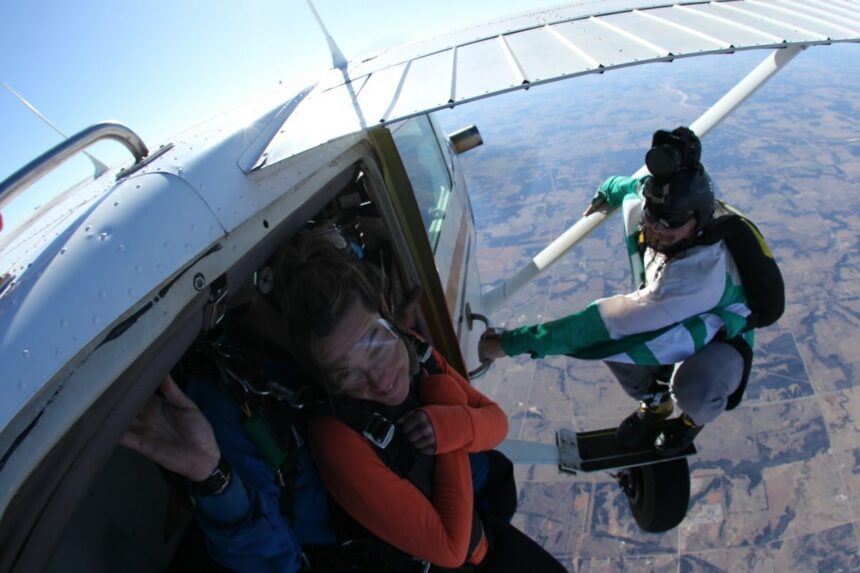
Skydiving fear is real—and completely normal.
Even experienced jumpers once stood at the aircraft door with racing hearts.
The difference? They learned how to control the fear of skydiving instead of letting it control them.
- 🔑 Key Takeaways (Read This First)
- Why Fear of Skydiving Feels So Intense
- Skydiving Safety: Facts That Calm the Mind
- 5 Mental Tricks Pro Skydivers Use to Beat Fear
- Beginner Guide: What Actually Happens on a Tandem Jump
- Pro-Tip from Real Skydiving Experience 🪂
- Is Fear of Skydiving a Sign You Shouldn’t Jump?
- How Skydiving Rate & Statistics Reduce Anxiety
- What If I Panic Mid-Air?
- Safety-First Checklist Before You Jump
- Final Thoughts: Fear Is the Door, Not the Wall
- ❓ Frequently Asked Questions (FAQ)
This safety-first guide uses proven mental techniques from professional skydivers to help beginners turn fear into focus—without ignoring risk or reality.
🔑 Key Takeaways (Read This First)
- Fear of skydiving is psychological, not a sign of real danger
- Modern skydiving has strong safety records and strict training standards
- Pro divers use simple mental tricks—not bravery—to stay calm
- Understanding the skydiving rate of accidents reduces fear with facts
- Preparation beats motivation every time
Why Fear of Skydiving Feels So Intense
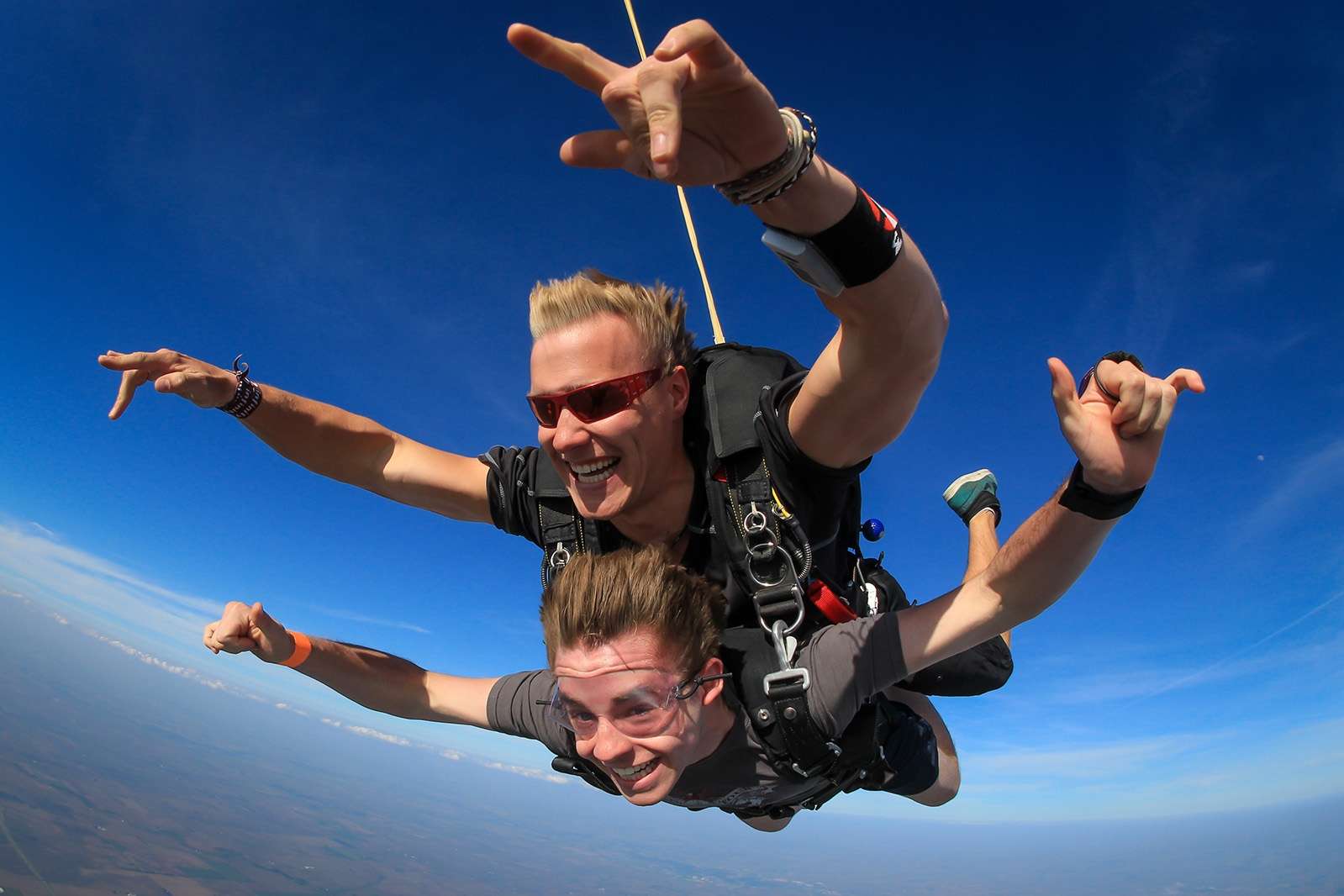
Fear spikes because your brain detects height + speed + uncertainty.
Your survival instinct assumes danger, even when safety systems are in place.
This response is automatic—not logical.
Common Thoughts First-Time Jumpers Have
- “What if the parachute doesn’t open?”
- “What if I panic mid-air?”
- “What if I lose control?”
These thoughts feel real, but they are not evidence-based.
Skydiving Safety: Facts That Calm the Mind
Before mental tricks, let’s ground fear in facts.
Skydiving Safety Records (Reality Check)
- Tandem skydiving accident rate: ~0.003%
- Fatality rate: ~0.0003% per jump
- Most incidents happen during advanced solo maneuvers, not beginner jumps
According to global industry data and organisations like United States Parachute Association, modern skydiving is safer than many everyday activities.
Fear reduces when uncertainty reduces.
5 Mental Tricks Pro Skydivers Use to Beat Fear
🧠 Trick #1: Replace “What If” with “What Is”
Fear thrives on imagination.
Pros focus only on what is happening now.
Instead of:
“What if something goes wrong?”
Think:
“I’m strapped to a certified instructor. The plane is stable. The system is checked.”
✔ This grounds your mind in reality.
🧠 Trick #2: Let the Instructor Borrow Your Fear
First-time jumpers are not expected to be fearless.
Pros mentally delegate control.
Say to yourself:
“This is not my jump. This is my instructor’s jump.”
Tandem instructors train for thousands of jumps.
You are the passenger—not the decision-maker.
🧠 Trick #3: Breathe Like a Professional (4–4–6 Method)
Fear tightens breathing, which increases panic.
Pro breathing pattern:
- Inhale: 4 seconds
- Hold: 4 seconds
- Exhale: 6 seconds
Do this 3 times before boarding and at the door.
Longer exhales signal safety to the brain.
🧠 Trick #4: Reframe Fear as Excitement
Your body doesn’t know the difference between fear and excitement.
Both create adrenaline.
Pro divers mentally relabel the sensation:
“This is excitement, not danger.”
Heart racing?
That’s your body preparing—not warning.
🧠 Trick #5: Visualise the Landing, Not the Exit
Beginners obsess over jumping out.
Pros visualise the smooth landing.
Picture:
- Parachute open
- Calm floating
- Safe landing
- Smiling afterward
Your brain follows the last image it believes.
Beginner Guide: What Actually Happens on a Tandem Jump
| Stage | What You Feel | What’s Actually Happening |
|---|---|---|
| Plane ascent | Nervous | Normal altitude gain |
| Door opens | Fear spike | Instructor checks wind |
| Exit | Shock | 3–5 seconds adjustment |
| Freefall | Calm | Stable body position |
| Canopy open | Relief | Controlled glide |
| Landing | Confidence | Instructor-guided |
Fear peaks before the jump—not during it.
Pro-Tip from Real Skydiving Experience 🪂
The biggest fear killer is knowledge—not motivation.
Pro divers always:
- Watch safety briefings seriously
- Ask instructors “what if” questions
- Understand backup parachute systems
The more you understand the process, the less room fear has to grow.
Never rush your jump.
Confidence comes from clarity.
Is Fear of Skydiving a Sign You Shouldn’t Jump?
Absolutely not.
Fear means:
- You respect risk
- You value safety
- You are mentally alert
These are good traits in skydiving.
Reckless confidence is dangerous.
Calm awareness is ideal.
How Skydiving Rate & Statistics Reduce Anxiety
When fear is emotional, facts bring balance.
Compare Risk Levels
| Activity | Relative Risk |
|---|---|
| Driving daily | Higher |
| Motorbike riding | Much higher |
| Skydiving (tandem) | Very low |
| Scuba diving | Comparable |
Understanding the skydiving rate, Skydiving Guide 2026 of incidents helps your brain recalibrate threat perception.
What If I Panic Mid-Air?
This is one of the biggest fears—and one of the least realistic.
Why?
- Your instructor controls body position
- Panic freezes you—it doesn’t cause movement
- The jump is over before your brain can spiral
Most first-timers say:
“I didn’t even have time to be scared.”
Safety-First Checklist Before You Jump
- ✔ Choose a licensed drop zone
- ✔ Verify instructor certification
- ✔ Attend full safety briefing
- ✔ Eat light, stay hydrated
- ✔ Avoid alcohol 24 hours before
Fear drops when preparation rises.
Final Thoughts: Fear Is the Door, Not the Wall
Every professional skydiver once felt exactly what you feel now.
They didn’t remove fear—they learned to work with it.
The goal isn’t to be fearless.
The goal is to jump despite fear—safely, informed, and in control.
❓ Frequently Asked Questions (FAQ)
Is fear of skydiving normal for beginners?
Yes. Over 90% of first-time jumpers report intense fear before boarding.
How safe is tandem skydiving today?
Very safe. Modern safety records show extremely low accident rates for beginners.
Does fear go away after the jump?
Yes. Most fear disappears within seconds of freefall.
Can I back out if I feel overwhelmed?
Yes. Ethical drop zones never force a jump.
Is skydiving safe for people with anxiety?
In many cases, yes—but consult a professional and inform your instructor.