
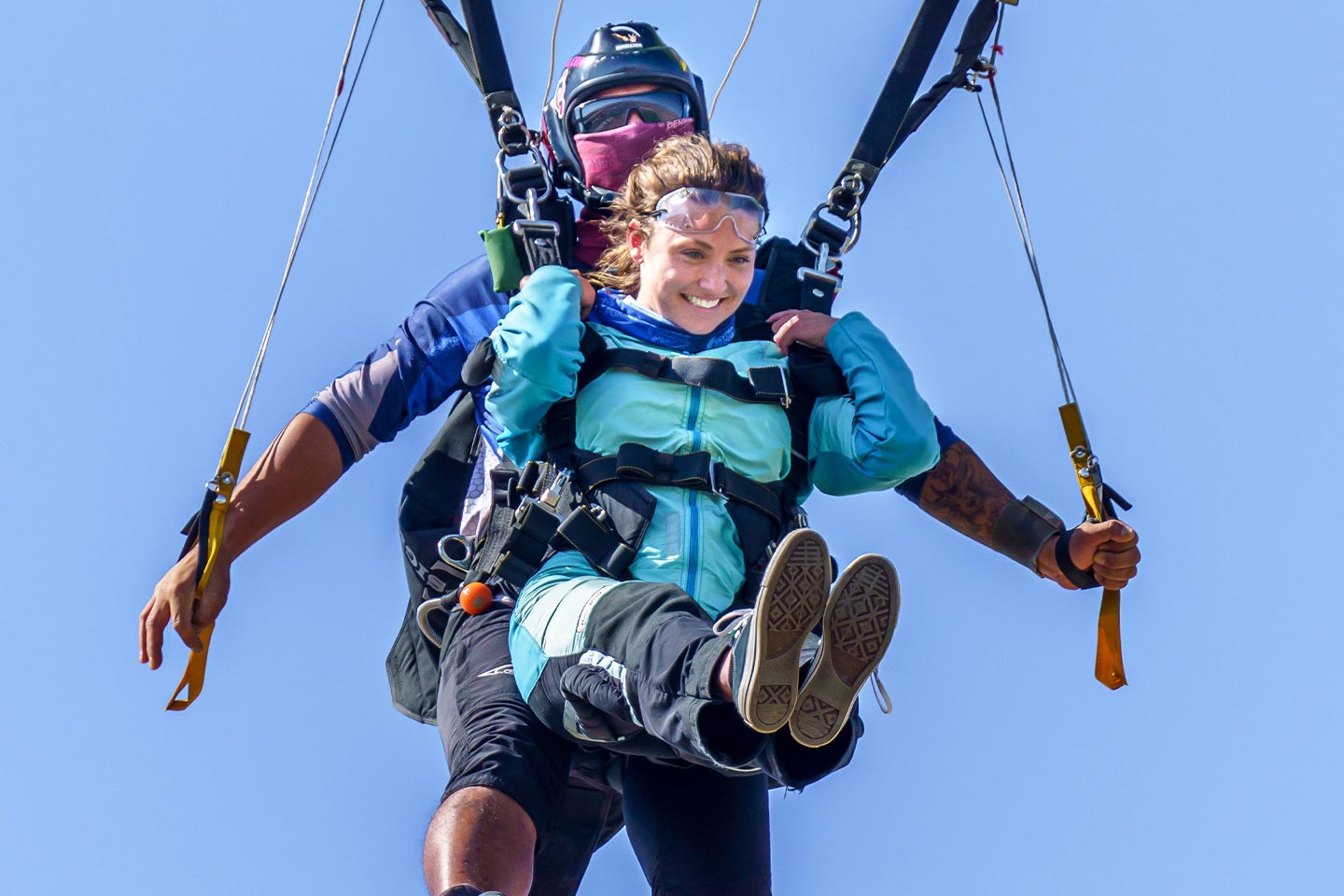
The weight limit for skydiving is 220 to 250 lbs (100–113 kg) for most tandem jumps in the USA, and around 220 lbs (100 kg) for solo jumps. But a single number barely scratches the surface. Your height, body shape, where you’re jumping in the world, and what equipment the drop zone stocks all play a role in whether you can jump — and how safely.
In this guide, we break down every restriction that matters: weight limits by jump type and country, height requirements, what to do if you’re near or over the limit, age rules, and how to prepare for the best possible jump day experience.
New to skydiving? Explore our complete Skydiving Guide 2026 →
What Is the Weight Limit for Skydiving?
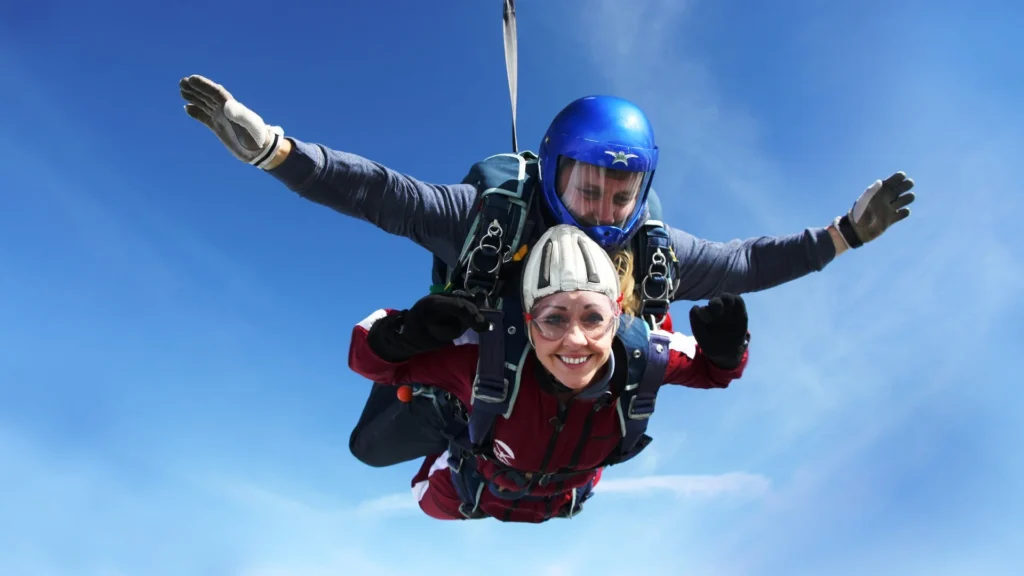
Most drop zones in the United States follow guidelines set by the United States Parachute Association (USPA). For tandem skydiving — where you jump attached to a certified instructor — the standard maximum weight is 220 to 250 lbs (100 to 113 kg). For solo skydiving, the limit is typically around 220 lbs (100 kg), and some schools set it lower depending on their canopy inventory.
These numbers come directly from equipment manufacturer certifications. Every tandem parachute rig is tested and rated to a maximum combined suspended weight — meaning the total of both the student and the instructor together. When that combined weight is too high, parachute deployment can become unpredictable, freefall stability is affected, and the landing impact increases. The weight limit is, fundamentally, an equipment rating — not a judgment about fitness.
Curious about the full range of safety rules before your jump? Read our detailed guide on Is Skydiving Safe to understand how modern equipment and training keep the sport as safe as it has ever been.
Why Does Weight Matter in Skydiving?
The physics are straightforward. Heavier bodies fall faster because gravitational force increases proportionally with mass, while air resistance stays relatively constant. This means a heavier tandem pair reaches a higher terminal velocity than a lighter pair. At the moment the parachute deploys, that extra speed creates more stress on the canopy and suspension lines. Equipment manufacturers calculate these forces when they set weight ratings, and those ratings are not flexible recommendations — they are tested limits.
Weight also matters for the harness fit. Tandem harnesses are designed around a range of torso sizes. A student who is very heavy may find the harness compressed awkwardly, which affects both comfort and the security of the connection between student and instructor. Some drop zones carry multiple harness sizes for this reason.
Finally, there is an ongoing safety consideration for instructors. Tandem instructors make thousands of jumps throughout their career. Repeatedly jumping near the maximum weight limit accelerates wear on both their body and the equipment. When drop zones set firm weight limits, they are protecting their staff as much as their students.
Tandem Skydiving Weight Limit vs Solo Skydiving Weight Limit
Tandem Skydiving Weight Limit
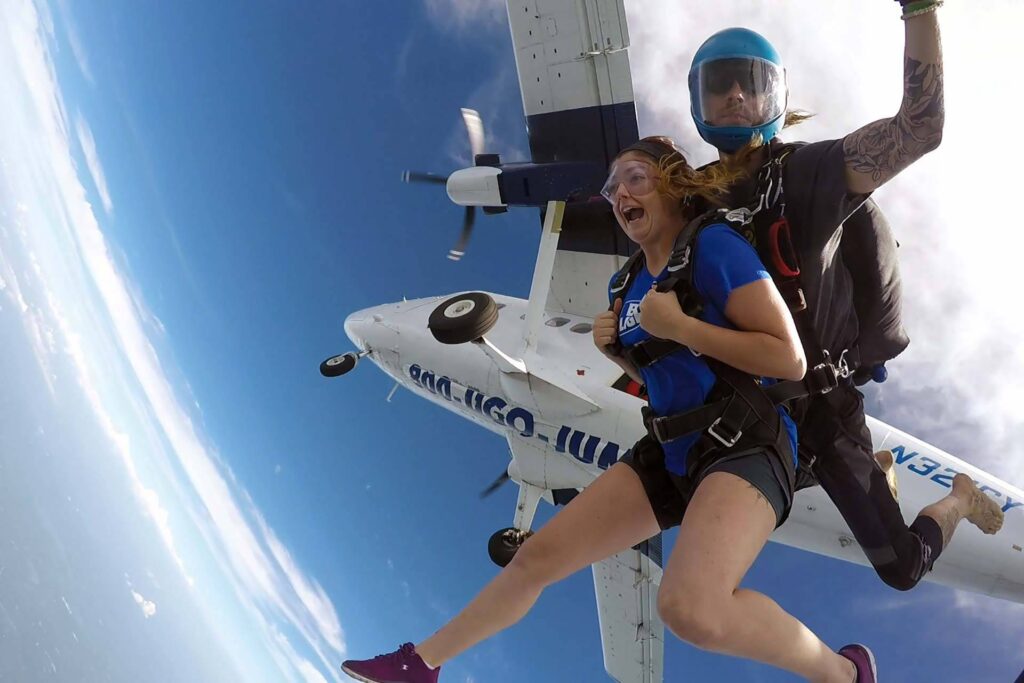
Tandem jumps are by far the most common type for first-timers. You are harnessed directly to a certified instructor who controls the entire dive — exit, freefall, deployment, and landing. Because control is entirely with the instructor, the equipment specifications allow a broader weight range. Most US drop zones cap tandem students at 220 to 250 lbs (100 to 113 kg), with some specialist centres equipped with high-capacity rigs accommodating up to 265 lbs (120 kg) for an additional gear surcharge.
If your weight falls between 200 and 250 lbs, the most important step is to call your chosen drop zone before booking. Ask specifically whether they have equipment suitable for your weight, and confirm there will be no issues on jump day. Showing up without this confirmation and being turned away at check-in is a frustrating and avoidable situation.
Thinking about your first tandem jump? Our Tandem Skydiving Guide covers what to expect from the moment you arrive at the drop zone to when you land.
Solo Skydiving Weight Limit
Solo skydiving — through a static-line programme or Accelerated Freefall (AFF) training — is physically more demanding and has stricter weight requirements. When you are solo, you are entirely responsible for your own canopy from the moment it opens. Most AFF programmes require students to be under 220 lbs (100 kg), and some schools set a lower maximum of 200 lbs depending on the canopy sizes available in their student equipment fleet.
The reasoning is straightforward. A large, fast-moving canopy in poor conditions is difficult to control even for experienced jumpers. Adding above-average body weight to that equation during initial training is a risk that most responsible instructors are not willing to take. As you progress in the sport and buy your own appropriately sized equipment, this limitation becomes less of a factor.
Skydiving Weight and Height Restrictions by Country
The table below shows general industry ranges across key regions. These are starting points — always confirm the specific limits with the individual drop zone you plan to use, as equipment and policies vary between centres even within the same country.
| Jump Type & Region | Min Weight | Max Weight | Height Range | Notes |
|---|---|---|---|---|
| Tandem — USA | 70 lbs / 32 kg | 250 lbs / 113 kg | 4’10” – 6’6″ | Follows USPA guidelines; some centres allow 265 lbs with specialist gear surcharge |
| Solo AFF — USA | 120 lbs / 54 kg | 220 lbs / 100 kg | 5’0″ – 6’5″ | Varies by school equipment; lower limit at some centres |
| Tandem — Europe | 70 lbs / 32 kg | 265 lbs / 120 kg | 4’10” – 6’5″ | Specialist high-capacity rigs common; confirm with drop zone |
| Tandem — Australia | 70 lbs / 32 kg | 275 lbs / 125 kg | 4’10” – 6’6″ | Pre-jump consultation recommended for jumpers near max |
| Tandem — Asia | 70 lbs / 32 kg | 198–220 lbs / 90–100 kg | Varies | Equipment regulations more conservative; check locally |
Australian and some European drop zones tend to have higher maximum weights because operators there frequently invest in high-capacity tandem rigs as standard equipment. In the US, most centres align with USPA recommendations, though there is still meaningful variation between individual drop zones.
Is There a Height Limit for Skydiving?
Height restrictions are less commonly discussed than weight limits, but they matter just as much for a safe tandem jump. Most drop zones accept skydivers between 4’10” (147 cm) and 6’6″ (198 cm). The lower limit relates to harness fit — tandem harnesses need to wrap securely around the chest and thighs, and on very small bodies, even the smallest available harness may not fit safely. The upper limit relates to body positioning in freefall and the physical geometry of the tandem connection.
Very tall jumpers sometimes struggle to get into a clean arch position during freefall, and long limbs can create awkward angles in the harness. Most drop zones will do a harness fitting check before your jump is confirmed. If there is any concern about fit, the instructor will flag it at that point — well before you are boarding the aircraft.
If you are outside the typical height range, the best approach is the same as for borderline weight cases: call ahead and describe your proportions. Drop zone staff can assess the whole picture far better than any website can.
What If You Are Over the Skydiving Weight Limit?
Being over the standard weight limit does not automatically mean skydiving is off the table. Many drop zones, particularly larger commercial ones, operate what are sometimes called heavy-flyer or plus-size programmes. These involve certified tandem rigs with larger canopies and higher maximum load ratings. The equipment is fully legitimate and safe — it simply is not what most centres keep on hand at all times, which is why advance booking is essential.
A gear surcharge is standard practice for these arrangements. This covers the additional wear on specialist equipment and the extra planning required. It is a reasonable trade-off for the ability to jump safely. Surcharges typically range from $25 to $75 depending on the drop zone.
What you should never do is misrepresent your weight during the booking process. Every serious drop zone weighs all jumpers before the jump, regardless of what was declared online. If you arrive significantly over the stated limit and the centre does not have the right equipment available that day, your jump will not proceed and you will typically not receive a refund. Honesty upfront is genuinely the most practical approach.
Planning your jump? See full skydiving packages and pricing options →
Skydiving Age Limit: Minimum and Maximum
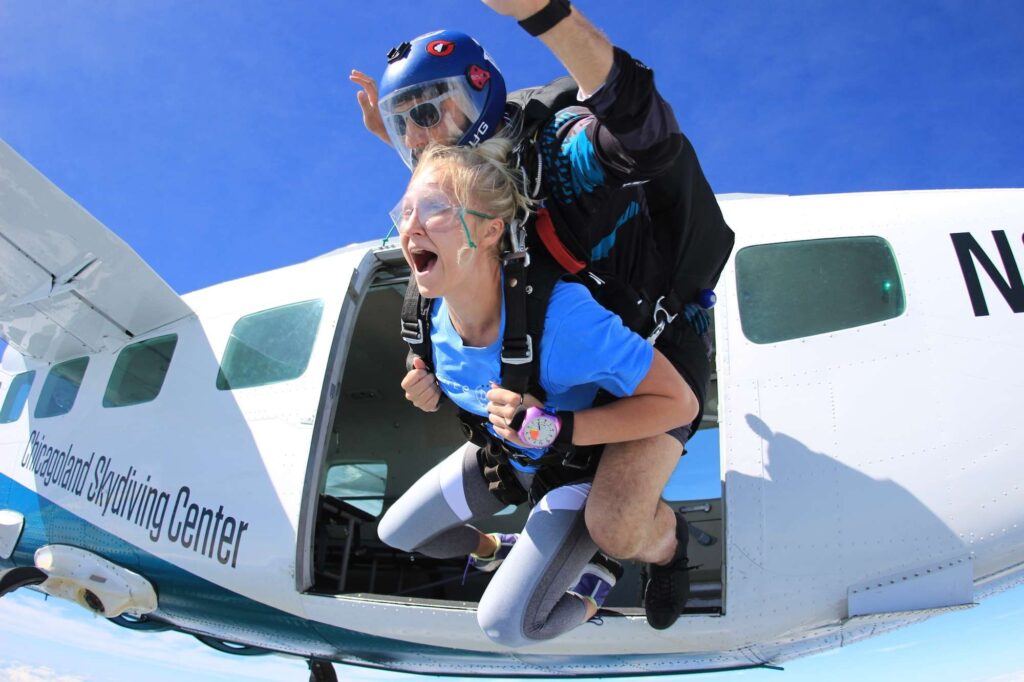
In the United States, the minimum age for skydiving is 18 years old at all USPA member drop zones. This is a firm rule with no exceptions for parental consent, unlike some European countries where 16-year-olds may jump with written guardian approval. The 18-year minimum exists because of liability, physical development considerations, and the ability to give fully informed consent as an adult.
There is no upper age limit for skydiving anywhere in the world. People in their 70s and 80s make tandem jumps regularly, and some record holders are well into their 90s. The relevant factor for older skydivers is general health and cardiovascular fitness rather than age. Conditions such as recent heart surgery, uncontrolled blood pressure, or severe joint problems may require a doctor’s written clearance before jumping. This is not a barrier — it is a reasonable precaution that any responsible drop zone will apply.
For a complete breakdown of age rules by country and what documentation you may need, see our guide on Skydiving Age Limits in the USA.
How Safe Is Skydiving? Understanding the Risk Context
Weight and age restrictions exist within a broader framework of skydiving safety that is often misunderstood. Skydiving is genuinely one of the most tightly regulated adventure sports in the world. In the US, the USPA records approximately 10 to 15 fatalities per year across roughly 3.3 million jumps annually. That works out to about 0.39 fatalities per 100,000 jumps — a figure that continues to improve year on year as equipment and training standards advance.
The vast majority of skydiving incidents involve experienced skydivers making errors of judgment during canopy flight, not tandem students. First-time tandem jumpers are statistically among the safest participants in the sport because they are attached to a professional who handles everything. The weight limit, the harness check, the weather approval process — all of these are layers in a safety system designed to make your jump as routine as possible.
Want to understand the statistics in full detail? Our guide on How Many People Die Skydiving Per Year breaks down global fatality data by country and jump type.
How Much Does Skydiving Cost?
Understanding weight limits is only one part of planning your jump. The other major factor for most people is cost. A standard tandem skydive in the US typically costs between $150 and $250 for the jump itself. Video and photo packages add $50 to $150 depending on the drop zone and package level. If you require specialist heavy-flyer equipment, expect an additional surcharge of $25 to $75 on top of the standard price.
Prices vary significantly by location, altitude, and the reputation of the drop zone. Jumping from 18,000 feet costs more than jumping from 10,000 feet because of the additional aircraft fuel and time. Some of the best-value tandem experiences in the US are found in locations like Texas and the Midwest, where operational costs are lower than at coastal tourist destinations.
For a full regional price comparison, read our guide on Skydiving Costs in the US, which covers everything from jump-only pricing to full-day packages.
How to Prepare for Your First Skydive
Once you have confirmed that you meet the weight and height requirements, preparation becomes about comfort and confidence. Wear form-fitting athletic clothing — nothing loose or flowing that could catch the wind or interfere with the harness. Closed-toe shoes with proper laces are required at almost every drop zone. Avoid jeans as they restrict leg movement during landing.
Eat a normal, light meal two to three hours before your jump. Being hungry can lead to lightheadedness during freefall. Stay well hydrated the day before. If you are prone to motion sickness, mention it to your instructor — they can advise on the best body position during the canopy phase to minimise discomfort.
Pay genuine attention during the ground briefing. It typically lasts 20 to 30 minutes and covers the body positions, exit sequence, and landing procedure. You will not retain every detail under adrenalin, which is why your instructor is there — but understanding the basics makes the experience significantly smoother and more enjoyable.
Wondering what to wear on the day? Our guide on What to Wear Skydiving covers clothing, footwear, and what to leave in the car.
Frequently Asked Questions About Skydiving Weight Limits
What is the weight limit for a parachute jump?
For a tandem parachute jump — the most common type for first-timers — the weight limit in the US is 220 to 250 lbs (100 to 113 kg) at most drop zones. Some specialist centres with higher-capacity equipment can accommodate up to 265 lbs (120 kg). Solo parachute jumps typically have a lower limit of around 220 lbs (100 kg).
Is there a weight limit for skydiving?
Yes. All serious drop zones enforce weight limits based on equipment manufacturer specifications. The limit exists to ensure that the parachute deploys correctly, freefall is stable, and the landing is controlled. It is an equipment safety standard, not a fitness judgment.
What is the maximum weight for skydiving?
The standard maximum for tandem skydiving in the US is 250 lbs (113 kg). In Europe and Australia, some drop zones allow up to 265–275 lbs (120–125 kg) with specialist high-capacity rigs. For solo skydiving, the maximum is typically 220 lbs (100 kg) at most schools.
What are the weight requirements for skydiving?
Most US drop zones require tandem students to weigh between 70 lbs (32 kg) and 250 lbs (113 kg). There is both a minimum and a maximum — very light individuals may not fit the harness correctly, while those above the maximum exceed the equipment’s certified load rating. Solo students generally need to be between 120 lbs (54 kg) and 220 lbs (100 kg).
Can you skydive at 250 lbs?
Yes. Many US drop zones accommodate tandem students up to 250 lbs (113 kg) as standard. If you are exactly at 250 lbs, call ahead to confirm equipment availability and whether a gear surcharge applies. Solo skydiving at 250 lbs is generally not permitted at most schools.
What is the skydiving weight limit in kg?
For tandem jumps in the US, the standard maximum is 100 to 113 kg. In Europe and Australia, some centres allow up to 120 to 125 kg with specialist equipment. Solo skydiving limits are generally capped at 100 kg.
Is there a height limit for skydiving?
Yes. Most drop zones accept jumpers between 4’10” (147 cm) and 6’6″ (198 cm). The restriction at both ends relates to harness fit — the tandem harness must wrap securely around the student’s body. If you are outside this range, contact the drop zone directly for a fit assessment.
What is the skydiving age limit?
In the US, the minimum age is 18 with no exceptions. Some European countries allow 16-year-olds to jump with parental consent. There is no maximum age limit globally — general health and cardiovascular fitness are the determining factors for older jumpers.
How much does skydiving cost if you are a heavier jumper?
If you require specialist heavy-flyer equipment, most drop zones add a surcharge of $25 to $75 to the standard jump price. The base tandem jump in the US typically costs $150 to $250, so the total for heavier jumpers is usually $175 to $325 before any video package.
Final Thoughts: Know Your Numbers Before You Book
The weight limit for skydiving is one of the most searched questions in the sport — and for good reason. Showing up on jump day without knowing whether you meet the requirements is one of the few things that can genuinely derail an experience you’ve been looking forward to.
If you are within the standard range of 70 to 220 lbs, virtually every USPA-affiliated drop zone in the US can take you up without any special arrangements. If you are between 220 and 250 lbs, confirm with the drop zone when you book. If you are above 250 lbs, search specifically for drop zones that advertise heavy-flyer programmes — they exist, and they run safe, professional operations. Skydiving is genuinely one of the most incredible things a person can experience, and a weight number is simply a logistical detail on the way to making it happen.
Read our full Skydiving Packages guide to compare drop zones and pricing →
Find out exactly how safe skydiving is — backed by real statistics →