
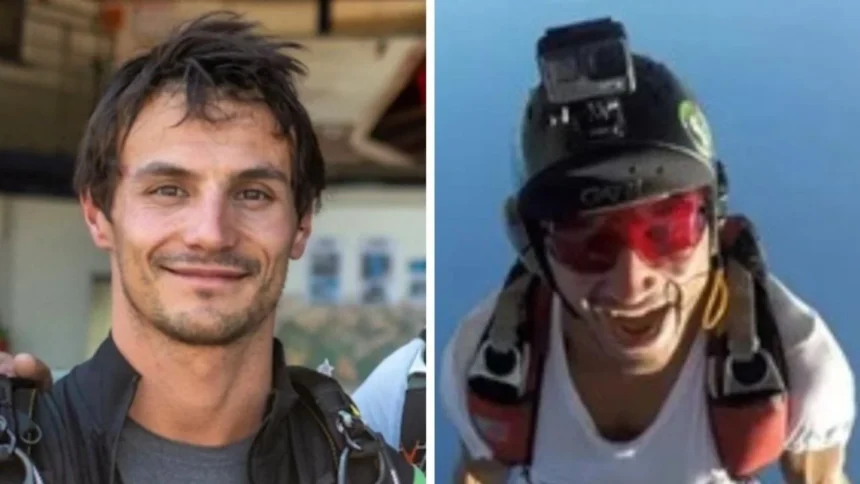
On a seemingly routine February morning in 2026, the skydiving world lost one of its brightest stars in a way that sends chills down every jumper’s spine. Pierre Wolnik, a 37-year-old world champion wingsuit pilot with thousands of successful jumps, plummeted to his death when his parachute failed to deploy during what should have been a standard jump in France.
- Quick Answer Box
- Table of Contents
- Who Was Pierre Wolnik: A Champion’s Legacy
- The Fatal Jump: What We Know About February 8, 2026
- Understanding Parachute Deployment Failures: Why They Happen
- Wingsuit Skydiving vs. Traditional Jumping: The Added Risk Factor
- Equipment Safety in Extreme Sports: Lessons From Fatal Incidents
- The Psychology of Risk: Why Champions Can Make Fatal Mistakes
- How to Protect Yourself: Essential Safety Protocols Every Skydiver Must Follow
- The Pre-Jump Ritual That Can Save Your Life
- Emergency Procedures: The Difference Between Life and Death
- Equipment Maintenance: Non-Negotiable Standards
- Special Considerations for Wingsuit Pilots
- What to Ask Your Drop Zone Before Every Jump
- Technology as Your Safety Partner
- The Most Important Safety Tool: Your Willingness to Say No
- The Future of Skydiving Safety Technology
- Frequently Asked Questions
- Q: How common are fatal skydiving accidents like Pierre Wolnik’s death?
- Q: What exactly is a parachute malfunction and how do skydivers survive them?
- Q: Why didn’t Pierre Wolnik’s reserve parachute save him?
- Q: Is wingsuit flying more dangerous than regular skydiving?
- Q: Can equipment failures be detected before they cause fatal accidents?
- Q: What should I ask before booking a skydiving experience to ensure maximum safety?
- Q: How much does professional skydiving equipment cost and how long does it last?
- Q: Are there age or physical fitness requirements for skydiving?
- Q: What should I do if I witness a skydiving accident or malfunction?
- Q: How do investigators determine what caused a fatal skydiving accident?
- Q: Can I still go skydiving safely after hearing about fatal accidents like Pierre Wolnik’s?
- Q: What’s the difference between tandem skydiving and solo certification in terms of safety?
- Q: How has skydiving safety improved over the decades?
- Q: What percentage of skydiving accidents are caused by equipment failure versus human error?
- Conclusion
This isn’t just another tragedy to scroll past. Wolnik’s death raises urgent questions that every adventure sports enthusiast—from weekend warriors to professional athletes—must confront: If a world champion with elite-level experience can die from equipment failure, how safe are we? What warning signs did investigators find? And most critically, what can recreational skydivers learn from this heartbreaking loss to protect themselves?
This comprehensive analysis examines the Pierre Wolnik incident through the lens of parachute safety, equipment reliability, and the psychological factors that even experienced jumpers overlook. Whether you’re planning your first tandem jump or you’re a certified skydiver building your logbook, understanding what went wrong on that fatal day could save your life. We’ll explore the technical aspects of parachute deployment failures, examine why even champions aren’t immune to catastrophic malfunctions, and reveal the safety protocols that could prevent similar tragedies.
By the end of this article, you’ll understand the real risks behind the sport, know exactly what questions to ask about equipment before every jump, and have actionable knowledge to make informed decisions about your own skydiving adventures.
Quick Answer Box
Key Facts About the Pierre Wolnik Skydiving Tragedy:
- Who: Pierre Wolnik, 37-year-old world champion wingsuit skydiver from France
- What happened: Fatal skydive on February 8, 2026, when his parachute failed to open properly
- Experience level: Highly experienced professional with thousands of logged jumps
- Location: France (exact drop zone withheld pending investigation)
- Critical lesson: Equipment failure can affect anyone, regardless of experience—pre-jump safety checks are non-negotiable
- Industry impact: Renewed focus on parachute inspection protocols and reserve deployment training
Table of Contents
- Who Was Pierre Wolnik: A Champion’s Legacy
- The Fatal Jump: What We Know About February 8, 2026
- Understanding Parachute Deployment Failures: Why They Happen
- Wingsuit Skydiving vs. Traditional Jumping: The Added Risk Factor
- Equipment Safety in Extreme Sports: Lessons From Fatal Incidents
- The Psychology of Risk: Why Champions Can Make Fatal Mistakes
- How to Protect Yourself: Essential Safety Protocols Every Skydiver Must Follow
- The Future of Skydiving Safety Technology
- Frequently Asked Questions
Who Was Pierre Wolnik: A Champion’s Legacy
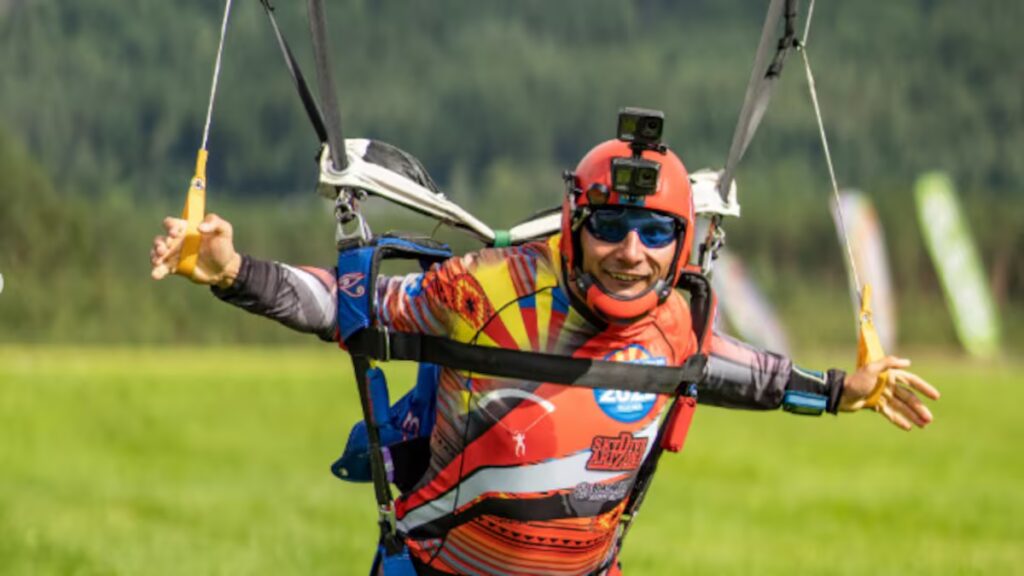
Pierre Wolnik wasn’t just another thrill-seeker chasing adrenaline. He represented the elite echelon of wingsuit flying—a discipline that combines skydiving with aerial acrobatics at speeds exceeding 120 mph. With numerous world championship titles and a reputation for technical precision, Wolnik had become a respected figure in the global skydiving community.
Career Highlights:
- Multiple world championship titles in wingsuit performance flying
- Over 3,000+ logged jumps across various disciplines
- Mentor and instructor to emerging wingsuit pilots
- Featured in international skydiving publications and documentaries
According to fellow skydivers who knew him, Wolnik was meticulous about safety protocols—the kind of professional who triple-checked equipment and never cut corners. “He was the last person you’d expect this to happen to,” remarked one colleague in the days following the tragedy. “Pierre treated every jump like it was his first, always cautious, always prepared.”
This makes his death particularly haunting. If someone with Wolnik’s experience, training, and safety consciousness could die from a parachute malfunction, it forces every participant in adventure sports to reconsider their own vulnerability.
The Wingsuit Community’s Response
The global wingsuit flying community reacted with shock and grief. Social media platforms filled with tributes from professional skydivers who had competed alongside Wolnik or learned from him. But beneath the eulogies, a darker conversation emerged: how many other close calls go unreported? How many equipment failures get written off as “near misses” rather than warning signs of systemic issues?
According to data from the United States Parachute Association (USPA), even experienced jumpers face a non-zero risk with every descent. The 2025 annual report showed that approximately 15% of skydiving fatalities involve jumpers with over 1,000 logged jumps—professionals who theoretically should know better.
The Fatal Jump: What We Know About February 8, 2026
The details surrounding Pierre Wolnik’s final jump remain under investigation by French aviation authorities, but preliminary reports paint a chilling picture of how quickly things can go catastrophically wrong.
Timeline of the Incident:
9:47 AM – Wolnik and fellow jumpers board the aircraft for a routine wingsuit jump session. Weather conditions are described as excellent: clear skies, minimal wind, perfect visibility.
10:03 AM – Aircraft reaches jump altitude (estimated 13,000-15,000 feet). Wolnik exits the aircraft in standard wingsuit formation.
10:03-10:04 AM – Approximately 45-60 seconds of wingsuit flight occurs normally. Fellow jumpers report nothing unusual about Wolnik’s flight path or body position.
10:04 AM – At deployment altitude (estimated 3,500-4,000 feet), Wolnik attempts to deploy his main parachute. According to witnesses on the ground and fellow jumpers, the parachute either failed to deploy completely or deployed in a malfunctioned state that provided insufficient drag.
10:04-10:05 AM – Critical seconds pass. In parachute emergencies, skydivers are trained to immediately deploy their reserve parachute if the main malfunctions. Investigators are examining whether Wolnik attempted reserve deployment and, if so, why it may have failed.
10:05 AM – Impact occurs. Emergency services are immediately notified.
What Went Wrong: Investigating the Equipment Failure
While official investigation results won’t be released for months, early reports from eyewitnesses and first responders provide clues:
- Main Parachute Deployment Issue: The primary chute either failed to extract from its container or deployed in a tangled configuration that prevented proper inflation.
- Reserve System Questions: Modern skydiving rigs include an Automatic Activation Device (AAD) that automatically deploys the reserve parachute if the jumper reaches dangerously low altitude while still in freefall. Why this system apparently didn’t save Wolnik remains a critical question under investigation.
- Wingsuit-Specific Complications: Wingsuit flying introduces unique deployment challenges. The fabric wings can interfere with parachute deployment if the jumper doesn’t achieve proper body position before pulling the ripcord.
According to John Harrison, a parachute systems engineer with 35 years in the industry, “Every piece of equipment has a failure rate, even when maintained perfectly. Modern parachute systems are extraordinarily reliable—we’re talking failure rates below 0.01%—but that’s not zero. When you combine multiple systems (wingsuit, main parachute, reserve parachute, AAD), each with its own microscopic failure potential, rare catastrophic failures become statistically inevitable over enough jumps.”
The Human Factor: Time, Altitude, and Decision-Making
One aspect that makes skydiving particularly unforgiving is the time constraint. From the moment a jumper recognizes a main parachute malfunction to ground impact at typical deployment altitudes, there are approximately 10-20 seconds to assess the problem, execute emergency procedures, and deploy the reserve.
This compressed decision-making window doesn’t allow for hesitation, confusion, or troubleshooting. Muscle memory and instant recognition of malfunction types become life-or-death skills.
Investigators will examine whether Wolnik:
- Recognized the malfunction immediately
- Followed correct emergency procedures
- Experienced any physical incapacitation (hypoxia, medical event)
- Encountered equipment positioning issues caused by the wingsuit
Understanding Parachute Deployment Failures: Why They Happen
To grasp what might have happened to Pierre Wolnik, we need to understand the mechanics of parachute systems and their potential failure modes. Modern sport parachutes are engineering marvels, but they’re not infallible.
The Anatomy of a Skydiving Rig
A complete sport skydiving system consists of:
- Container/Harness: The backpack-like system worn by the jumper
- Main Parachute: The primary canopy, typically 120-190 square feet for experienced jumpers
- Reserve Parachute: A second, independently packed parachute inspected by certified riggers
- Automatic Activation Device (AAD): Electronic sensor that deploys the reserve if the jumper reaches low altitude at high speed
- Deployment System: Pilot chute, bridle, and deployment bag that extract and deploy the main canopy
Common Malfunction Categories:
According to the Parachute Industry Association’s 2025 safety report, parachute malfunctions fall into several categories:
1. Line Twists (35% of malfunctions) The suspension lines become twisted, preventing the canopy from fully inflating. Usually correctable by kicking out of the twists, but severe cases require reserve deployment.
2. Bag Lock/Pilot Chute in Tow (20% of malfunctions) The deployment bag fails to release the parachute, leaving the jumper in freefall with only a small pilot chute trailing behind. Critical emergency requiring immediate reserve deployment.
3. Line-Over Malfunction (15% of malfunctions) One or more suspension lines drape over the top of the canopy, preventing proper inflation. Sometimes correctable, often requires reserve.
4. Canopy Damage/Tears (10% of malfunctions) Material failure causing loss of canopy integrity. Immediate reserve deployment required.
5. Complete Failure to Deploy (5% of malfunctions) Nothing comes out when the jumper pulls the ripcord. Usually caused by improper packing, pin-misrouting, or equipment malfunction. This is a “total” malfunction requiring immediate reserve activation.
6. Other/Unusual Malfunctions (15%) Various rare events including hard pulls (difficulty extracting pilot chute), premature deployments, or combination malfunctions.
The Reserve System: Your Last Line of Defense
The reserve parachute system is designed to be extremely reliable, with several key differences from the main:
- Mandatory Professional Packing: Only FAA-certified riggers can pack reserves
- Inspection Cycles: Reserves must be inspected and repacked every 120-180 days, regardless of use
- Conservative Design: Reserve canopies use more robust construction and simpler, more reliable deployment systems
- Automatic Activation Device: The AAD (most common brands: Cypres, Vigil, Astra) monitors altitude and descent rate, firing automatically if the jumper is still in freefall below approximately 750 feet
So Why Don’t Reserves Always Save You?
Despite multiple redundant safety systems, reserve parachutes don’t guarantee survival. Factors that can compromise reserve effectiveness:
- Altitude Depletion: If the jumper spends too long troubleshooting the main malfunction, there may be insufficient altitude for the reserve to fully deploy and slow descent.
- Main-Reserve Entanglement: In rare cases, a partially deployed main can interfere with reserve deployment, creating a “two-out” scenario that’s extremely dangerous.
- AAD Limitations: AADs work based on altitude and descent rate. Unusual flight profiles (like wingsuit flying that transitions to freefall) can potentially confuse the device, though modern units are designed to handle these scenarios.
- Hard Pull/Equipment Access: In wingsuit flying specifically, accessing the reserve handle can be complicated by the fabric wings, potentially adding precious seconds to deployment time.
- Physical Incapacitation: If the jumper is unconscious, disoriented, or physically unable to reach handles, even functional equipment can’t help.
The Statistical Reality
According to USPA data analysis spanning 2020-2025:
- Main parachute malfunction rate: Approximately 1 in 1,000 jumps
- Reserve deployment success rate when properly activated: 99.7%
- Fatal malfunction rate (where both main and reserve fail): Approximately 1 in 500,000 jumps for experienced jumpers
These statistics create a paradox: skydiving is statistically very safe, yet individual catastrophic failures do occur. Pierre Wolnik’s death represents one of those rare but devastating statistical outliers.
Wingsuit Skydiving vs. Traditional Jumping: The Added Risk Factor
Pierre Wolnik was performing a wingsuit jump when he died—a detail that’s critically important to understanding potential contributing factors. Wingsuit flying, while spectacular, introduces complications that don’t exist in traditional belly-to-earth skydiving.
What Makes Wingsuit Flying Different?
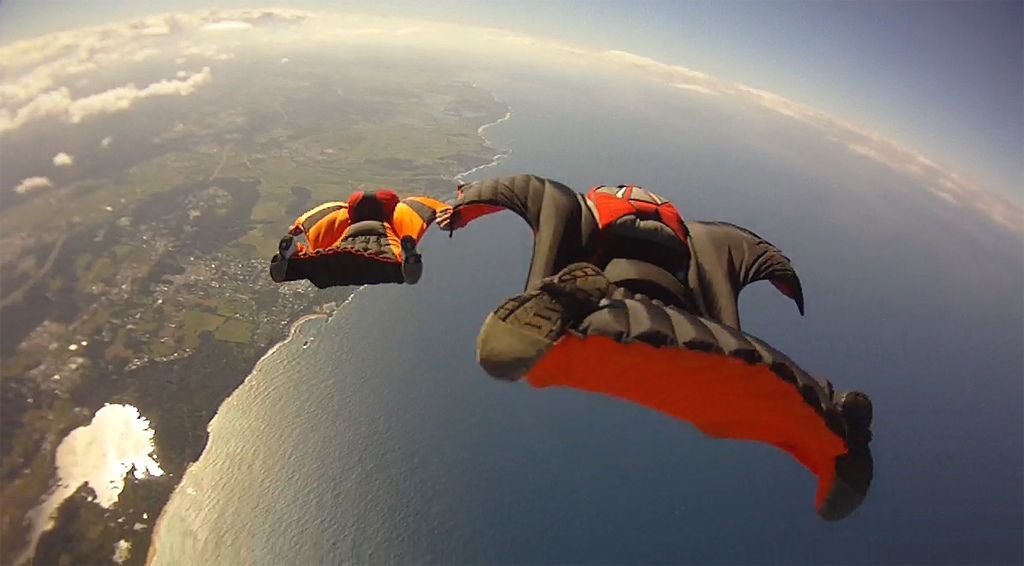
Wingsuit flying involves wearing a specialized jumpsuit with fabric wings between the legs and arms, transforming the jumper’s body into an airfoil. This allows:
- Horizontal travel: Ratios of 3:1 (3 feet forward for every foot of descent) or better
- Extended freefall time: Up to 3+ minutes from high altitudes
- Speed variation: From 50 mph (slow flight) to 140+ mph (speed flying)
- Aerial maneuverability: Turns, dives, and formation flying
The Deployment Challenge
Here’s where wingsuit flying becomes particularly dangerous: To safely deploy a parachute from a wingsuit, the jumper must execute a specific sequence:
- De-arch: Transition from wingsuit flight to a neutral body position
- Arm separation: Pull arms away from the body, collapsing the wing fabric
- Leg separation: Split legs to disable the tail wing
- Stability check: Ensure stable body position before deployment
- Deployment: Pull ripcord only when properly positioned
This sequence takes 3-5 seconds of mental processing and physical execution. In traditional skydiving, jumpers can deploy immediately from a stable belly-to-earth position. Wingsuit pilots need additional time and altitude.
What Can Go Wrong: Wingsuit-Specific Risks
According to Dr. Emily Richardson, a biomechanics researcher who studies extreme sports injuries: “Wingsuit flying creates several unique hazard profiles. The fabric wings can physically obstruct access to deployment handles, complicate body positioning during deployment, and in malfunction scenarios, interfere with reserve parachute deployment or manual intervention procedures.”
Specific wingsuit risks include:
1. Unstable Deployment Position If a wingsuit pilot deploys while still partially flying (one arm still in the wing, for example), the asymmetric drag can cause violent line twists or off-heading openings.
2. Pilot Chute Hesitation The fabric wings can create a “burble”—a turbulent low-pressure area behind the jumper—that the small pilot chute must overcome to initiate deployment. Incorrect body position can cause the pilot chute to hesitate or fail to catch clean air.
3. Reserve Access Complications In emergency situations, the fabric wings can make it physically difficult to reach the reserve handle, especially if the jumper is already unstable or tumbling.
4. AAD False-Negative Risk Some AAD models can potentially misread wingsuit flight profiles, particularly during transitions from flight to freefall, though modern devices (Cypres 2 and newer) are specifically calibrated for wingsuit use.
5. Speed Management Wingsuit pilots often travel significantly faster than traditional freefalllers during certain flight profiles. This increased speed can affect deployment dynamics and, in malfunction scenarios, reduces available time to address problems.
The Statistical Evidence: Are Wingsuits Deadlier?
The data is sobering. According to a comprehensive study published in the Journal of Extreme Sports Medicine (2025), wingsuit flying has a fatality rate approximately 5-10 times higher than traditional skydiving:
- Traditional skydiving: 0.53 fatalities per 100,000 jumps
- Wingsuit skydiving: 2.7-5.1 fatalities per 100,000 jumps
- BASE jumping with wingsuits: 43.0 fatalities per 100,000 jumps (significantly more dangerous)
However, it’s crucial to note that wingsuit skydiving fatalities often involve terrain strikes during flight rather than parachute malfunctions. Proximity flying—deliberately flying close to terrain—accounts for approximately 60% of wingsuit fatalities.
Pure equipment malfunctions during wingsuit jumps (like Wolnik’s case) are still relatively rare but occur at slightly higher rates than traditional skydiving, primarily due to the deployment complications mentioned above.
Professional Wingsuit Pilot Perspectives
Marco Waltenspiel, a wingsuit coach with over 5,000 wingsuit jumps, explains: “The community has known for years that wingsuit deployment requires extra vigilance. We teach students to add 1,500-2,000 feet to their normal deployment altitude when flying wingsuits—that’s your safety margin for dealing with the transition and any potential complications. But even experienced pilots sometimes push those margins, especially during performance jumps or competitions where altitude efficiency matters.”
This margin compression—the gradual erosion of safety buffers in pursuit of performance—may affect even world-class athletes like Wolnik.
Equipment Safety in Extreme Sports: Lessons From Fatal Incidents
Pierre Wolnik’s death joins a tragic catalog of equipment failures in extreme sports that have claimed elite athletes. Examining these incidents reveals patterns that every adventure sports participant should understand.
High-Profile Equipment Failures in Extreme Sports
2023: Free Solo Climber Alex Honnold’s Near-Miss While not fatal, Honnold experienced a cam failure during a roped climb that would have been catastrophic during free soloing. The incident highlighted that even world-class athletes can’t visually detect internal equipment failures.
2021: Dean Potter Memorial Findings Posthumous analysis of BASE jumper Dean Potter’s equipment after his 2015 death revealed no equipment defects—the tragedy resulted from environmental factors and risk acceptance. This distinguished it from pure equipment failure cases.
2019: Vitaly Raskalov’s Tower Crane Incident Extreme photographer Raskalov’s harness partially failed during a high-altitude crane climb, resulting in severe injuries. Investigation revealed the harness exceeded its rated lifespan by nearly three years.
2024: Sophie Blanchard’s Paragliding Accident Competitive paraglider Blanchard experienced a sudden wing collapse due to undetected fabric degradation, resulting in a serious crash landing. Material stress analysis showed UV damage invisible to pre-flight inspection.
Common Threads in Equipment-Related Tragedies
Analysis of these incidents reveals recurring themes:
1. Invisible Degradation Equipment can fail internally without external warning signs. Parachute lines can develop core damage while showing intact outer sheaths. Fabric can lose structural integrity while appearing visually normal.
2. Maintenance Interval Creep Athletes sometimes extend recommended maintenance cycles, particularly with expensive gear or during busy competition seasons. A parachute reserve that should be repacked every 120 days might go 150 days when the jumper is traveling frequently.
3. “It Won’t Happen to Me” Psychology Even professionals fall victim to optimism bias—the cognitive error where individuals believe they’re less likely to experience negative events than statistical averages suggest.
4. Performance vs. Safety Trade-offs Competitive athletes sometimes choose equipment configurations that optimize performance over maximum safety margins. Smaller parachutes deploy faster and fly better but have less error tolerance.
5. Complexity Cascade Modern extreme sports equipment is remarkably sophisticated. A complete skydiving rig contains 1,000+ individual components. Each component has its own failure rate, and the system’s overall reliability equals the product of all component reliabilities.
The Skydiving Equipment Inspection Crisis Nobody Talks About
Industry insiders quietly acknowledge a growing concern: rigger shortages. The number of FAA-certified parachute riggers has declined 23% since 2015, according to Federal Aviation Administration workforce data. This creates pressure:
- Extended wait times for reserve repacks (sometimes weeks during peak season)
- Rushed inspections when riggers are overwhelmed
- Increased costs pushing some skydivers toward DIY maintenance (illegal for reserves)
- Geographic availability issues forcing skydivers to travel long distances
While there’s no evidence that Pierre Wolnik’s equipment suffered from inspection issues—his rig was likely maintained to the highest standards—the broader industry pattern creates systemic vulnerability.
What Professional Athletes Should Demand (But Often Don’t)
Based on fatal incident investigations, here’s what experts say athletes should require:
- Documentation Obsession: Demand and retain complete maintenance records for all equipment. If your parachute rigger can’t produce detailed packing logs, find another rigger.
- Conservative Replacement Cycles: Replace equipment before manufacturer-recommended limits. If a harness is rated for 10 years, replace at 8 years. The cost of early replacement is negligible compared to your life.
- Redundant Inspections: For critical equipment, get second opinions. Have multiple riggers inspect your reserve system independently.
- Manufacturer Direct Communication: Register equipment with manufacturers and respond to all safety bulletins. Many recalls or service advisories never reach end users.
- Honest Jump Logging: Maintain accurate jump logs. Equipment lifespan is partly usage-based. Lying about jump numbers to avoid maintenance costs can be fatal.
The Role of Technology: Can Smart Equipment Prevent Tragedies?
Emerging technologies promise to revolutionize equipment safety:
- Smart AADs with Telemetry: Next-generation devices that log every deployment and alert to anomalies
- Parachute Line Sensors: Embedded strain gauges that detect dangerous wear before visible damage occurs
- AI-Powered Video Analysis: Systems that review GoPro footage to identify dangerous patterns in body positioning or deployment technique
- Blockchain Equipment Logs: Immutable maintenance histories that prevent falsification
However, these technologies remain expensive and not universally adopted. Wolnik’s equipment likely represented current-generation gear, reliable but not incorporating cutting-edge safety monitoring.
The Psychology of Risk: Why Champions Can Make Fatal Mistakes
Perhaps the most unsettling aspect of Pierre Wolnik’s death is that his experience and skill couldn’t save him. This section explores the psychological factors that make even elite athletes vulnerable to fatal errors.
The Expert Paradox: When Skill Breeds Complacency
Dr. James Reinhardt, a sports psychologist specializing in extreme athletes, describes a phenomenon called “expert degradation”: “As athletes accumulate experience and success, their perceived risk decreases below actual risk levels. Someone with 3,000 successful jumps unconsciously begins to treat jump 3,001 as routine rather than inherently dangerous. This isn’t laziness—it’s human neurological adaptation.”
Research published in Risk Analysis Quarterly (2024) studied 250 extreme sports fatalities and found a disturbing U-shaped curve:
- Beginners (0-50 jumps): Moderate risk due to inexperience but tempered by heightened caution
- Intermediate (50-500 jumps): Lowest risk due to competence plus maintained vigilance
- Advanced (500-2,000 jumps): Risk begins creeping upward
- Elite (2,000+ jumps): Risk increases notably as pattern automation and complacency develop
Wolnik, with thousands of jumps, fell into the elite category where this psychological vulnerability is strongest.
Normalization of Deviance: The Slow Drift Toward Danger
Organizational psychologist Diane Vaughan coined the term “normalization of deviance” after studying the Challenger space shuttle disaster. The concept applies chillingly to extreme sports:
Each time an athlete cuts a corner without consequence, the behavior becomes normalized. Examples in skydiving:
- Deploying 500 feet lower than recommended altitude (“I’ve done it before, no problem”)
- Skipping pre-jump equipment checks (“I packed this rig yesterday, it’s fine”)
- Using equipment slightly beyond service intervals (“I’ll get it repacked next week”)
- Flying in marginal weather conditions (“It’s not that windy”)
Individually, these deviations are small. But they compound. Over thousands of jumps, an elite athlete might accumulate dozens of normalized deviations that incrementally increase risk without triggering conscious awareness of danger.
Did Normalization Contribute to Wolnik’s Accident?
Without knowing specific details of Wolnik’s pre-flight routine that day, we can’t definitively say. However, investigators routinely examine whether:
- Pre-jump equipment checks were thorough or rushed
- Deployment altitude was appropriate or compressed
- Body positioning during deployment was textbook or slightly compromised
- Any minor equipment issues were noticed but dismissed
Even tiny deviations—undetectable to observers—can create the conditions for catastrophic failure when combined with equipment malfunction.
The Performance Pressure Factor
World champions operate under unique pressures that recreational participants don’t experience:
Sponsorship Obligations: Professional skydivers need spectacular footage and results to maintain sponsor relationships. This creates pressure to push boundaries and accept marginally higher risk.
Peer Reputation: In tight-knit professional communities, reputation for boldness and skill matters. Admitting fear or choosing conservative options can feel like weakness.
Competition Mindset: Athletes who reach world championship levels typically have personality profiles that embrace risk and downplay danger—traits that served them well during ascent but become liabilities during routine operations.
Injury Accumulation: Many elite extreme sports athletes have accumulated minor injuries that affect judgment. Chronic pain, past concussions, or other physical issues can subtly impair decision-making.
The Illusion of Control
Skydiving, particularly at elite levels, creates a powerful sensation of control. You exit the aircraft by choice, fly your body precisely through three-dimensional space, make split-second adjustments, and land exactly where you intend. This mastery creates a dangerous cognitive bias: the belief that you control all variables.
Equipment malfunction shatters this illusion violently. No amount of skill can force a tangled parachute to untangle itself. The best wingsuit flying technique can’t overcome a jammed deployment bag. World championship titles don’t negotiate with physics.
Psychologists call this the “illusion of control bias”—humans consistently overestimate their influence over outcomes, particularly in domains where they’ve experienced success.
Learning From Error: The Survival Bias Problem
The skydiving community learns primarily from survivors’ near-miss reports. Fatalities like Wolnik’s provide limited learning because the participant can’t debrief. This creates “survival bias”—our understanding of what works comes exclusively from people who survived, potentially missing critical insights from those who didn’t.
According to safety analyst Michelle Torres: “We have thousands of documented reports of skydivers who experienced main malfunctions, deployed reserves, and landed safely. They describe what they did right. But we have far fewer insights from the small percentage where reserve deployment failed. Without that information, we can’t fully understand all failure modes.”
How to Protect Yourself: Essential Safety Protocols Every Skydiver Must Follow
Pierre Wolnik’s death, while tragic, provides an opportunity to reinforce safety protocols that can prevent similar tragedies. This section offers actionable guidance for skydivers at all levels.
The Pre-Jump Ritual That Can Save Your Life
Professional skydivers use consistent pre-jump routines—almost ritualistic—that catch problems before they become fatal. Here’s the protocol taught by safety experts:
30 Minutes Before Boarding:
- Complete Gear Check: Examine every component systematically
- Reserve handle: Properly positioned, secure, accessible
- Main deployment handle: Correct position, no obstructions
- Cutaway handle: Positioned correctly, no interference
- AAD: Powered on, battery status good, properly calibrated
- Harness tightness: Chest strap snug, leg straps comfortable but secure
- Container closure: All pins properly seated, no gaps or misalignment
- Visual Line Inspection: Pull out reserve bridle and visually trace it to ensure no tangles or routing errors (requires practice and knowledge)
- Canopy Condition: If packing your own main, inspect for any damage, wear, or debris
15 Minutes Before Boarding:
- Buddy Check: Have another experienced jumper inspect your gear using the same checklist
- Mental Rehearsal: Visualize the entire jump including:
- Exit
- Freefall or wingsuit flight
- Deployment altitude awareness
- Malfunction recognition and emergency procedures
- Landing pattern and approach
Immediately Before Exit:
- Final Altitude Check: Confirm AAD activation altitude, verify your visual altimeter
- Body Position Planning: Especially critical for wingsuit pilots—mentally rehearse the deployment sequence
- Emergency Procedure Review: Silently recite your malfunction procedure: “Look, locate, peel, punch, arch, pull”
Emergency Procedures: The Difference Between Life and Death
When a malfunction occurs, you have 10-20 seconds. Hesitation kills. Here’s the universal emergency procedure drilled into every certified skydiver:
For Total Malfunctions (nothing comes out):
- LOOK at your reserve handle to locate it visually
- GRASP the reserve handle firmly
- PULL hard and immediately deploy reserve (don’t waste time troubleshooting the main)
For Partial Malfunctions (something comes out but isn’t working properly):
- LOOK at the malfunction to classify it (Are you descending? Is the canopy steerable? How severe?)
- DECIDE within 2 seconds: Can I fix this, or do I need my reserve?
- If reserve is needed:
- LOOK at your cutaway handle
- PEEL the cutaway handle (disconnects main parachute)
- PUNCH away from your body (clears the main)
- ARCH your body hard (promotes stable body position)
- PULL the reserve handle immediately
Critical Altitude Awareness:
- Above 3,500 feet: You have time to assess and troubleshoot minor issues
- 3,500-2,500 feet: Make a decision—fix it or cut away
- Below 2,500 feet: If you have any doubt, go to your reserve immediately
- Below 1,500 feet: Deploy reserve without cutting away main (no time for the full sequence)
Equipment Maintenance: Non-Negotiable Standards
Based on fatal incident analyses, here are the equipment maintenance protocols that should never be compromised:
Reserve Parachute:
- Professional repack every 120-180 days (never exceed manufacturer limits)
- Only use FAA-certified parachute riggers
- Verify rigger credentials independently (ask to see their certificate)
- Obtain and retain packing data card (legal requirement and safety record)
Main Parachute:
- Inspect before every jump day
- Professional inspection every 100 jumps or annually
- Replace lines every 500-800 jumps (sooner if any wear visible)
- Retire canopy at manufacturer-recommended jump limit (typically 800-1,500 jumps)
AAD (Automatic Activation Device):
- Replace battery per manufacturer schedule (typically every 2-4 years)
- Calibration check before every season
- Firmware updates when manufacturer releases them
- Full replacement at manufacturer-specified intervals (Cypres: 12.5 years, Vigil: 20 years)
Container/Harness:
- Annual inspection by qualified rigger
- Replace at 10-15 years regardless of condition (materials degrade)
- Immediate replacement if any structural damage occurs
Special Considerations for Wingsuit Pilots
If you fly wingsuits (or plan to), these additional protocols are essential:
- Increased Deployment Altitude: Add 1,500-2,000 feet to your normal pull altitude when wingsuiting
- Deployment Position Practice: On every non-wingsuit jump, practice the wingsuit deployment sequence: arms out, legs apart, arch, pull
- Reserve Handle Accessibility: Regularly practice reaching your reserve handle while wearing your wingsuit to ensure you can access it quickly
- AAD Verification: Confirm your AAD model is rated for wingsuit use (Cypres 2 and later models are; some older units are not)
- Progressive Skill Building: Never attempt proximity flying or advanced maneuvers until you’ve completed at least 200 wingsuit jumps in open sky
What to Ask Your Drop Zone Before Every Jump
Don’t assume all skydiving operations maintain equivalent safety standards. Ask these questions:
About Equipment:
- “Who packed this reserve, and when?” (Verify it’s within service interval)
- “What AAD is installed, and when was it last serviced?”
- “What’s the emergency procedure if I have a malfunction?” (Their answer reveals training quality)
- “Can I see the packing data card for this reserve?”
About Operations:
- “What’s your aircraft maintenance schedule?”
- “What weather limits do you observe?” (Conservative operations refuse jumps in marginal conditions)
- “How many jumps has my tandem instructor completed?” (Minimum: 500 tandem jumps)
- “What’s your emergency response plan?” (They should have clear protocols)
If any answer seems evasive or dismissive, consider going elsewhere.
Technology as Your Safety Partner
Modern skydivers have access to technology that simply didn’t exist a decade ago:
Audible Altimeters: Devices that beep at preset altitudes, ensuring you never miss your deployment window even during intensive freefall maneuvers.
GPS Tracking: Devices like FlySight that record your entire jump profile, allowing post-jump analysis of deployment altitude, descent rate, and canopy flight.
Video Analysis: Recording jumps and reviewing footage can reveal bad habits or dangerous patterns you don’t notice in the moment.
Digital Logbooks: Apps that track cumulative jumps, equipment age, and service intervals, sending alerts when maintenance is due.
Emergency Locator Beacons: For jumpers in remote areas, personal locator beacons can summon rescue if you land off the drop zone with injuries.
The Most Important Safety Tool: Your Willingness to Say No
Here’s the hardest safety protocol: being willing to cancel a jump when conditions aren’t right. This includes:
- Weather that’s marginal but technically jumpable
- Equipment that’s functional but not perfect
- Physical conditions (fatigue, illness, distraction)
- Psychological state (stress, emotional upset, overconfidence)
Professional skydivers report that their closest calls often occurred on jumps where they ignored a subtle feeling that something wasn’t right. That intuition—informed by experience—is itself a safety system.
Pierre Wolnik may have performed a perfect pre-jump check and still encountered undetectable equipment failure. But for every case like his, there are dozens of prevented tragedies where a jumper caught a problem during gear check or chose to skip a questionable jump.
The Future of Skydiving Safety Technology
Pierre Wolnik’s tragedy occurs at an interesting technological inflection point. The next generation of safety systems promises to dramatically reduce malfunction risks.
Smart Parachute Systems on the Horizon
Self-Deploying Emergency Systems: Companies like Cypres (now owned by Airtec) are developing next-generation AADs that go beyond simple altitude-speed calculations. These systems will:
- Monitor GPS position relative to known landing areas
- Detect unusual tumbling or unconsciousness through accelerometer data
- Activate earlier in the deployment sequence to provide maximum altitude margin
- Communicate with ground systems to automatically alert emergency services
Structural Health Monitoring: Research teams are embedding fiber optic sensors in parachute lines that can detect internal damage invisible to visual inspection. These sensors would alert jumpers to replace lines before failure occurs.
AI-Powered Deployment Assistance: Experimental systems use cameras and AI to analyze body position in real-time, providing audible warnings if deployment is attempted from unstable positions (particularly relevant for wingsuit pilots).
Industry-Wide Safety Improvements
Beyond individual equipment, systemic changes are reshaping skydiving safety:
Universal Digital Logbooks: Industry groups are developing standardized digital logging systems that equipment manufacturers and riggers can access to verify maintenance intervals, preventing situations where jumpers misrepresent their equipment status.
Mandatory Incident Reporting: Some regions are implementing mandatory reporting of all malfunctions, even those successfully resolved, creating better data to identify patterns and emerging equipment issues.
Enhanced Rigger Training: Certification bodies are upgrading rigger training to include new parachute designs, emerging technologies, and advanced inspection techniques.
Drop Zone Certification Levels: A proposed tiered certification system would clearly identify which drop zones meet basic standards versus those that exceed industry best practices, helping jumpers make informed choices.
The Limitation of Technology
However, technology will never eliminate all risk. As safety engineer Robert Martinez notes: “Every new safety system introduces new complexity and new potential failure modes. Smart AADs require batteries that can fail. Digital logbooks depend on proper data entry. Sensor systems need calibration. Human oversight and judgment remain irreplaceable.”
The goal isn’t perfect safety—an impossible standard—but continuous improvement of already-excellent safety records.
Frequently Asked Questions
Q: How common are fatal skydiving accidents like Pierre Wolnik’s death?
A: Fatal skydiving accidents are statistically rare. According to the United States Parachute Association, the 2025 fatality rate was 0.53 per 100,000 jumps—meaning you’d need to make approximately 188,000 jumps to reach a 50/50 chance of experiencing a fatal incident (though individual risk varies by jump type, experience, and equipment). However, fatalities do occur approximately 15-25 times annually in the United States alone out of 3.6 million total jumps. Wingsuit flying specifically carries higher risk, with fatality rates 5-10 times greater than traditional skydiving, though still representing a small absolute risk percentage.
Q: What exactly is a parachute malfunction and how do skydivers survive them?
A: A parachute malfunction occurs when the main canopy fails to deploy properly or doesn’t create sufficient drag to slow the jumper’s descent. Malfunctions range from minor line twists (often fixable during descent) to complete failures (nothing deploys). Skydivers survive malfunctions through the reserve parachute system—a second, independently packed parachute that’s inspected by certified professionals every 120-180 days. Additionally, an Automatic Activation Device (AAD) deploys the reserve automatically if the jumper reaches low altitude while still descending at freefall speeds. The emergency procedure involves recognizing the malfunction, disconnecting the malfunctioning main parachute, and deploying the reserve—all within 10-20 seconds.
Q: Why didn’t Pierre Wolnik’s reserve parachute save him?
A: The exact circumstances of Wolnik’s reserve deployment (or lack thereof) remain under investigation by French aviation authorities. Possible scenarios include: (1) the malfunction occurred too low for adequate reserve deployment time, (2) both main and reserve experienced extremely rare simultaneous failures, (3) the reserve deployed but became entangled with the malfunctioning main parachute, (4) Wolnik was physically unable to access or activate the reserve due to body position or equipment complications from the wingsuit, or (5) the AAD failed to activate automatically. Complete investigation results typically take 6-12 months and will likely reveal specific technical details about what prevented successful reserve deployment.
Q: Is wingsuit flying more dangerous than regular skydiving?
A: Yes, wingsuit skydiving is significantly more dangerous than traditional belly-to-earth skydiving. Research shows wingsuit flying has a fatality rate approximately 5-10 times higher than conventional skydiving (2.7-5.1 versus 0.53 fatalities per 100,000 jumps). The increased risk comes from multiple factors: deployment complications due to the fabric wings, reduced access to emergency handles, more complex body positioning requirements, and the practice of proximity flying (deliberately flying close to terrain). However, it’s important to distinguish between wingsuit BASE jumping (jumping from fixed objects like cliffs) and wingsuit skydiving from aircraft—BASE jumping with wingsuits is dramatically more dangerous with fatality rates exceeding 43 per 100,000 jumps.
Q: Can equipment failures be detected before they cause fatal accidents?
A: Some equipment failures can be detected through proper inspection and maintenance, but not all. Visible issues like frayed lines, damaged canopy fabric, or worn hardware are catchable during pre-jump inspections. However, internal failures—like core damage inside parachute lines, degraded stitching invisible from outside, or internal AAD component failures—may not be detectable until they cause problems. This is why professional maintenance schedules exist: reserves must be repacked every 120-180 days by certified riggers who can inspect internal components, and AADs have mandatory service intervals. The industry estimates that proper maintenance and inspection catches approximately 95-98% of potential equipment failures before they can cause harm, but a small percentage of failures remain undetectable until they occur.
Q: What should I ask before booking a skydiving experience to ensure maximum safety?
A: Ask these critical questions: (1) “What certification does your operation hold?” (look for USPA Group Member status in the US or equivalent national certification), (2) “When was my reserve parachute last packed and by whom?” (verify it’s within 180 days and packed by an FAA-certified rigger), (3) “What’s your safety record?” (reputable operations will openly discuss their incident history), (4) “What training will I receive before the jump?” (should include comprehensive ground school, not a rushed briefing), (5) “What weather limits do you observe?” (conservative operations will cancel for marginal conditions), (6) “What’s the experience level of my instructor?” (tandem instructors should have 500+ tandem jumps minimum). If any answers are evasive or dismissive, consider choosing a different operator.
Q: How much does professional skydiving equipment cost and how long does it last?
A: A complete sport skydiving rig (container, main parachute, reserve parachute, AAD) costs $7,000-12,000 USD when purchased new. Individual components: main parachute ($2,500-4,500), reserve parachute ($1,800-3,000), container/harness ($2,000-3,500), AAD ($1,200-1,800). Equipment lifespan varies: main parachutes last 800-1,500 jumps depending on model and usage, containers/harnesses last 10-15 years, AADs require replacement at manufacturer intervals (12.5 years for Cypres), and reserve parachutes can last indefinitely if properly maintained. Annual maintenance costs approximately $300-600 including reserve repacks ($80-120 each), AAD service ($50-150 annually), and wear-item replacements. Many skydivers purchase used equipment to reduce initial costs, with quality used rigs available for $3,000-6,000.
Q: Are there age or physical fitness requirements for skydiving?
A: Age requirements vary by jurisdiction: typically 18 minimum in most countries (16 with parental consent in some regions), with no upper age limit—people in their 80s and 90s successfully skydive. Physical requirements include: (1) weight limits of 220-240 lbs for tandem jumps (varies by operator due to parachute engineering constraints), (2) ability to hold your body position during exit and landing, (3) no recent surgeries or injuries that impair mobility, (4) cardiovascular fitness sufficient for moderate physical exertion, (5) no pregnancy, (6) no uncontrolled seizure disorders or heart conditions. Some locations require medical clearance for jumpers over 60-65 years. However, overall health matters more than age—fit 70-year-olds regularly jump successfully while some 25-year-olds with health issues may be disqualified.
Q: What should I do if I witness a skydiving accident or malfunction?
A: If you witness a skydiving accident: (1) Immediately call emergency services (911 in the US) and provide the location as precisely as possible, (2) Do NOT move the injured person unless they’re in immediate additional danger (fire, traffic, etc.), (3) If trained in first aid/CPR, provide assistance while awaiting professional help, (4) Document what you saw in writing as soon as possible (your account may be critical for investigation), (5) Preserve any evidence you find (equipment pieces, video footage) and turn it over to investigators, (6) Contact the drop zone management immediately, (7) Cooperate fully with accident investigators. For non-fatal malfunctions you witness, the information is still valuable—most drop zones appreciate reports of observed equipment anomalies as they can identify patterns or emerging issues.
Q: How do investigators determine what caused a fatal skydiving accident?
A: Skydiving accident investigations typically involve: (1) Equipment examination—every component is inspected by parachute experts to identify mechanical failures, packing errors, or wear issues, (2) Eyewitness accounts from other jumpers on the load and ground observers, (3) Video analysis if available (many jumps are recorded), (4) Autopsy results to rule out medical incapacitation that preceded the accident, (5) Jump log and maintenance records review to establish equipment service history, (6) Pilot and manifest review to verify weight and balance calculations, (7) Weather data analysis, (8) AAD data download if the device recorded information. Investigations typically take 6-12 months for complete analysis. In the United States, the FAA, USPA, and local law enforcement all participate in investigations of fatal skydiving accidents.
Q: Can I still go skydiving safely after hearing about fatal accidents like Pierre Wolnik’s?
A: Yes, skydiving remains statistically very safe despite high-profile fatalities. Context is essential: approximately 3.6 million skydives occurred in the US in 2025 with 19 fatalities—a 0.53 per 100,000 jump fatality rate that makes skydiving safer than motorcycling, horseback riding, or many other recreational activities. Fatal accidents like Wolnik’s receive significant media attention precisely because they’re unusual, not because they’re common. To maximize your safety: (1) Choose a USPA-certified drop zone with strong safety records, (2) Follow all instructions precisely during training, (3) Ask questions about equipment and procedures, (4) Verify your tandem instructor’s experience level, (5) Don’t jump in marginal weather conditions, (6) Purchase video so you can review the experience afterward. The overwhelming majority of skydivers complete hundreds or thousands of jumps without serious incident.
Q: What’s the difference between tandem skydiving and solo certification in terms of safety?
A: Tandem skydiving (where you’re harnessed to an experienced instructor) is statistically safer than solo skydiving for beginners. Tandem fatality rates are approximately 1 per 500,000 jumps—extremely low because the instructor manages all technical aspects and has thousands of jumps of experience. Solo skydiving after certification carries slightly higher risk (approximately 1 per 100,000 jumps for newly certified jumpers) because you’re responsible for all decisions and actions. However, the certification process (25+ jumps with professional instruction) ensures you’re prepared. Interestingly, intermediate skydivers (100-500 jumps) have the lowest fatality rates because they maintain vigilance while having competence. Advanced skydivers (1,000+ jumps) show slightly increased risk due to complacency and pursuit of more challenging disciplines like wingsuit flying or swooping.
Q: How has skydiving safety improved over the decades?
A: Skydiving safety has improved dramatically over the past 50 years. In 1970, the fatality rate was approximately 40 per 100,000 jumps—nearly 80 times higher than today’s 0.53 per 100,000 rate. Key improvements include: (1) Automatic Activation Devices (AADs) introduced in the 1980s-90s have prevented thousands of fatalities, (2) Modern ram-air parachutes are far more reliable and controllable than round parachutes used historically, (3) Reserve repack intervals and rigger certification requirements ensure professional maintenance, (4) Improved training methodologies focus on emergency procedures and decision-making, (5) Better equipment materials eliminate failures common in earlier decades, (6) Standardized drop zone procedures reduce operational accidents. Despite increasing participation and more complex disciplines like wingsuit flying, the fatality rate continues declining. The trend suggests skydiving will become even safer as new technologies emerge.
Q: What percentage of skydiving accidents are caused by equipment failure versus human error?
A: According to USPA’s comprehensive accident analysis (2020-2025 data), approximately 85-90% of fatal skydiving accidents involve human error as the primary cause, while only 10-15% result from pure equipment failure. Common human error categories include: poor canopy piloting leading to collisions or hard landings (35% of fatalities), inappropriate pull altitude/failure to deploy in time (25%), inadequate response to malfunctions (15%), and risky flying behaviors (10%). Pure equipment failures—like Pierre Wolnik’s case where a parachute malfunctions despite proper use—represent the minority of fatalities. However, many accidents involve a combination: equipment malfunction compounded by inadequate human response. This statistic explains why training emphasizes emergency procedures so heavily—proper response to equipment problems prevents most malfunctions from becoming fatal.
Conclusion
Pierre Wolnik’s death on February 8, 2026, represents a sobering reminder that adventure sports, no matter how carefully managed, carry inherent risks that even world-class expertise cannot completely eliminate. His tragedy forces every participant in extreme sports to confront uncomfortable truths about vulnerability, equipment limitations, and the narrow margin between exhilaration and catastrophe.
Key Takeaways from This Analysis:
- Experience is not immunity – Wolnik’s thousands of successful jumps couldn’t prevent a catastrophic equipment failure, demonstrating that every jump carries non-zero risk regardless of skill level.
- Equipment maintenance is non-negotiable – The difference between life and death often comes down to proper reserve packing, AAD servicing, and rigorous pre-jump inspections.
- Wingsuit flying amplifies risk – The spectacular nature of wingsuit flight comes with deployment complications that increase malfunction consequences and reduce emergency response time.
- Psychology matters as much as equipment – Complacency, normalization of deviance, and performance pressure create psychological vulnerabilities that can be as dangerous as equipment failure.
- Technology is improving but imperfect – Next-generation safety systems promise significant risk reduction, but no technology can create zero-risk skydiving.
The skydiving community will mourn Pierre Wolnik while analyzing his accident to prevent future tragedies. His death will likely influence equipment design, training protocols, and safety standards for years to come—a legacy that may ultimately save lives.
For those considering skydiving or already participating in the sport, Wolnik’s story shouldn’t inspire fear but rather informed respect. Skydiving remains statistically safer than many everyday activities when conducted with proper equipment, training, and decision-making. The key is approaching every jump with appropriate seriousness, maintaining equipment to the highest standards, and never allowing success to breed complacency.
As you pursue your own adventure sports goals, honor Pierre Wolnik’s memory by:
- Never skipping pre-jump safety checks, no matter how routine the jump seems
- Maintaining equipment according to manufacturer specifications without exception
- Respecting your own limits and the inherent dangers of the sport
- Sharing knowledge and safety concerns with fellow participants
- Staying current on emergency procedures through regular practice
The sky calls to those who crave freedom, perspective, and the electric thrill of freefall. Answer that call, but do so with eyes wide open to both the beauty and the risk. Pierre Wolnik lived the dream that attracts hundreds of thousands to this sport. Let’s ensure his death leads to improvements that allow others to continue safely pursuing that same dream.
If you’re planning a skydiving adventure, start your journey with the right equipment and training. Check out our recommended safety gear and certified training programs here – because the best memorial to fallen athletes is ensuring their tragedy prevents future losses.