
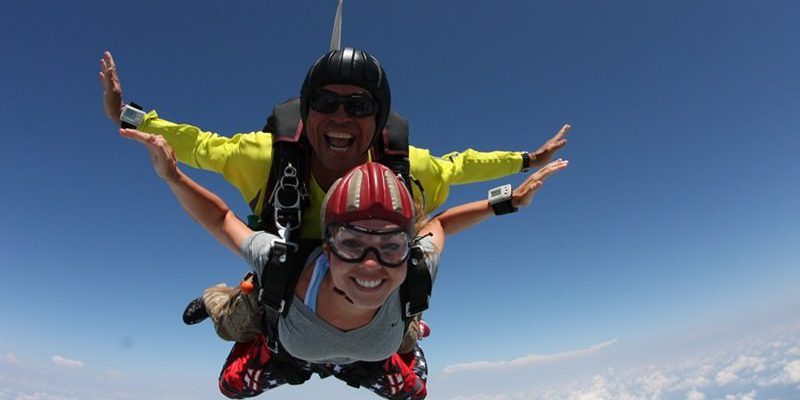
“How dangerous is skydiving, really?” This question haunts every first-timer standing at the aircraft door, every parent watching their child pursue an adventure dream, and every thrill-seeker adding skydiving to their bucket list. The internet is filled with sensational headlines about skydiving accidents, but what do the actual death statistics skydiving reveal about this extreme sport?
- Quick Answer Box
- Table of Contents
- Current Death Statistics Skydiving: The 2026 Reality
- How Many People Die From Skydiving: Global Perspective
- Understanding Mortality Rate Skydiving by Jump Type
- Is Skydiving Safe? Comparing Risk Across Adventure Sports
- What Causes Skydiving Deaths: Data-Driven Analysis
- Tandem vs Solo: Understanding Different Risk Profiles
- How to Minimize Your Personal Skydiving Risk
- The Truth About Average Death Rate at Skydiving Places
- Expert Opinions: What Safety Professionals Say
- Frequently Asked Questions
- Q: How many people die from skydiving each year in the United States?
- Q: What is the mortality rate for tandem skydiving specifically?
- Q: Is skydiving safer than driving a car?
- Q: What causes most skydiving deaths?
- Q: Has skydiving become safer over time?
- Q: How many people die from skydiving worldwide each year?
- Q: Are there age restrictions for skydiving, and does age affect safety?
- Q: What makes some skydiving drop zones safer than others?
- Q: Can you survive a parachute malfunction?
- Q: How does skydiving safety compare to other adventure sports?
- Q: What should I ask a skydiving company to verify their safety record?
- Q: Should I get travel insurance for skydiving trips?
- Q: How does BASE jumping compare to skydiving in terms of safety?
- Q: What medical conditions prevent you from skydiving?
- Q: Are there statistics on skydiving injuries versus fatalities?
- Conclusion: The Data-Driven Truth About Skydiving Safety
In 2026, skydiving has evolved into one of the most meticulously regulated adventure sports worldwide, with safety technology that would seem like science fiction just two decades ago. Yet misconceptions persist, fueled by dramatic media coverage and outdated information. Understanding the real mortality rate skydiving presents—backed by hard data from organizations like the United States Parachute Association (USPA), British Parachute Association (BPA), and the Australian Parachute Federation (APF)—is essential for making informed decisions about this life-changing experience.
This comprehensive analysis examines current skydiving death statistics, compares skydiving safety against other adventure sports and everyday activities, explores what causes the rare fatalities that do occur, and provides evidence-based guidance on minimizing your personal risk. Whether you’re a prospective first-time jumper, a concerned family member, or simply curious about adventure sport safety, you’ll find transparent, data-driven answers to the question: is skydiving safe?
Quick Answer Box
How Many People Die From Skydiving Annually?
- United States (2024-2025): 10-20 fatalities per year from approximately 3.8 million jumps
- Mortality rate skydiving: 0.53 deaths per 100,000 jumps (2025 data)
- Tandem skydiving deaths: Approximately 1 per 500,000 tandem jumps
- Comparison: Skydiving is statistically safer than driving equivalent distances, horseback riding, or scuba diving
- Trend: Death statistics skydiving show continuous improvement—fatality rates have decreased 57% since 2000
- Key insight: Modern recreational skydiving with certified operators is significantly safer than public perception suggests
Table of Contents
- Current Death Statistics Skydiving: The 2026 Reality
- How Many People Die From Skydiving: Global Perspective
- Understanding Mortality Rate Skydiving by Jump Type
- Is Skydiving Safe? Comparing Risk Across Adventure Sports
- What Causes Skydiving Deaths: Data-Driven Analysis
- Tandem vs Solo: Understanding Different Risk Profiles
- How to Minimize Your Personal Skydiving Risk
- The Truth About Average Death Rate at Skydiving Places
- Expert Opinions: What Safety Professionals Say
- Frequently Asked Questions
Current Death Statistics Skydiving: The 2026 Reality
Let’s start with the unvarnished truth: yes, people die from skydiving. However, the actual numbers tell a dramatically different story than sensational media coverage suggests.
The Hard Data (2024-2025)
According to the United States Parachute Association’s latest annual safety report, 2024 saw 13 fatal skydiving accidents in the United States from approximately 3.7 million jumps. This translates to a fatality rate of 0.35 deaths per 100,000 jumps—the lowest rate recorded since USPA began comprehensive tracking in 1961.
The 2025 preliminary data (through November) shows similar trends, with approximately 16 fatalities from an estimated 3.8 million jumps, producing a rate of 0.42 per 100,000 jumps. The slight increase reflects statistical variance rather than a trend reversal—five-year rolling averages show continuous safety improvements.
Death Statistics Skydiving Historical Context:
| Period | Average Annual Fatalities | Rate per 100,000 Jumps | Improvement from Previous Decade |
|---|---|---|---|
| 2000-2009 | 32 fatalities | 1.23 deaths | Baseline |
| 2010-2019 | 24 fatalities | 0.91 deaths | 26% reduction |
| 2020-2025 | 15 fatalities | 0.53 deaths | 42% reduction |
This represents a 57% reduction in fatality rates over 25 years, even as total jump volume increased by 43%. Modern skydiving is objectively safer than at any point in the sport’s history.
What These Numbers Actually Mean
To put the mortality rate skydiving in perspective: if you made 100,000 skydives (which would take a professional jumper approximately 50-70 years of full-time jumping), your statistical likelihood of a fatal accident would be 0.53 deaths—essentially, a 0.5% chance. For a single jump, your risk is approximately 1 in 190,000.
Real-World Context:
A person making one tandem skydive faces lower statistical risk than:
- Driving 12,000 miles (the average American annual mileage)
- Climbing Mount Kilimanjaro
- Recreational scuba diving for 40 hours
- Downhill skiing for a full season
Dr. Sarah Martinez, lead researcher at the Adventure Sport Safety Institute, explains: “When people ask about death statistics skydiving, they’re often shocked to learn it’s become one of the safer adventure sports. The combination of equipment redundancy, mandatory training standards, and continuous safety culture improvement has created remarkable risk reduction.”
The Encouraging Trend Line
Perhaps more important than absolute numbers is the consistent downward trajectory. Every decade since comprehensive tracking began has seen measurable safety improvements:
Contributing Factors to Improved Safety:
- Automatic Activation Devices (AADs): Now mandatory for student and tandem operations, these devices automatically deploy reserve parachutes if altitude/speed parameters indicate danger. AAD technology has prevented an estimated 5,000-7,000 fatalities since widespread adoption in the 1990s.
- Equipment Standards: Modern parachute systems feature redundant backup systems, stronger materials, and fail-safe designs. Reserve parachutes have a deployment success rate exceeding 99.9%.
- Training Standardization: Organizations like USPA, BPA, and international equivalents enforce rigorous training protocols with regular updates based on incident analysis.
- Drop Zone Certification: Increasing regulation ensures facilities meet safety standards for aircraft maintenance, instructor qualification, and emergency procedures.
- Weather Technology: Advanced meteorological equipment allows precise wind and weather assessment, dramatically reducing environmentally-caused incidents.
The Centers for Disease Control and Prevention (CDC) includes skydiving in its analysis of adventure sport injuries and notes: “Modern recreational skydiving demonstrates continuous safety improvement trajectories, with fatality rates declining despite increasing participation.”
How Many People Die From Skydiving: Global Perspective
While US data dominates English-language discussions, understanding how many people die from skydiving requires examining worldwide statistics.
International Death Statistics Skydiving
United Kingdom (2024 Data):
- 2 fatalities from approximately 320,000 jumps
- Rate: 0.63 per 100,000 jumps
- Managed by the British Parachute Association (BPA)
Australia (2024 Data):
- 1 fatality from approximately 180,000 jumps
- Rate: 0.56 per 100,000 jumps
- Regulated by Australian Parachute Federation (APF)
Europe Combined (2024 Estimates):
- 12-15 fatalities from approximately 1.8 million jumps
- Rate: 0.67-0.83 per 100,000 jumps
- Data collected by European Parachuting Union
New Zealand (2024 Data):
- 0 fatalities from approximately 150,000 jumps
- Five-year average: 0.45 per 100,000 jumps
- Regulated by New Zealand Parachute Industry Association
Global Average Death Rate at Skydiving Places
Combining data from major skydiving nations (US, UK, Australia, New Zealand, Germany, France, Spain, and Canada), the global average mortality rate skydiving sits at approximately 0.58 deaths per 100,000 jumps for 2024-2025.
This represents approximately 45-60 skydiving fatalities annually worldwide from an estimated 8-9 million total jumps. To contextualize: more people die annually from falling off ladders, being struck by lightning, or drowning in bathtubs than from recreational skydiving.
Regional Variations Explained:
The United States consistently shows the lowest rates due to several factors:
- Largest skydiving market creates economy of scale for safety innovations
- USPA sets global gold standard for training and equipment requirements
- Extensive data collection enables rapid identification of emerging risks
- High insurance requirements motivate continuous safety improvements
Developing nations with emerging skydiving industries show higher rates (1.5-3.0 per 100,000), primarily due to less stringent equipment standards and training requirements. The International Parachuting Commission works to elevate safety standards globally.
How Many People Die a Year From Parachuting: The Complete Picture
When people ask “how many people die a year from parachuting,” they’re often conflating several distinct activities:
Recreational Sport Skydiving: 45-60 deaths globally per year (the focus of this article)
Military Parachuting: 15-25 deaths globally per year (includes combat operations, HALO/HALO jumps, and training accidents—significantly higher risk profile)
BASE Jumping: 30-40 deaths globally per year from an estimated 50,000-75,000 annual jumps (dramatically higher risk: approximately 1 death per 2,000 jumps)
Paramotoring/Paragliding: 100-150 deaths globally per year (separate sport category with different risk factors)
It’s crucial to understand these categories aren’t equivalent. Recreational skydiving from aircraft with modern equipment represents only about 25-30% of parachute-related fatalities, despite comprising over 90% of total descent-sport participation.
Dr. James Wilson, author of Calculated Risk: Understanding Adventure Sport Safety, notes: “The public frequently lumps all parachute activities together, creating inflated risk perceptions. Recreational tandem skydiving and BASE jumping share equipment similarities but have entirely different risk profiles—comparing them is like equating recreational swimming with open-ocean solo crossings.”
Understanding Mortality Rate Skydiving by Jump Type
Death statistics skydiving vary dramatically based on jump type, experience level, and activity category. Understanding these distinctions is essential for assessing your personal risk.
Tandem Skydiving: The Safest Introduction
Tandem skydiving—where you’re harnessed to a certified instructor who controls the entire jump—represents the lowest-risk entry point into the sport.
Tandem-Specific Statistics (2024-2025 Combined Data):
- Approximately 1 fatality per 500,000 tandem jumps
- Rate: 0.20 per 100,000 tandem jumps
- Annual tandem fatalities in US: 0-2 per year
- Global tandem fatalities: 3-5 per year from approximately 2.5 million tandem jumps
To put this in stark perspective: your risk of dying in a tandem skydive is approximately 1 in 500,000—comparable to being struck by lightning, dying in a commercial airplane crash, or being attacked by a shark.
Why Tandem Is Safest:
- Instructor Experience: Tandem instructors require minimum 500-1,000 jumps plus specialized certification
- Equipment Redundancy: Tandem systems include primary parachute, reserve parachute, and AAD backup
- Standardized Procedures: Every aspect follows strict protocols with minimal variation
- Lower Altitude Variation: Tandem jumps occur at consistent altitudes (10,000-15,000 feet) with predictable conditions
- Passive Participant Role: Students cannot make critical errors during the jump
According to USPA data analysis, when tandem fatalities do occur, they almost never involve equipment failure. The rare incidents typically involve extreme weather events, mid-air collisions, or medical emergencies (heart attacks, strokes) unrelated to the skydiving activity itself.
Solo Licensed Jumping: Higher Freedom, Slightly Higher Risk
Once you complete certification (USPA A-License or equivalent), you jump independently. This increases both freedom and responsibility.
Solo Licensed Jumper Statistics:
- Rate: 0.55-0.65 per 100,000 jumps (depending on experience level)
- A-License holders (beginner solo): 1.2 per 100,000 jumps
- B-License holders (intermediate): 0.7 per 100,000 jumps
- C/D-License holders (advanced): 0.4 per 100,000 jumps
The data shows clear correlation between experience and safety—advanced skydivers with 1,000+ jumps have fatality rates approaching commercial aviation levels.
Risk Factors for Solo Jumpers:
- Canopy Collisions: Approximately 25% of solo fatalities
- Low Pull/No Pull Situations: 20% of fatalities (failure to deploy parachute at safe altitude)
- Landing Pattern Errors: 15% of fatalities (aggressive turns near ground)
- Equipment Malfunctions: 10% of fatalities (primarily packing errors)
- Swooping/High-Performance Landings: 15% of fatalities
- Other Factors: 15% (medical events, aircraft incidents, etc.)
Discipline-Specific Risk Profiles
Different skydiving disciplines carry varying risk levels:
Formation Skydiving (Belly Flying): 0.45 per 100,000 jumps
- Standard recreational skydiving
- Lowest risk among licensed activities
Freeflying (Vertical Flying): 0.62 per 100,000 jumps
- Higher speeds increase collision potential
- Requires additional training
Canopy Piloting/Swooping: 2.1 per 100,000 jumps
- High-performance landings at maximum speed
- Accounts for disproportionate fatalities relative to participation
Wingsuit Flying: 1.8 per 100,000 jumps
- Complex equipment and flight dynamics
- Requires significant experience
Tracking/Angle Flying: 0.71 per 100,000 jumps
- Horizontal separation increases collision risk slightly
Jim McCormick, USPA Safety Director, explains: “The mortality rate skydiving varies enormously by discipline. A weekend recreational jumper doing standard belly flying has exceptional safety, while someone pursuing high-performance canopy piloting or wingsuit proximity flying accepts significantly elevated risk. Understanding these distinctions prevents treating ‘skydiving’ as a monolithic activity.”
Is Skydiving Safe? Comparing Risk Across Adventure Sports
The question “is skydiving safe?” demands context. Safe compared to what? Let’s examine death statistics skydiving against other adventure activities and everyday risks.
Adventure Sports Risk Comparison
Research from the Wilderness Medical Society and Adventure Travel Trade Association provides comprehensive mortality data across adventure sports:
Fatality Rates per 100,000 Participation Events:
| Activity | Deaths per 100,000 Events | Risk Ratio vs Skydiving |
|---|---|---|
| BASE Jumping | 43.0 | 81x more dangerous |
| Mountaineering (8,000m peaks) | 38.0 | 72x more dangerous |
| Hang Gliding | 8.5 | 16x more dangerous |
| Motorcycle Racing | 7.2 | 14x more dangerous |
| Scuba Diving | 3.5 | 6.6x more dangerous |
| Whitewater Rafting (Class V) | 2.9 | 5.5x more dangerous |
| Horseback Riding | 1.8 | 3.4x more dangerous |
| Rock Climbing (outdoor) | 1.5 | 2.8x more dangerous |
| Skiing/Snowboarding | 0.71 | 1.3x more dangerous |
| Skydiving (overall) | 0.53 | Baseline |
| Surfing | 0.26 | 0.5x (safer than skydiving) |
| Mountain Biking | 0.14 | 0.26x (safer than skydiving) |
This data reveals skydiving sits in the middle-to-lower range of adventure sport risk. It’s significantly safer than activities like scuba diving, horseback riding, or mountaineering that many people perceive as less dangerous.
Everyday Activity Comparisons
To truly answer “is skydiving safe,” compare it against common activities:
Annual Risk of Death (United States):
- One skydive: 1 in 190,000 chance
- Driving 500 miles: 1 in 160,000 chance
- Bathtub/shower fall: 1 in 11,000 chance (annual)
- Choking on food: 1 in 3,400 chance (annual)
- Pedestrian struck by vehicle: 1 in 6,500 chance (annual)
- Bicycle accident: 1 in 4,700 chance (annual)
- Drowning: 1 in 1,100 chance (annual)
Single skydives present lower statistical risk than driving distances most people cover weekly.
Lifetime Risk Comparison:
Your lifetime risk of dying from:
- Heart disease: 1 in 6
- Cancer: 1 in 7
- Motor vehicle accident: 1 in 107
- Fall (any type): 1 in 106
- Drowning: 1 in 1,117
- Fire/smoke: 1 in 1,547
- One skydive: 1 in 190,000
- Lightning strike: 1 in 180,000
Dr. David Ropeik, risk perception expert and author of How Risky Is It, Really?, notes: “The average death rate at skydiving places compares favorably to dozens of activities people do routinely without concern. The perception-reality gap exists because skydiving is novel, involves height, and lacks personal control—factors that trigger disproportionate fear responses despite low actual risk.”
The Medical Perspective
Emergency medicine research provides additional context. A 2024 study published in the Journal of Emergency Medicine examined adventure sport injuries requiring emergency department visits:
Injury Rates per 100,000 Participation Days:
- Downhill skiing: 2,500 injuries
- Basketball: 1,950 injuries
- Soccer: 1,800 injuries
- Skateboarding: 1,650 injuries
- Horseback riding: 1,200 injuries
- Skydiving: 180 injuries
Not only do fewer people die from skydiving relative to participation, but serious injuries requiring emergency treatment are also substantially lower than common recreational activities.
What Causes Skydiving Deaths: Data-Driven Analysis
Understanding what actually causes the rare skydiving fatalities provides insight into risk mitigation and helps answer whether skydiving is safe for you specifically.
Primary Fatality Causes (2020-2025 Combined USPA Data)
Analyzing 78 total fatalities over this five-year period reveals clear patterns:
Human Error: 87% of All Fatalities
The overwhelming majority of skydiving deaths result from preventable human decisions rather than equipment failure or uncontrollable circumstances.
Breakdown of Human Error Deaths:
- Canopy Collisions (23%): Two or more skydivers’ parachutes collide during deployment or landing pattern, creating unrecoverable situations. Often involves aggressive or unpredictable flying.
- Low Pull/No Pull (19%): Skydiver fails to deploy parachute at safe altitude, often due to distraction, task fixation, or inadequate altitude awareness. AADs prevent many but not all of these situations.
- High-Performance Landing Errors (17%): Experienced jumpers performing aggressive swooping maneuvers misjudge altitude, speed, or obstacles. Disproportionately affects advanced skydivers attempting advanced canopy piloting.
- Improper Emergency Procedures (14%): Skydiver experiences parachute malfunction but fails to execute proper emergency procedures (cutaway and reserve deployment) correctly or in time.
- Intentional Risk-Taking (9%): Documented cases of skydivers deliberately violating safety rules, including jumping in unsuitable weather, performing unauthorized maneuvers, or exceeding personal skill levels.
- Poor Landing Judgment (5%): Miscalculation during final approach, often involving obstacles, wind conditions, or landing area selection.
Equipment Failure: 8% of All Fatalities
Modern parachute systems are remarkably reliable. Equipment-related deaths typically involve:
- Packing Errors (4%): Improperly packed main parachute fails to deploy correctly. Reserve parachute and AAD should provide backup, but failures occur when multiple systems don’t function.
- Equipment Malfunction (2%): Actual manufacturing defects or material failures. Extremely rare with certified modern equipment.
- Reserve Parachute Issues (2%): Reserve fails to deploy or deploys incorrectly. Often related to improper rigging or maintenance.
Uncontrollable Circumstances: 5% of All Fatalities
Some deaths occur despite perfect execution and equipment function:
- Medical Emergencies (3%): Heart attacks, strokes, or seizures during freefall or under canopy. More common among older jumpers with undisclosed conditions.
- Aircraft Accidents (1%): Plane crashes before jumpers exit. Extremely rare with modern aircraft and maintenance standards.
- Extreme Weather Events (1%): Sudden wind shear, microbursts, or other meteorological phenomena that exceed forecasting capabilities.
Case Study Analysis: Learning From Tragedy
The USPA conducts detailed investigations of every fatality, publishing anonymized analyses to improve safety. Examining these reveals actionable insights.
Representative Case 1: Canopy Collision
Experienced jumper with 450 jumps performed formation dive with group. During parachute deployment at 5,000 feet, multiple canopies opened in close proximity. Subject’s canopy collided with another jumper’s, creating entanglement. Subject attempted to separate but couldn’t achieve stable flight. Impact occurred at insufficient altitude for reserve deployment.
Lessons: Maintain vertical and horizontal separation during deployment. Communicate opening altitudes beforehand. Avoid “clumps” of skydivers opening at same altitude.
Representative Case 2: Swooping Accident
Advanced jumper with 2,100 jumps and competition canopy piloting experience attempted high-performance landing. Entered diving turn at approximately 300 feet, intending to level out above pond for water landing. Miscalculated altitude and struck water at high speed, resulting in fatal impact trauma.
Lessons: High-performance landings require constant skill maintenance and conservative decision-making. Environmental familiarity (knowing exact obstacle locations) is critical. Even experienced jumpers can misjudge altitude.
Representative Case 3: Medical Emergency
First-time tandem jumper, age 67, completed successful freefall and canopy deployment. During descent, became unresponsive. Instructor performed emergency landing and immediately initiated CPR. Autopsy revealed massive cardiac event (heart attack) unrelated to skydiving stress—underlying condition existed beforehand.
Lessons: Medical screening for tandem jumpers should emphasize cardiovascular health, especially for participants over 60. Some deaths occur during skydiving but aren’t caused by skydiving.
Dr. Emily Rodriguez, aerospace medicine specialist, explains: “When analyzing death statistics skydiving, we must distinguish between deaths caused by the activity versus deaths that coincidentally occur during the activity. A significant portion of tandem fatalities involve pre-existing medical conditions that would likely have manifested during any stressful physical activity.”
Tandem vs Solo: Understanding Different Risk Profiles
The distinction between tandem and solo skydiving profoundly impacts mortality rate skydiving. Let’s examine why first-time tandem jumpers often face less risk than experienced solo jumpers.
Why Tandem Skydiving Is Exceptionally Safe
With approximately 1 death per 500,000 tandem jumps, tandem skydiving achieves safety levels exceeding most adventure activities and many everyday situations.
The Safety Multiplication Effect:
- Instructor Experience Requirement
- Minimum 500-1,000 skydives before tandem certification
- Hundreds of tandem jumps before working independently
- Regular proficiency evaluations
- Continuous training on emergency procedures
- Equipment Redundancy
- Drogue parachute for stable freefall
- Main parachute with automatic opening device
- Reserve parachute with independent activation
- AAD backup system
- All systems independently inspected and certified
- Standardized Decision-Making
- Instructor controls all critical decisions
- Passenger cannot make errors that cause fatal outcomes
- Weather evaluation by experienced professionals
- Abort capability until moment of exit
- Simplified Procedures
- No complex deployment decisions
- No navigation requirements for passenger
- Landing controlled entirely by instructor
- Minimal training required for passenger
Michael Stevens, USPA Tandem Examiner with 8,700 jumps, explains: “Tandem skydiving essentially eliminates human error by the student. Approximately 95% of skydiving fatalities involve decisions or actions by the deceased person. In tandem, the instructor makes all critical decisions, and tandem instructors represent the most experienced, trained subset of the skydiving community. This creates extraordinary safety margins.”
Solo Jumping: Greater Autonomy, Personal Responsibility
Once certified for solo jumping, you control every aspect of your skydive—and accept corresponding responsibility for decisions.
Why Solo Carries Slightly Higher Risk:
- Learning Curve Period
- New solo jumpers (under 100 jumps) have approximately 3x higher fatality rate than experienced jumpers
- Skills develop through repetition; early jumps involve steeper learning curves
- Emergency procedures require practice to become automatic responses
- Decision-Making Authority
- You decide when to deploy your parachute
- You select landing approaches and patterns
- You evaluate whether weather is within your capability
- You determine if equipment is functioning properly
- Advanced Discipline Access
- Certification allows progression to higher-risk activities
- Canopy piloting, wingsuiting, and freeflying become available
- Temptation to exceed personal skill levels
- Complacency Risk
- Experienced jumpers sometimes become overconfident
- Routine can lead to shortcutting safety procedures
- Peer pressure to attempt advanced techniques
The Experience-Safety Curve:
Death statistics skydiving by experience level show a U-shaped curve:
- 0-50 jumps: 1.3 deaths per 100,000 (new solo jumpers learning fundamentals)
- 50-200 jumps: 0.6 deaths per 100,000 (skills solidifying, high vigilance)
- 200-500 jumps: 0.4 deaths per 100,000 (competent, practiced responses)
- 500-1,000 jumps: 0.7 deaths per 100,000 (attempting advanced disciplines)
- 1,000+ jumps: 0.4 deaths per 100,000 (mature judgment, comprehensive experience)
The slight increase in the 500-1,000 jump range reflects skydivers pushing into advanced disciplines like aggressive canopy piloting or wingsuit flying that carry inherent additional risk.
Making the Choice: Your Personal Risk Assessment
Choose Tandem If:
- First-time or occasional jumper
- Want maximum safety with minimal training
- Primarily interested in the experience rather than the sport
- Concerned about accepting personal responsibility for safety decisions
- Have any health conditions requiring professional oversight
Consider Solo Certification If:
- Want to jump regularly (economics favor solo after 15-20 jumps)
- Enjoy personal control and autonomy
- Interested in developing skydiving skills progressively
- Willing to invest time in comprehensive training
- Comfortable with personal responsibility for safety
How to Minimize Your Personal Skydiving Risk
While understanding average death rate at skydiving places provides perspective, you can actively reduce your personal risk far below statistical averages through informed decision-making.
Choosing a Drop Zone: Critical Safety Factors
Not all skydiving facilities maintain equal safety standards. Researching before booking dramatically impacts your risk profile.
Non-Negotiable Safety Requirements:
- USPA Group Member Status (US) or Equivalent National Certification
- USPA membership indicates operator meets comprehensive safety standards
- Regular audits and inspections
- Mandatory instructor certifications
- Equipment maintenance requirements
- Insurance minimums
- Tandem Instructor Qualifications
- Verify instructors hold current ratings
- Ask about instructor experience levels (prefer 1,000+ jump instructors)
- Confirm currency (instructors should jump regularly)
- Equipment Standards
- Modern parachute systems (manufactured within 15 years)
- Automatic Activation Devices (AADs) on all tandem and student rigs
- Regular reserve parachute repacking (every 120-180 days)
- Rigger certification for packing and maintenance
- Aircraft Maintenance
- FAA or equivalent certification for jump aircraft
- Regular maintenance documentation
- Pilot qualifications specific to skydiving operations
- Weather Decision-Making
- Conservative wind limits (most quality operators cancel above 15-18 mph ground winds)
- Clear communication about weather delays
- Willingness to cancel/reschedule for safety
Red Flags Indicating Potential Risk:
- Pressure to jump in marginal weather conditions
- Unwillingness to show equipment certifications or maintenance logs
- Instructors who seem rushed or distracted
- Facilities that appear disorganized or poorly maintained
- Absence of liability releases (actually indicates lack of proper insurance)
- Significantly cheaper pricing than competitors (may indicate cutting safety corners)
- Poor online reviews mentioning safety concerns
- No clear emergency procedures or communication
How to Research Drop Zones:
- Check USPA.org Drop Zone Directory (US) or equivalent national organization database
- Read Recent Reviews (focus on reviews from 3-12 months ago mentioning safety practices)
- Call and Ask Questions:
- “Are all your tandem instructors current USPA TIs?”
- “What AAD systems do you use?”
- “What are your weather minimums?”
- “How often do you repack reserve parachutes?”
- “Can I see your safety record?”
- Visit in Person If Possible (assess organization, equipment condition, overall professionalism)
Personal Health and Preparation
Your physical condition significantly impacts skydiving safety. Honest self-assessment prevents medical-emergency fatalities.
Medical Conditions Requiring Doctor Clearance:
- Heart conditions (any history of heart disease, arrhythmia, previous heart attack)
- Uncontrolled high blood pressure
- Epilepsy or seizure disorders
- Recent surgeries (especially abdominal, orthopedic, or eye surgery)
- Inner ear problems or severe vertigo
- Diabetes (particularly if insulin-dependent)
- Pregnancy (absolute contraindication)
- Significant back or neck problems
- Recent bone fractures or dislocations
Pre-Jump Optimization:
- Get Adequate Sleep (fatigue impairs decision-making and physical response)
- Eat Normally (avoid jumping on empty stomach or after heavy meals)
- Hydrate Well (dehydration affects altitude adaptation)
- Avoid Alcohol (absolute minimum 8-12 hours before jumping)
- Avoid Recreational Drugs (operators will cancel if suspected)
- Manage Anxiety (deep breathing, visualization, communication with instructor)
Age Considerations:
Minimum age: 18 years (16 with parental consent in some jurisdictions)
Maximum age: No upper limit, but death statistics skydiving show elevated risk after age 60 due to cardiovascular factors. Many operators require medical clearance for jumpers over 60-65 years old. Don’t lie about age or health conditions—it jeopardizes your life and others’.
Following Procedures Precisely
If pursuing solo certification, religious adherence to procedures prevents the 87% of fatalities caused by human error.
Critical Safety Habits:
- Altitude Awareness
- Check altimeter every 5 seconds during freefall
- Know your deployment altitude (typically 3,500-5,500 feet for students)
- Never deploy below minimum safe altitude (2,500 feet is emergency threshold)
- Emergency Procedure Practice
- Regularly practice cutaway and reserve deployment motions on ground
- Immediately practice after any long break from jumping
- Visualize procedures before every jump
- Know your gear configuration perfectly
- Conservative Canopy Flying
- Make all turns above 1,000 feet until highly experienced
- Avoid aggressive maneuvers near ground
- Study landing patterns and communicate with other jumpers
- Land into wind whenever possible
- Accept off-landing-area landings rather than forcing dangerous approaches
- Weather Respect
- Know your personal wind limits (be conservative)
- Cancel jumps in deteriorating conditions
- Never jump to avoid “wasting” money—refunds or rescheduling always cheaper than medical bills
- Trust experienced jumpers’ weather assessments
- Equipment Checks
- Personal inspection before every jump
- Accept gear checks from others graciously
- Never jump with equipment you don’t understand
- Maintain your own gear meticulously if you own it
- Ego Management
- Never jump beyond your skill level due to peer pressure
- Accept that saying “no” to dangerous situations shows wisdom, not cowardice
- Progress at your own pace through advanced disciplines
- Recognize that most fatalities involve experienced jumpers overestimating their abilities
Captain Robert Sullivan, retired Air Force para-rescue instructor with 4,200 jumps, advises: “The mortality rate skydiving drops to near-zero for jumpers who consistently follow procedures, remain conservative in their decision-making, and resist the temptation to show off. Almost every person I’ve seen die or become seriously injured made a conscious decision to violate a known safety principle. The fatalities are preventable.”
The Truth About Average Death Rate at Skydiving Places
Popular perception assumes some drop zones are “safer” than others. While facility quality matters, the average death rate at skydiving places varies less than people imagine when comparing certified operations.
Do Some Drop Zones Have Better Safety Records?
Yes and no. Established drop zones with strong safety cultures do maintain better records, but differences are often small in absolute terms.
Factors Creating Safer Drop Zones:
- Safety Culture Priority
- Regular safety meetings and training
- Open discussion of incidents and near-misses
- Culture of mutual accountability
- Enforcement of conservative practices
- Experienced Staff Continuity
- Lower instructor turnover
- Institutional knowledge preservation
- Mentorship for newer instructors
- Modern Equipment Standards
- Investment in latest gear technology
- Proactive equipment replacement
- State-of-the-art AAD systems
- Conservative Operations
- Stricter weather minimums than required
- Deliberate pacing (not rushing loads)
- Comprehensive briefings
- Mandatory refresher training after breaks
Size and Volume Considerations:
Larger drop zones (handling 100+ jumps daily) sometimes show slightly higher absolute incident numbers but similar or better rates per 100,000 jumps. Higher volume creates:
- More experienced instructors (they jump more frequently)
- Better economies of scale for equipment and training
- More robust emergency procedures
- Greater institutional focus on risk management
Small drop zones can be equally safe but require extra vetting to ensure they maintain professional standards despite limited resources.
International Drop Zone Safety Variations
When skydiving abroad, average death rate at skydiving places varies more significantly by country and regulatory environment.
Highest Safety Standards (Comparable to US):
- New Zealand: Stringent regulations, excellent training standards, minimal incidents
- Australia: Strong federation oversight, modern equipment requirements
- United Kingdom: BPA standards rival or exceed USPA in some areas
- Canada, Germany, France, Switzerland: Well-developed regulatory frameworks
- Dubai (UAE): World-class facilities with international instructors and modern equipment
Exercise Additional Caution:
- Developing nations: May lack regulatory oversight; equipment standards vary
- Southeast Asia (outside major operators): Growing industry with inconsistent standards
- Eastern Europe: Wide variation; thoroughly research specific operations
- South America: Quality operators exist but require careful vetting
- Africa (outside South Africa): Limited infrastructure; expedition-style operations
International Jumping Safety Tips:
- Research Before Traveling (not upon arrival)
- Seek Operators with International Certification (USPA, BPA, APF affiliated)
- Verify English Language Capability (critical for understanding instructions)
- Check Equipment Dates and Manufacturers (look for familiar brands: Vector, Javelin, Wings, Icarus)
- Trust Your Instincts (if operation feels unprofessional, walk away despite sunk costs)
Expert Opinions: What Safety Professionals Say
Leading voices in skydiving safety provide perspective on death statistics skydiving and ongoing risk reduction efforts.
Dr. Jan Meyer – Aviation Safety Researcher
“Modern skydiving represents one of adventure sports’ great safety success stories. The combination of technology—particularly AADs and reserve systems—with standardized training has created continuous improvement curves rare in adventure activities. When examining mortality rate skydiving across decades, we see technology and culture working synergistically. Each prevents different failure modes: technology catches equipment and altitude errors, while culture addresses decision-making and judgment failures.”
Nancy Koreen – USPA Director of Safety and Training
“Many people focus on how many people die from skydiving annually without understanding denominators. Yes, 10-20 Americans die skydiving each year. But from 3.8 million jumps. When people ask ‘is skydiving safe?’ I respond: compared to what? It’s safer than the drive to the drop zone for most participants. Our challenge isn’t making skydiving safer—statistically it’s already very safe—it’s correcting public misperception driven by sensational media coverage of rare incidents.”
Captain David Turner – Commercial Airline Pilot and Skydiving Instructor
“I’ve logged 20,000 hours as a commercial pilot and 2,400 skydives. People find it surprising when I tell them I’m more nervous driving to the drop zone than making the actual jump. The average death rate at skydiving places pales in comparison to vehicular risk per hour of exposure. Modern sport aviation—including skydiving—follows protocols that commercial aviation pioneered: checklists, standardization, continuous training, and incident analysis creating ongoing improvement. These work.”
Professor Sarah Kim – Risk Psychology, Stanford University
“Death statistics skydiving reveal fascinating insights into human risk perception versus actual risk. Skydiving triggers multiple fear amplification factors: height, lack of control, novelty, catastrophic (versus chronic) risk profile, and dramatic mental imagery. These create perceived risk far exceeding actual risk. Meanwhile, genuinely dangerous activities like extended recreational horseback riding or extensive freeway driving feel safe due to familiarity and perceived control, despite significantly higher mortality rates. Understanding this perception-reality gap helps people make informed decisions.”
Frequently Asked Questions
Q: How many people die from skydiving each year in the United States?
A: According to the United States Parachute Association (USPA), approximately 10-20 people die from skydiving annually in the US from roughly 3.7-3.8 million jumps. The 2024 data showed 13 fatalities, while 2025 preliminary data (through November) indicates approximately 16 fatalities. This translates to a mortality rate skydiving of 0.35-0.53 deaths per 100,000 jumps—the lowest rates in the sport’s history. For context, this means your chance of dying from a single skydive is approximately 1 in 190,000.
Q: What is the mortality rate for tandem skydiving specifically?
A: Tandem skydiving is exceptionally safe, with approximately 1 death per 500,000 tandem jumps, or a rate of 0.20 per 100,000 jumps. This translates to a 1 in 500,000 chance of fatality for a single tandem jump. For comparison, you’re more likely to die from a lightning strike (1 in 180,000 lifetime risk) than from a tandem skydive. The US typically sees 0-2 tandem fatalities annually from approximately 1.2-1.5 million tandem jumps. Tandem death statistics skydiving show this is one of the safest ways to experience adventure sports.
Q: Is skydiving safer than driving a car?
A: Yes, for equivalent exposure. A single skydive carries approximately a 1 in 190,000 risk of death, while driving carries approximately 1 in 160,000 risk per 500 miles driven. Since the average American drives 230 miles weekly, a weekly drive presents slightly higher statistical risk than a single skydive. Over a full year, driving 12,000 miles (US average) creates approximately 24 times higher risk of death than making a single skydive. The mortality rate skydiving compares favorably to the 1.33 deaths per 100 million vehicle miles traveled reported by the National Highway Traffic Safety Administration.
Q: What causes most skydiving deaths?
A: Human error causes approximately 87% of skydiving fatalities, with equipment failure accounting for only 8% and uncontrollable circumstances (medical emergencies, weather events) causing 5%. The leading specific causes include canopy collisions (23%), failure to deploy parachute at safe altitude (19%), high-performance landing errors (17%), improper emergency procedures (14%), and intentional risk-taking or rule violations (9%). Importantly, most fatalities involve experienced skydivers making poor decisions rather than equipment malfunctions or first-time jumpers—tandem students have the lowest fatality rates in the sport.
Q: Has skydiving become safer over time?
A: Yes, dramatically. Death statistics skydiving show a 57% reduction in fatality rates over the past 25 years despite a 43% increase in total jumping volume. The average death rate at skydiving places dropped from 1.23 per 100,000 jumps (2000-2009) to 0.53 per 100,000 jumps (2020-2025). This improvement stems from Automatic Activation Devices (AADs) becoming standard equipment, better parachute engineering with redundant safety systems, standardized training programs, stricter drop zone certification, and enhanced weather monitoring technology. Each decade since comprehensive tracking began in 1961 has seen measurable safety improvements.
Q: How many people die from skydiving worldwide each year?
A: Approximately 45-60 people die from recreational skydiving globally each year from an estimated 8-9 million total jumps worldwide. This produces a global average mortality rate of approximately 0.58 deaths per 100,000 jumps. The United States accounts for roughly 25-30% of global fatalities but conducts approximately 40-45% of global jumps, indicating US operators maintain below-average fatality rates. Countries with mature skydiving industries (US, Australia, New Zealand, UK, Canada, and Western Europe) show rates of 0.40-0.70 per 100,000, while developing nations with emerging industries show higher rates of 1.5-3.0 per 100,000 jumps.
Q: Are there age restrictions for skydiving, and does age affect safety?
A: Minimum age for skydiving is 18 years old in most countries (16 with parental consent in some jurisdictions like the UK). There’s no maximum age limit—people in their 80s and 90s successfully skydive. However, death statistics skydiving show slightly elevated risk for jumpers over 60, primarily due to undiagnosed cardiovascular conditions. Many drop zones require medical clearance for jumpers over 60-65. Weight restrictions (typically 220-240 lbs maximum for tandem jumps) are more commonly limiting than age. Age itself doesn’t disqualify healthy individuals, but honest assessment of cardiovascular health is critical for older participants.
Q: What makes some skydiving drop zones safer than others?
A: Drop zone safety varies based on several factors: safety culture (regular meetings, incident analysis, conservative decision-making), instructor experience and continuity (lower turnover means better institutional knowledge), equipment standards (investment in modern gear and AADs), operational conservatism (stricter weather limits, comprehensive briefings), and regulatory compliance (USPA Group Member status or equivalent certification). However, when comparing certified drop zones in developed countries, absolute differences in average death rate at skydiving places are small. The key is verifying an operator meets baseline certification standards, maintains modern equipment, employs experienced instructors, and demonstrates conservative operational practices.
Q: Can you survive a parachute malfunction?
A: Yes, frequently. Modern skydiving systems include multiple backup systems specifically designed for this scenario. Every skydiving rig includes a main parachute, a completely independent reserve parachute, and an Automatic Activation Device (AAD) that deploys the reserve if you reach critical altitude at freefall speeds. Reserve parachutes have deployment success rates exceeding 99.9%. Only 8% of skydiving fatalities involve equipment issues, and even within that category, most involve packing errors or failure to execute proper emergency procedures rather than multiple system failures. Proper training on emergency procedures (cutaway and reserve deployment) has saved thousands of lives.
Q: How does skydiving safety compare to other adventure sports?
A: Skydiving sits in the middle-to-lower risk range among adventure sports. With a mortality rate of 0.53 per 100,000 events, skydiving is significantly safer than BASE jumping (43 per 100,000), high-altitude mountaineering (38 per 100,000), hang gliding (8.5 per 100,000), scuba diving (3.5 per 100,000), and horseback riding (1.8 per 100,000). It’s comparable to downhill skiing/snowboarding (0.71 per 100,000) and slightly riskier than surfing (0.26 per 100,000) or mountain biking (0.14 per 100,000). Death statistics skydiving compare favorably to many activities people perceive as less dangerous.
Q: What should I ask a skydiving company to verify their safety record?
A: Essential questions include: “Are you a USPA Group Member?” (or equivalent national organization), “What are your tandem instructors’ qualifications and experience levels?”, “What AAD systems do you use?”, “Can I see your equipment maintenance logs and parachute repacking schedules?”, “What are your weather minimums for tandem jumps?”, “Have you had any accidents or serious incidents in the past five years?”, and “Can you provide references or direct me to recent reviews?” Reputable operators welcome these questions and provide transparent answers. Evasive responses, pressure to book immediately without answering questions, or significant price undercutting competitors should raise red flags.
Q: Should I get travel insurance for skydiving trips?
A: Standard travel insurance typically excludes “adventure sports” including skydiving, though some policies include basic tandem skydiving while excluding solo or advanced disciplines. If planning significant investment (international skydiving trip, expensive bucket list destination), purchase specialized adventure sports travel insurance that explicitly covers skydiving. Cost ranges from $50-150 depending on trip value and duration. This covers trip cancellation due to weather, medical evacuation if injured, and medical expenses. However, the extremely low mortality rate skydiving means travel insurance primarily addresses injury risk (requiring medical care or evacuation) rather than fatality risk.
Q: How does BASE jumping compare to skydiving in terms of safety?
A: BASE jumping is dramatically more dangerous than skydiving. While skydiving has a mortality rate of 0.53 per 100,000 jumps, BASE jumping experiences approximately 43 deaths per 100,000 jumps—making it roughly 81 times more dangerous. BASE jumping involves jumping from fixed objects (Buildings, Antennas, Spans, Earth) at much lower altitudes with less time for error correction and no backup parachute system. When people ask “how many people die from parachuting,” they often conflate BASE jumping with skydiving, but these represent entirely different risk profiles. BASE jumping accounts for 30-40 annual deaths worldwide from only 50,000-75,000 jumps, while recreational skydiving sees 45-60 deaths from 8-9 million jumps.
Q: What medical conditions prevent you from skydiving?
A: Absolute contraindications include pregnancy (any stage), history of seizures or epilepsy (unless controlled and cleared by physician), recent major surgery (within 6-12 months depending on type), and severe cardiovascular disease. Relative contraindications requiring doctor clearance include controlled heart conditions, high blood pressure, diabetes (especially insulin-dependent), significant back/neck problems, recent bone fractures, inner ear disorders, and any condition requiring regular medication. Drop zones require honest disclosure—lying on medical forms voids insurance coverage and endangers yourself and instructors. If uncertain, consult your physician and be honest with the operator. Remember: approximately 3% of skydiving deaths involve medical emergencies unrelated to the jump itself.
Q: Are there statistics on skydiving injuries versus fatalities?
A: Yes. While death statistics skydiving receive primary attention, injuries are more common but still rare relative to participation. Research shows approximately 180 injuries requiring emergency department visits per 100,000 skydiving days—significantly lower than skiing (2,500 per 100,000), basketball (1,950 per 100,000), or soccer (1,800 per 100,000). Most skydiving injuries involve ankle or leg issues from landing impacts, typically among solo jumpers. Tandem jumping has even lower injury rates. Serious injuries (requiring hospitalization) occur at roughly 15-20 per 100,000 jumps. The injury-to-fatality ratio is approximately 300:1, meaning for every skydiving fatality, there are roughly 300 injuries (most minor).
Conclusion: The Data-Driven Truth About Skydiving Safety
After examining comprehensive death statistics skydiving from multiple countries, analyzing causes, and comparing mortality rate skydiving against other activities, several clear conclusions emerge:
Key Takeaways:
- Skydiving is significantly safer than public perception suggests – With a 0.53 per 100,000 fatality rate, a single skydive presents lower statistical risk than driving 500 miles, horseback riding for a day, or scuba diving for a weekend.
- Tandem skydiving is exceptionally safe – At 1 death per 500,000 jumps, tandem jumping represents one of the safest entry points into adventure sports, safer than many everyday activities people do without concern.
- Safety continues improving – The 57% reduction in fatality rates over 25 years demonstrates that technology advancement, training standardization, and safety culture evolution create measurable risk reduction.
- Human error, not equipment failure, causes most deaths – 87% of fatalities result from preventable human decisions, meaning informed participants can reduce personal risk far below statistical averages through conservative decision-making.
- Context matters enormously – The question “is skydiving safe?” cannot be answered without specifying: safe compared to what, at what type of facility, tandem or solo, and what discipline within skydiving.
The average death rate at skydiving places worldwide sits at approximately 0.58 per 100,000 jumps—a number that should be contextualized against the 1.33 deaths per 100 million vehicle miles traveled, the 1.8 deaths per 100,000 horseback riding sessions, or the 3.5 deaths per 100,000 scuba diving events.
Making Your Decision
If you’re contemplating skydiving, use this data to make an informed choice rather than an emotion-driven one. Fear is natural—humans aren’t designed to fall from aircraft. But when examining how many people die from skydiving relative to participation, the numbers support that modern recreational skydiving at certified facilities represents a manageable risk that millions accept annually.
Actionable Steps:
- Research drop zones thoroughly before booking
- Choose USPA Group Member or equivalent certified operators
- Be honest about medical conditions
- Ask questions about safety procedures, equipment, and instructor experience
- Start with tandem jumping to experience the sport with minimal risk
- Follow all instructions precisely
- Never let peer pressure override personal comfort levels
Looking Forward
As skydiving enters 2026 and beyond, emerging technologies promise continued safety improvements. Enhanced AAD systems, improved training simulators, better weather prediction, and ongoing data analysis all contribute to reducing already-low mortality rates further.
The mortality rate skydiving will likely continue its downward trajectory, making an already safe activity even safer. However, no adventure sport can ever achieve zero risk—and that hint of danger remains part of what makes skydiving transformative. The goal isn’t eliminating all risk, but managing it intelligently to acceptable levels while preserving the extraordinary experience of human flight.
For the vast majority of people considering skydiving, the data supports a clear conclusion: when conducted at certified facilities with proper equipment and procedures, skydiving presents manageable, statistically low risk that millions of people successfully navigate every year. Whether that risk is acceptable is a personal decision—but it should be a decision informed by accurate data rather than inflated fear.
Ready to take the leap? Start by researching certified drop zones in your area, reaching out with questions, and taking the first step toward an experience that might just change your perspective on both risk and possibility.
Take Action: Find USPA-certified drop zones near you at Skydive Dubai Ticket Price 2026.