
Most first-time skydivers feel excited about the idea of jumping out of an aircraft — but many are equally curious (and sometimes nervous) about the equipment that makes the jump safe.
- What Does Skydiving Gear Include?
- The Tandem Rig: Designed for Beginner Safety
- Dual Parachute System (Main + Reserve)
- Automatic Activation Device (AAD): Digital Safety Backup
- Harness & Container System
- Helmet & Headgear
- Goggles for Freefall Visibility
- Skydiving Clothing & Jumpsuits
- Footwear Matters More Than People Think
- Inspection & Packing: The Hidden Safety Process
- Who Handles the Gear During a First-Timer Jump?
- Common Misconceptions About Skydiving Gear
- Frequently Asked Questions
- Final Thoughts: Skydiving Gear Is Built With Beginners in Mind
The good news is that modern skydiving gear is engineered with multiple safety layers, built to handle high speeds, intense airflow, and emergency scenarios — long before a beginner ever steps onto a plane.
This guide explains how skydiving gear works, what safety features are built in, and why tandem students can trust the equipment used during their first jump.
What Does Skydiving Gear Include?
A complete skydiving gear system consists of:
✔ Parachute system (main + reserve)
✔ Automatic Activation Device (AAD)
✔ Container + harness
✔ Helmet or headgear
✔ Goggles
✔ Jumpsuit or clothing layer
✔ Altimeters (for licensed jumpers)
✔ Footwear (athletic shoes recommended)
For beginners doing a tandem jump, most of this is handled by the instructor and dropzone.
The Tandem Rig: Designed for Beginner Safety
Tandem skydiving rigs are different from solo rigs — they are designed for:
✔ higher weight capacity
✔ slower canopy flight
✔ stable deployment
✔ smooth landings
✔ instructor control
✔ student comfort
Key characteristics of tandem rigs:
- larger canopy surfaces (more stability)
- stronger harness materials
- dual parachute system
- additional attachment points
- heavy-duty stitching and webbing
- pre-inspection requirements before use
These rigs are made specifically so first-time students do not need to control or operate anything.
Dual Parachute System (Main + Reserve)
Every modern skydiving rig includes two parachutes:
Main Parachute
Used during normal jumps — deployed by the instructor.
Reserve Parachute
Backup canopy — packed and sealed by certified riggers.
This dual system ensures that if there is any issue with the main canopy, a backup solution exists.
Reserve canopies are:
✔ packed under strict regulations
✔ inspected during every repack cycle
✔ designed for fast & stable openings
This creates a controlled redundancy layer for safety.
Automatic Activation Device (AAD): Digital Safety Backup
The AAD is a small electronic device that monitors:
- altitude
- descent speed
If a skydiver passes a preset altitude at high speed, the AAD automatically deploys the reserve parachute.
This is one of the biggest safety advancements in modern skydiving gear, especially for first-timers.
Students aren’t responsible for any of this — instructors and digital systems manage deployment.
Harness & Container System
This system physically connects:
✔ the parachutes
✔ the student
✔ the instructor
A tandem harness has:
- chest straps
- leg straps
- back straps
- shoulder straps
- metal locking points
Harnesses are built from:
✔ high-strength webbing
✔ metal rings and connectors
✔ double/triple stitching
✔ aviation-grade hardware
Before gearing up, instructors do multiple fit checks to ensure straps are secure but comfortable.
Helmet & Headgear
First-timers usually wear soft helmets or bump caps, not hard-shell helmets. That’s because:
✔ no solo control required
✔ no aerial filming duty
✔ no high-speed turns under canopy
The purpose of these helmets is to:
- protect head during aircraft exit
- keep hair out of face
- hold goggles comfortably
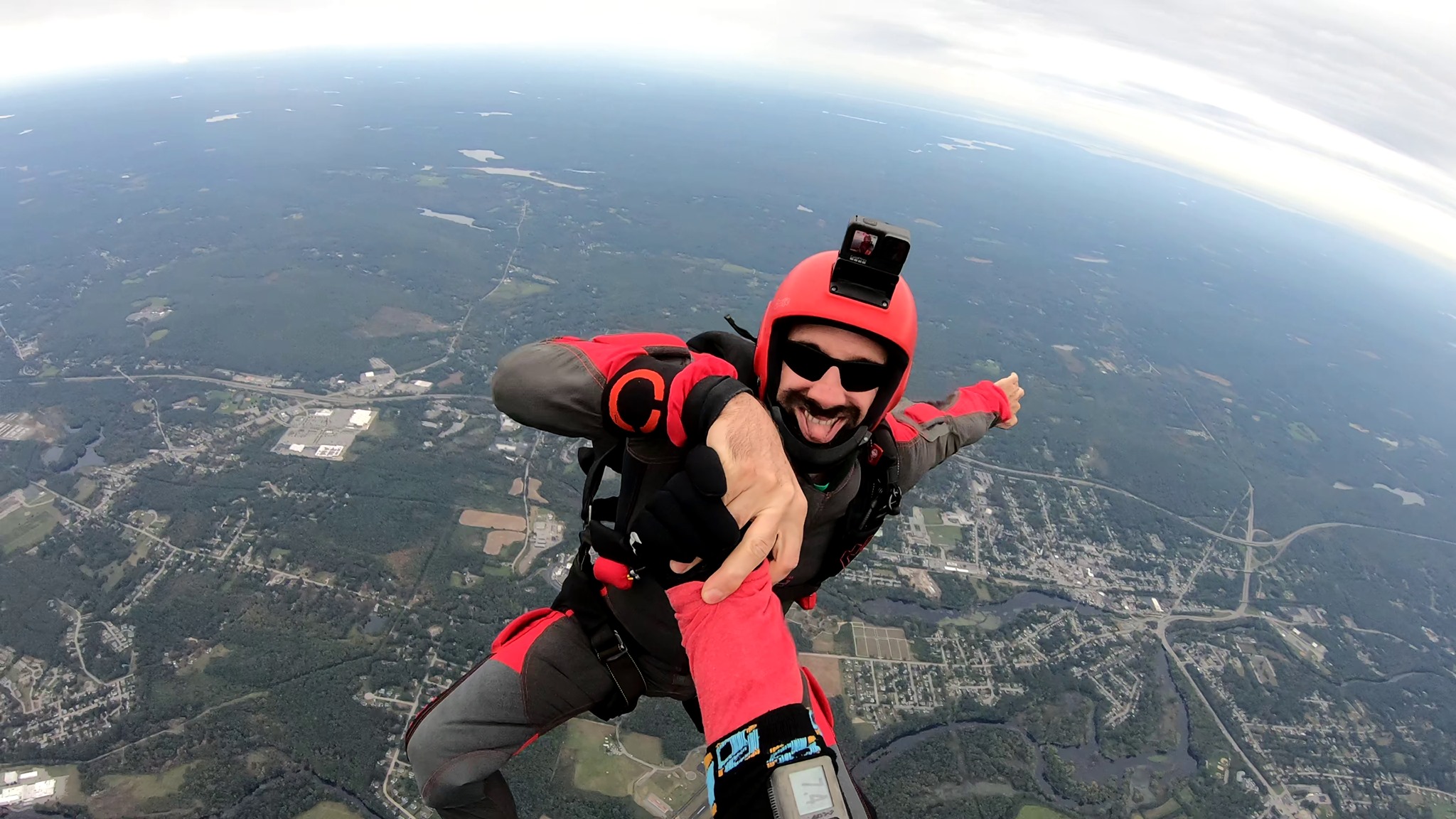
Licensed skydivers may wear full-face helmets or open-face systems depending on style.
Goggles for Freefall Visibility
Freefall airspeed reaches ~120 mph during tandem jumps.
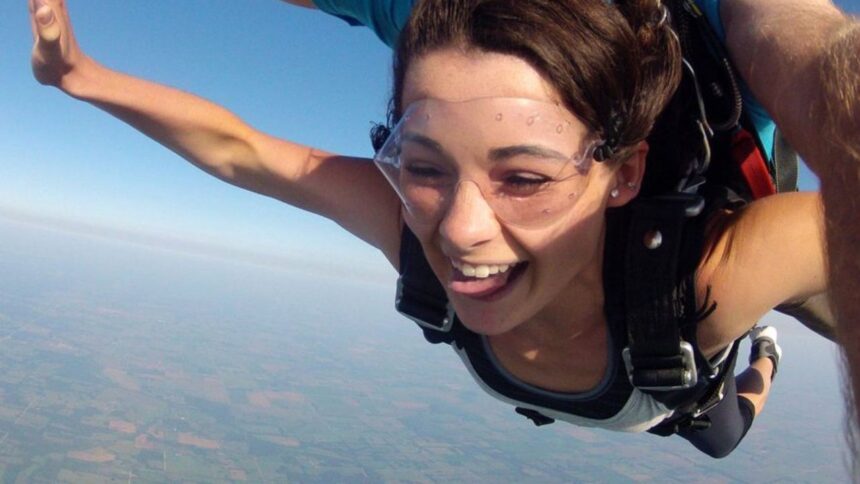
Goggles are essential for protecting eyes and improving visibility.
There are usually two types:
✔ Standard goggles
✔ Prescription-compatible goggles for glasses wearers
These keep airflow and dust away from eyes while allowing you to enjoy the views.
Skydiving Clothing & Jumpsuits
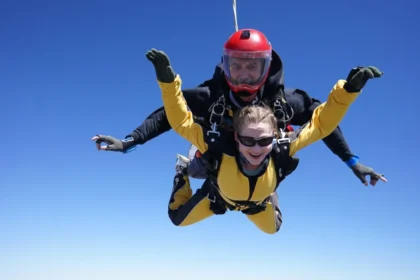
In some dropzones, beginners wear jumpsuits to protect clothing and improve aerodynamics.
Advantages include:
✔ better airflow stability
✔ skin protection
✔ temperature comfort
✔ snag prevention
✔ photo-friendly outfits
In warm climates, athletic clothing may be enough — instructors will advise.
Footwear Matters More Than People Think
Safe skydiving footwear is:
✔ closed-toe
✔ secure
✔ flat-soled (sneakers)
Avoid:
❌ sandals
❌ flip-flops
❌ boots with hooks
❌ heels
Safe footwear helps during:
✔ aircraft loading
✔ landings
✔ canopy control walks
✔ post-jump movements
Inspection & Packing: The Hidden Safety Process
Skydiving gear safety isn’t just about equipment — it’s about maintenance and care.
Licensed riggers are responsible for:
✔ inspecting containers
✔ checking harness integrity
✔ evaluating stitching
✔ maintaining hardware
✔ packing reserve canopies
✔ logging service dates
Reserve parachutes are legally required to be repacked on schedule (cycle length varies by country).
Dropzones also conduct:
✔ daily equipment checks
✔ pre-jump visual inspections
✔ tandem gear pairing checks
This professional infrastructure supports student safety.
Who Handles the Gear During a First-Timer Jump?
For beginners doing tandem:
✔ instructor controls the parachute
✔ instructor handles deployment
✔ instructor manages landing
✔ instructor checks harness
✔ instructor briefs safety steps
Students simply:
✔ follow simple instructions
✔ maintain relaxed body posture
✔ enjoy the views
You don’t need to operate or understand complex equipment to be safe.
Common Misconceptions About Skydiving Gear
“If the parachute fails, there’s nothing you can do.”
Incorrect — rigs include a reserve canopy and AAD for emergencies.
“Skydiving suits are random outfits.”
Jumpsuits are engineered for airflow, comfort, and snag prevention.
“Equipment is old or reused too much.”
Certified dropzones maintain equipment under scheduled inspections.
If you’re researching risk awareness, you may find our data overview useful:
👉 skydiving deaths per year worldwide
This provides a factual, number-based breakdown for safety researchers and first-timers.
Frequently Asked Questions
What gear does a first-time skydiver use?
A tandem rig with main + reserve canopy, AAD, harness, goggles, and soft helmet.
Do I need to bring my own equipment?
No — dropzones supply everything needed for the jump.
What is the safest part of the gear system?
The combination of dual parachutes + AAD + instructor training creates layered safety.
Can I breathe with goggles on?
Yes — goggles only cover eyes, not nose or mouth.
Is skydiving gear heavy?
Tandem rigs are heavier than solo rigs, but instructors carry that weight.
Final Thoughts: Skydiving Gear Is Built With Beginners in Mind
Modern skydiving gear is the result of decades of engineering, testing, aviation standards, and instructor feedback.
For first-timers, the most important takeaway is:
✔ you are not responsible for gear operation
✔ instructors handle deployment & landing
✔ multiple backup systems exist
✔ equipment is maintained professionally
Skydiving gear isn’t just sporty — it’s purpose-built for safety, especially during tandem jumps.