
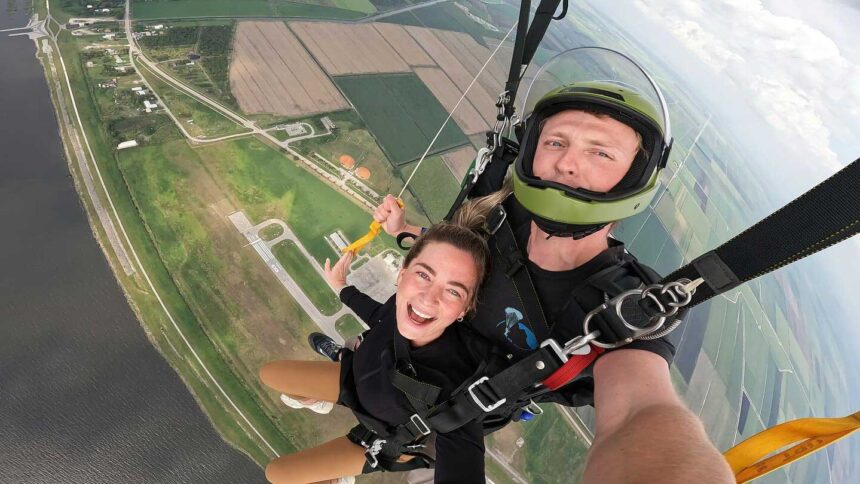
Skydiving is one of the most exciting adventure sports in the world. But before you book your jump, it is very important to understand skydiving height and weight restrictions. These rules exist for your safety and help instructors make sure that every jump is smooth, controlled, and risk-free.
- Understanding Why Skydiving Height and Weight Restrictions Matter
- Skydiving Weight Limit KG: What Most Centers Accept
- Tandem Skydiving Height and Weight Restrictions
- Skydiving Height and Weight Restrictions Near Me
- Height Limit for Skydiving
- Weight Limit for Skydiving With an Instructor (Tandem)
- Weight Limit for Skydiving Solo
- Skydiving Height and Weight Restrictions in Florida
- Skydiving Weight Minimum
- How to Prepare for Skydiving If You Are Near the Weight Limit
- When Should You Avoid Skydiving Due to Weight or Height?
- Conclusion: Know Your Limits for a Safe and Amazing Skydive
- FAQs About Skydiving Height and Weight Restrictions
If you are planning your first tandem skydive or thinking about going solo in the future, this guide will explain everything in simple, clear language. From the skydiving weight limit in kg to height requirements and even restrictions in different states like Florida, you will find all the answers here.
To learn more about skydiving safety, you can also explore trusted resources on Skydive Guides, including updated information on skydiving deaths 2025 .
Now let’s dive into the complete guide.
Understanding Why Skydiving Height and Weight Restrictions Matter
Skydiving involves special equipment like harnesses, parachutes, and tandem gear. Each piece of equipment is designed to support a specific range of weight and height.
If a jumper is too heavy, too light, or even too tall for the harness, it can affect:
• the balance of the instructor
• the speed of the freefall
• the opening of the parachute
• the landing stability
Because of these factors, skydiving centers follow strict safety rules set by manufacturers and safety organizations. These restrictions can vary slightly depending on the country and individual drop zones.
Skydiving Weight Limit KG: What Most Centers Accept
Most skydiving centers follow a maximum weight limit between 90 kg to 110 kg for tandem skydiving. This limit includes your clothes and shoes.
In many places, the most common skydiving weight limit is:
Up to 100 kg (220 lbs)
Some centers allow:
Up to 110 kg (240 lbs) but usually with an extra fee.
This fee is not a penalty. It is because heavier jumpers require extra effort, stronger equipment, and sometimes extra time for instructors.
Why is the weight limit important?
• The parachute has a certified maximum weight rating.
• Heavier jumpers fall faster which increases risk.
• Landing becomes more difficult if the weight is too high.
It is always better to check with your nearest drop zone before booking so you know the exact limit.
Tandem Skydiving Height and Weight Restrictions
Tandem skydiving means you jump directly attached to a trained instructor. Because the instructor controls everything, equipment safety becomes even more important.
Typical Tandem Weight Limits
Most tandem skydiving centers require jumpers to be under:
100–105 kg (220–230 lbs)
Some may accept up to 110 kg only if the harness fits comfortably and weather conditions are suitable.
Tandem Height Restrictions
While there is no strict universal limit, many centers prefer:
• Minimum height: 120 cm (for younger jumpers)
• Maximum height: around 200–202 cm
Very tall people may face harness fitting issues, especially during landing.
Skydiving Height and Weight Restrictions Near Me
If you are searching for skydiving height and weight restrictions near me, remember that every skydiving center may follow slightly different rules. Factors that can affect these limits include:
• Instructor experience
• Equipment brand and load capacity
• Local safety laws
• Weather patterns of the region
To find the most accurate information, always check the official website of your local skydiving center or contact them directly.
Height Limit for Skydiving
Height limits are not as strict as weight limits, but they still matter.
Minimum height for skydiving
Most centers allow:
People above 120–130 cm
This is usually for younger or shorter adventure seekers.
Maximum height for skydiving
Most centers allow people up to:
200–203 cm (6’7″)
Very tall jumpers may have issues with:
• Harness comfort
• Leg positioning during landing
• Weight distribution with the instructor
Still, many tall people skydive without any problem after proper checking.
Weight Limit for Skydiving With an Instructor (Tandem)
When skydiving with an instructor, the weight limit usually stays around:
90–100 kg standard limit
100–110 kg extended limit with conditions
Instructors must ensure that both combined weights stay within safe levels. They must also balance the body correctly during freefall, so they avoid exceeding equipment load ratings.
Weight Limit for Skydiving Solo
Solo skydiving has slightly different rules because the jumper uses individual equipment.
Most centers follow a solo weight limit of:
95 kg to 105 kg
If someone is too light, they may fall slower than expected, which may impact group jumps or formation skydives.
If someone is too heavy, they may fall much faster, creating control challenges.
This is why all solo students must undergo training and equipment fitting checks.
Skydiving Height and Weight Restrictions in Florida
Florida is one of the most popular skydiving destinations in the USA. Restrictions are similar to most other states but may vary by center.
The typical Florida skydiving weight limit is:
Up to 100 kg (220 lbs)
Many centers allow up to 110 kg with extra charges.
Florida’s warm weather and stronger winds in some seasons may also influence weight acceptance for safety reasons.
Height limits remain the same as general guidelines, usually allowing jumpers up to 200–203 cm.
If you are jumping in Florida, always confirm updated policies on the drop zone’s website before arriving.
Skydiving Weight Minimum
While most people focus on maximum weight limits, there is also a minimum weight—and this is especially important for younger or smaller jumpers.
The minimum weight for skydiving is usually:
40–45 kg (88–100 lbs)
This is because extremely light jumpers fall much slower than average, which can affect parachute deployment and landing. Instructors also need proper weight distribution during tandem jumps.
If someone is too light, the tandem harness may not fit securely.
How to Prepare for Skydiving If You Are Near the Weight Limit
If you are close to the weight limit, here are a few simple tips to make sure your jump is smooth:
• Wear light clothing to keep your weight under the maximum limit.
• Avoid heavy meals before the jump.
• Arrive early so the instructors can do proper harness adjustments.
• Choose a day with stable weather because wind can affect weight assessments.
Being honest about your weight during booking is very important for your safety.
When Should You Avoid Skydiving Due to Weight or Height?
You should avoid skydiving if:
• You exceed the maximum weight allowed by the drop zone.
• The harness does not fit your body safely.
• You are extremely short or tall for the available equipment sizes.
• You have medical conditions that are affected by weight restrictions.
Your safety always comes first, and skydiving centers strictly follow these rules to protect you.
Conclusion: Know Your Limits for a Safe and Amazing Skydive
Skydiving is a thrilling experience, but understanding skydiving height and weight restrictions is very important. These rules are designed to keep you safe and ensure that equipment works correctly during the jump.
Whether you are planning a tandem skydive or thinking about going solo, always check the latest rules with your nearest skydiving center. If you want more guides, safety tips, and skydiving insights, you can explore more resources on Skydive Guides.
If you are ready to start your skydiving journey, visit SkydiveGuides.com to find complete guides, training tips, and safety advice designed just for beginners.
FAQs About Skydiving Height and Weight Restrictions
What is the maximum weight limit for skydiving in kg?
Most centers accept between 90 kg to 100 kg, and some allow up to 110 kg with extra fees.
What is the height limit for skydiving?
Most skydiving centers accept jumpers up to 200–203 cm in height.
Are weight limits different for tandem and solo skydiving?
Yes. Tandem jumps usually have a 100–110 kg limit, while solo jumps allow around 95–105 kg for safety.
Is there a minimum weight for skydiving?
Yes. Most places require a minimum weight of 40–45 kg to ensure the harness fits securely.
Do skydiving restrictions change by location?
Yes. Weather, equipment, and local safety laws may result in different limits, so always check with your nearest drop zone.