
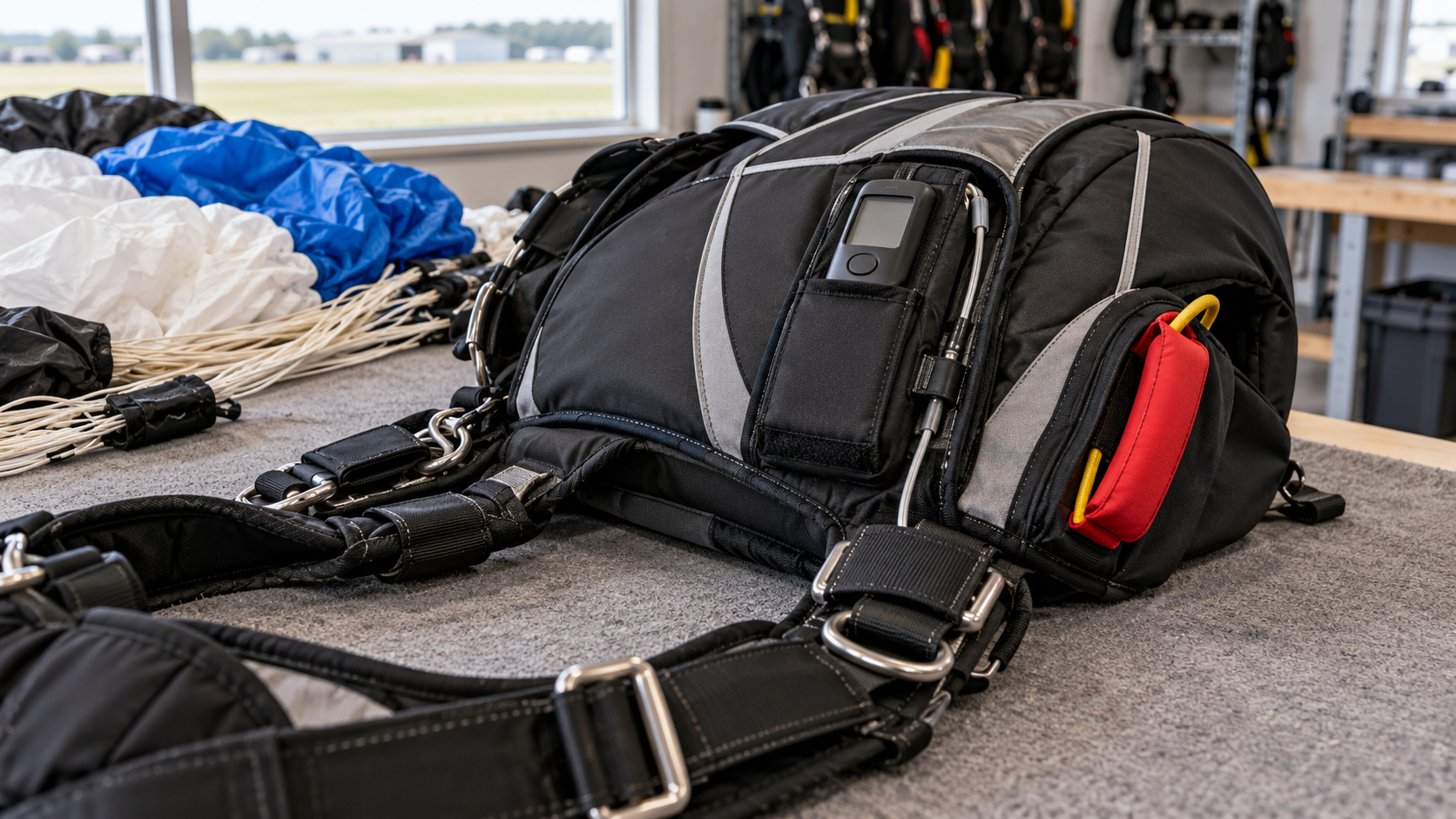
Skydiving requires meticulous planning, correct training, and reliable equipment. Skydivers will always check their parachute system, altimeters and other safety equipment before each jump. Many modern skydiving rigs are equipped with an Automatic Activation Device.
The AAD is an extra safety precaution that will monitor the skydiver’s altitude and speed of descent. If the AAD identifies an altitude and descent rate that meet its activation criteria, then it will automatically trigger the reserve parachute deployment sequence. This can be an important factor if a skydiver cannot deploy their parachute manually or is descending too quickly at a low altitude.
But what is an AAD, and how does it work? Let’s understand how this small device works, how popular systems like CYPRES and Vigil operate, and why you should consider it only a backup to proper skydiving procedures.
What Is an AAD in Skydiving?
An Automatic Activation Device is an electronic safety device that can be installed into a suitable skydiving rig. Its main function is to deploy the reserve parachute when the jumper reaches certain altitudes and speeds.
Most modern electronic AADs consist of a pressure sensor, microprocessor, power source and a knife. The pressure sensor detects changes in air pressure to determine the jumper’s altitude and calculate their rate of descent. This is connected to the reserve parachute container’s closing loop.
When the programmed conditions are met, the AAD activates, the cutter severs the reserve closing loop, opening the container, allowing the reserve to deploy and normally inflate the reserve canopy, but starts the process of deployment of the reserve parachute system.
An AAD does not normally inflate the reserve canopy; it initiates deployment of the reserve parachute system.
How Does an Automatic Activation Device Work?
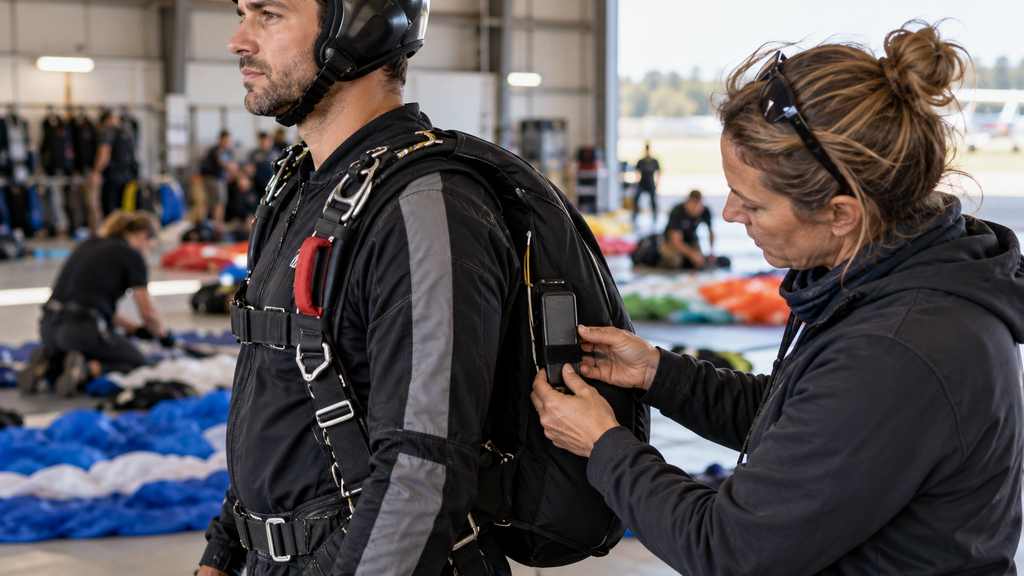
Although the exact technology and activation settings vary between models, the basic operating principle of a modern electronic AAD is similar.
1. The Device Establishes a Ground Reference
The AAD is activated and will carry out start-up tests as described by the manufacturer. Many devices will use atmospheric pressure to establish a baseline.
As atmospheric pressure varies with height, the device can estimate how far above the ground the skydiver is. Some systems will compensate for variations in pressure.
This is an important reference, as the device must differentiate between normal flight and a potentially hazardous low-altitude descent.
2. It Monitors Altitude and Descent Speed
Once the AAD is operating, it continually monitors pressure data to determine altitude and vertical speed.
On a normal skydive, the parachute will be deployed at the correct altitude. The canopy will deploy, and the rate of descent will reduce dramatically. The AAD should not trigger in this scenario.
However, if the jumper continues falling rapidly as the ground approaches, the device evaluates whether its programmed conditions for activation have been satisfied.
3. The Microprocessor Evaluates the Conditions
The AAD’s internal computer will process the sensor data and compare it with the programmed triggers.
These will usually be based on a combination of altitude and rate of descent. The exact values will depend on the model, operating mode, and manufacturer’s settings.
This matters because an AAD is not a time-related device. It will respond to certain conditions.
4. The Cutter Releases the Reserve Container
When the activation criteria are met, the electronics unit activates a cutter. This cutter cuts the reserve closing loop. This allows the reserve container to open so that the reserve parachute deployment system can be initiated.
The AAD does not require the skydiver to pull the reserve parachute handle to activate it; however, the reserve parachute system must be correctly installed, serviced, and packed.
5. The Reserve Parachute Deploys
Once the container is released, the reserve deployment system deploys the parachute. The reserve pilot chute and deployment components will function as designed to deploy the reserve canopy.
The canopy must deploy correctly to create enough drag to slow the descent. Although the AAD will deploy the reserve, there is no guarantee it will deploy correctly or that you will have enough altitude.
Therefore, it is critical to monitor altitude, maintain emergency training, and ensure your equipment is properly maintained at all times.
How Does CYPRES Work?
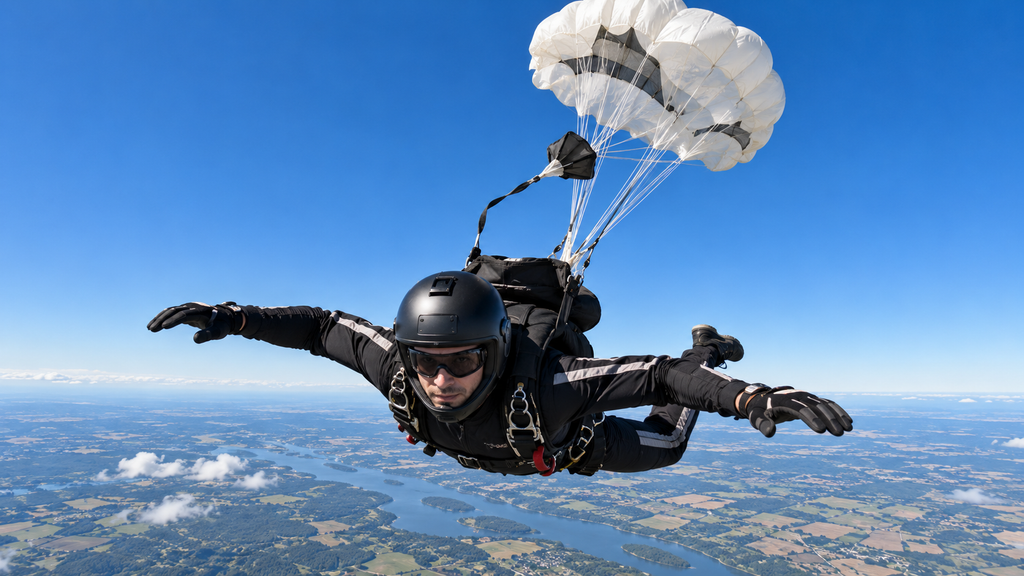
The CYPRES (Cybernetic Parachute Release System) is one of the best-known AADs used in sport skydiving. It works using electronic pressure sensing and a microprocessor to determine how high and how fast the skydiver is descending.
The CYPRES device takes pressure readings, calculates the correct flight conditions and deploys the cutter if the programmed thresholds are breached. (CYPRES Technology Overview, Manufacturer)
Here’s how the process works:
- Ground-level calibration: When switched on, CYPRES takes pressure measurements to establish a reference for the drop zone’s ground level.
- Continuous monitoring: The device measures atmospheric pressure and calculates altitude and rate of descent during the skydive.
- Emergency assessment: Its processor evaluates whether the measured conditions match the activation criteria for the selected model.
- Cutter activation: If those conditions are met, the cutter severs the reserve closing loop, initiating reserve deployment.
Several versions of CYPRES are available to suit different skydive situations (expert, student, tandem, and specialised). Deployment parameters may vary depending on the version.
It is therefore important to always refer to your current CYPRES manual for the correct deployment parameters for your version.
Vigil AAD Explained: How Does It Work?
Another popular e-AAD produced by Advanced Aerospace Designs is the Vigil. Like the CYPRES, the Vigil uses pressure altitudes and rate of descent to determine if emergency deployment conditions have been met.
The cutter mechanism will deploy if the conditions are met. This cuts the closing loop on the reserve container to begin deployment.
The main steps are:
Electronic monitoring: The device measures atmospheric pressure and processes the data to assess altitude and descent speed.
Mode-specific operation: Vigil offers different operating modes for different skydiving applications. The selected mode determines which programmed criteria apply.
Automatic activation: When the relevant conditions are met, the cutter releases the reserve container.
Reserve deployment: The reserve parachute system begins its normal deployment sequence.
The Vigil website contains information on the product’s features and operation. Always refer to the latest documentation for details relating to the specifications, service requirements and activation parameters of the device you are using.
CYPRES vs. Vigil: What Is the Difference?
Both systems will provide automatic backup for your reserve parachute; however, they may differ in how they operate, how they are controlled, how they are calibrated, how they need servicing, etc.
Don’t choose either device solely based on brand; also consider compatibility with your skydiving equipment, the jumps you will be doing, manufacturer recommendations, and advice from a qualified rigger.
Why Is an AAD Important in Skydiving?
Skydivers are trained to monitor their altitude and deploy their parachute at the right time. However, unexpected issues can turn off the jumper, making them unable to track their altitude or respond to an emergency.
An AAD will give extra protection by deploying the reserve parachute once it has been activated.
Its main benefits include:
- An additional safety layer: It can initiate reserve deployment if a skydiver fails to deploy a parachute and meets the device’s activation criteria.
- Automatic operation: It can activate without the jumper manually pulling the reserve handle.
- Support for student training: AADs are commonly used in student skydiving equipment, subject to applicable rules and drop-zone procedures.
- Backup during emergencies: It may help in situations where the jumper cannot respond appropriately before reaching a dangerously low altitude.
However, using an AAD does not always prevent injury or death. It may not deploy in every emergency. If it does deploy, it may not deploy high enough for the reserve canopy to fully open before landing. This also depends on the situation, equipment, and altitude.
Can an AAD Activate Accidentally?
While AADs are designed to activate only when certain conditions are met, it is important to understand their limitations. They can accidentally activate due to certain conditions.
Depending on the AAD model and settings, factors such as a rapid descent or unusual flying conditions may affect it. The AAD could also be a concern due to incorrect setup, an incorrect mode selection, or failure to follow the manufacturer’s guidelines.
To reduce risks, skydivers should:
- Follow the manufacturer’s instructions on how to turn on and use the unit.
- Ensure that the unit is being used in the correct mode for your planned jump.
- Ensure that you understand the conditions and restrictions of turning the unit on.
- Ensure that your equipment is compatible and in a serviceable condition, as determined by a qualified rigger.
- Follow all procedures at the drop zone and all relevant aviation and skydiving regulations.
Does Every Skydiver Need an AAD?
AAD requirements vary by country, governing body, type of jump, and drop zone. Some organisations will require a student jumper or certain types of parachuting to use AADs. Others will have different requirements for experienced solo jumpers.
Even if they are not legally required to use an AAD on a specific jump, you should always consider regulations, compatibility, and expert advice.
The AAD must be maintained to the manufacturer’s requirements. The skydiver should check that the device is serviced, that the batteries are in good condition (if applicable), and that it is ready to operate.
Conclusion
An Automatic Activation Device will monitor the altitude and rate of descent of the skydiver. It will automatically deploy the reserve parachute if it detects a pre-programmed emergency. Devices such as CYPRES and Vigil have electronic sensing and processing systems that will cut the closure loop on the reserve container.
While these devices provide an extra level of safety, they can never replace proper training, altitude awareness, and regular maintenance. Knowing how your AAD works and following the manufacturer’s guidelines will help you make informed decisions when skydiving.