
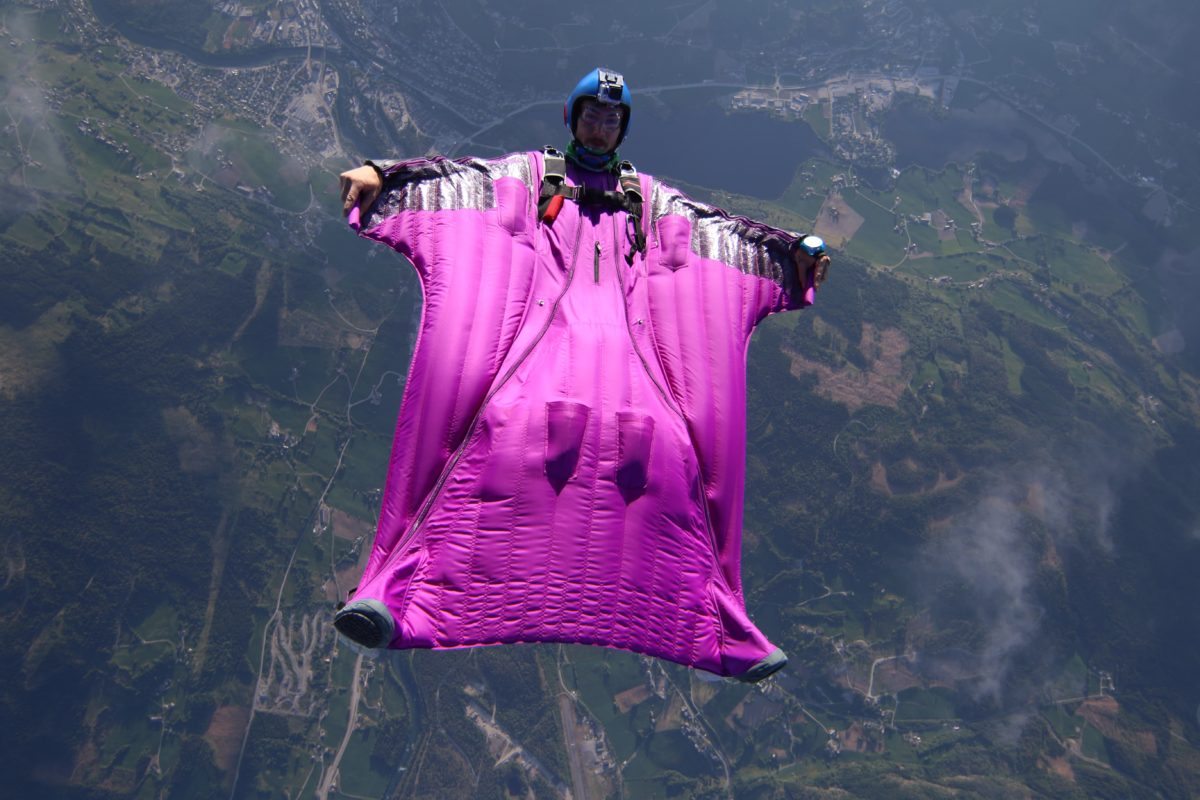
Wingsuit flying is the closest human beings have come to unaided flight. Wearing a specialized suit with fabric panels between the arms and legs, a wingsuit pilot can achieve glide ratios exceeding 3:1, covering three horizontal meters for every meter of vertical descent. At speeds exceeding 100 miles per hour, it is one of the most technically demanding and visually spectacular disciplines in all of sport aviation.
But unlike most extreme sports where you can show up, pay a fee, and participate on the same day, wingsuit flying has a very specific certification path. You cannot walk into a drop zone and ask for a wingsuit lesson with no prior experience. There is a mandatory progression that most beginner skydivers underestimate when they first research the discipline.
This guide covers everything you need to know about the path to becoming a wingsuit pilot in 2026. The exact prerequisites. How many jumps you need. What the official training courses involve. Which schools are considered the best globally. And what the full cost of the journey looks like from your first jump to your first solo wingsuit flight.
What Is Wingsuit Flying?
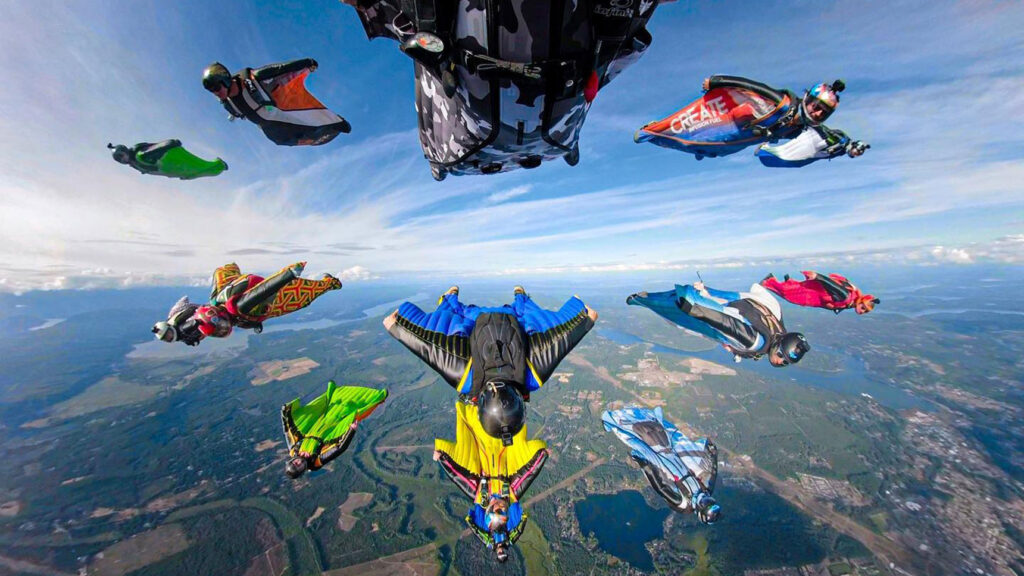
A wingsuit is a specially designed jumpsuit with rigid or semi-rigid fabric panels sewn between the arms and torso and between the legs. When inflated by the oncoming airflow during freefall, these panels create aerodynamic lift, dramatically slowing the descent rate and allowing the pilot to glide horizontally through the sky.
Standard sport skydiving involves a near-vertical descent at approximately 120 miles per hour. A wingsuit pilot can reduce their vertical descent rate to as low as 25 to 40 miles per hour while achieving horizontal speeds of 80 to 120 miles per hour. The resulting glide path resembles that of a bird of prey rather than a falling object.
Wingsuit flying exists in two primary forms. Skydiving wingsuits (also called belly wingsuits or skydiving suits) are deployed from aircraft at standard skydiving altitudes (10,000 to 15,000 feet) and involve parachute deployment and landing exactly like standard skydiving. BASE wingsuits combine wingsuit flight with BASE jumping, flying close to terrain including mountains, cliffs, and ridgelines, which is an entirely separate and significantly more extreme discipline.
This guide covers the skydiving wingsuit path only. BASE wingsuit flying involves prerequisites and risks that go well beyond anything discussed here.
The Minimum Requirements to Start Wingsuit Flying
The wingsuit skydiving community and the major equipment manufacturers maintain a strong consensus on minimum requirements for first-time wingsuit pilots. These are not arbitrary barriers. They exist because the skills required to fly a wingsuit safely and handle emergencies in freefall require a level of body awareness, canopy control ability, and emergency response capability that only comes with significant jumping experience.
Jump Number Requirement
The widely accepted minimum for starting wingsuit flying is 200 logged skydives. This is the threshold recommended by the USPA, by major wingsuit manufacturers including Tony Suits, Squirrel, and Crash Inc., and by virtually every experienced wingsuit coach and instructor in the global community.
Some individual schools set their minimum at 150 to 200 jumps and assess each student individually. No reputable coach or manufacturer recommends starting wingsuit flying with fewer than 150 jumps, and 200 is the safer and more commonly applied standard.
The reason for this threshold is not bureaucratic caution. Wingsuit flying requires a level of body awareness in freefall, the ability to manage unexpected instability, familiarity with emergency procedures under unfamiliar flight conditions, and advanced canopy control skills that simply do not develop before 150 to 200 jumps for most skydivers.
License Requirement
You must hold a minimum of a USPA B-License to begin wingsuit training. A B-License requires completion of 50 skydives and demonstration of specific freefall and canopy skills assessed by a USPA S&TA (Safety and Training Advisor). Some coaches and manufacturers prefer candidates to hold a C-License (200 jumps minimum).
Freefall Skills Required
Beyond the jump number, the community widely agrees on the following specific skills as prerequisites.
The ability to maintain a stable arch position consistently without any external reference. Demonstrated ability to complete 360-degree turns in both directions in freefall with precision. Backloop and frontloop competency. Freefall to canopy transition without instability. Advanced canopy skills including landing accuracy within 10 meters of a target.
No Deployment Malfunctions in Recent Jump History
Most experienced coaches also want to know about your malfunction history. Skydivers who have had recent deployment issues without confident emergency procedure responses are typically advised to build more standard skydiving experience before moving to wingsuits.
What Happens During a Wingsuit First Flight Course
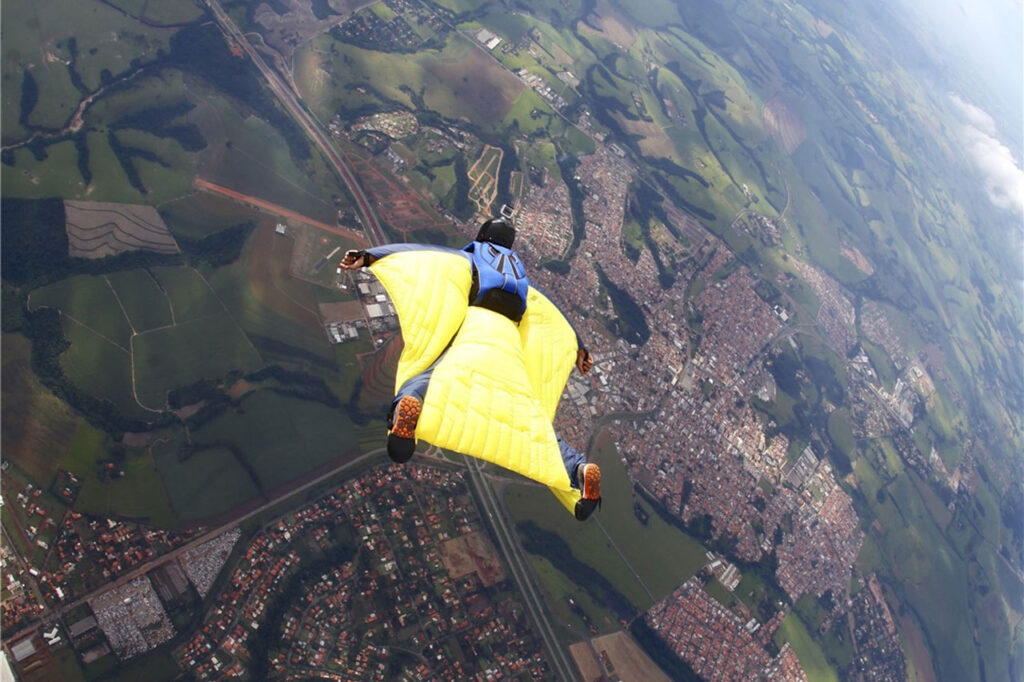
The industry-standard entry point for wingsuit flying is a First Flight Course (FFC), offered by certified wingsuit coaches at most well-established drop zones. An FFC consists of both ground school and supervised jump progressions.
Ground School (Day 1)
Ground school for a First Flight Course typically takes 4 to 8 hours and covers the following.
Wingsuit aerodynamics: how the suit generates lift and how pilot body position controls glide ratio, bank angle, and pitch. Emergency procedures specific to wingsuit flying, which differ significantly from standard skydiving emergency procedures. Inflation and deployment techniques. Canopy deployment specific to wingsuit flight, including the specific body position and procedure required to safely transition from wingsuit flight to canopy flight. Pre-jump suit checks and fitting.
Supervised Jump Progressions (Day 2 Onward)
Most First Flight Courses involve 3 to 6 supervised jumps with a coach. The first jump focuses purely on suit inflation and basic stability. Subsequent jumps introduce controlled turns, pitch control, and canopy deployment practice. Assessment continues across all jumps.
After completing the FFC and demonstrating competency, you are cleared to fly a beginner wingsuit independently and continue developing your skills.
Wingsuit Categories: Starting Small Is Not Optional
One of the most common mistakes made by students approaching wingsuit flying is wanting to start with a large, high-performance suit immediately. This is one of the most dangerous decisions available in the sport.
Wingsuit suits are categorized by their surface area and performance capability. Beginner suits are small, docile, and forgiving. They have limited glide performance and are specifically designed to be manageable for pilots with developing skills. Advanced and expert suits have dramatically larger wing areas, generate much more lift, fly much faster horizontally, and are significantly more demanding to control and emergency-manage.
Every major wingsuit manufacturer produces a dedicated first wingsuit model. Squirrel’s Aura, Tony Suits’ Intro, and Crash Inc.’s Origin are examples of entry-level designs that are genuinely appropriate for 200-jump pilots starting their wingsuit journey.
Starting on a beginner suit and building 50 to 100 wingsuit jumps before moving to an intermediate suit is not optional for safety. It is the difference between enjoying a long career in the discipline and becoming a statistic.
Best Wingsuit Schools and Coaches in 2026
Several operations and individual coaches are consistently recognized as among the best in the world for wingsuit instruction.
Tony Suits Academy (USA and International)
Tony Suits is one of the most respected wingsuit manufacturers globally, and the Tony Suits Academy runs First Flight Courses at events and drop zones across the USA and internationally. Their instructors combine deep suit knowledge with formal coaching methodology.
Squirrel Performance (International)
Squirrel is one of the most innovation-driven wingsuit manufacturers operating today. Their coaching programs are run by world-class pilots at sanctioned events globally. Squirrel training is particularly strong for intermediate and advanced level progression.
Apex BASE (Twin Falls, Idaho, USA)
While primarily a BASE training organization, Apex runs one of the most respected wingsuit skills progressions in the world for skydivers looking to build the advanced skills required for future BASE wingsuit work. Their coaching methodology is thorough, safety-focused, and technically demanding.
Fly Your Body (Spain and International)
Fly Your Body is a European-based wingsuit coaching operation with a strong reputation for both beginner courses and competitive formation wingsuit coaching. They run dedicated wingsuit events at premier European drop zones.
World Wingsuit League Sanctioned Events
For skydivers looking to combine wingsuit training with competition or high-performance coaching, World Wingsuit League sanctioned events bring together the world’s top performers and coaches at specific drop zones internationally each season.
Full Cost Breakdown: Learning to Fly a Wingsuit
The cost of the wingsuit journey depends on where you are starting from. Here is the realistic total.
If You Already Have Your A-License (25 Jumps)
You need approximately 175 more jumps to reach the 200-jump threshold. At $25 to $40 per jump (with your own gear), that represents $4,375 to $7,000 in additional jump fees. This does not include gear costs if you are still renting.
First Flight Course Cost
A standard First Flight Course with a certified coach costs $300 to $600 for the ground school and supervised jump coaching fees. Aircraft and jump ticket fees are additional.
Beginner Wingsuit Cost
A new beginner wingsuit costs $700 to $1,500 depending on the manufacturer. Used beginner wingsuits in good condition can be found for $400 to $800 through the second-hand market.
Total Journey Cost (Starting from Zero)
| Stage | Approximate Cost |
|---|---|
| AFF course and A-License | $1,800 to $2,800 |
| Jumps 25 to 200 (at drop zone) | $4,000 to $7,000 |
| First Flight Course | $300 to $600 |
| Beginner wingsuit | $700 to $1,500 |
| Total approximate investment | $6,800 to $11,900 |
This is a significant investment, which is one reason wingsuit flying is genuinely earned rather than simply purchased.
Wingsuit Flying vs BASE Wingsuit Flying: The Difference
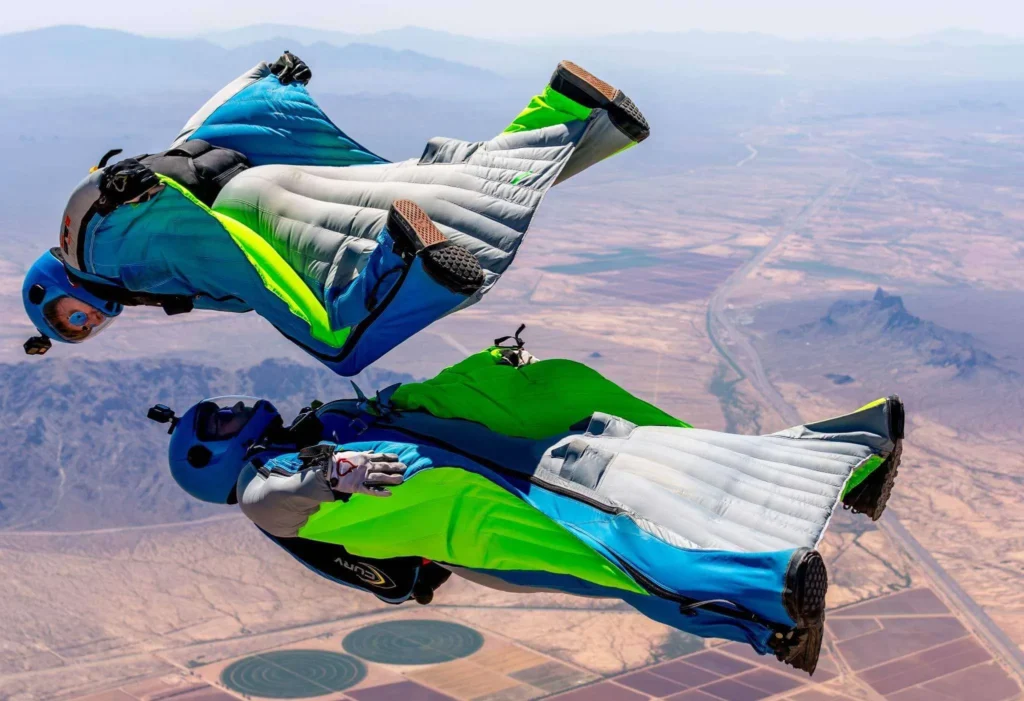
Skydiving wingsuit flying, which is covered entirely in this guide, involves jumping from an aircraft at standard altitude (10,000 to 15,000 feet), flying a wingsuit in freefall, and deploying a standard parachute for a conventional landing. It is a natural progression from standard skydiving.
BASE wingsuit flying involves jumping from fixed objects (cliffs, buildings, antennas, and earth features) or from aircraft at low altitudes while flying in close proximity to terrain. It involves parachute deployment at much lower altitudes with minimal margin for error.
BASE wingsuit flying is categorically more dangerous than skydiving wingsuit flying and has its own extensive prerequisite pathway that includes significant BASE jumping experience well before any wingsuit is introduced. It is not a progression step from skydiving wingsuit flying for most jumpers. They are fundamentally different disciplines.
Frequently Asked Questions
How many jumps do I need before I can fly a wingsuit? The widely accepted minimum is 200 logged skydives, as recommended by USPA, major wingsuit manufacturers, and the global wingsuit coaching community. Some coaches assess students individually at 150 jumps but 200 is the safer and more consistently applied standard.
Can a complete beginner start wingsuit training? No. Wingsuit flying requires a minimum of 200 skydives and a USPA B-License or equivalent before beginning any wingsuit training. This prerequisite exists because wingsuit flying demands freefall skills and emergency procedure capability that only develops through extensive standard jumping experience.
What is a wingsuit First Flight Course? A First Flight Course (FFC) is the structured entry-point training program for beginner wingsuit pilots. It includes a ground school covering wingsuit aerodynamics, emergency procedures, and deployment techniques, followed by 3 to 6 supervised jumps with a certified wingsuit coach.
How much does a beginner wingsuit cost? New beginner wingsuits cost $700 to $1,500 depending on the manufacturer. Used beginner suits in good condition are available for $400 to $800 through the second-hand skydiving community. Never buy a used suit without having it inspected by a certified rigger or experienced coach.
What is the difference between a skydiving wingsuit and a BASE wingsuit? Skydiving wingsuits are used for aircraft-to-earth jumps at standard altitudes with full parachute deployment for landing. BASE wingsuits are used for proximity flying near terrain from fixed objects or low-altitude aircraft. They are different disciplines with different prerequisites, risks, and skill requirements.
Which wingsuit should a beginner buy first? Every major manufacturer produces a dedicated beginner model specifically appropriate for the first 50 to 100 wingsuit jumps. Recommended beginner options include the Squirrel Aura, Tony Suits Intro, and Crash Inc. Origin. Never start on an intermediate or advanced suit regardless of how comfortable you feel in freefall.
Is wingsuit flying more dangerous than regular skydiving? Wingsuit skydiving carries a higher accident rate per jump than standard sport skydiving, primarily due to canopy deployment challenges under wingsuit flight conditions and the increased complexity of emergency procedures. These risks are substantially mitigated by meeting the jump number prerequisites, taking a formal First Flight Course, and starting on an appropriately sized beginner suit.