
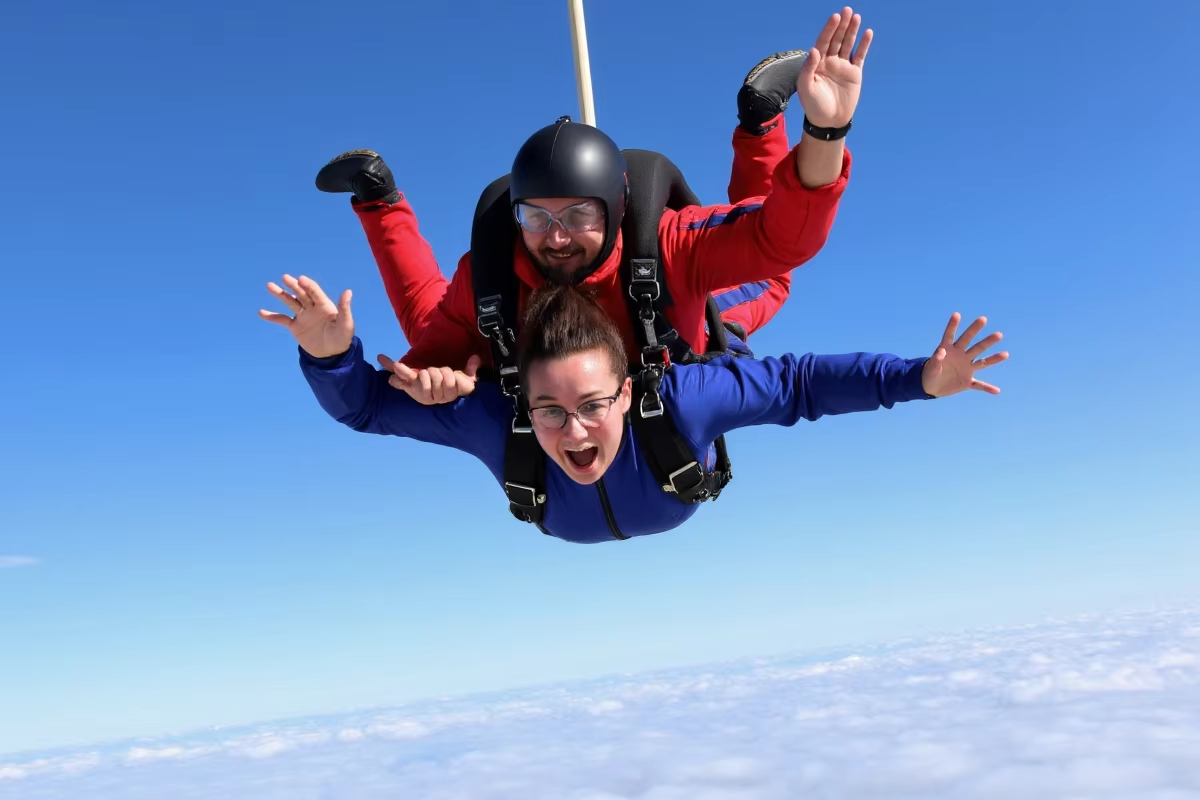
If you’ve never skydived before, one of the most common questions that comes up is:
“How do you land during a skydive, and is it safe?”
Movies often show dramatic landings, but real tandem skydiving landings are smooth, controlled, and instructor-managed, especially for first-time jumpers.
This guide breaks down how skydiving landings work, what first-timers can expect, and how instructors handle safety from canopy to touchdown.
What Actually Happens Before Landing
Once the parachute opens at around 5,000–6,000 feet, the experience becomes calm and scenic.
During the canopy descent, instructors:
✔ steer the parachute
✔ select the landing pattern
✔ communicate instructions
✔ maintain controlled altitude loss
This canopy stage lasts 5 to 7 minutes on average, giving plenty of time to prepare for landing.
How Tandem Instructors Set Up Landing
Before touching down, instructors guide the parachute into a landing pattern, which is similar to small aircraft patterns.
It includes these three phases:
✔ Downwind leg
✔ Base leg
✔ Final approach
Each phase allows the instructor to:
- align with the wind direction
- adjust descent rate
- evaluate landing surface
- prepare student instructions
This controlled approach is what makes landings smooth.
Types of Tandem Landings
There are two main landing styles for tandem skydiving:
1. Slide-In Landing (Most Common)
Instructors often prefer slide-in landings for beginners.
Why?
✔ safer for joints
✔ works in grassy fields
✔ easy for most body types
✔ simple student instructions
Students are usually told to:
➡ lift legs forward
➡ let instructor handle touchdown
➡ relax during slide
Slide-ins are soft and controlled — imagine sliding into home plate in baseball, but slower and smoother.
2. Stand-Up Landing (Weather & Experience Dependent)
Stand-up landings are also possible, especially when:
✔ winds are mild
✔ surface is smooth
✔ descent is stable
✔ timing is perfect
In this case, students may:
➡ lower feet at instructor’s cue
➡ stand gently
➡ take one or two steps forward
Both landing types are instructor-managed.
Landing Surface & Safety Zones
Certified dropzones have dedicated landing areas designed for safety.
These areas typically include:
✔ open grass fields
✔ minimal obstacles
✔ clear perimeter boundaries
✔ wind indicators (windsocks)
✔ soft landing surfaces
This prevents landing near:
❌ trees
❌ roads
❌ fences
❌ structures
❌ water bodies
Landing zones are intentionally selected with ample room for parachute glide and student comfort.
How Wind Affects Landing Safety
Wind is an important factor in landing safety.
Instructors watch:
✔ wind direction
✔ wind speed
✔ turbulence
✔ gust patterns
Good landing winds:
➡ slow horizontal movement
➡ allow gentle flare landings
➡ increase precision
High or gusty winds may:
❌ delay jumps
❌ change landing patterns
❌ require slide-in landings
This is why reputable dropzones delay operations during poor conditions — not because they’re disorganized, but because they’re safety-oriented.
Student Instructions Before Landing
Just before landing, instructors typically give simple cues like:
➡ “Legs up!”
➡ “Legs forward!”
➡ “Stay up!”
➡ “Legs down!” (for stand-up landings)
Instructions are always:
✔ short
✔ clear
✔ timed correctly
✔ practiced beforehand during briefing
Beginners don’t need special training — just basic listening.
Why Landing Safety Is Better Today Than Decades Ago
Modern skydiving has evolved significantly.
Safety improvements include:
✔ stronger canopy materials
✔ better flare control systems
✔ improved harness comfort
✔ advanced steering toggles
✔ stability-focused canopy design
These innovations let instructors:
✔ slow the descent smoothly
✔ soften forward speed
✔ time the flare precisely
✔ adapt to surface conditions
Today’s landings are engineered for comfort & control.
Common Landing Myths (Beginner Misconceptions)
Myth #1: “You hit the ground really hard.”
Reality: Proper flaring slows descent dramatically before touchdown.
Myth #2: “You need to learn how to land.”
Reality: Instructors handle landing — students follow simple cues.
Myth #3: “Landing is the dangerous part.”
Reality: Landing is a controlled flight phase, not a crash.
Comparing Landings to Other Sports
For context:
✔ Slide-in landings feel similar to sitting into a sled
✔ Stand-up landings feel similar to skiing/snowboarding stopping gently
✔ Flare timing feels like landing a small glider
Most students are surprised by how gentle landings feel.
After Landing: What Happens Next
After touchdown:
✔ instructor secures canopy
✔ student gets unhooked
✔ gear is removed
✔ photos/videos may be taken
✔ adrenaline smiles happen naturally
Most first-timers say the landing moment feels like:
“A calm ending to a wild story.”
Frequently Asked Questions
Do landings hurt?
In normal conditions with proper guidance, landings are smooth and controlled.
Do I have to run or sprint during landing?
Only sometimes during stand-up landings. Many landings are slide-ins.
Can I fall during landing?
Instructors minimize this risk through training and canopy control.
Do wind conditions matter for landing?
Yes — wind strongly influences landing safety and approach patterns.
Does the instructor tell me what to do?
Yes — instructors give simple cues before touchdown.
Final Thoughts: Skydiving Landing Safety Is Highly Structured
Landing isn’t a dramatic crash — it’s a planned, instructor-engineered glide, made safer by:
✔ canopy flight control
✔ flare timing
✔ wind analysis
✔ landing zone selection
✔ simple student cues
The entire design ensures first-timers don’t need skill — just willingness.
If you’re considering your first tandem jump, knowing how landing works removes a huge part of the unknown and makes the experience more exciting than intimidating.